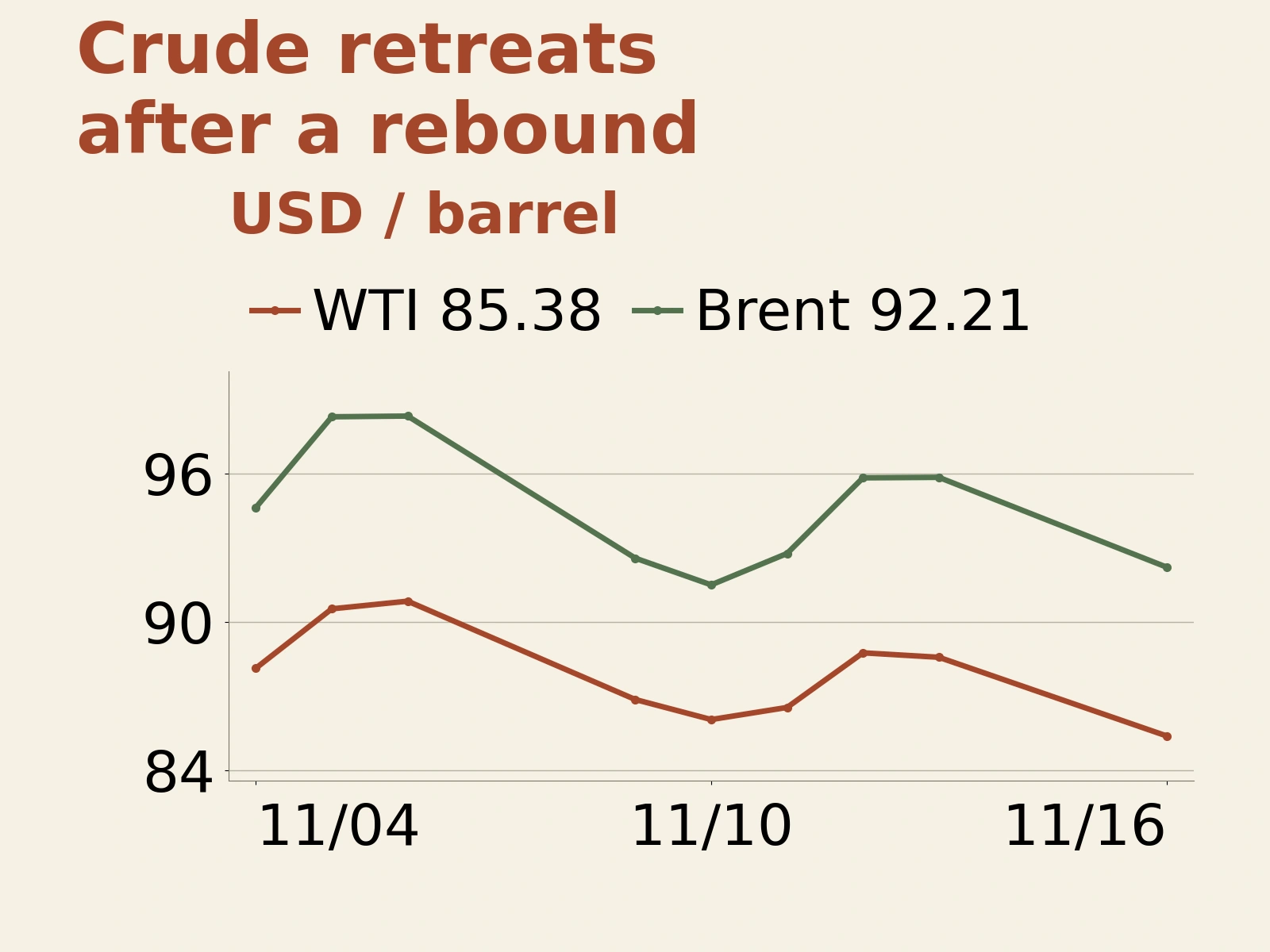
On November 18, 2026, following the release of US inventory data, NYMEX WTI crude for December 2026 delivery settled at $83.26 a barrel, the lowest front-month settlement since August 26. US commercial crude inventories rose for a second consecutive week, while the weekly increase in gasoline stocks was more than three times the increase the market had expected. Front-month US crude fell more sharply that day than Brent or US crude for later delivery, narrowing its premium over the second-month contract.
Front-month contracts lead the decline
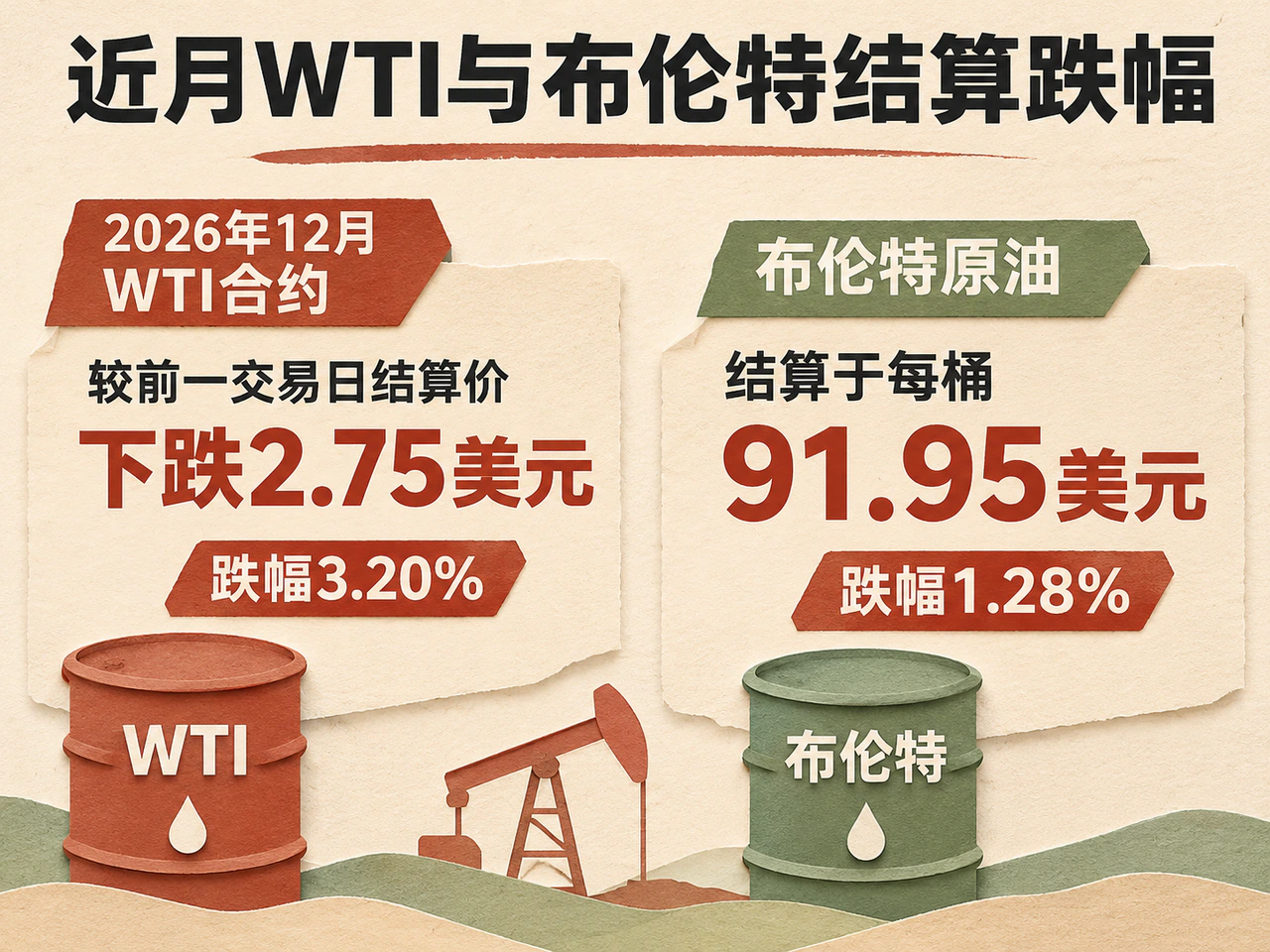
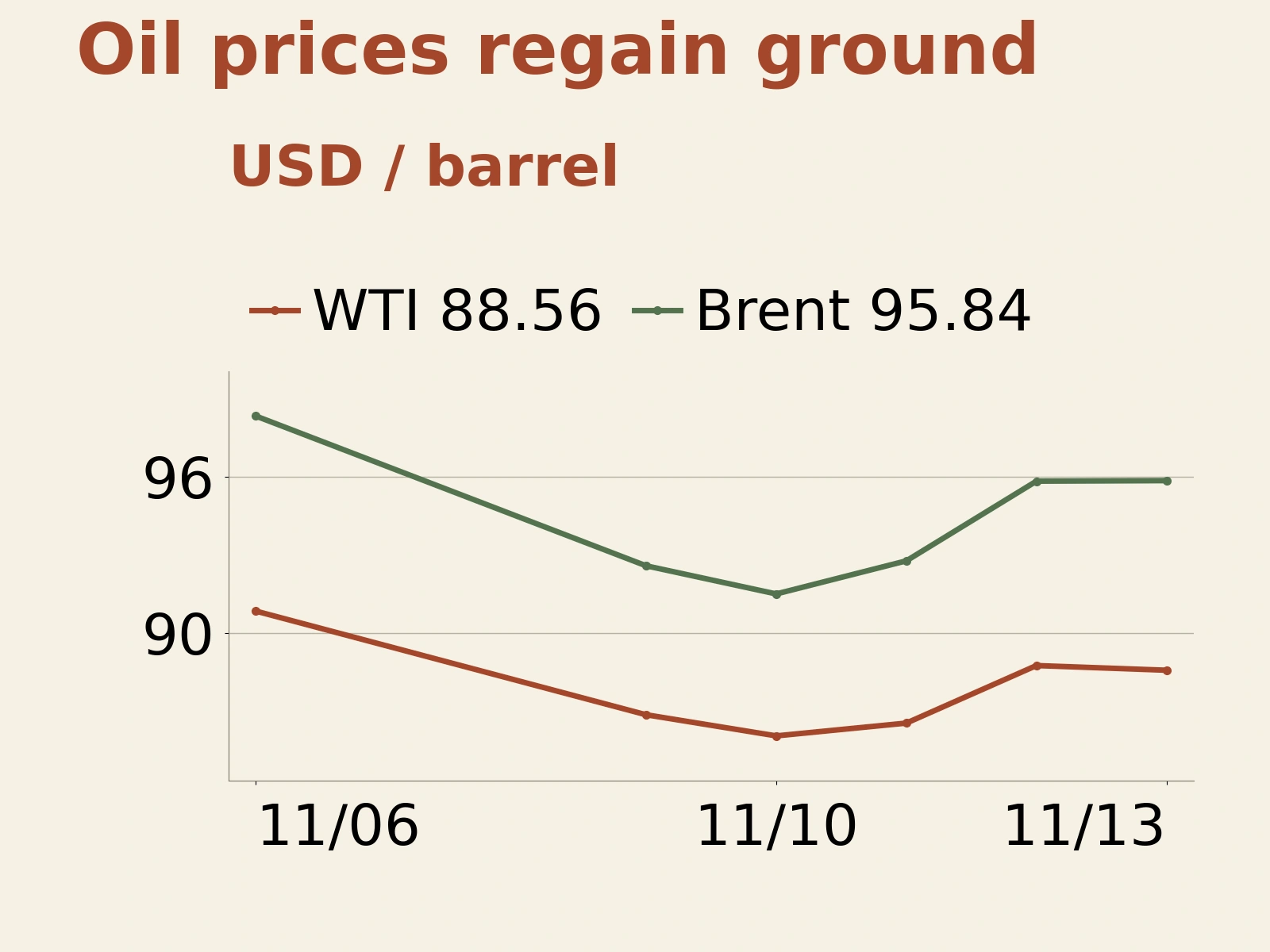
The December 2026 WTI contract fell $2.75, or 3.20%, from the previous session’s settlement. ICE Brent crude for January 2027 delivery settled at $91.95 a barrel, down $1.19, or 1.28%. The two contracts had closed last Friday at $88.56 and $95.84, respectively. After falling on Monday and briefly rebounding on Tuesday, WTI was $5.30 below last Friday’s level by Wednesday, while Brent was $3.89 lower.
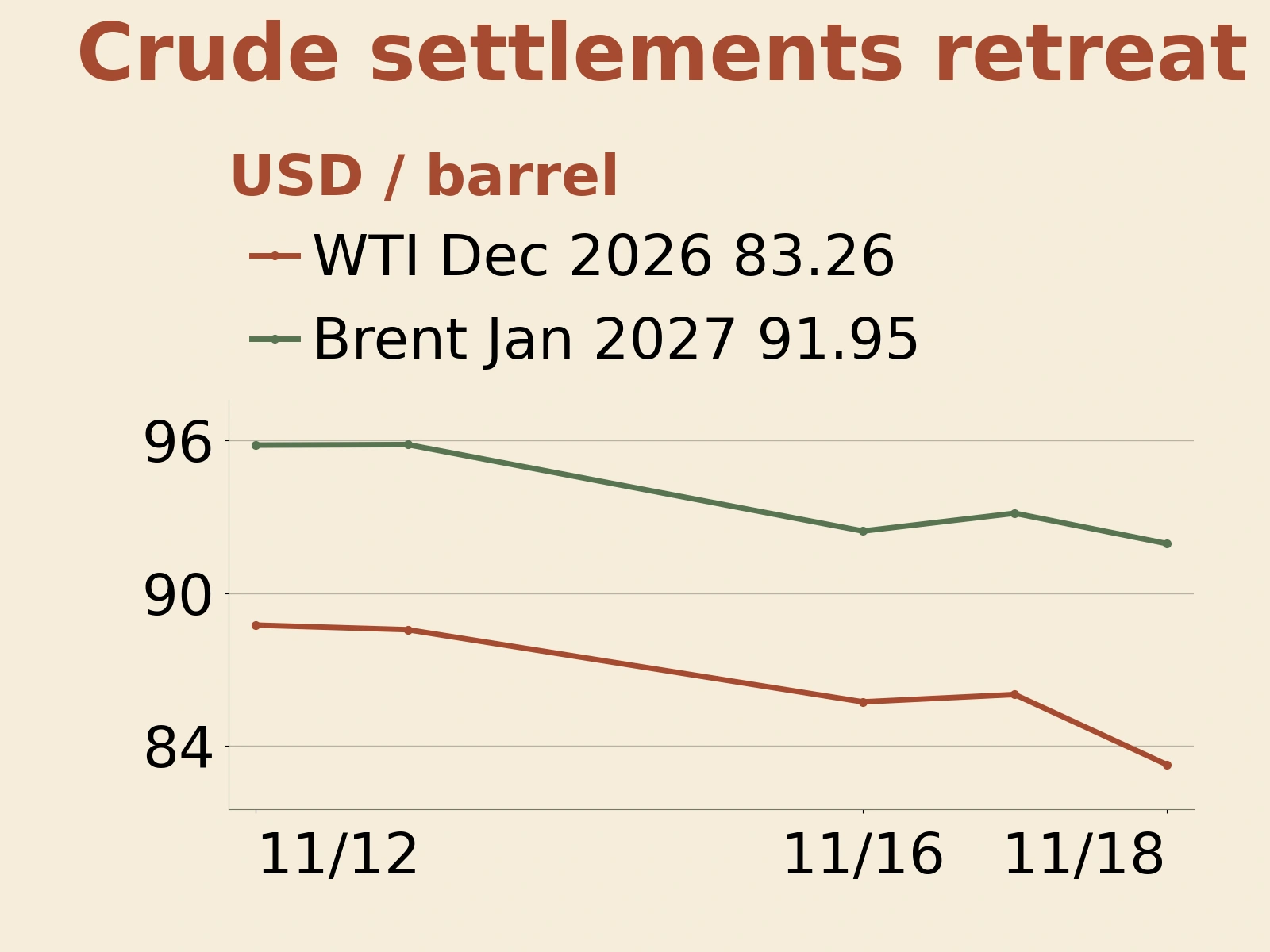
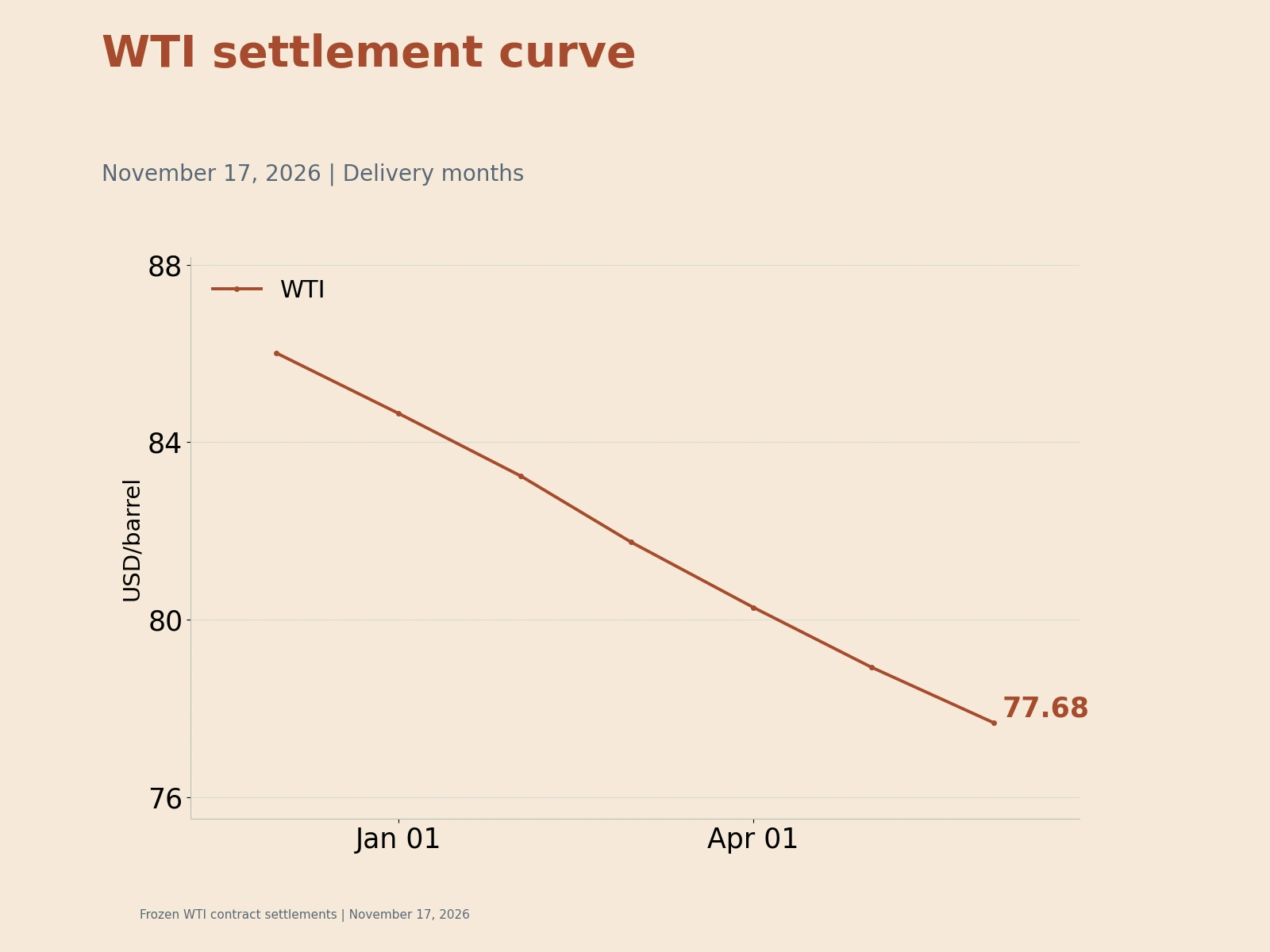
The closer WTI contracts were to delivery, the steeper their declines. The NYMEX settlement table published by the Associated Press showed the January 2027 contract falling $2.34 to $82.31 a barrel, while the June 2027 contract fell just $1.18 to $76.50. The December 2026 contract commanded a $0.95 premium over January 2027, down from $1.36 the previous day. Refiners still had to pay extra to receive crude a month earlier, but that premium shrank by $0.41 in a single day. The inventory build eased concerns about near-term supply, with the December contract reacting most strongly. Comparing the same January 2027 delivery month, Brent traded at a $9.64 premium to WTI. A Sparta Commodities analyst told Reuters that the price differentials for shipping US crude to Asia and northwest Europe had previously been insufficient to cover costs; relatively lower US prices could help attract overseas buyers again.
Gasoline stocks rise faster; distillates remain below last year
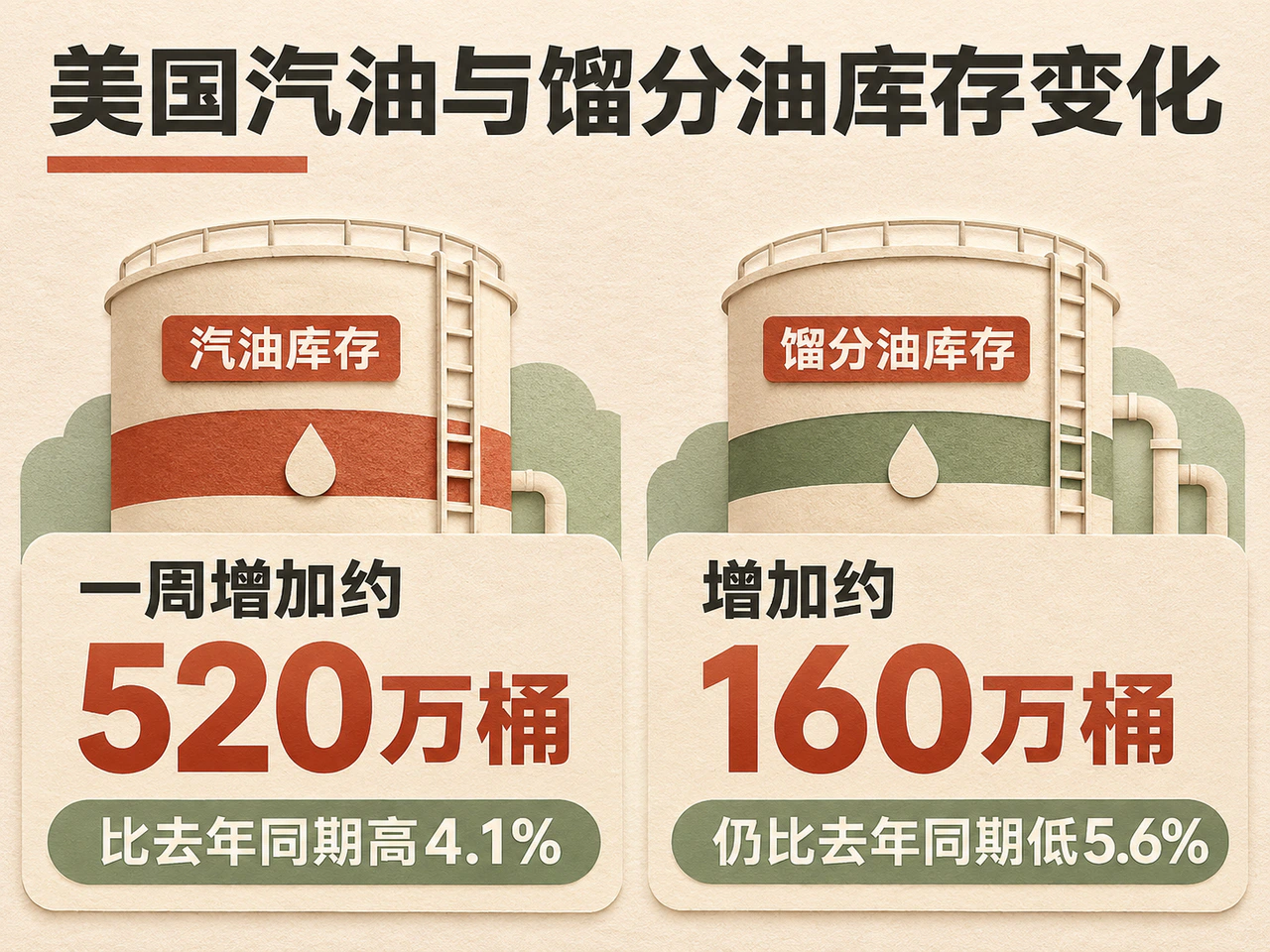
The US Energy Information Administration reported on November 18 that commercial crude inventories rose by about 3.4 million barrels to 417.8 million barrels in the week ended November 13, compared with an expected increase of 58,000 barrels in a Reuters survey. Commercial crude stocks had already risen by about 4.66 million barrels the preceding week. However, the Strategic Petroleum Reserve fell by about 3.2 million barrels over the same period, leaving total US crude inventories including the reserve only about 200,000 barrels above the previous week. Crude stocks at the delivery hub of Cushing, Oklahoma, fell by 1.2 million barrels. For traders buying the December contract to take delivery at Cushing, less local inventory was available than a week earlier.
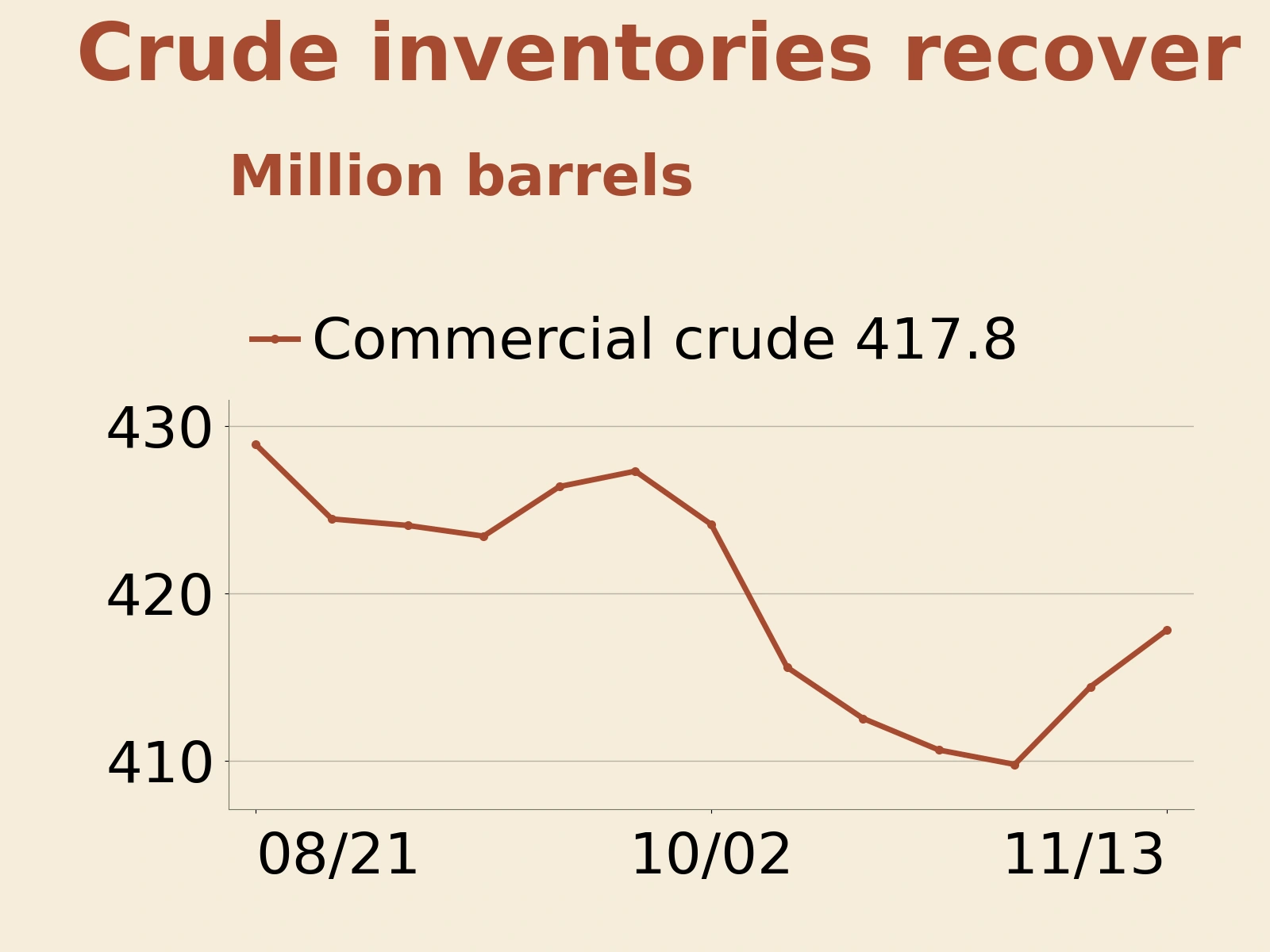
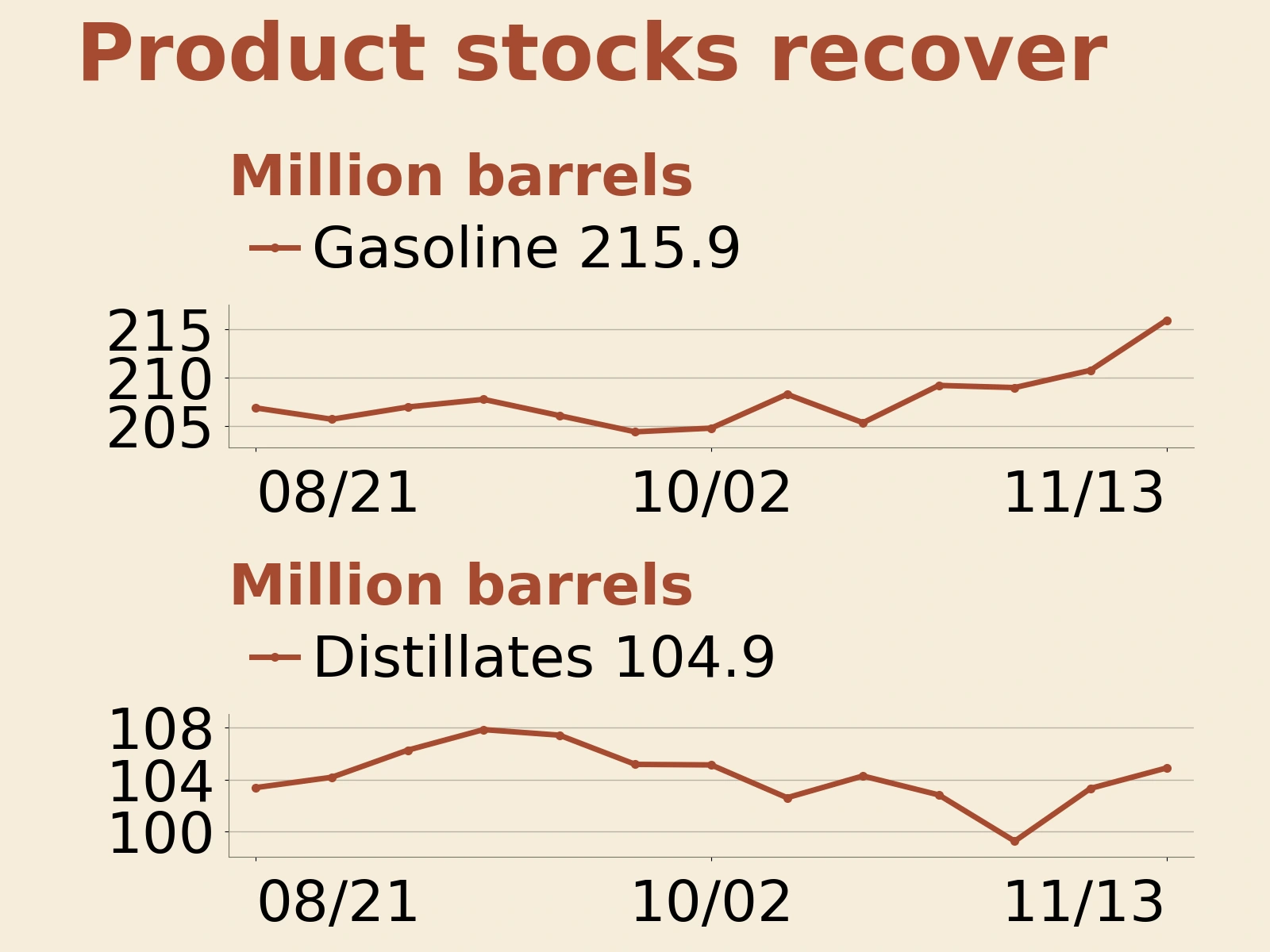
The divergence in refined-product inventories was more pronounced. Gasoline stocks rose by about 5.2 million barrels in a week to 215.9 million barrels, 4.1% above the year-earlier level. Distillate inventories, including diesel and heating oil, increased by about 1.6 million barrels to 104.9 million barrels, but remained 5.6% below a year earlier. More ample gasoline supply removes one incentive for refiners to increase crude purchases. With the distillate inventory cushion much thinner ahead of winter, whether refiners raise throughput will also depend on whether margins on diesel and other distillates can offset weakness in gasoline.
Gulf exports recover, with more crude at sea
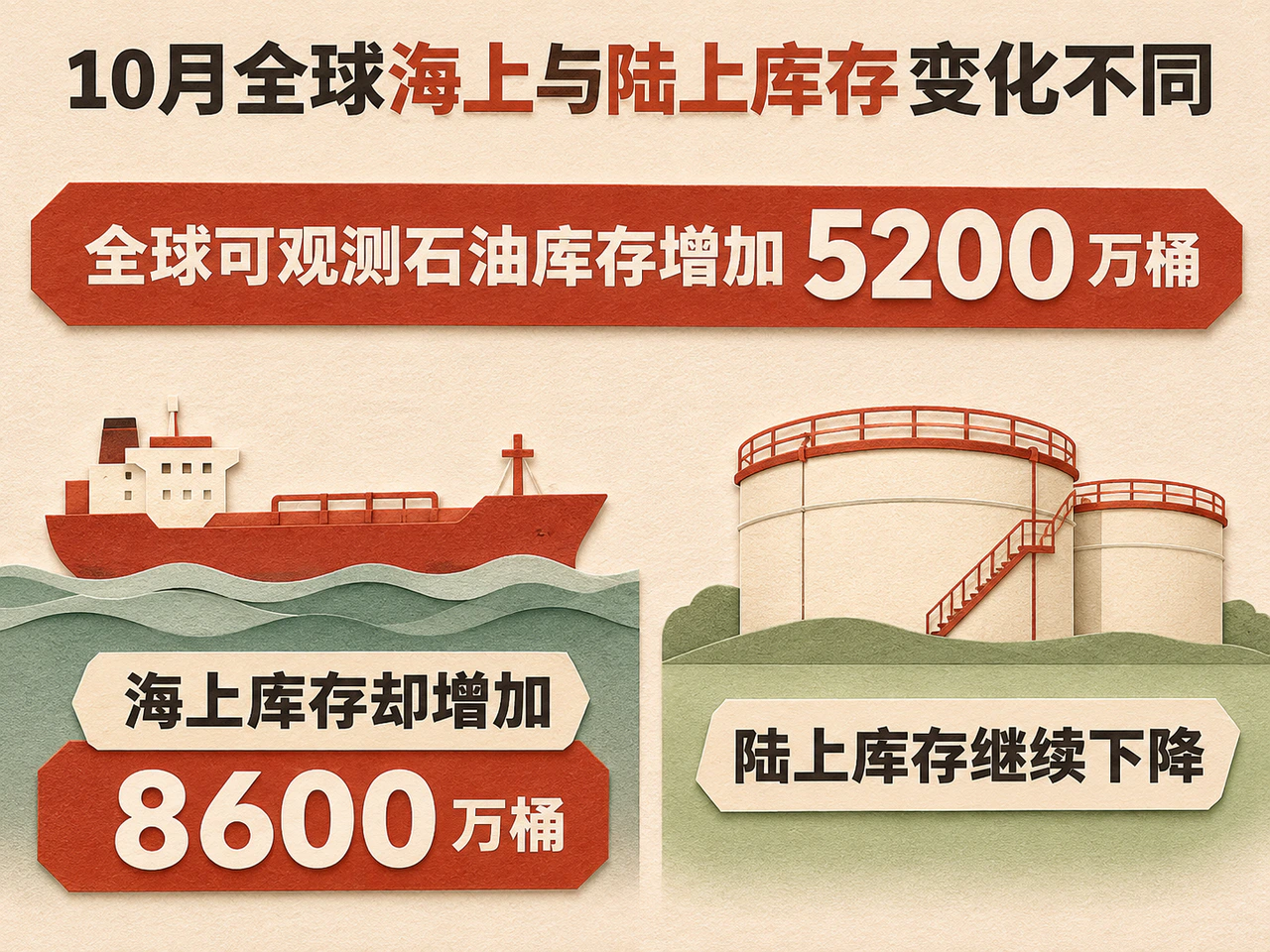
The International Energy Agency’s monthly report, released on November 13, offered a perspective beyond the United States. The agency estimated that Gulf crude exports excluding Oman rose to 15 million barrels a day in October, equivalent to 82% of their pre-conflict level. Global observed oil inventories increased by 52 million barrels that month, yet oil on water rose by 86 million barrels while onshore inventories continued to fall. More crude had already been loaded onto ships, allowing refiners to anticipate subsequent arrivals and easing concerns over future supply. Voyage lengths and unloading schedules still affect inventories available for immediate use.
What to watch

If the EIA’s next weekly inventory report on November 25 shows continued builds in commercial crude and gasoline stocks, with Cushing also returning to a build, the front-month WTI premium over the second month will remain under pressure to narrow. If Cushing continues to draw, attention will shift as the December contract expires to whether January 2027 can maintain a premium over February. Outside the United States, the question is whether crude loaded in the Gulf can be unloaded into storage in consuming markets on schedule. If oil on water remains elevated while onshore inventories keep falling, front-month Brent prices will remain sensitive to shipping delays.