On November 20, the U.S. Office of the Comptroller of the Currency (OCC) granted cross-border payments company Payoneer preliminary conditional approval to establish a national trust bank in New York. The following day, reports focused on PAYO-USD, the dollar stablecoin the proposed bank plans to issue. The decision contains a detail that directly affects how merchants would use it: under the plan submitted to the regulator, customers could use the token to pay other customers on the same platform, but could not transfer it directly to wallets outside the platform.
How a Cross-Border Trade Payment Would Enter and Leave the Platform
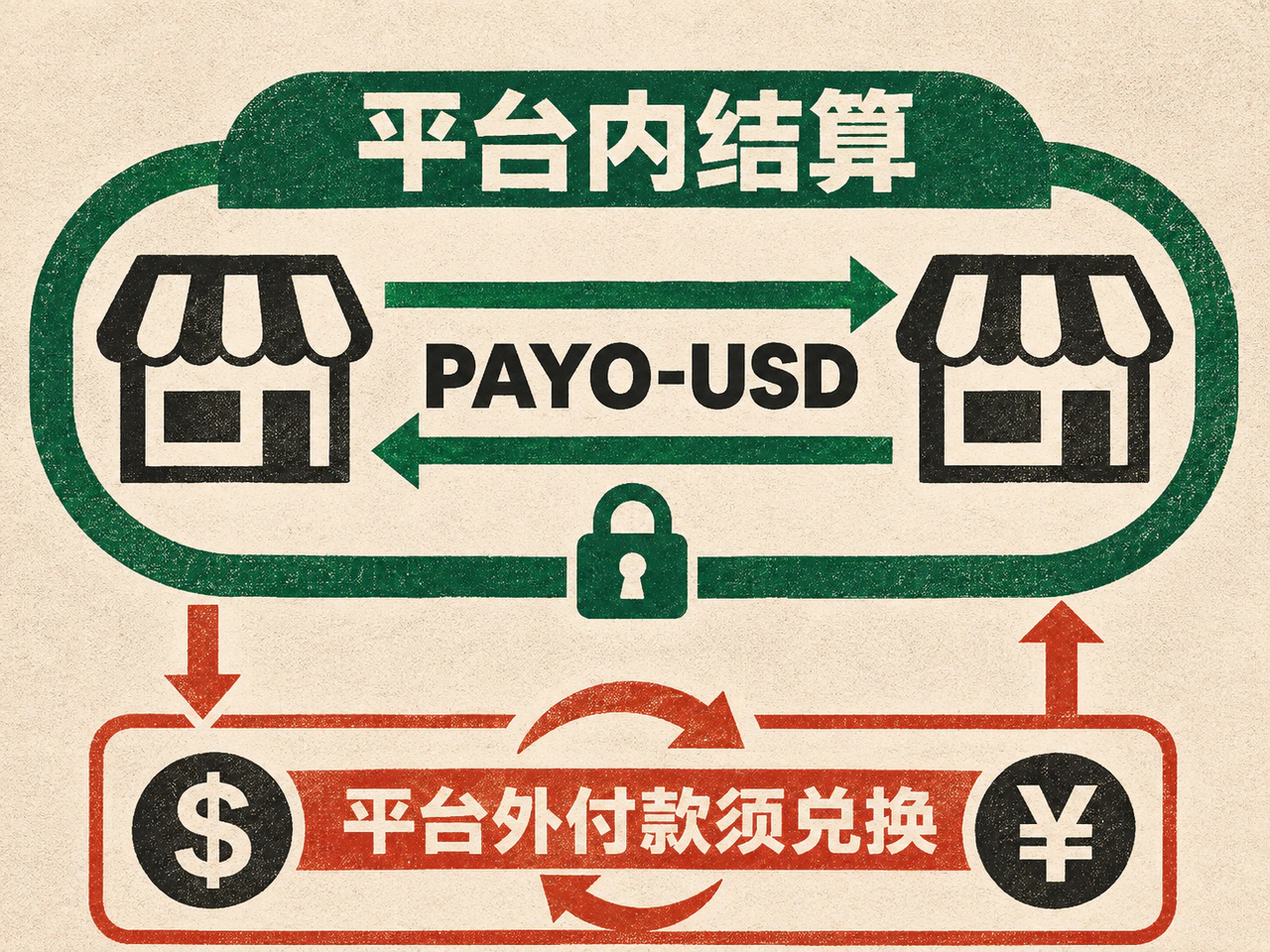
Suppose an exporter and its supplier were both customers of the proposed bank. They could, in future, settle with each other in PAYO-USD within the platform. If the supplier wanted to transfer the payment to a local bank, or use another stablecoin to pay someone outside the platform, it would need a separate service. The application lists conversion between fiat currency, PAYO-USD and third-party stablecoins as a distinct business activity. Payoneer also says it plans to support businesses in making and receiving payments in third-party stablecoins and then converting their balances into local currency. Its own stablecoin would serve as a balance held within the platform, and the company has no plans to list it on exchanges.
This arrangement distinguishes two services often grouped together as “stablecoin payments”: settlement between merchants on a platform using the same asset, and payments to recipients outside the platform. In the latter case, what matters is whether the platform can convert the balance into a currency the recipient accepts and deliver it to the specified account. For businesses that need to pay local wages and suppliers, conversion quotes, settlement times and available currencies warrant more attention than PAYO-USD trading volume on exchanges. A comparison of those terms and actual service performance will have to wait until the product launches.
Approval to Establish the Bank Still Leaves a Preopening Examination

The OCC’s decision allows organizational work to proceed, but Payoneer still needs final approval to open before customers can actually use the service. The board must implement anti-money-laundering and sanctions compliance programs, and the bank must submit its final information systems architecture, risk assessments and management plans to the regulator for review. Under the decision, the proposed bank must write at least 60 days before its planned opening to request a preopening examination and explain that it is ready to operate.
The preliminary approval also has time limits: it expires if the bank fails to raise the required capital within 12 months of approval, or fails to open within 18 months. The decision sets the approval’s period of validity; it does not amount to a company commitment to a date on which customers can begin using the payment service.
Account balances involve another distinction. In responding to public comments, the OCC noted that payment stablecoins under U.S. law do not carry federal deposit insurance. Payoneer’s statement that its proposed product would be fully backed by reserves, meanwhile, describes the product’s planned design. How reserves support redemption is a separate question from whether deposit insurance would pay out if a bank ran into trouble. The next document that would directly change the services available to merchants is final approval to open. At that point, the bank’s published conversion and payment arrangements will also be needed to assess which types of cross-border transactions could benefit from this closed-loop settlement system.
Click “Read the original” for details.