On November 23, 2026, bitcoin rallied and then gave back its gains. BTC/USDT rose from Sunday’s close of 61,271.08 USDT to an intraday high of 64,603.12 USDT, before closing at 61,270.93 USDT—just 0.15 USDT below the previous close. This report covers 8 a.m. Beijing time on November 23 to 8 a.m. on November 24, using Binance spot prices quoted in USDT and UTC daily candles. The close preserved most of the weekend rebound from the 55,130 USDT low, but bitcoin failed to build on Sunday’s closing level despite a sharp rally in U.S. stocks on Monday.
Crypto and U.S. stocks both rebound, but their closes diverge

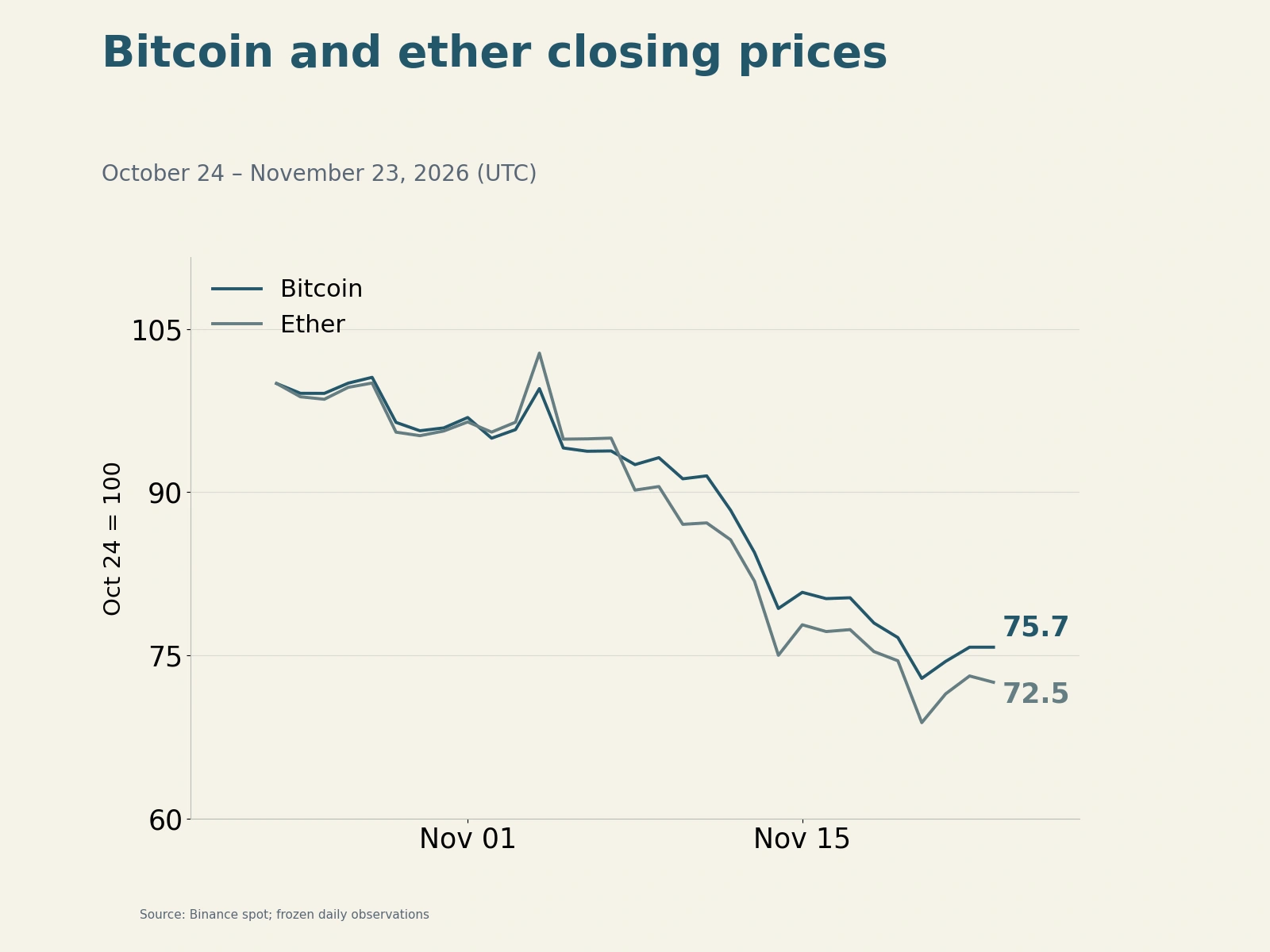
Binance’s 15-minute price data show that bitcoin and ether both reached their daily highs in the 9:15–9:30 a.m. U.S. Eastern time candle, the final 15 minutes before U.S. equities opened. Ether touched 1,845.07 USDT, about 7% above its previous close, before retreating to close at 1,710.65 USDT at 8 a.m. Beijing time on November 24, down 0.79% for the day. Both assets rallied sharply intraday, but neither held those gains through the close.
U.S. stocks, by contrast, held on to their rebound: the Nasdaq Composite rose 6.51% on Monday and the S&P 500 gained about 4.7%. Reuters reported that news of Jensen Huang’s return as Nvidia’s chief executive drove a rebound in artificial intelligence stocks, while the dollar at one point reached a more than 19-month high against the euro.
A change in management can affect the market’s valuation of Nvidia and its supply chain, whereas bitcoin holders have no claim on those companies’ profits. For a technology stock rally to support crypto prices, it must be transmitted through channels such as investors reallocating capital. The divergence in Monday’s closing performance suggests that this transmission was limited that day.
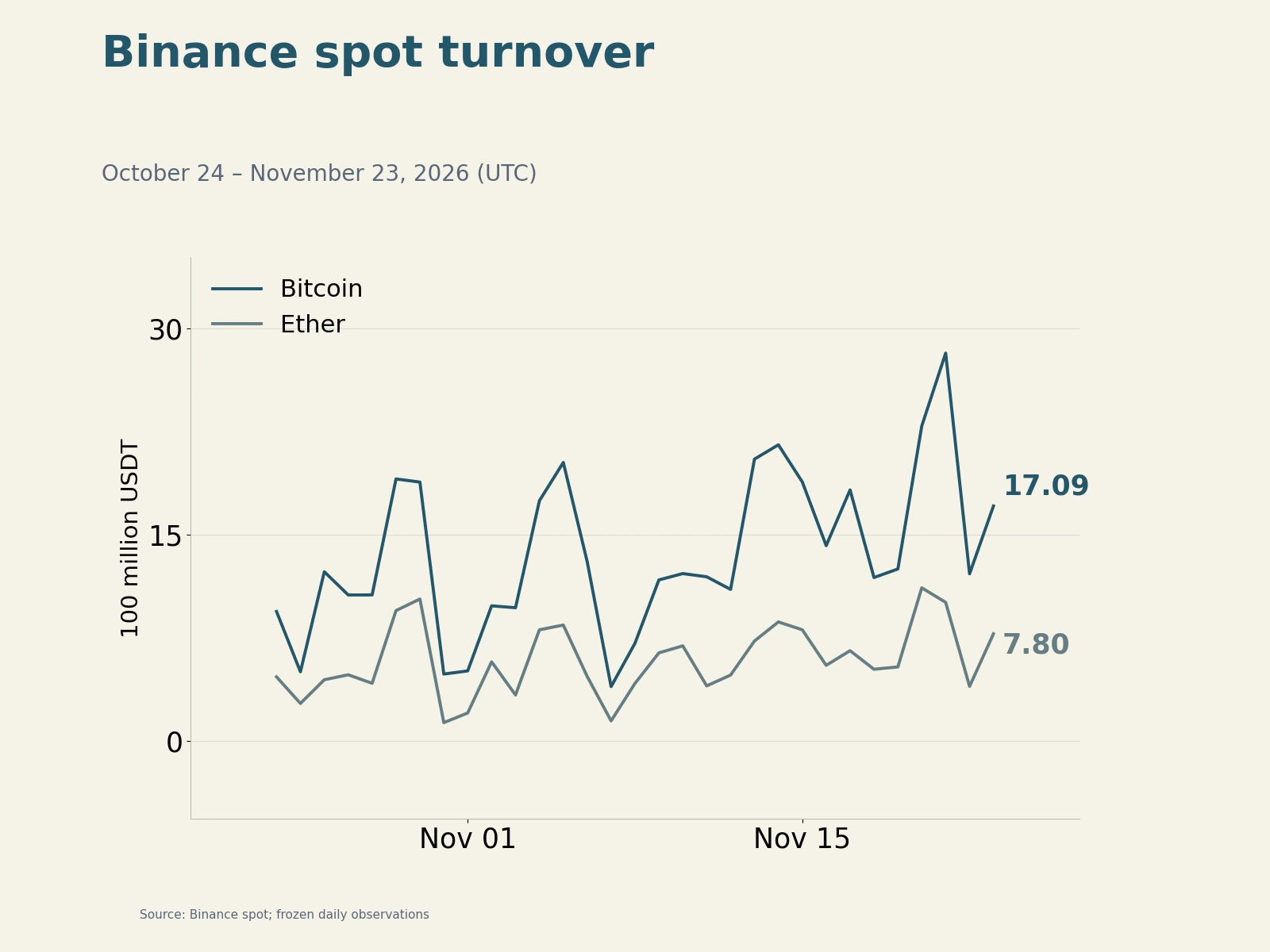
Binance BTC/USDT spot turnover totaled 1.709 billion USDT on Monday, about 41% above Sunday’s level but broadly in line with the daily average of 1.716 billion USDT over the preceding seven complete trading days. ETH/USDT turnover reached 780 million USDT, nearly double Sunday’s level. Trading was noticeably more active than on Sunday, but BTC/USDT turnover did not deviate materially from the previous seven days’ daily average. Every trade has both a buyer and a seller: higher turnover can coexist with a stalled price, and turnover alone does not identify the types of investors selling intraday.
Five assets close higher, yet remain down 22%–30% over 30 days

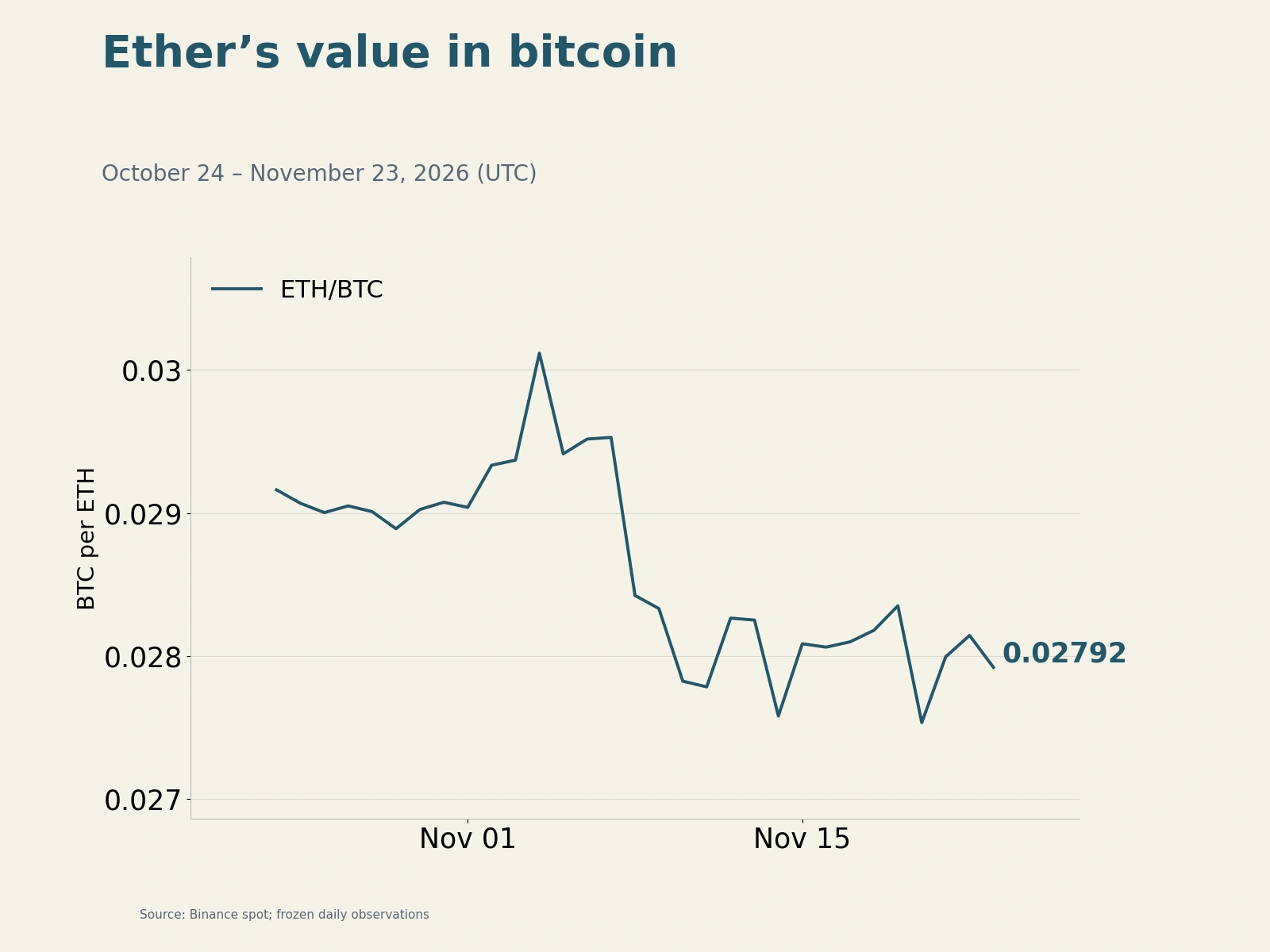
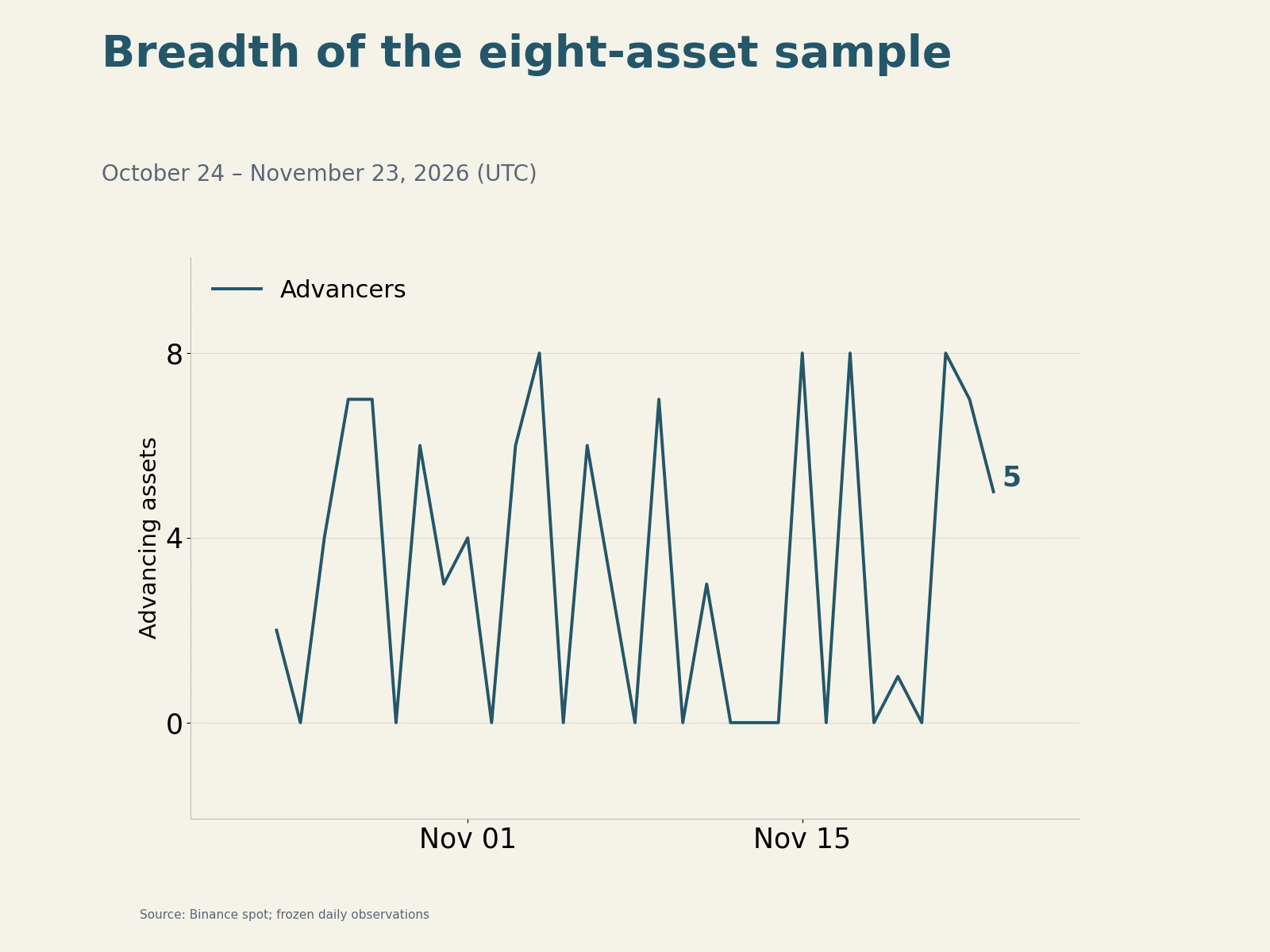
Five of the eight Binance spot USDT pairs in the fixed monitoring sample closed higher on Monday: ADA gained 2.62%, LINK rose 2.16%, and DOGE, SOL and XRP also advanced. BTC was almost unchanged, while ETH and BNB declined. Calculated from their respective USDT closing prices, ETH/BTC fell from 0.02814 the previous day to about 0.02792, meaning one ETH was worth approximately 0.02792 BTC. Some tokens rebounded more strongly than bitcoin, while ether underperformed it. Describing these moves collectively as “money rotating into altcoins” would obscure the differences within the sample.
Even after Monday’s gains, those five assets remained 22%–30% below their closing prices 30 days earlier. ADA, the day’s strongest performer, was still down 28.63% over that period. Gains in five assets suggest buying support for some of the assets that had recently fallen heavily. More trading days are needed to establish whether the market is persistently increasing risk exposure. A useful next test is whether these assets can retain their relative gains when bitcoin next rallies and retreats, which would help assess whether the rotation is broadening.
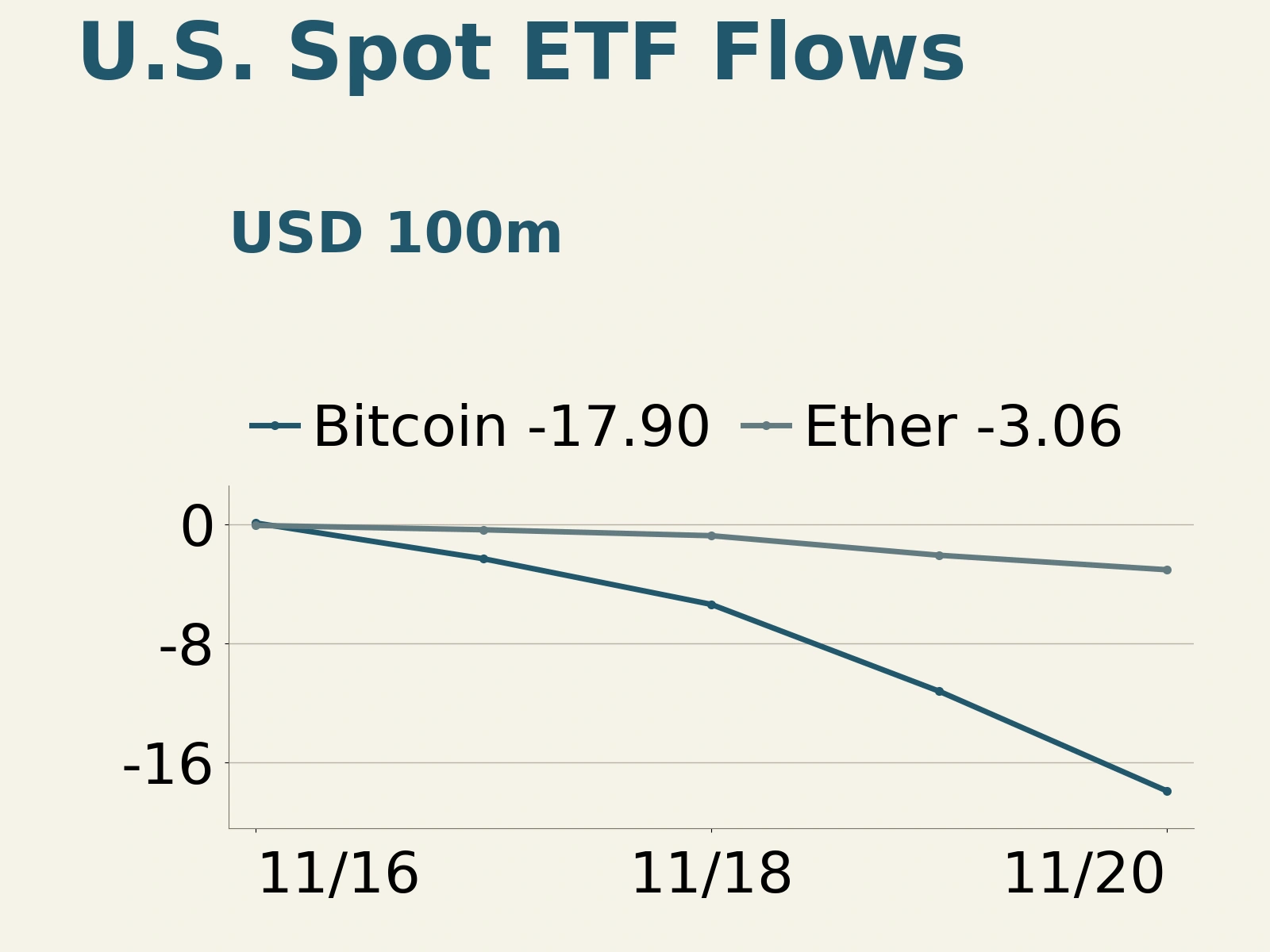
Bitcoin still has selling pressure to absorb. Citing SoSoValue data on Monday, CoinDesk reported that U.S. spot bitcoin ETFs recorded approximately $1.79 billion in net outflows last week, their fourth consecutive week of net outflows. That formed part of the capital-flow backdrop at Monday’s open, but the figures cover the preceding week and do not directly describe specific sell orders during Monday’s session.
Observers quoted in CoinDesk’s reporting differed in their interpretation of the recent sustained decline. Author Michael Terpin argued that extreme pessimism could mean panic sellers were nearing exhaustion. Bloomberg Intelligence strategist Mike McGlone, meanwhile, noted that large rebounds can also occur in bear markets.
Monday’s trading showed both buying support at lower levels and insufficient sustained demand at higher prices. The more useful signals now are whether spot ETF redemptions slow and whether bitcoin can repeatedly hold the new closing levels established by the rebound as weekday trading resumes. These signals offer a better test of the rebound’s durability than another intraday touch of a round-number price level.
Click “Read the original” for full details.