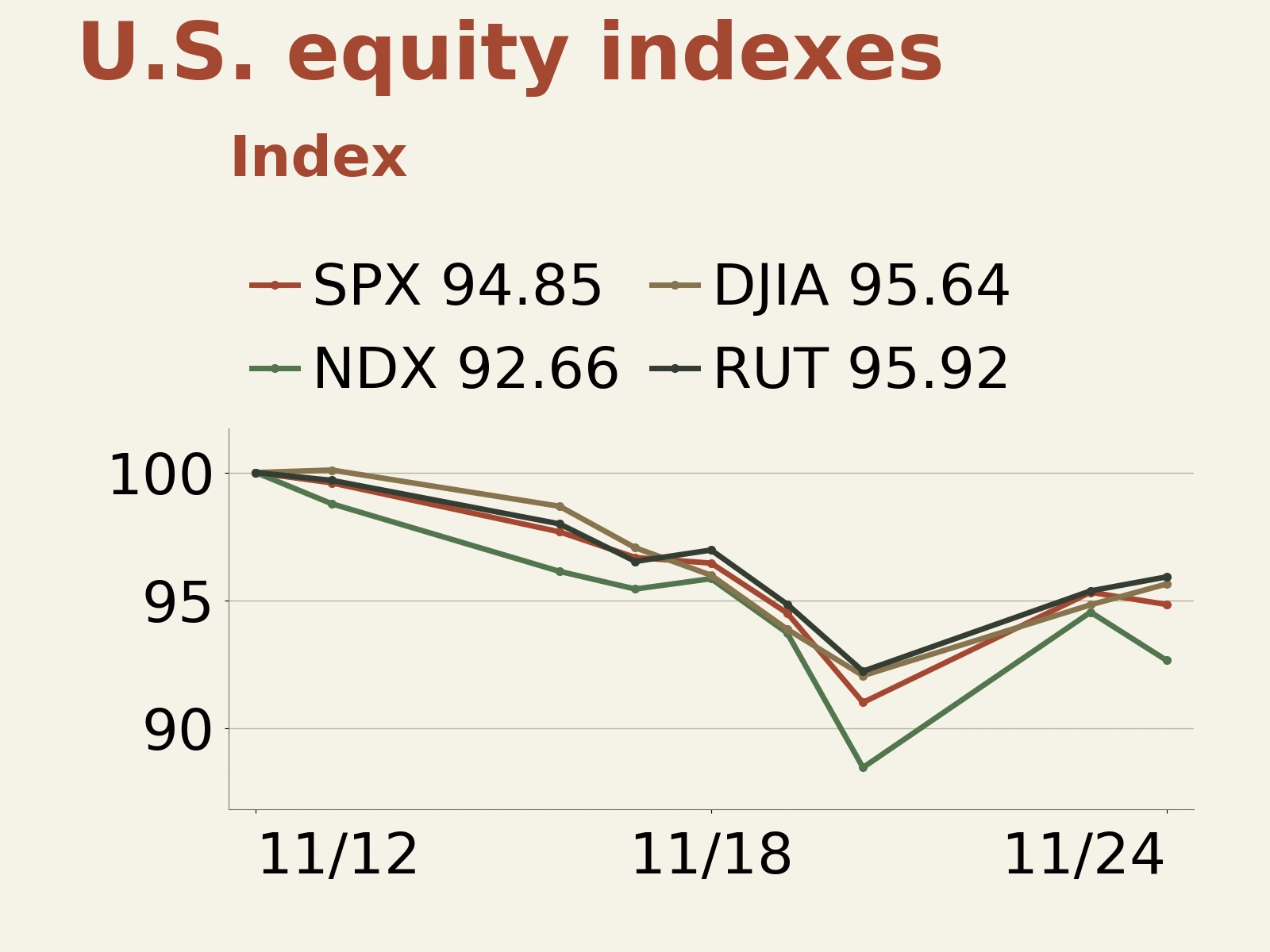
On November 25, 2026, the S&P 500 fell as much as 3.21% from its previous close before paring its loss to 0.25% late in the session. The Dow Jones Industrial Average and small-cap stocks turned positive, while large technology stocks remained under pressure and expected volatility implied by S&P 500 options rose rather than fell. Data released that day showed a sharp upward revision to US third-quarter growth, but virtually no growth in real household spending in October. The 10-year Treasury yield fell 6 basis points, entirely because of a decline in the real yield. Mounting risks to Gulf supplies drove Brent crude futures up 3.51%, adding uncertainty to the inflation outlook.
Technology weighs on the indexes, but most stocks finish higher
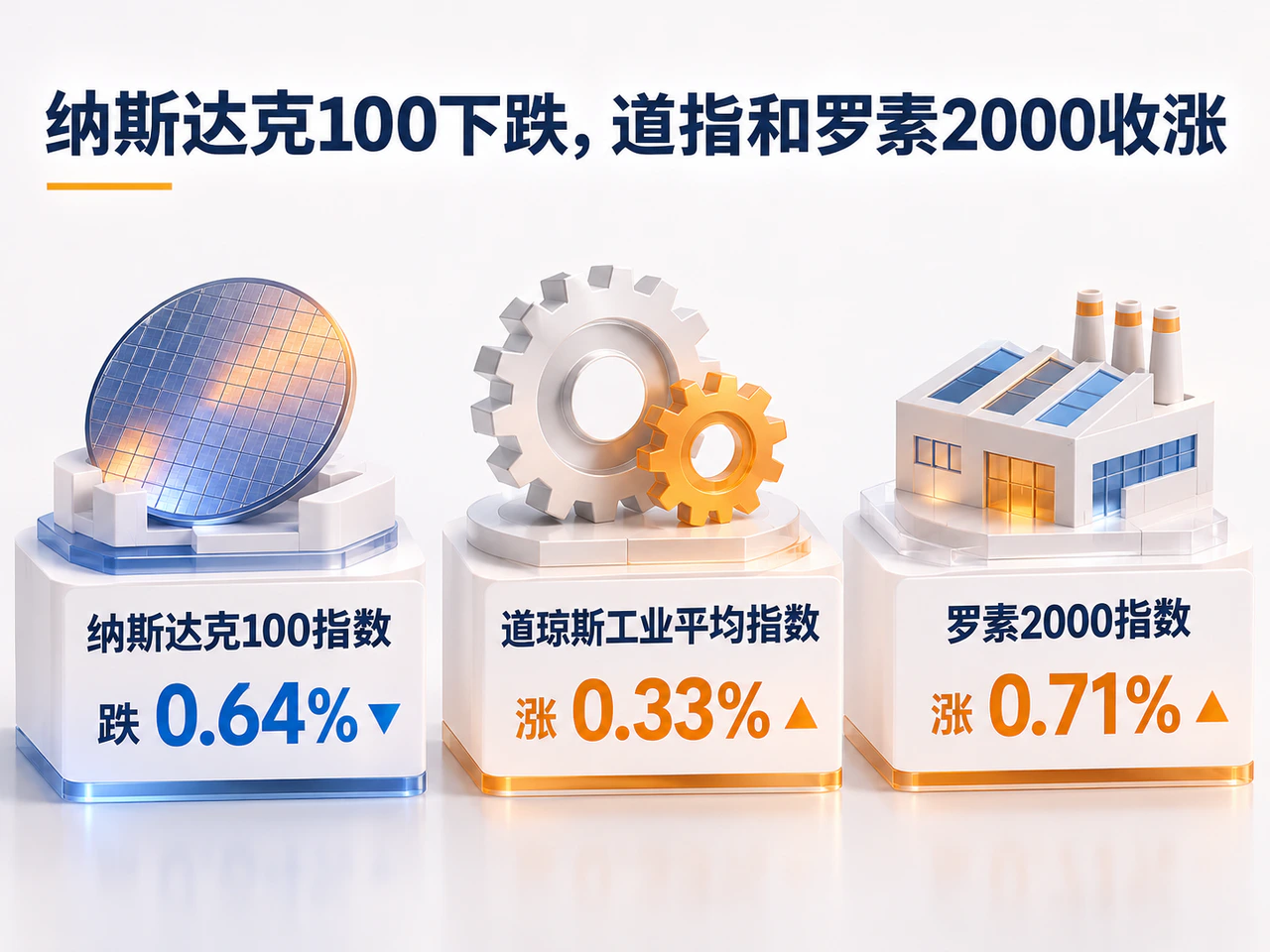
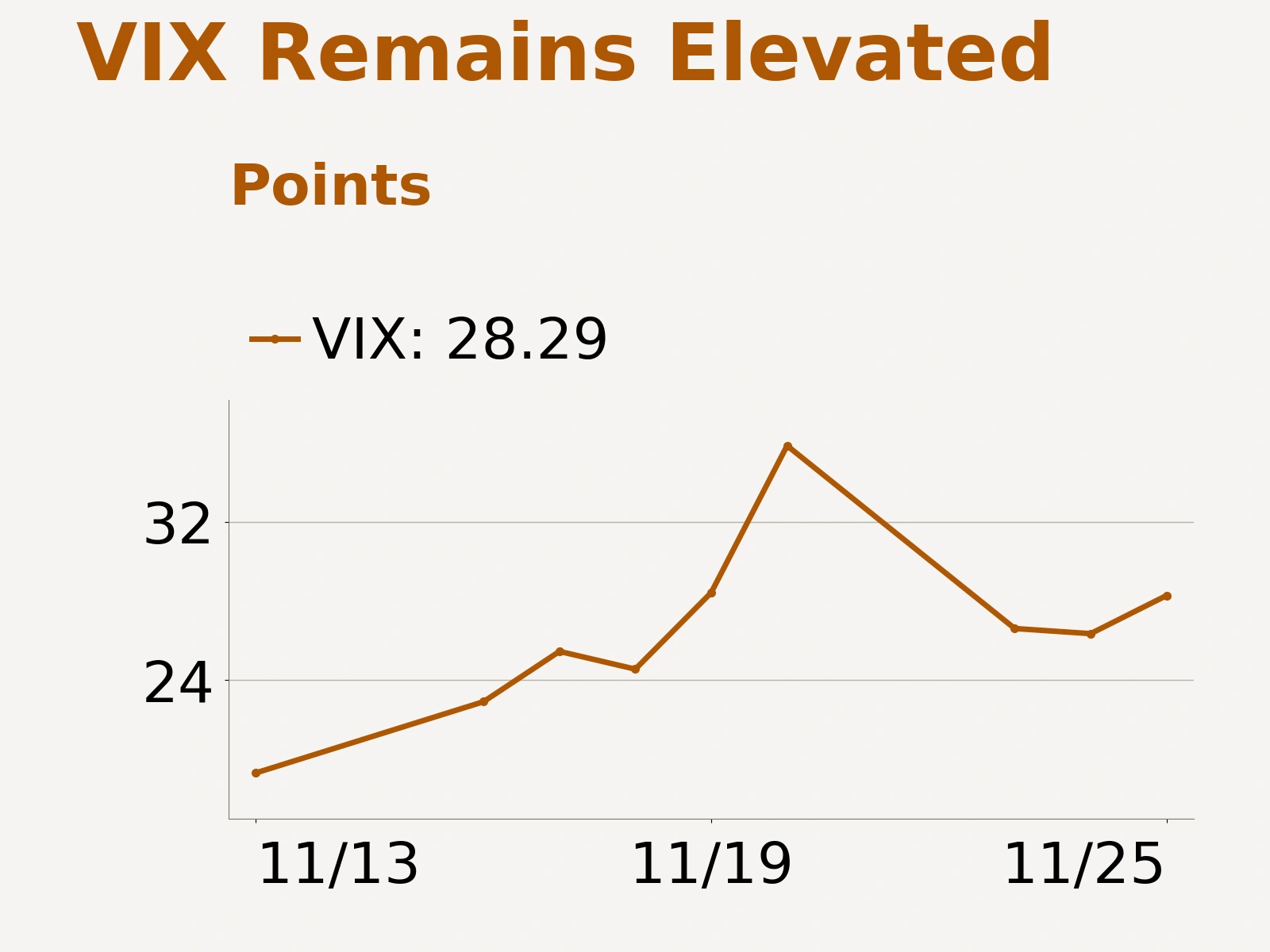
The S&P 500 touched an intraday low of 6,970.11 before closing at 7,182.78. The Nasdaq 100 fell 0.64% to 26,046.90. The Dow Jones Industrial Average rose 0.33% to 50,182.95, while the Russell 2000 gained 0.71% to 2,704.06, outperforming the Nasdaq 100 by about 1.35 percentage points. By investment style, the Russell 1000 Value Index rose 0.4%, while its growth counterpart fell 0.8%. Market breadth was positive on the New York Stock Exchange, where advancers outnumbered decliners by 2.04 to 1. Among Nasdaq Composite constituents, however, 479 stocks hit 52-week intraday lows, versus just 44 reaching new highs. Despite late buying that lifted most stocks, the Cboe Volatility Index (VIX) rose from 26.36 to 28.29.
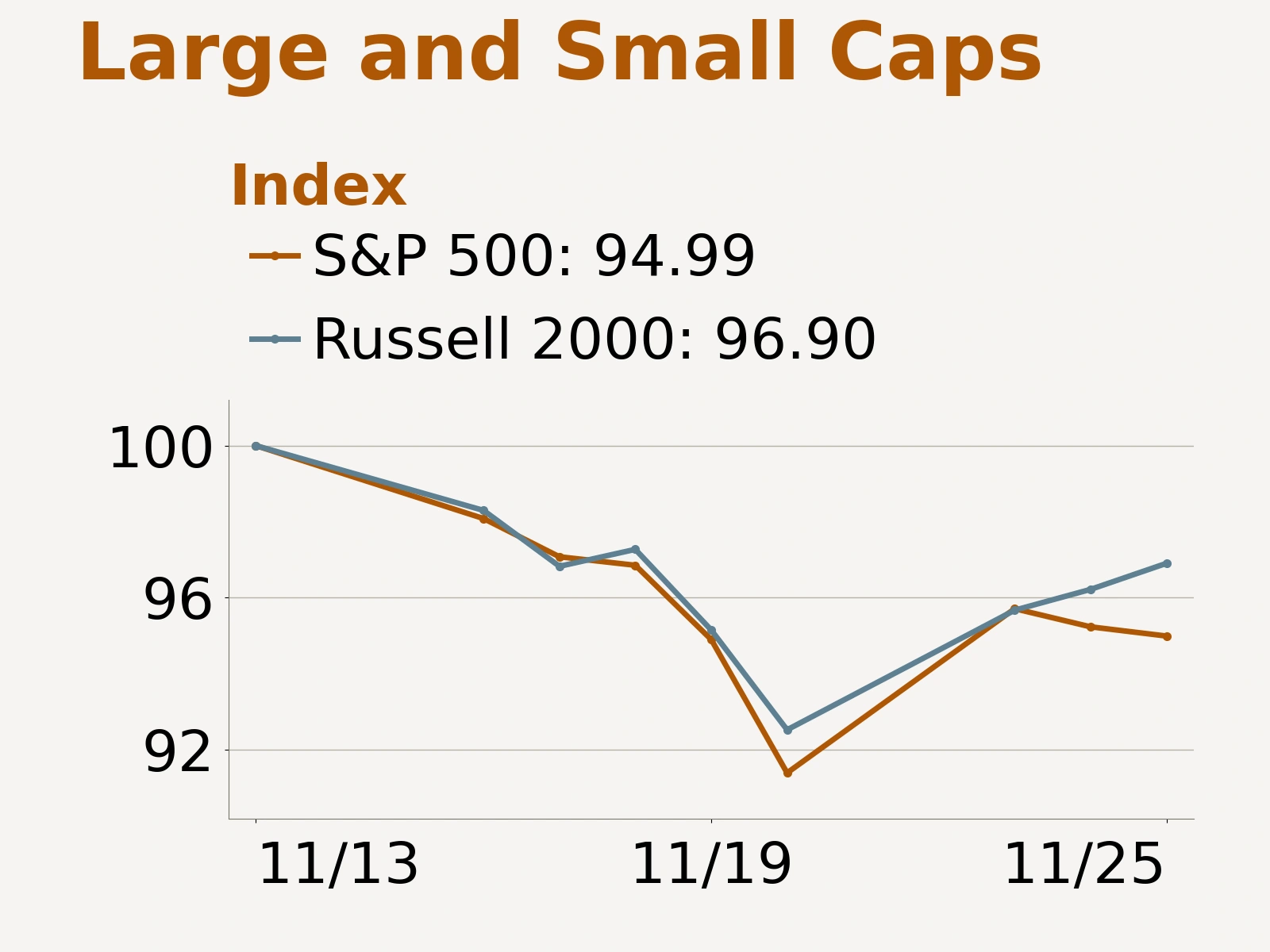
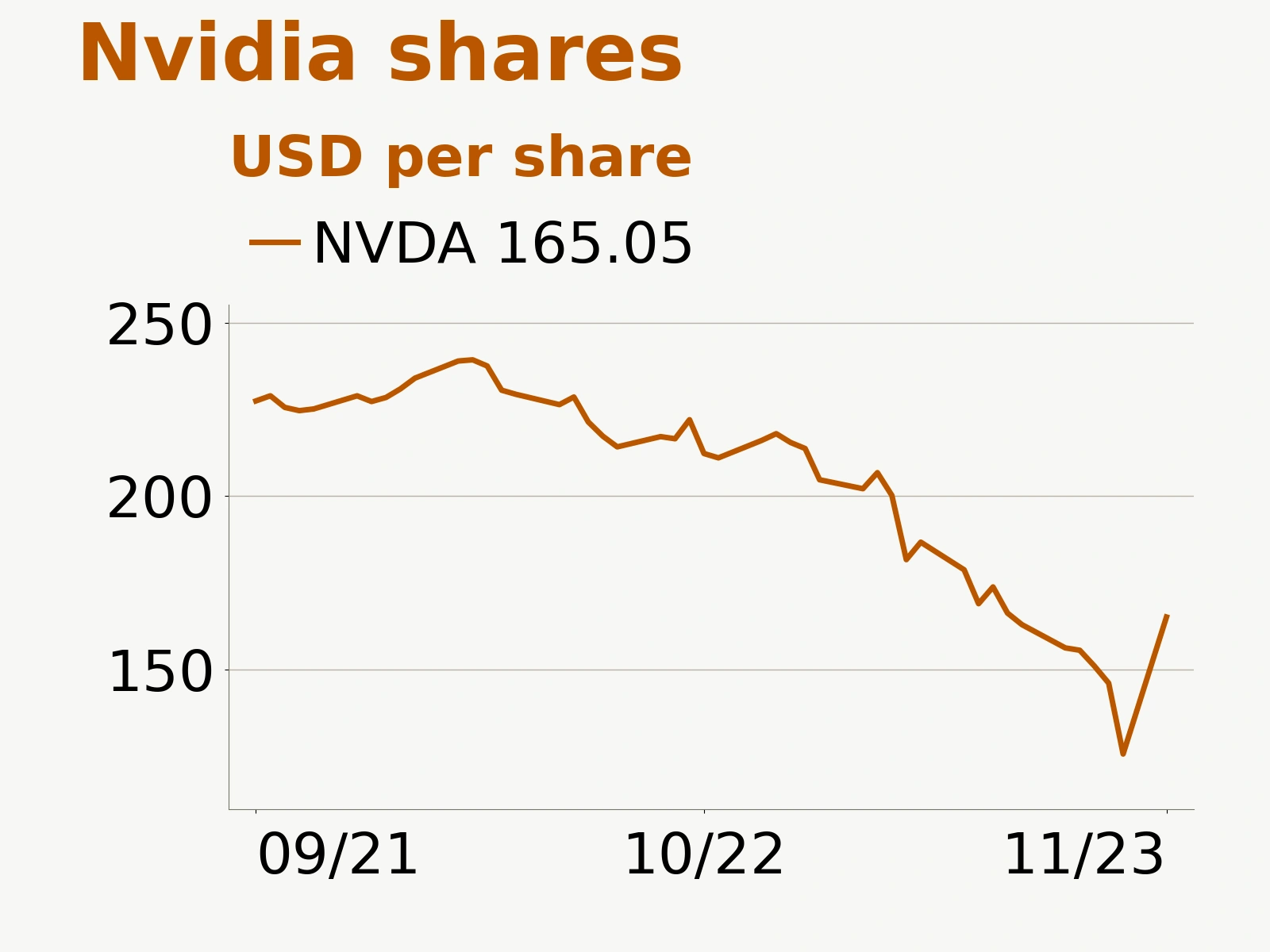
According to Reuters, investors continued to assess the prospective returns on investment in artificial intelligence. Nvidia fell 3.9% and Amazon dropped 3.1%, while materials and real estate led the market higher. Fellow technology company HP surged 11.5%. Its fourth-quarter results, released the previous day, showed adjusted diluted earnings of $0.83 per share, above the $0.79 upper end of its original guidance. Tariff refunds contributed $0.15, compared with the $0.08 included in that guidance. Within its Personal Systems business, commercial revenue grew 23%, while consumer revenue fell 7%. Even within the same technology sector, resilient corporate spending and one-time refunds can therefore produce substantial differences in company results.
Institutions differed in their assessment of the late buying. Oliver Pursche of Wealthspire Advisors said the earlier selloff had pushed some share prices away from fundamentals, drawing in bargain hunters. Venu Krishna, head of US equity strategy at Barclays, argued that corporate fundamentals remained strong, while BCA Research warned that upgrades to 2027 corporate earnings forecasts were slowing. This disagreement matters for the durability of buying: if earnings expectations keep improving, lower valuations will make stocks more attractive; if the momentum behind profit upgrades fades, the staying power of the rebound remains to be seen.
Asian equities also rebounded after steep losses. On November 25, South Korea's Kospi tumbled 6.2%, with heavyweights Samsung Electronics and SK Hynix down 9.9% and 11.1%, respectively. The Nikkei 225 fell 2.8% and the Hang Seng Index lost 1.1%. By 9:52 a.m. local time in Japan and South Korea on November 26, the Kospi was up 2.07% from its previous close and the Nikkei 225 had gained 1.81%, recovering some of the previous day's losses.
Third-quarter demand revised sharply higher; inflation offsets October spending growth
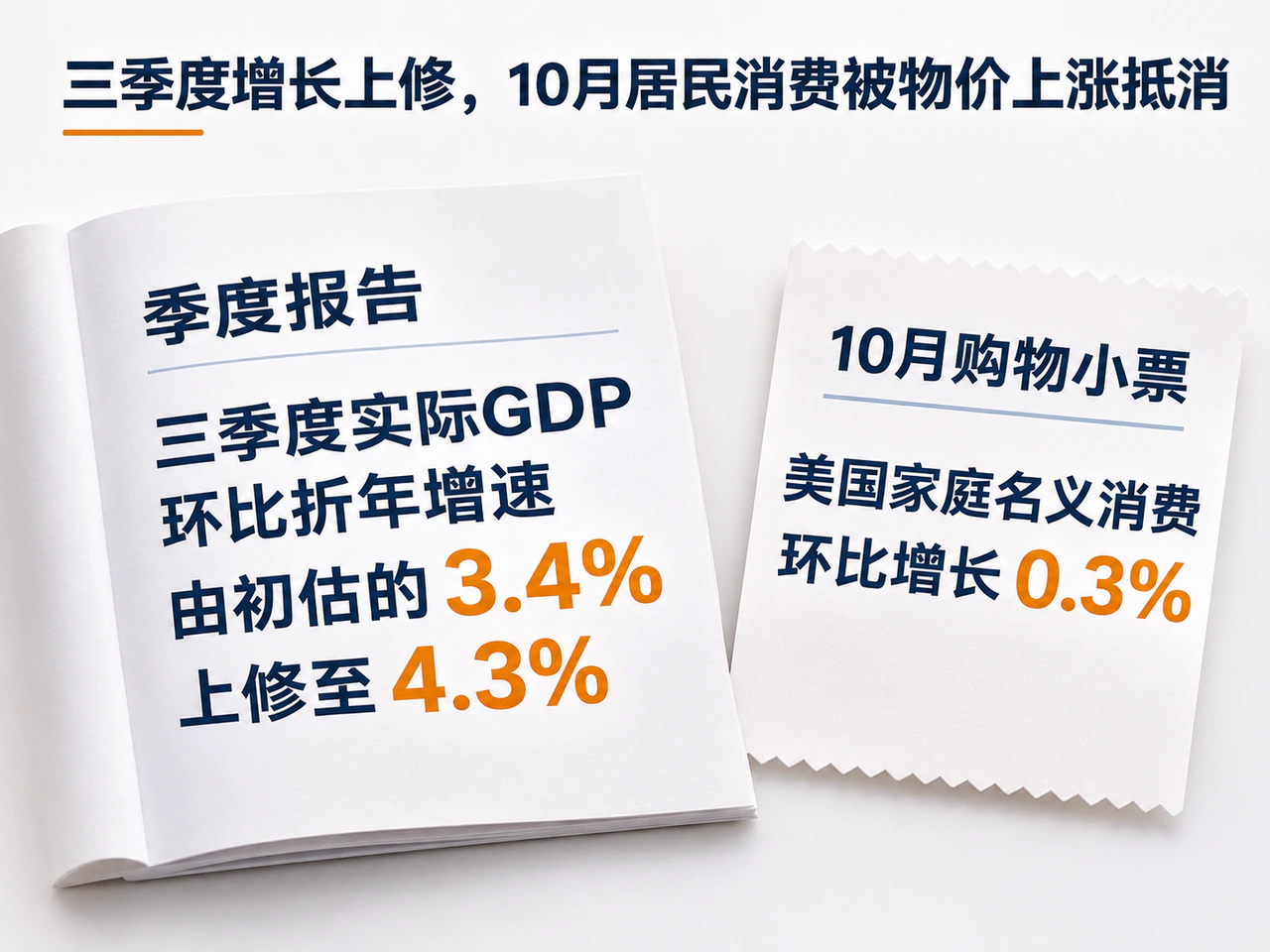
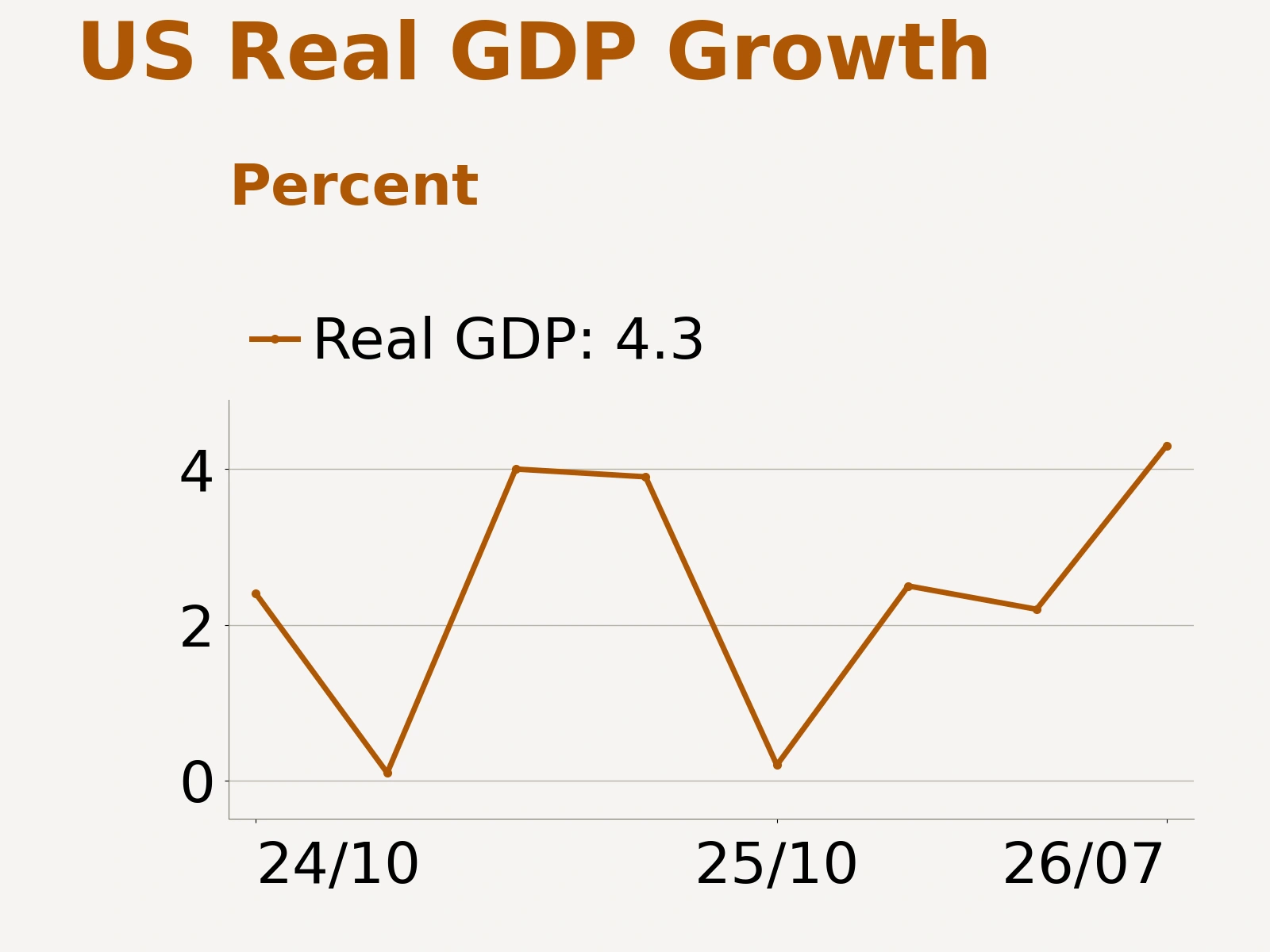
The US Bureau of Economic Analysis revised third-quarter real GDP growth up from an initial estimate of 3.4% to an annualized quarter-on-quarter rate of 4.3%, above the 3.5% expected in a Reuters poll and the second quarter's 2.2%. The revision primarily reflected stronger-than-initially-estimated spending on goods such as pharmaceuticals, computer software and accessories. Statistical revisions to certain software producer price indexes also raised inflation-adjusted software investment. Real final sales to private domestic purchasers, a measure of underlying domestic demand comprising household consumption and private fixed investment, grew 5.8%, versus an initial 4.9%. Measured from the income side, real gross domestic income also grew 4.4% in the third quarter.
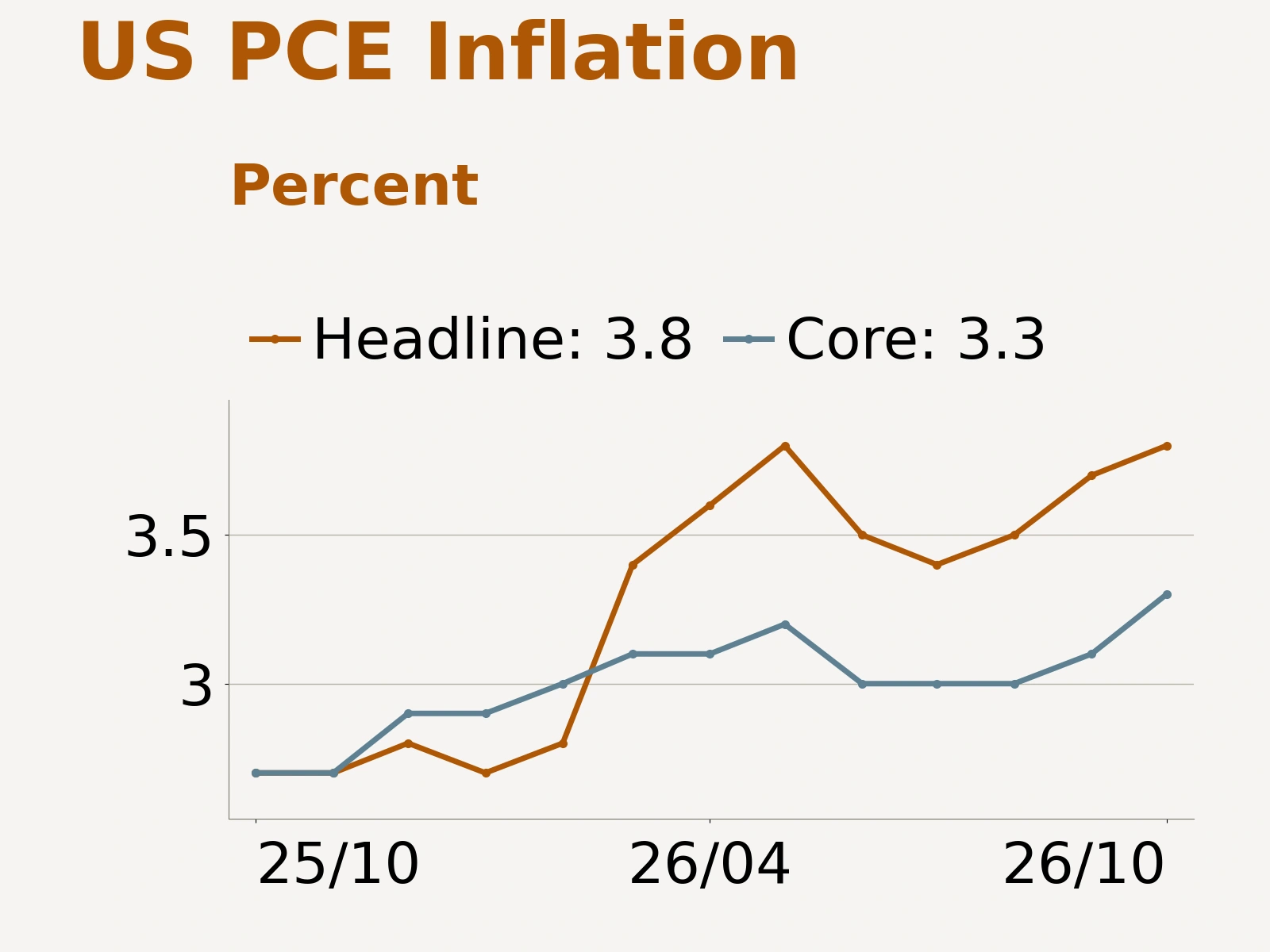
In October, nominal US household spending rose 0.3% month on month, but the increase was fully offset by a 0.3% rise in the personal consumption expenditures (PCE) price index. Real spending edged down, rounding to zero growth to one decimal place. Annual headline PCE inflation accelerated from 3.7% to 3.8%, while core PCE inflation, which excludes food and energy, rose from 3.1% to 3.3%. Real disposable personal income increased 0.5% month on month, and the saving rate recovered from 3.6% to 4.1%. Because that month's income included a one-time refund of medical insurance premiums, a return to consumption growth will depend heavily on whether wages can continue to outpace prices.
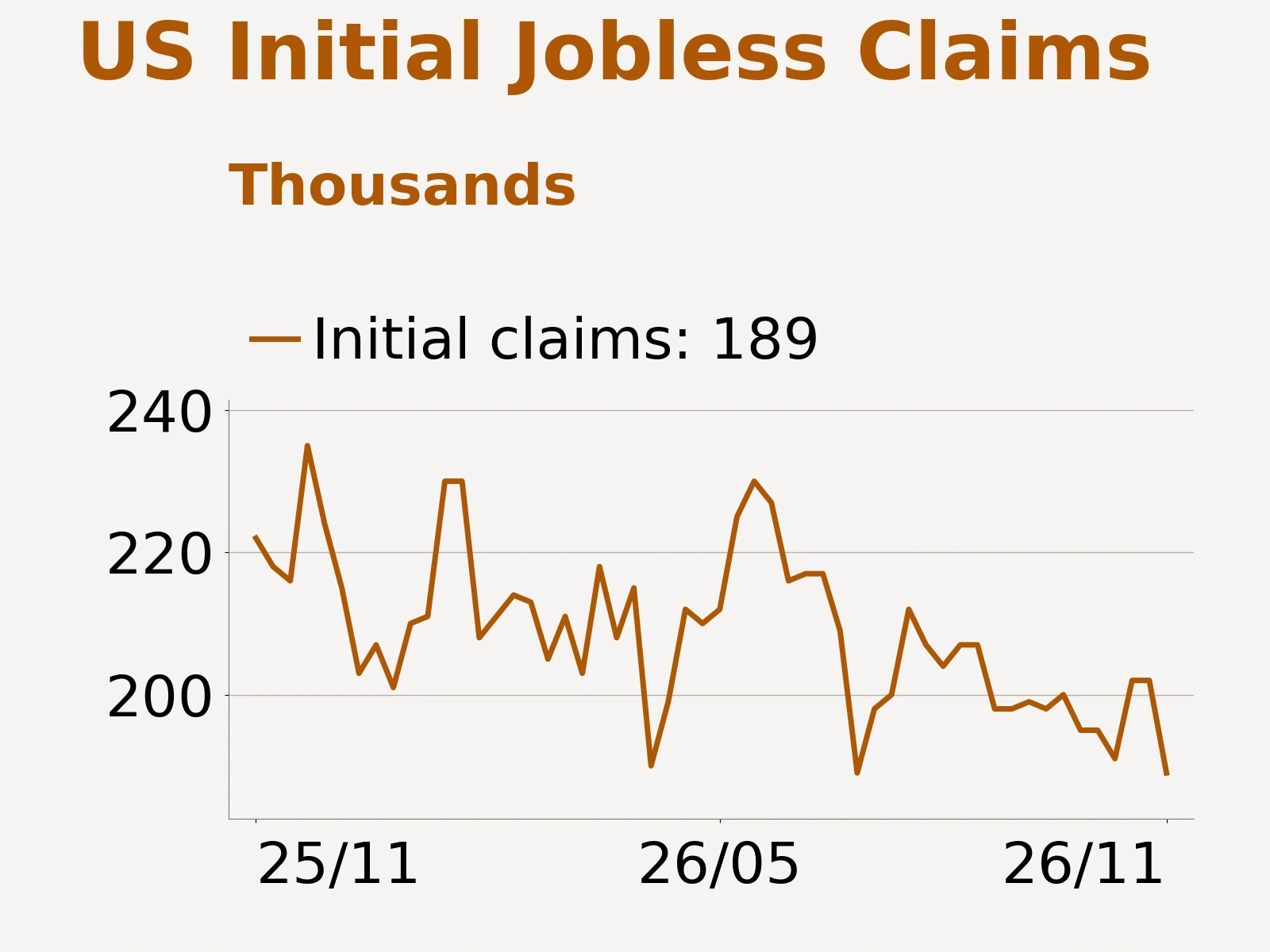
Even so, two factors supported the economy at the start of the fourth quarter. First, although durable goods orders rose just 0.2% in October, below the 0.7% expected, orders for nondefense capital goods excluding aircraft, an indicator of business equipment investment intentions, increased 1.2%. Shipments in the same category rose 0.6%, indicating that companies continued to take delivery of new equipment. Second, initial US unemployment claims totaled 189,000 in the week ended November 21, below the 200,000 expected in a survey. PNC economist Gus Faucher highlighted the technology stock correction's potential effects on both business investment and households' equity wealth. He expected the Federal Reserve to raise rates by 25 basis points at its December 8–9 policy meeting.
Long-dated Treasuries lead gains; 10-year inflation compensation unchanged
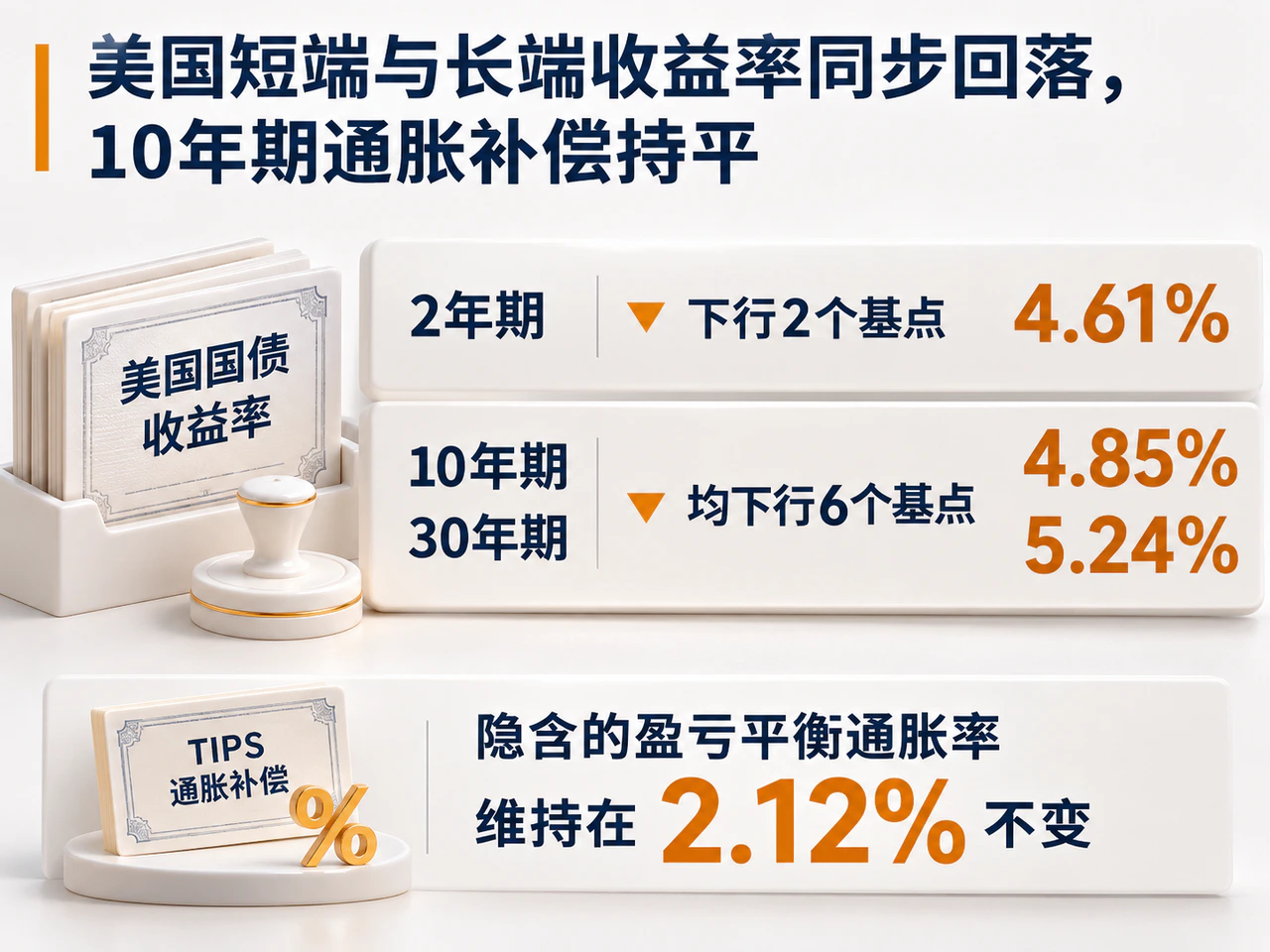
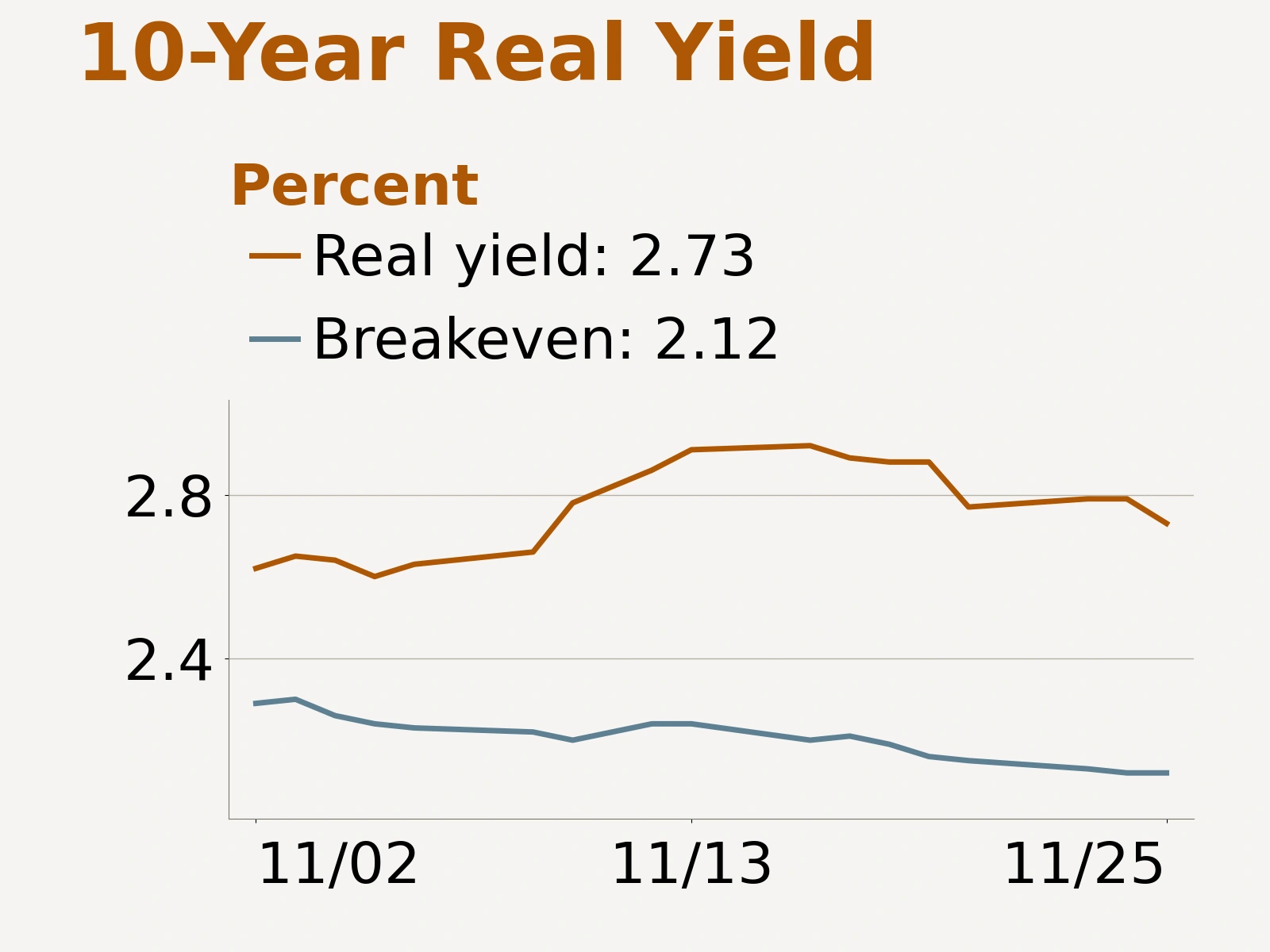
The US Treasury's end-of-day yield curve showed the two-year yield down 2 basis points to 4.61% and the five-year yield down 4 basis points to 4.65%. The 10-year and 30-year yields each fell 6 basis points, to 4.85% and 5.24%, respectively. The spread between 10-year and two-year Treasuries narrowed from 28 to 24 basis points. Breaking down the move, the 10-year Treasury inflation-protected securities (TIPS) real yield fell from 2.79% to 2.73%, matching the decline in the nominal yield and leaving implied breakeven inflation unchanged at 2.12%. The five-year real yield also declined 6 basis points to 2.52%, while corresponding inflation compensation edged up from 2.11% to 2.13%. These moves fit an economic backdrop of slower real spending in October alongside persistent inflation.
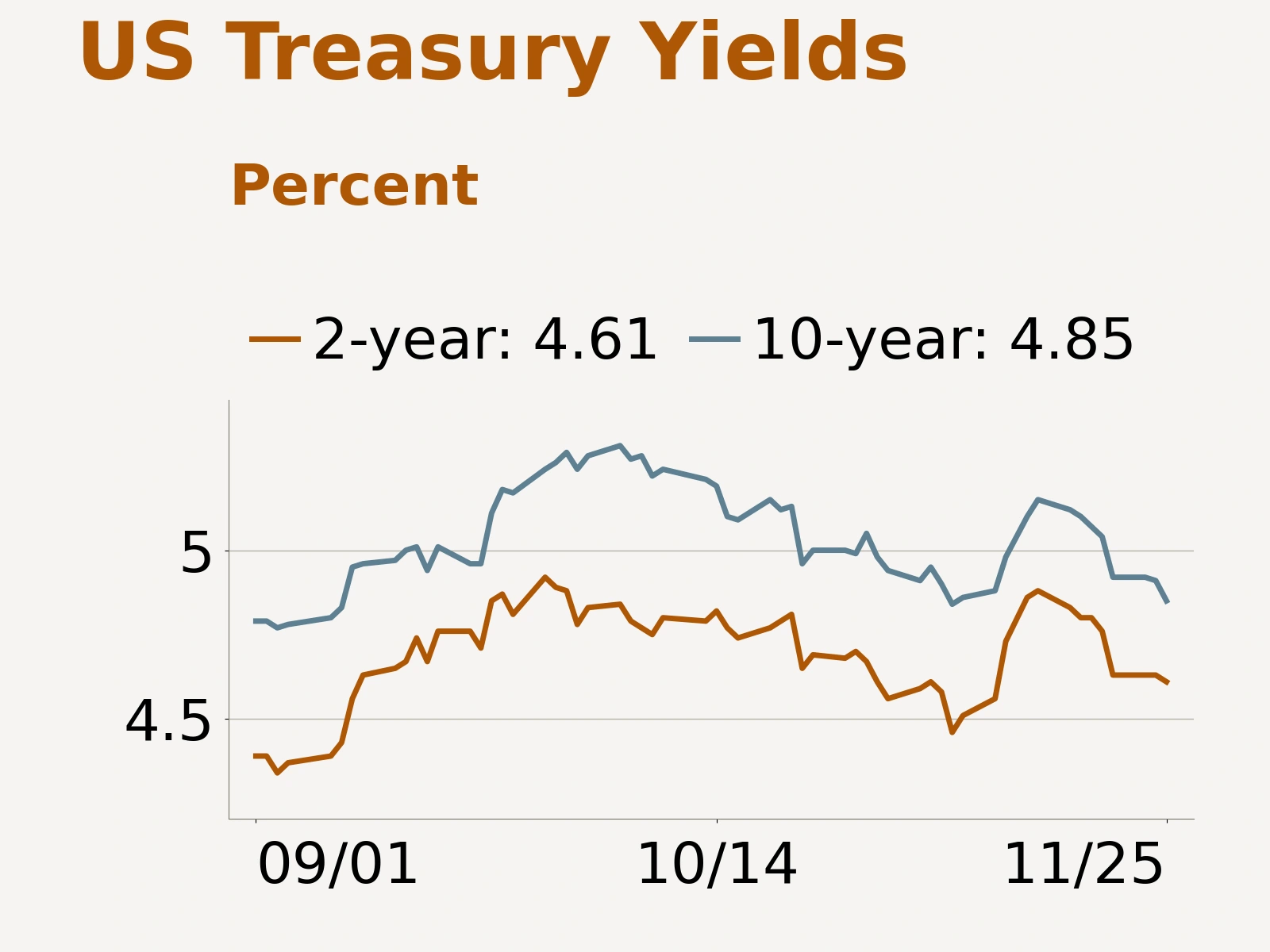
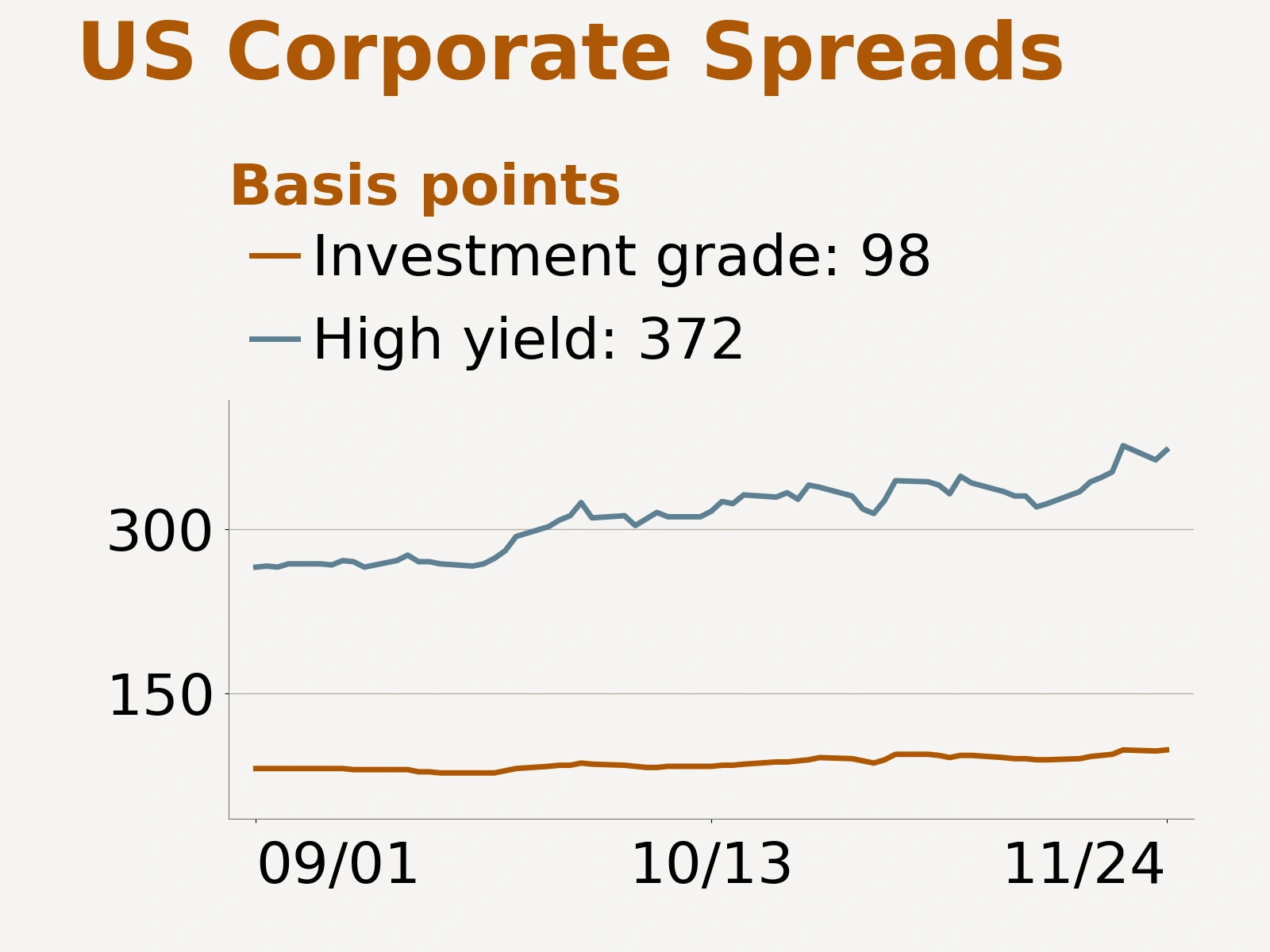
Even as outstanding bonds rallied in the secondary market, primary-market buyers remained cautious about pricing new debt. The day's $44 billion seven-year Treasury auction cleared at a high yield of 4.708%, 0.9 basis points above the 4.699% when-issued yield at the bidding deadline reported by Dow Jones Newswires. The bid-to-cover ratio declined from 2.46 at the previous auction to 2.43. Corporate bonds also reflected changing credit risk. On November 24, the ICE BofA US investment-grade corporate option-adjusted spread widened 1 basis point from the previous day to 98 basis points, while the high-yield spread widened 9 basis points to 372 basis points. The increase in credit risk premiums was more pronounced for lower-rated companies.
China's interbank market, meanwhile, faced funding needs spanning the month-end. On November 25, the People's Bank of China conducted RMB500 billion of seven-day reverse repos and rolled over RMB1 trillion of maturing medium-term lending facility (MLF) loans with RMB800 billion of one-year MLF lending, a net withdrawal of RMB200 billion through that facility. Ming Ming, chief economist at CITIC Securities, noted that reserve payments, a peak in government bond payments and the maturity of Treasury cash-management deposits coincided that day. The central bank's seven-day liquidity injection could help institutions bridge the month-end. Through November 24, the month-to-date average overnight pledged repo rate for deposit-taking institutions was 1.29%, broadly unchanged from October's 1.28%.
Section 301 tariff proposals enter hearings process, clouding import order pricing

On November 25, the Office of the US Trade Representative announced progress in its investigation of structural manufacturing overcapacity in 16 economies. It determined that practices in 14 of them met the conditions for action under Section 301 of the Trade Act of 1974; investigations concerning Mexico and Norway were continuing. The tariff proposals for those 14 economies have entered the public comment stage. Written comments are due by January 5, 2027, and hearings are scheduled to begin on January 25.
For importers, the immediate priority is to calculate the potential tariff burden on new orders. Under the US proposal, EU goods would face a 15% rate, with deductions for most-favored-nation duties and existing Section 301 tariffs, as well as a product-exclusion mechanism. The proposed rate for Indian goods is up to 25%, also subject to credits and exclusions; the US could consider a 17% rate if India reaches an agreement addressing the matters under investigation. For Chinese goods, the proposal sets a maximum rate of 10% for products listed in Annex A, exempts those in Annex B, and proposes a rate of up to 20% for the remaining products, less a specified separate Section 301 rate. These complex calculation rules mean that even orders from the same country can face very different incremental costs depending on their tariff classifications, existing duties and eligibility for exclusions.
In a separate case, the US also proposed removing the existing exclusion for finished aircraft made in Brazil and imposing an additional 10% ad valorem duty. For certain out-of-quota sugar imports, it proposed extending the additional tariffs to all origins to prevent importers from avoiding them by switching suppliers. A hearing in that case is scheduled for January 14, 2027. Aircraft orders would therefore face an origin-dependent tariff burden, while importers of out-of-quota sugar must also assess whether their competitors' tariff costs would rise at the same time.
Gulf risks lift near-month oil; gold recovers from intraday low
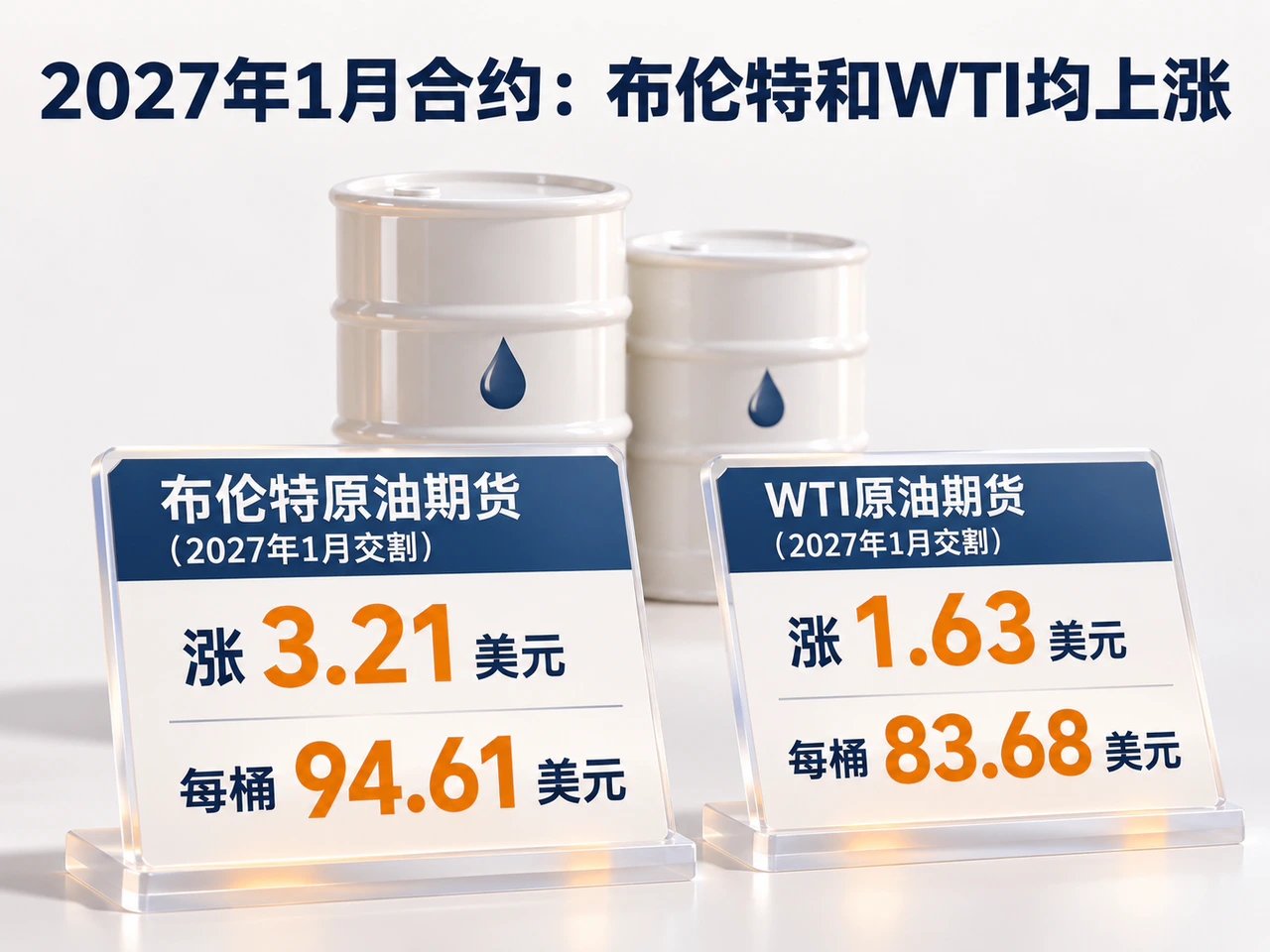
Yemen's Houthi movement claimed an attack on Saudi Arabia's Ras Tanura refinery, which also serves crude export functions. Reuters cited PVM analyst Tamas Varga as saying that traders had increased the price attached to supply-disruption risks, while short covering ahead of Thanksgiving may also have amplified oil's rise. January 2027 Brent crude futures closed up $3.21, or 3.51%, at $94.61 a barrel. WTI crude for the same delivery month rose $1.63, or 1.99%, to $83.68 a barrel. In the spread structure, January Brent's premium over WTI widened from $9.35 to $10.93. WTI's front-month January premium over February also increased from $0.98 to $1.33. These moves suggest that Brent, which is more exposed to seaborne supplies, and near-month delivery contracts were more sensitive to geopolitical risks.
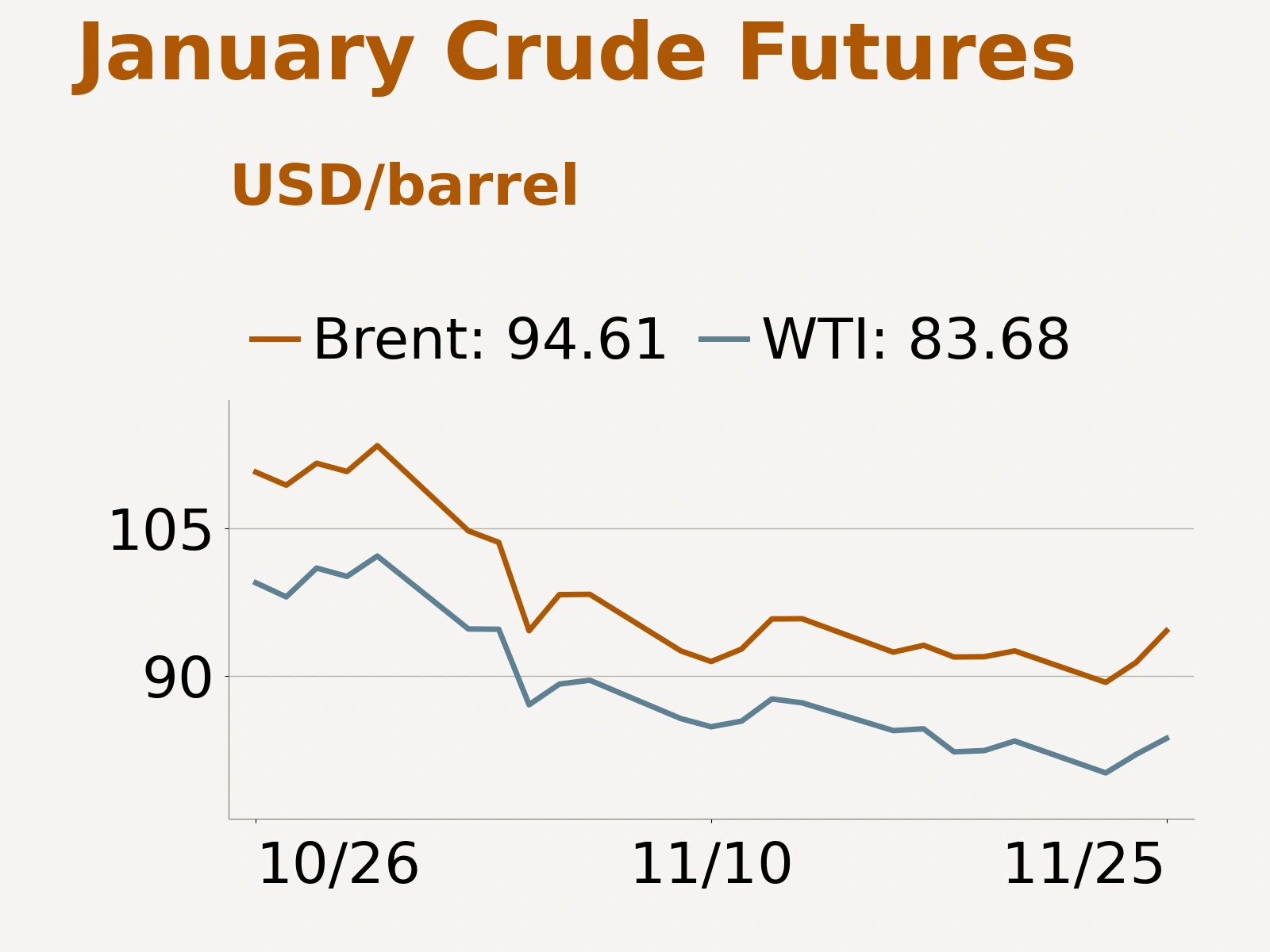
Supplies from other producing regions showed some recovery. Libya's National Oil Corporation announced that the Sharara pipeline had resumed delivering oil to storage tanks at Zawiya. US Energy Information Administration (EIA) data showed that refinery crude runs increased by 428,000 barrels per day in the week ended November 20, lifting utilization to 97.5%; crude imports rose by 673,000 barrels per day over the same period. Commercial US crude inventories increased by 1.1 million barrels to 418.9 million barrels, less than the 1.5 million-barrel increase expected in a Reuters poll. Next, OPEC and its allies (OPEC+) will meet on November 29 to discuss 2027 production policy, with the assessment of members' production capacity baselines directly affecting quota allocations.
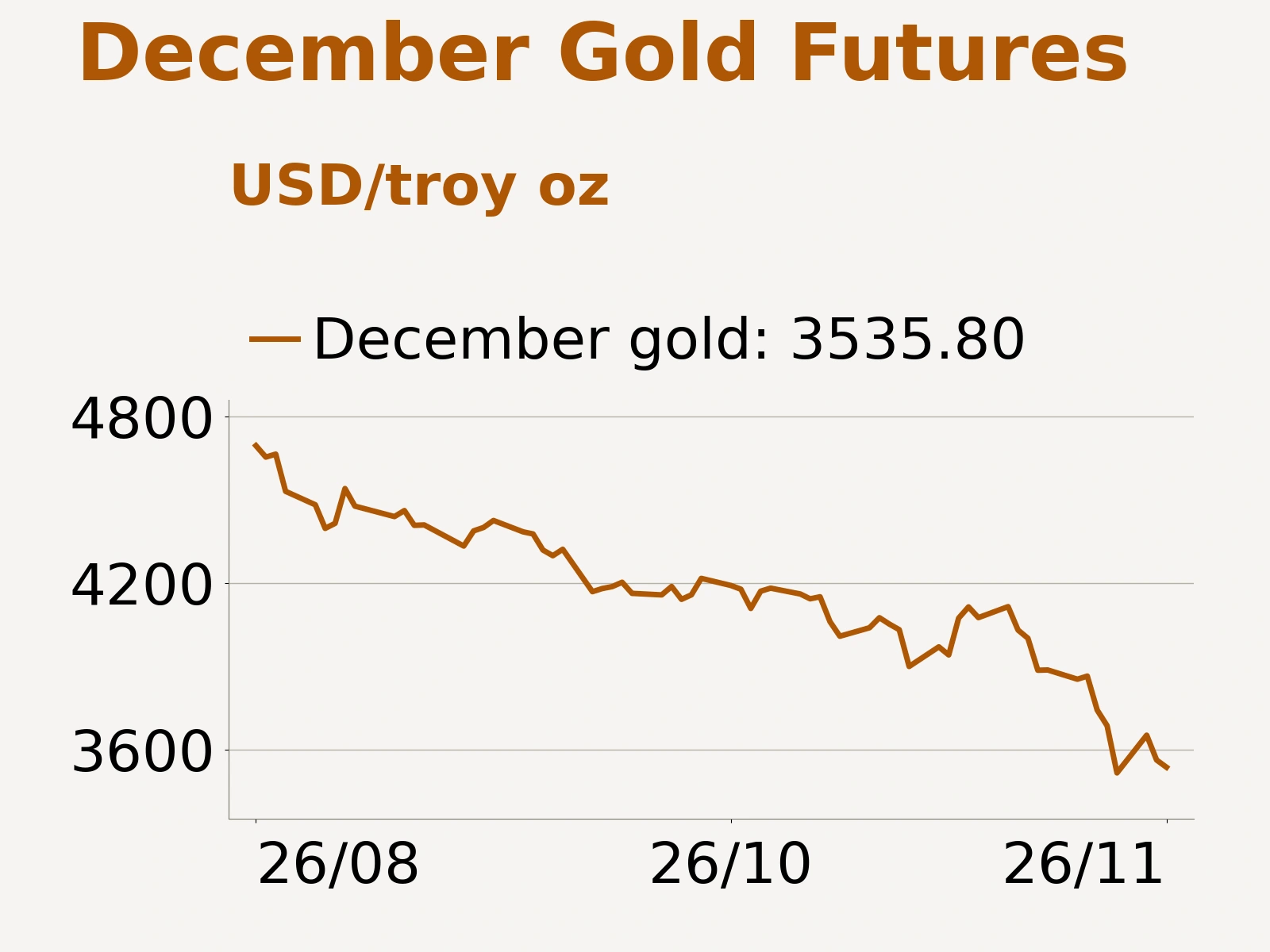
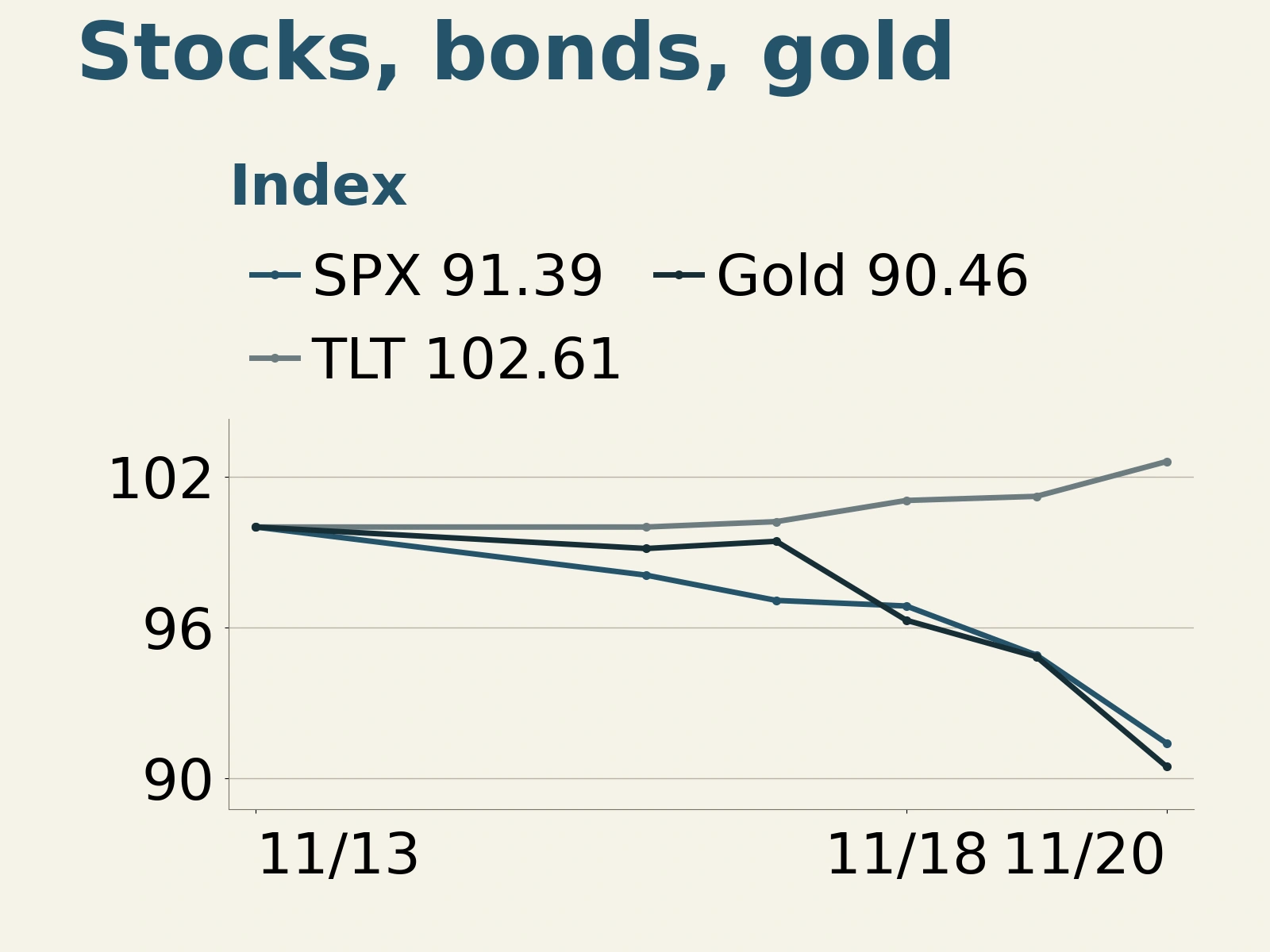
Precious metals diverged. At 11:13 a.m. New York time on November 25, December gold futures touched $3,445.10 per troy ounce. They recovered to close at $3,535.80, but remained down $26.10, or 0.73%, from the previous close. David Meger, director of metals trading at High Ridge Futures, said October's PCE inflation figures kept investors concerned about further Federal Reserve rate increases. Although lower 10-year real Treasury yields reduced the longer-term opportunity cost of holding gold, near-term policy-rate expectations remained constrained by sticky inflation. These different forces at the short and long ends of the yield curve allowed long-dated bonds to rise while gold closed lower on the same day.