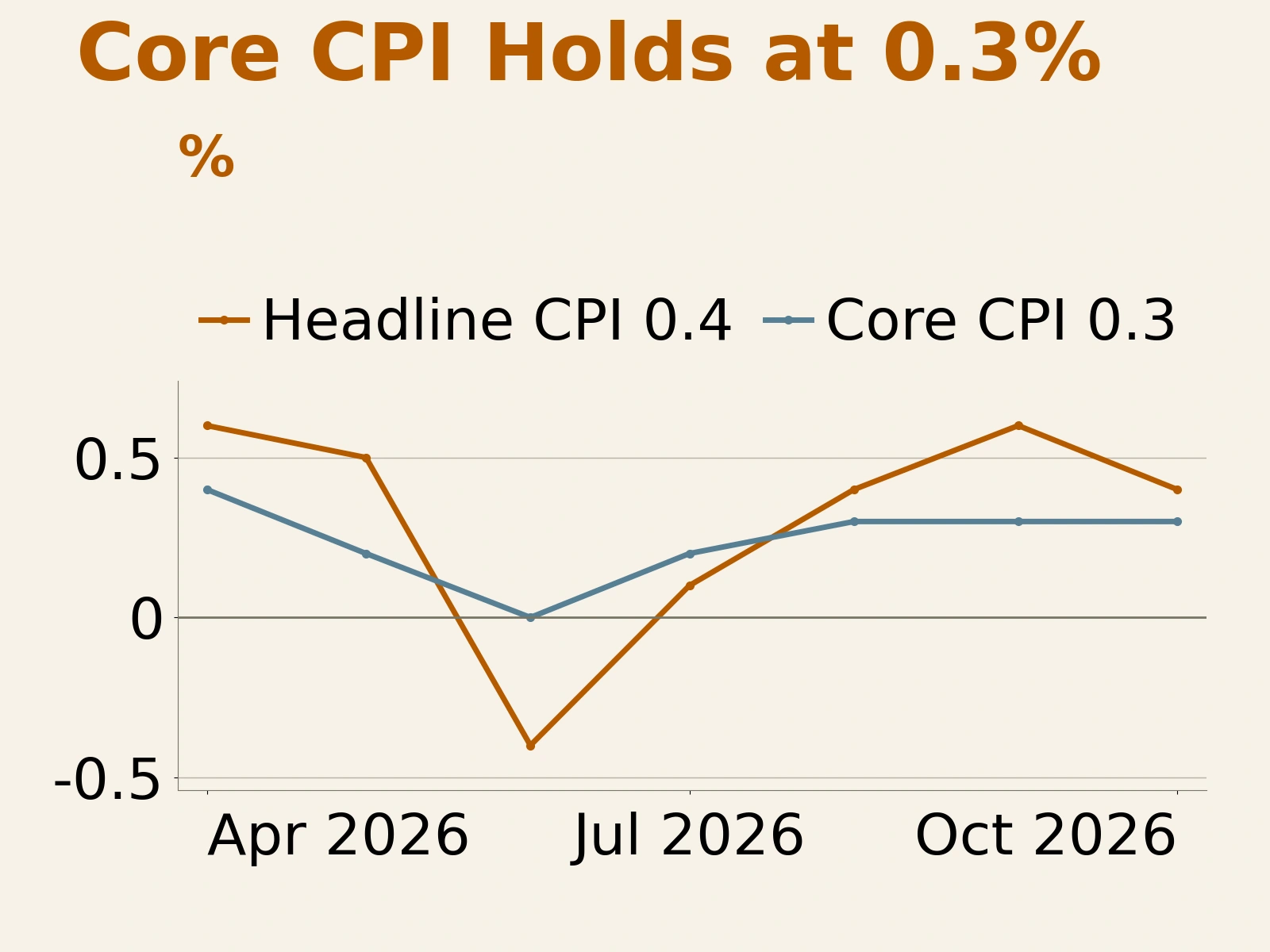
On November 10, 2026, the October Consumer Price Index (CPI) released by the U.S. Bureau of Labor Statistics showed that core CPI, which excludes food and energy, rose 0.3% month on month for the third consecutive month. That same day, Federal Reserve Governor Waller specified the condition under which a 50-basis-point rate increase should be considered in December, while Dallas Fed President Logan advocated at least two further increases of 25 basis points each. Following October's pause in rate increases, policy discussions within the Fed have returned to the pace and scale of tightening.
Energy price moderation slows headline CPI inflation, but core inflation remains sticky

On a seasonally adjusted basis, U.S. headline CPI rose 0.4% month on month in October, down from 0.6% in September. The slowdown was driven mainly by energy prices: their monthly increase dropped sharply from 5.2% in September to 0.7%.
Core inflation, however, did not ease alongside the headline measure, remaining at 0.3% month on month since August. Among the components, shelter prices rose 0.3% in October, accounting for more than 30% of the monthly increase in headline CPI. Prices for recreation, medical care and motor vehicle insurance also continued to rise.
Waller's condition for considering a 50-basis-point hike is met; Logan favors another 50 basis points in total
At its October 28 policy meeting, the Fed kept the federal funds target range unchanged at 3.75%–4%. On November 10, the two officials issued hawkish signals on the path of further rate increases.
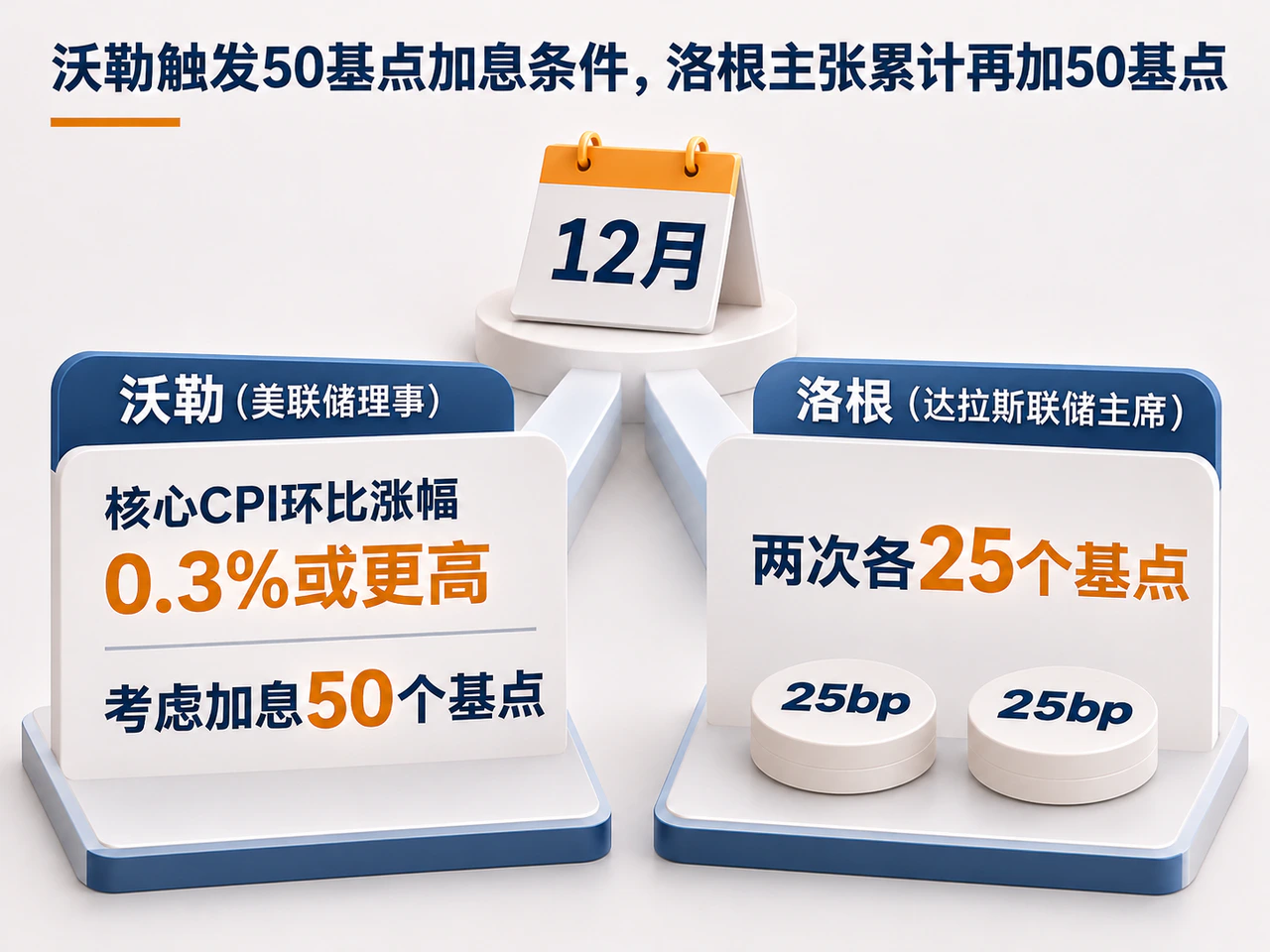
Speaking at the Bank of England Watchers' Conference in London that day, before the CPI release, Waller said he would still lean toward supporting a 25-basis-point increase in December even if October inflation improved. If the monthly rise in core CPI were similar to those of the preceding two months—that is, 0.3% or higher—a 50-basis-point increase should be considered. The October core CPI reading released subsequently met that threshold exactly, putting a single 50-basis-point increase on the table. Waller also explained that one reason for October's pause was that earlier policy communication had already prompted markets to price in tightening. Those expectations would ultimately have to be fulfilled through action, however, or a renewed easing of financial conditions would weaken the policy's effect.
At an energy conference jointly hosted by the Dallas and Kansas City Feds that same day, Logan proposed a similar cumulative increase, approaching the question from the degree of monetary restraint. She argued that the current target range needed to rise by at least another 50 basis points to become somewhat restrictive, advocating two further increases of 25 basis points each and suggesting that the pace of increases over the winter could be faster than in the autumn. In addition to energy and goods, Logan focused on services prices less closely linked to those shocks, warning of the risk that persistently high inflation could feed into the next round of wage negotiations.
Bowman highlights the costs of tighter financing; PCE and payrolls will shape December's decision

That afternoon, Fed Vice Chair for Supervision Bowman spoke at the Council on Foreign Relations in Washington. She, too, made lowering inflation a priority, but placed greater emphasis on the potential costs of further tightening. Bowman noted that financing costs were rising for some artificial intelligence-related companies, while interest-sensitive sectors such as real estate remained under pressure. If companies' investment returns fell short of expectations, tighter financial conditions could restrain economic activity while also bringing inflation down.
For now, disagreement within the Fed centers mainly on the size and pace of further rate increases. Waller and Logan see steady employment and persistent price pressures as reasons for further tightening, while Bowman argues that market volatility and changes in financing conditions should also be taken into account.
Before the December policy meeting, markets will receive the October personal consumption expenditures (PCE) price index and the November employment report. These releases will provide further tests of the breadth of price pressures and the resilience of labor demand. If core inflation remains elevated, the case for faster tightening will strengthen. Conversely, if tighter financing feeds more visibly into demand, the Fed will need to reassess the pace of rate increases.