On November 20, 2026, the Sky Frontier Foundation, which supports research and development in the Sky ecosystem, disclosed that users had exchanged more than $2 billion of USDS for USDC through the Sky protocol’s peg stability module on November 19. The foundation said the module had maintained 1:1 conversions throughout the day. At almost the same time, DefiLlama recorded a decline in circulating USDS from 5.239 billion to 3.207 billion tokens.
Large withdrawals and redemptions at the agreed rate occurred on the same day. Assessing the event’s liquidity implications requires distinguishing the circulating supply of stablecoins, the protocol’s total collateral assets, and the USDC immediately available within the module.
Trading recovers as stablecoin supply contracts
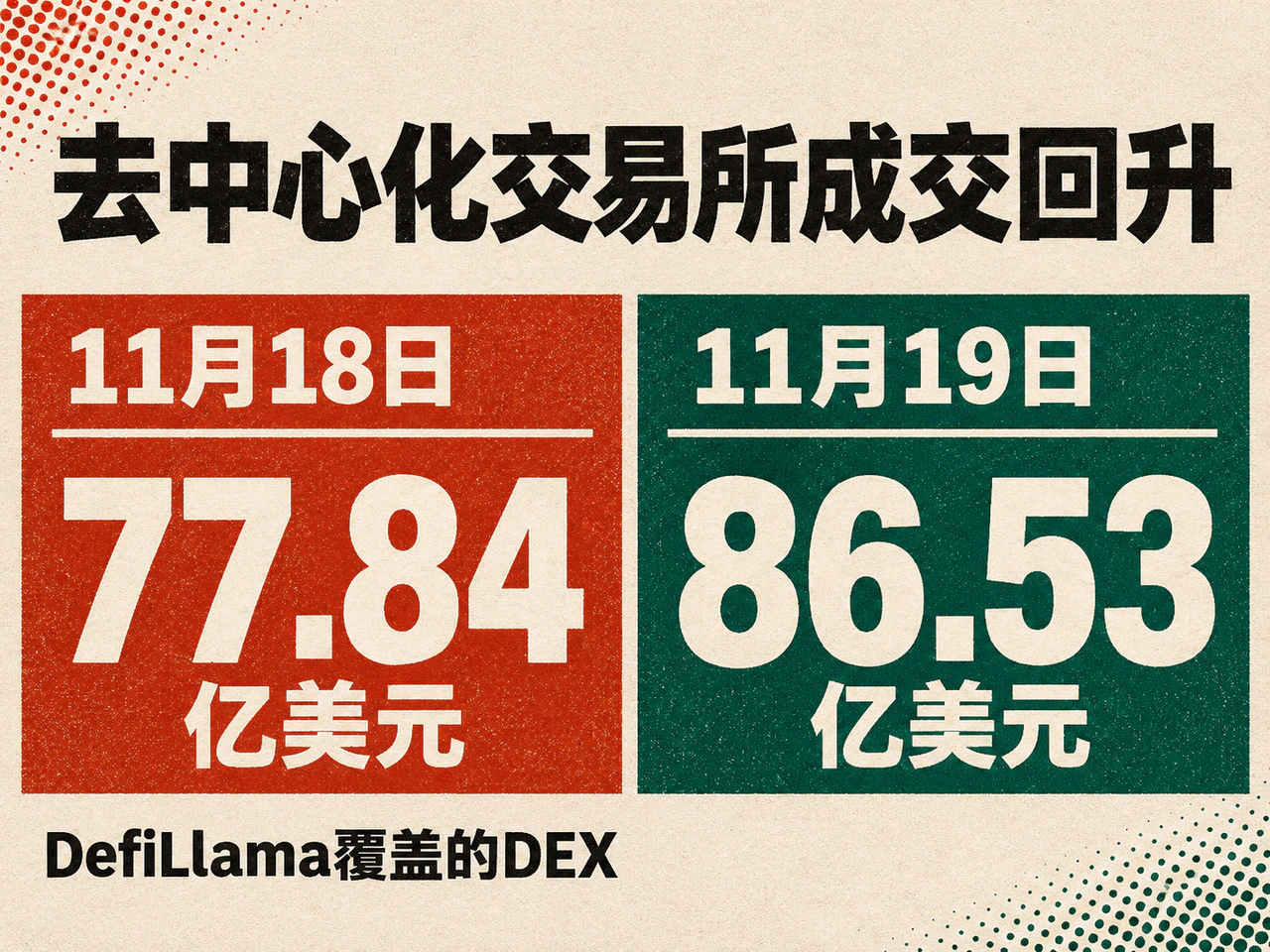
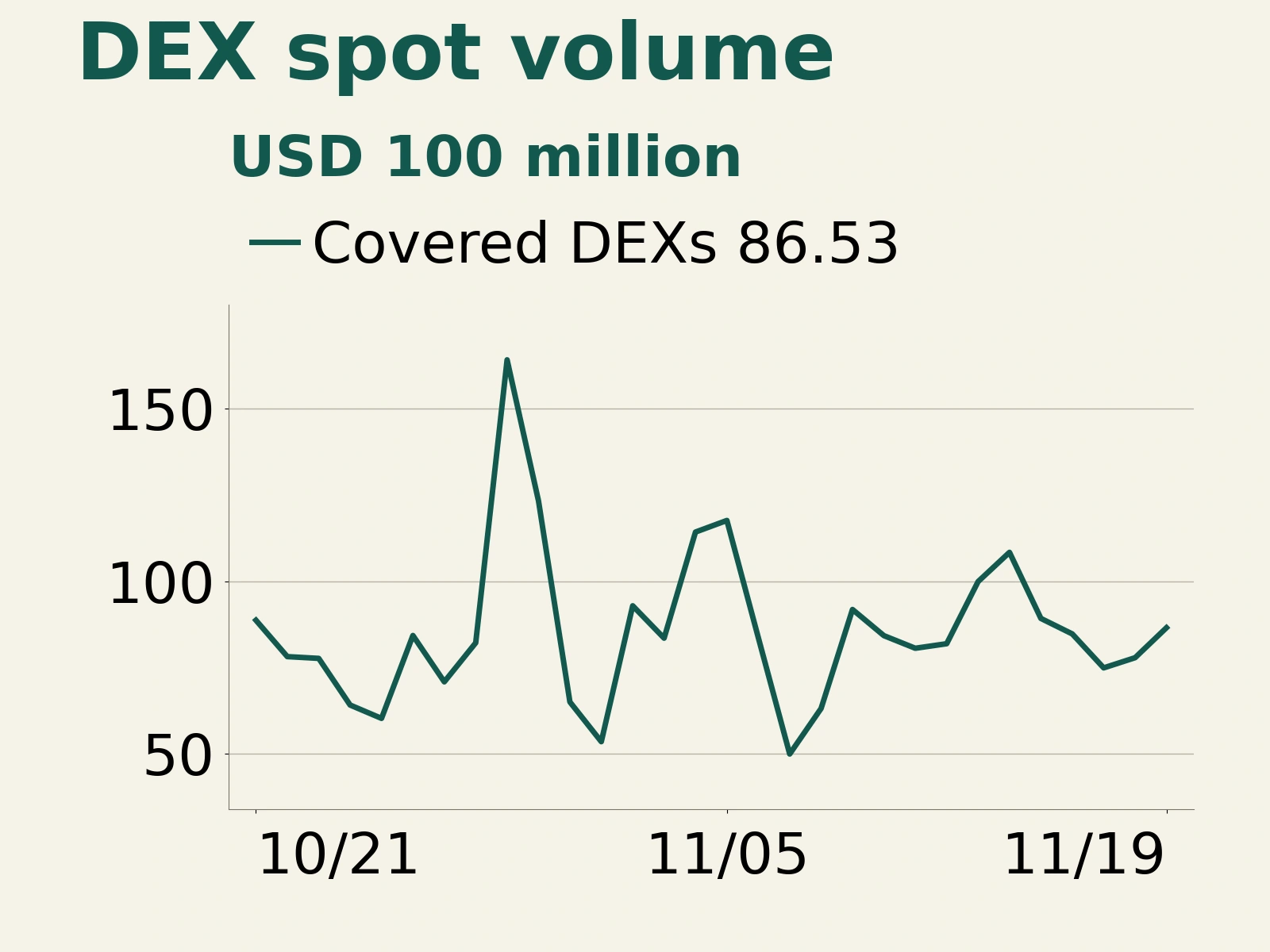
On-chain trading did not contract in tandem with stablecoin supply. DefiLlama’s latest complete daily data were for November 19: trading volume across the decentralized exchanges (DEXs) it covers was $8.653 billion, up from $7.784 billion on November 18.
By chain, Ethereum mainnet volume rose from $1.448 billion to $1.664 billion, volume on the layer-2 network Base increased from $994 million to $1.224 billion, and Solana’s rose from $1.815 billion to $1.904 billion. BNB Chain volume, however, fell from $835 million to $820 million. Volume increased on several major chains, but the size and direction of the changes varied.
Stablecoin data, by contrast, showed a contraction in supply. Between the two observations labeled November 19 and November 20 by DefiLlama, the circulating market capitalization of dollar-pegged stablecoins fell from $285.227 billion to $283.441 billion, a decline of about $1.786 billion. Over the same interval, circulating USDS fell by approximately 2.032 billion tokens, or nearly 39%; DAI, which is also part of the Sky ecosystem, edged up from 4.590 billion to 4.606 billion tokens. The category’s net decline was smaller than the contraction in USDS, indicating that the remaining stablecoins in aggregate offset part of that decline.
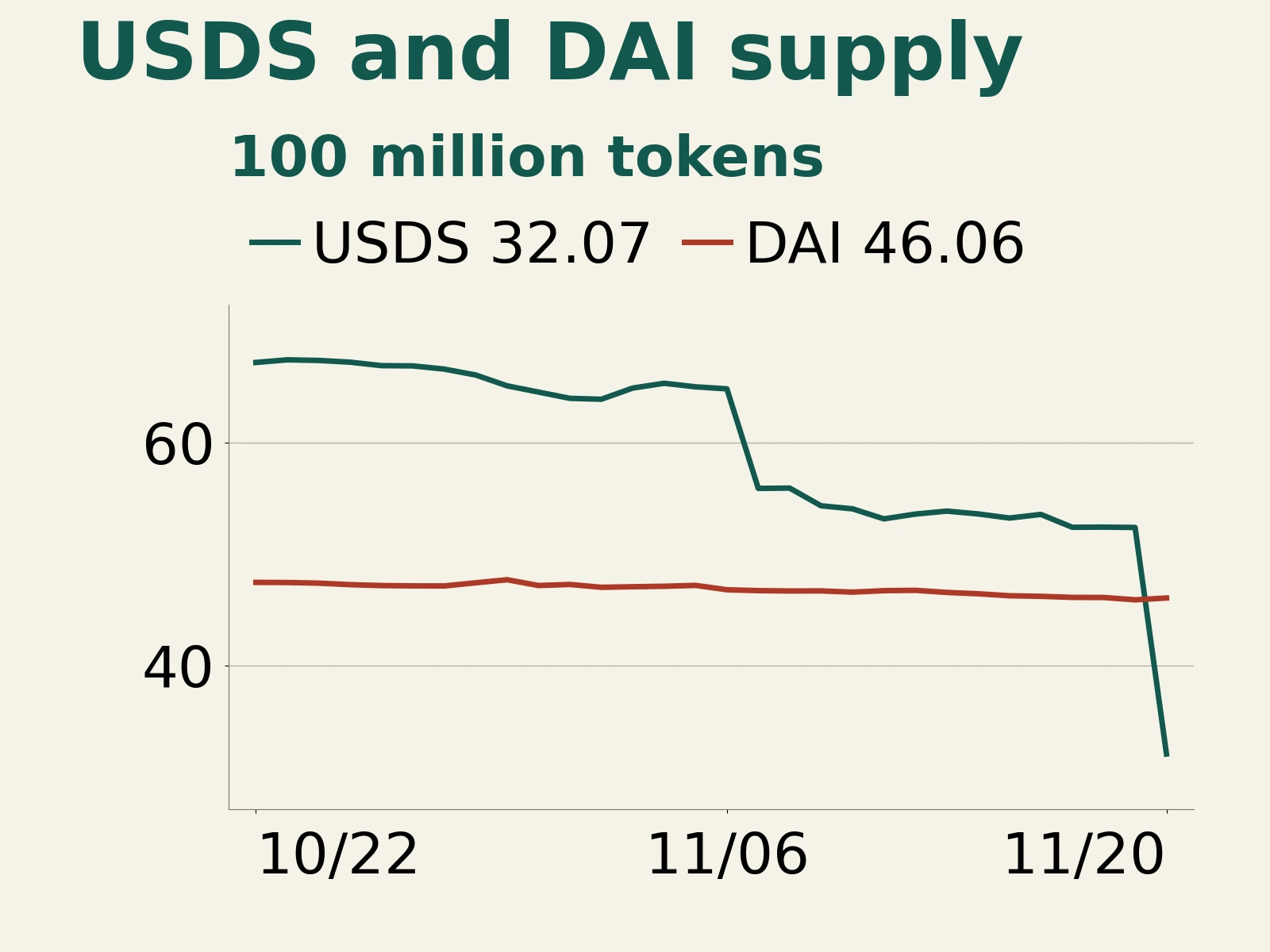
The two sets of data measure different things: DEX volume records asset turnover, while circulating stablecoin supply records outstanding balances. Holders can exchange one stablecoin for another and continue holding dollar assets on-chain; demand for trading may even rise during a wave of conversions. The DEX figures above cover multiple markets and, on their own, cannot establish that Sky accounted for the day’s additional volume on Ethereum or Base. This wave of conversions took place directly in the Sky module and can be examined through its redemptions and changes in balances.
A wave of conversions tests available reserves
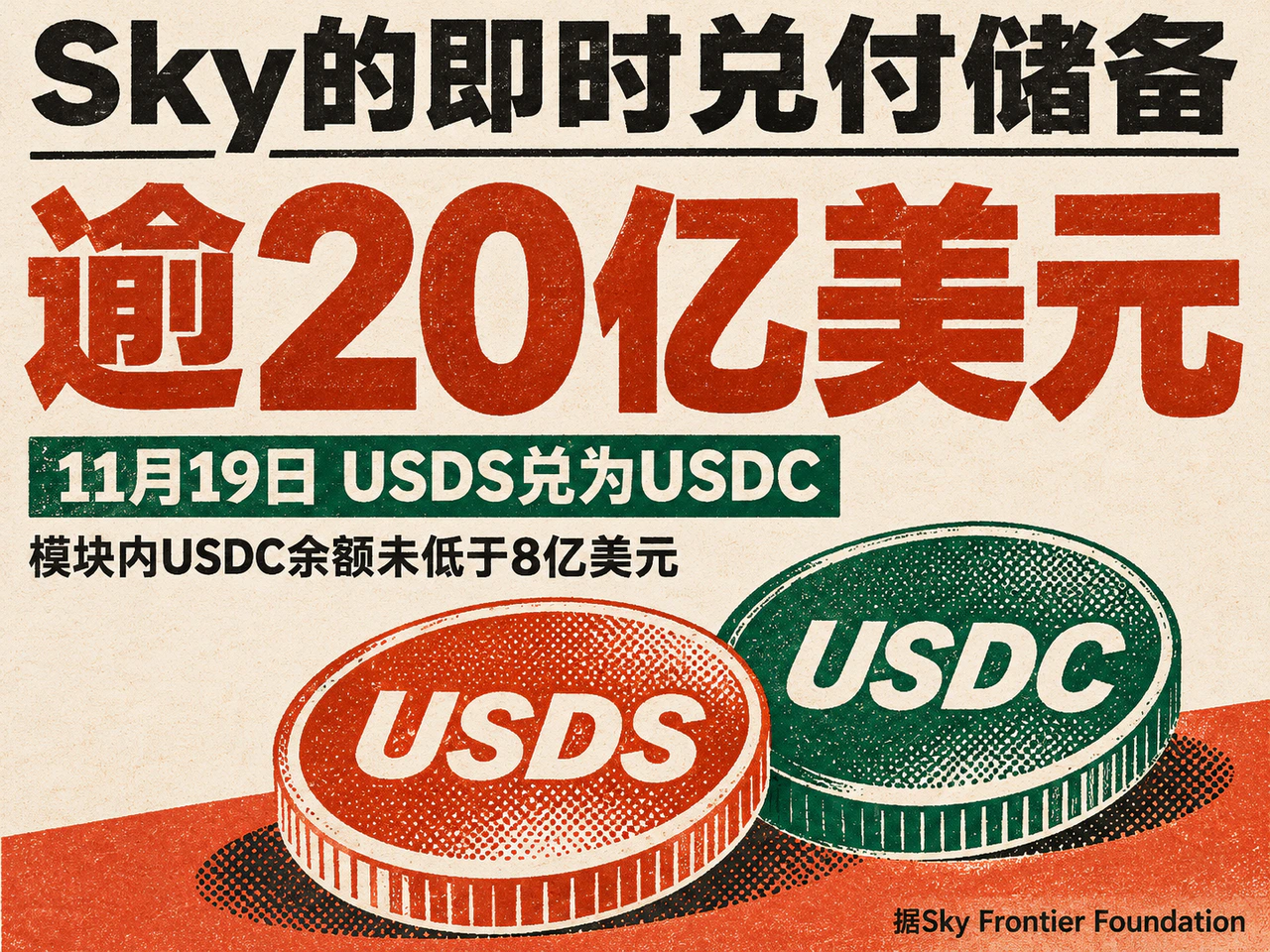
The module gives USDS holders a direct route to exchange their tokens for USDC. According to the foundation, the module’s USDC balance did not fall below $800 million while it processed more than $2 billion of conversions on November 19, and recovered to above $1.1 billion at one point on November 20. For users exiting at the time, immediate access to USDC depended on the balance available in the module and the speed at which funds were replenished.
The foundation also disclosed that the Sky protocol held approximately $9.3 billion in total collateral assets. That total encompasses assets serving different purposes and reflects the protocol’s overall asset coverage; USDC immediately redeemable from the module contract is a separate measure.
As the wave of conversions unfolded, the compliance risks associated with Sky’s reserves also became a subject of debate. On November 19, CoinDesk published an investigation based on on-chain tracing by Inca Digital, reporting that transactions totaling approximately $518 million and linked to wallets suspected of involvement in illicit activity had passed through the module. The report raised the possibility that a freeze on USDC in the reserves could also affect redemptions by other holders.
On November 20, the foundation responded by citing a review by its ecosystem risk adviser, Block Analitica. It said the transaction volume in question spanned five years, roughly two-thirds occurred during the legacy module’s operation, and aggregators had selected the routes for some transactions. The two sides continued to disagree over how those transactions should be attributed; the reserve freeze raised in the report remains a risk scenario.
The 1:1 redemptions on November 19 show that users were still able to obtain USDC under the rules during this peak in withdrawals. Whether external restrictions could make the reserves difficult to access in the future depends on the assets’ legal status and actual availability. In assessing such protocols, the routinely disclosed total collateral can be compared with the balance available for redemption that day: the former concerns the assets ultimately backing the debt, while the latter, together with the speed of replenishment, determines whether holders can obtain USDC promptly during a concentrated wave of conversions.
Click “Read the original” for the full article.