On November 20, the Hong Kong government gazetted the Virtual Asset Services Legislation (Amendment) Bill 2026, proposing to bring four types of service—virtual asset dealing, advising, management and custody—under licensing or registration regimes. An investor may buy virtual assets through one institution, appoint another to manage them and entrust a third with their custody. Each stage carries different responsibilities. The existing virtual asset trading platform licensing regime primarily establishes who may operate a trading platform; the bill proposes extending regulation to each of these stages.
Extending regulation from trading platforms to four types of service

The bill proposes amendments to Hong Kong’s Anti-Money Laundering and Counter-Terrorist Financing Ordinance. Under the government’s announced proposals, institutions conducting these four types of business in Hong Kong would have to be licensed by or registered with the Securities and Futures Commission (SFC), and meet fit-and-proper criteria and other regulatory requirements. Banks and stored value facility licensees supervised by the Hong Kong Monetary Authority (HKMA) would also have to register with the SFC if they wished to provide services covered by the bill in Hong Kong. The bill also proposes granting the SFC and the HKMA the corresponding powers to implement the regimes.
This distinction has particular practical relevance for customers accessing digital assets through banks. A bank may be a familiar channel for account opening and payments, yet the same product can involve separate questions about who provides investment advice, who decides what to buy and sell on the customer’s behalf, and who holds the assets. Under the bill’s proposed framework, being a bank would not in itself replace the authorisation required for a particular service. The relevant questions would remain which institution provides which service, and what authorisation it holds for that business. For institutions operating several businesses, the actual division of responsibilities within the group and with external partners would affect arrangements for registration and licence applications.
Why investment advice and asset management are treated separately
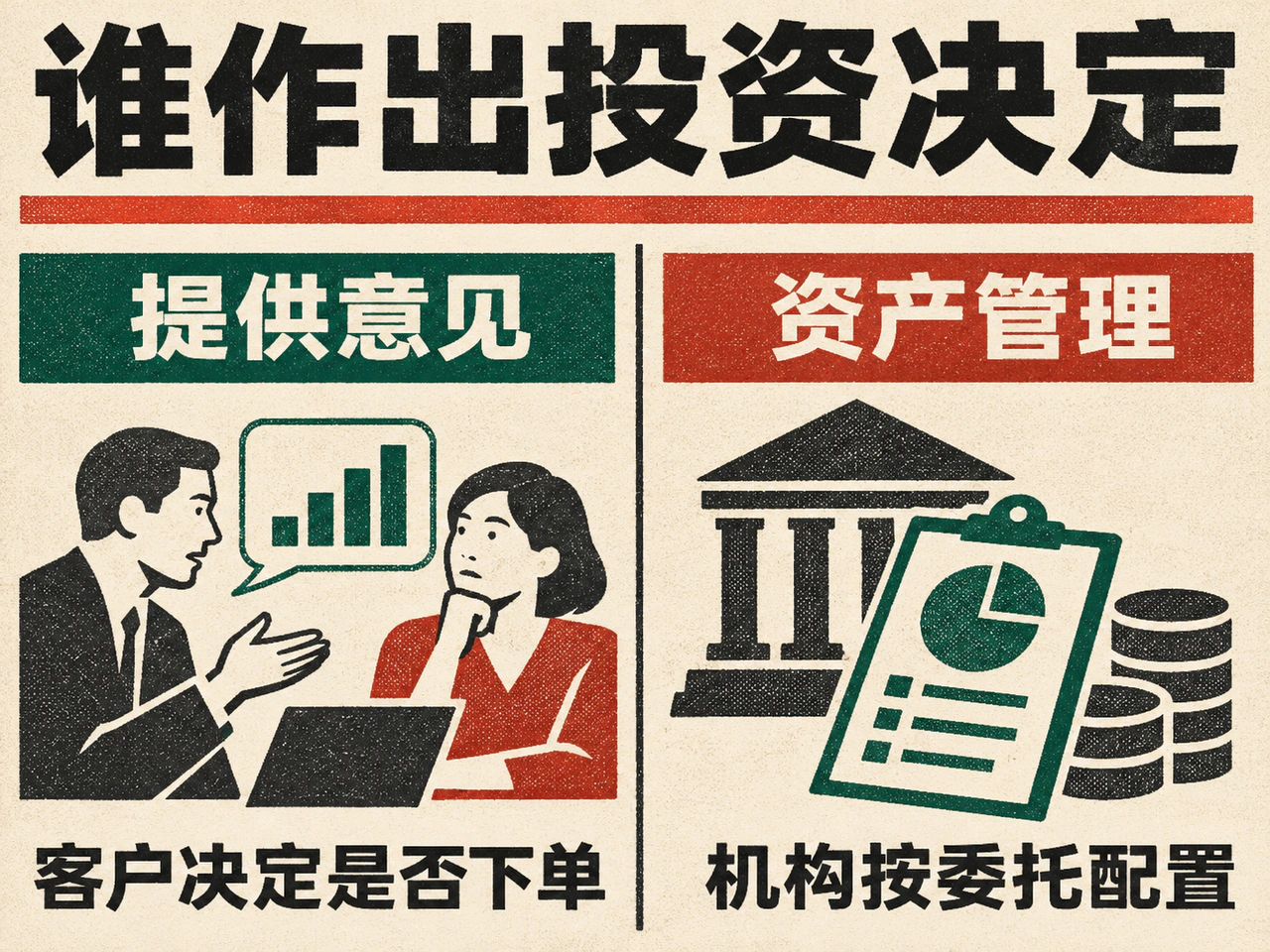
When Hong Kong’s Financial Services and the Treasury Bureau and the SFC published their consultation conclusions in May, they defined the proposed scope of virtual asset advisory and management services by reference to the securities sector’s existing Type 4 regulated activity (advising on securities) and Type 9 regulated activity (asset management), respectively. The distinction lies in who makes the investment decision. An institution recommending an asset to a customer, with the customer ultimately deciding whether to place an order, is one example of providing advice. An institution appointed by a customer to decide how to allocate a portfolio within an agreed mandate takes on the additional responsibility of making decisions on the customer’s behalf. Even if two institutions deal with the same token, their functions may differ.
The gazetted bill brings services previously addressed in separate consultations into a single legislative proposal. Institutions planning to launch digital asset businesses can start by following the sequence from customer instructions through trade execution to asset custody, identifying who is responsible at each step. When assessing a service provider’s authorisation in future, investors should check the legal entity actually providing the service and the scope of its permission. The government has scheduled the bill for its first reading in the Legislative Council on December 2; the final obligations and commencement dates remain subject to the outcome of the legislative process.
Click “Read original” for the full details.