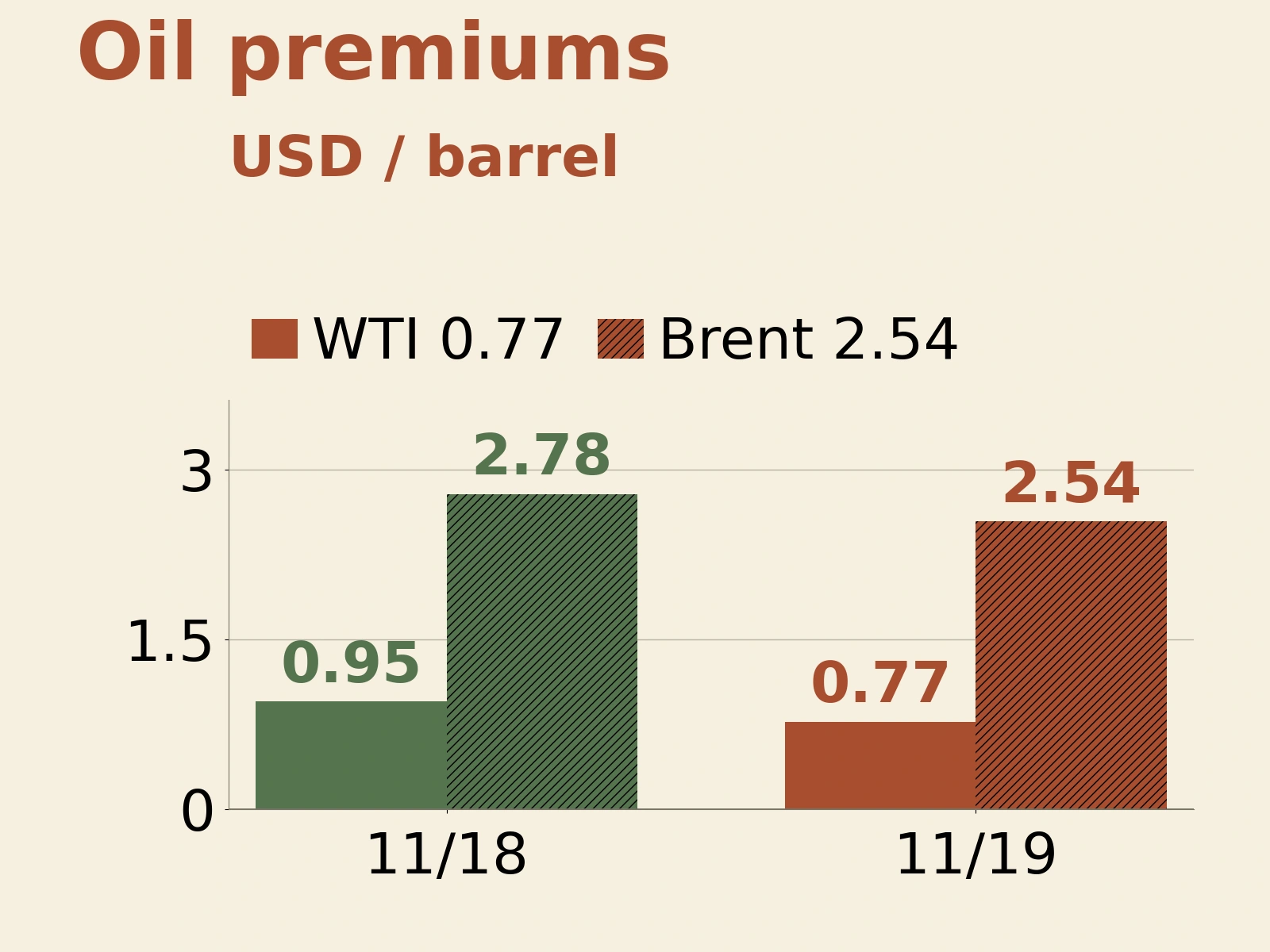
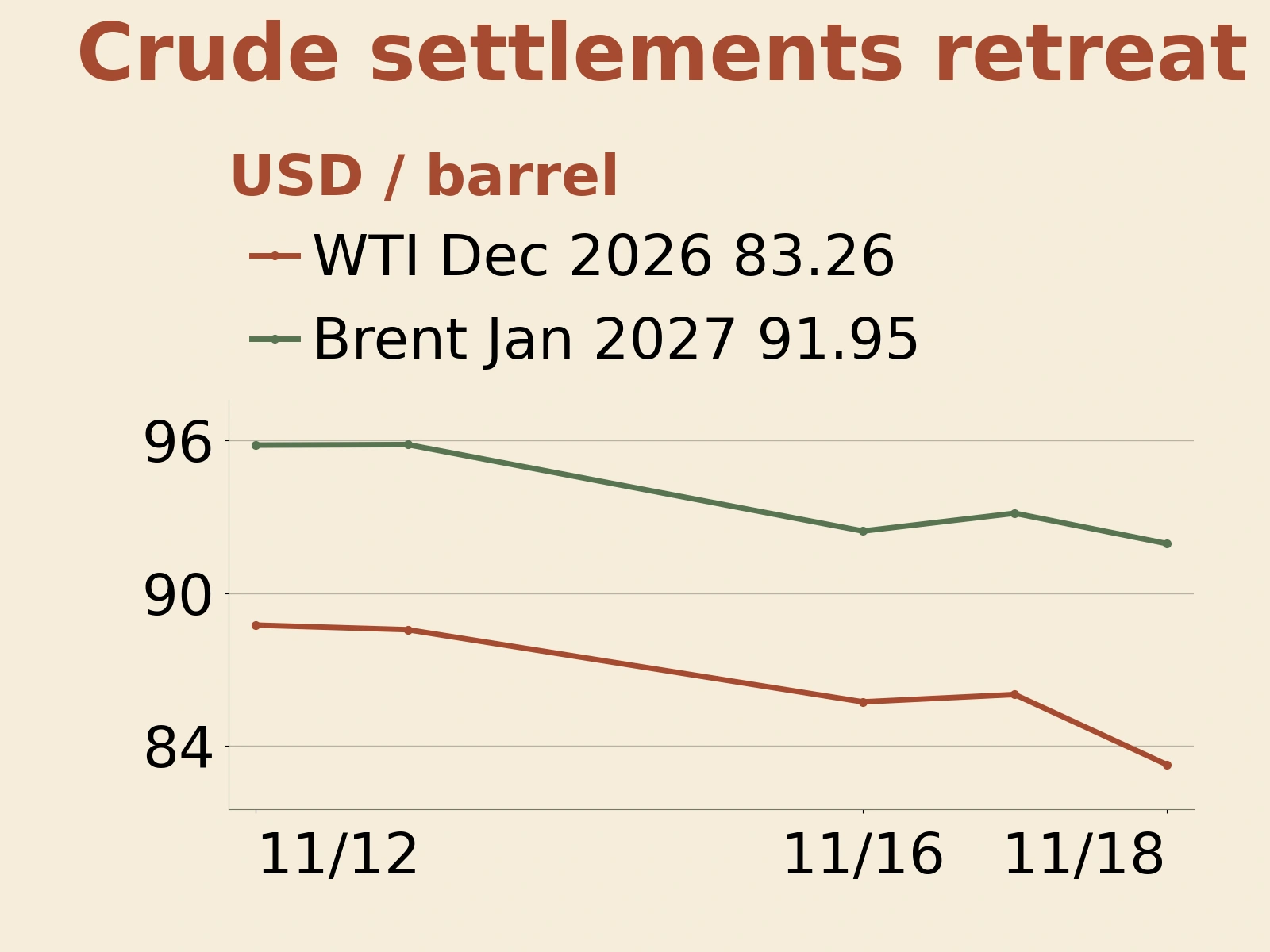
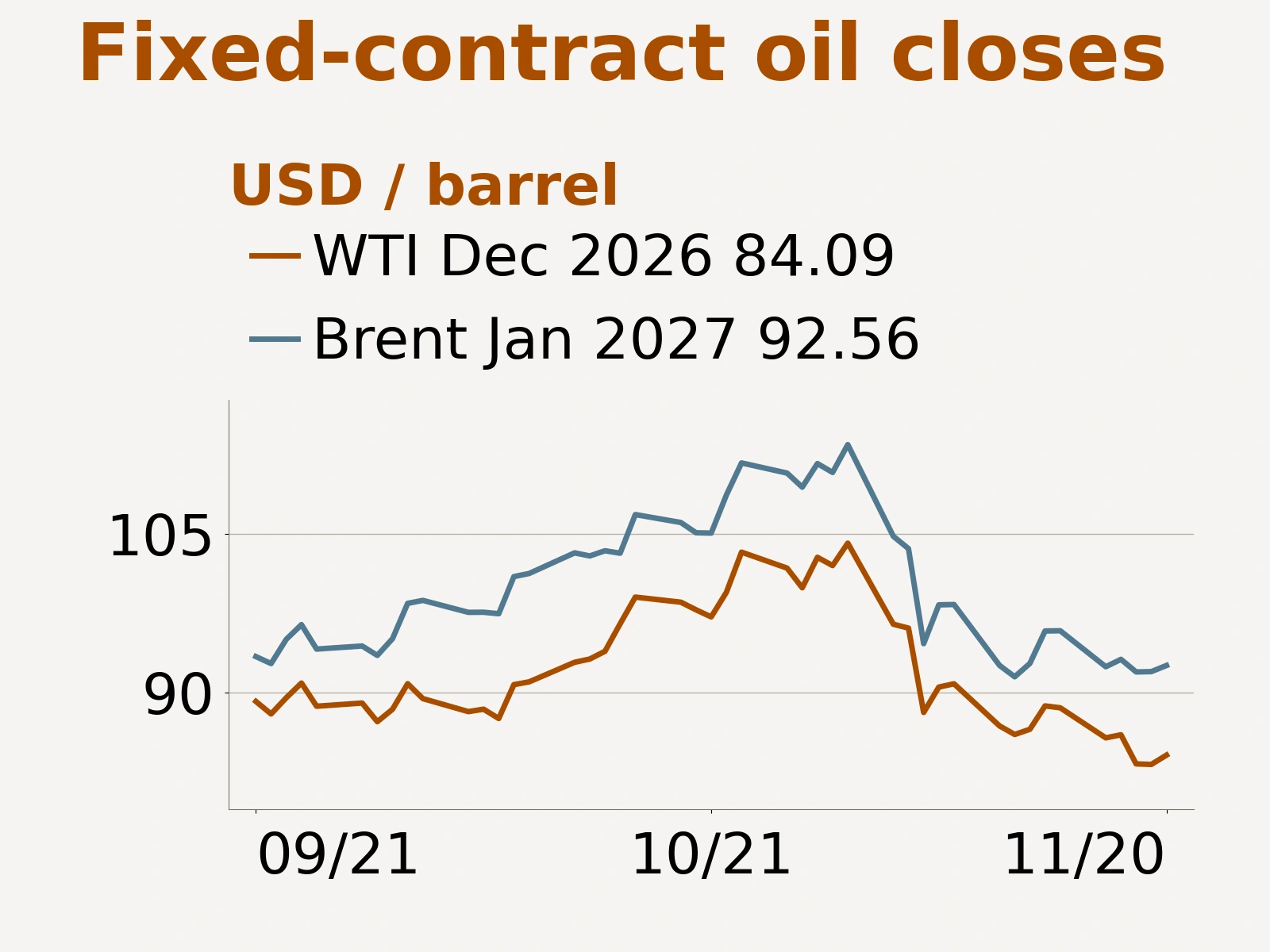
On November 20, 2026, crude oil futures recovered late in the session. Brent for January delivery settled at $92.57 a barrel, up $0.59 from the previous day; December U.S. West Texas Intermediate (WTI), which expired that day, settled at $83.98, up $0.77. Over the week, however, the two contracts still fell 3.41% and 5.17%, respectively. Friday's buying recovered some of those losses. The market's assessment of Gulf supply still hinges on two stages: how much crude producers can load onto ships, and when refineries can receive it.
More oil at sea, while onshore inventories keep falling

The International Energy Agency's November monthly report showed that a recovery in Gulf exports lifted global oil supply by 2.3 million barrels a day month on month in October, to 105.4 million barrels a day. The increase in cargoes appeared first at sea. The agency observed a 52 million barrel increase in global oil inventories that month, including an 86 million barrel rise in oil on water; onshore inventories continued to decline, reaching their lowest level since at least 2016. For buyers able to wait for delivery, more crude in transit means a wider range of procurement options ahead. This helps explain why oil prices fell for a third consecutive week.
For refineries that need to run in the coming days, however, the protection offered by crude in transit still depends on arrival dates, shipping schedules and freight rates. The IEA noted that crude freight rates from the Middle East to Asia remained near record levels. Reuters reported on Friday that crude oil shipments through the Strait of Hormuz had broadly recovered to prewar levels; shipping risks nevertheless drew renewed attention that same week. Iran claimed on Thursday that two tankers had struck mines. On Friday, the Houthis warned that they would strike Saudi Red Sea ports if the port of Hodeidah came under attack. Shipowners and refiners have to consider the cost of delays to individual voyages. Even if overall flows through the strait hold up for now, buyers still have reason to pay a premium for earlier delivery.
U.S. stocks rise nationwide, but fall at the delivery hub
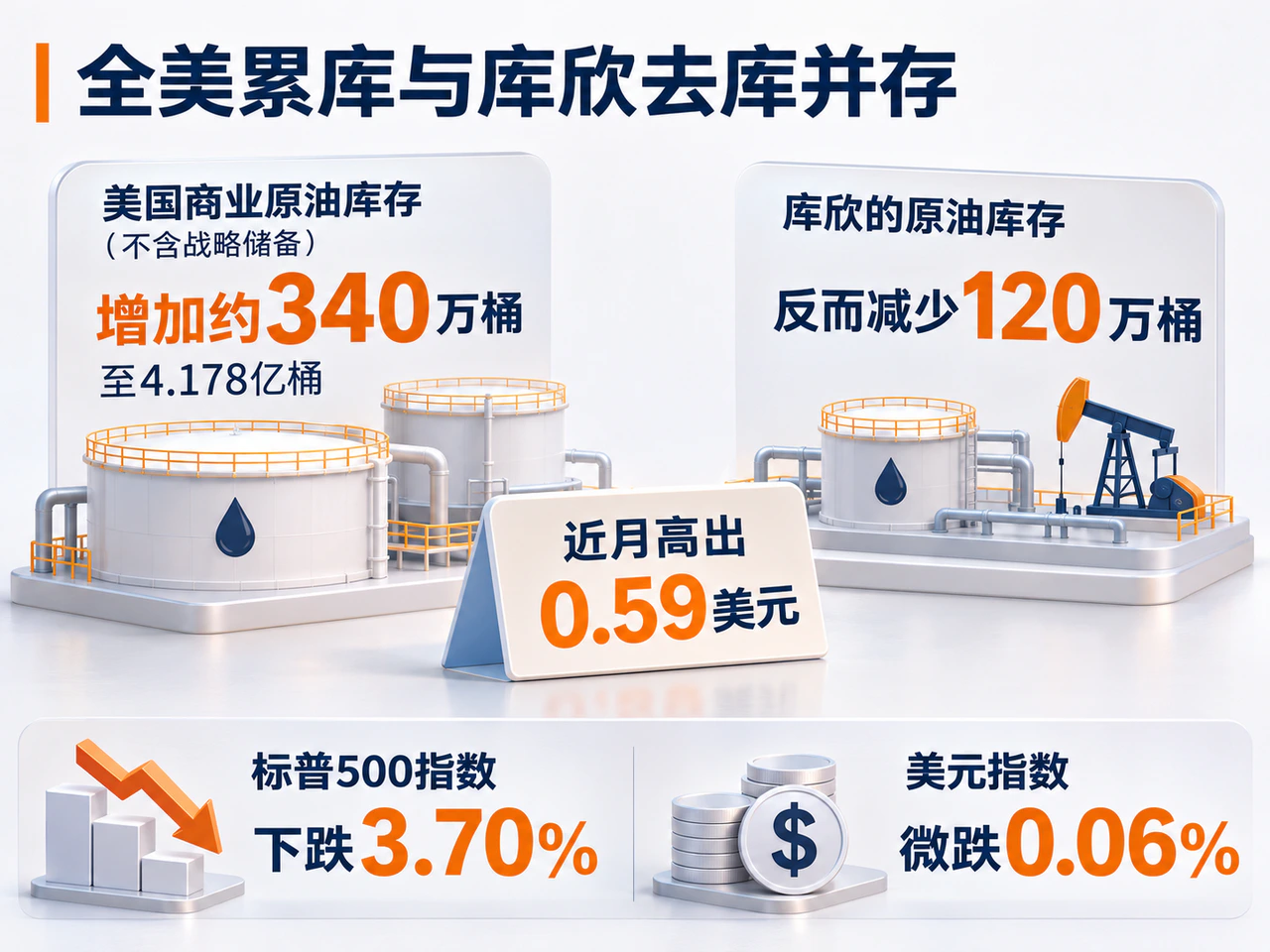
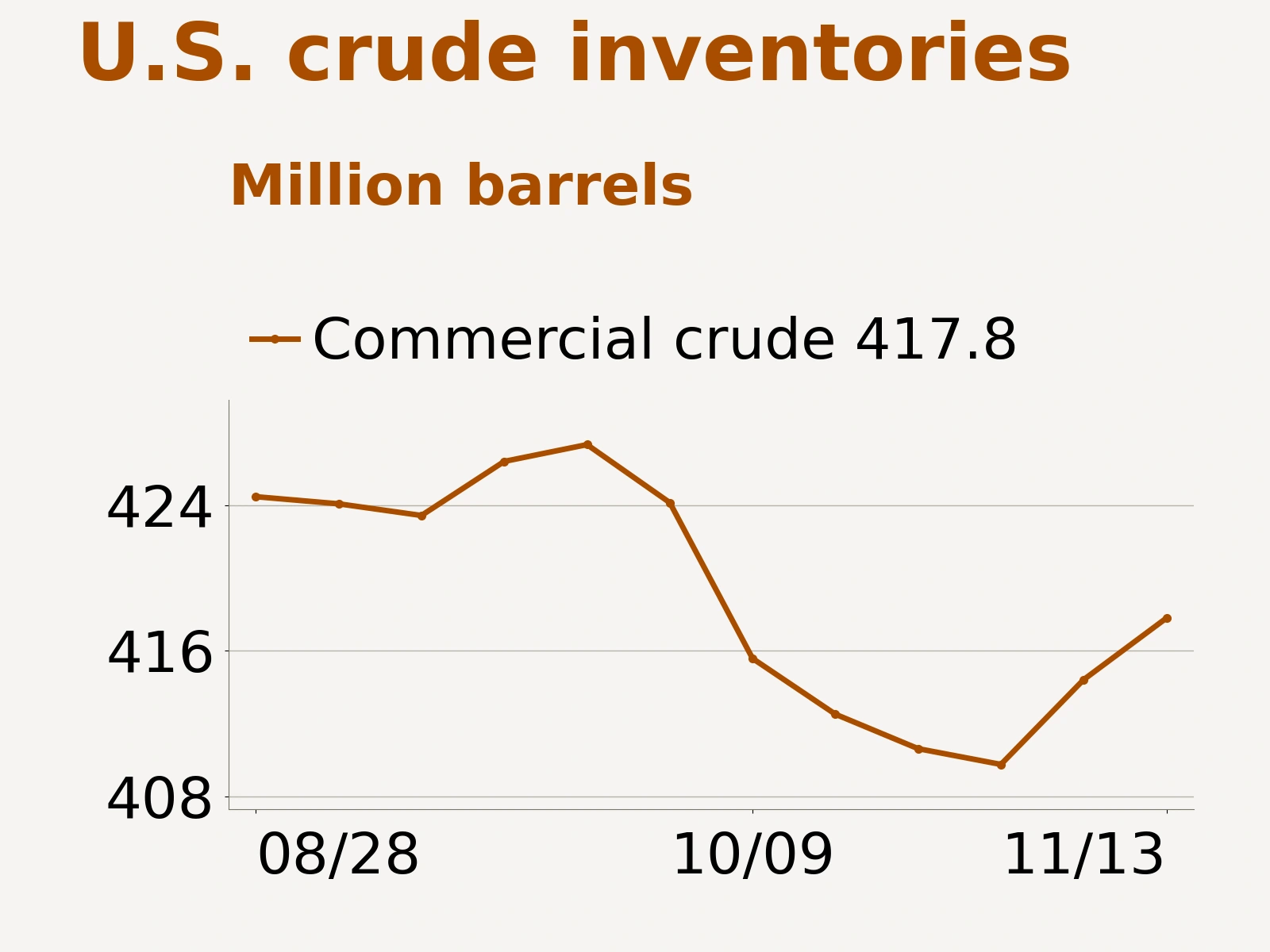
The U.S. Energy Information Administration reported on November 18 that commercial crude oil inventories, excluding the Strategic Petroleum Reserve, rose by about 3.4 million barrels in the week ended November 13, to 417.8 million barrels. Gasoline and distillate inventories rose by 5.2 million and 1.6 million barrels, respectively. Simultaneous builds in crude and refined products gave buyers an additional buffer at the national level. Yet crude stocks at Cushing, Oklahoma, the WTI delivery hub, fell by 1.2 million barrels. Even as national inventories increase, the stocks available for allocation at the delivery hub may still be tightening.
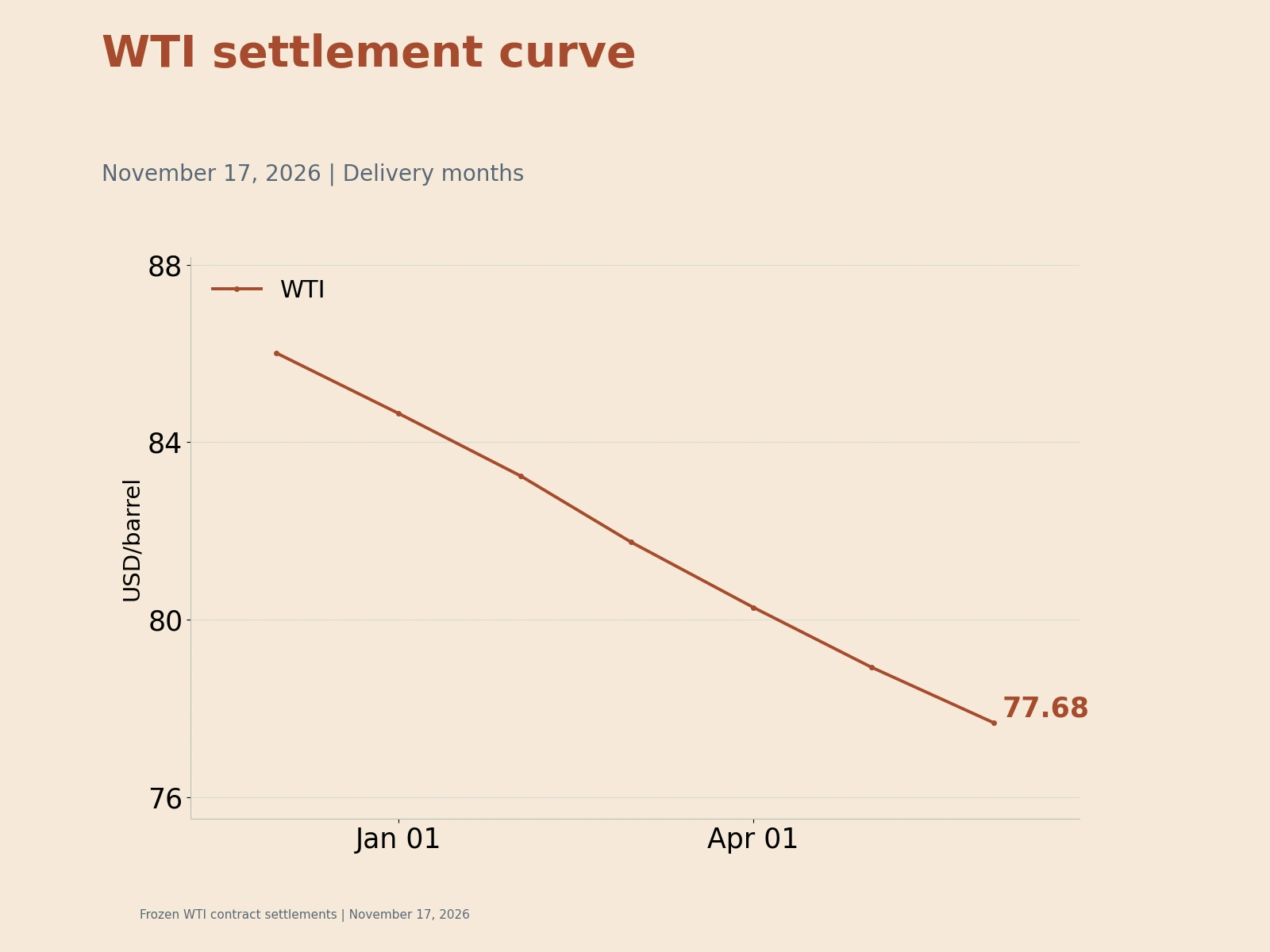
At 07:20 GMT on Friday, December WTI traded at $83.63, while the more actively traded January contract stood at $83.04, giving the prompt month a $0.59 premium at the same moment. The December contract expired that day, so supply conditions for imminent delivery directly affected this spread; position adjustments ahead of Thanksgiving also influenced late-session trading. Reuters cited market participants as explaining that some traders were buying back short positions before the holiday while also guarding against an escalation in the Middle East. The S&P 500 fell 3.70% that day, while the dollar index slipped 0.06%. Compared with U.S. equities, the rebound in crude settlement prices more clearly reflected traders' repricing of near-term delivery risks.
How long the premium lasts depends on when cargoes arrive

The most useful development to watch next is whether Gulf loadings and arrivals at destination ports recover in tandem. If departing cargoes gradually become onshore inventories that refineries can draw on, buyers' willingness to pay extra for earlier delivery should decline. In the United States, the Cushing and national figures in the next weekly inventory report need to be read together. If Cushing also begins to rebuild stocks, the premium of the new prompt WTI contract over the following month will narrow, making the current tightness look more like a localized delivery issue.
Supply further out also depends on how the November 29 meeting of OPEC and non-OPEC producers sets output for 2027. Higher production targets will ease refineries' procurement pressure only when they translate into actual exports that are unloaded at their destinations. If exports remain high but freight rates stay elevated and onshore inventories continue to fall, the early-delivery premium seen during Friday's trading could persist beyond the contract rollover.