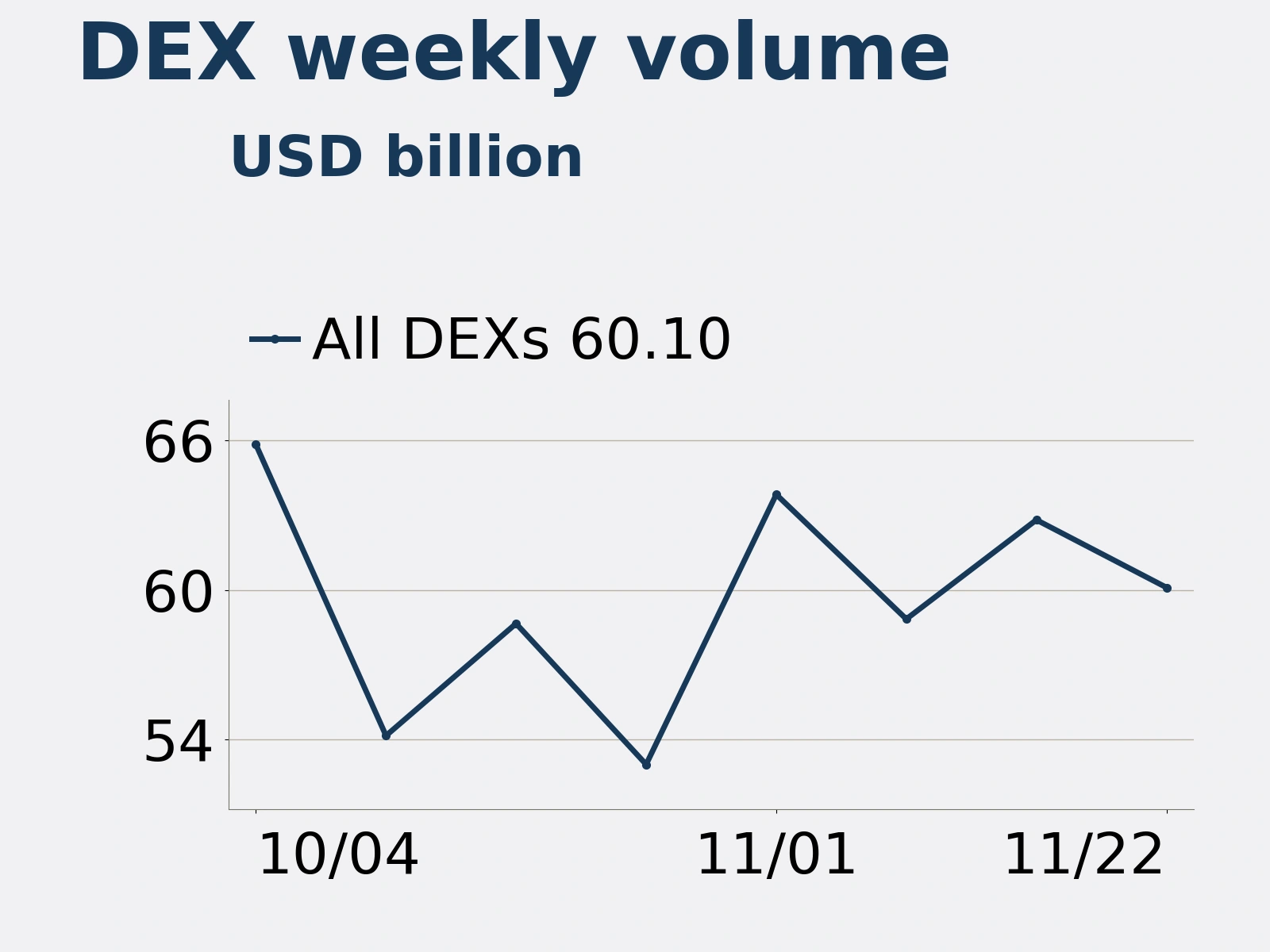
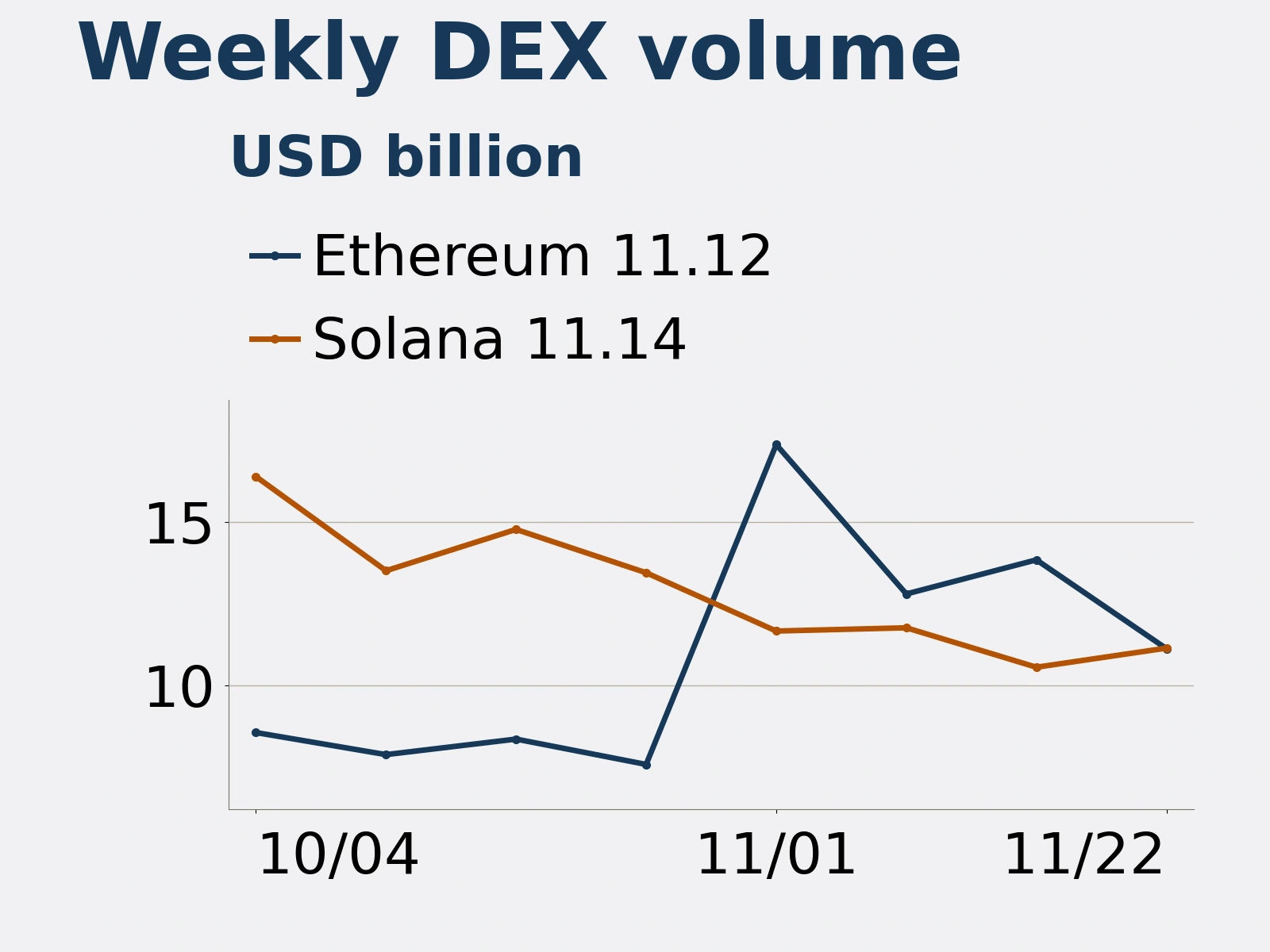
From November 16 to 22, 2026, based on daily UTC observations, decentralized exchanges (DEXs) tracked by DefiLlama recorded approximately $60.098 billion in trading volume, down 4.3% from $62.815 billion the previous week. Weekly volume on Ethereum mainnet fell by approximately $2.715 billion, almost matching the net decline across the entire market, while Solana and BNB Smart Chain (BSC) recorded increases. Measured in dollar trading volume, this week's slowdown was concentrated in certain networks.
Ethereum volume falls as BNB Smart Chain surges on Sunday
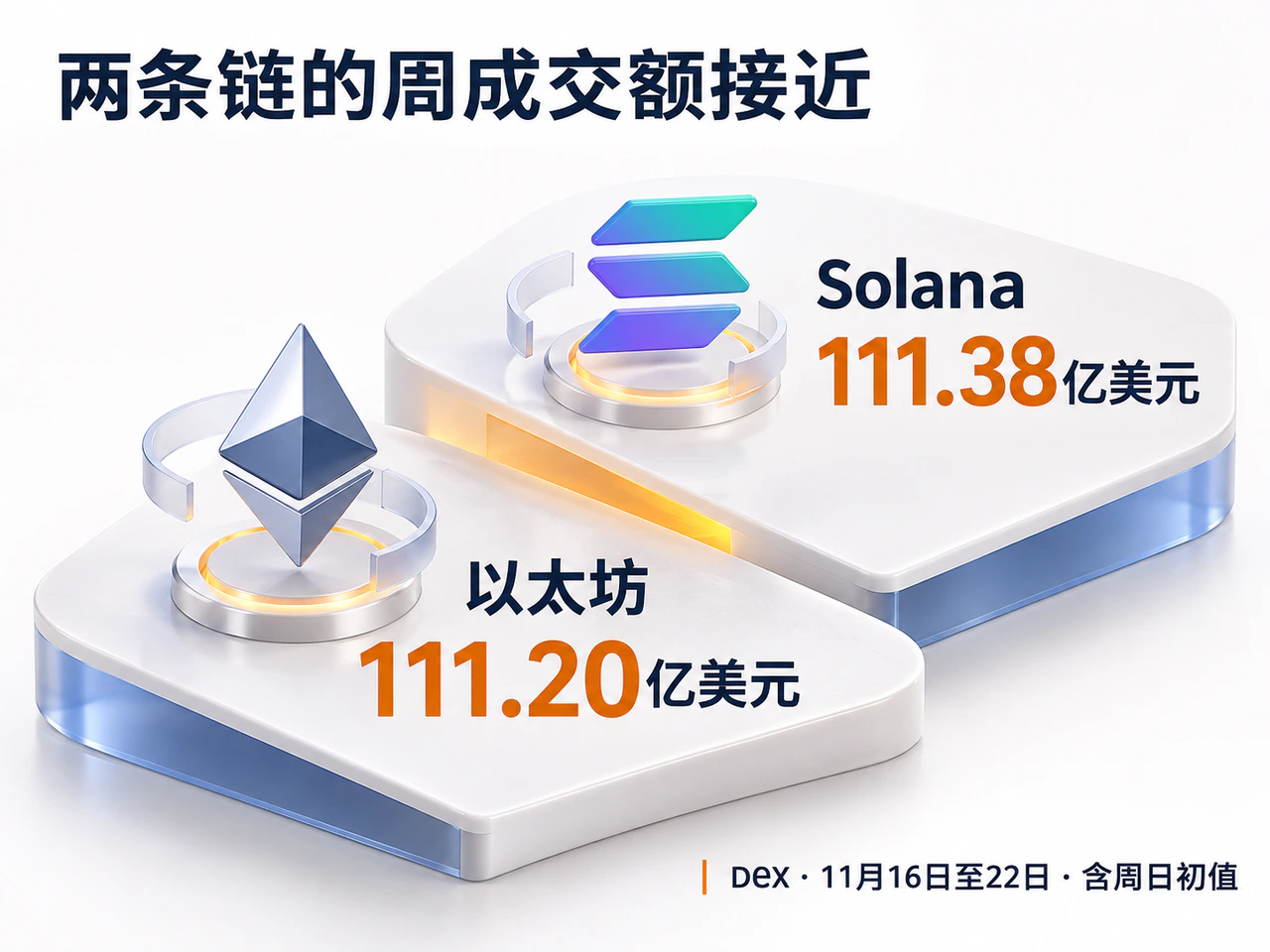
DEX volume on Ethereum mainnet totaled $11.120 billion over the same period, down 19.6% from the previous week; Solana recorded $11.138 billion, up 5.5%. Ethereum had led Solana by almost $3.3 billion the previous week, but their volumes were very close this week. Among Ethereum layer-2 networks, Base recorded $8.023 billion, down 6.3%, and Arbitrum $1.351 billion, down 18.8%. These figures include preliminary Sunday data, and subsequent reporting could still change the ranking of Ethereum and Solana.
BNB Smart Chain recorded weekly volume of $8.455 billion, up 13.8%. Sunday alone accounted for $2.818 billion, or approximately one-third of the weekly total. A protocol-level breakdown from the same source shows that Uniswap v4 volume on the chain rose from $21.38 million on Saturday to $1.879 billion on Sunday, representing approximately two-thirds of the chain's Sunday volume. A large part of BNB Smart Chain's Sunday surge can therefore be traced to Uniswap v4. Assessing whether users and trading activity are shifting to the chain on a sustained basis requires further observation of volume at other protocols and whether Sunday's large trades continue.
Uniswap fees rise 30% as protocol revenue falls
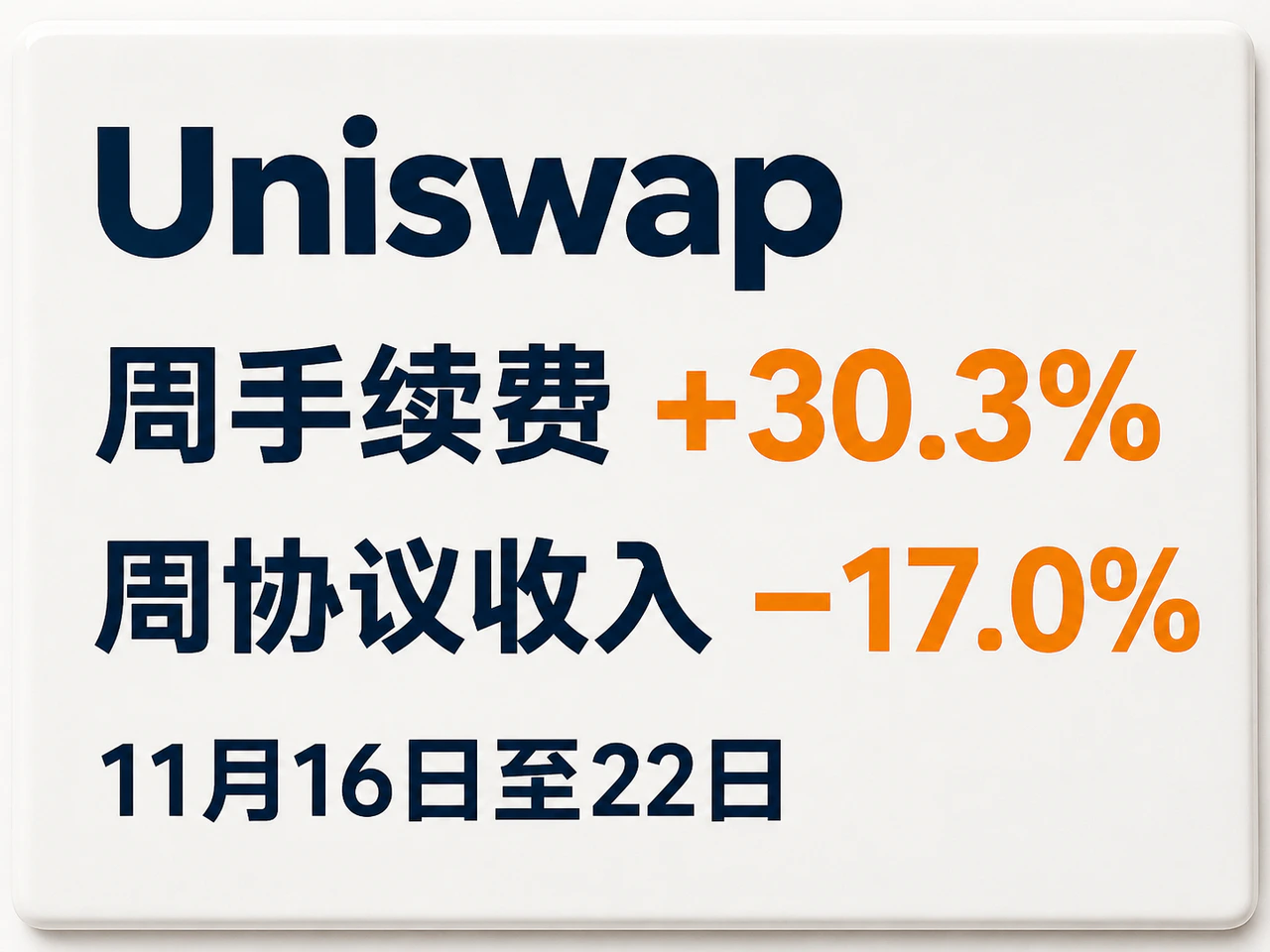
Across all versions and networks, Uniswap recorded weekly trading volume of $14.743 billion, down 5.8% from the previous week. Fees paid by users nevertheless rose from approximately $14.20 million to $18.50 million, an increase of 30.3%; DefiLlama recorded $8.37 million in fees on Sunday alone. Over the same period, the weekly amount classified as protocol revenue fell from $1.8123 million to $1.5050 million, down 17.0%. Trading volume, fees and protocol revenue measure trading activity, trader costs and the protocol's proceeds, respectively; the three moved in different directions this week.
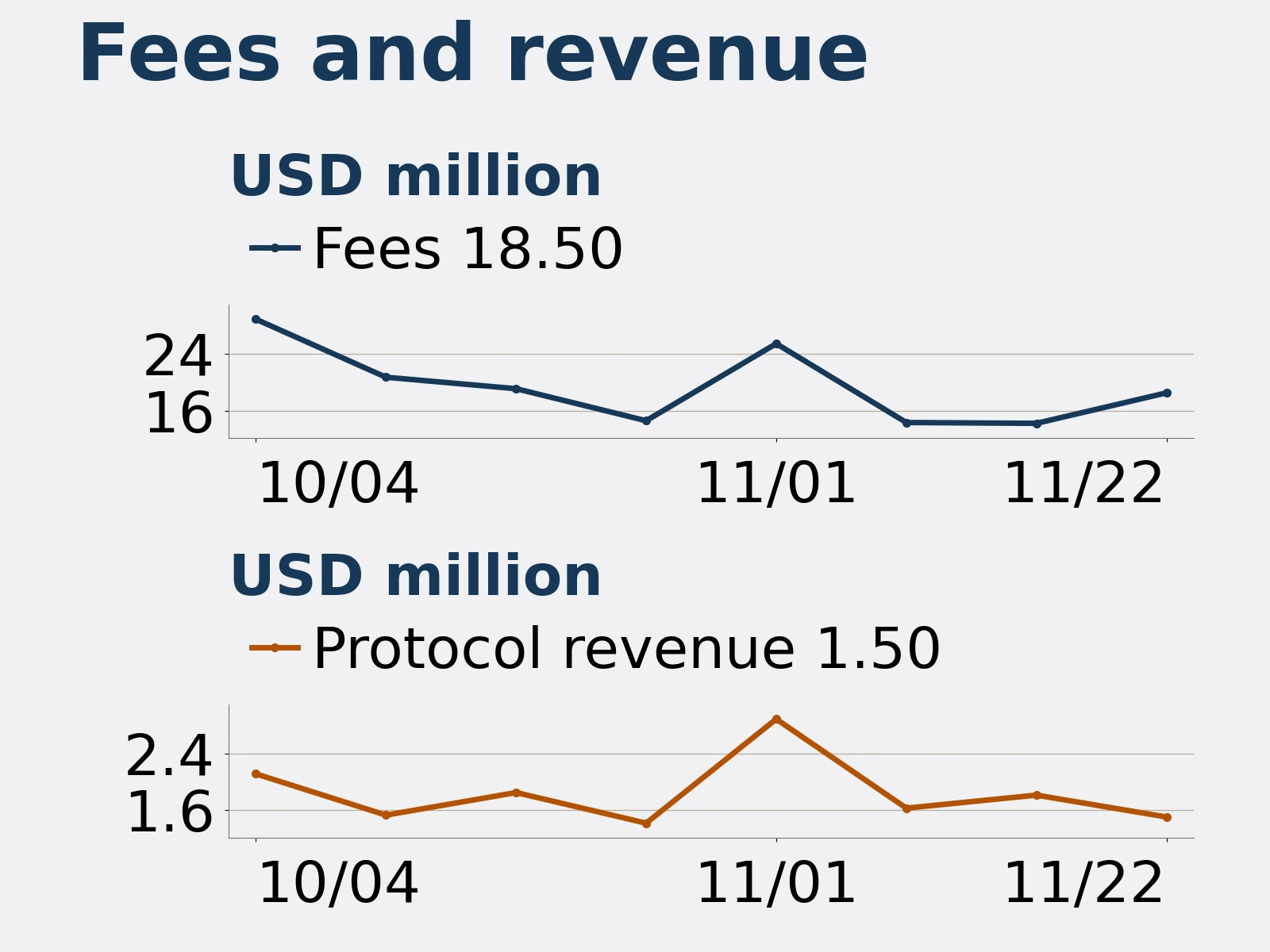
This divergence relates to the way fees are charged. In Uniswap v4 pools, liquidity providers that supply assets for trading can collect fees; whether the protocol earns revenue from a trade also depends on whether protocol fees are enabled for the pool and on the applicable rate. If trading becomes concentrated in pools with higher fees, total fees paid by users can rise even when volume declines. The available weekly aggregates show the divergence, but more detailed data are needed to establish which pools generated the additional fees and how much was contributed by Sunday's large trades on BNB Smart Chain.
On November 16, Uniswap Labs proposed in the governance forum that v4 protocol fees be extended to Celo, Soneium, X Layer, World Chain and Zora. These five chains had already enabled v2 and v3 protocol fees. According to the explanation accompanying the proposal when it was published, v4 protocol fees were already enabled on eight chains, including BNB Smart Chain. The proposal also set out lower target liquidity-provider fee rates for two USDC/USDG stablecoin pools on Arbitrum. Extending protocol fees to additional networks and adjusting the fees traders pay in particular pools are two governance decisions that can be made separately.
The proposal must pass an onchain vote and be executed before the expanded fee coverage can be reflected in protocol revenue. Evaluating its actual effect will require continued observation of how much volume comes from fee-enabled pools on the additional networks and how much protocol revenue those trades generate. Uniswap's aggregate volume across networks reflects the scale of trading; pool-level distribution and the allocation of fees require more detailed data.
Click “Read original” for the full details.