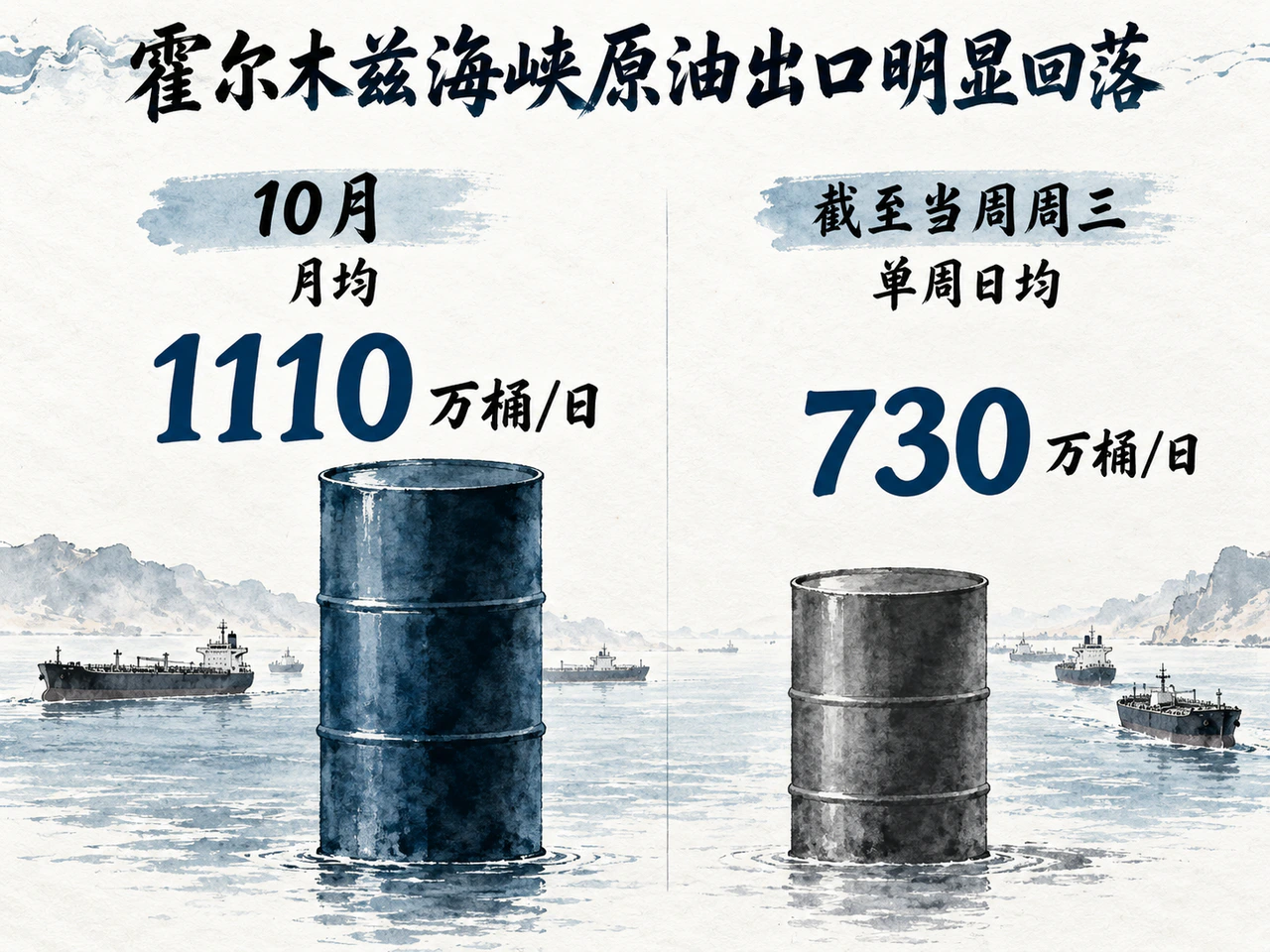
On October 31, 2026, mediation over the Strait of Hormuz made technical progress. Iranian Foreign Minister Abbas Araghchi said that, following consultations with Qatari mediators, the implementation period for a plan to reopen the Strait of Hormuz could be shortened to two days, and that an Iranian delegation had traveled to Doha for further talks. The same day, US Secretary of State Marco Rubio said President Donald Trump had not yet decided whether to resume military strikes against Iran.
Although diplomatic channels remain active, the two sides have yet to reach an agreement. The change in the latest talks concerns the speed of implementation: Qatar had previously proposed shortening the implementation period for Iran's original plan to five days, and the latest discussions reduced it further to two days. However, the two days refer only to the period needed to implement the plan once it is accepted; they do not mean a countdown to reopening the strait has begun. The central disagreement remains the terms of an exchange involving passage through the strait and sanctions arrangements. Iran wants oil-sales waivers restored, frozen assets released, including those held in Qatar, relevant sanctions lifted and US military deployments in the region reduced. It has also attached its own conditions to shipping-route arrangements in the strait.
Iran Insists on Sanctions Relief Before Nuclear Talks; Washington Declines to Set a Deadline
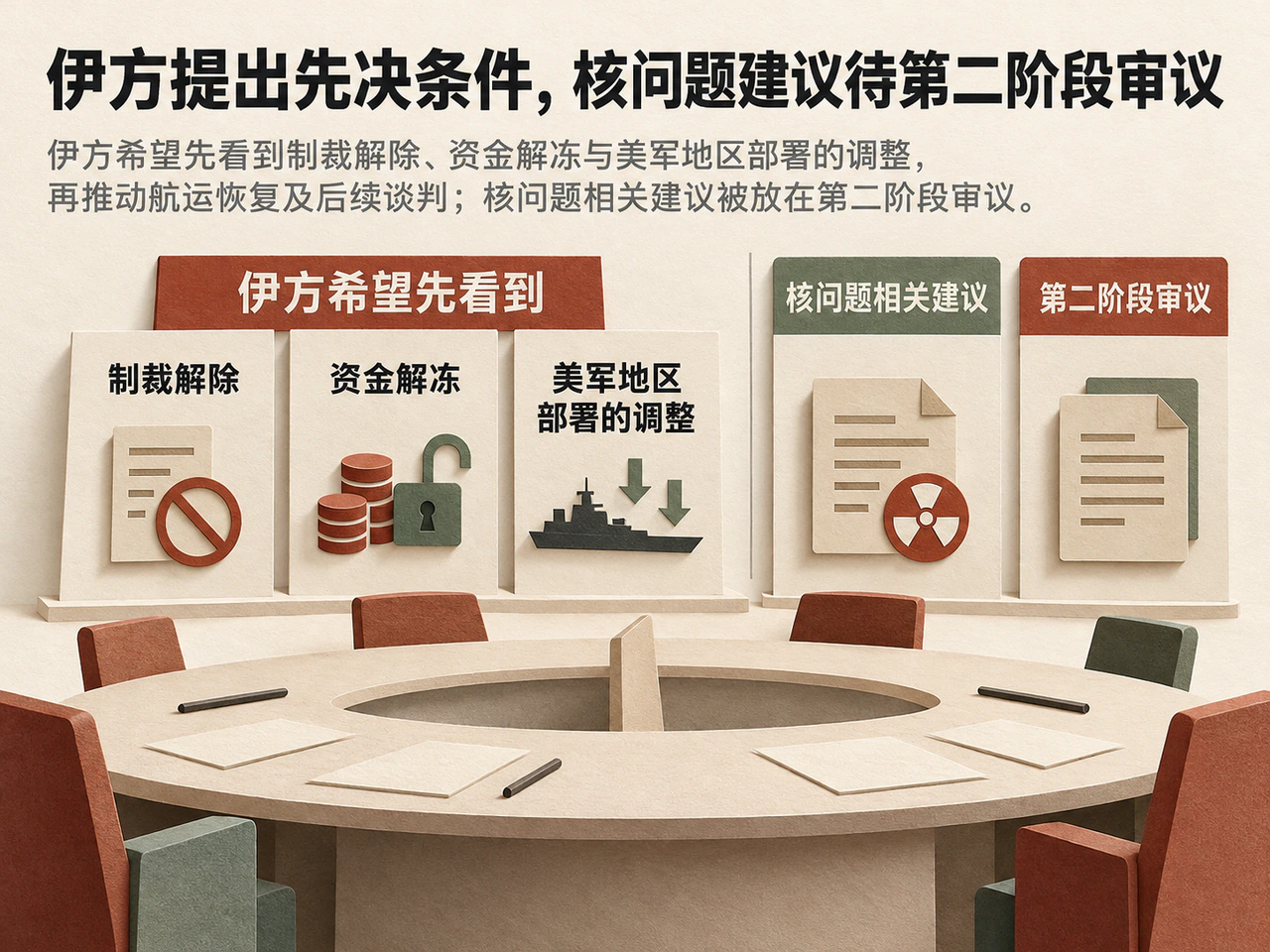
The core demands of Washington and Tehran remain unresolved over the sequence of negotiations. Araghchi described the US pursuit of broader dialogue as a positive step and disclosed that Tehran had examined a letter from US Vice President JD Vance at a high-level meeting. However, Rezaei, secretary of Iran's Supreme National Security Council, confirmed that no reply had yet been sent. Araghchi made clear that there were currently no plans to meet US officials, and that direct or indirect negotiations would still depend on whether Iran's conditions were met. Qatar and Pakistan continue to act as intermediaries, while Iran has deferred consideration of proposals concerning nuclear issues to a second stage.
This arrangement brings the negotiating obstacles into sharper focus. Iran wants to see sanctions lifted, funds unfrozen and adjustments to US military deployments in the region before moving ahead with the resumption of shipping and subsequent talks. The United States, meanwhile, continues to treat preventing Iran from acquiring nuclear weapons as a core objective. Shortening the implementation period reduces the time required for execution, but does not resolve fundamental questions about how each side would verify the other's compliance or which steps should come first.
At a press conference following the Group of Twenty (G20) foreign ministers' meeting in Atlanta, Rubio declined to assess the progress or timing of negotiations, but said any resolution must address the United States' core security concerns. He also emphasized that Washington had the capacity to take military action but preferred a diplomatic solution. The remarks preserved room for talks while maintaining military pressure.
Khamenei Orders Retaliation Without Geographic Limits if Attacked, as Friction Persists in and Around the Strait
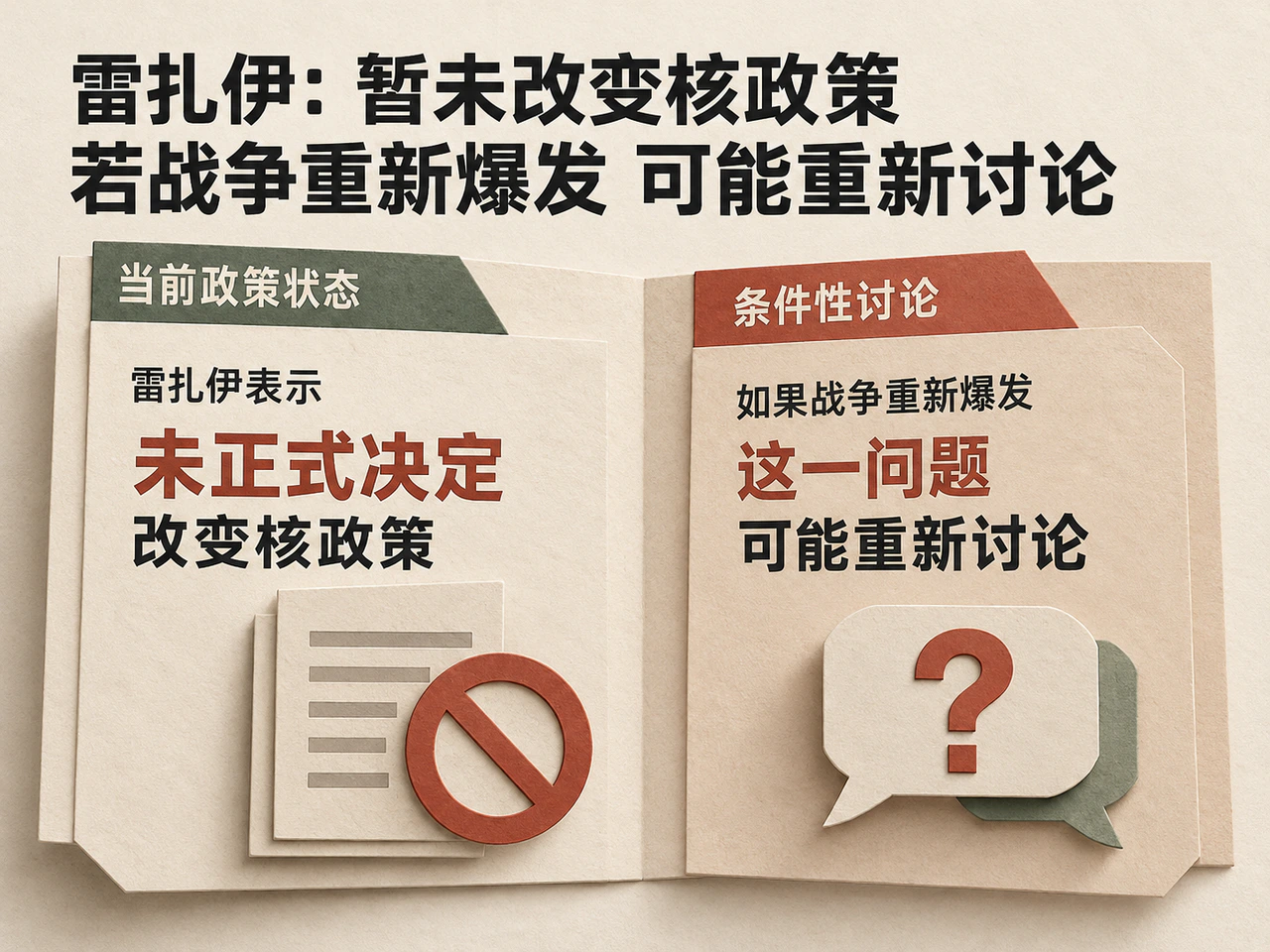
Alongside diplomatic mediation, Iran continued to send forceful signals that day. According to a statement released by Iran, Supreme Leader Mojtaba Khamenei instructed the military to respond to new military or terrorist attacks immediately, effectively and without geographic restrictions. Abdollahi, chief of staff of Iran's armed forces, also claimed that potential strike targets had been updated. On nuclear policy, Rezaei said the government had not formally decided to change its policy, but the issue could be reconsidered if war broke out again. By strengthening the threat of retaliation after an attack and preserving flexibility over nuclear policy, Iran is seeking to increase its adversaries' hesitation about restarting hostilities.
Maritime friction, meanwhile, has continued despite the Doha talks. Iran's navy claimed that a tanker in the eastern part of the strait ignored warnings that day, entered waters Iran deemed unsafe, and struck a mine before catching fire. The claim has not been independently verified. Iranian state television also said that two previously missing fishermen from Qeshm had been found. Iran blamed the United States for the attack on their fishing boat and said two other people had been injured.
Regional spillover pressures persist. The Saudi-led coalition reported intercepting a drone in the Riyadh region that day, with no injuries caused by falling debris, and subsequently intercepting one drone each in the eastern and southern regions. Amid continuing security risks, Saudi and Egyptian officials called for de-escalation at a security conference in Bahrain. Egyptian Foreign Minister Badr Abdelatty warned that another round of war could be more destructive.
A satellite-imagery investigation published by the Associated Press that day highlighted the accumulated military costs of the earlier conflict. Reviewing attacks through August, the investigation found that more than 115 drone and missile strikes claimed by Iran or armed groups it supports had damaged or destroyed buildings and facilities at 26 bases and other sites housing US military equipment. The findings exposed the vulnerability of fixed early-warning, air-defense and base infrastructure during a sustained conflict. Whether the Doha talks can advance bears directly on whether these military losses and shipping risks continue to grow.
Key Developments
The times below are when reports were published or updated, in Beijing time.
| Key Developments |
|---|
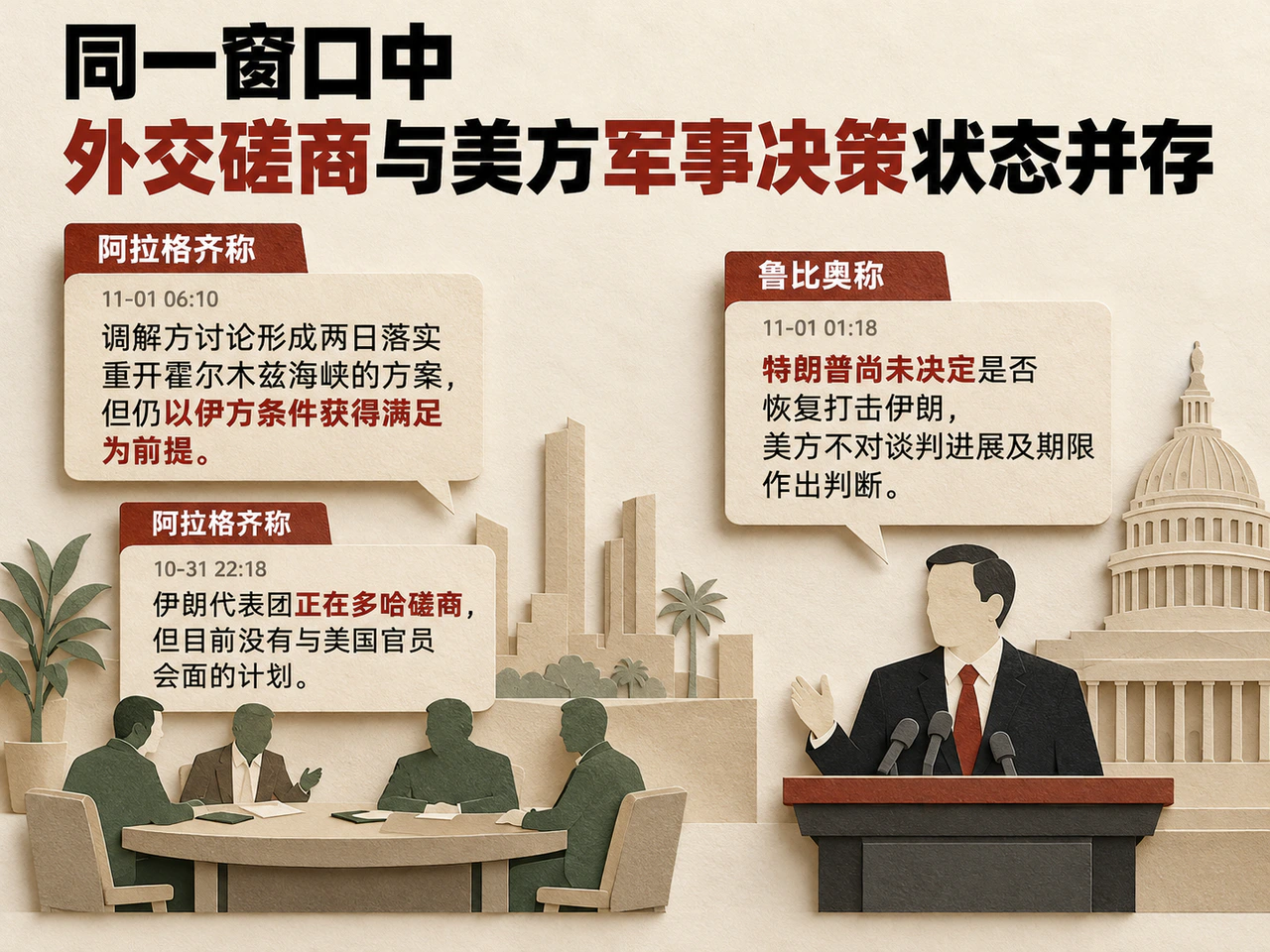
| 11-01 06:10Araghchi said discussions with mediators had produced a plan to implement the reopening of the Strait of Hormuz within two days, but it remained conditional on Iran's demands being met. |
| 11-01 02:40Rezaei said Iran's government had not formally decided to change its nuclear policy, but might reconsider the issue if war resumed. No reply had yet been sent to Vance's letter. |
| 11-01 02:17Iran's navy claimed that a tanker in the eastern part of the strait ignored warnings, entered unsafe waters, and struck a mine before catching fire. The claim has not been independently verified. |
| 11-01 01:18Rubio said Trump had not yet decided whether to resume strikes against Iran, and Washington declined to assess the progress or timing of negotiations. |
| 10-31 23:15The Associated Press published a satellite-imagery investigation finding that, through August, more than 115 attacks claimed by Iran or armed groups it supports had damaged or destroyed buildings at 26 bases and other sites housing US military equipment. |
| 10-31 22:18Araghchi said an Iranian delegation was holding talks in Doha, but there were currently no plans to meet US officials. |
| 10-31 21:37Saudi and Egyptian officials called for avoiding escalation at a security conference in Bahrain. Egypt's foreign minister warned that another round of war would be more destructive. |
| 10-31 21:07A statement released by Iran said Khamenei had instructed the military to respond immediately to any new attack, without geographic restrictions on its response. |
| 10-31 20:03Iranian state television said two previously missing fishermen from Qeshm had been found. Iran blamed the United States for the attack on their fishing boat and said two other people had been injured. |
| 10-31 16:48The Saudi-led coalition said it had intercepted one drone each in the eastern and southern regions, in addition to another drone intercepted in the Riyadh region that day. |