On October 26, 2026, Saudi Defense Minister Khalid bin Salman, Pakistani army chief Munir and Turkish intelligence chief Kalin traveled to Tehran to meet Iranian President Pezeshkian and other officials. Their visit set the direction for the week's diplomacy: regional governments stepped up efforts to prevent a resumption of large-scale fighting between the United States and Iran. But the two sides have yet to agree on the sequence for addressing the nuclear issue, the port blockade and passage through the Strait of Hormuz, and diplomatic contacts have yet to produce an agreement.
On October 31, Iranian Foreign Minister Araghchi said a new proposal discussed through mediators could shorten the time needed to fully reopen the strait to two days, provided the United States met Iran's conditions. On November 1, Iranian negotiators continued consultations with Qatari mediators in Doha, in what media reports citing officials described as a third consecutive day of talks. The proposed timetable is accelerating, but the exchange of concessions has yet to be implemented, while actual attacks continue to test shipping security.
Officials from Three Countries Visit Tehran as Nuclear Sequencing Becomes a Focus of Talks

Saudi Arabia described the October 26 visit as an effort to encourage dialogue, prevent renewed escalation and support mediation. Saudi Arabia itself has been affected by attacks from Yemen; Pakistan has long helped facilitate communication between Washington and Tehran; and Turkey is also concerned about the strait and developments in Yemen. Their joint engagement with Iran reflects a regional desire to reduce the costs of another spillover of the war.
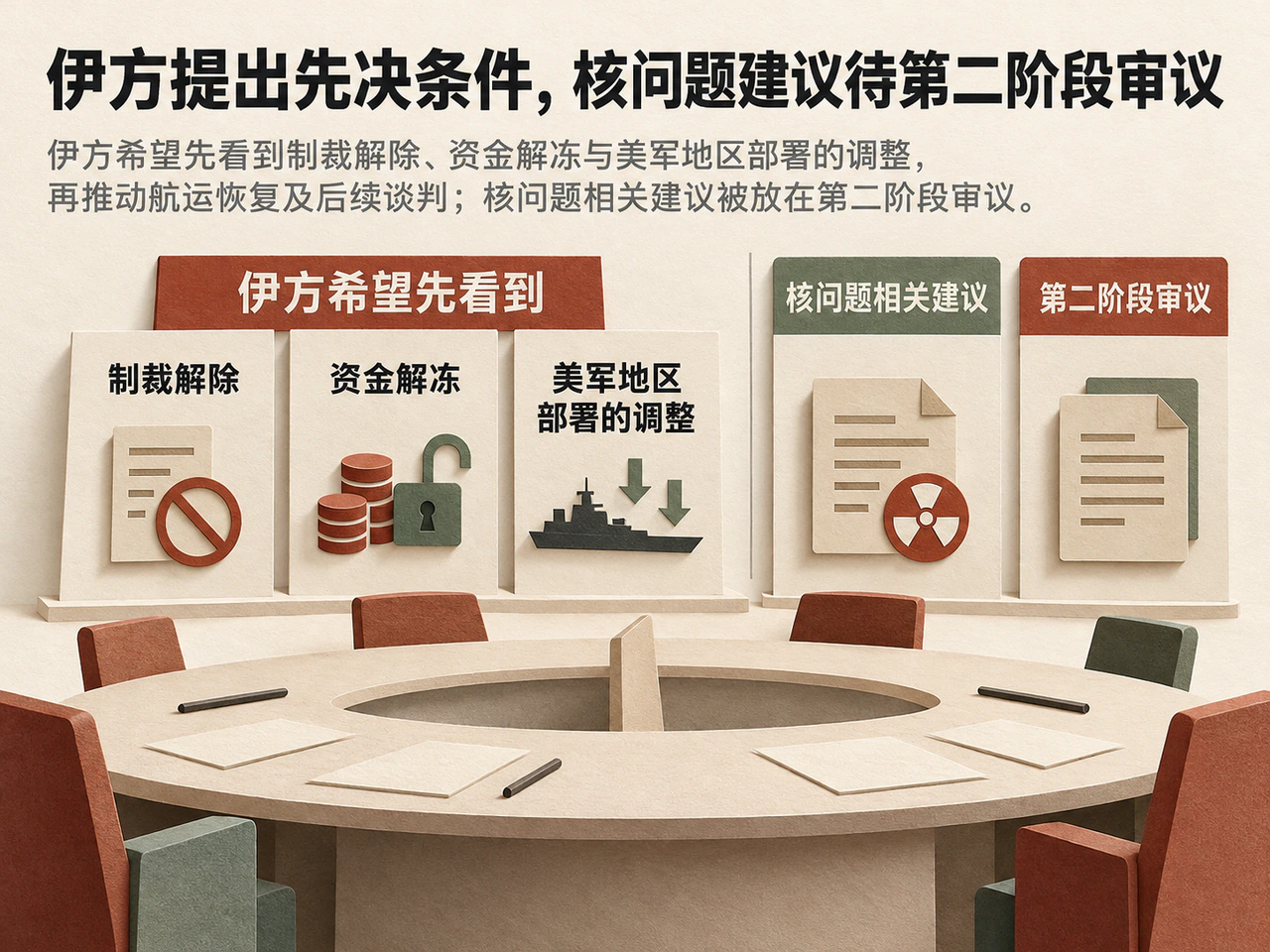
Washington has sought to open broader negotiations. Media reports said Vice President Vance sent a letter through Qatar to Rezaei, secretary of Iran's Supreme National Security Council, proposing direct, comprehensive talks that would begin with the nuclear issue. On October 29, Iran's Tasnim news agency said Tehran had not yet replied and remained committed to its earlier conditions for negotiations. Reuters reported on October 31 that the disagreement remained whether to discuss the nuclear issue first or first lift the port blockade and oil sanctions.
Araghchi subsequently put forward the conditional proposal to reopen the strait within two days, while saying there were currently no plans for a direct meeting with U.S. officials. Mediation continues, but direct negotiations have yet to begin. The next key developments will be Washington's response to conditions such as lifting the blockade, and whether Tehran accepts placing the nuclear issue on the agenda at the same time.
LNG Carrier Attack Extends Strait Risks Beyond Oil

On October 30, Oman announced the evacuation of 25 crew members from a Panama-flagged merchant ship that had caught fire after an attack off Musandam. On November 1, Qatar's state news agency disclosed that the LNG carrier Al Mayeda had been struck by an unidentified object in the Gulf on the evening of October 30. No crew members were injured, there was no environmental impact, and the vessel remained operational. The attack on an LNG carrier extends the strait's risks to energy shipments beyond oil.
Iran said several oil tankers had struck mines and caught fire, claims that have not been independently verified. U.S. Central Command denied the mine-strike claims on October 28, saying the internationally recognized main shipping lanes had been cleared of mines. Established developments such as crew evacuations and vessel damage should be distinguished from claims about attack methods, responsibility and military results. As long as ships still face attacks, rescue operations and decisions over which routes to use, diplomatic proposals will struggle to remove carriers' operational risks immediately.
The shipping conflict has also left environmental costs. The United Arab Emirates said on October 30 that the source of the leak from the tanker GEM NO.2 had been stopped and no additional oil leakage had been detected, although coastal cleanup and monitoring continued. A resumption of shipping depends both on military arrangements and on shipowners' assessments of risks to vessels and crews, as well as liability for pollution.
Fighting Continues Around Yemen as Aden Airport Attack Halts Flights

On October 26, Egypt's parliament approved purely defensive military support for Saudi Arabia, with deployments confined to Saudi territory. The following day, the Houthis claimed an attack on Saudi Arabia's Ras Tanura refining facilities, a claimed military result that has not been independently verified. The Saudi-led coalition said it intercepted 5 ballistic missiles and 4 drones that day. On October 28, Yemen's government said the Houthis had attacked Aden airport, causing injuries and property damage; transport officials said flights had been suspended. Successive attacks on an airport and energy facilities have thus intertwined regional governments' efforts to promote negotiations with their defense arrangements.
In Lebanon, judicial sources said on October 30 that a military court had charged 13 people in connection with an earlier intercepted shipment of Hezbollah explosives, with two of them already in custody. This also shows that regional security issues encompass armed groups' supply networks and domestic law enforcement, and are difficult to resolve in their entirety through an arrangement on the strait alone.
Military Options Remain Open as an Exchange of Concessions Determines Mediation's Prospects

Both sides kept military options open over the weekend. Rubio said on October 31 that Trump had not yet decided whether to launch another round of strikes on Iran and that the United States still favored a diplomatic solution. Rezaei said there had been no new formal decision on Iran's nuclear policy, but that renewed war could prompt discussion. A diplomatic opening remains. Whether the next steps produce an executable exchange of concessions will determine whether faster mediation translates into improved security.
Key Developments

| Key Developments |
|---|
| 11-01Qatar's state news agency disclosed that the LNG carrier Al Mayeda was struck by an unidentified object in the Gulf on the evening of October 30. No crew members were injured, there was no environmental impact, and the vessel remained operational. |
| 11-01Iranian negotiators continued consultations with Qatari mediators in Doha. Media reports citing officials said this was the third consecutive day of talks. |
| 11-01Araghchi said a new proposal discussed through mediators could fully reopen the Strait of Hormuz within two days after the United States met the conditions. There were currently no plans for a direct meeting with U.S. officials. |
| 11-01Rubio said Trump had not yet decided whether to launch another round of strikes on Iran and that the United States still favored a diplomatic solution. |
| 11-01Rezaei, secretary of Iran's Supreme National Security Council, said there had been no new formal decision on nuclear policy, but renewed war could trigger discussion. |
| 10-31At the Manama Dialogue in Bahrain, Egypt's foreign minister warned that another escalation would be more dangerous and destructive. Qatari mediators had returned to Tehran the previous day. |
| 10-31Oman announced the evacuation of 25 crew members from a Panama-flagged merchant ship that caught fire after an attack off Musandam. Iran separately said several oil tankers had struck mines; those claims have not been independently verified. |
| 10-31The United Arab Emirates said the source of the leak from the tanker GEM NO.2 had been stopped and no additional oil leakage had been detected. Coastal monitoring and cleanup continued. |
| 10-30Lebanese judicial sources said a military court had charged 13 people in connection with an earlier intercepted shipment of Hezbollah explosives, with two of them already in custody. |
| 10-29Iran's Tasnim news agency said Tehran had not yet replied to the U.S. letter and remained committed to its earlier conditions for negotiations. |
| 10-28U.S. Central Command denied Iran's claims that merchant ships had struck mines, saying the internationally recognized main shipping lanes had been cleared of mines. Attacks continued to affect vessel safety. |
| 10-28Yemen's government said the Houthis attacked Aden airport, causing injuries and property damage. Transport officials said flights had been suspended. |
| 10-27The Houthis claimed an attack on Saudi Arabia's Ras Tanura refining facilities, a claimed military result that has not been independently verified. The Saudi-led coalition said it intercepted 5 ballistic missiles and 4 drones that day. |
| 10-26The Saudi defense minister, Pakistani army chief and Turkish intelligence chief met Iran's leadership in Tehran to promote de-escalation and support Qatari and Pakistani mediation. |
| 10-26Egypt's parliament approved purely defensive military support for Saudi Arabia, with deployments confined to Saudi territory. |