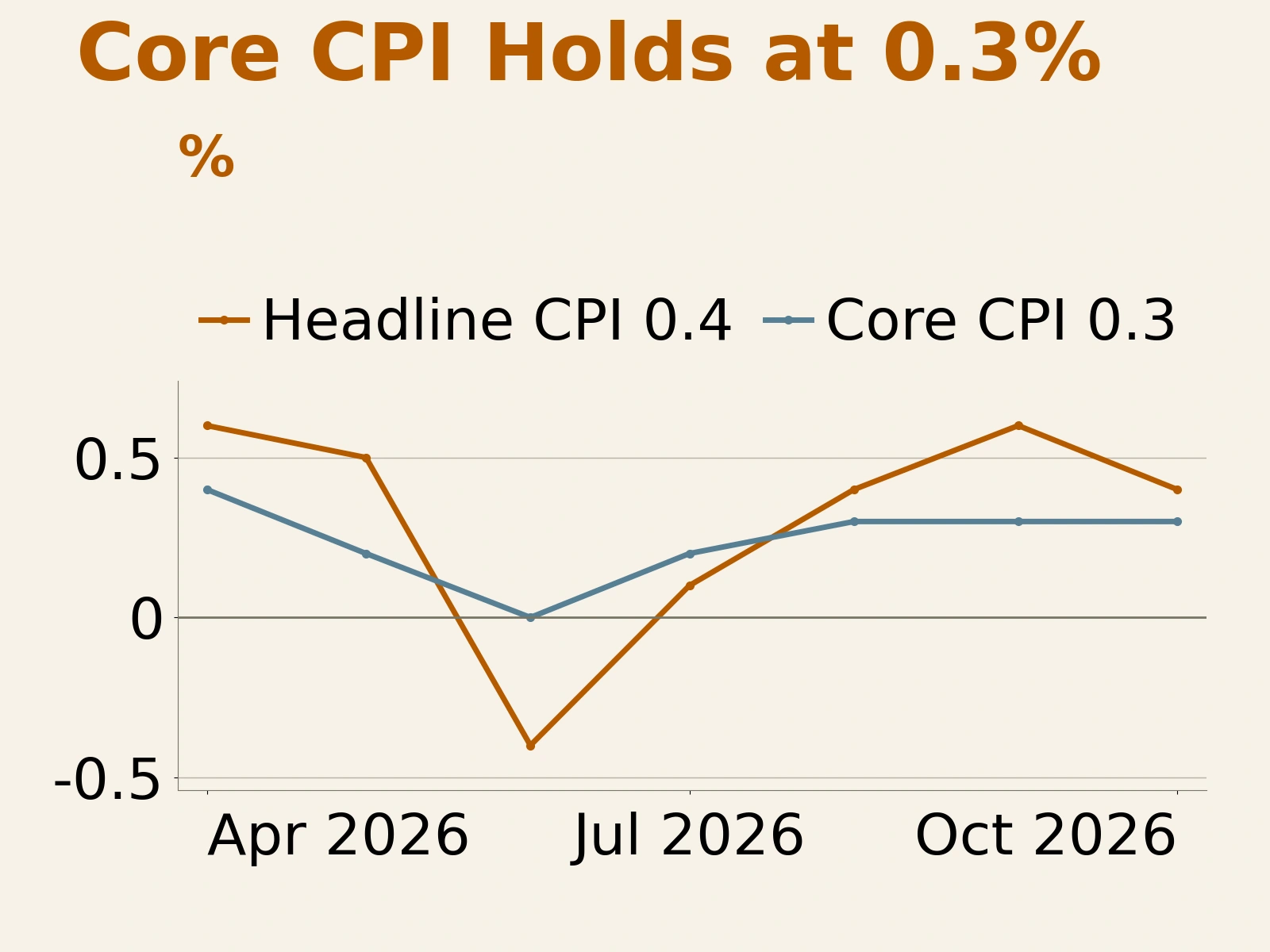
On November 12, 2026, Cleveland Federal Reserve President Beth Hammack said at an event in Columbus, Ohio, that monetary policy needed to move to a more restrictive stance, although she favored smaller, more frequent interest-rate increases. U.S. unemployment insurance claims data released the same day showed that layoff pressures had not continued to broaden. The focus of discussion within the Fed is now shifting toward the pace of tightening: persistent inflation calls for further action, while the economy’s ability to absorb higher financing costs will determine the size of each increase.
Hammack favors gradual tightening and keeps an open mind on December
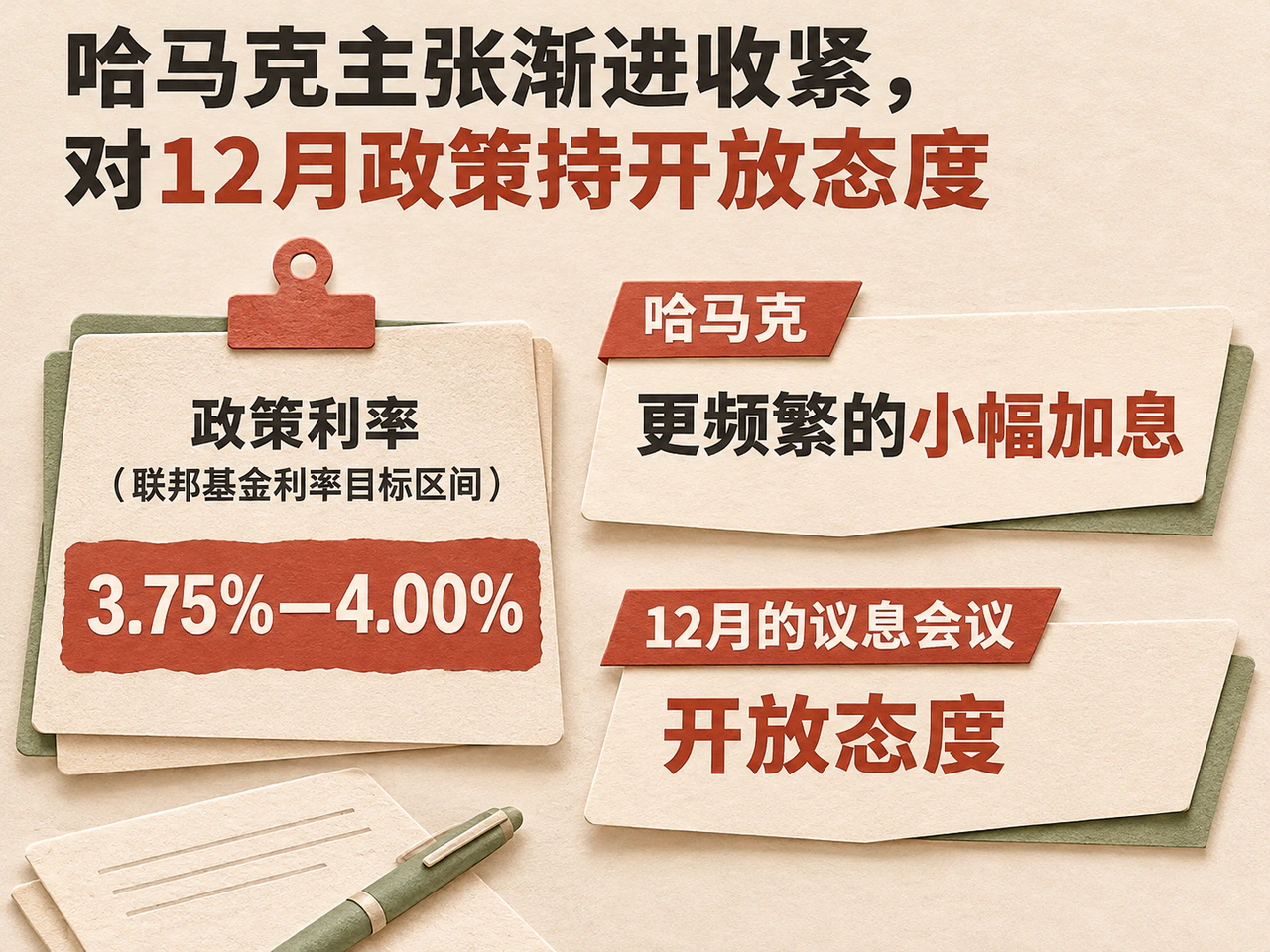
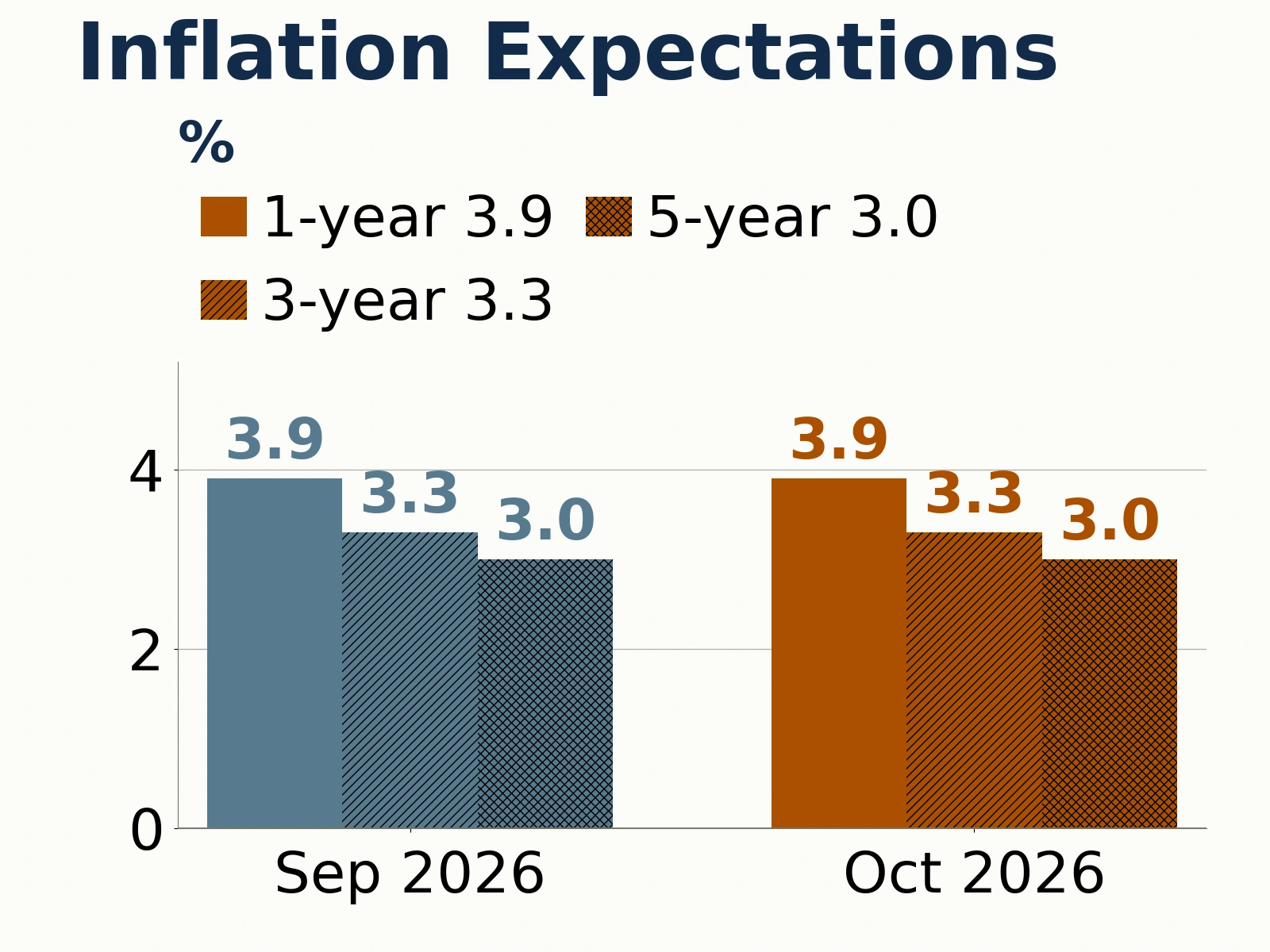
According to Bloomberg, Hammack is concerned that a failure to bring inflation back to the 2% target could lead the public to expect inflation to remain elevated. TheStreet’s coverage of the event further reported that, in her view, October consumer price data showed that progress on inflation had clearly stalled, but smaller, more frequent rate increases would be less disruptive to the economy; more aggressive action would need to be considered only if policy fell behind developments. She remains open-minded about the December policy meeting.
Her remarks attracted particular attention because Hammack was already among those advocating earlier tightening. When the Fed decided on October 28 to hold the federal funds rate target range at 3.75%–4.00%, she and Governor Lisa Cook both voted for a 25-basis-point increase. A clear supporter of further tightening favoring gradual steps suggests that the Fed’s deliberations on the direction of rates and the size of individual moves are becoming more distinct. The key question now is whether inflation will become still more persistent, forcing policymakers to change this gradual approach.
Initial claims rebound to 200,000, with labor-market resilience intact

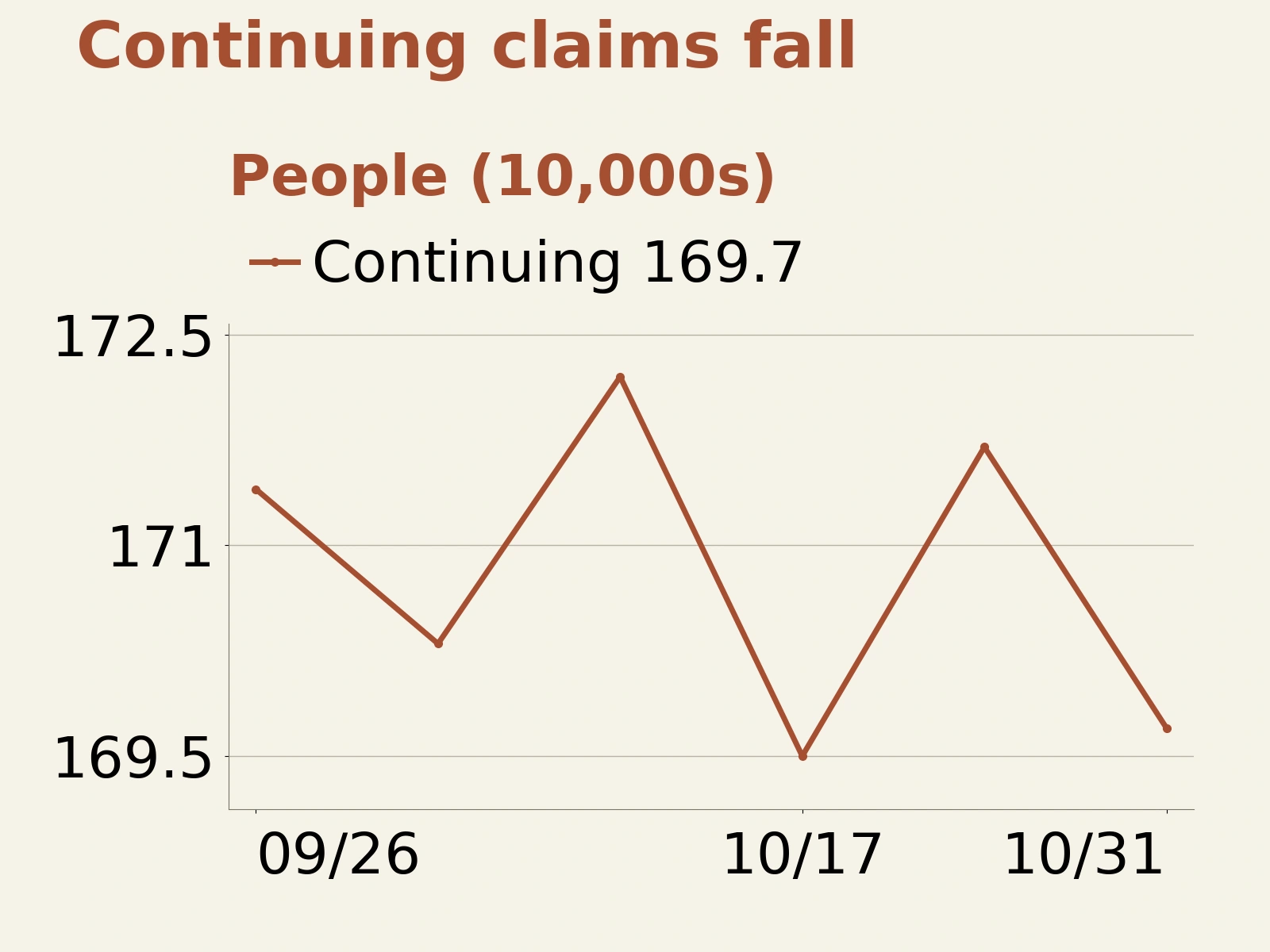
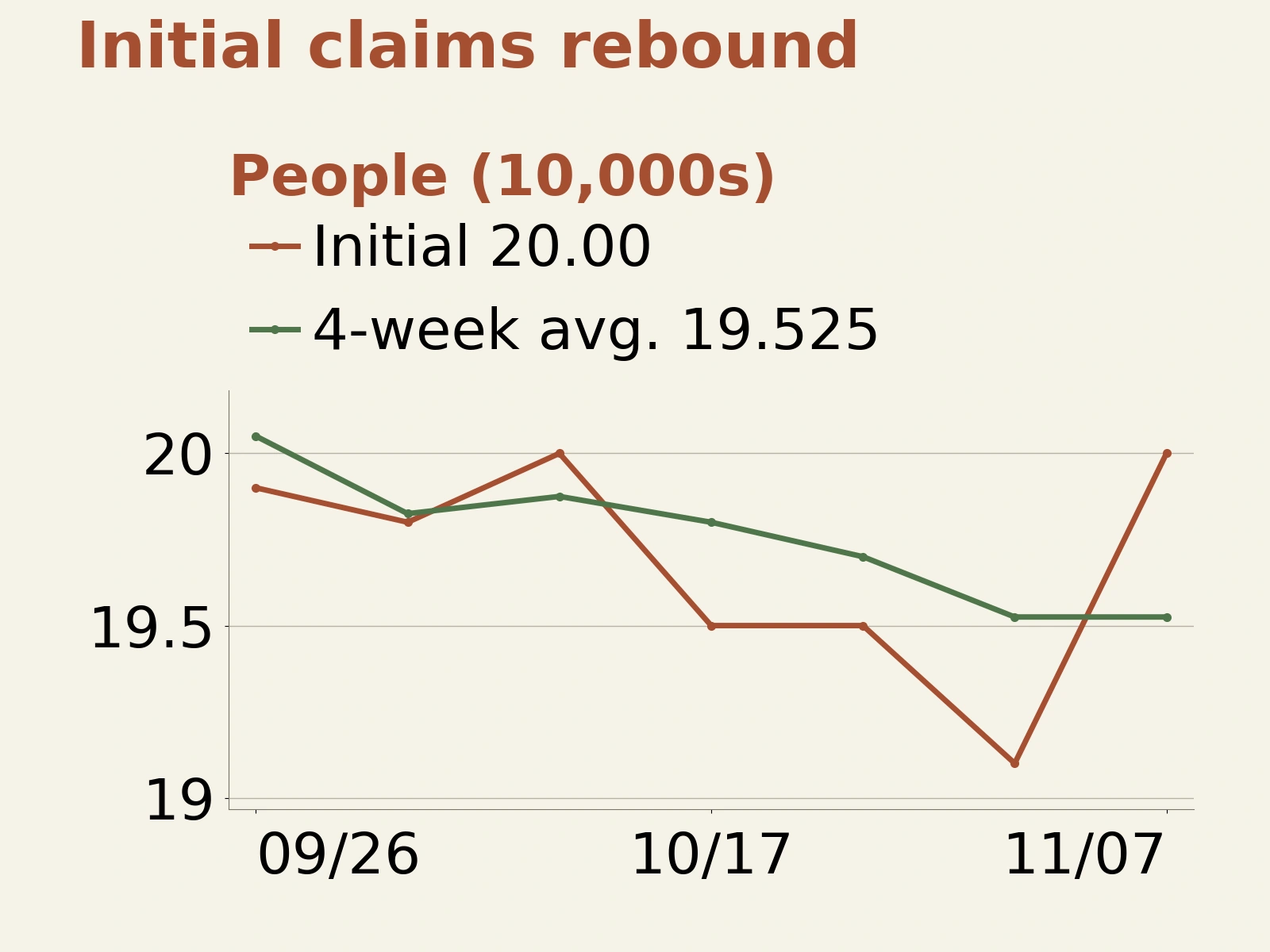
Data released by the U.S. Department of Labor on November 12 showed that seasonally adjusted initial unemployment insurance claims totaled 200,000 in the week ended November 7, up 9,000 from the previous week’s revised 191,000. The four-week moving average was unchanged at 195,250. Continuing claims, released the same day but covering a reporting week one week earlier, fell by 20,000 to 1.697 million.
Over a longer horizon, initial claims began at 199,000 in the week ended September 26, stayed within a range of 198,000 to 200,000 in early October, fell as low as 191,000 at the end of October, and rebounded to 200,000 in the latest week. Although the weekly rebound warrants monitoring, an unchanged four-week average alongside declining continuing claims indicates that the labor market remains resilient overall. This removes any immediate urgency to pivot toward easing and leaves the Fed room to keep fighting inflation, making the direction of policy increasingly dependent on whether price data show signs of cooling.
Housing pressures are unlikely to displace the inflation fight; October PPI and further labor data are in focus

Also that day, Kansas City Fed President Jeff Schmid told a local housing finance forum that housing construction was being squeezed by simultaneous increases in labor, building-material and financing costs, while the AI investment boom was competing with the construction industry for skilled workers and capital. He emphasized, however, that the Fed’s policy rate serves overall price stability, and that the long-term interest rates determining housing finance costs are also influenced by numerous factors beyond monetary policy.
Pressure on interest-sensitive sectors such as housing therefore constrains the pace of rate increases, but has yet to overturn the broader policy priority of combating inflation. Markets face two key near-term data tests. The first is October’s Producer Price Index (PPI), due at 8:30 a.m. Eastern Time on November 13, which will help assess upstream price pressures. The second is the next unemployment insurance claims report, scheduled for November 19, which will test whether the rebound in initial claims develops into a sustained trend. If price pressures persist while employment remains solid, the case for gradual tightening will strengthen. Conversely, if signs of labor-market weakness begin to spread, the balance of costs and benefits of further rate increases will also change.