On November 13, 2026, Iran’s Revolutionary Guard claimed to have destroyed a US military early-warning radar in Bahrain. US Central Command subsequently denied that the radar had been damaged, saying both Iranian one-way attack drones had been shot down, with no casualties or damage to facilities.
Iran said the operation was a response to a US attack on a communications tower in Sirik, near the Strait of Hormuz; Iran’s state news agency had previously reported that Sirik was attacked late on the night of November 12, local time. The available information points to renewed direct exchanges between the two sides, with US early-warning facilities now among the targets of retaliation. The radar’s destruction remains an Iranian claim. This round of exchanges has again linked facilities on Iran’s southern coast and US bases in the Gulf in a single chain of retaliation, while merchant shipping through the Strait of Hormuz remains far from normal.
Weekly Hormuz traffic totals 308 vessel movements; mine-strike claims await verification

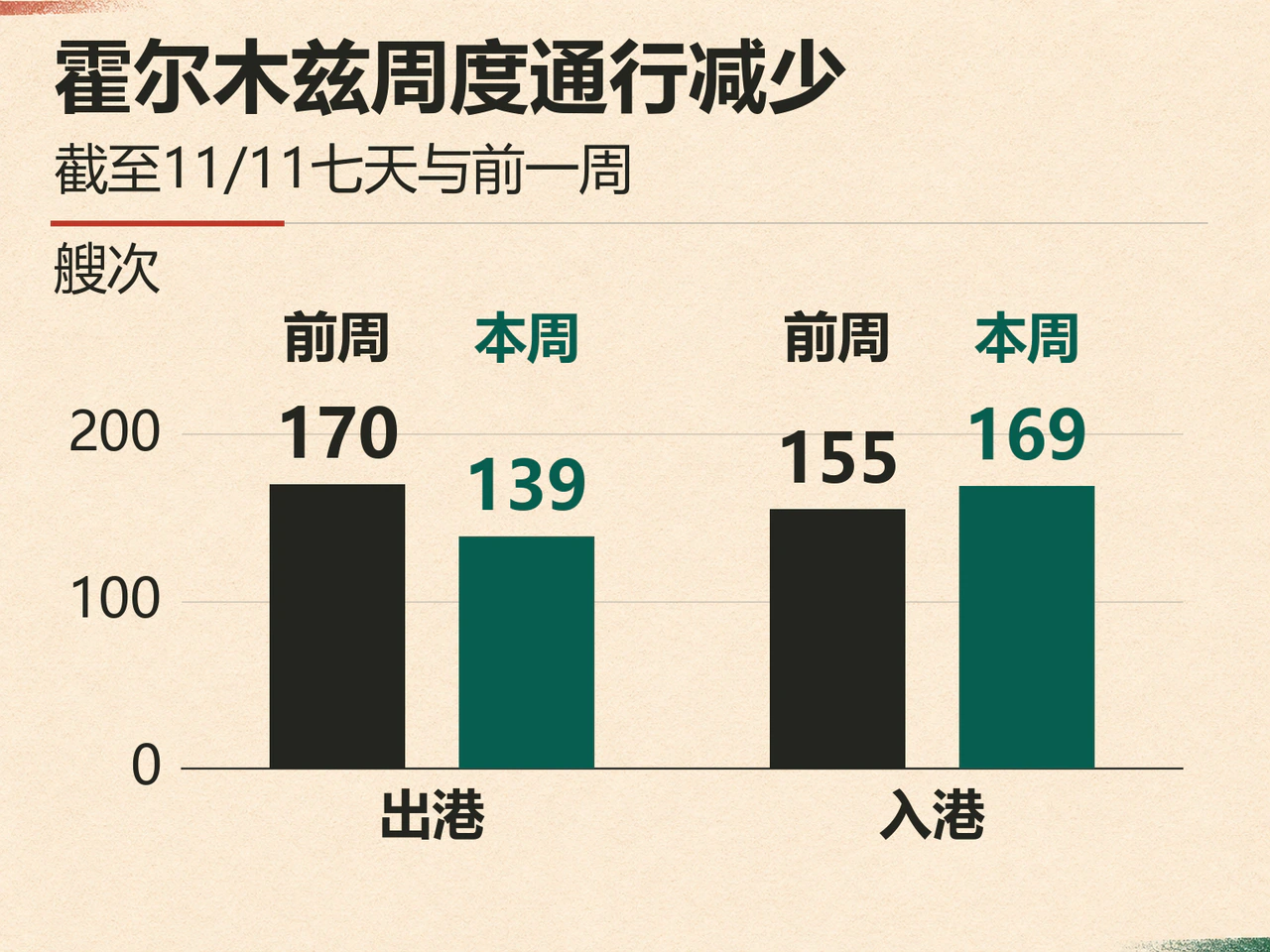
According to media accounts of weekly data released by the United Kingdom Maritime Trade Operations office on November 13, the Strait of Hormuz recorded 139 outbound and 169 inbound vessel movements in the seven days through November 11, a combined 308, down from 325 the previous week. Overall shipping activity remained approximately 65% below its prewar level. Eight maritime incidents recorded over the same period were spread across the Strait of Hormuz, the Gulf and the Gulf of Oman: the risk was not confined to a single narrow shipping channel.
On November 13, the Revolutionary Guard claimed that a gas carrier had struck a mine in the eastern part of the strait. It subsequently claimed that two other vessels, both oil tankers, had struck mines and caught fire while following what it called “unauthorized routes.” The names of the three vessels, casualties and damage remained unclear, as did the correspondence between the various claims and specific incidents. The International Association of Independent Tanker Owners cautioned the same day that one case of damage known to it appeared related to a floating device, but that this was not sufficient to establish the presence of mines in the Gulf. The specific weapons threatening merchant ships and the claimed results therefore remain to be confirmed, while persistent disruption to passage and recorded attacks are tangible constraints.
Iran says nuclear-monitoring talks cannot advance; IAEA urges a return to inspections
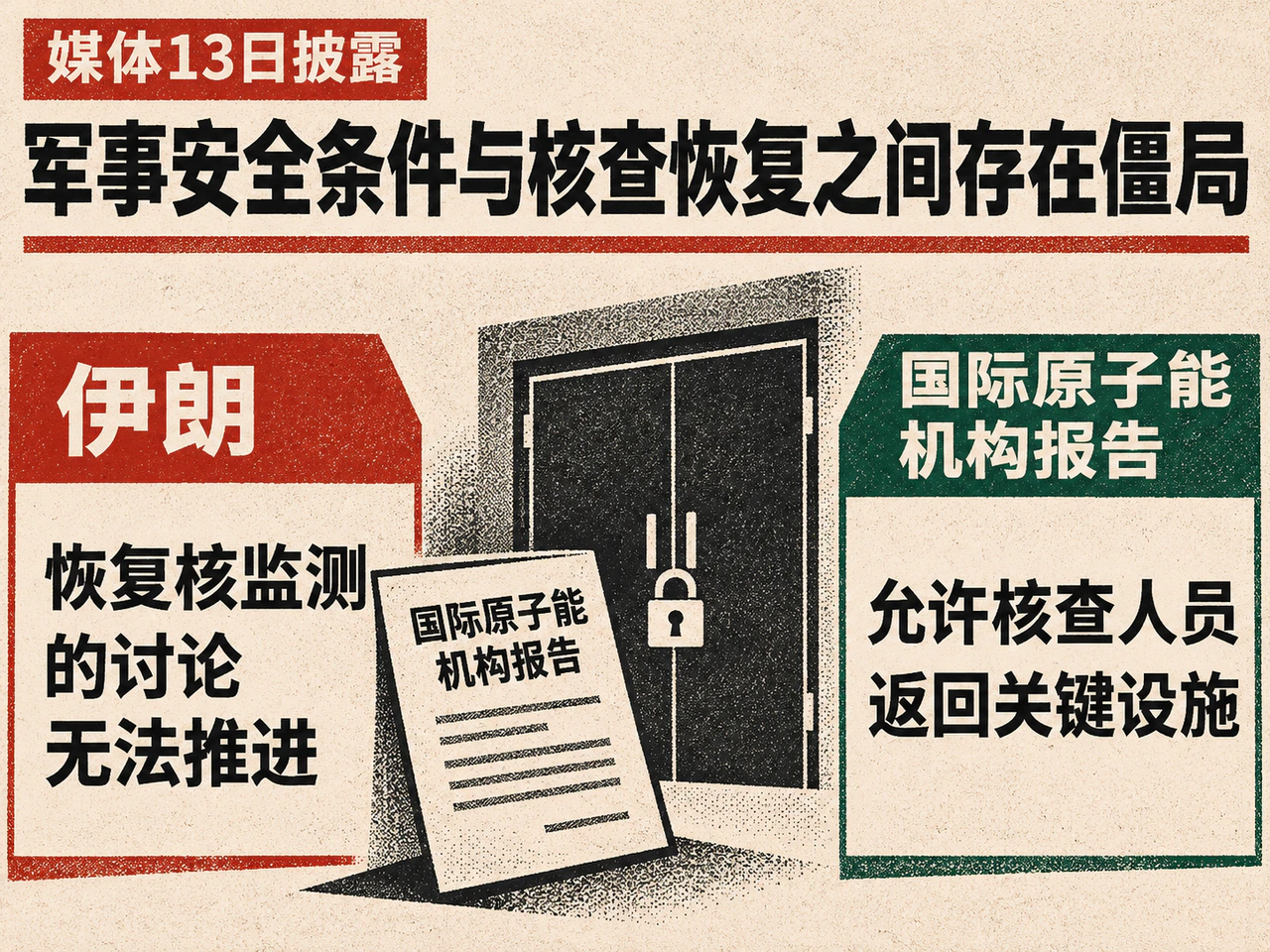
An International Atomic Energy Agency report disclosed by the media on November 13 said Iran considered discussions on restoring nuclear monitoring unable to advance while the United States continued threatening attacks on its nuclear facilities. The agency urged Iran to take technical, incremental steps to allow inspectors to return to key facilities. Iran also reiterated that it would resume full implementation of its safeguards obligations when conditions permitted. By linking the resumption of inspections to security conditions, Iran makes it difficult for military de-escalation to translate automatically into a verifiable nuclear arrangement.
Turkey and Qatar sign defense pact; more than 340,000 people displaced in Yemen

Turkey and Qatar signed a mutual defense agreement in Istanbul on November 13. Their joint statement called for a unified position on external armed attacks against either or both countries, alongside stronger cooperation on security consultations, joint military exercises, the defense industry and personnel training. Erdoğan also said the two countries would continue working together to prevent the Gulf war from expanding again and to promote dialogue. Defense cooperation and diplomatic mediation are advancing in parallel.
The Yemen front also bears on Saudi Arabia’s energy and transport facilities. On the evening of November 13, the Houthis claimed missile attacks on Riyadh airport and a pumping station on the East–West oil pipeline; Saudi Arabia had not confirmed the claims at the time. Citing Yemeni government military officials, media reports said the Houthis were advancing toward the vicinity of Aden, while government forces were reinforcing positions on the outskirts of Aden governorate.
The International Organization for Migration announced on November 13 that more than 340,000 people in Yemen had left their homes because of continuing hostilities and insecurity. Approximately 66% were from Taiz, 21% from Lahj and 12% from Hodeidah. Restrictions on transport routes were delaying deliveries of life-saving supplies, as the advancing front translated increasingly into pressure on healthcare, drinking water and shelter.
De-escalation requires progress on shipping, inspections and the Yemen front together
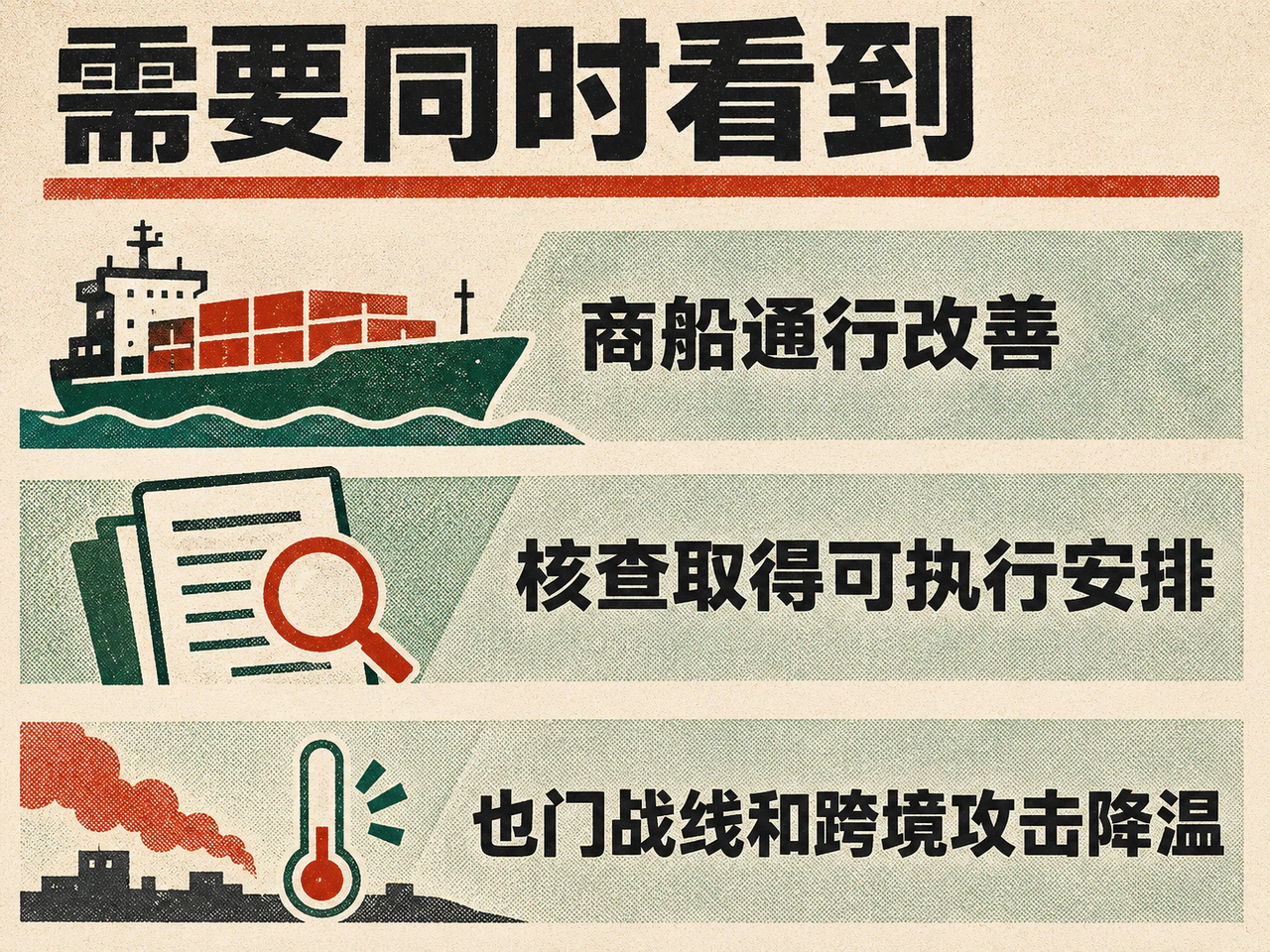
These developments point to a common judgment: even if the scale of military operations is constrained, the conflict can continue spilling over through Gulf bases, merchant shipping lanes and Yemen’s land front. Assessing whether tensions can ease meaningfully requires simultaneous improvement in merchant passage, workable inspection arrangements, and a cooling of both the Yemen front and cross-border attacks. A single defense pact or a unilateral claim of military success is unlikely to remove these interconnected constraints.
Key developments
| Key developments |
|---|
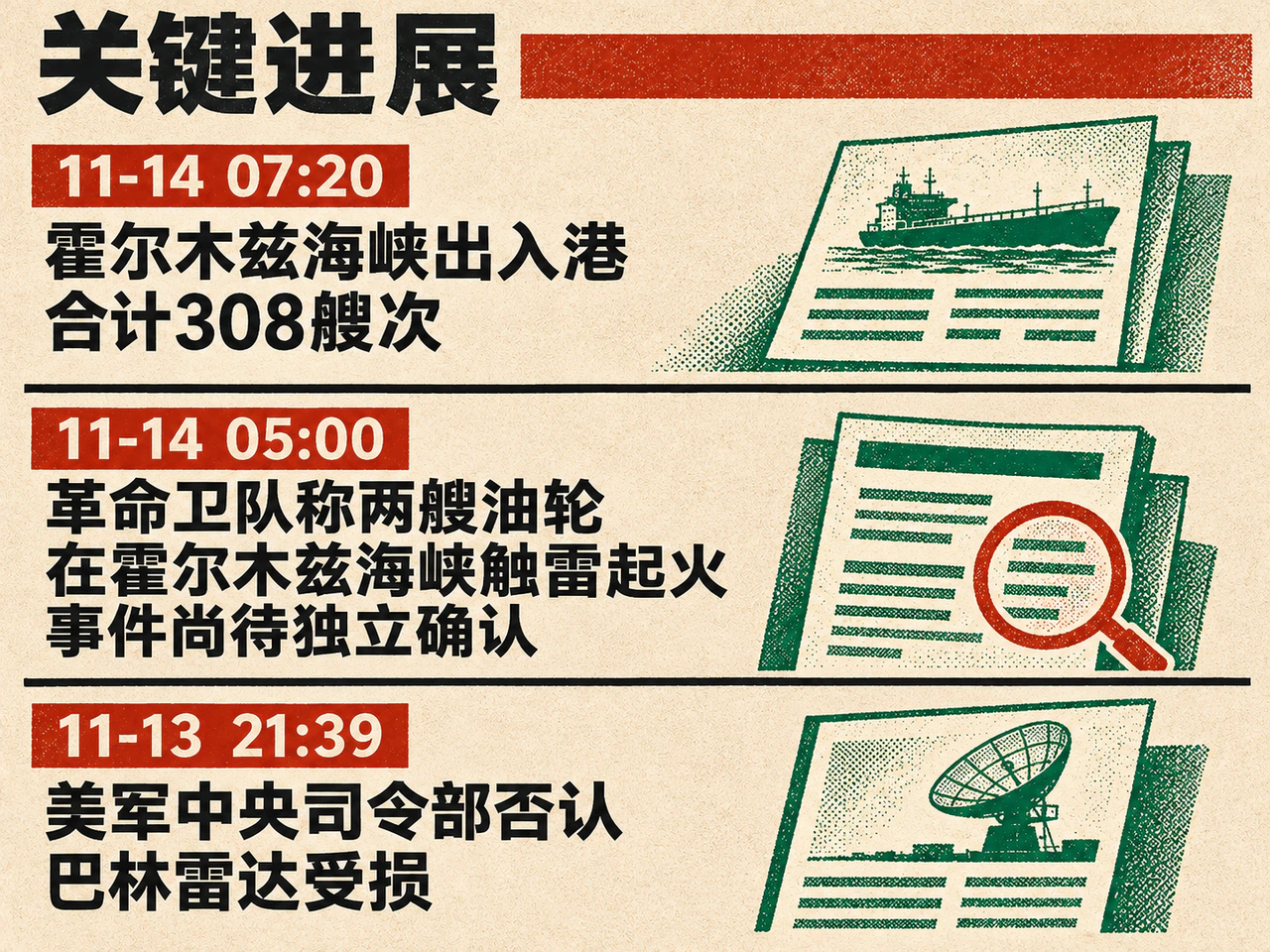
| 11-14 07:20Media accounts of the United Kingdom Maritime Trade Operations office’s weekly report: the Strait of Hormuz recorded 308 combined inbound and outbound vessel movements in the seven days through November 11, with overall shipping activity still approximately 65% below its prewar level. |
| 11-14 05:00The Revolutionary Guard said two oil tankers struck mines and caught fire in the Strait of Hormuz. Vessel names and casualties remained unclear, and the incidents awaited independent confirmation. |
| 11-14 04:42The Houthis claimed missile attacks on Riyadh airport and a pumping station on the East–West oil pipeline; Saudi Arabia had not confirmed the claims at the time. |
| 11-14 04:27Media reported that Turkey and Qatar had signed a mutual defense agreement in Istanbul. Their joint statement called for a unified position on external armed attacks against either or both countries. |
| 11-13 21:39US Central Command denied that the Bahrain radar had been damaged, saying two Iranian one-way attack drones had been shot down, with no casualties or damage to facilities. |
| 11-13 18:47Media disclosed an International Atomic Energy Agency report: Iran considered discussions on restoring nuclear monitoring unable to advance while the United States continued threatening attacks on its nuclear facilities; the agency urged Iran to allow inspectors back into key facilities. |
| 11-13 15:03The Revolutionary Guard claimed to have destroyed a US military early-warning radar in Bahrain, saying it was responding to the attack on the Sirik communications tower. The United States subsequently denied the claimed result. |
| 11-13The International Organization for Migration announced that more than 340,000 people in Yemen had left their homes because of fighting and insecurity, while transport restrictions were compounding difficulties in delivering aid. |