On November 14, 2026, Iran’s navy and the Islamic Revolutionary Guard Corps issued successive reports that tankers had struck mines and caught fire in the Strait of Hormuz. The same day, media reports said Trump was considering postponing a new round of strikes on Iran, provided Iran and Yemen’s Houthi forces engaged in no further provocations.
As of the morning of November 15, Beijing time, incidents at sea were continuing even as Washington considered delaying strikes. The threshold for military escalation may be shifting, while the pressure on shipping through the strait has yet to ease.
Successive reports of tankers striking mines; vessel identities and damage await verification
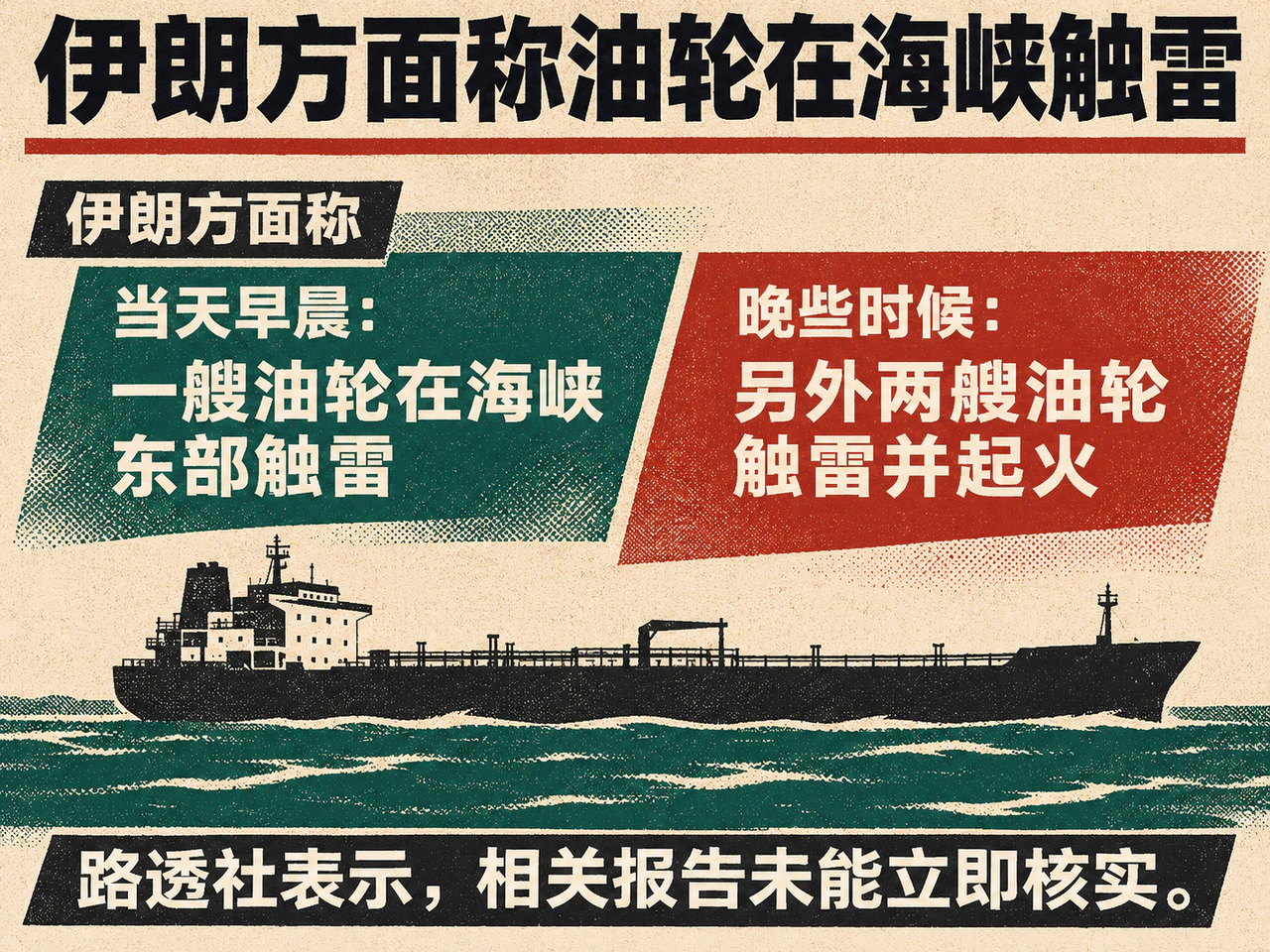
Reuters reported on the evening of November 14 that, according to Iran, one tanker struck a mine in the eastern part of the strait that morning, and two other tankers struck mines and caught fire later in the day. The IRGC navy said the latter two vessels had switched off their navigation and tracking systems and attempted to use a route it deemed prohibited. Reuters said the reports could not immediately be verified.
An earlier AFP report that day cited statements from Iran’s two naval forces saying that two tankers in the southern part of the strait and another in its eastern part had struck mines. The report did not provide vessel names or flags; the IRGC described one as a very large crude carrier. Because the statements were issued at different times and lacked identifying details that would allow the vessels to be matched individually, the numbers in existing reports cannot simply be added together. The US military had previously said it had cleared mines from the main shipping lanes, sharply at odds with Iran’s continuing reports of mine incidents.
A media live blog separately quoted the IRGC navy as saying that two tankers attempting to pass along a route it deemed prohibited had struck mines and caught fire, while two other vessels turned back after receiving warnings. This account mentioned only two vessels striking mines and did not refer to the one reported that morning. Its vessel count cannot be reconciled ship by ship with the earlier statements, and the vessels’ names and damage likewise remain independently unconfirmed.
Without confirmation of vessel identities and the extent of damage, it is difficult to assess actual shipping conditions in the strait. Switching off positioning systems, changing routes or sailing under military escort can also affect how readily vessels can be tracked. The incident numbers released unilaterally by Iran are not yet sufficient to estimate transit volumes or shipping losses. Nevertheless, successive reports of mine incidents suggest that shipowners still lack a stable basis for planning passage.
The IRGC also said it had shot down a US MQ-1 drone over Qeshm Island at 14:30 local time on November 14 (19:00 Beijing time). Qeshm lies near the strait, bringing friction over aerial reconnaissance and maritime passage together in the same narrow area. The claimed shootdown comes from an Iranian statement; no US confirmation has been seen so far.
Any delay in strikes would depend on no new provocations, as Houthi drones are intercepted
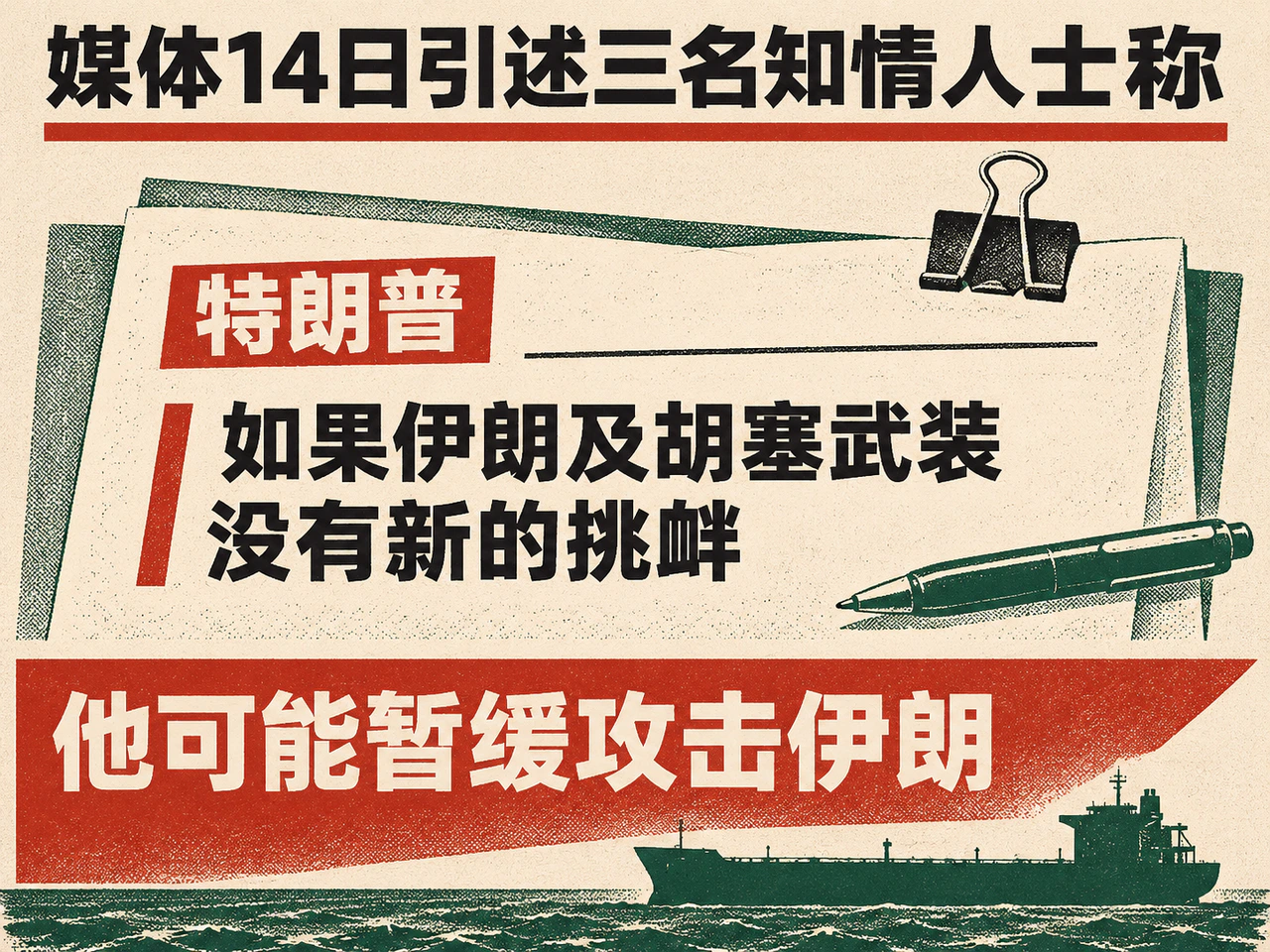
Media reports on November 14, citing three people familiar with the matter, said Trump had recently told senior advisers that he might postpone attacks on Iran if Iran and the Houthis engaged in no new provocations. He was also receptive to regional allies’ appeals to avoid a resumption of full-scale war. This represents a conditional inclination in decision-making; the United States has not announced a new ceasefire agreement on that basis.
Potential triggers for regional conflict extend beyond Iran itself. The Saudi-led coalition said on November 14 that it had intercepted and destroyed two Houthi drones over Riyadh and southern Saudi Arabia, without specifying casualties or damage. Yemeni government forces said air defenses were intercepting multiple drones launched by the Houthis over Marib.
Israel’s caretaker prime minister, Netanyahu, again said that day that he would address security challenges by forming a unity government and eliminate the Iranian threat. Whether the United States delays action, its allies’ security demands and harassment on peripheral fronts continue jointly to shape assessments of escalation risk.
UN proposes passage for five fertilizer ships a day; transport arrangements could start within seven to ten days

On November 14, Jorge Moreira da Silva, head of the United Nations Office for Project Services (UNOPS), called on Iran and the United States to immediately allow fertilizer shipments through, speaking during the climate conference in Antalya. He proposed permitting five fertilizer ships a day to pass and said the UN had prepared transport arrangements that could begin operating within seven to ten days.
According to Moreira da Silva, about one-third of the world’s fertilizer passed through the Strait of Hormuz before the conflict, and fertilizer prices have risen about 30% since the blockade began. He estimated that, if planting seasons continued to be missed around the world, 45 million people could face severe, acute food insecurity and 30 million could be pushed into poverty. These figures are his estimates of the risks. Passage for five fertilizer ships a day also remains a proposal, rather than a shipping arrangement already in operation.
The initiative separates a comprehensive agreement from limited transport arrangements, offering a more concrete opening for diplomacy. The strait’s disruption now reaches beyond energy shipping into agricultural inputs and planting cycles, and the cost of delay may accumulate as planting seasons pass. Progress capable of changing conditions would need to take the form of vessels actually being allowed through, shipping routes accepted by both sides, and a transport mechanism beginning to operate. Consideration of a pause in strikes alone is insufficient to resolve these issues.
Key developments

| Key developments |
|---|
| 11-15 05:51A media live blog quoted the IRGC navy as saying that two tankers attempting to pass through the Strait of Hormuz along a route it deemed prohibited had struck mines and caught fire, while two other vessels turned back after receiving warnings. Vessel names and damage have not been independently confirmed. |
| 11-15 04:45Yemeni government forces said air defenses were intercepting multiple drones launched by the Houthis over Marib; the report gave no exact number or damage assessment. |
| 11-14 21:19The head of UNOPS called for fertilizer shipments to be allowed through immediately, proposing passage for five fertilizer ships a day through the Strait of Hormuz and saying transport arrangements could begin within seven to ten days. This timestamp is the report’s publication time. |
| 11-14 19:00The IRGC said it had shot down a US MQ-1 drone over Qeshm Island. This timestamp is the event time announced by Iran; there is no US confirmation so far. |
| 11-14Media reports, citing three people familiar with the matter, said Trump told advisers he might postpone a new round of strikes on Iran if Iran and the Houthis engaged in no new provocations. |
| 11-14The Saudi-led coalition said it had intercepted and destroyed two Houthi drones over Riyadh and southern Saudi Arabia, without specifying casualties or damage. |
| 11-14Israel’s caretaker prime minister, Netanyahu, again said he would address security challenges by forming a unity government and eliminate the Iranian threat. These were statements of political and military objectives. |