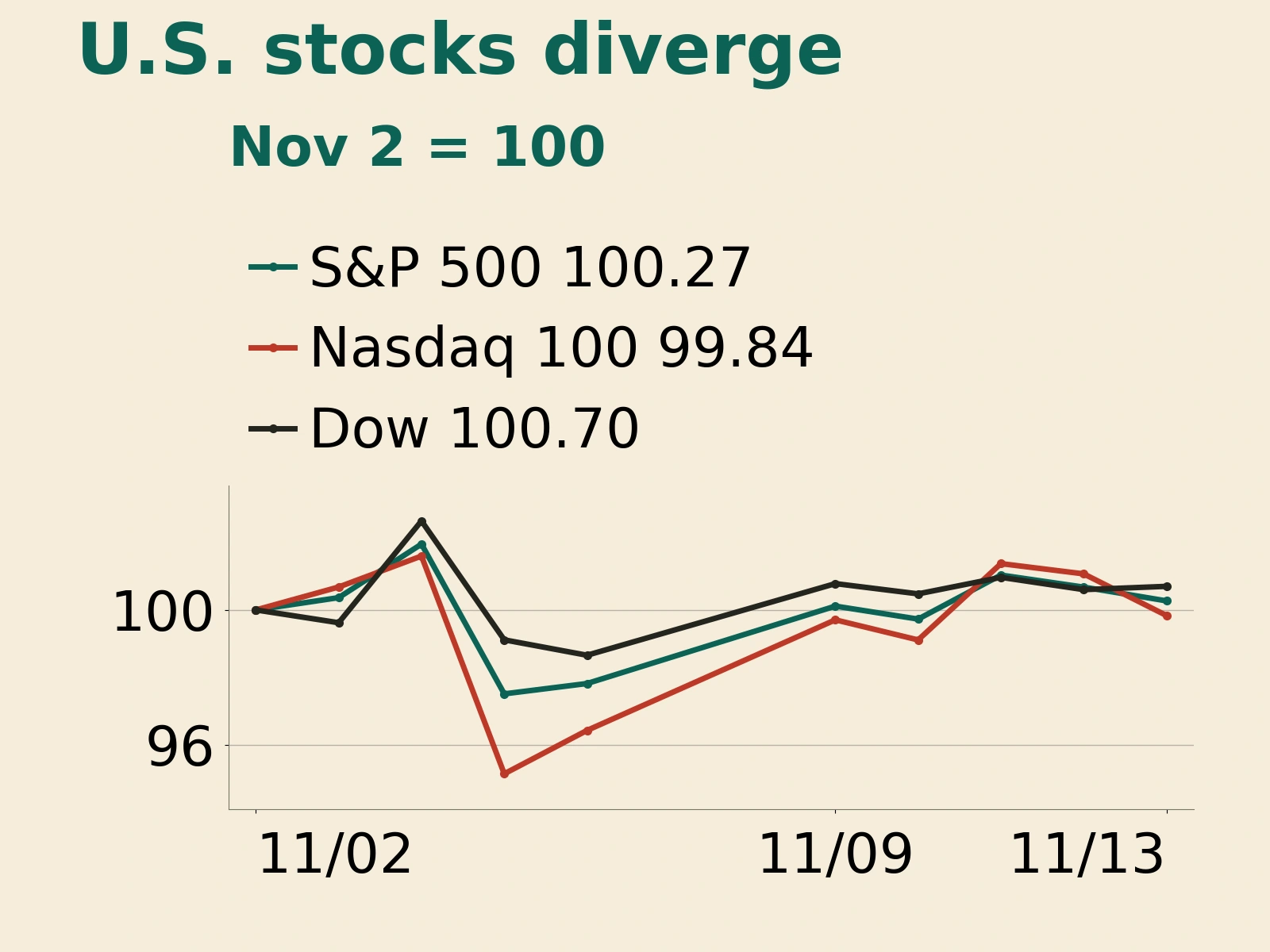
On November 10, 2026, U.S. data showed that consumer prices rose more than expected in October, shifting the market's focus from the early-week recovery in risk appetite back to interest-rate pricing. Over the trading week of November 9–13, the S&P 500 gained 2.51% and the Nasdaq 100 rose 3.53%. Yet two-year and ten-year U.S. Treasury yields climbed 37 and 29 basis points, respectively, the dollar index strengthened, and gold fell 4.63%. The simultaneous equity rebound and tightening in financial conditions defined the week's cross-asset performance.
Market pricing shifted markedly during the week. An extension of the trade-policy grace period, falling oil prices and the preceding equity correction together helped risk appetite recover early in the week. Subsequently, however, persistent core inflation, higher real yields and company-specific events at leading technology firms limited the rebound's staying power. Major U.S. equity indexes retreated after Wednesday, while oil recovered from its early-week lows. Although U.S. stocks retained positive cumulative returns for the week, markets were increasingly pricing higher financing costs and pressure on companies to deliver earnings as the weekend approached.
U.S. October core CPI rises another 0.3% month on month; high mortgage rates push existing-home sales to a more than 16-year low
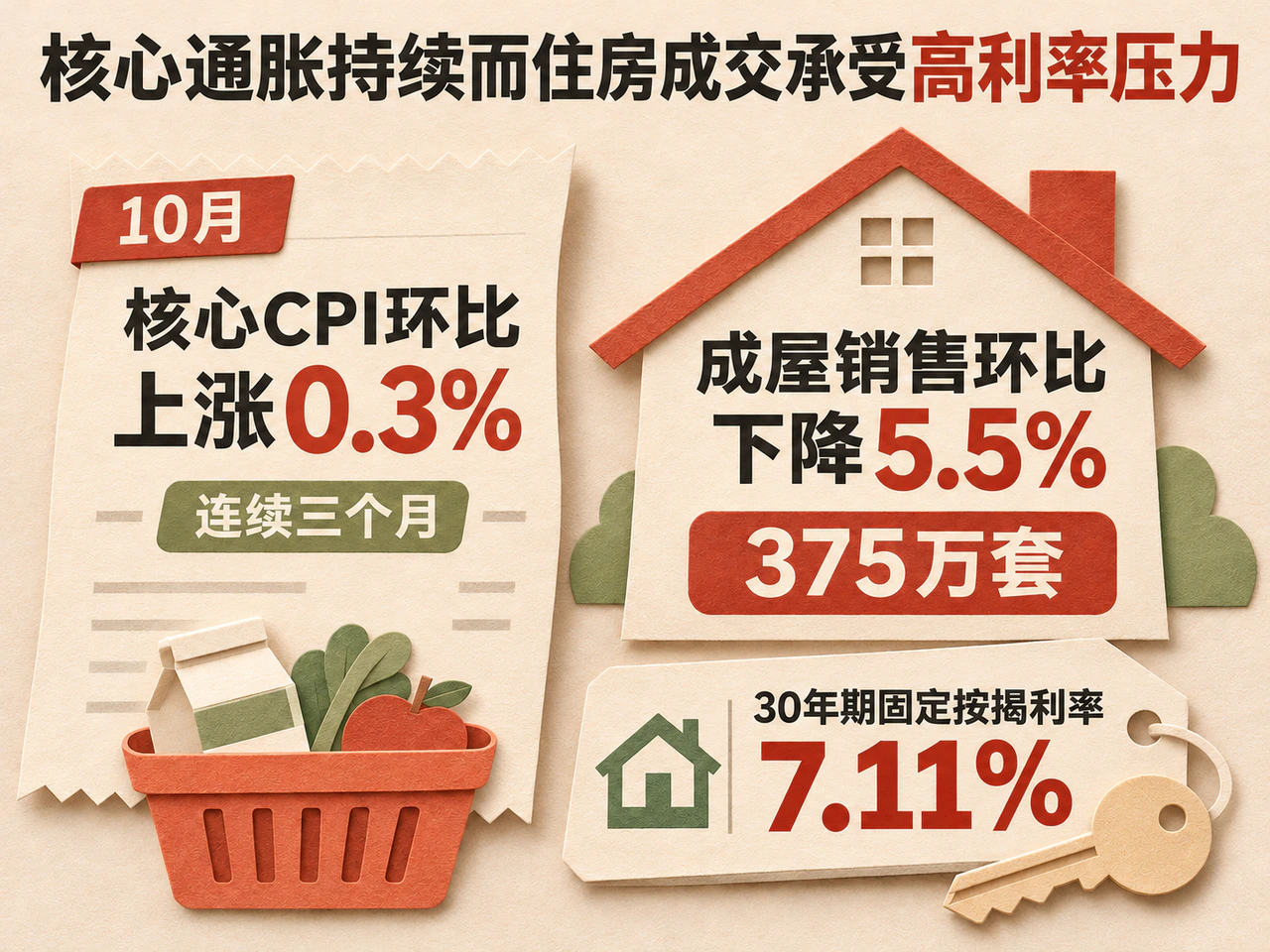
Data released on November 10 showed that U.S. CPI increased a seasonally adjusted 0.4% month on month in October, down from September's 0.6% but above the 0.3% market forecast. Core CPI rose 0.3% month on month for a third consecutive month, also exceeding the expected 0.2%. Monthly energy-price inflation slowed from 5.2% to 0.7%, bringing down the headline CPI reading, but core inflation did not improve alongside it.
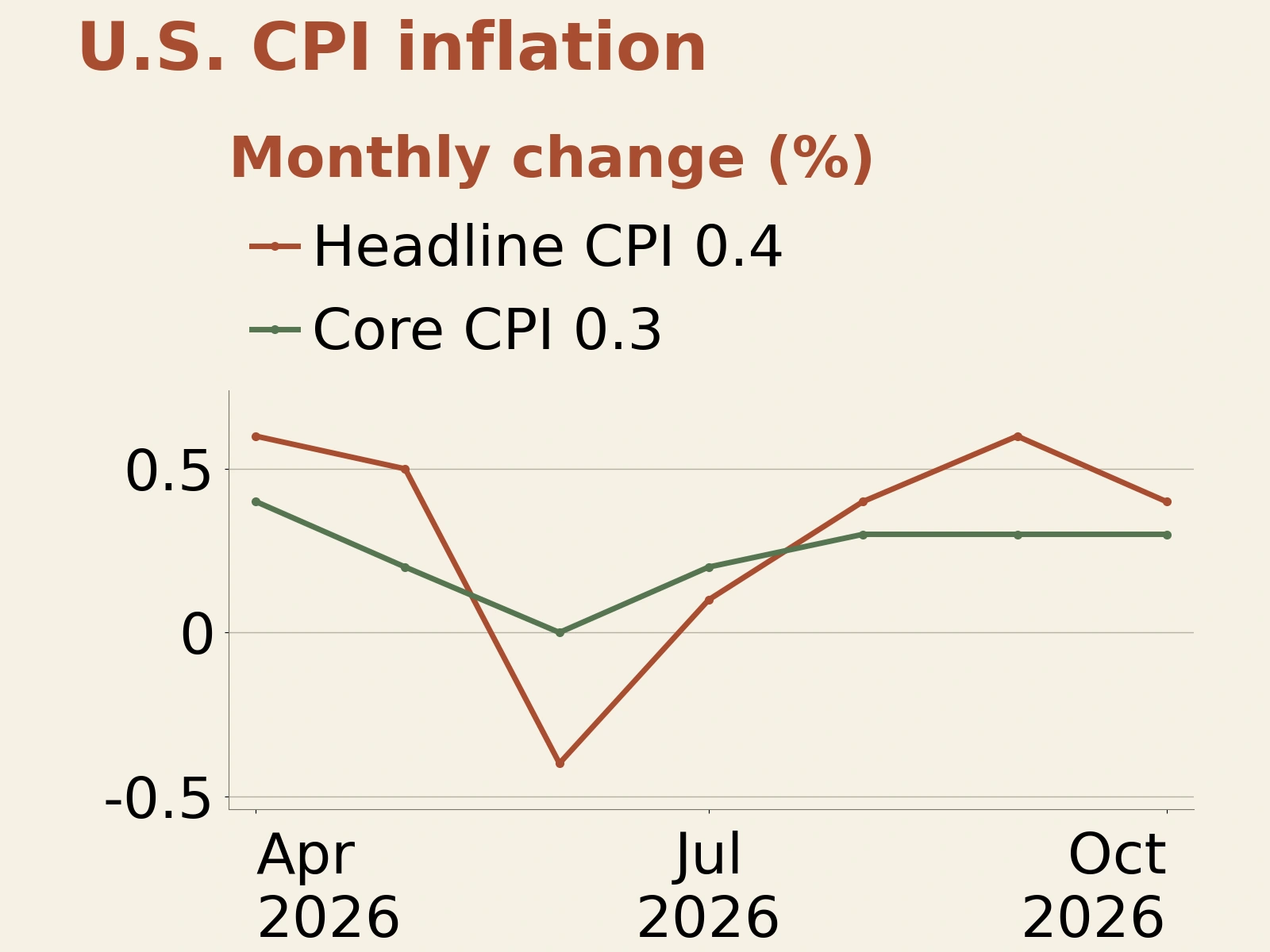
Price pressures were concentrated in shelter, food and services. Shelter prices rose 0.3% month on month, accounting for more than 30% of the overall CPI increase; food prices rose 0.5% and transportation services prices increased 0.8%. Although the energy shock eased, sticky prices in households' everyday spending continued to rise, prompting the bond market to raise its expectations for policy rates further.
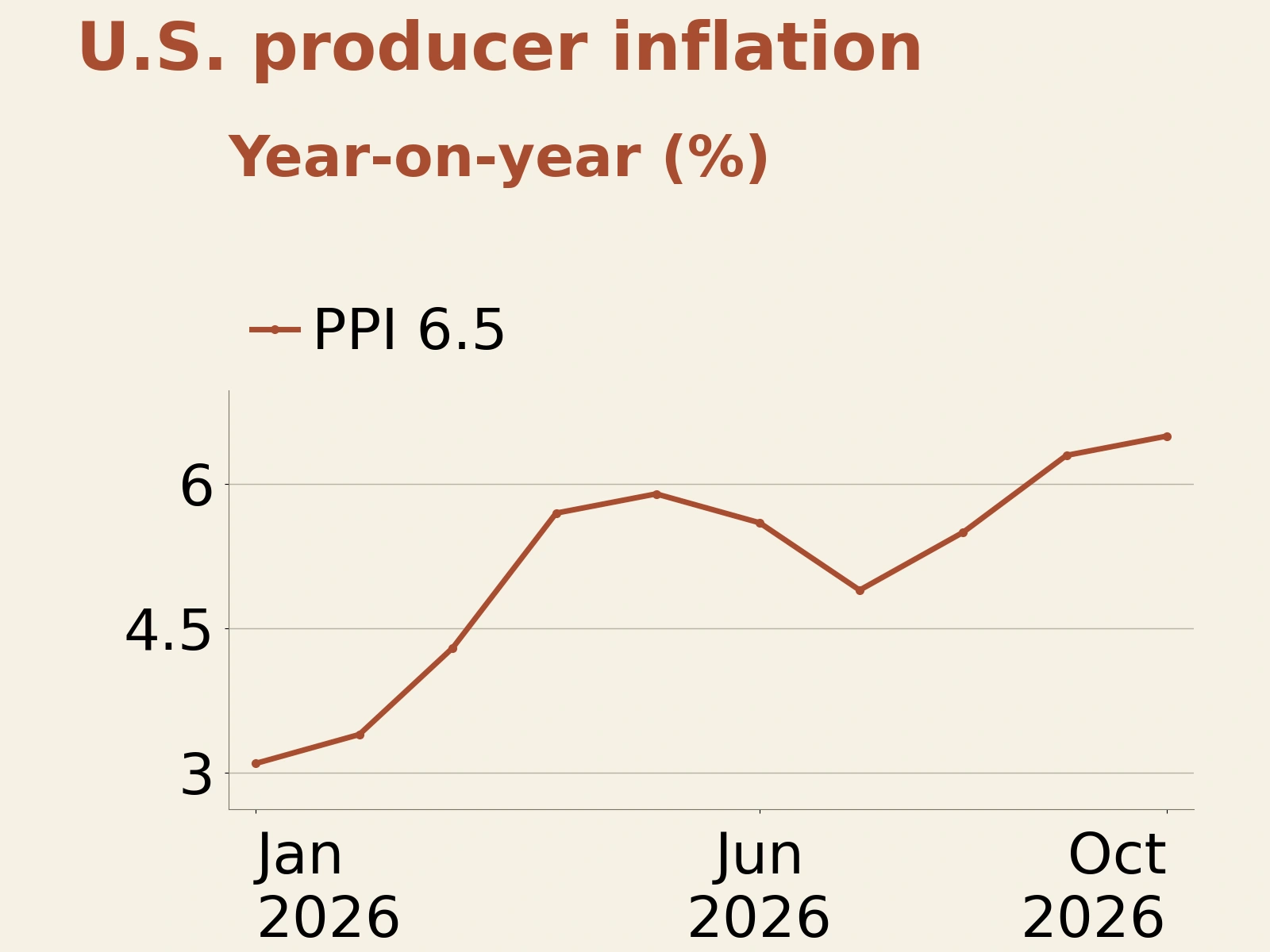
The October PPI release on November 13 offered some relief: final-demand prices rose 0.3% month on month, below the 0.4% forecast and sharply slower than September's 1.4%. However, annual PPI inflation accelerated from 6.3% to 6.5%, while core PPI excluding food, energy and trade services still rose 0.5% month on month. Transportation and warehousing services prices increased an even stronger 2.0% on the month. Although the monthly headline increase at the producer level moderated, non-energy cost pressures persisted.
Growth data also showed structural divergence. Initial jobless claims were 200,000 in the week of November 7, up 9,000 from the previous week but still low. Continuing claims fell 20,000 to 1.697 million in the week ended October 31. The labor market had yet to show the layoff pressures that would force a rapid monetary-policy pivot, but the interest-rate-sensitive housing sector had cooled significantly.
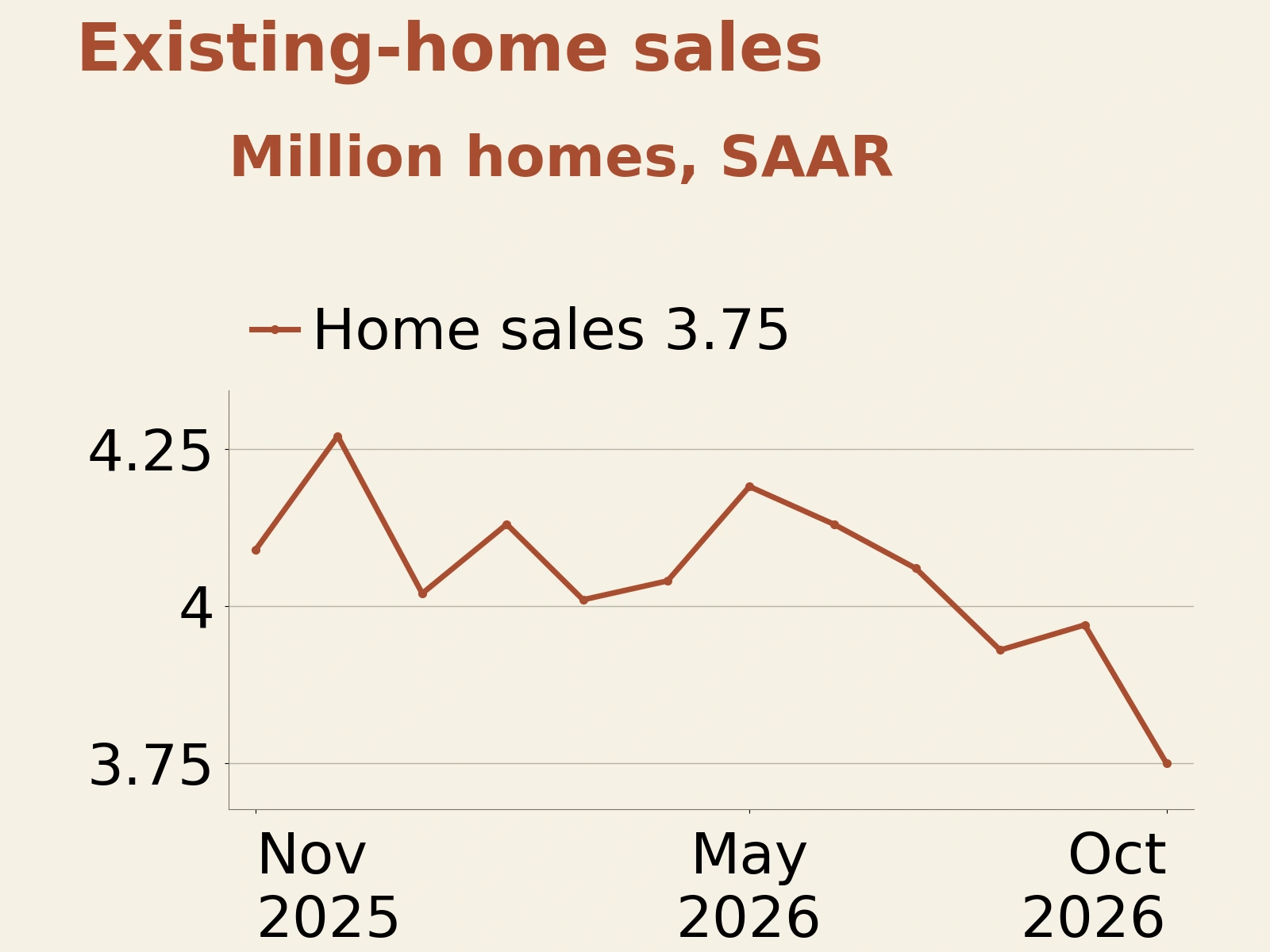
U.S. existing-home sales fell 5.5% month on month in October to a seasonally adjusted annual rate of 3.75 million, the lowest since August 2010 and down 8.8% year on year. The inventory of existing homes rose to 1.59 million, equivalent to 5.1 months of supply, while the latest weekly 30-year fixed mortgage rate remained as high as 7.11%. Low layoffs alongside weak home transactions indicate that the restraining effects of high rates are reaching the real economy first through sectors sensitive to financing costs.
Treasury curve bear-flattens as the ten-year real yield reaches 2.91%
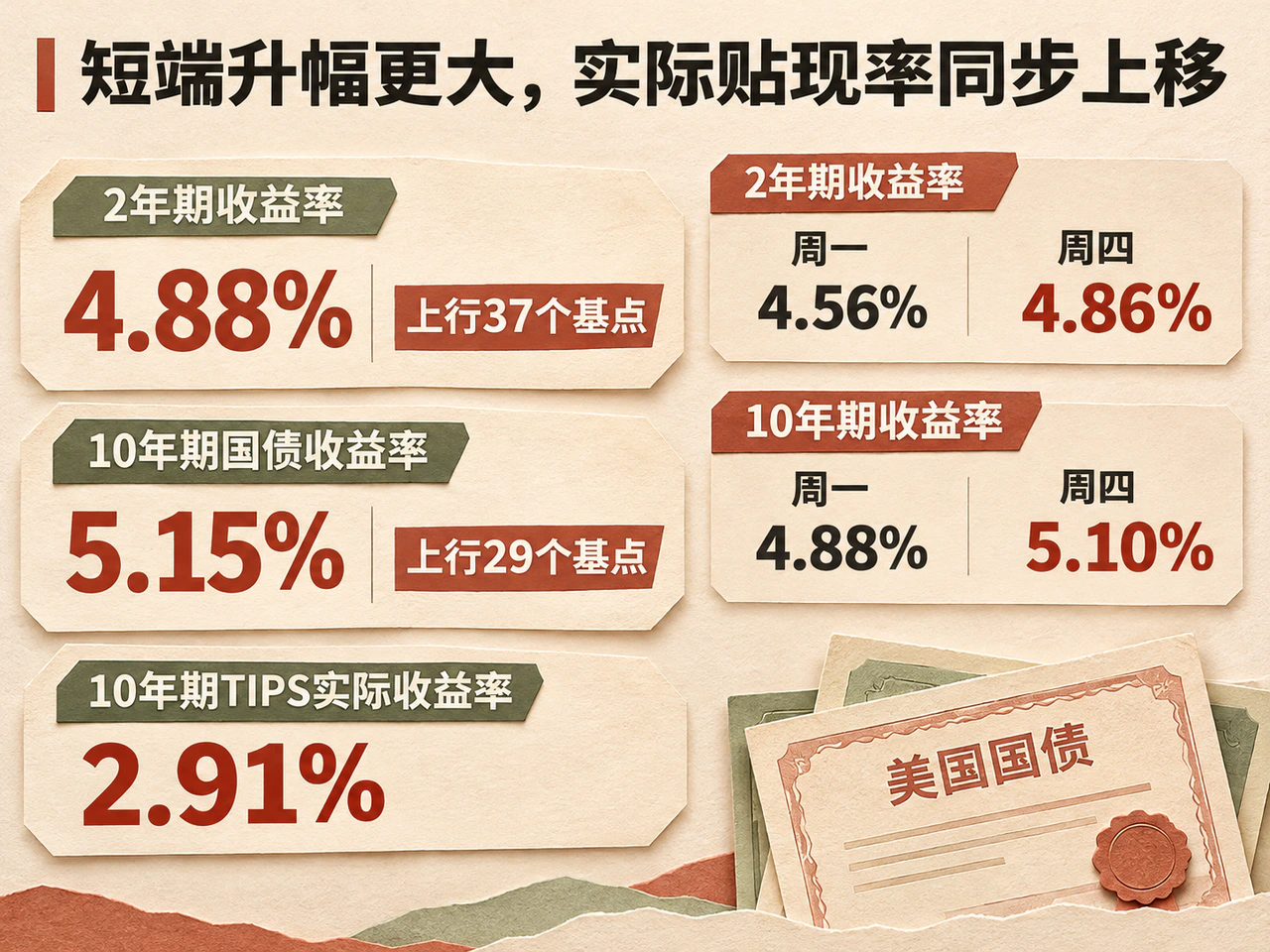
Comparing November 13 with the November 6 baseline, the U.S. Treasury's consistently measured yield curve shifted higher across all maturities. The two-year yield rose from 4.51% to 4.88%, an increase of 37 basis points; the five-year rose from 4.64% to 4.98%, up 34 basis points; the ten-year rose from 4.86% to 5.15%, up 29 basis points; and the 30-year rose from 5.26% to 5.47%, up 21 basis points.
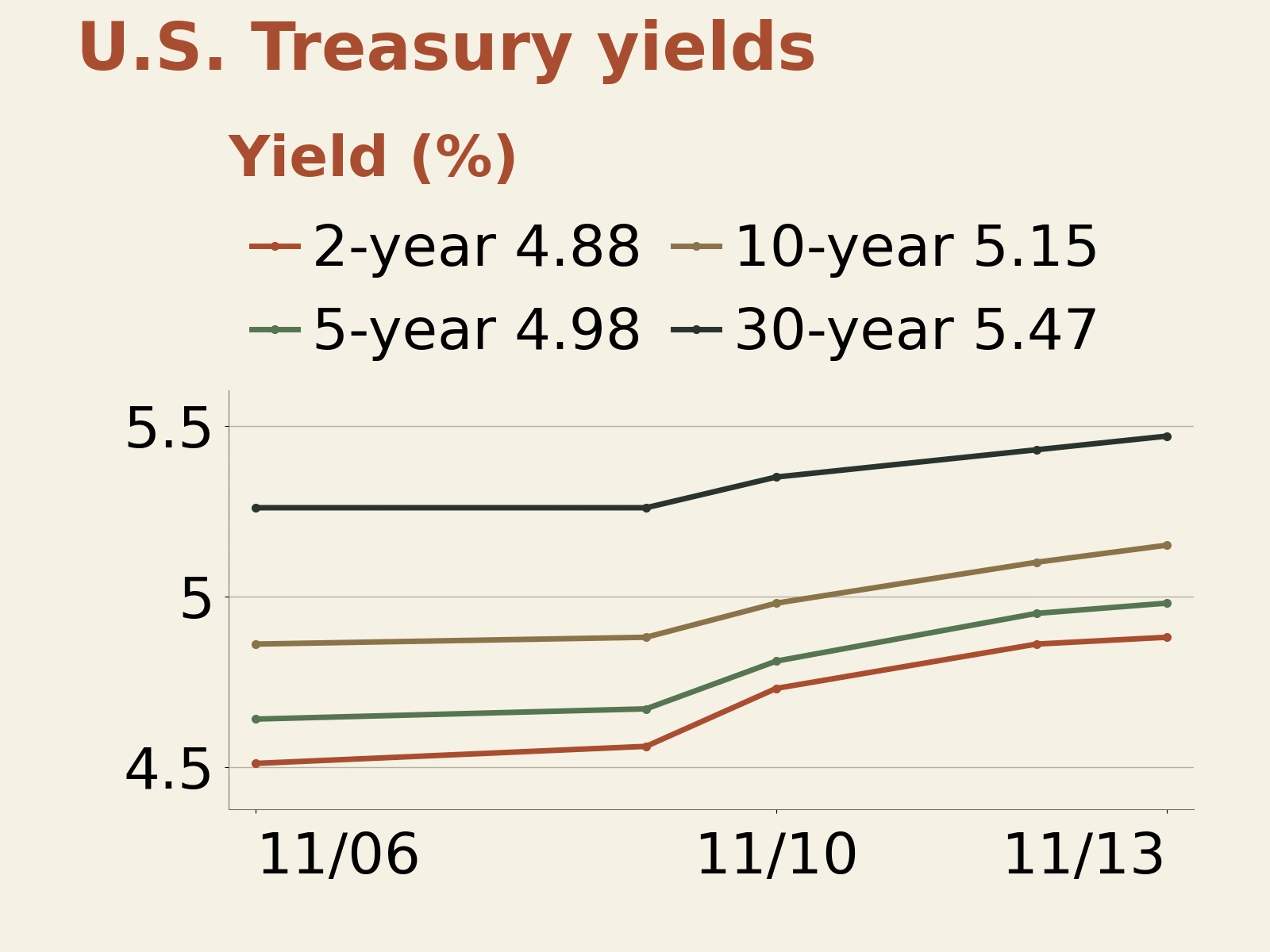
Short-term yields rose more than long-term yields, narrowing the ten-year–two-year Treasury spread from 35 to 27 basis points in a bear flattening. The yield increases were concentrated on November 10 and 12: the two-year yield rose from 4.56% on Monday to 4.86% on Thursday, while the ten-year increased from 4.88% to 5.10% over the same interval. Policy-sensitive maturities led the rise after the CPI release, consistent with media reports of strengthening expectations for a December rate increase.
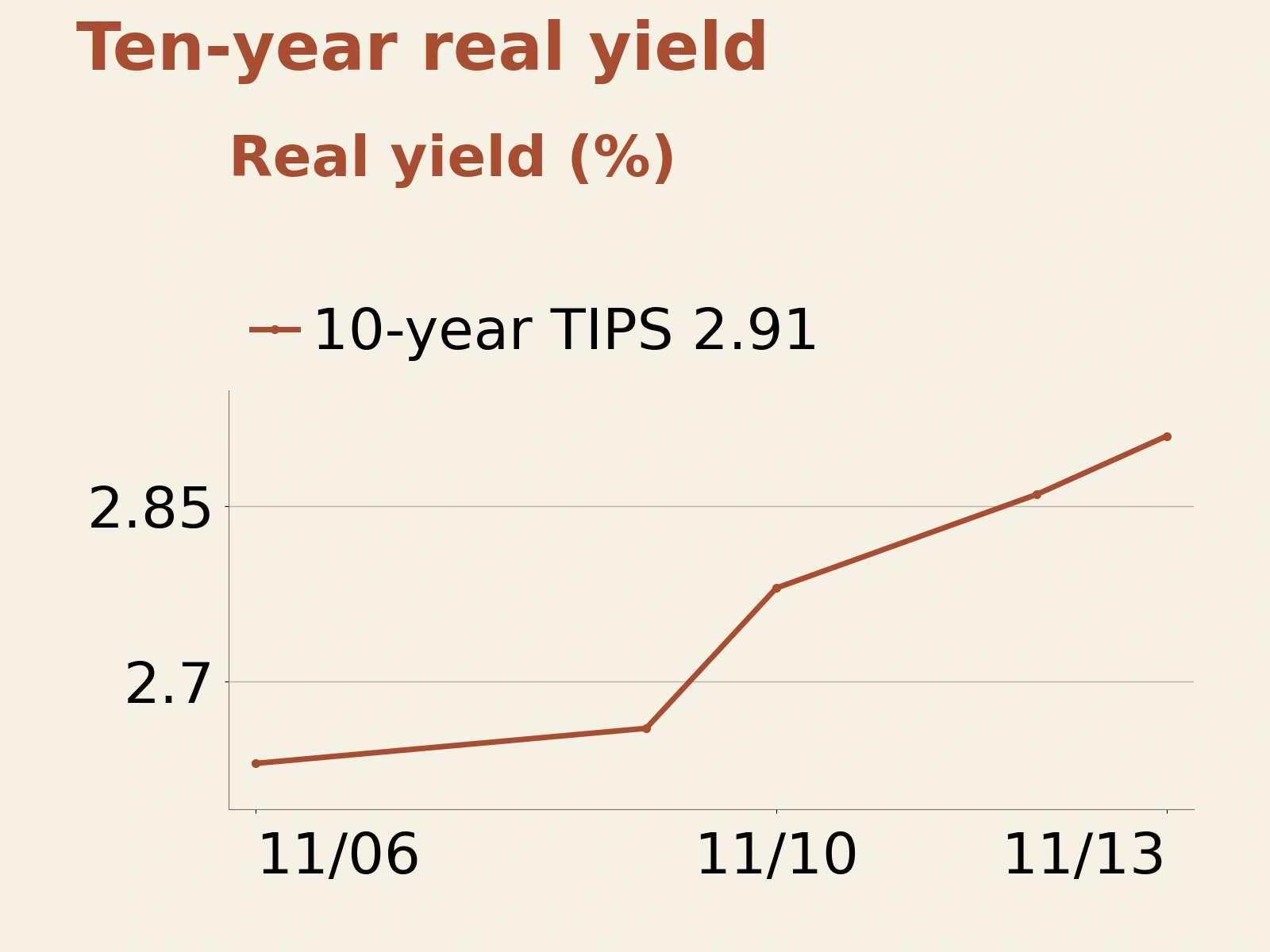
The rise in long-term rates directly reflected a higher required real return. The ten-year TIPS real yield climbed from 2.63% to 2.91% over the week, an increase of 28 basis points that accounted for almost all of the contemporaneous 29-basis-point rise in the nominal yield. The five-year real yield increased 33 basis points, likewise close to the 34-basis-point rise in the nominal yield at the same maturity. Breakeven inflation rates changed little, showing that higher real discount rates were the dominant force in this bond-market adjustment and were putting pressure on other assets through valuation and financing channels.
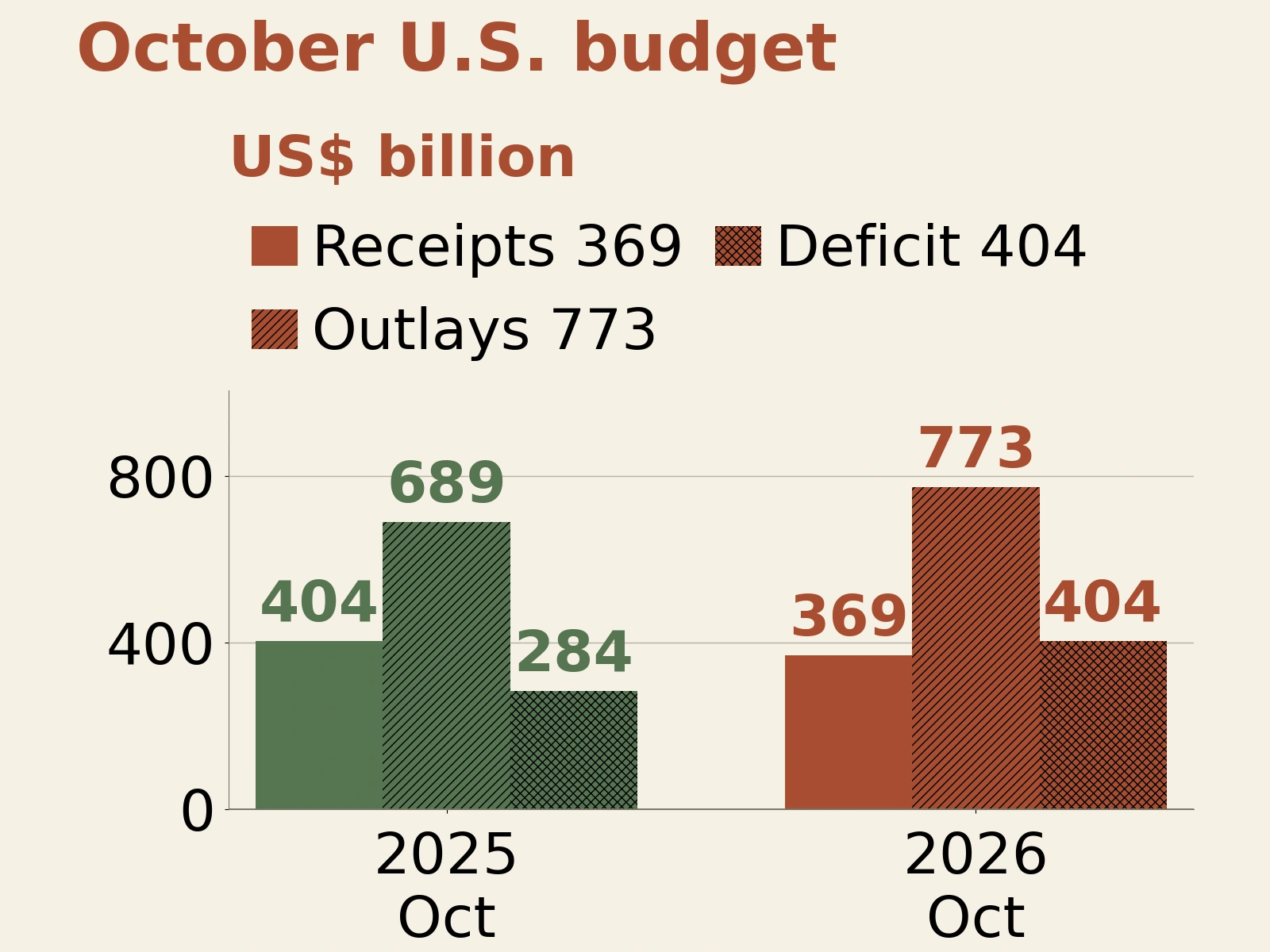
Fiscal deficits and Treasury issuance also require the long end of the market to absorb additional duration continually. At the $25 billion 30-year Treasury auction on November 12, the high yield was 5.441% and the bid-to-cover ratio was 2.36. Budget data released the same day for the first month of fiscal 2027 showed a U.S. federal deficit of about $404 billion in October 2026, up 42% year on year, as receipts fell 9% and outlays increased 12%. Some November payments were brought forward into October, temporarily inflating the monthly deficit. Even after adjusting for payment-calendar shifts, however, October's deficit was $285 billion, up 49% from a year earlier. Large fiscal financing needs formed the supply backdrop for long-term rates, while the larger rise at the short end underscored that repricing the monetary-policy path remained the central trade of the week.
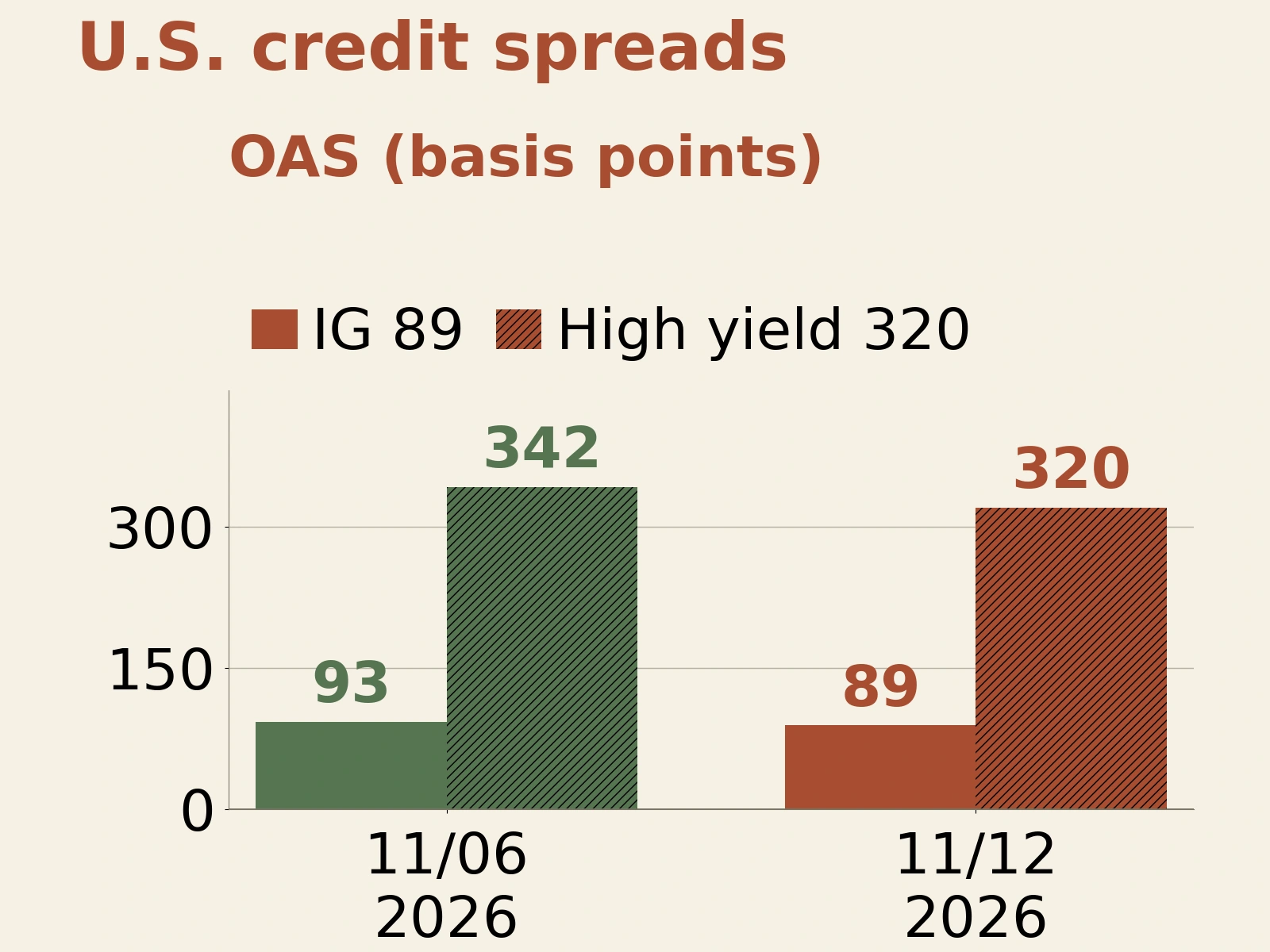
Credit markets, meanwhile, signaled resilience. As of November 12, the option-adjusted spread (OAS) on U.S. investment-grade corporate bonds was 89 basis points, 4 basis points tighter than the previous Friday; high-yield OAS was 320 basis points, 22 basis points tighter. Narrower credit spreads cushioned some of the impact from rising benchmark rates, but companies' actual financing costs remained constrained by higher Treasury yields, to which issuers with medium- and long-duration debt are particularly sensitive.
Asia-Pacific investors remained keen to absorb supply from high-quality issuers. According to Fixed Income News Australia, citing Reuters term sheets, Alphabet issued Hong Kong dollar and Singapore dollar bonds for the first time last week, raising about US$3.8 billion in total against an initial US$3 billion target. The Hong Kong dollar tranche totaled HK$16 billion and attracted more than HK$32.5 billion in orders. Separately, China's Ministry of Finance announced on November 11 that it planned to issue up to US$2 billion in U.S. dollar sovereign bonds in Hong Kong during the week of November 16. Regional financing channels remained active despite rising U.S. dollar risk-free rates. Pricing on subsequent issues will further test differences in investor demand across currencies and credit profiles.
Oil falls about 2.5% for the week; higher real rates push gold down 4.63%
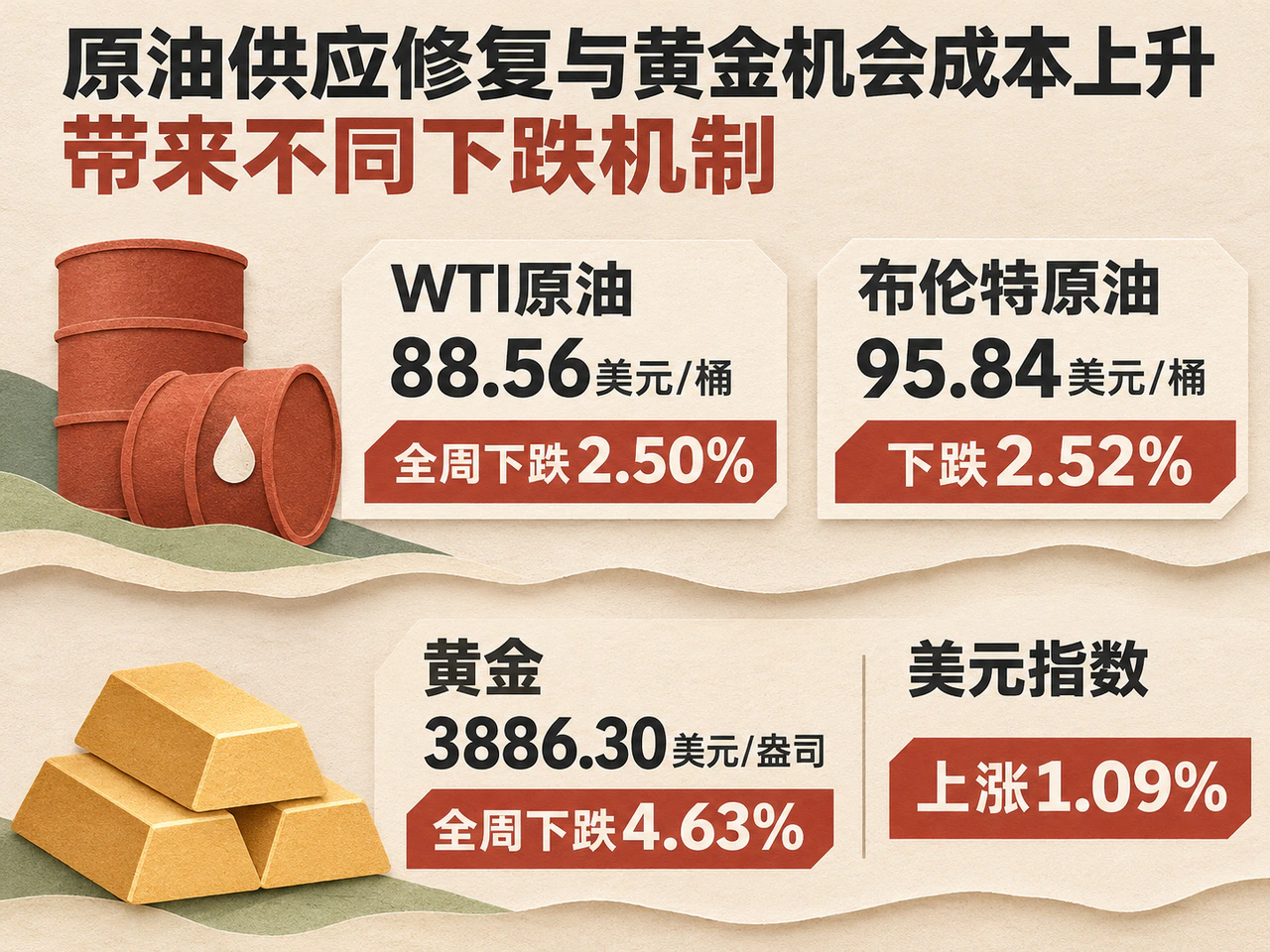
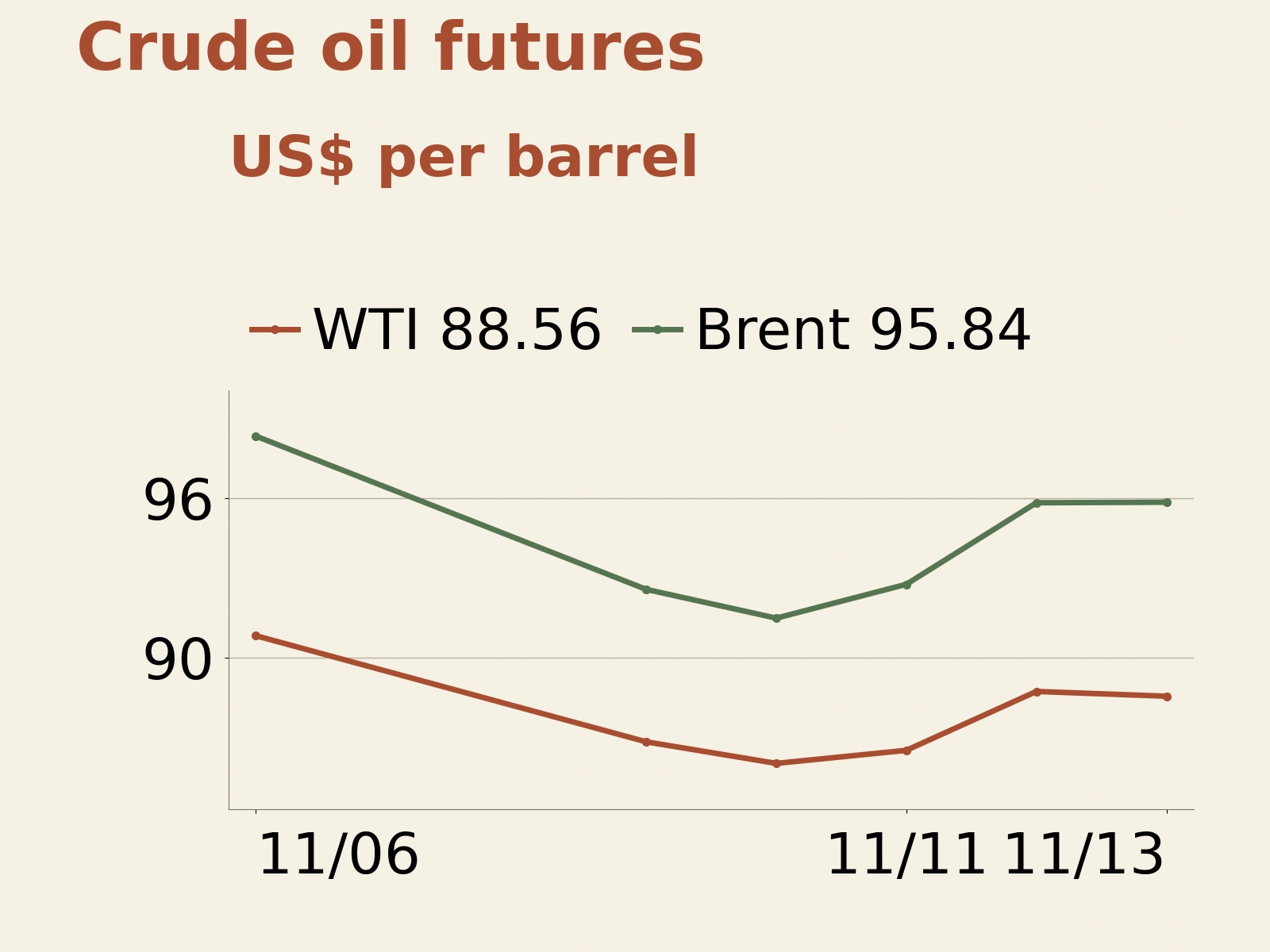
On a continuous-futures daily-close basis, WTI crude fell 2.50% over the week to $88.56 per barrel, while Brent fell 2.52% to $95.84 per barrel. Oil followed a volatile path: Brent declined from $98.32 per barrel the previous Friday to as low as $91.49 on Tuesday before rebounding markedly later in the week. On the geopolitical front, the U.S. softened its language early in the week about further military action against Iran, temporarily easing concerns about supply disruptions. Later reports concerning transport security, however, led the market to restore part of the risk premium.
Recovering supply provided a fundamental basis for oil's weekly decline. Data released by the International Energy Agency (IEA) on November 13 showed that global oil supply increased by 2.3 million barrels per day in October to 105.4 million barrels per day. Gulf oil exports excluding Oman recovered to 18.4 million barrels per day, though still 26% below their prewar level. The IEA expects the global oil balance to return to surplus in the fourth quarter. At the same time, however, it observed a 52-million-barrel increase in global oil inventories in October, including an 86-million-barrel increase in oil at sea, while onshore inventories continued to decline. Freight rates from the Gulf to Asia also remained near record highs. This indicates that logistical bottlenecks still separate recovering output from actual deliveries. Strains in transportation make it difficult for the inflationary effects of energy costs to fade quickly.
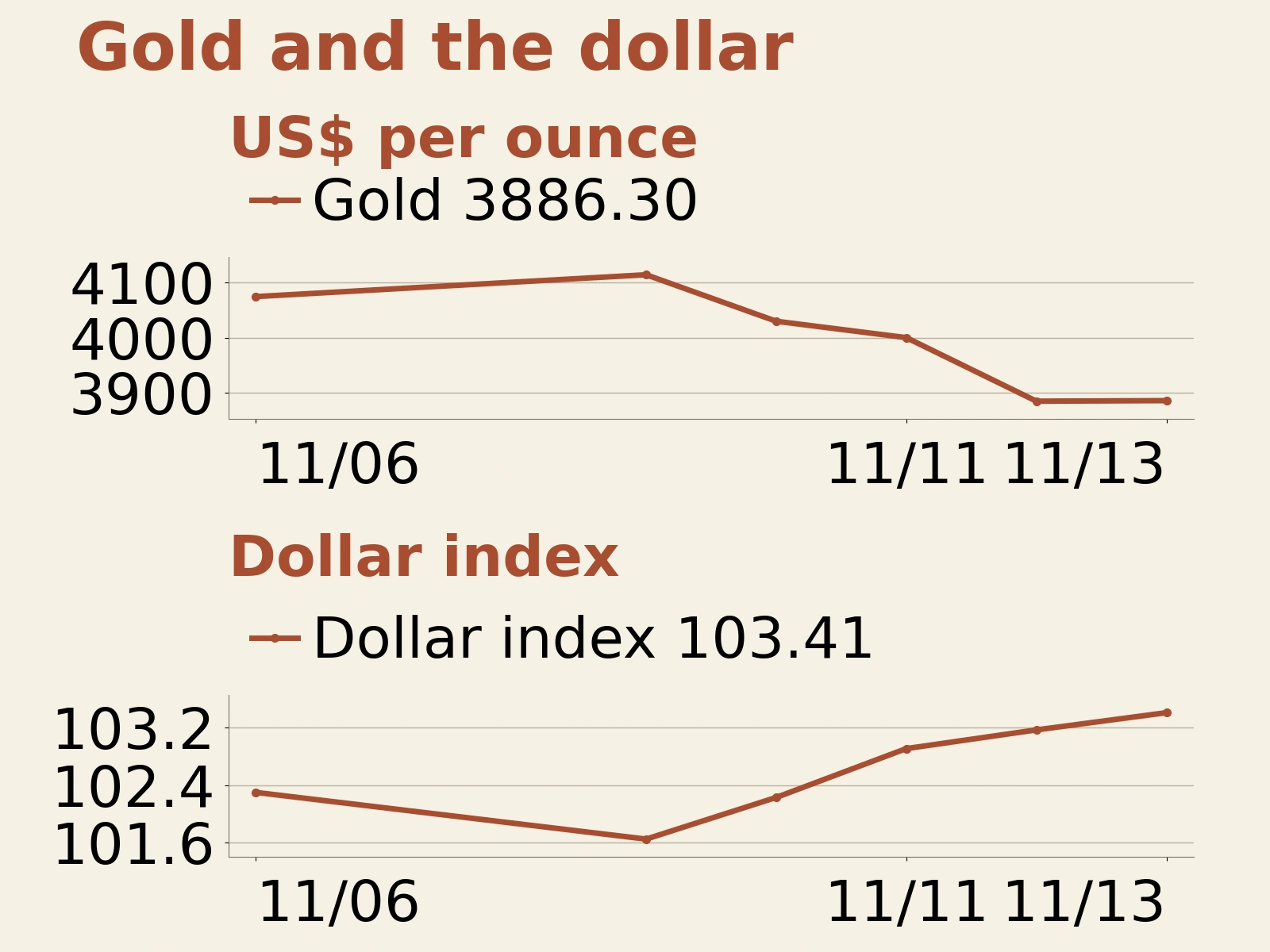
Gold was squeezed mainly by the combination of rising real rates and a stronger dollar. Its continuous-futures daily close fell from $4,074.90 per ounce the previous Friday to $3,886.30, a weekly decline of 4.63%. Over the same period, the dollar index rose 1.09% to 103.41. Gold was still at $4,114.50 per ounce on Monday; most of its decline occurred in the trading sessions following Tuesday's CPI release. The jump in real risk-free rates increased the opportunity cost of holding non-interest-bearing gold, while dollar appreciation raised purchase costs for buyers outside the United States. Together these forces drove gold lower, and Friday's weaker-than-expected PPI release did not reverse the week's repricing.
Early-week rebound secures U.S. stocks' weekly gains; Nvidia falls 13% amid leadership change
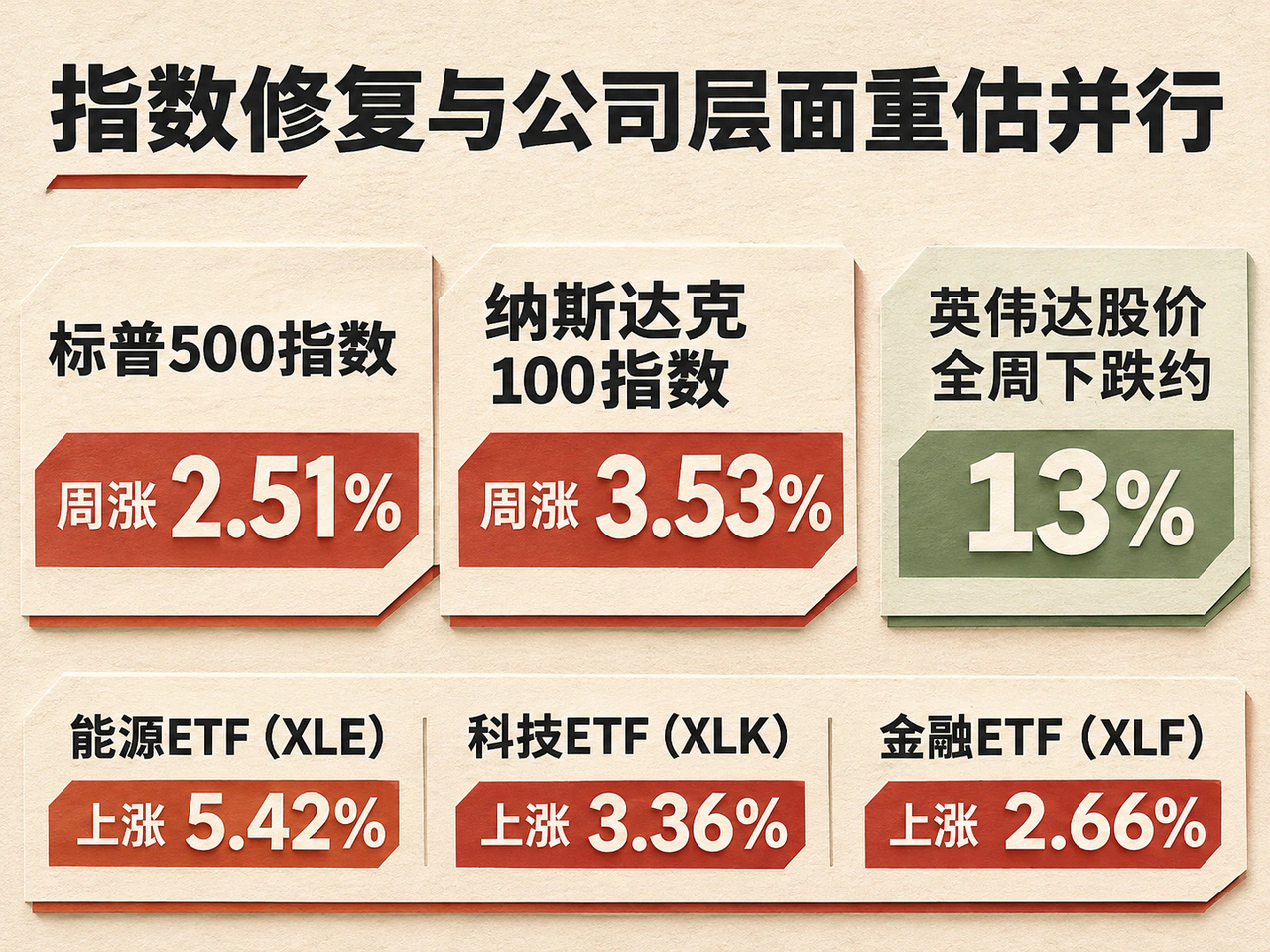
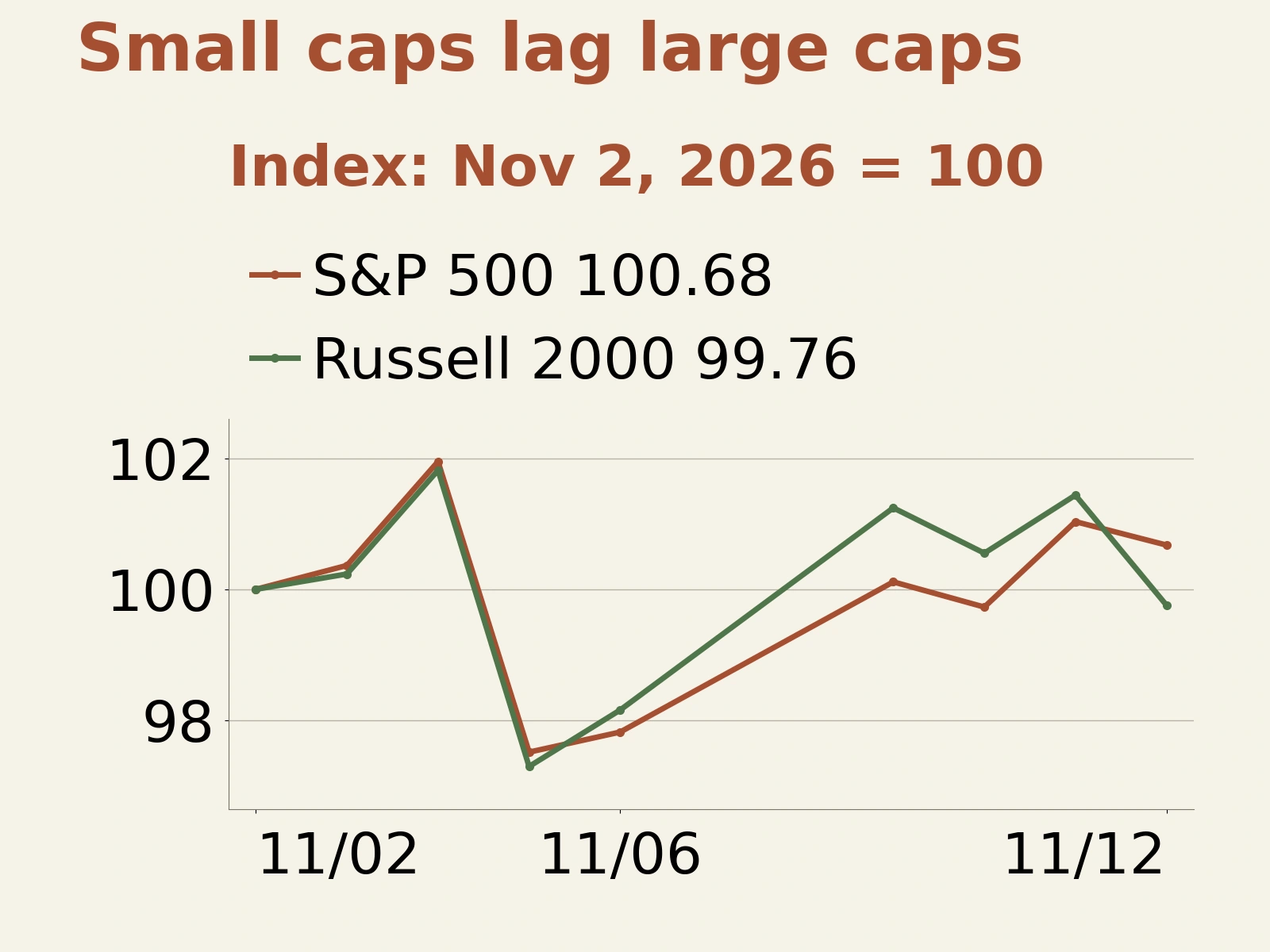
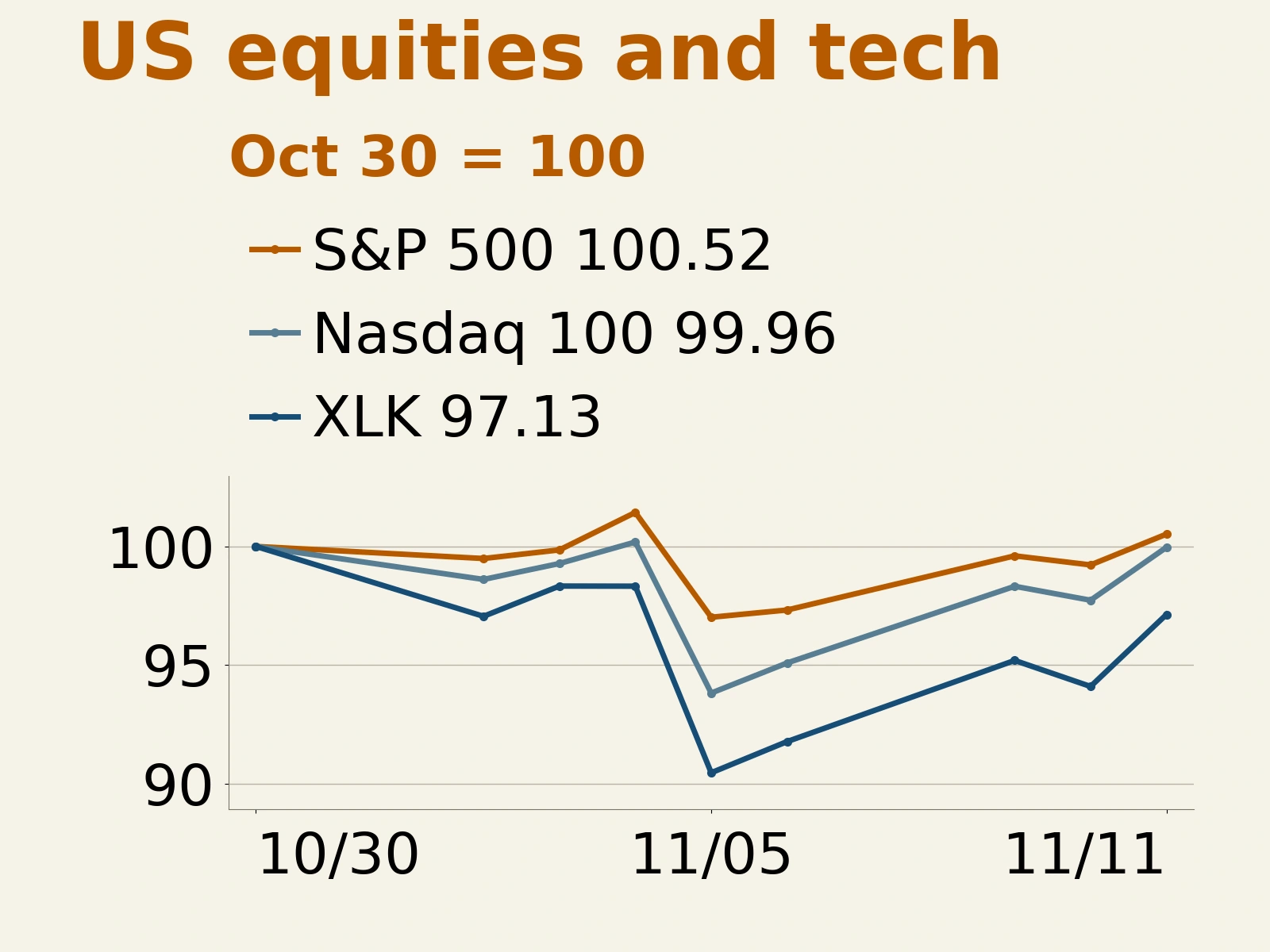
Major U.S. stock indexes finished the week higher. The S&P 500 closed at 7,561.67, up 2.51%; the Nasdaq 100 closed at 27,943.74, up 3.53%; the Dow Jones Industrial Average rose 2.07%; and the Russell 2000 gained 1.32%. Within the week, the S&P 500 had already reached 7,549.94 on Monday and hit its weekly high of 7,619.38 on Wednesday before giving back part of its gains later in the week. The early recovery in risk appetite accounted for most of the weekly return.
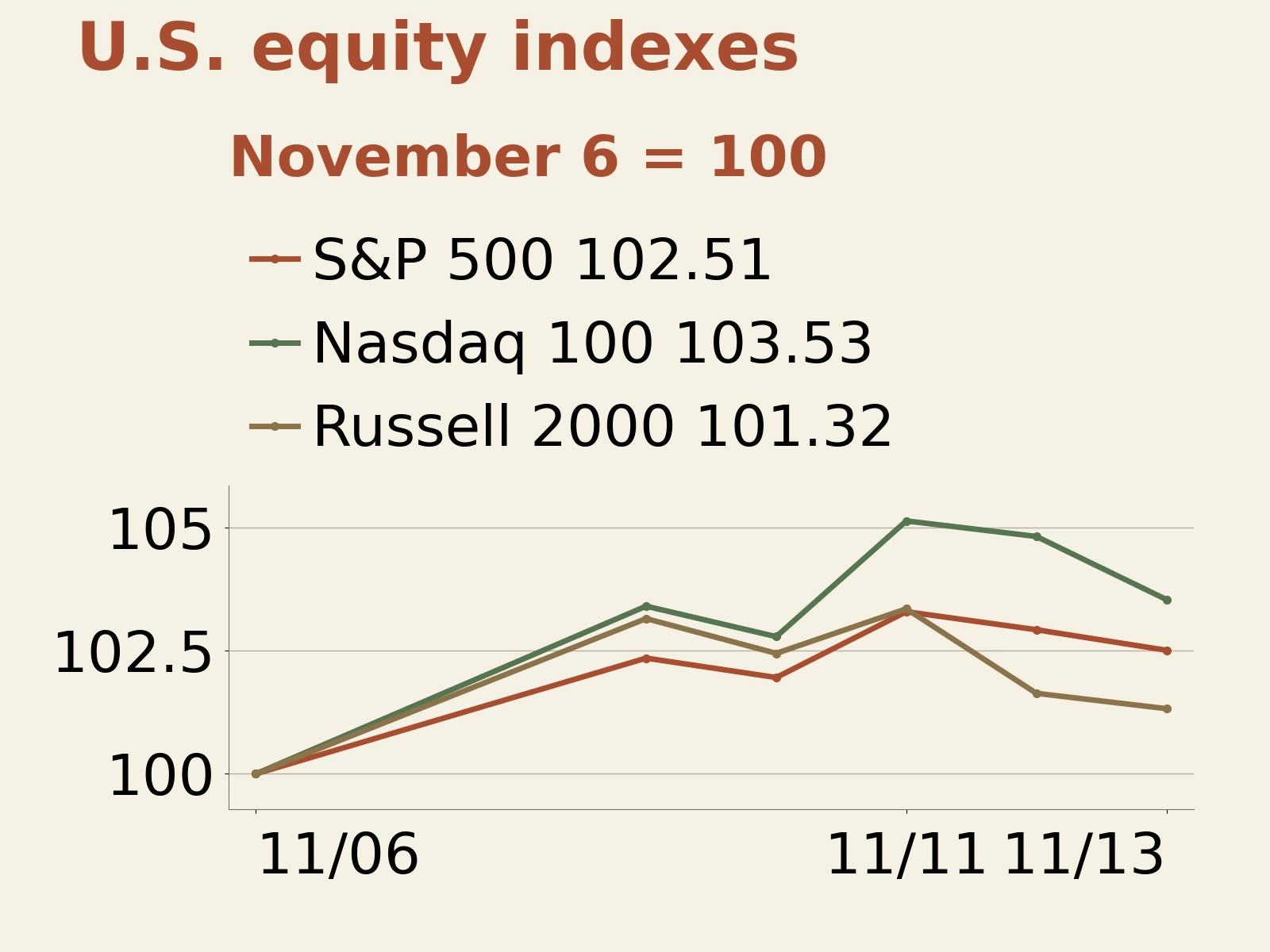
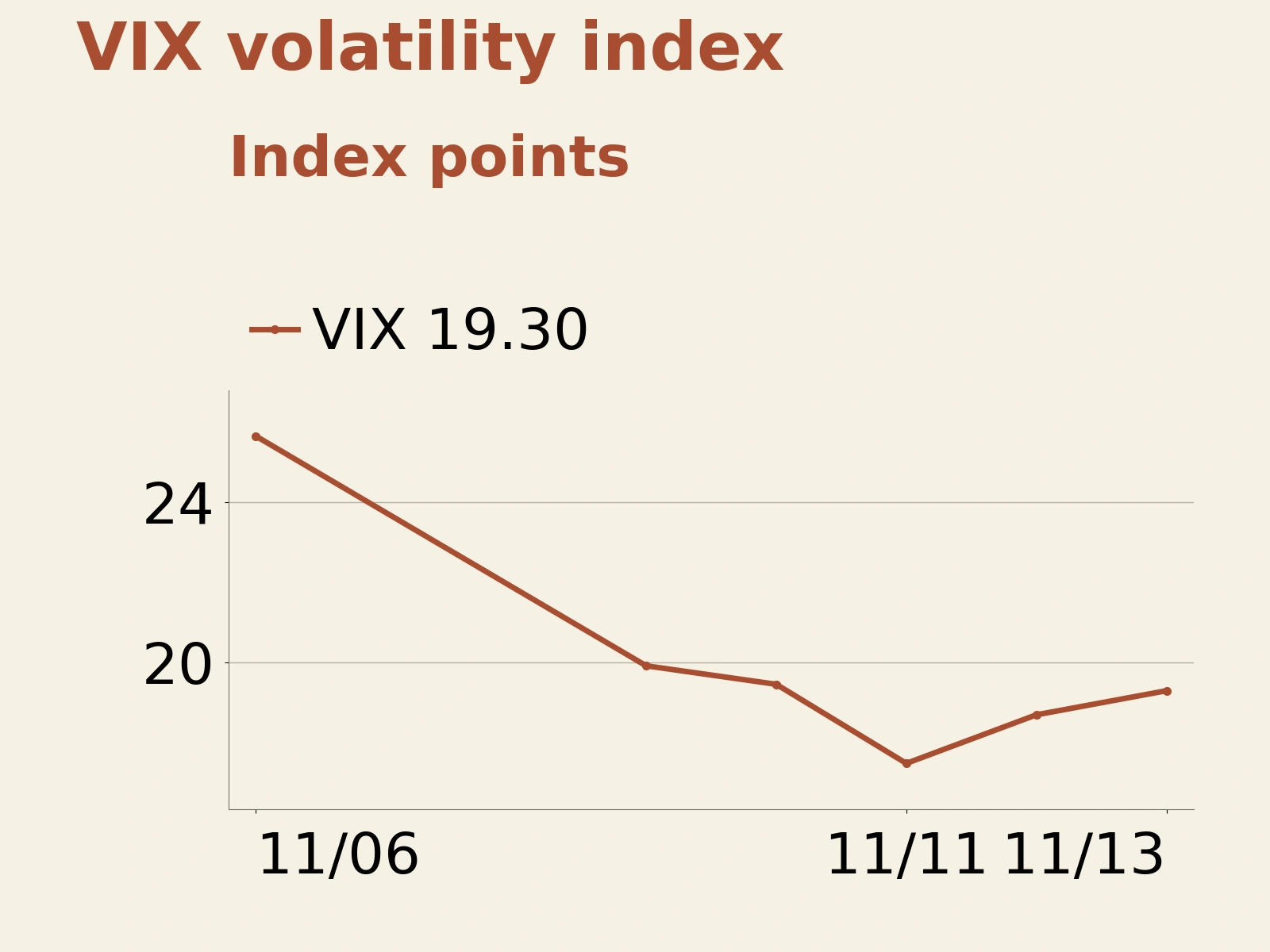
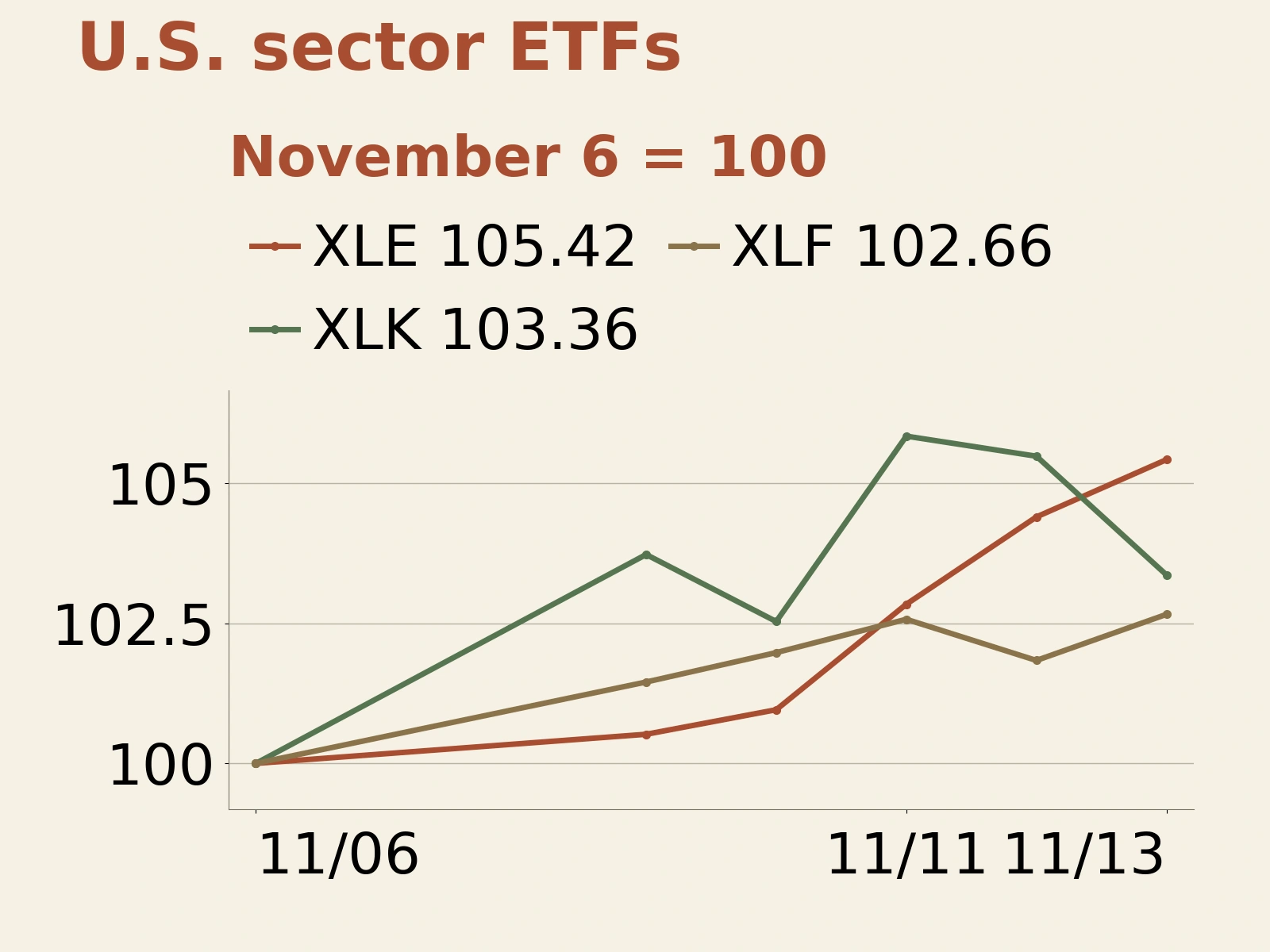
Several sectors supported the advance. The energy ETF XLE rose 5.42% over the week, diverging from the decline in crude futures and reflecting support for equity returns from corporate earnings expectations, valuations and institutional portfolio adjustments. The technology ETF XLK rose 3.36%, and the financials ETF XLF gained 2.66%. In volatility, the VIX fell from about 25.64 the previous Friday to 17.49 on Wednesday, then recovered to 19.30 on Friday. After the early-week improvement in risk appetite, investors were again increasing demand for downside protection ahead of the weekend.
Although the technology sector gained overall, leaders in the AI supply chain diverged sharply because of corporate-governance events and valuation considerations. Nvidia announced on November 12 that Jensen Huang had resigned as president, chief executive officer and director. Finance chief Colette Kress also became interim CEO, and the board began its search for a permanent successor. The company emphasized that customer commitments and its product roadmap would continue and that it would report quarterly results as scheduled on November 17, U.S. Pacific Time. According to CNBC, Nvidia shares fell about 13% over the week, their sixth consecutive weekly decline. Beyond industry demand, the change in senior leadership significantly increased investors' focus on the company's ability to execute.
Cisco's earnings offered striking company-level evidence of demand for AI infrastructure, yet its shares also retreated. After the close on November 12, Cisco reported first-quarter fiscal 2027 revenue of $18.5 billion for the period ended October 24, up 24% year on year, and non-GAAP earnings per share of $1.40, up 40%. Cisco also raised its full-year guidance and increased its forecast for full-year AI infrastructure revenue from hyperscale customers to $9 billion. Even so, its shares fell about 6% on Friday. Strong earnings growth and higher guidance alongside a falling share price show that, as real discount rates rise, the market is imposing more demanding standards on the fit between order-conversion timing, profit margins and current valuations.
China's October exports surge 35.2% as financing and lending diverge; Asia-Pacific equities are mixed
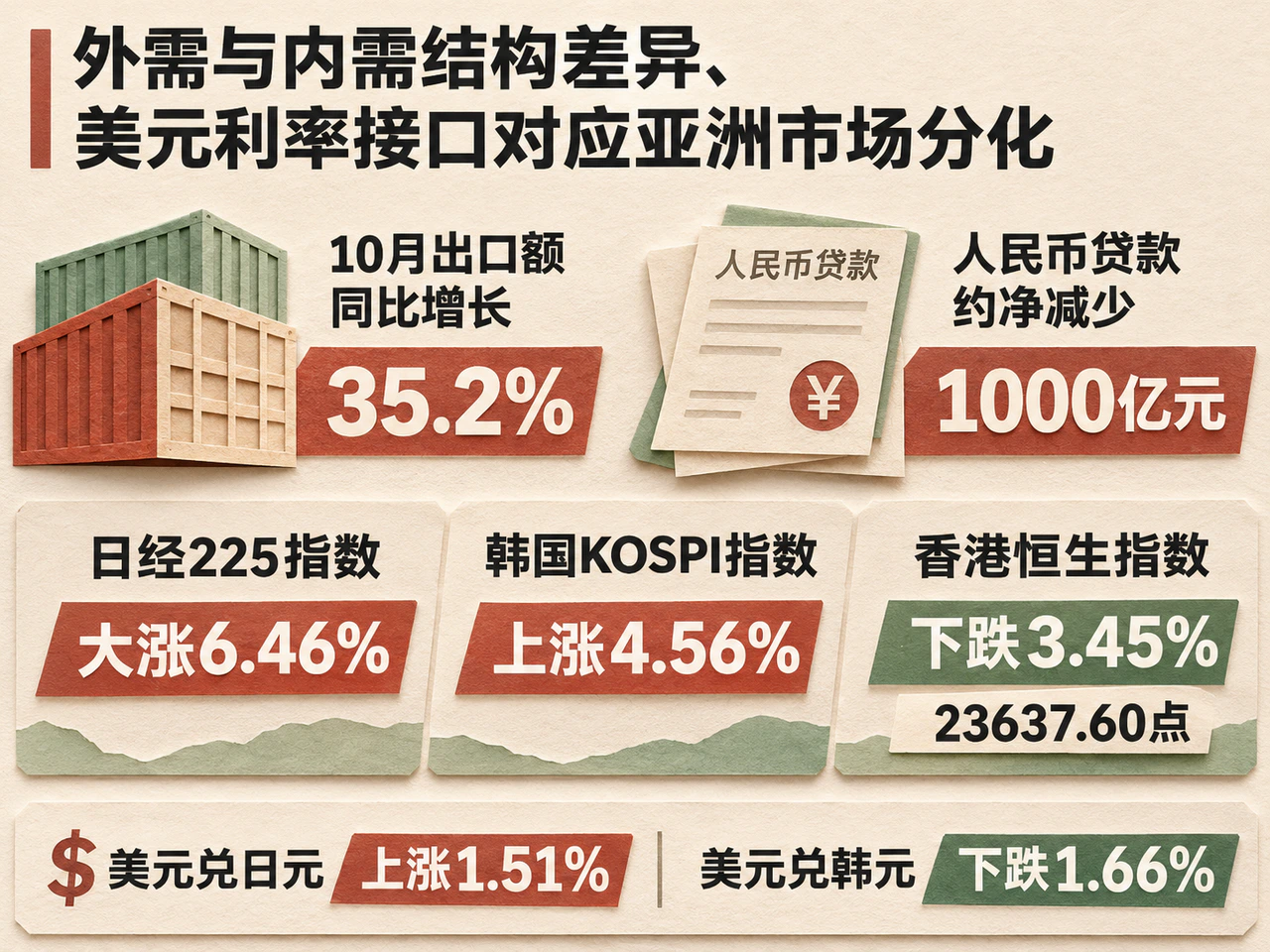
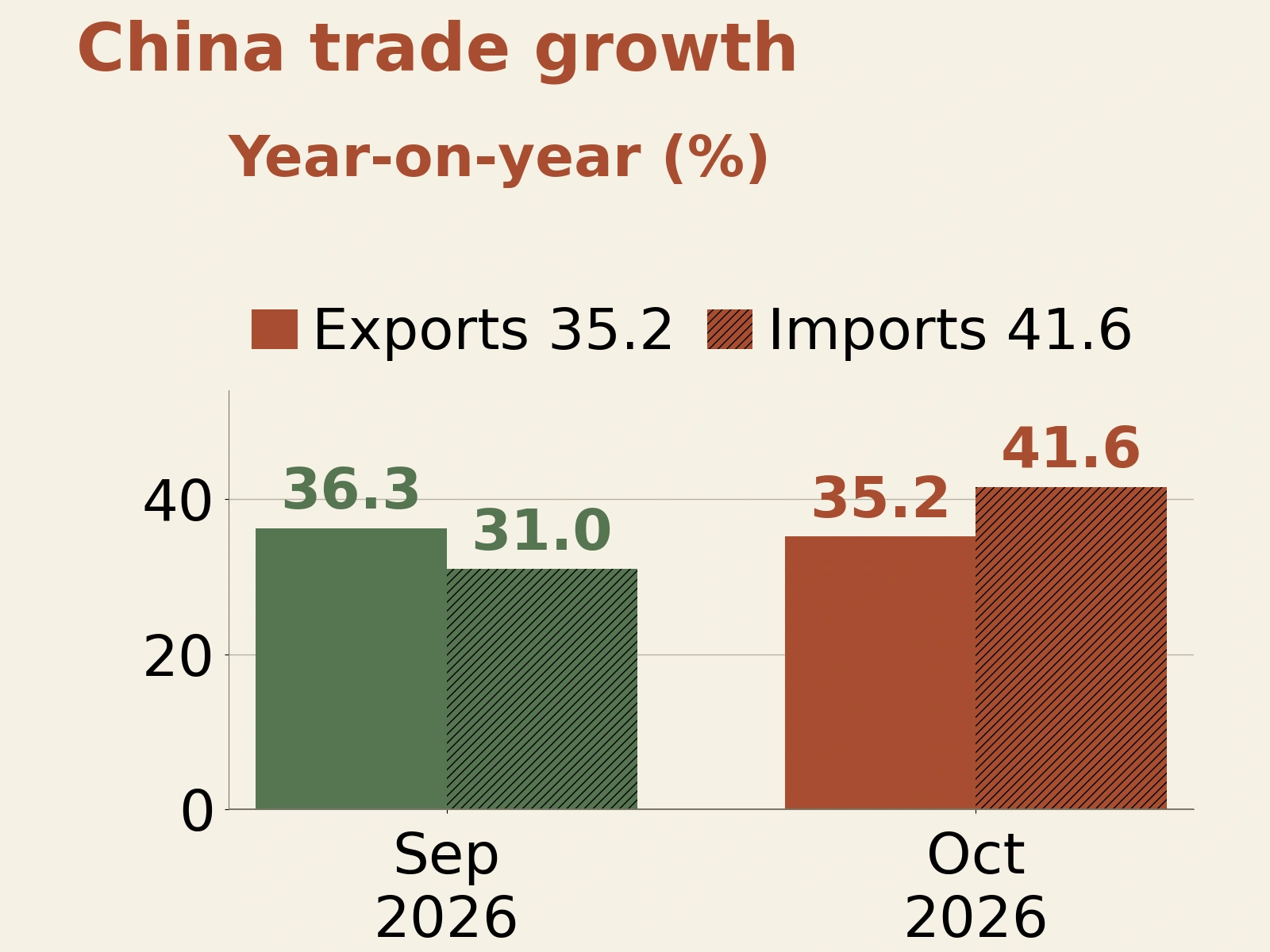
China's macroeconomic releases last week showed a structural combination of strong external demand and moderate domestic demand. In U.S. dollar terms, October exports rose 35.2% year on year and imports increased 41.6%, both exceeding market expectations. Semiconductor exports surged 111.1% year on year in the first ten months, while high-tech product exports increased 47.9%. The global AI infrastructure building boom provided strong external demand for related supply chains. Growth in trade values also reflected changes in energy prices and increased purchases of technology products.
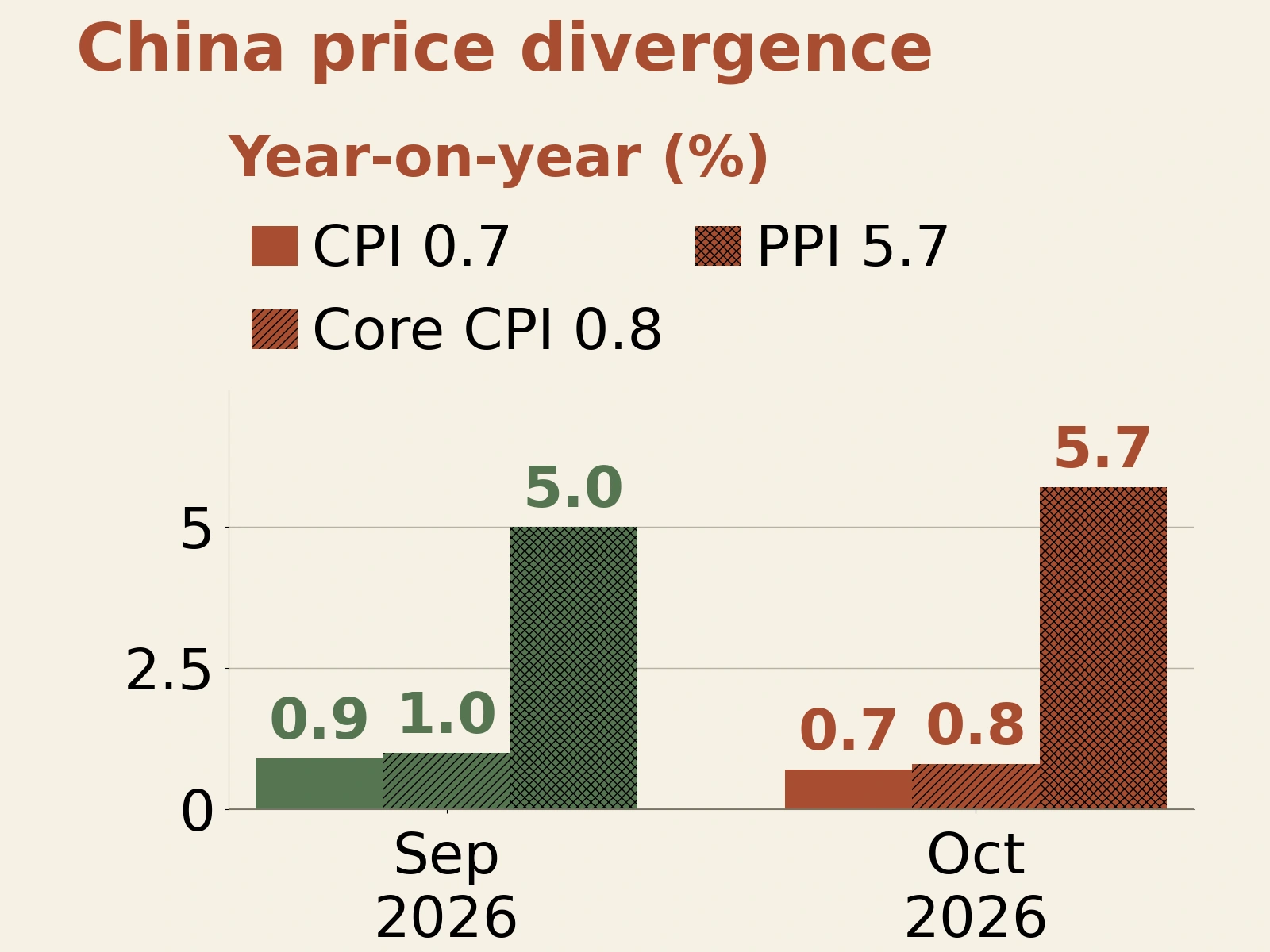
By contrast, domestic consumer inflation and credit demand were relatively moderate. China's annual CPI inflation eased from 0.9% in September to 0.7% in October, and core CPI inflation fell from 1.0% to 0.8%. Annual PPI inflation, however, accelerated from 5.0% to 5.7%. Rising upstream costs alongside slower final consumer-price growth mean that profit performance in midstream and downstream industries will depend on companies' ability to pass costs on.
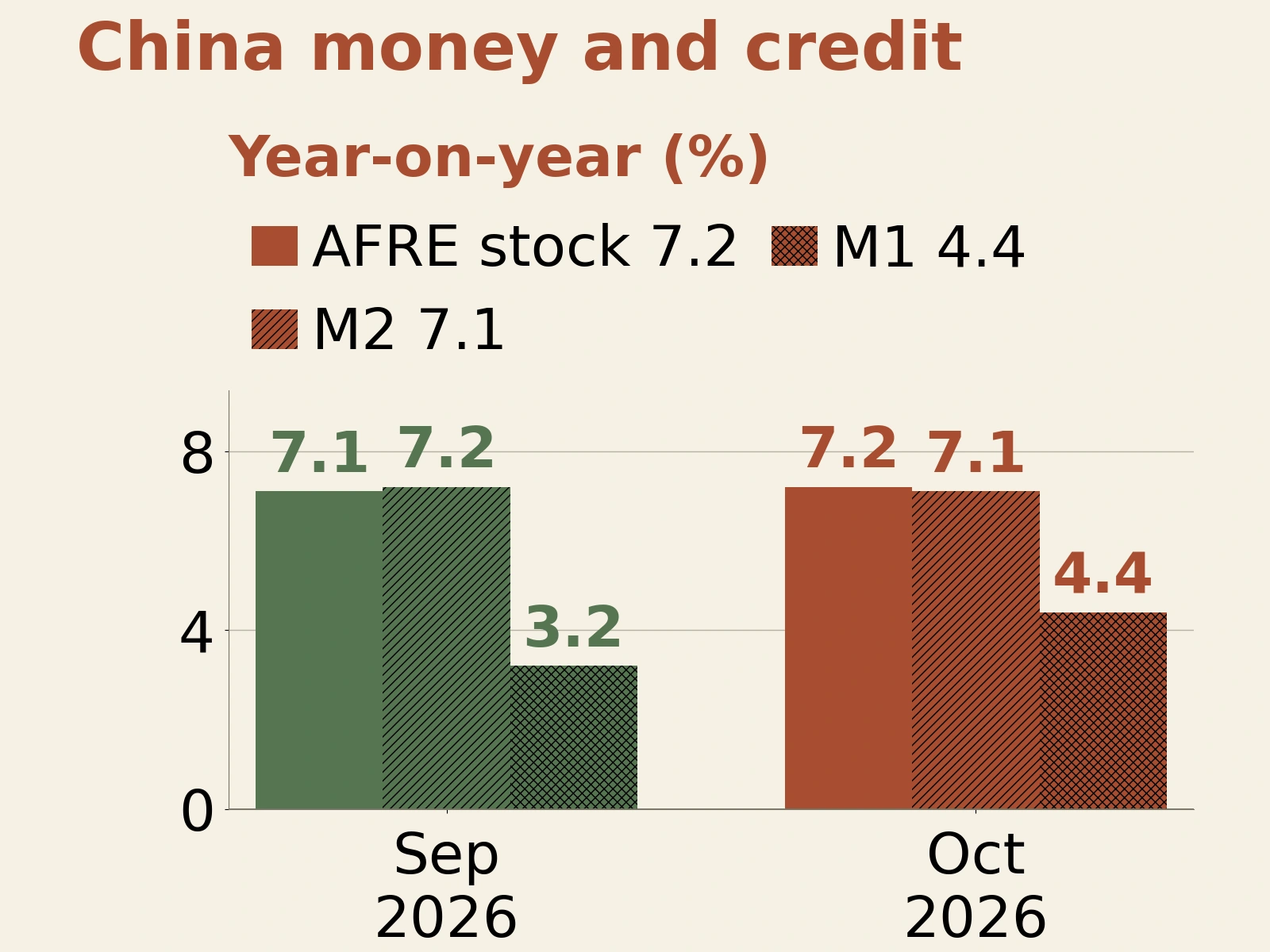
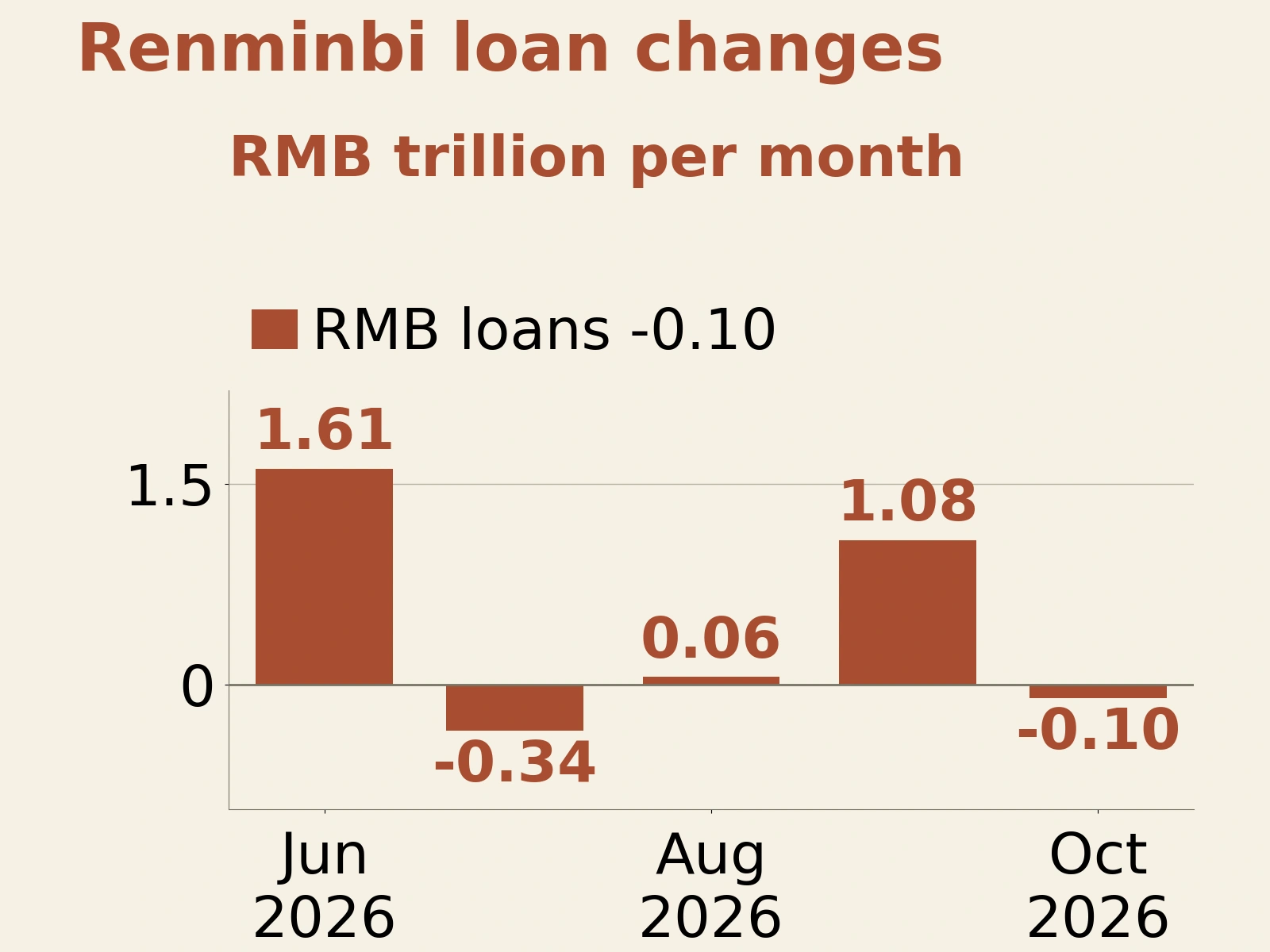
In the financial data, the outstanding stock of aggregate financing to the real economy grew 7.2% year on year at end-October, slightly above September's 7.1%. Annual M2 growth edged down from 7.2% to 7.1%, while M1 growth recovered from 3.2% to 4.4%. Subtracting cumulative renminbi lending for the first nine months from the comparable first-ten-month total gives an approximate net decline of RMB100 billion in October. Improved M1 growth alongside weak monthly on-balance-sheet lending indicates that the transmission of monetary support into real-economy credit expansion still requires follow-through from consumption, investment and project financing. In its third-quarter monetary-policy implementation report released last week, the People's Bank of China continued to emphasize stronger countercyclical adjustments, support for domestic demand and reasonably ample liquidity.
Temporary easing in trade policy gave multinational supply chains additional time. Under arrangements disclosed on November 9, the suspension of the additional 24% tariff on U.S. goods was extended by two months, while a separate 10% tariff remained. Certain exemptions from critical-mineral export controls and the suspension of special port fees were extended to January 10, 2027. Information disclosed on November 14 also showed that, at the trade council meeting on November 13, the two sides discussed reciprocal tariff reductions covering $30 billion of goods on each side, but no new agreement had been announced. Extending the existing grace period reduced the risk of a near-term jump in supply-chain costs. Any substantive earnings boost from further tariff cuts still depends on the finalization of subsequent agreements.
Other geopolitical and policy risks also generated volatility in individual markets. Trump threatened on November 12 to double tariffs on Mexican goods. According to Bloomberg, the Mexican peso weakened after the relevant social-media post; the tariff change has yet to take effect. Russia, Ukraine and the United States resumed talks but made no major breakthrough on territory, leaving any substantive improvement in energy supply dependent on concrete agreements. Meanwhile, temporary funding for the U.S. federal government expires on December 11, and budget negotiations will continue to influence subsequent fiscal arrangements.
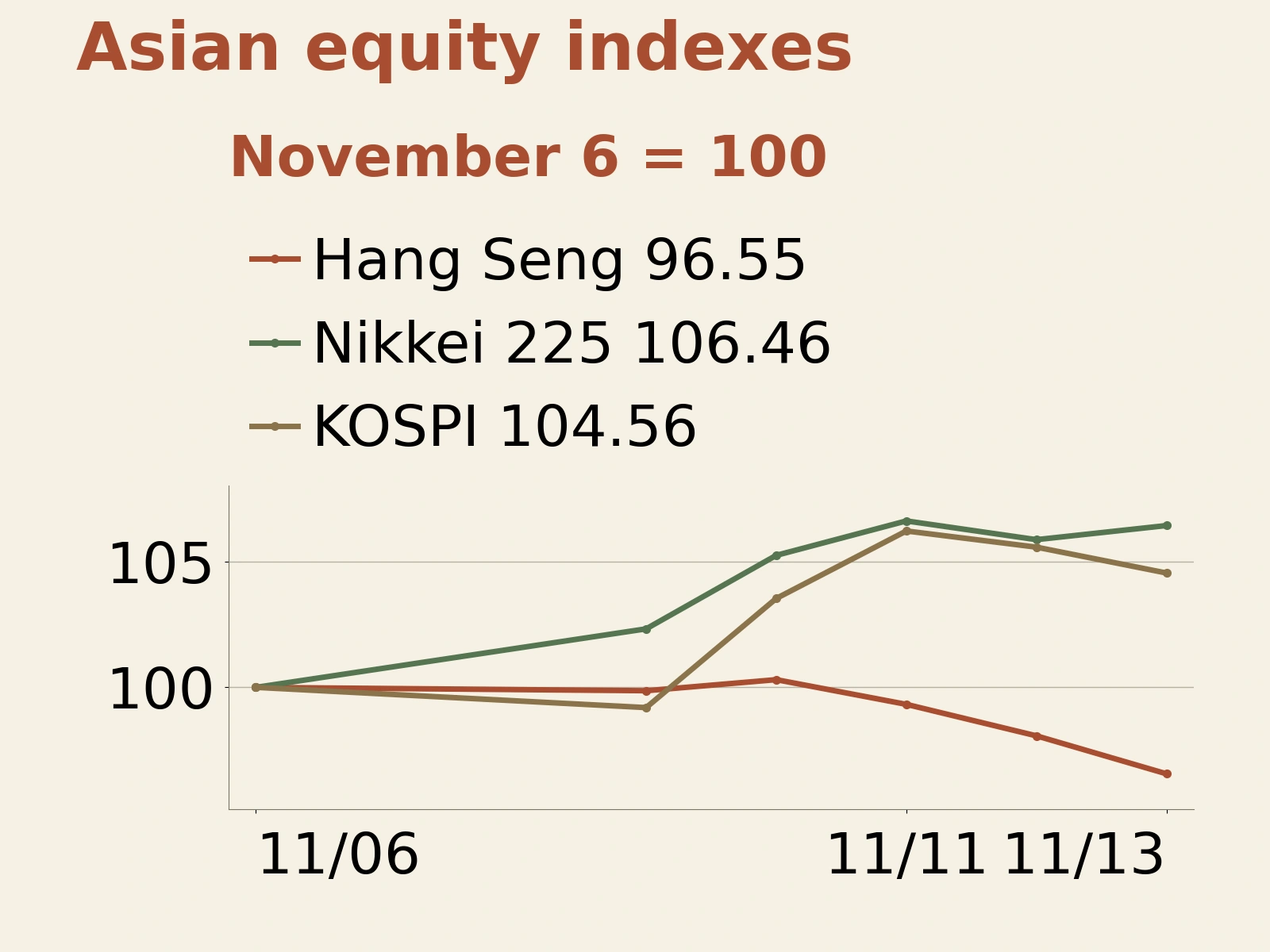
Differences in fundamental exposures and the transmission of interest rates produced widely divergent returns across major Asian equity markets. Based on local-currency closing index levels, the Nikkei 225 jumped 6.46% last week and South Korea's KOSPI rose 4.56%, while Hong Kong's Hang Seng Index fell 3.45% to 23,637.60. Japanese and South Korean equities benefited more from expanding global technology capital expenditure and favorable supply-chain conditions. Hong Kong, meanwhile, faced valuation constraints from both rising U.S. dollar risk-free rates and moderate mainland domestic demand. Exchange-rate moves further widened differences in dollar-denominated market returns: USD/JPY rose 1.51% over the week to 159.875, while USD/KRW fell 1.66% to 1,333.78.
In the new week, China releases industrial value-added, total retail sales of consumer goods and fixed-asset investment data on November 16, followed by U.S. retail sales and industrial production on November 17. These two sets of releases will further test how well real demand in China and the United States can withstand the current financing environment and price structure. Nvidia's quarterly results and management-transition arrangements, also due on November 17, are a key point for assessing the strength of global AI demand and governance risks at a leading company. After last week's recovery in risk appetite delivered initial gains, the constraints that higher real rates impose on corporate cash flows and financing costs will continue to determine the breadth and durability of this equity rebound.