On November 11, 2026, US stocks rebounded during regular trading, led by technology shares, while the dollar strengthened further, gold declined and crude oil edged higher. Strong earnings and customer prepayment arrangements at cloud computing provider CoreWeave eased concerns over how AI capital spending would be funded. Yet the previous day's stronger-than-expected US inflation figures continued to reverberate, extending the repricing of interest rates. Cross-asset moves showed investors becoming more selective in an environment of expensive dollar funding, distinguishing companies' ability to turn orders into cash from the cost of holding non-interest-bearing assets. Nvidia's sharp after-hours decline on rumors of senior management changes introduced a fresh corporate governance risk to the technology recovery.
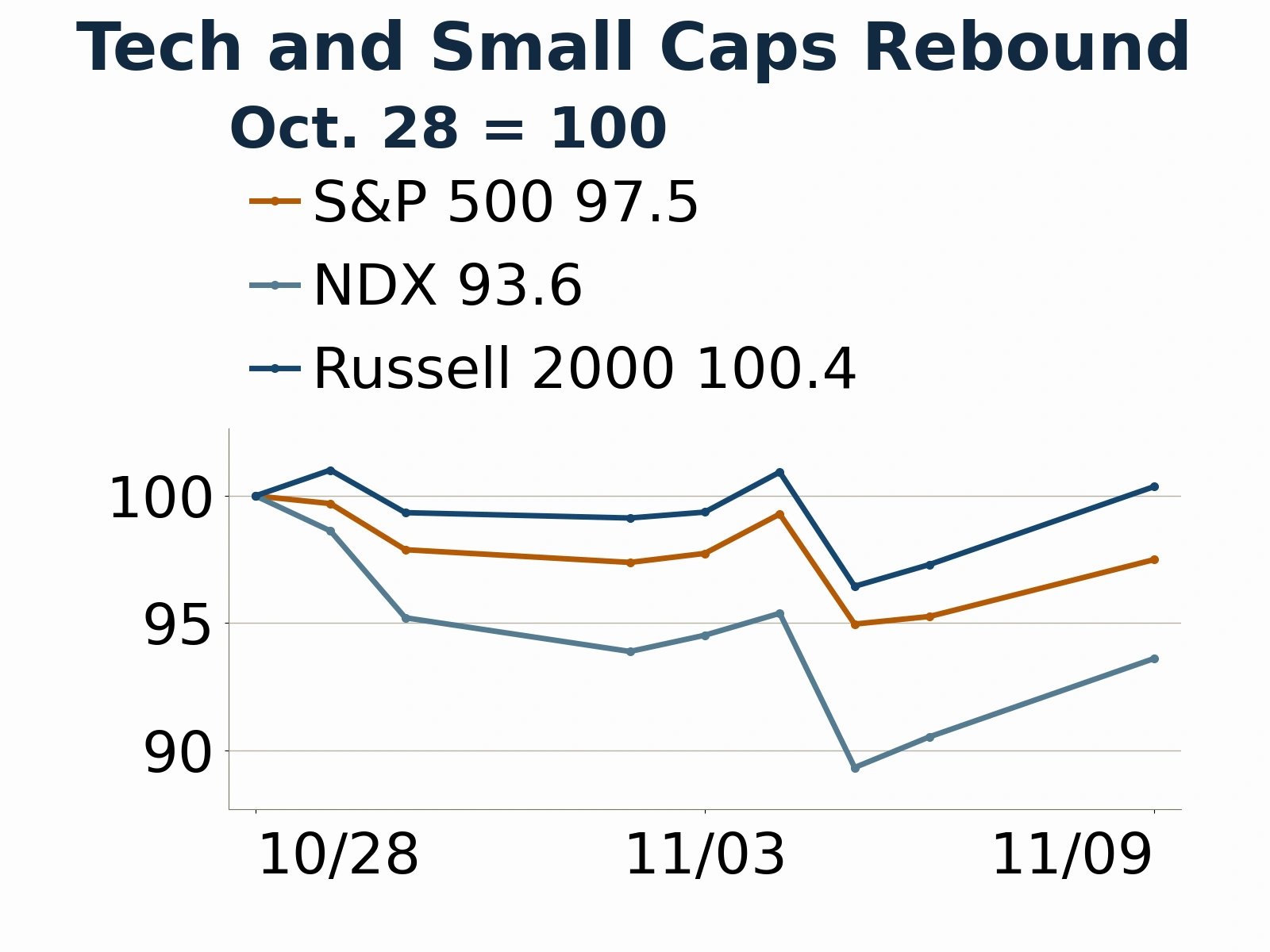
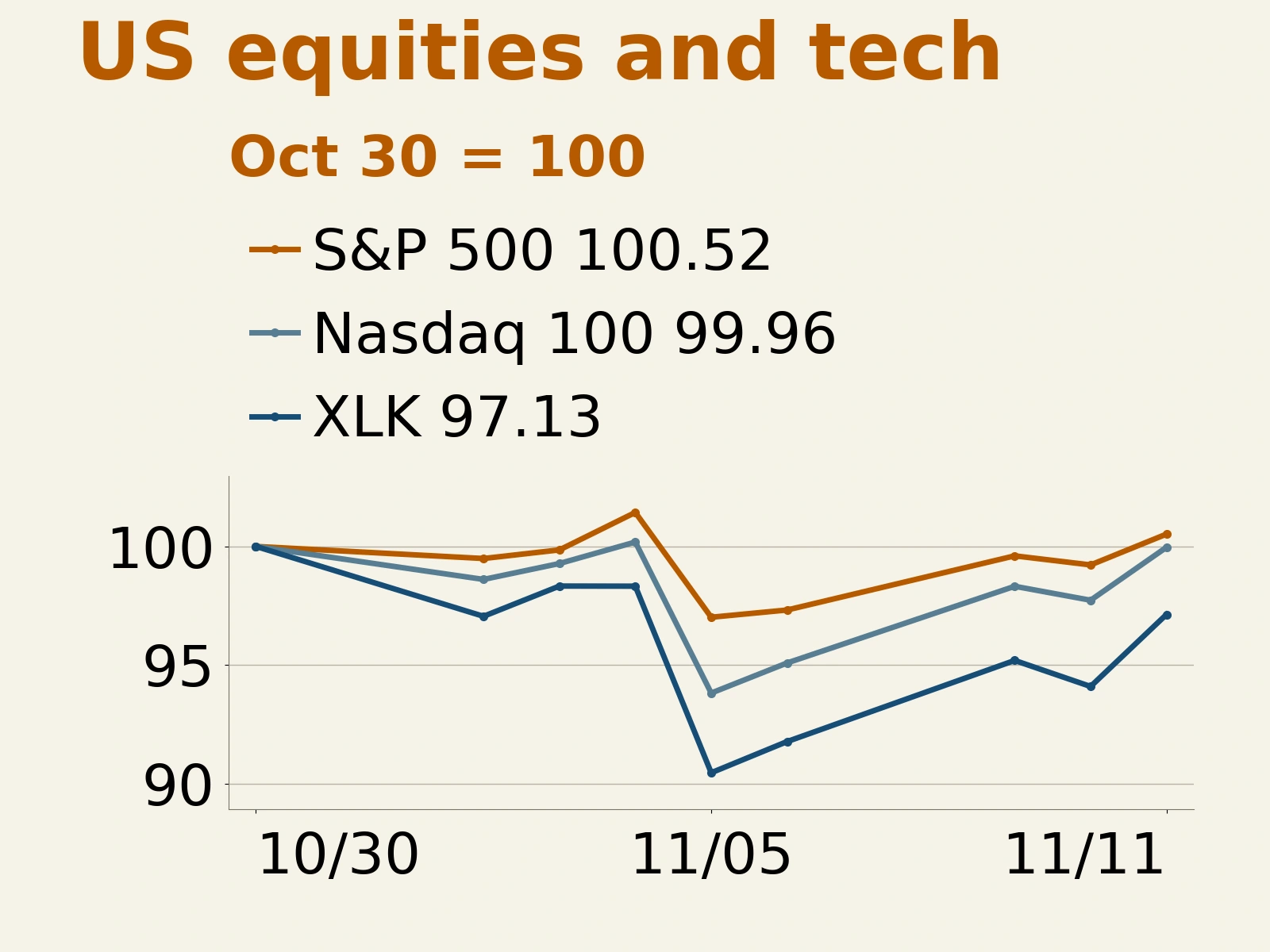
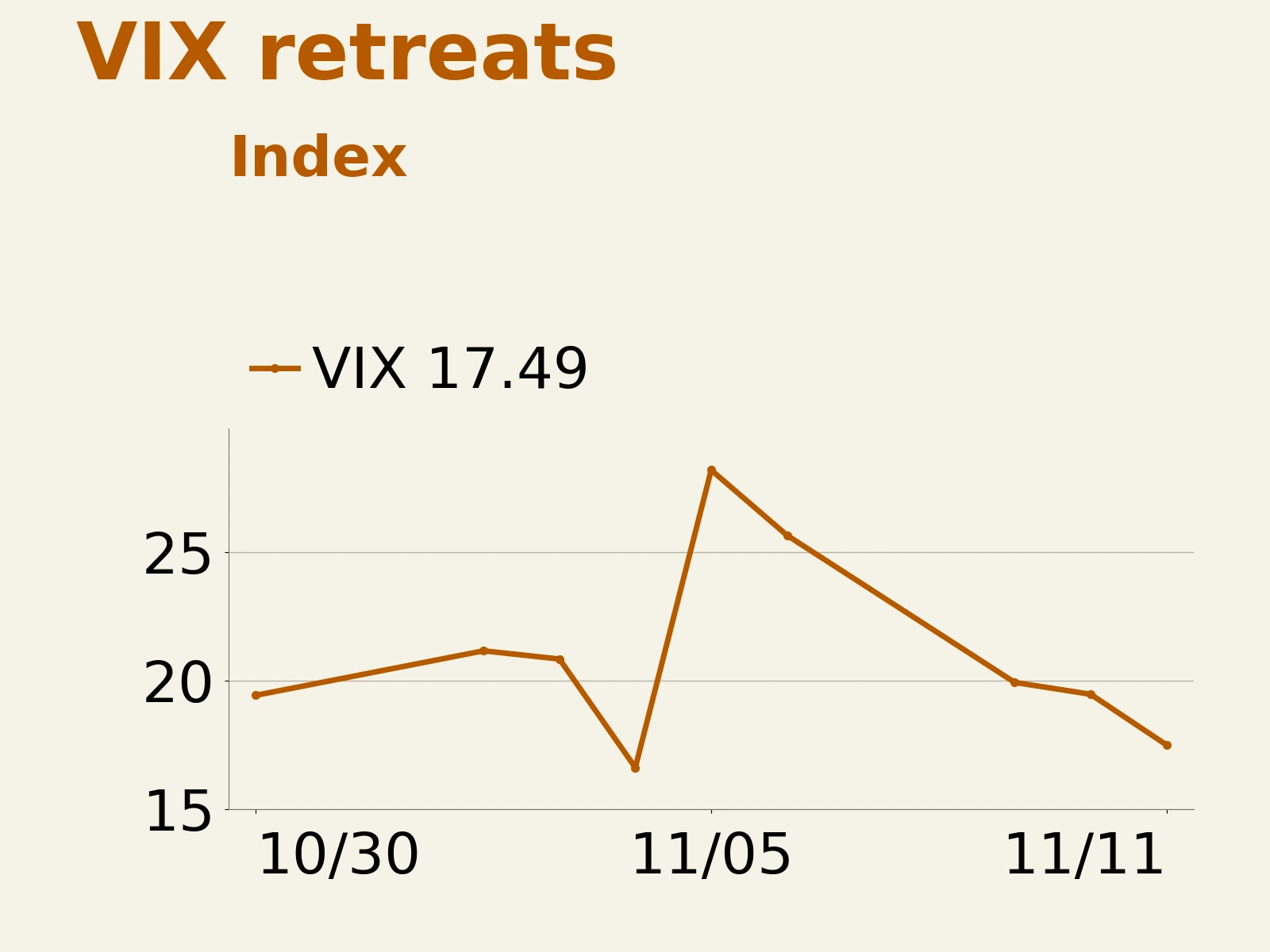
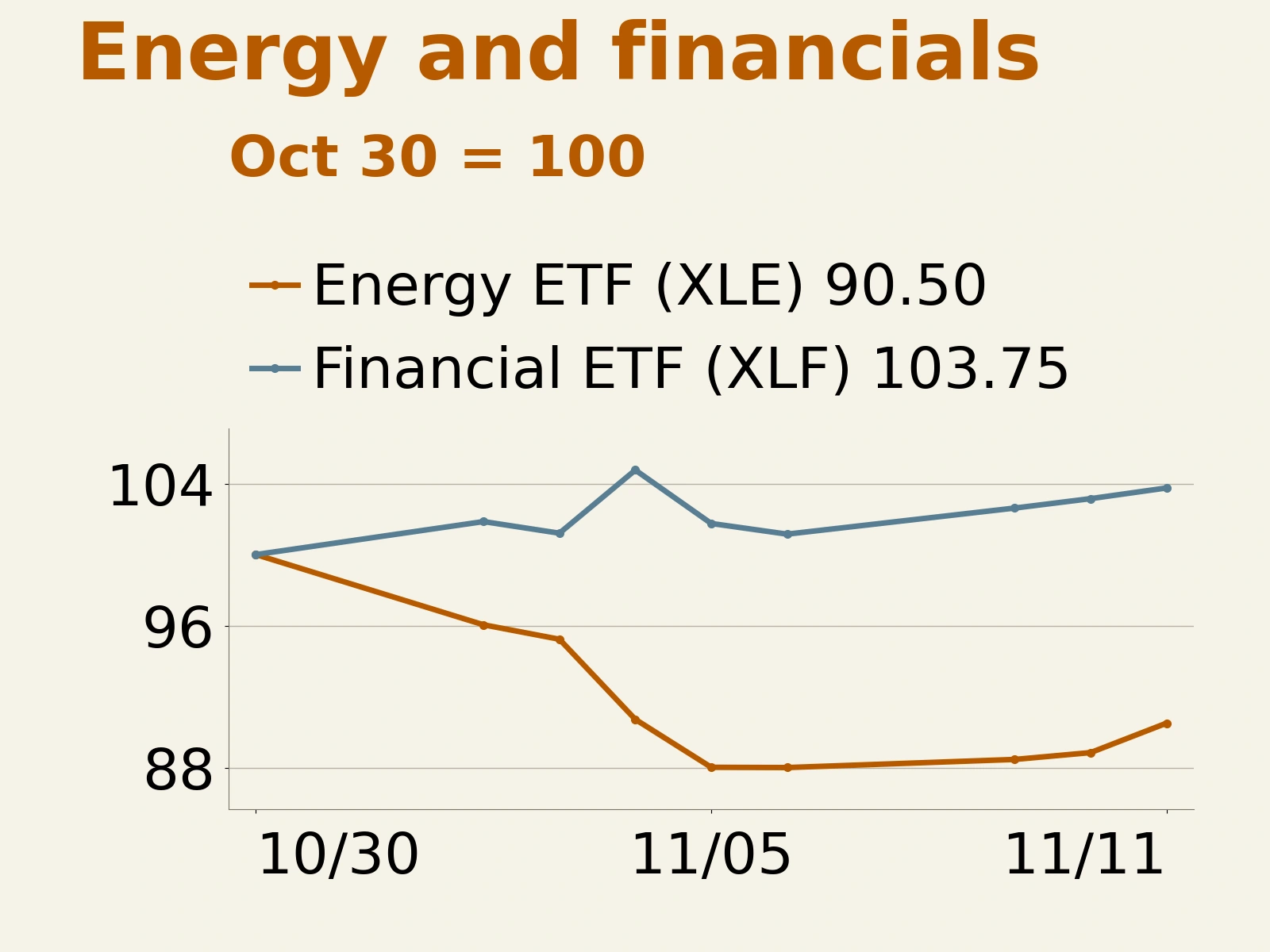
At the close, the S&P 500 had risen 1.31% to 7619.38, the Nasdaq 100 gained 2.28% to 28374.25, the Dow Jones Industrial Average advanced 0.49% to 52486.49, and the Russell 2000 added 0.88% to 2846.26. By sector, the technology ETF XLK rose 3.23%, the energy ETF XLE gained 1.86%, and the financial ETF XLF increased 0.58%. The VIX fell 1.97 points, from 19.46 to 17.49. Technology led the gains, with other sectors following, signaling an improvement in equity risk appetite as earnings and financing progress at leading companies temporarily offset the valuation pressure from high interest rates.
CoreWeave prepayments ease AI financing anxiety; Nvidia rumors complicate the outlook after hours

The central support for the AI rebound was that customer orders were beginning to provide tangible backing for companies' financing capacity. After the US close on November 10, CoreWeave reported third-quarter revenue of $3.66 billion, up 168% year on year and above analysts' $3.55 billion forecast. Its adjusted loss per share was $0.95, narrower than the expected $1.16 loss. The company raised its full-year revenue guidance from $12.4 billion–$13.2 billion to $13.0 billion–$13.3 billion, while also increasing its adjusted operating income guidance. CoreWeave shares closed approximately 25% higher on November 11.
The company's funding arrangements mattered even more to sentiment than its reported results. Management expects to receive approximately $9 billion in customer prepayments and deposits over the next three months, and said its funding requirements for 2027 would be covered primarily by customer prepayments and financing from hardware partners. Given elevated market yields, the company plans to refrain from issuing further unsecured debt at the parent-company level through the end of 2027, instead continuing to pursue contract-backed, secured financing at the asset level. Using signed orders to replenish cash flow directly improved visibility into its computing capacity expansion and eased investors' concerns over refinancing risk in a high-rate environment.
Optimism quickly spread through the computing infrastructure supply chain. On November 11, the semiconductor ETF SOXX gained approximately 6%, Micron Technology rose about 12%, SanDisk about 14%, Dell about 12%, and Oracle about 9%. Baird strategist Ross Mayfield noted that, alongside the boost from CoreWeave's results, the sharp rally also reflected position rebuilding after earlier declines. Daily closing levels nevertheless suggest that the rebound remained a recovery from prior pessimism: the S&P 500 and Nasdaq 100 still closed approximately 0.90% and 0.22% below their November 4 levels, respectively, while XLK remained about 1.21% lower.
The returns on the industry's heavy capital spending are also far from proven. CoreWeave's third-quarter net loss widened from $110 million a year earlier to $709 million; liabilities approached $47 billion at quarter-end, and its full-year capital spending plan stands at $37 billion–$39 billion. In research dated November 9, Bessemer Trust also noted that the six largest hyperscalers had issued more than $250 billion of bonds so far this year, far above the $93 billion issued in all of 2025. Against this backdrop of enormous borrowing and construction outlays, elevated funding costs will continue to test AI companies' ability to deliver profits, making differences in financial health across the industry increasingly pronounced.
A fresh disruption emerged after regular trading ended. According to a Reuters report updated that day, Nvidia fell approximately 8% after hours following a 2.9% gain during the regular session. Reuters, citing The Wall Street Journal and people familiar with the matter, reported that Nvidia's board was preparing to replace its chief executive. The company had not confirmed the report, but it had already raised concerns over management continuity and business execution, putting the technology sector's newly stabilized risk appetite to another test.
Sticky core inflation lifts real Treasury yields, keeping dollar financing hurdles high
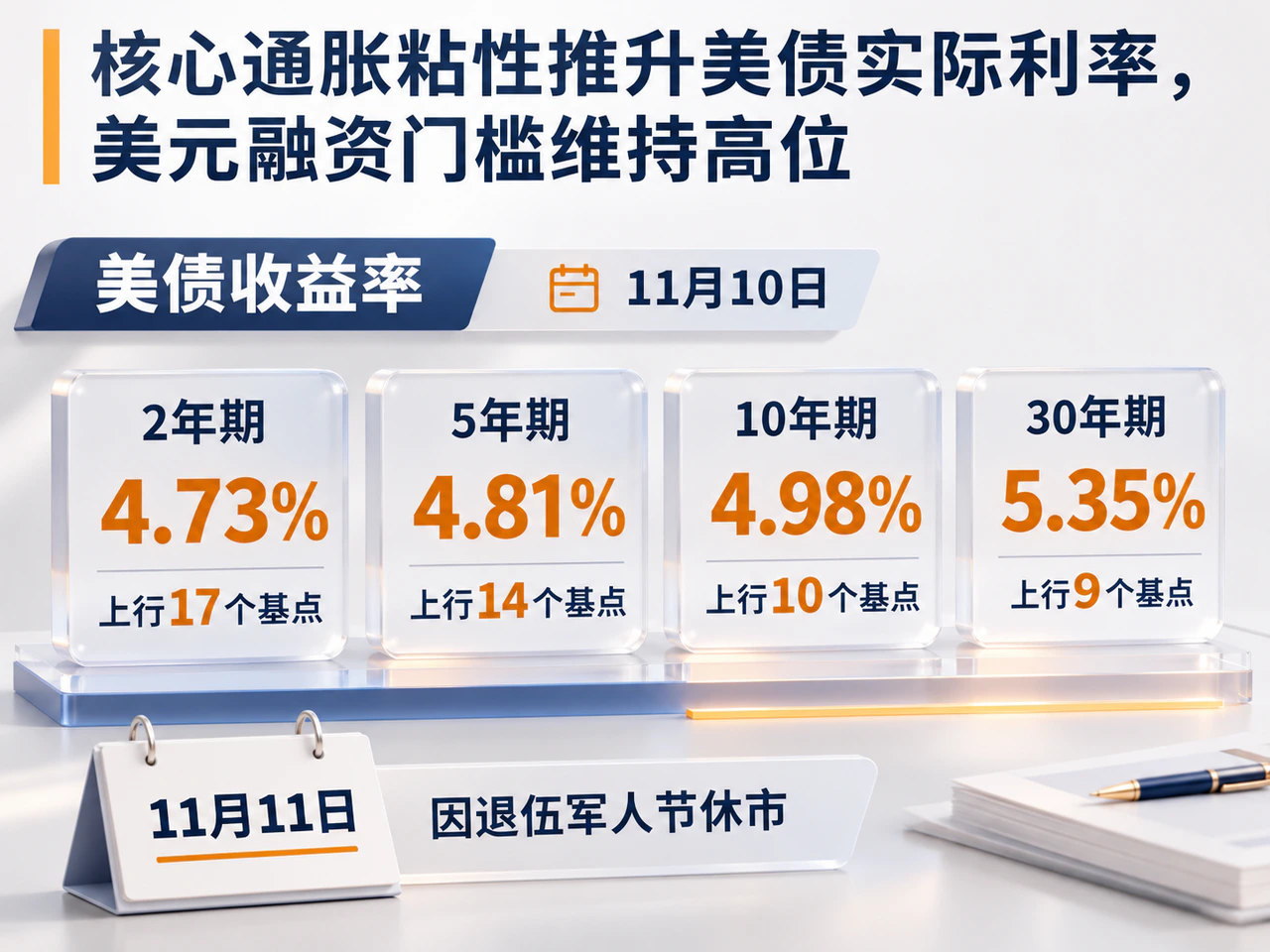
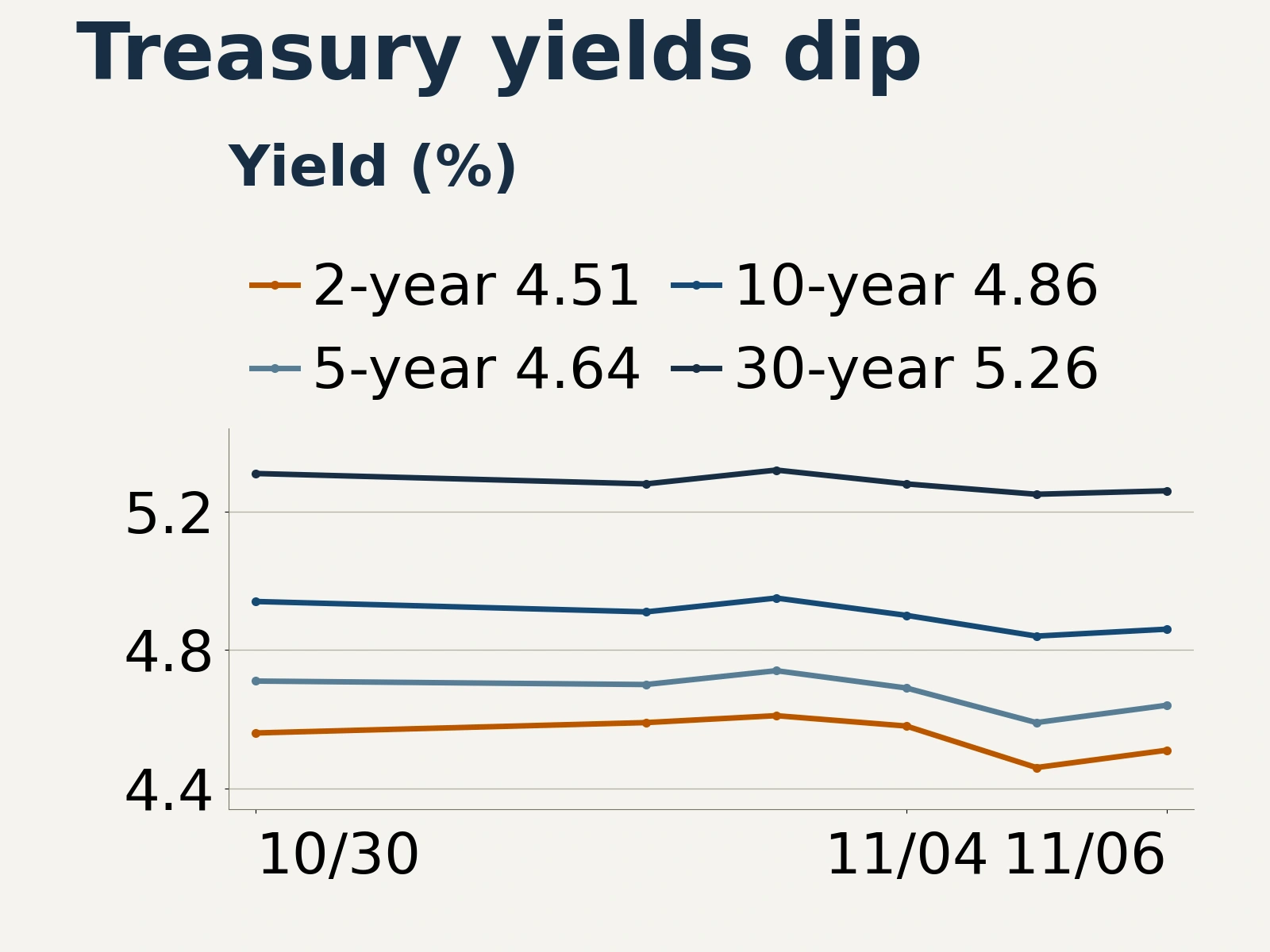
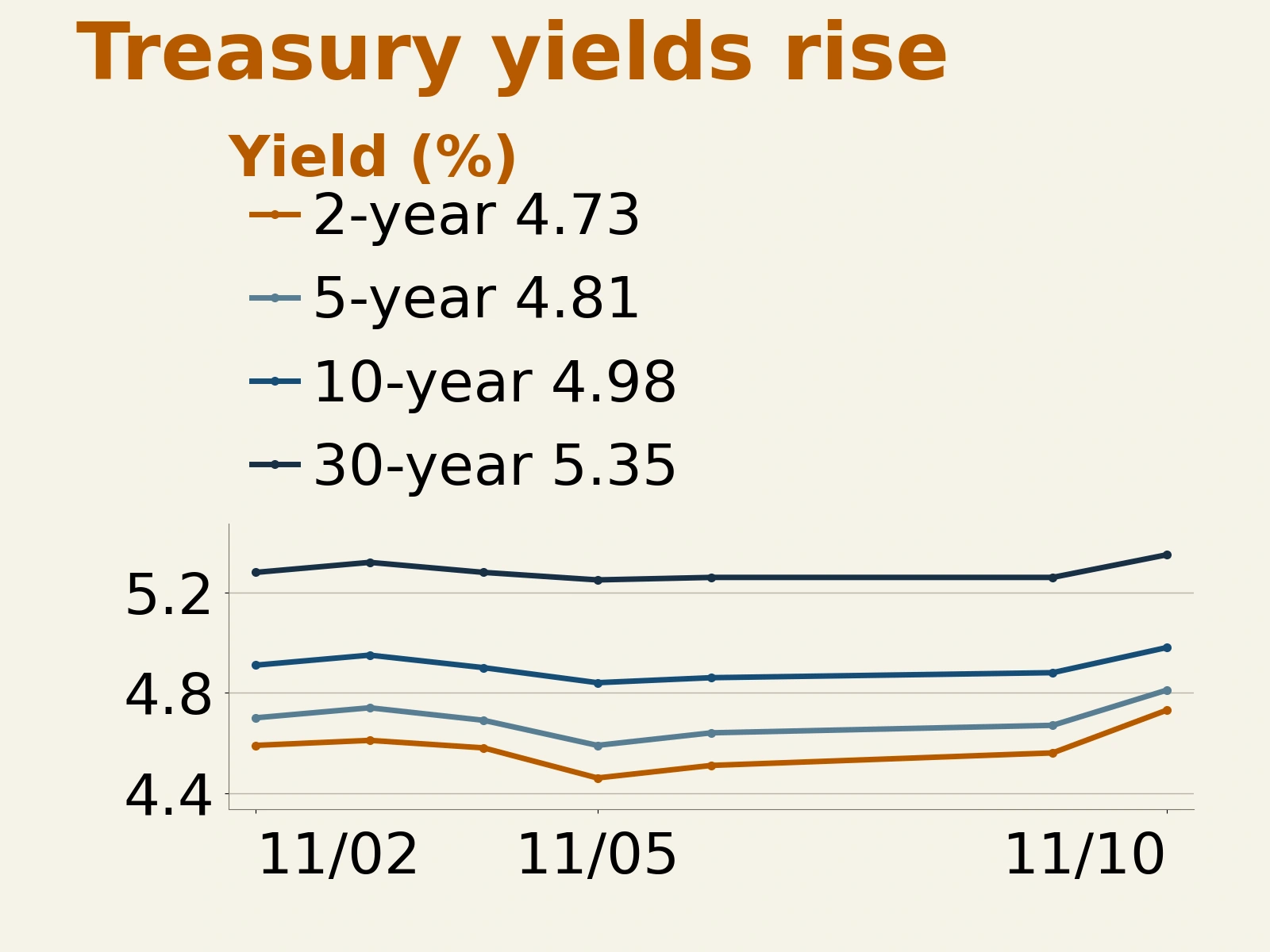
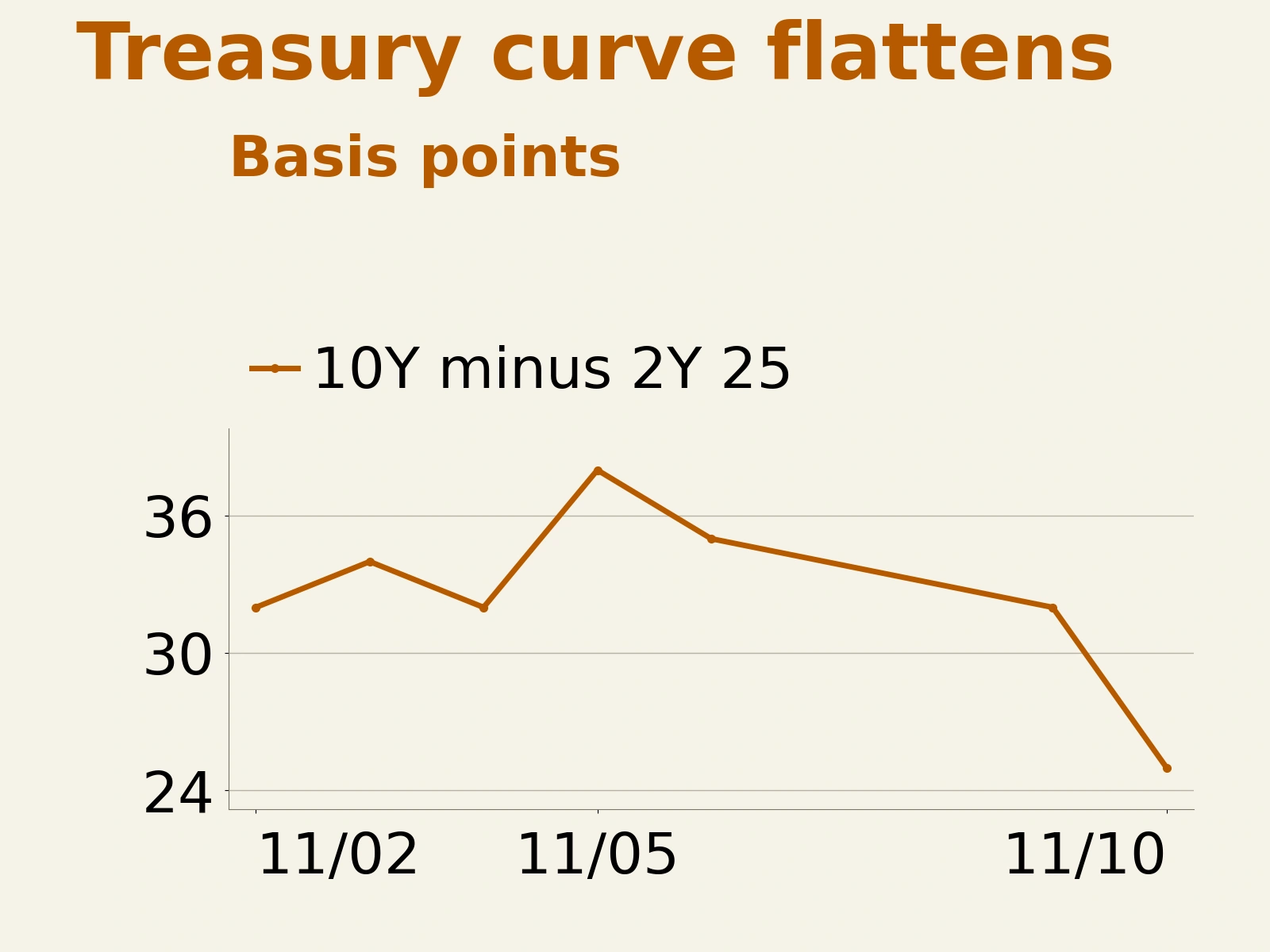
Technology shares' sensitivity to cash flow stems from persistently high dollar funding costs. The US cash Treasury market was closed for Veterans Day on November 11, so the previous day's closing data—November 10—captured the inflation-driven repricing: the 2-year Treasury yield rose 17 basis points to 4.73%, the 5-year yield gained 14 basis points to 4.81%, the 10-year yield increased 10 basis points to 4.98%, and the 30-year yield climbed 9 basis points to 5.35%. Shorter maturities rose much more sharply than longer ones, narrowing the 10-year/2-year spread from 32 basis points to 25 basis points and indicating a concentrated upward revision to policy-rate expectations.
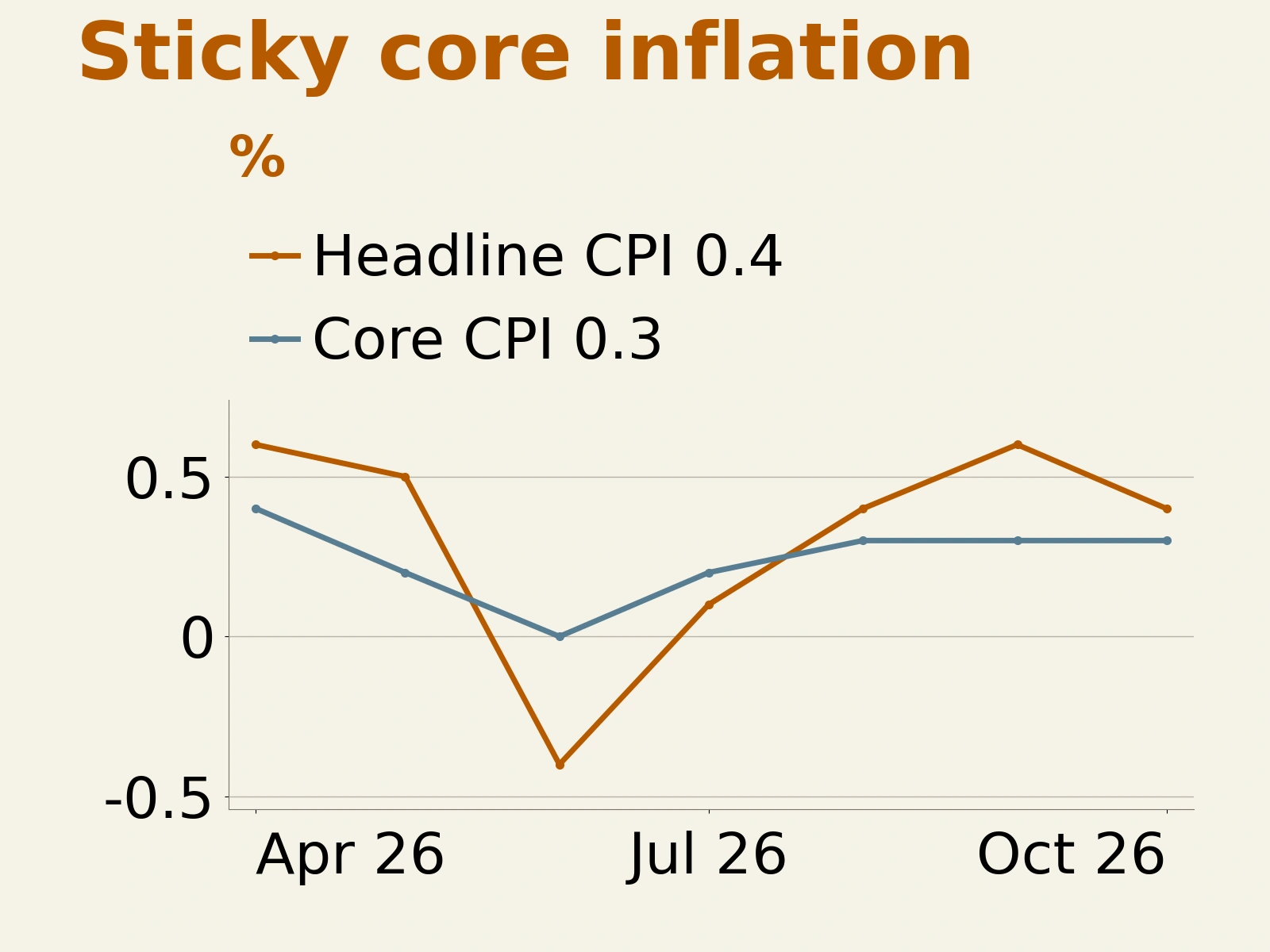
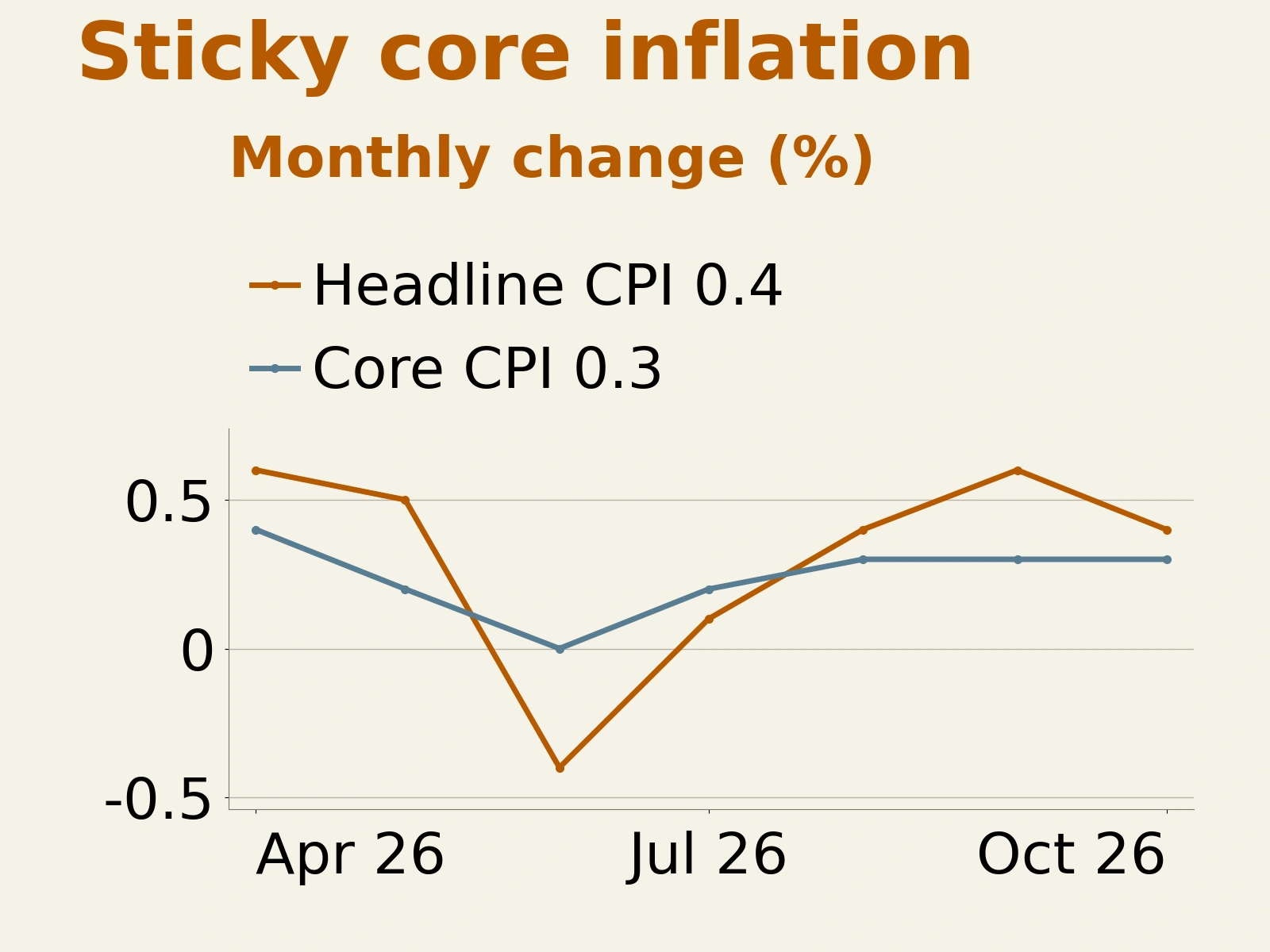
The immediate trigger for the repricing was the US October CPI report released on November 10. Seasonally adjusted headline CPI rose 0.4% month on month in October, below September's 0.6% but above the market forecast of 0.3%. Core CPI increased 0.3% for a third consecutive month, also exceeding the expected 0.2%. Within the report, monthly energy price inflation slowed sharply from 5.2% to 0.7%, but food, shelter and transportation services prices rose 0.5%, 0.3% and 0.8%, respectively. Persistent services and living costs kept core inflation slow to cool. Reuters reported on November 11 that interest-rate investors continued to treat a 25-basis-point Federal Reserve hike in December as the baseline, while allowing for the possibility of a 50-basis-point increase.
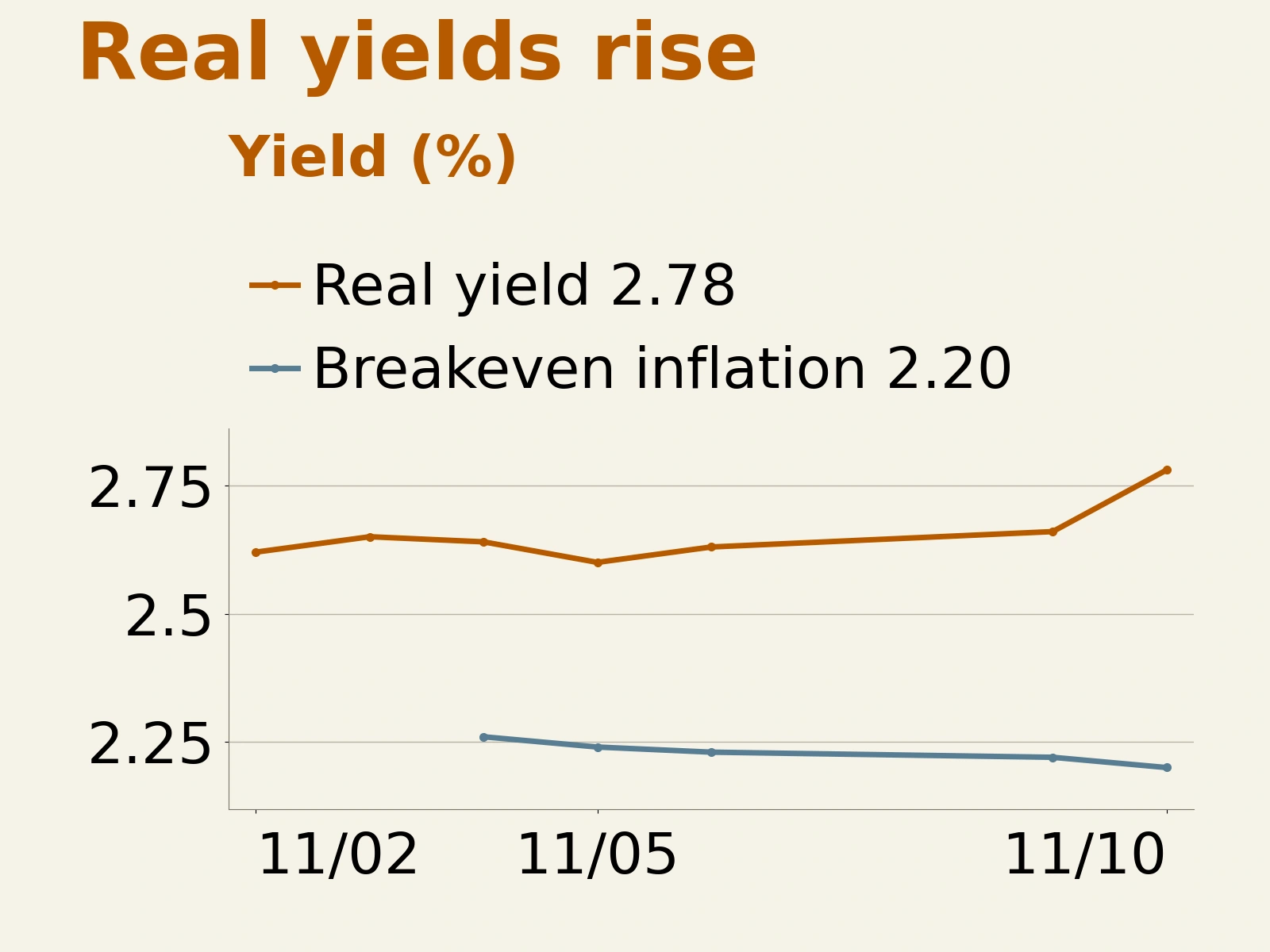
Breaking down nominal yields shows that the current valuation pressure comes primarily from higher real discount rates. US Treasury data show that the 10-year real yield rose 12 basis points on November 10, from 2.66% to 2.78%. Over the same period, the 10-year breakeven inflation rate in the Federal Reserve Economic Data database, FRED, edged down from 2.22% to 2.20%. Meanwhile, weak demand at the $42 billion 10-year Treasury auction on November 10 kept the market alert to its capacity to absorb subsequent long-dated Treasury supply.
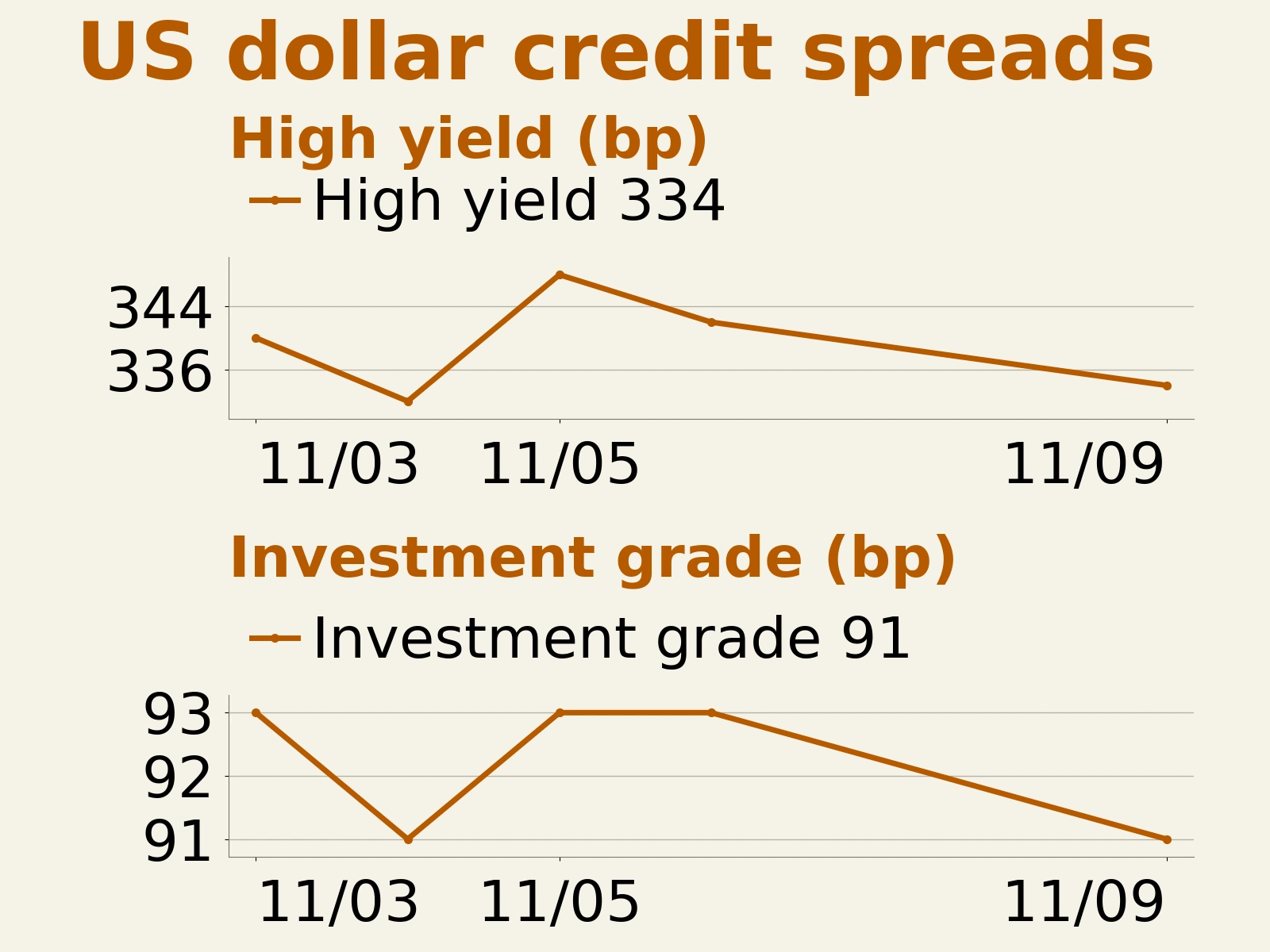
For companies, higher risk-free benchmark yields further raised the hurdle for new debt financing. According to the latest available ICE BofA data, dated November 9, US high-yield spreads stood at 334 basis points and investment-grade corporate spreads at 91 basis points, narrowing by 8 and 2 basis points, respectively, from November 6. Although credit spreads had improved before the inflation shock, the subsequent rise in Treasury yields still increased overall borrowing costs, forcing long-horizon investment projects to place more emphasis on internal funding and the speed of cash recovery.
OPEC supply growth meets shipping risk, while a strong dollar pushes gold below $4,000
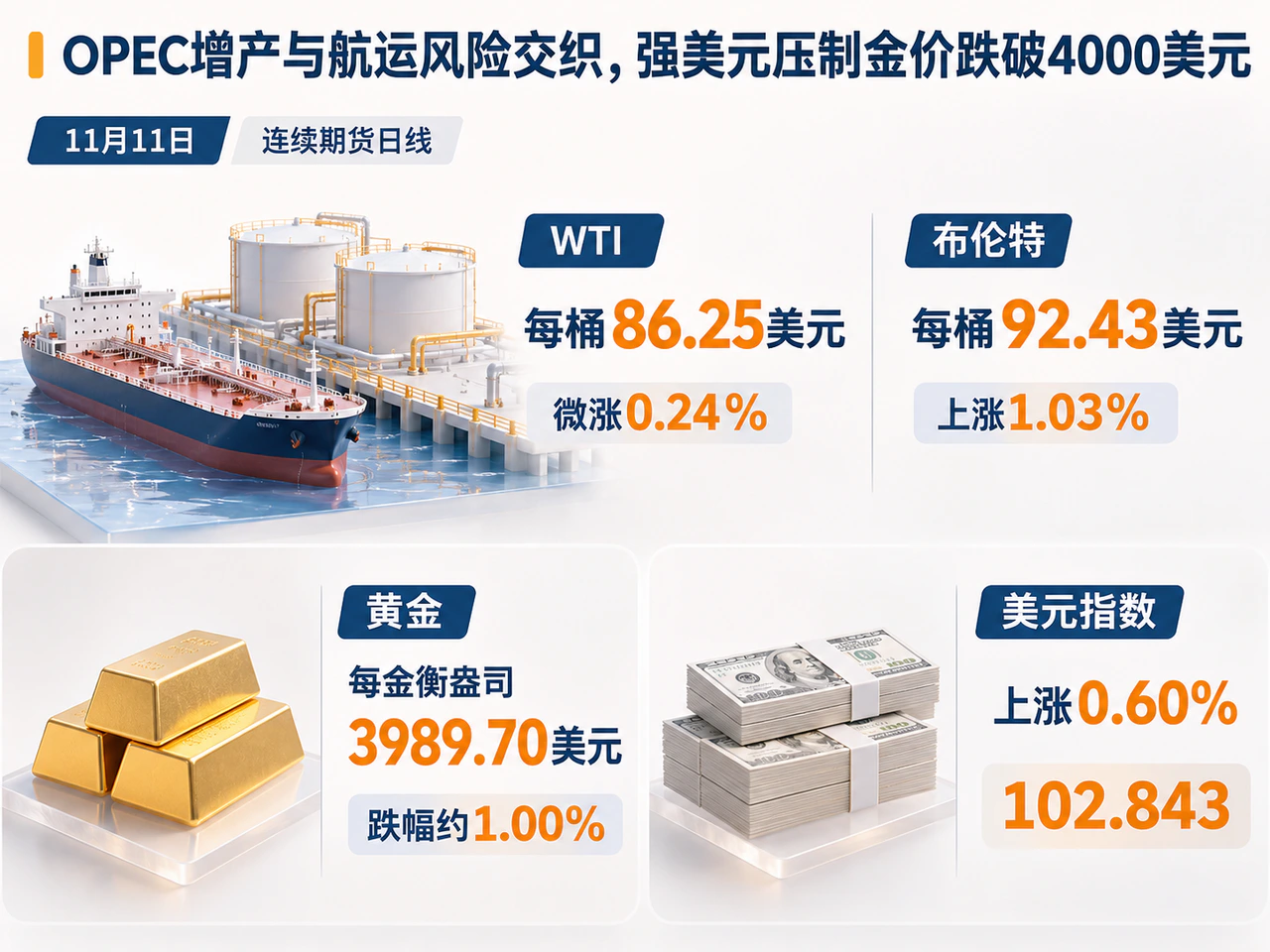
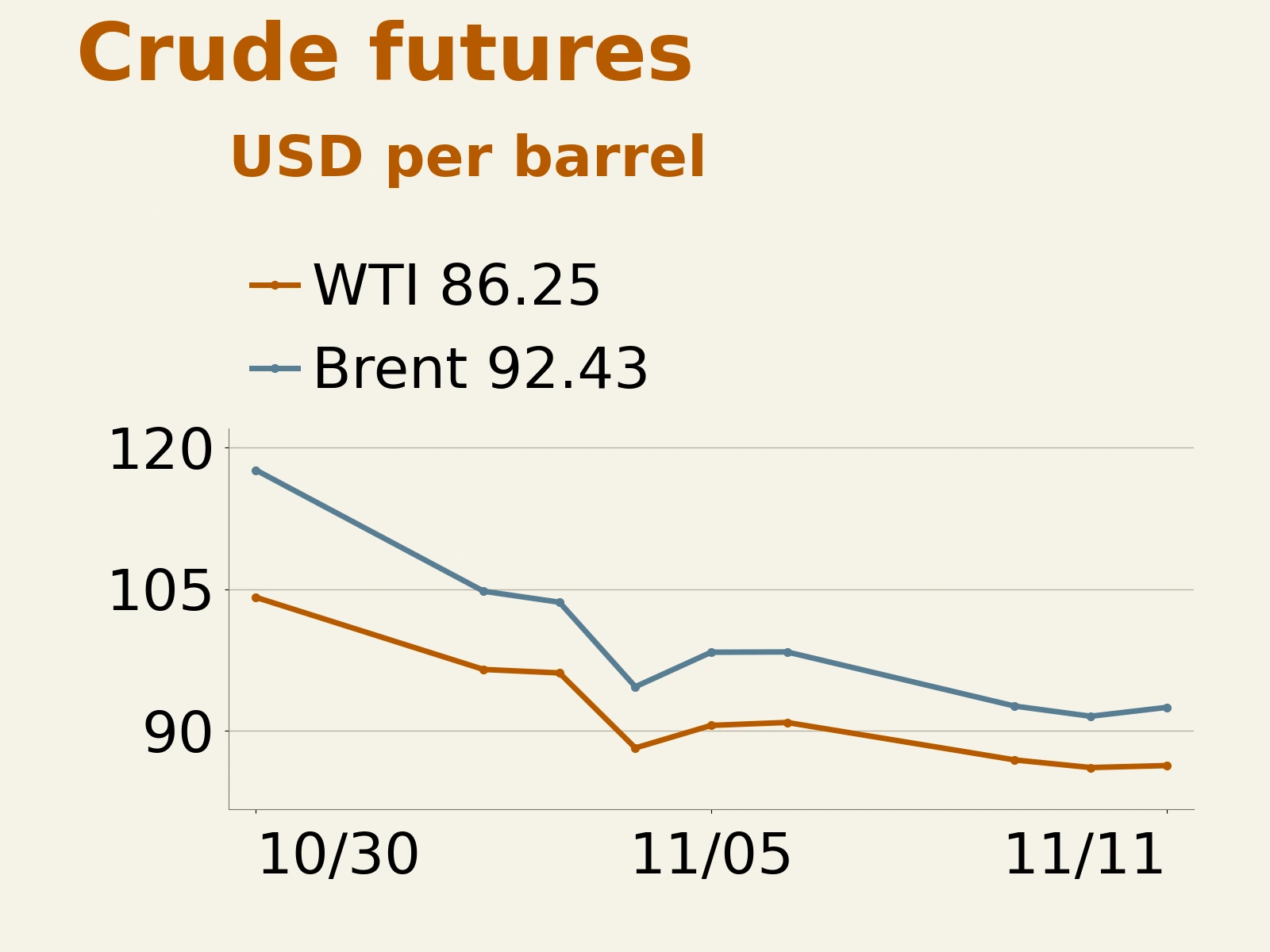
Commodity markets were likewise balancing the interest-rate environment against fundamentals. Continuous futures daily data for November 11 showed WTI crude closing at $86.25 per barrel, up a modest 0.24%, and Brent at $92.43 per barrel, up 1.03%. On the geopolitical front, shipping safety concerns in the Strait of Hormuz and disagreements in negotiations continued to sustain a transport risk premium. A meaningful recovery in shipping volumes still depends on progress in mine clearance, insurance rates and shipowners' willingness to take on voyages.
Physical crude supply, however, is gradually recovering. Dow Jones, citing OPEC's monthly report, said OPEC members' crude production rose by 1.96 million barrels per day in October to 27.16 million barrels per day, moving toward February's prewar level of 28.63 million barrels per day. Saudi output increased sharply from 8.37 million barrels per day in September to 10.56 million barrels per day. Recovering producer supply and the risk of disrupted shipping pulled in opposite directions, limiting further upside in oil prices.
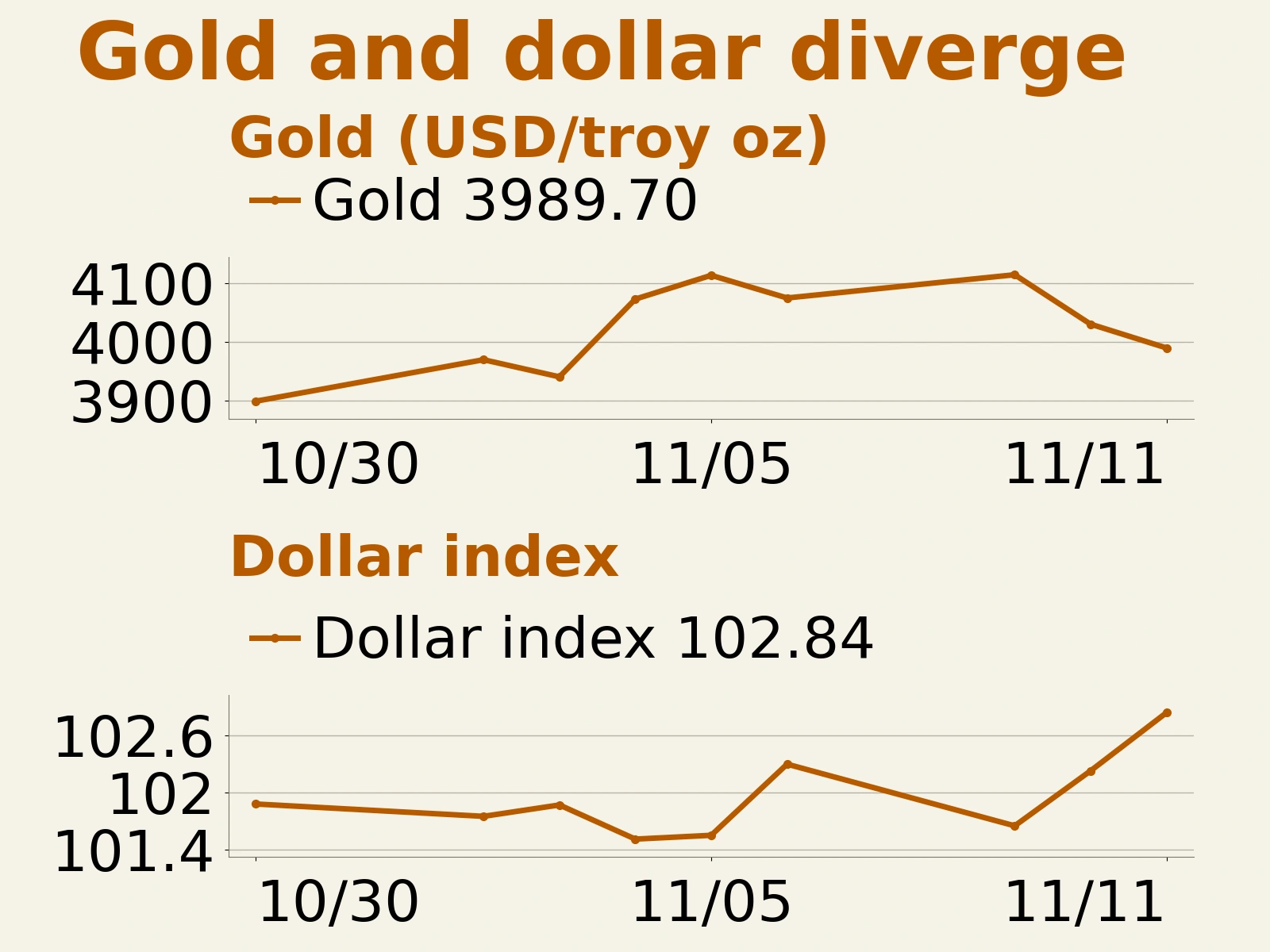
Gold faced a more direct constraint from interest rates. On November 11, the continuous gold futures daily price fell $40.50, or approximately 1.00%, to $3989.70 per troy ounce. The dollar index on the same data basis rose 0.60% to 102.843. The previous day's increase in real Treasury yields directly raised the opportunity cost of holding non-interest-bearing gold, while the stronger dollar made gold more expensive for buyers using other currencies. StoneX strategist Bob Haberkorn said the stronger CPI figures and expectations of a December rate increase had prompted selling, although central bank buying continued to provide underlying support. The tension between long-term allocation demand and short-term funding costs helps explain why US equities rebounded while gold declined that day.
Japan and South Korea rebound with computing supply chains as China's monetary easing coexists with high overseas rates
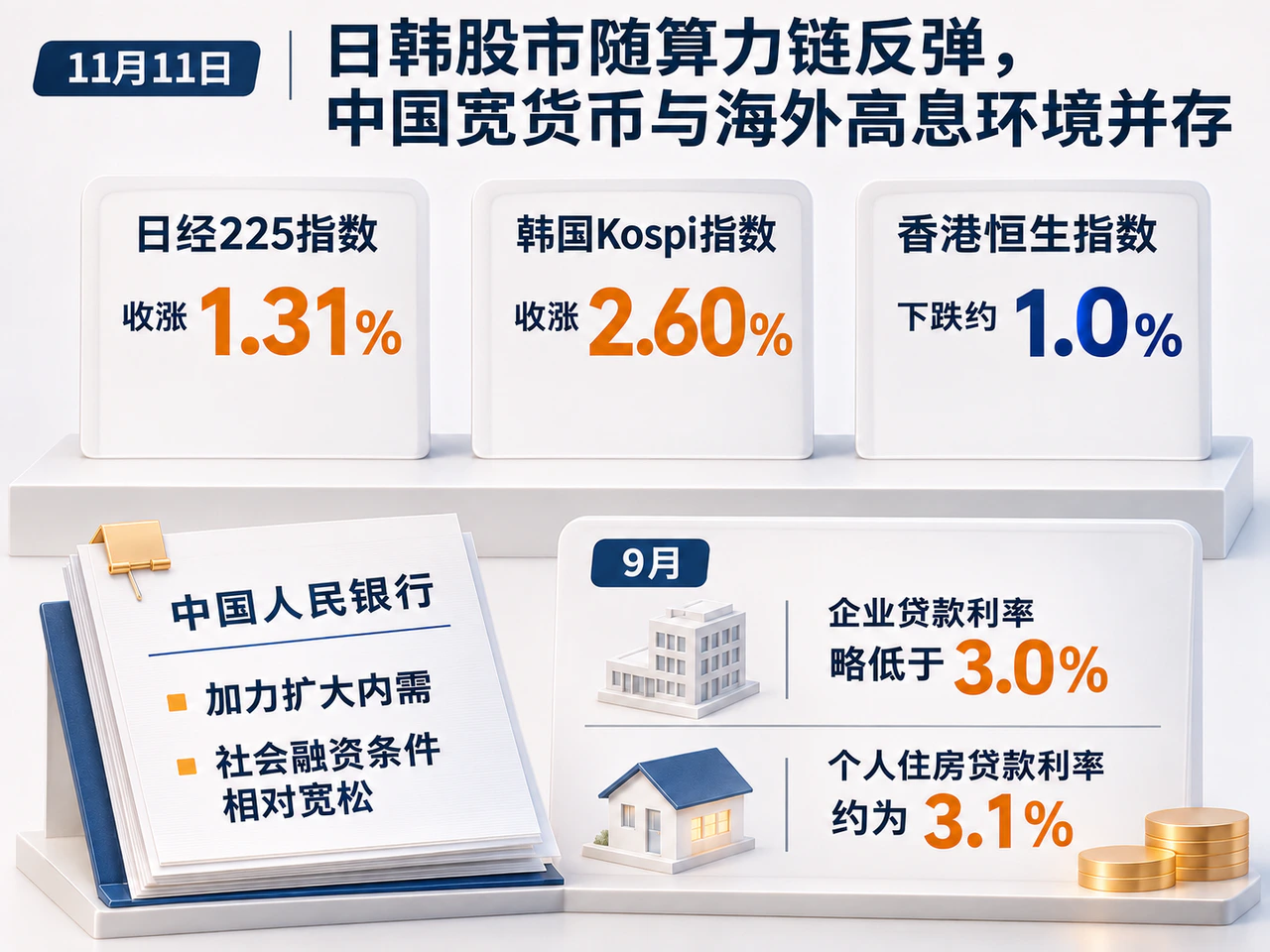
Asian trading on November 11 preceded the US open and was the first to reflect the positive impact of CoreWeave's results from the previous night. According to CNBC and AFP, Japan's Nikkei 225 closed 1.31% higher at 61248.59, South Korea's Kospi gained 2.60% to 5375.36, and Hong Kong's Hang Seng Index fell approximately 1.0% to 24315.92. Japanese and South Korean equities benefited directly from their close links to global computing investment through semiconductor equipment, electronics and memory. Hong Kong lagged, constrained by its different corporate earnings mix and external Hong Kong dollar and US dollar liquidity conditions. With rumors of a leadership change at Nvidia emerging after the November 11 US close, Asia-Pacific markets would face competing forces at the November 12 open: improved financing at CoreWeave and Nvidia's sharp after-hours decline.
In China, domestic policy is seeking to sustain low financing costs to support domestic demand. In its third-quarter Monetary Policy Report released on November 11, the People's Bank of China said it would strengthen countercyclical adjustment, step up efforts to expand domestic demand and keep aggregate financing conditions relatively accommodative. The report disclosed that rates on newly issued corporate loans in September were slightly below 3.0%, down approximately 0.2 percentage points year on year, while residential mortgage rates were around 3.1%, broadly unchanged from a year earlier. The central bank also called for stronger implementation of two monetary policy tools supporting capital markets and effective use of the swap facility for large redemptions at nonbank institutions in the bond market. With ample liquidity, the next stage of policy transmission depends on converting low-cost funding into actual corporate orders, investment and household consumption.
Meanwhile, offshore dollar funding remains anchored to high benchmark rates. China's Ministry of Finance announced the same day that it would issue up to $2 billion of US dollar sovereign bonds in Hong Kong during the week of November 16, with specific arrangements to be announced separately. The issue offers an important window into Hong Kong's capacity to absorb dollar-denominated financing. As easy domestic financing coexists with expensive external dollar funding, subsequent performance in Asian assets will depend increasingly on the cash-generating ability of individual businesses.
Geopolitical, trade and regulatory developments multiply, but implementation costs remain a constraint
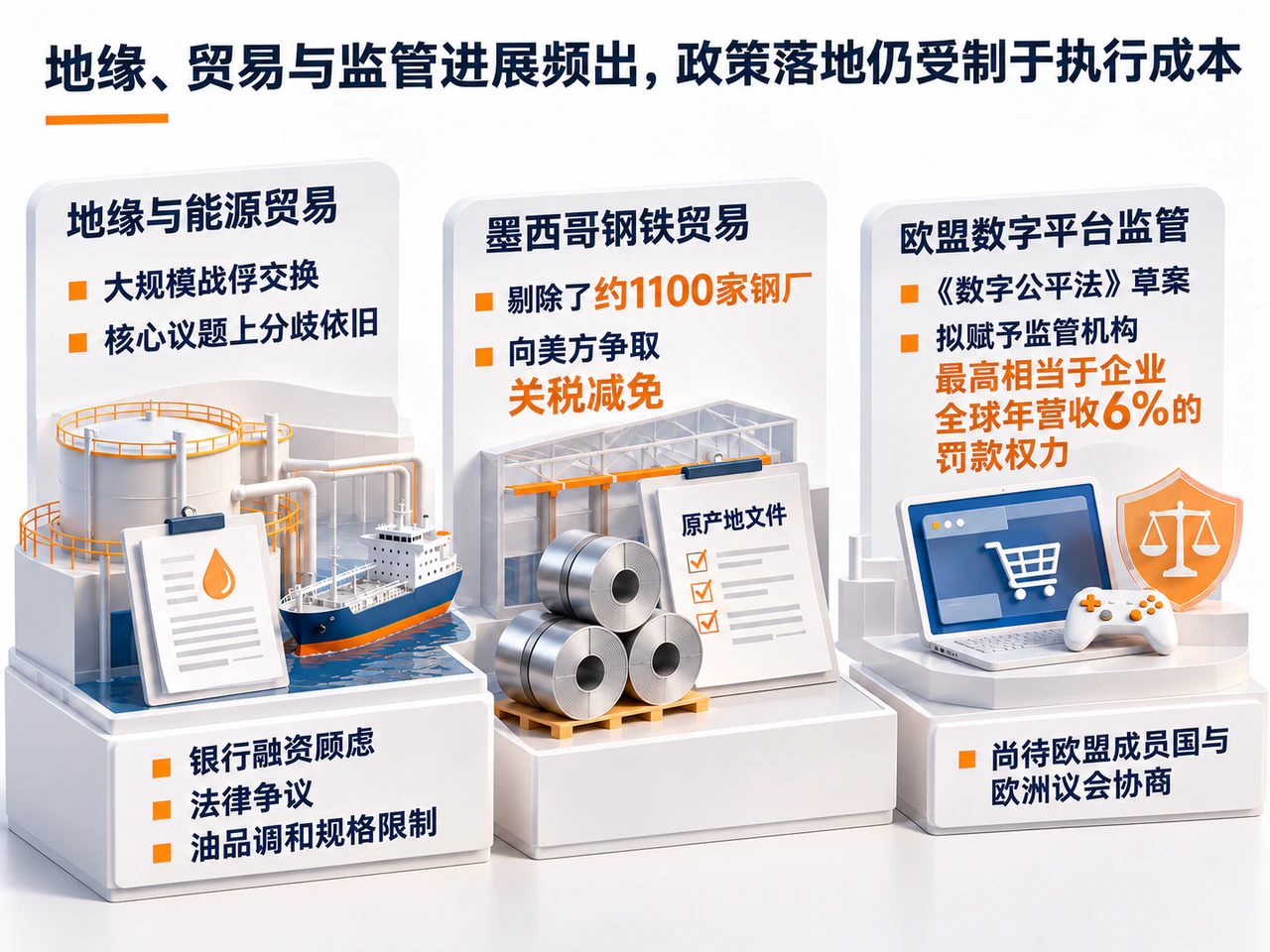
Beyond macroeconomic and industry fundamentals, several geopolitical, trade and regulatory developments are also reshaping companies' compliance and operating costs.
In geopolitics and energy trade, Russia and Ukraine concluded talks in Abu Dhabi on November 11, agreeing to a large-scale prisoner-of-war exchange while remaining divided on core issues such as territory. Diplomatic engagement may help ease long-term risk premiums, but the actual resumption of energy trade still faces substantial implementation barriers. A Reuters investigation published the same day found that, despite the United States temporarily easing some sanctions on Russian diesel last month, cargo movements remained hampered by banks' financing concerns, legal disputes and fuel blending specification restrictions. The friction between policy clearance and fuel actually reaching end markets will directly determine how quickly global energy and transport pressures ease.
In North American trade, Mexico is intensifying efforts to trace steel's origin and has removed approximately 1100 mills from its approved list as it seeks US relief from Section 232 tariffs on automobiles, steel and aluminum. Mexico said the US response to its proposals had been positive and hoped for progress before year-end. Lower industry tariffs would improve raw material costs for North American automotive and metalworking companies, but tighter origin checks would simultaneously increase procurement compliance costs.
Europe, meanwhile, moved toward stricter regulation of internet platforms. On November 11, the European Commission proposed a draft Digital Fairness Act to restrict manipulative consumer interfaces, certain in-game payment mechanisms, addictive design and subscription traps. Accompanying amendments to consumer protection rules would also give regulators the power to impose fines of up to 6% of a company's annual worldwide revenue. The package remains subject to negotiations among EU member states and the European Parliament. If enacted, it would require relevant platforms, e-commerce businesses, gaming companies and subscription businesses to bear the cost of adapting their customer acquisition, retention and payment conversion models.
Across the day's global markets, whether in CoreWeave's use of prepayments to address financing difficulties at high rates or the compliance friction affecting energy trade and cross-border business, the central question for asset pricing was the same: can reported revenue growth withstand the test of funding and execution costs? Improving risk appetite can drive a short-term rebound, but durable valuation support in a high-rate environment depends on reliable cash collection, efficient capital investment and profits ultimately being realized.