On November 12, 2026, the end-of-day yield on the 10-year U.S. Treasury rose to 5.10%, U.S. stocks retreated, crude oil advanced and gold fell. Rising financing costs are becoming a common constraint on pricing across asset classes: U.S. housing transactions have cooled markedly, while the labor market remains resilient; small-cap stocks, which are more sensitive to financing conditions, fell much more sharply than large index heavyweights; and the AI supply chain is reassessing the relative weight of its constituents amid a leadership change at the industry leader and growing demand for networking equipment.
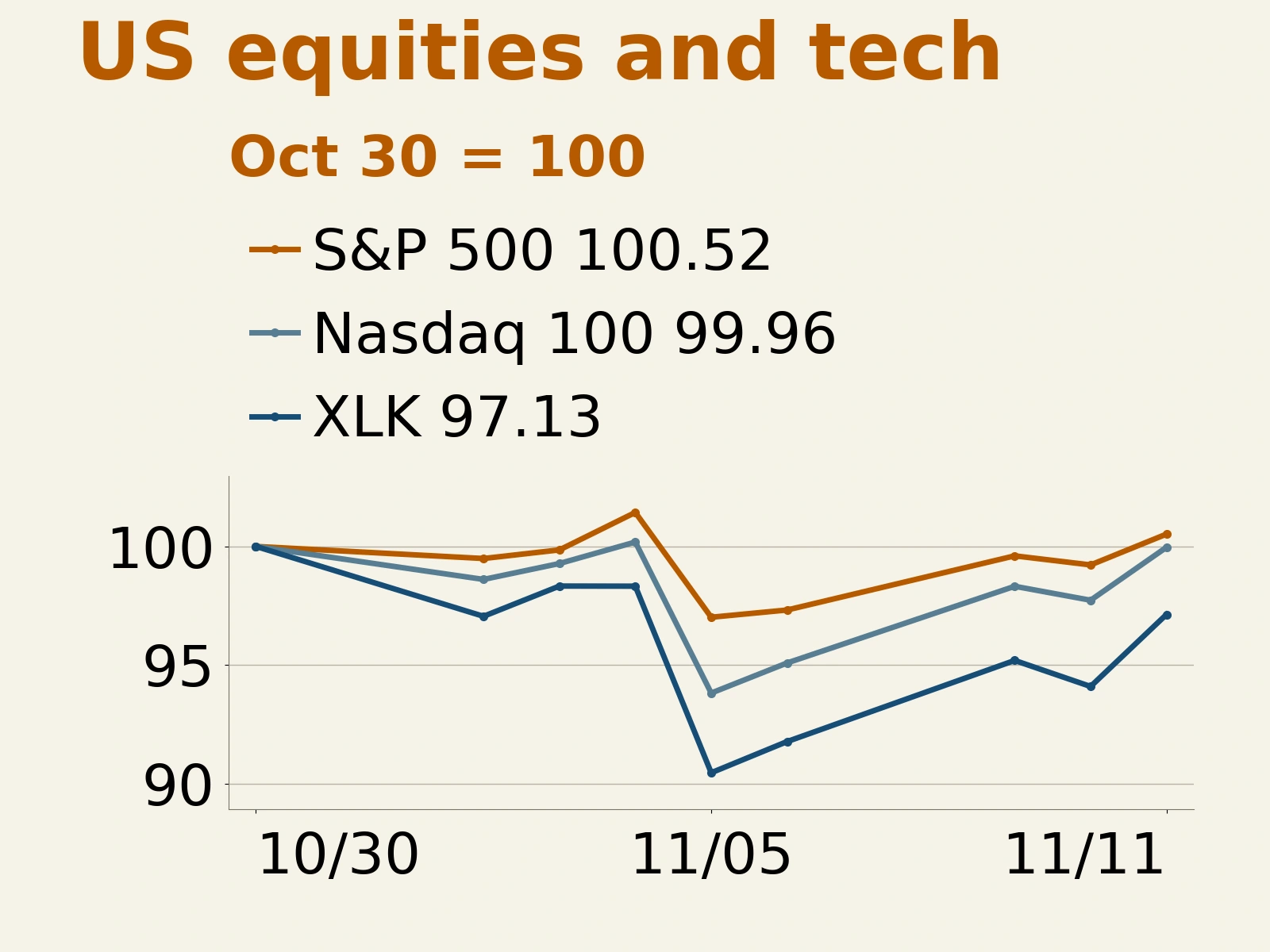
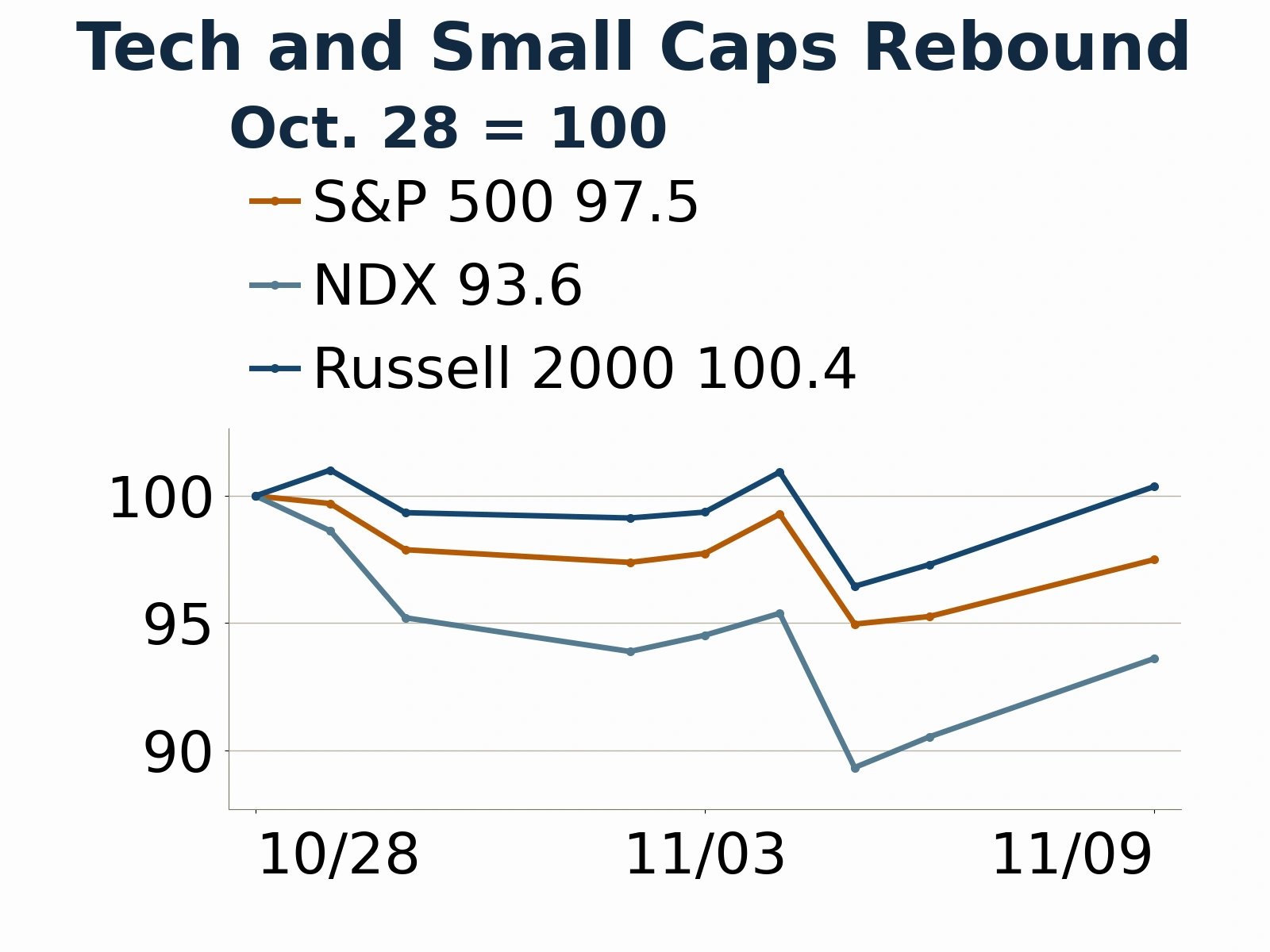
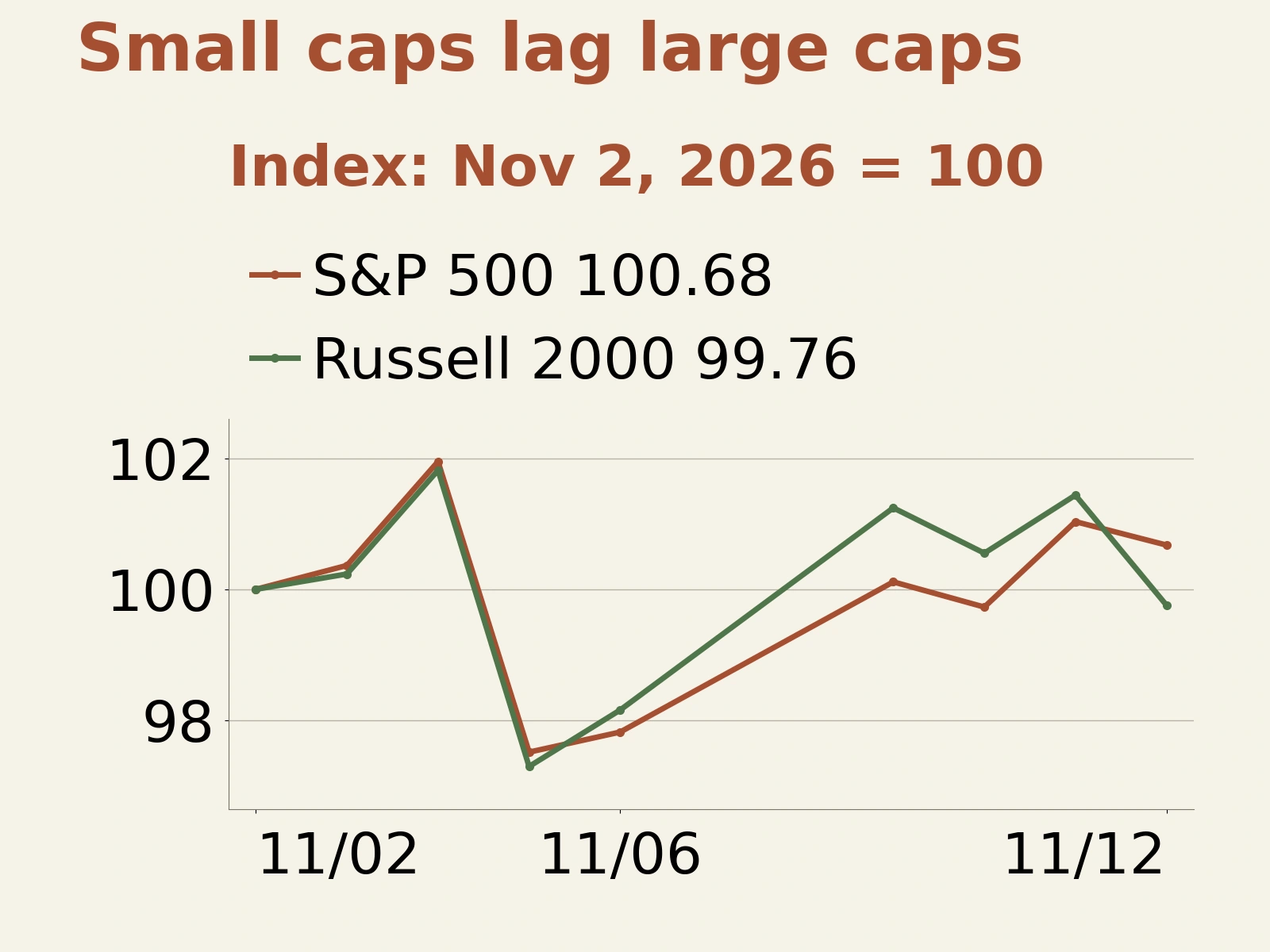
The S&P 500 closed at 7,592.40, down 0.35%; the Dow Jones Industrial Average ended at 52,297.09, down 0.36%; and the Nasdaq 100 finished at 28,289.19, down 0.30%. Against declines of less than half a percentage point in the major indexes, the Russell 2000 fell 1.66% to 2,799.06, providing a more concentrated illustration of the pressure high interest rates place on smaller businesses.
Continuing Jobless Claims Fall as High Mortgage Rates Weigh on October Existing-Home Sales
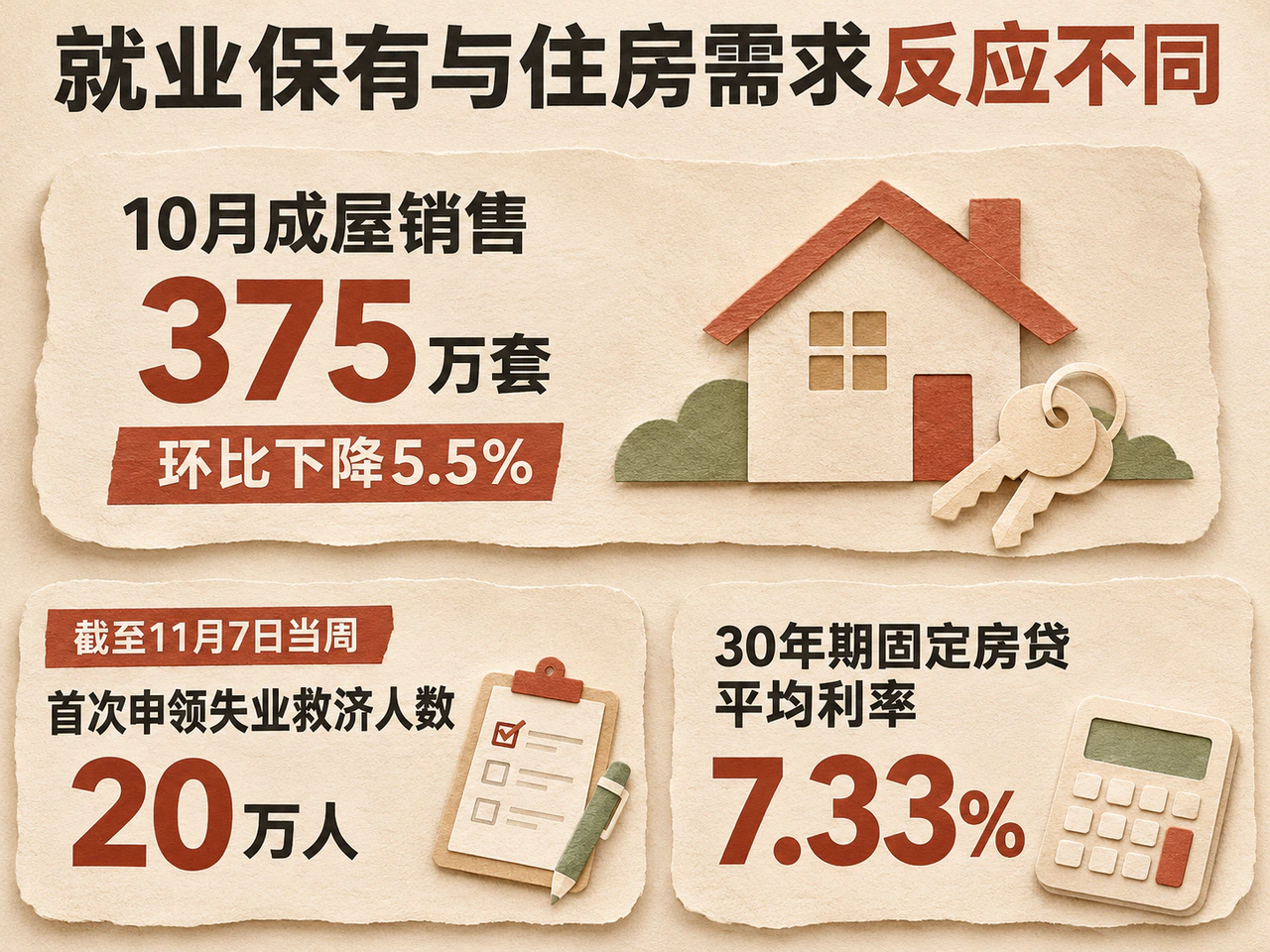
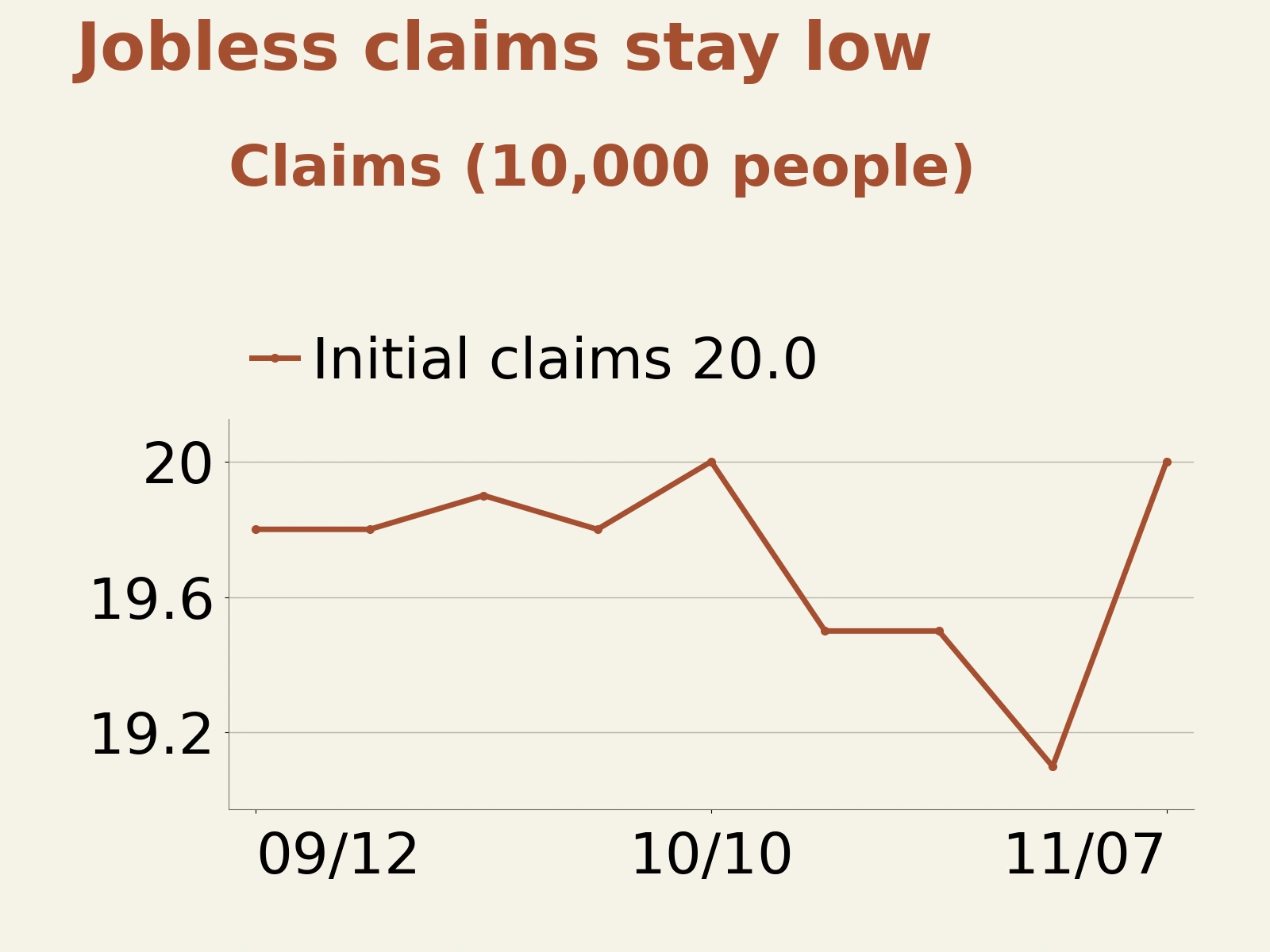
The U.S. Labor Department reported that seasonally adjusted initial claims for unemployment benefits totaled 200,000 in the week ended November 7, an increase of 9,000 from the previous week's revised figure and above the 195,000 expected in a Reuters poll. The four-week moving average was 195,250, unchanged from the upwardly revised previous reading. In the week ended October 31, continuing claims fell by 20,000 to 1.697 million, while the insured unemployment rate held at 1.1%. Although initial claims were slightly higher than expected, the decline in continuing claims suggests that employers remain willing to retain workers.
Citi economist Veronica Clark noted that a smaller labor force can also depress claims. Olivia Cross of Pantheon Macroeconomics expects layoffs to remain low in the fourth quarter, although tighter financial conditions and broader adoption of AI could increase employment pressures next year. For now, resilient employment supports household income and means the economic slowdown has not been sufficient to remove the constraint inflation imposes on monetary policy.
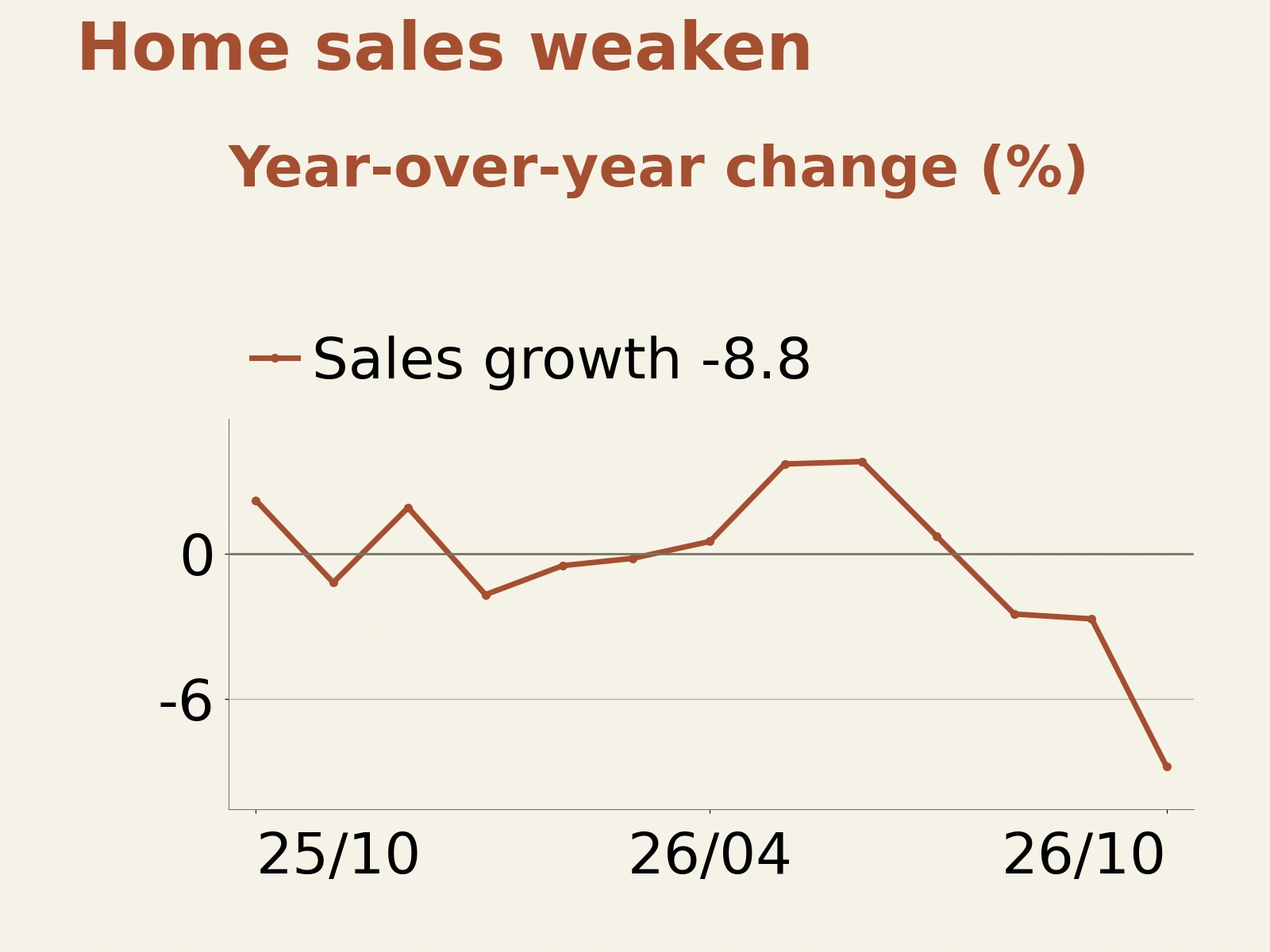
By contrast, the housing market, which is highly sensitive to financing costs, has cooled visibly. National Association of Realtors (NAR) data show that October existing-home sales fell to a seasonally adjusted annual rate of 3.75 million units, down 5.5% from the previous month and 8.8% from a year earlier. Sales fell short of the market forecast of 3.85 million and reached their lowest level since August 2010. By region, transactions fell month over month in the Midwest, South and West, while the Northeast was unchanged.
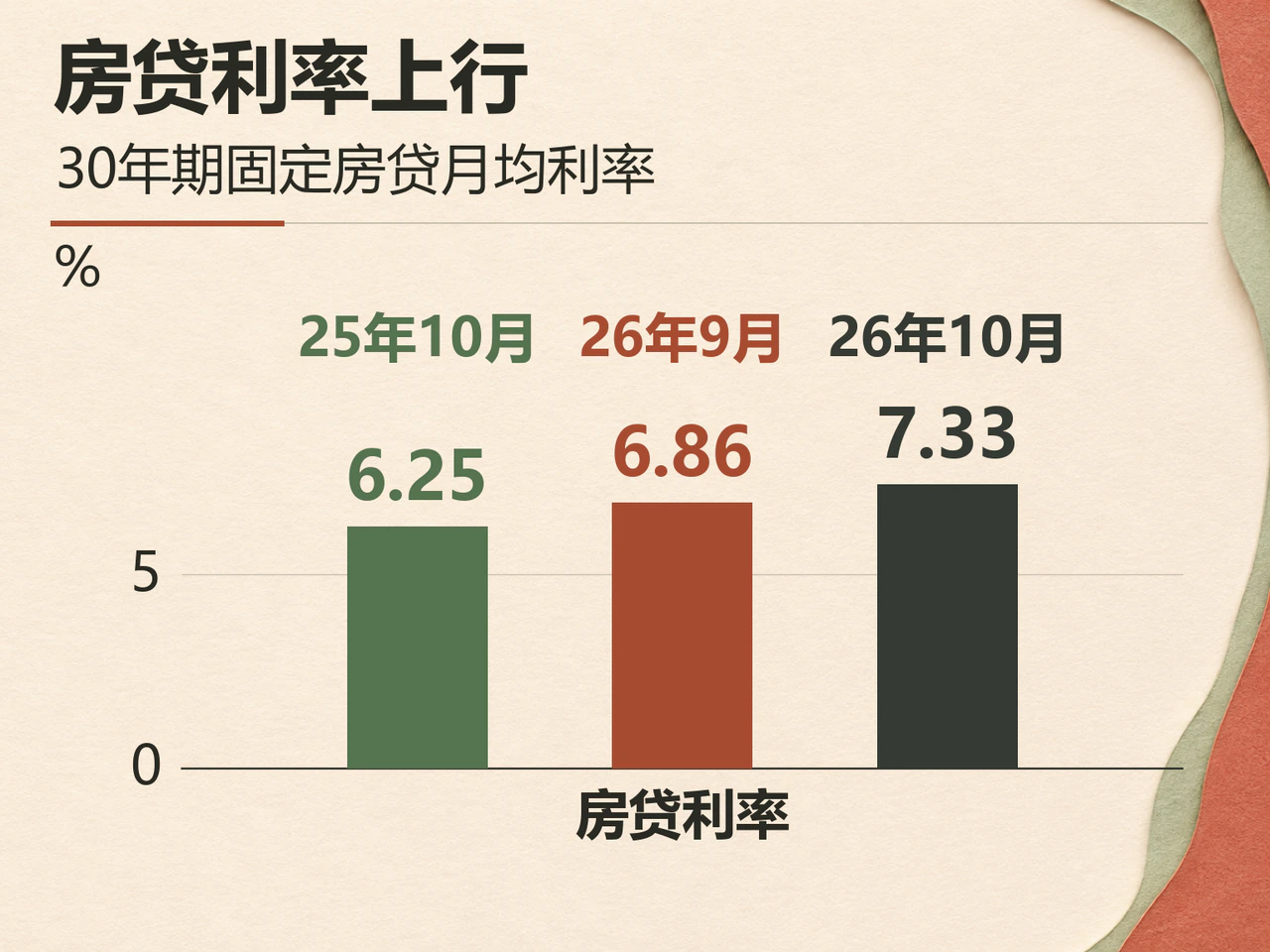
Citing Freddie Mac data, NAR said the average rate on a 30-year fixed mortgage rose to 7.33% in October, from 6.86% in September and 6.25% a year earlier. Higher monthly payments eroded affordability and reduced the incentive for existing homeowners with low-rate mortgages to move. Inventory available for sale rose to 1.59 million units in October. At the current sales pace, months of supply increased to 5.1 from 4.7 in September, compared with 4.4 a year earlier.
However, weaker transactions have not turned into widespread distressed selling at deep discounts. The median price for all existing homes sold in October was $416,700, still up 0.4% from a year earlier, and distressed sales accounted for just 2% of transactions. Resilient employment supporting household incomes, alongside high rates restraining large credit-financed purchases, explains the coexistence of low layoffs and a weak housing market.
December Rate-Hike Expectations and a Wider Fiscal Deficit Push Treasury Yields Higher

The Treasury's November 12 end-of-day yield curve showed that, compared with the previous available publication date of November 10, the 2-year yield rose 13 basis points to 4.86%, the 5-year rose 14 basis points to 4.95%, the 10-year rose 12 basis points to 5.10%, and the 30-year rose 8 basis points to 5.43%. With short- and intermediate-maturity yields rising faster, the 10-year/2-year spread narrowed from 25 to 24 basis points, and the 30-year/2-year spread from 62 to 57 basis points. From November 6 through November 12, the 2-year and 10-year yields had risen by a cumulative 35 and 24 basis points, respectively.
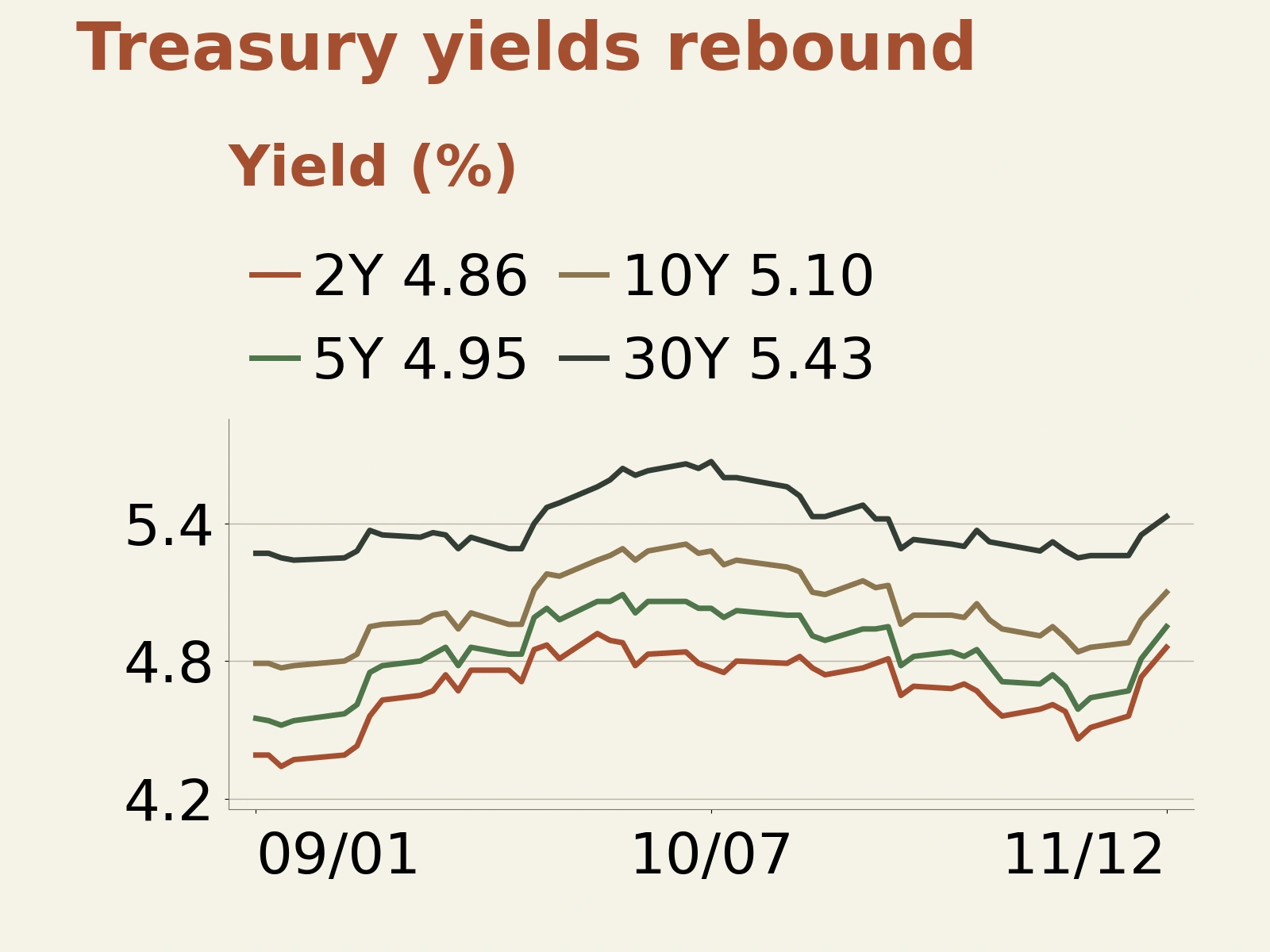
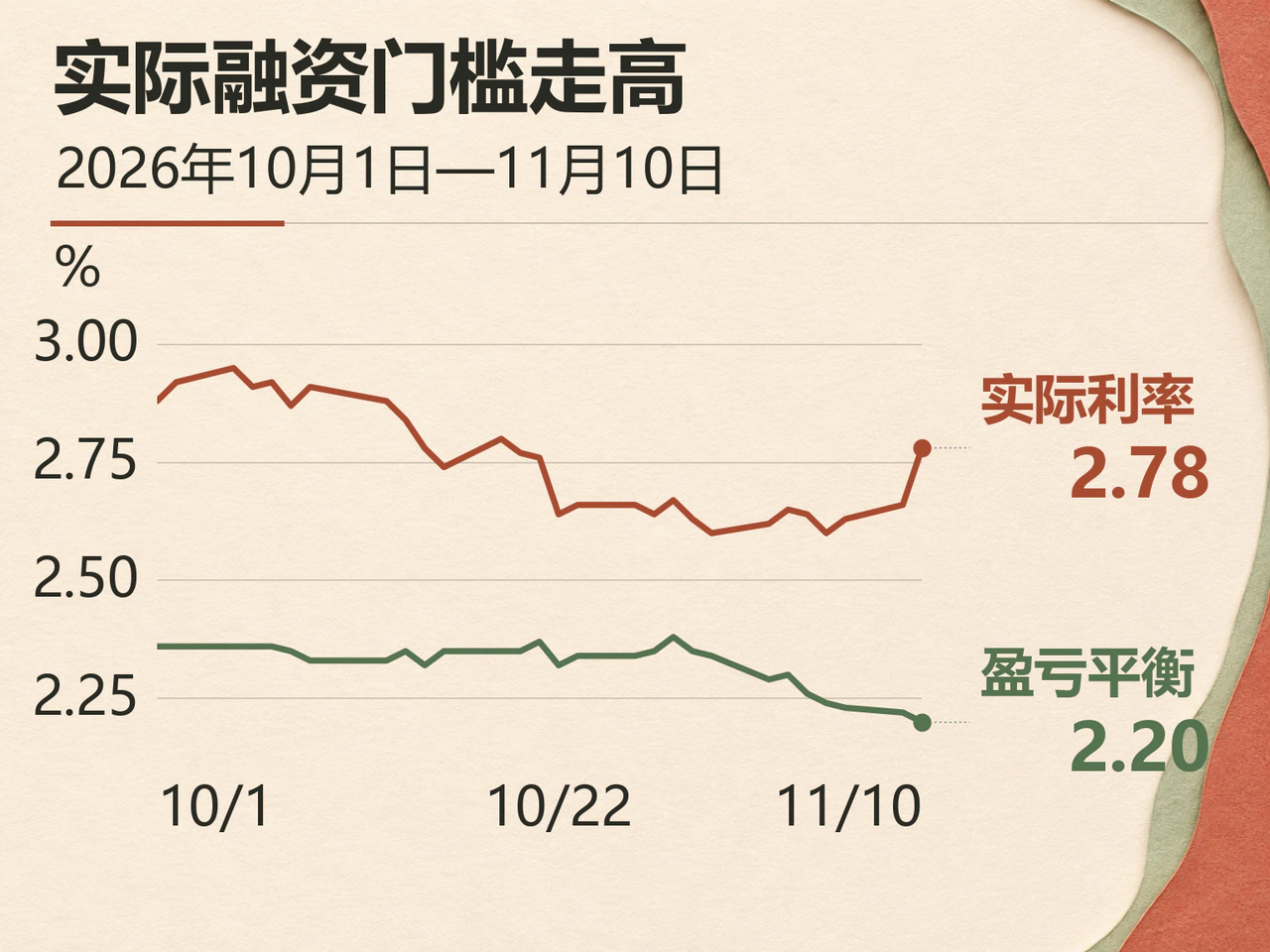
The rapid rebound in short-term yields reflects a repricing of the policy-rate path. Baystreet reported on the morning of November 12, U.S. Eastern time, that hotter inflation data had prompted markets to fully price in another 25-basis-point Federal Reserve rate increase at the December meeting. Real yields were also rising: FRED data show that the 10-year TIPS real yield stood at 2.78% on November 10, up from 2.66% on November 9, while the 10-year breakeven inflation rate edged down from 2.22% to 2.20%. A higher real financing hurdle directly reduces the present value of long-duration assets, placing a broad constraint on real estate, corporate capital spending and long-duration growth stocks.
Long-dated Treasuries must also absorb an expanding fiscal supply. The Treasury auctioned $25 billion of 30-year bonds that day at a high yield of 5.441%, which Dow Jones reported was 0.4 basis point above the pre-auction secondary-market level. The bid-to-cover ratio was 2.36, below the 2.54 recorded at the comparable October 8 auction. Indirect bidders, including overseas institutions, received approximately 68% of the issue, down from 72% previously. The results suggest that the market required a degree of price concession to absorb the supply of long-duration Treasuries.
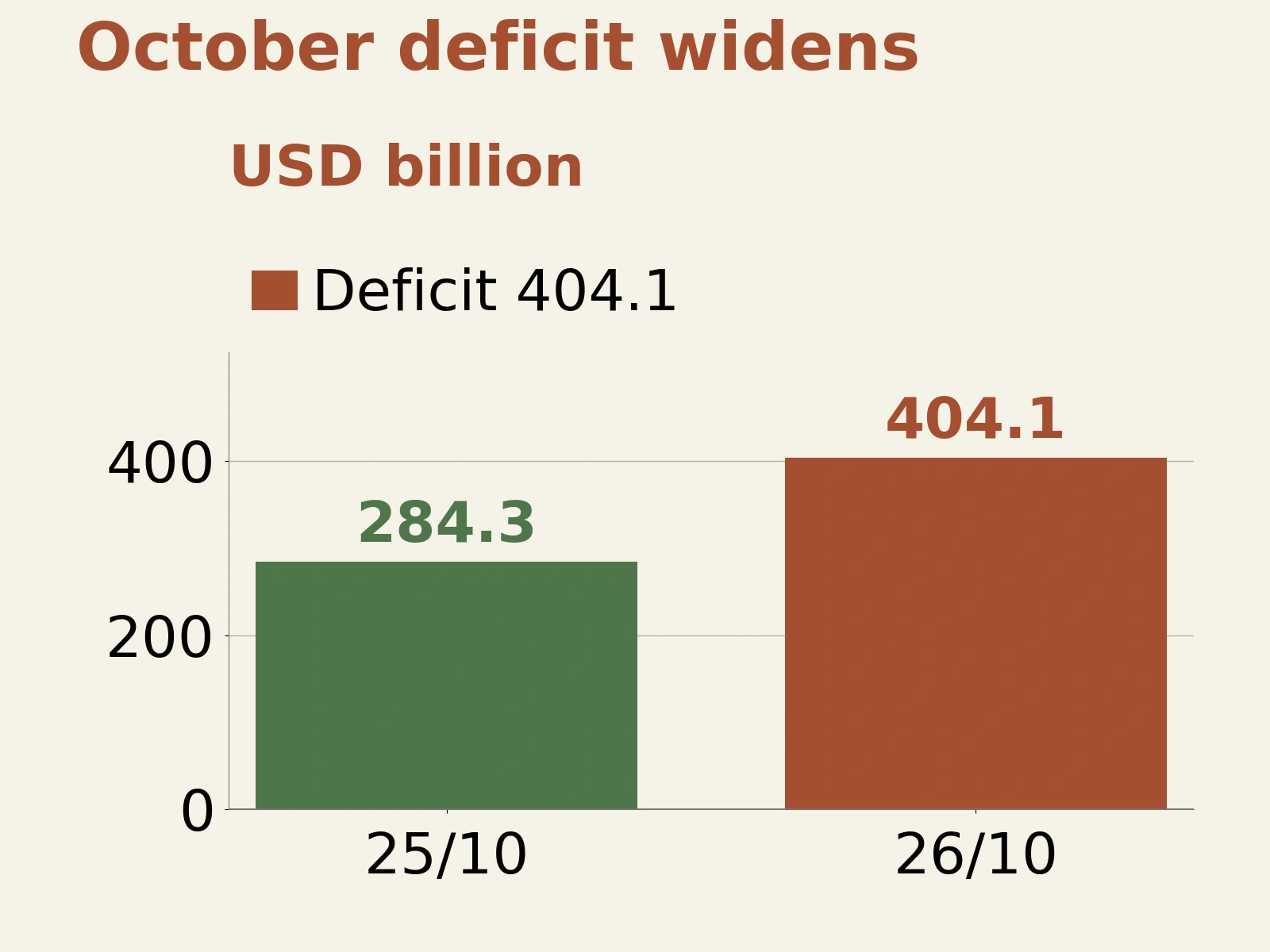
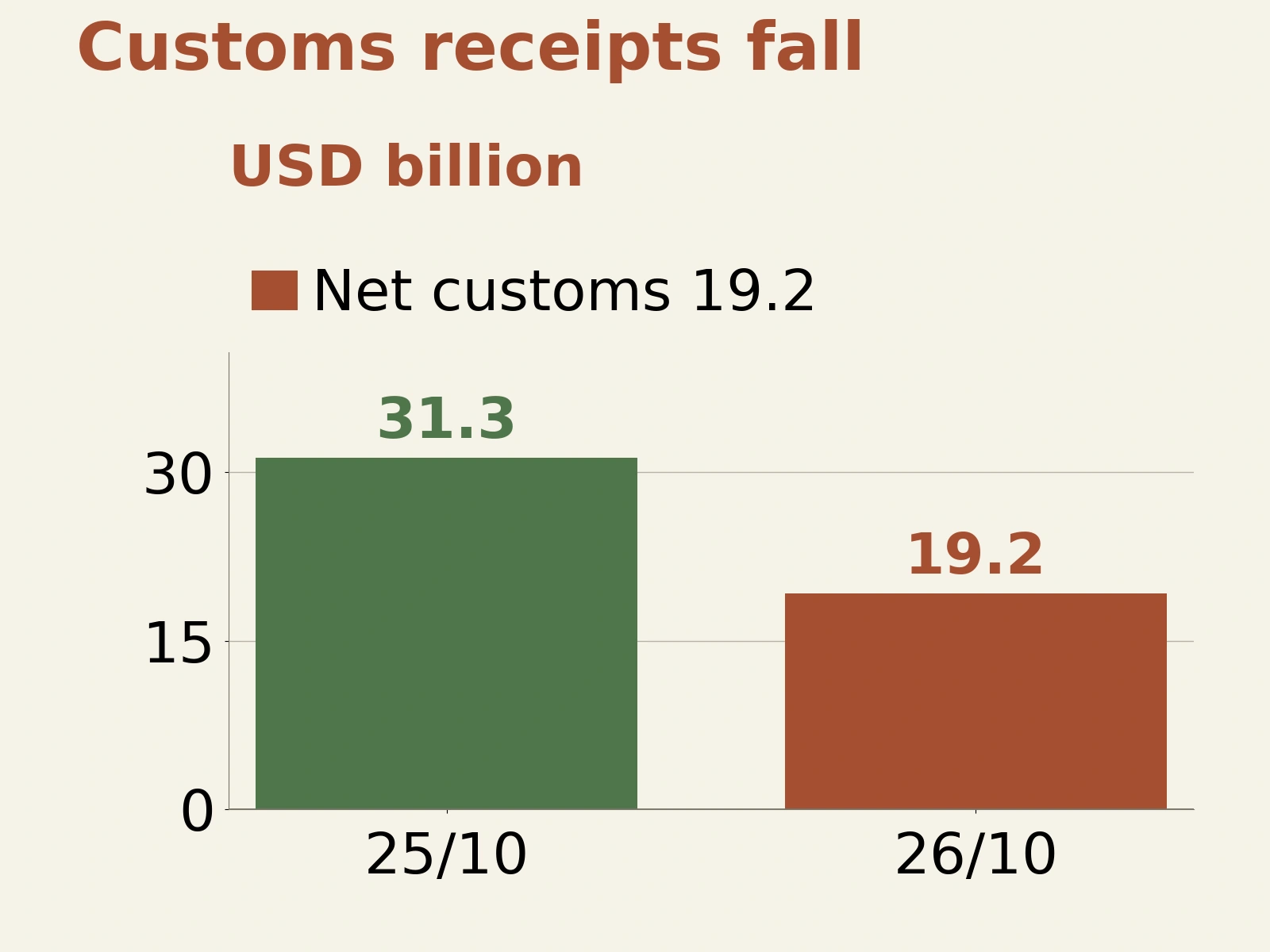
Also released that day, the federal budget deficit for October 2026, the first month of fiscal 2027, reached $404.06 billion, approximately 42.1% wider than a year earlier. Revenue fell to $368.94 billion, while outlays rose to $773.00 billion. Reuters cited the Treasury as saying that shifts in the calendar of benefit payments inflated the reported gap; even after removing calendar effects, however, the adjusted deficit was approximately $285 billion, still around 49% wider year over year. Within the total, net customs receipts fell from $31.3 billion to $19.2 billion, while gross interest expense on the debt reached $115 billion, an increase of $11 billion from a year earlier.
Research published that day by the St. Louis Fed found that Treasury buybacks can improve trading liquidity in specific older securities, but have yet to reverse the decline in the Treasury convenience yield—that is, investors' willingness to accept a lower yield in exchange for Treasuries' safety and liquidity. The overall return investors demand for holding U.S. government debt remains elevated.
Stable Corporate Spreads Mask Growing Differences Among Issuers as Benchmark Rates Rise

Credit spreads remained relatively stable even as Treasury yields rose across maturities. ICE BofA data show that U.S. investment-grade corporate option-adjusted spreads (OAS) stood at 90 basis points on November 11, while high-yield spreads were 330 basis points, slightly narrower than the respective 91 and 334 basis points recorded on November 9. This indicates that the current increase in corporate financing costs stems mainly from a rise in risk-free benchmark rates.
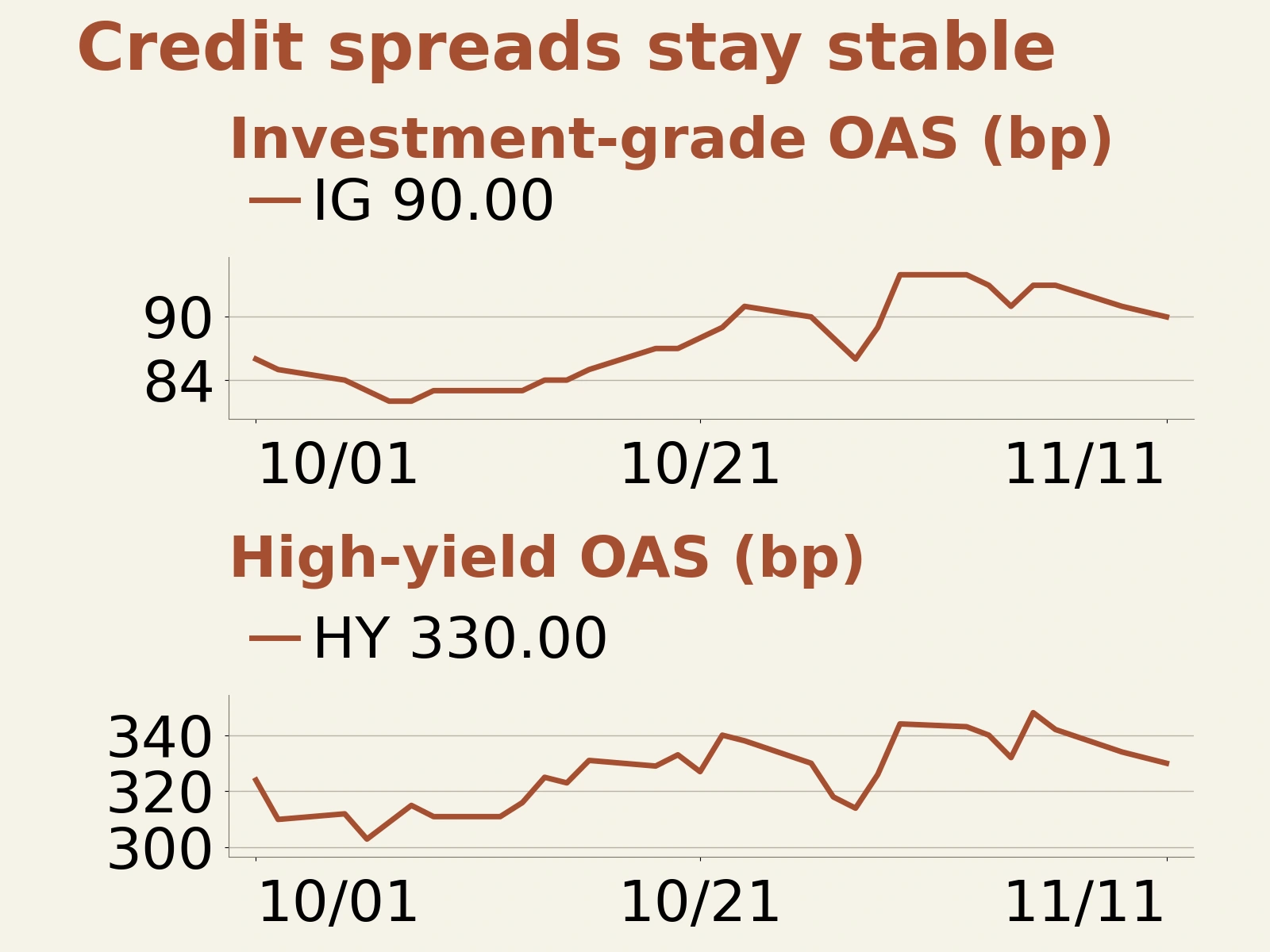
Penn Mutual Asset Management commented that day that the high-yield market combines relatively high absolute yields with relatively tight credit spreads. For companies issuing new debt, higher Treasury yields directly raise the starting point for financing costs; for investors, a high coupon does not necessarily provide adequate compensation for credit risk. As benchmark rates rise, differences in companies' operating cash flow, debt maturity profiles and access to financing will become more pronounced.
Large, highly rated companies are diversifying their sources of funding. According to Quartz, citing Bloomberg, Alphabet issued HK$16 billion and S$2.28 billion of bonds that day. The Hong Kong dollar offering comprised 2-, 5- and 10-year maturities, with final pricing 25 to 30 basis points tighter than initial price guidance. Asian local-currency markets offer multinational issuers an alternative source of funding, although their ultimate all-in U.S. dollar financing costs still depend on subsequent currency swaps and hedging arrangements. By contrast, capital-intensive and heavily indebted industries face more direct pressure. Bastille Post, citing Morgan Stanley, reported that rising U.S. interest rates would increase airlines' U.S. dollar debt burden, while higher energy costs would squeeze operating cash flow, posing a greater test for companies with weaker balance sheets.
Middle East Shipping Risks Lift Oil as a Stronger Dollar and High Rates Weigh on Gold
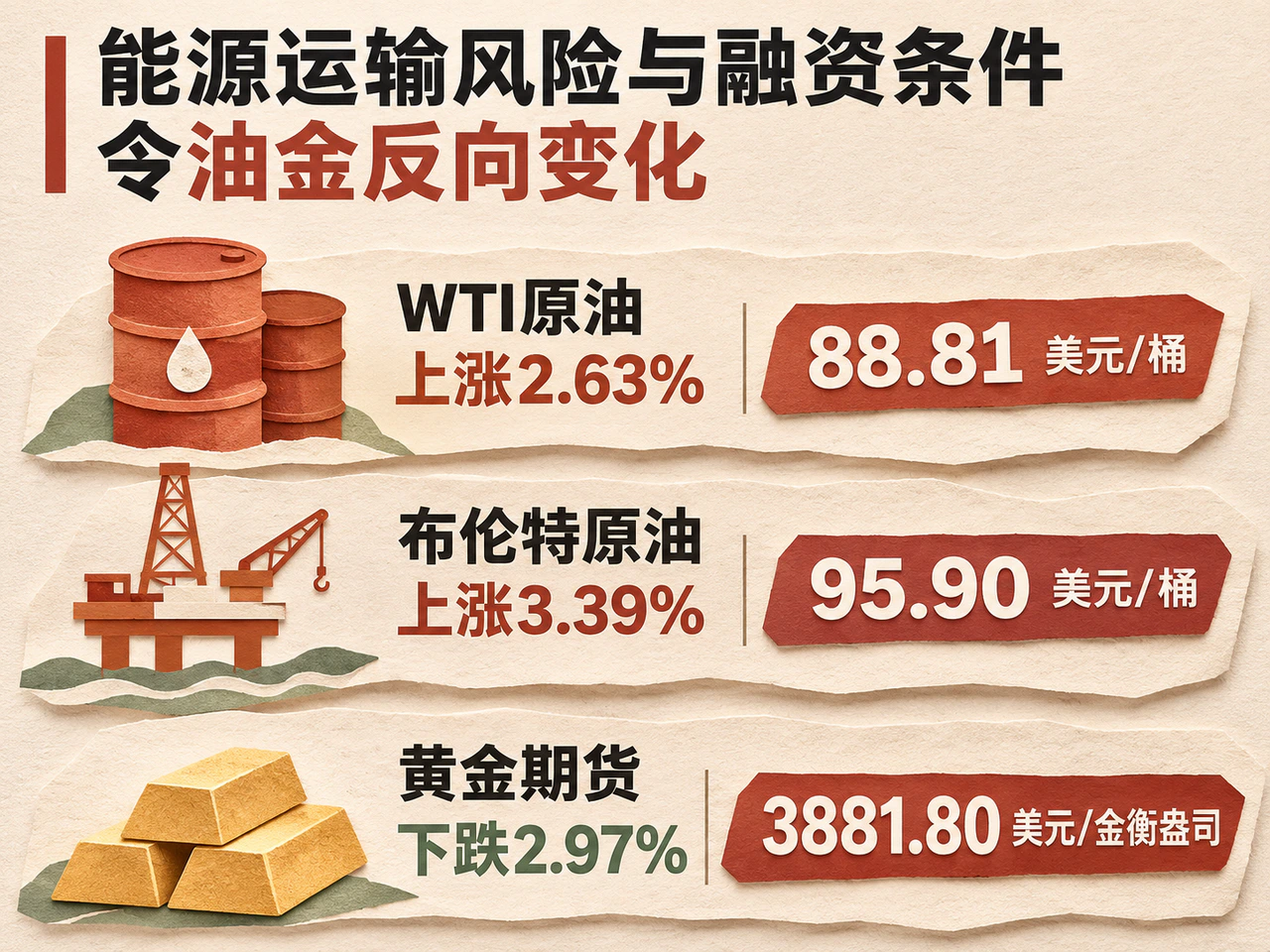
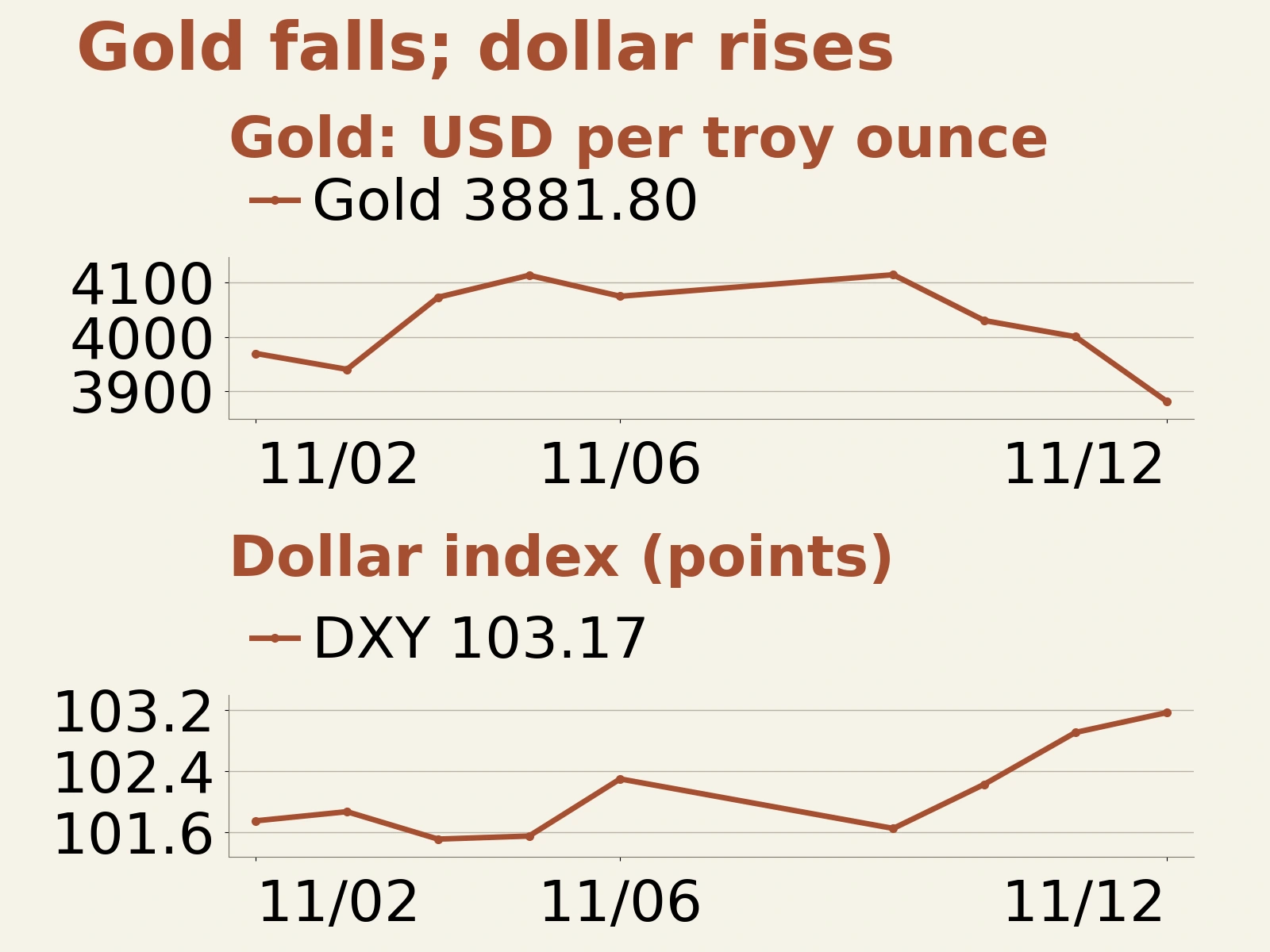
Crude oil and gold diverged sharply in commodity markets. Using Yahoo's daily closing prices for continuous futures, WTI crude rose 2.63% to $88.81 a barrel and Brent rose 3.39% to $95.90 a barrel, while gold futures fell 2.97% to $3,881.80 a troy ounce. The dollar index rose 0.25% to 103.17 over the same period.
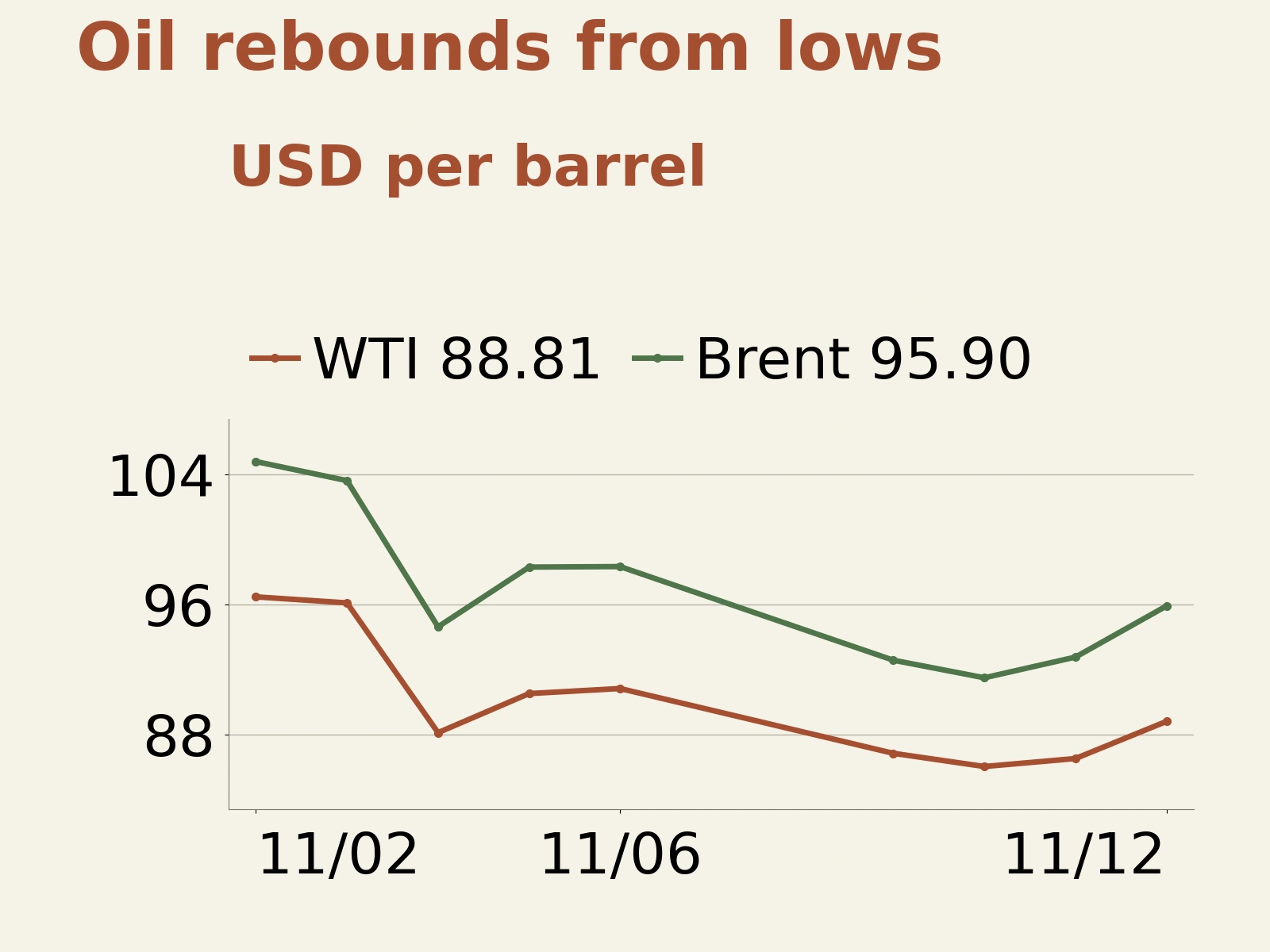
Reuters reported that international oil prices initially fell by around $1 in early Asian trading before turning higher on reports of risks to Middle Eastern energy facilities and shipping security. The Houthis claimed to have attacked Saudi oil transport infrastructure, while the Saudi-led coalition said it intercepted two drones. Reuters had not, at that time, verified the Iranian military's claim that an oil tanker had been attacked. Britain also announced an expansion of sanctions against Russian energy companies and the "shadow fleet" that day, raising related transaction, insurance and transport compliance costs. The European Union said it would propose a new sanctions package ahead of the November 26–27 summit. Although shipping and compliance friction lifted the risk premium, WTI and Brent remained approximately 2.22% and 2.46% below their November 6 levels, respectively.
Inventory fundamentals and the backdrop of higher production limited the rebound in oil prices. The U.S. Energy Information Administration (EIA) reported that day that commercial crude inventories rose by 4.7 million barrels to 414.4 million in the week ended November 6, while gasoline and distillate inventories increased by 1.8 million and 4.1 million barrels, respectively. Crude imports and refinery runs both rose during the week. Over the preceding four weeks, petroleum products supplied, a proxy for demand, increased 0.9% year over year; gasoline supplied fell 1.0%, while distillate supplied rose 4.2%. Inventory rebuilding, divergent demand for refined products and the October increase in OPEC+ production reported by Reuters together constrained oil prices.
Gold, meanwhile, primarily faced the combined pressure of high interest rates and a stronger dollar. An early-session Reuters report carried by CNBC quoted Saxo Bank's Ole Hansen as saying that persistent inflation pressure and hawkish Federal Reserve comments were weighing on gold. Although Middle Eastern disruption could lift energy prices and inflation expectations, safe-haven sentiment failed to lift gold alongside oil as real yields and the opportunity cost of holding the metal rose together.
Jensen Huang's Resignation Divides Chip Stocks as Cisco Raises Its AI Infrastructure Revenue Outlook

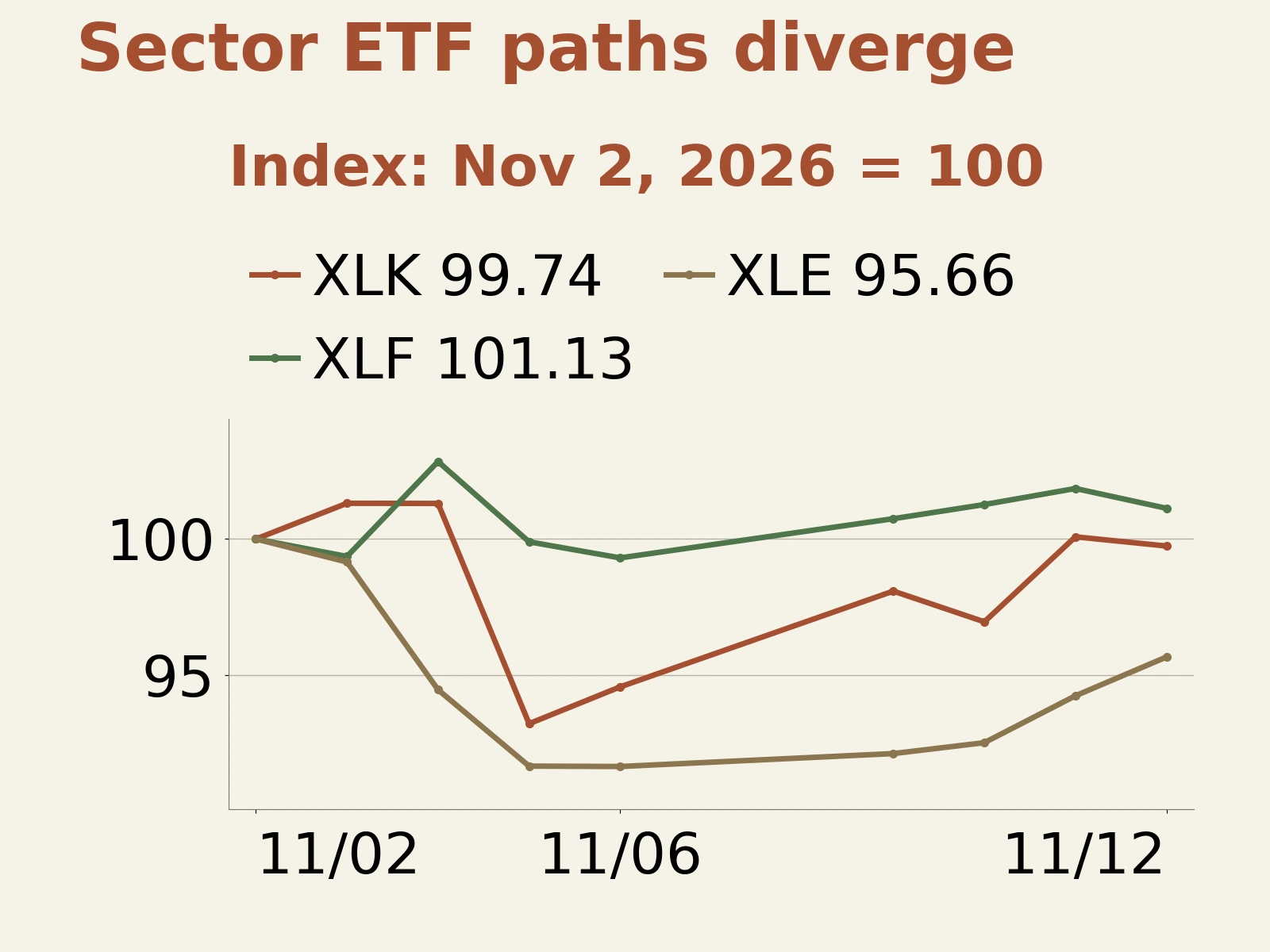
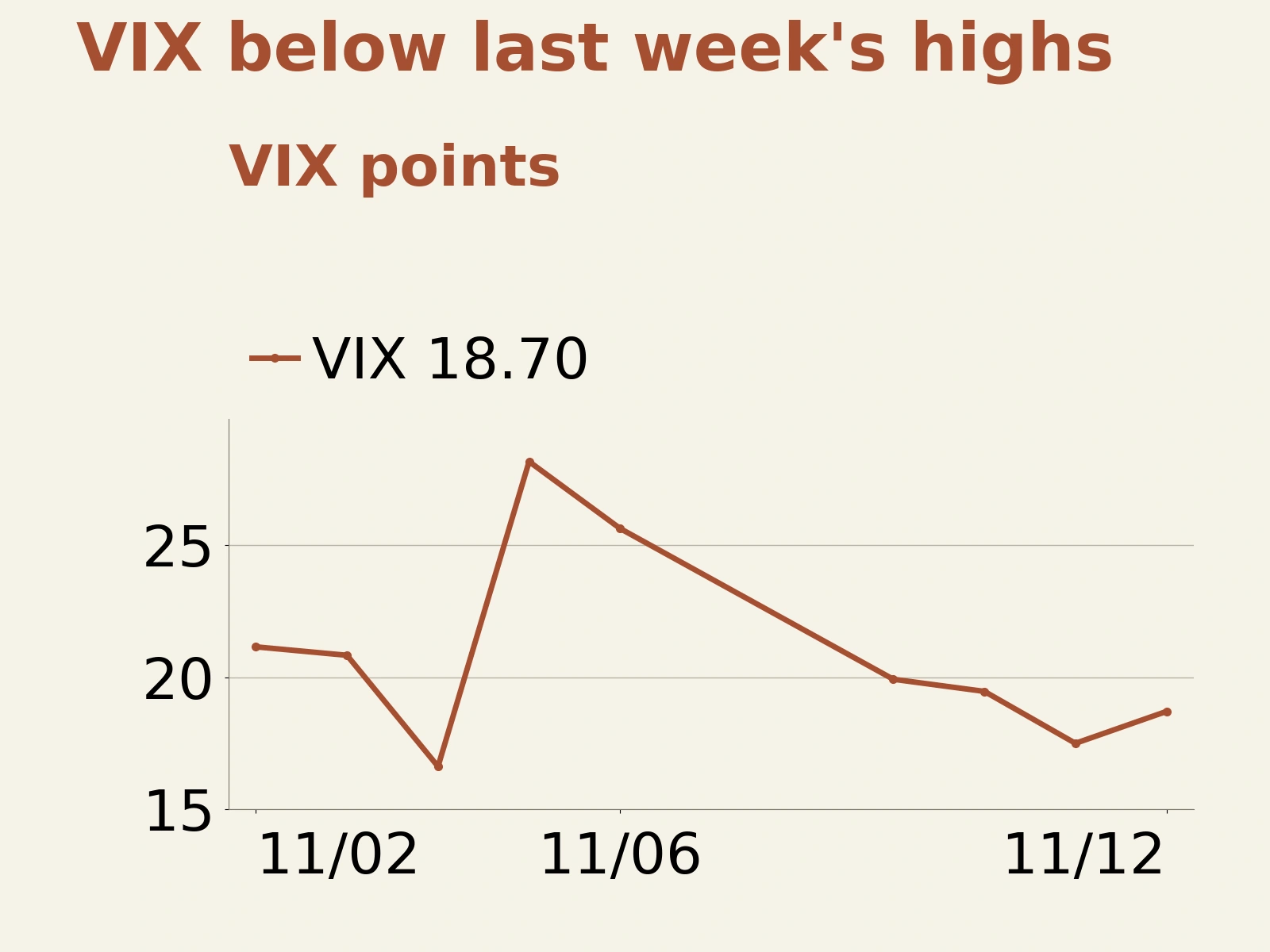
U.S. equities also diverged in response to rate pressure, energy prices and company-specific events. Among sector ETFs, the Energy Select Sector SPDR Fund (XLE) rose 1.51%, the Technology Select Sector SPDR Fund (XLK) fell 0.34%, and the Financial Select Sector SPDR Fund (XLF) fell 0.72%. The S&P 500 Volatility Index (VIX) rose 1.21 points to 18.70, but remained well below 28.18 on November 5 and 25.64 on November 6.
The AI supply chain underwent a sharp internal realignment. According to CNBC and the Associated Press, Nvidia announced on November 12 that Jensen Huang had resigned as chief executive and that Chief Financial Officer Colette Kress would become interim CEO. Nvidia shares initially fell approximately 14%; according to CNBC's closing market report, the loss had narrowed to more than 4% by the close. Rivals AMD and Broadcom each gained more than 5% that day, while Alphabet rose nearly 2%. Argent Capital's Jed Ellerbroek argued that, with overall demand for AI computing still intact, the change could prompt customers to reconsider their choice of suppliers, creating opportunities for competing chips and cloud providers' internally developed chips.
Investment firms differed on how long Nvidia's management change would affect the stock. Stephanie Link of Hightower Advisors sold Nvidia and switched to Micron Technology, arguing that management uncertainty could overshadow fundamentals for some time. Paul Meeks of Freedom Capital, however, saw the resignation announcement as helping to remove uncertainty. Elsewhere, AI infrastructure company Nebius reported quarterly revenue above expectations, but its outlook fell short, sending its shares down nearly 16% at one point in premarket trading. The reaction shows that investors remain demanding about the pace of AI investment delivery and its conversion into financial results.
After the U.S. market closed, Cisco's earnings supplied fresh evidence of demand for AI hardware. Results released at 16:05 U.S. Eastern time for its fiscal 2027 first quarter, ended October 24, showed revenue of $18.5 billion, up 24% year over year, and non-GAAP earnings per share of $1.40, up 40%. Both exceeded the LSEG consensus estimates reported by Reuters. Networking product revenue jumped 43% year over year. Cisco raised its full-year revenue guidance to $74.8 billion–$75.8 billion and increased its expected AI infrastructure revenue from hyperscale cloud customers to $9 billion from $7.5 billion. However, its quarterly non-GAAP gross margin fell to 65.6% from 68.1% a year earlier, and services revenue grew just 1%, indicating continued margin pressure even as demand for switches, routers and other networking equipment expanded rapidly.
Asia-Pacific Markets Face Treasury and Technology Spillovers as Attention Turns to October U.S. PPI

Asia-Pacific markets, which closed before the November 12 U.S. equity session, were broadly weaker. The Associated Press reported that the Nikkei 225 closed at 60,819.36, down approximately 0.7%; South Korea's Kospi ended at 5,342.73, down approximately 0.6%; and Hong Kong's Hang Seng Index finished at 24,008.55, down approximately 1.3%. However, CNBC reported that Japan's Topix edged up 0.20%, indicating that downward pressure in Japanese stocks was concentrated in certain index heavyweights and technology shares. Following Cisco's results after the U.S. close, that information, Nvidia's management change and rising Treasury yields will together feed into pricing in the next Asia-Pacific trading session.
Regional policy and trade developments are also shaping expectations. On November 12, the People's Bank of China conducted RMB384 billion of overnight reverse repos at a rate of 1.25% to support short-term liquidity. China's Ministry of Commerce said that day that China and the United States remained in close communication over a framework for reciprocal tariff reductions. In North American and technology policy, Trump conditionally threatened that day to double tariffs on Mexico, while U.S.–Canada trade talks remained in contact but had no timetable. CNBC reported that U.S. lawmakers were seeking to include new chip restrictions in the National Defense Authorization Act, with remote access to advanced chips in overseas data centers also attracting scrutiny. If these discussions become formal rules, they will directly affect compliance costs and the addressable markets of technology supply chains.
The United States is scheduled to release its October Producer Price Index (PPI) on November 13, U.S. Eastern time. With employment still resilient, fiscal supply remaining high and Middle East shipping risks disrupting energy prices, whether producer-level inflation pressure eases will directly influence expectations for how long high interest rates will persist.