On November 16, 2026, Cleveland Fed President Beth Hammack said in an interview with Bloomberg Television that she favored raising interest rates in smaller increments at a steady pace. But if monetary policy fell behind inflation and needed to become more restrictive, larger increases could also be appropriate. Her remarks shifted the focus of market discussion about Federal Reserve policy toward the pace of rate increases and the eventual peak in rates. The New York State manufacturing survey released the same day showed a divergence between slowing growth and stronger hiring, adding to the complexity of assessing the policy path.
Hammack favors small rate increases, but worsening inflation could raise the eventual rate peak
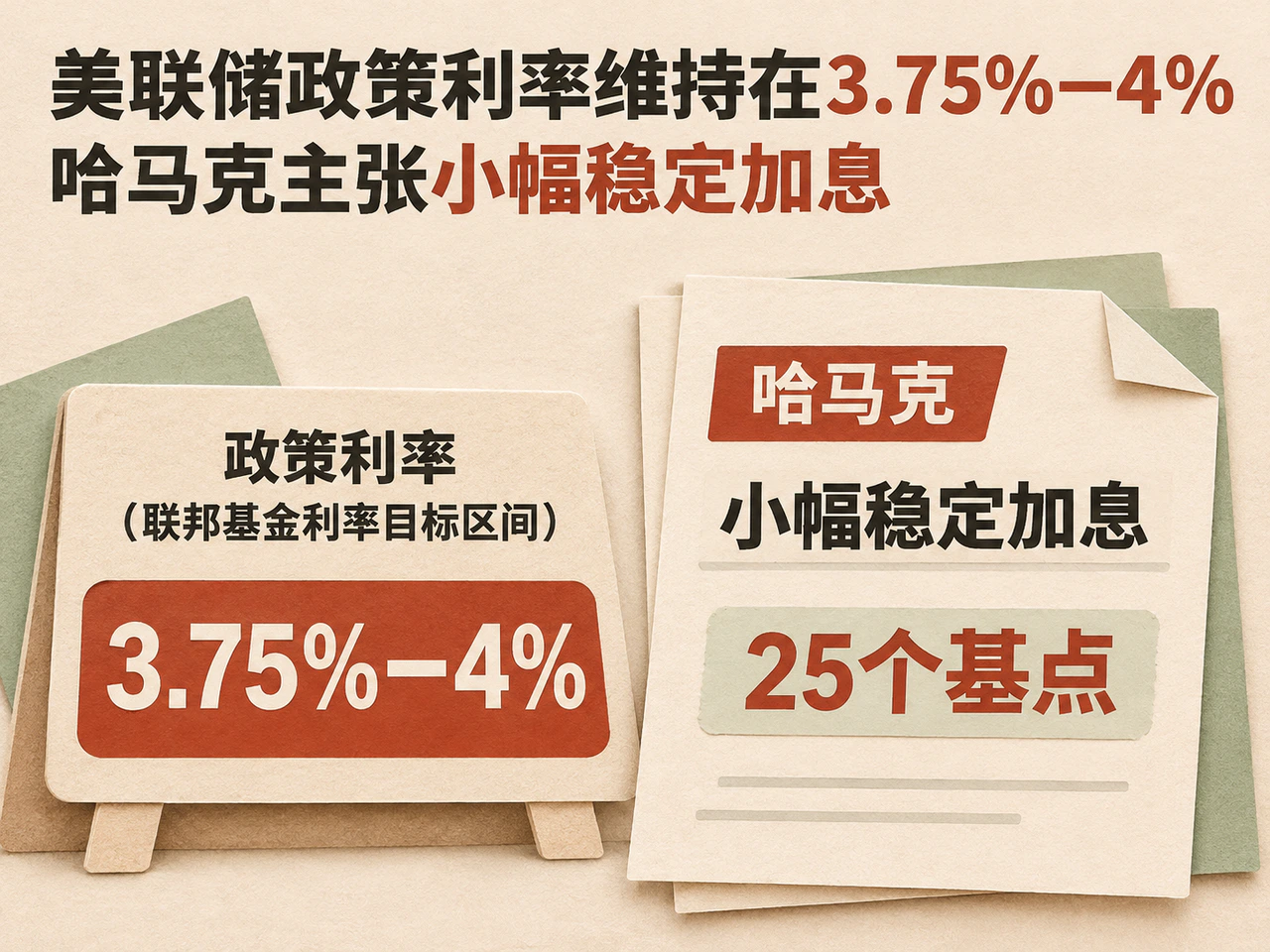
At its most recent policy meeting on October 28, the Federal Reserve decided to leave the federal funds target range unchanged at 3.75%–4%. Hammack and Fed Governor Cook both favored a 25-basis-point increase at that meeting. In her November 16 interview, Hammack elaborated on her policy thinking: predictable, small rate adjustments help businesses and households plan their finances, but whether that preference can be sustained depends on policy restraining inflation in time.
According to Reuters' reporting on the interview, Hammack believes inflation pressures are worsening, while financial conditions have yet to impose a significant restraint on economic growth. She described the labor market as broadly stable but with limited turnover, and pointed to early signs that hiring conditions for businesses were tightening. If both employment and inflation conditions call for greater restraint, the eventual peak interest rate needed may also change.
In policy terms, small individual rate increases are consistent with a higher terminal rate. Hammack's caution primarily concerns the size of each increase, while her assessment of economic resilience and inflation risks remains hawkish. For markets to scale back expectations of further Fed tightening, they would still need substantive evidence of sustained easing in demand and price pressures.
New York State manufacturing business conditions index falls to 7.8 in November; employment measure reaches a more than four-year high
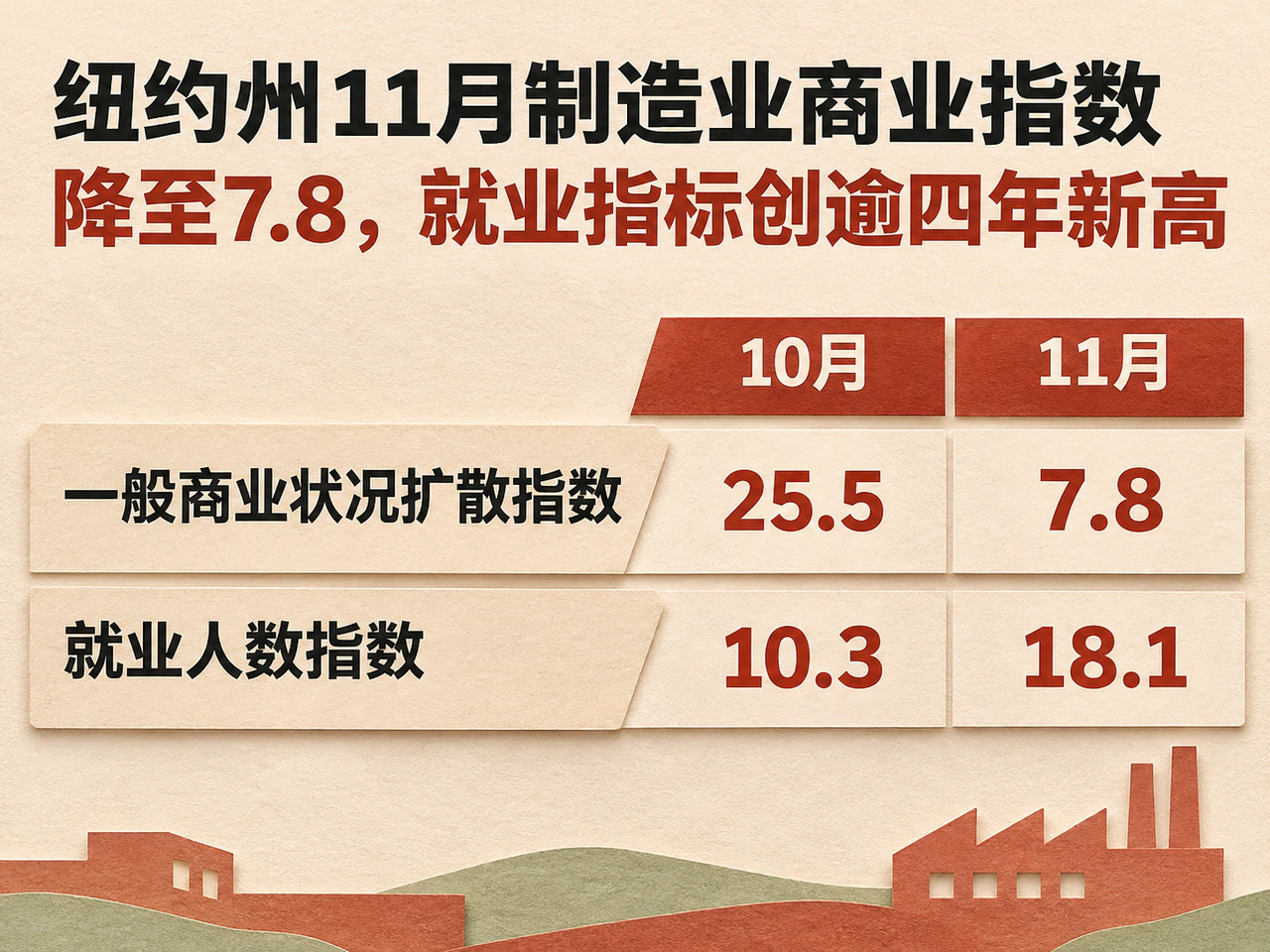
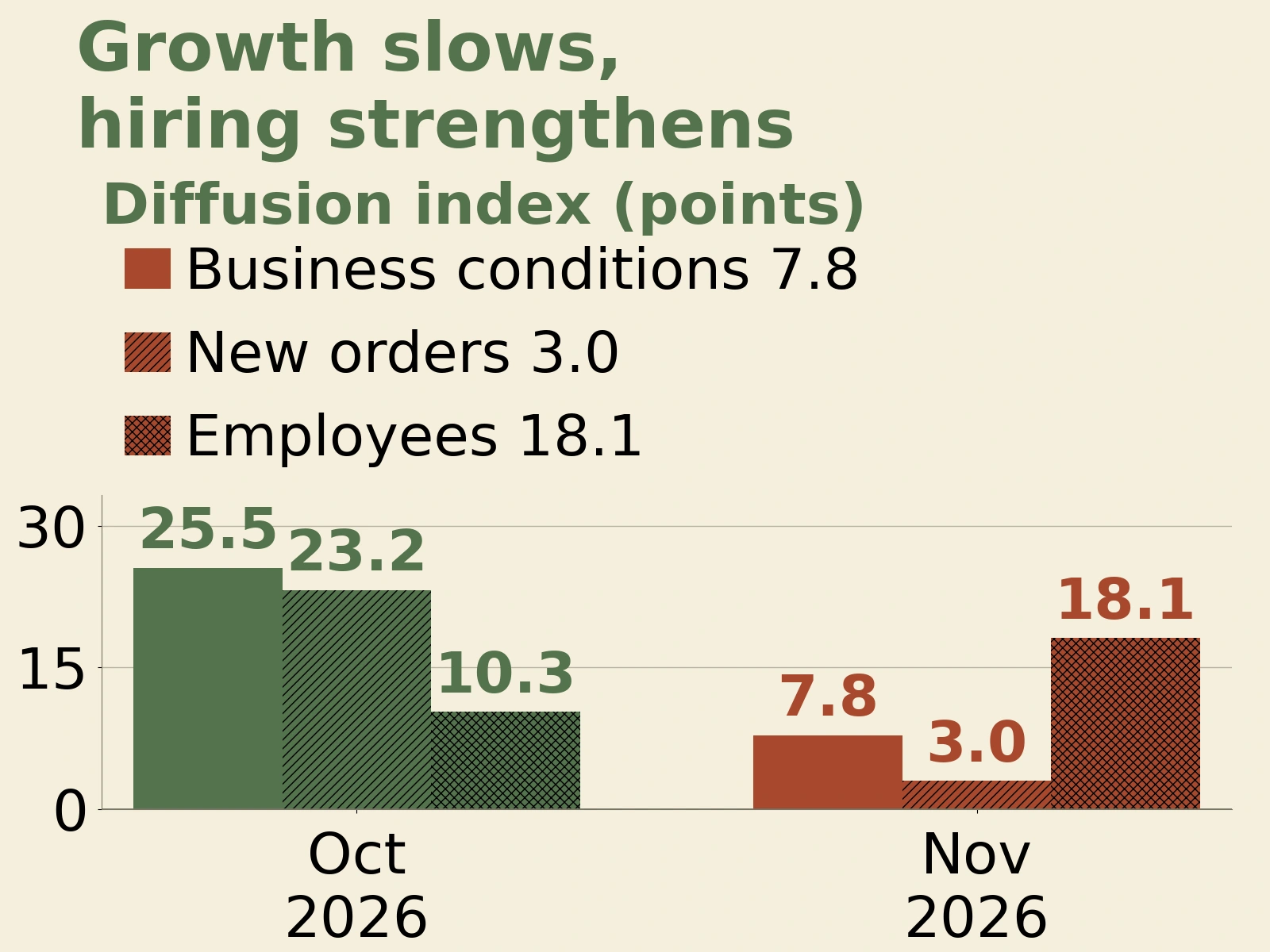
The New York Fed's November manufacturing survey, released on November 16 with responses collected from November 2 to 9, showed that the seasonally adjusted general business conditions diffusion index for New York State fell sharply from 25.5 in October to 7.8. The new orders index declined from 23.2 to 3.0. These diffusion indexes measure the difference between the shares of firms reporting increases and decreases. Their positive readings indicate that regional manufacturing activity and orders are still expanding, but the breadth of that expansion has narrowed considerably.
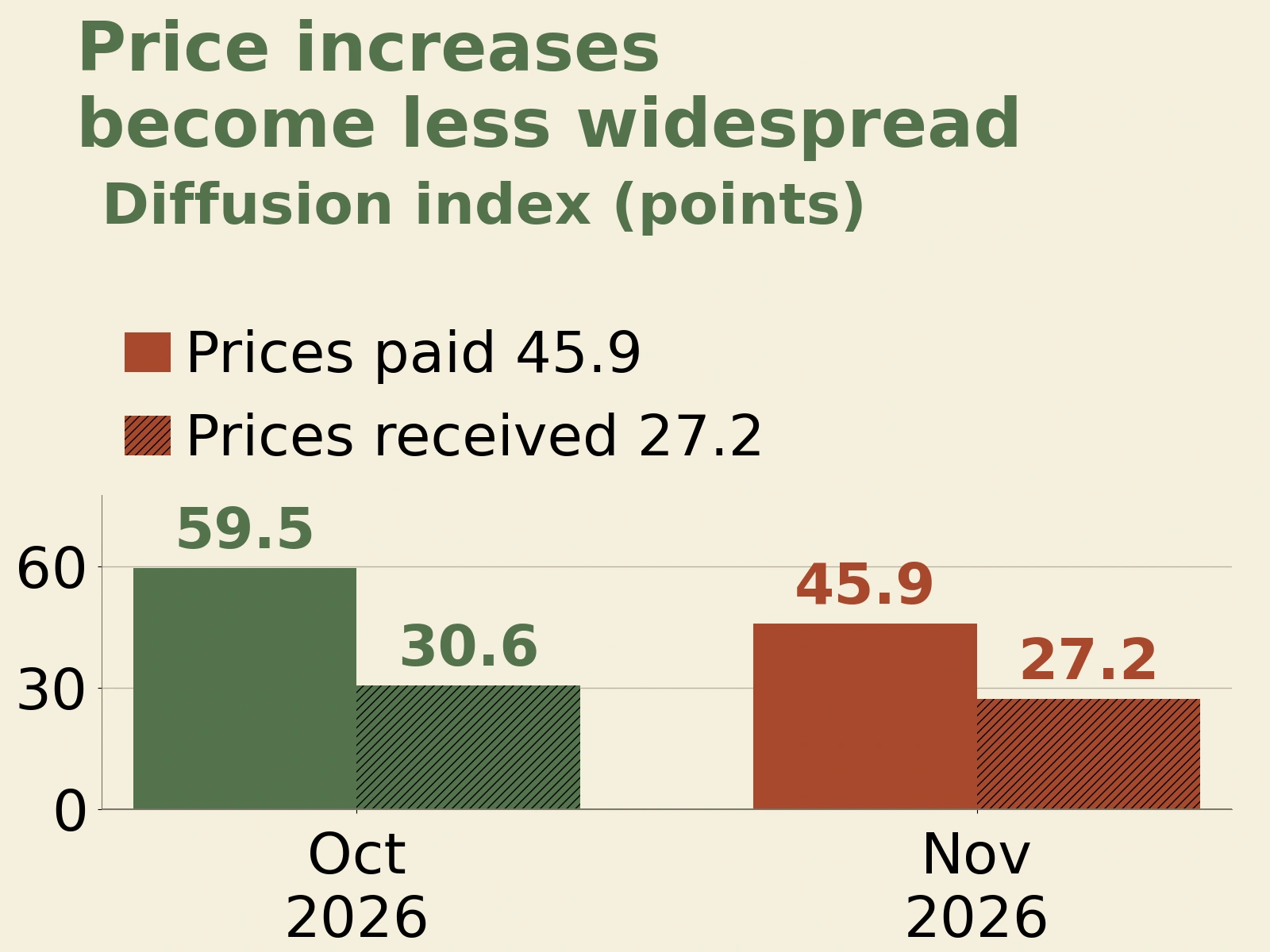
The survey's price and employment components sent different signals. On prices, the prices paid index fell from 59.5 in October to 45.9 in November, while the prices received index declined from 30.6 to 27.2, indicating some easing in upward price pressures. On employment, the number of employees index rose from 10.3 to 18.1, its highest level since June 2022. Taken together, New York State manufacturing combines slower growth with strong labor demand. That combination is not yet sufficient to prompt the Fed to shift its policy focus toward supporting employment.
Warsh and Barr focus on AI's medium- and long-term effects; industrial output and minutes will help assess the near-term tightening path

Several senior Fed officials also discussed the medium- and long-term economic effects of artificial intelligence (AI) that day. At a productivity and employment working group meeting in San Francisco, Fed Chair Kevin Warsh noted that productivity had recently been strong, but a clear structural upward break had yet to emerge. Technological progress could expand output while also displacing jobs; if investment returns fell short of expectations, valuations could decline and weigh on economic growth. In a speech in Milan the same day, Fed Governor Barr emphasized that a repricing of AI investment could affect the real economy through channels including weaker investment, a diminished wealth effect and the transmission of stress through leverage.
These remarks show the Fed paying greater attention to supply-side changes and potential financial risks, but Warsh offered no guidance in his speech on the next interest rate decision. In the near term, the more direct tests for markets are the industrial production data due on November 17 and the minutes of the October policy meeting due on November 18. The former will test whether the cooling in regional manufacturing has fed through to actual output; the latter will reveal the internal policy disagreements behind October's decision to hold rates steady. If demand remains resilient and price pressures stay elevated, the eventual peak in policy rates will remain under upward pressure even if the Fed raises rates in small steps.