On November 13, 2026, the release of the U.S. producer price index (PPI) for October showed a marked slowdown in the monthly increase, but prices excluding foods, energy, and trade services continued to rise briskly. Several Federal Reserve officials also continued to signal a preference for tighter monetary policy that day. The central question for policymakers remains whether inflation pressures are spreading more broadly across the economy.
The federal funds target range currently stands at 3.75%–4.00%. At its October 28 policy meeting, the Federal Open Market Committee (FOMC) voted 10–2 to leave rates unchanged, with two members voting for a 25-basis-point increase. The latest price data and officials’ remarks strengthen the case for another rate increase, although the size of any policy adjustment will still depend on subsequent inflation trends and changes in demand.
October PPI rises 6.5% year over year as core goods and services prices keep climbing
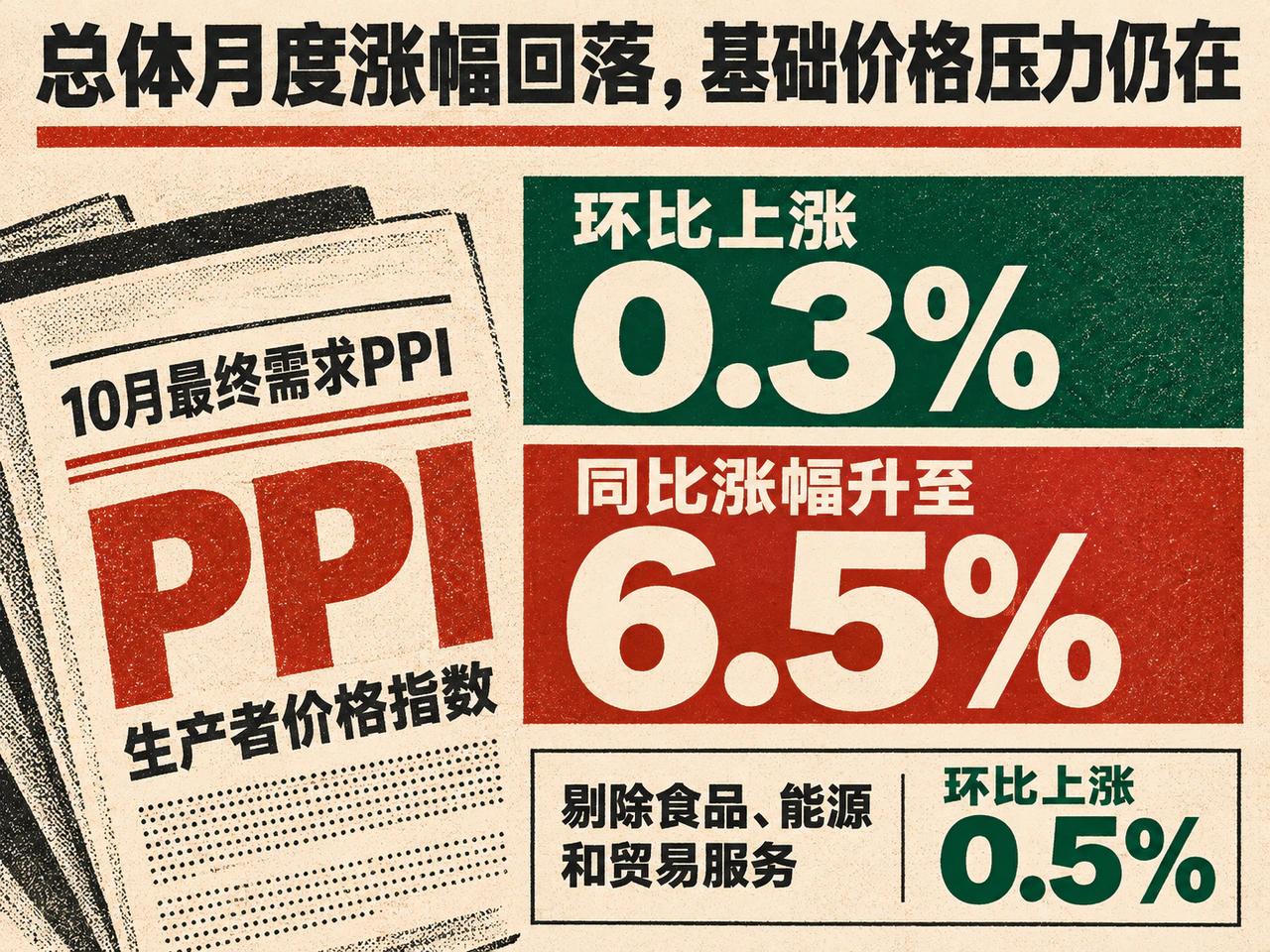
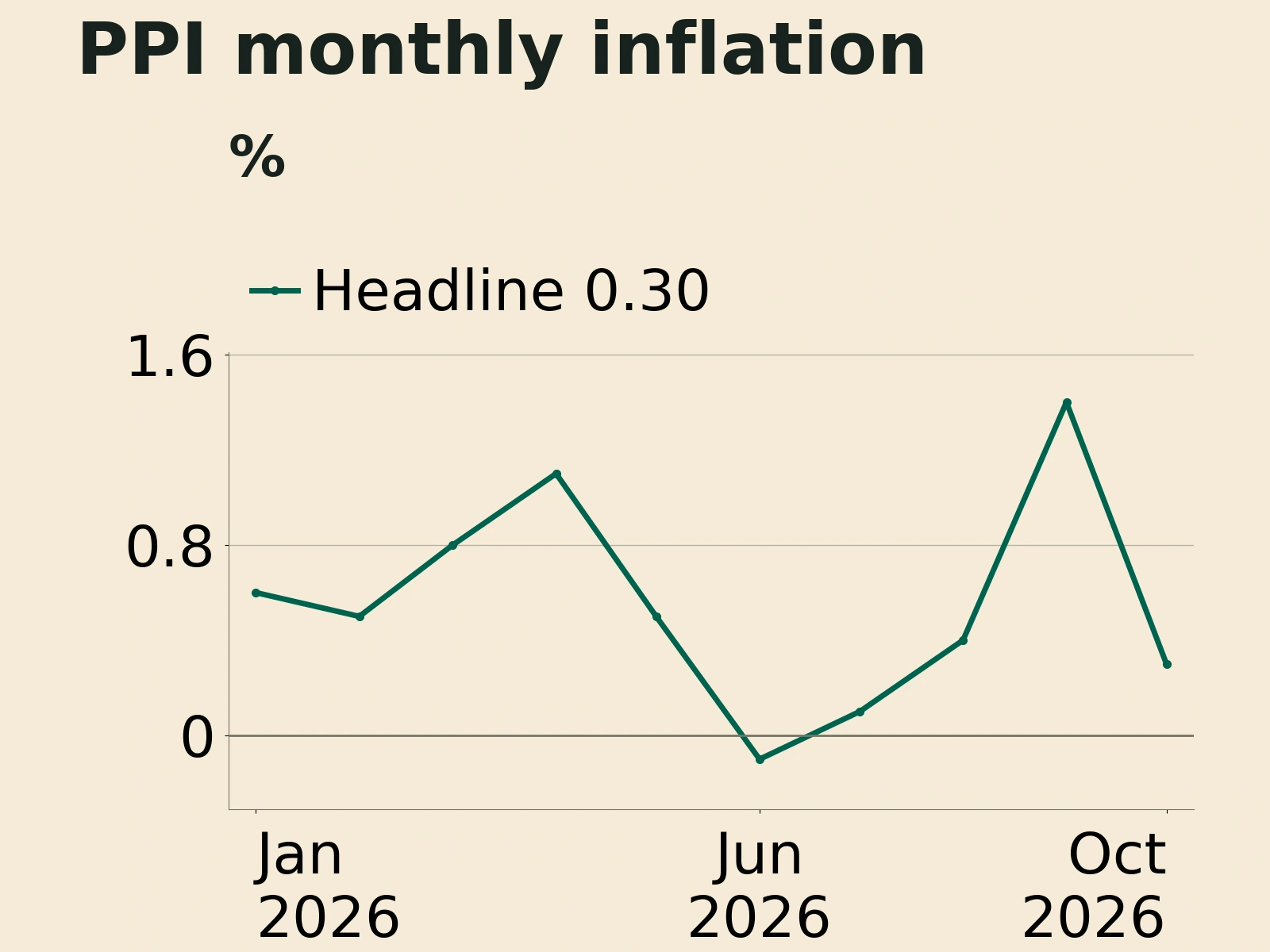
According to the U.S. Bureau of Labor Statistics, the final-demand PPI rose a seasonally adjusted 0.3% in October from the previous month, slowing sharply from September’s revised 1.4% increase. However, the combined effects of the comparison base and current price changes pushed the unadjusted annual increase to 6.5%, its highest level since November 2022.
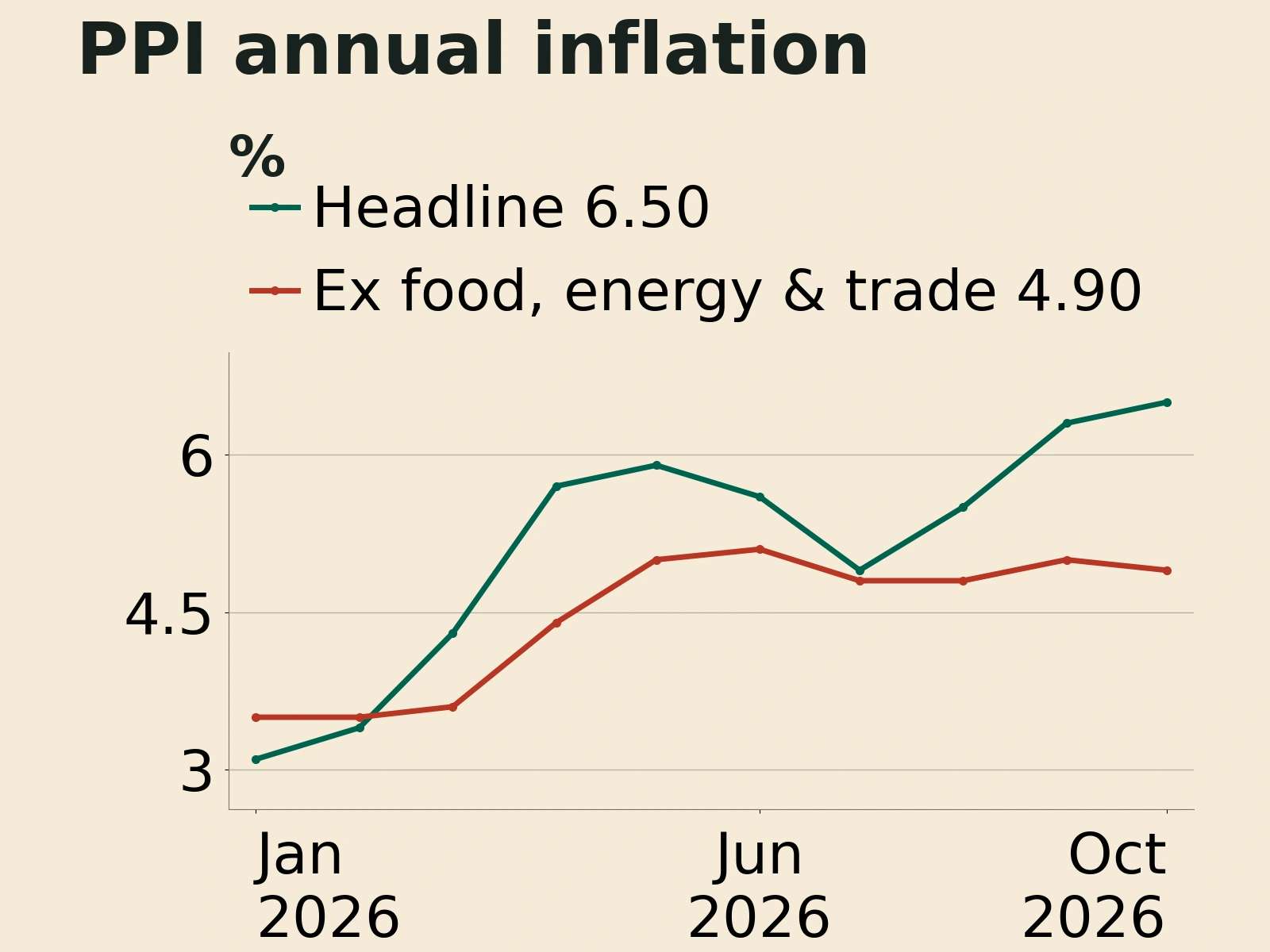
Within the components, falling energy prices eased some of the headline pressure, but businesses still faced rising costs across a broad range of inputs and finished products. Final-demand energy prices fell 0.1% in October from the previous month, yet final-demand goods prices overall rose 0.5%. Goods prices excluding foods and energy increased 0.5%, accounting for more than 60% of the overall monthly rise in goods prices. Excluding foods, energy, and trade services, final-demand prices rose 0.5% on the month and 4.9% from a year earlier.
Meanwhile, final-demand services prices rose 0.2% on the month, their fifth consecutive monthly increase. Transportation and warehousing services alone accounted for three-quarters of that month’s rise in services prices. For the Fed, the pressing question is how much of these upstream costs businesses will absorb through their profit margins, and how much they will pass on to final consumers.
Several officials favor further tightening, watching cost pass-through and overheating demand

With price data still showing persistent inflation, several Federal Reserve officials spoke on November 13 and signaled a preference for further policy tightening.
At an outlook event hosted by the Center for Business and Economic Research at the University of Nevada, Las Vegas, San Francisco Fed President Mary Daly said she was inclined to believe that further rate increases would be needed, with decisions to be made alongside her colleagues at the December meeting and subsequent meetings. According to Reuters, Daly was particularly concerned about services inflation excluding housing. She noted that a growing number of businesses reported that their margins could no longer absorb rising costs and that they were now considering raising prices for consumers.
In a CNBC interview that same day, Chicago Fed President Austan Goolsbee said inflation had proved more persistent than previously expected, and that overheating demand driven by the construction of artificial intelligence data centers was spreading to other parts of the economy. This suggests that the Fed’s policy concerns have extended beyond external supply shocks to demand generated within the domestic economy.
Boston Fed President Susan Collins also told Bloomberg Television that day that further policy tightening would be appropriate soon, although the precise pace of rate increases and the ultimate level of interest rates remained uncertain. In formal remarks at a housing conference on the same day, she acknowledged that high interest rates restrain residential construction and raise homebuying costs, but said price stability supports the long-term health of the housing market.
Changes at the margin in demand nevertheless leave room for trade-offs in the policy path. Daly said that although U.S. consumption remained resilient overall, reports from Nevada and some other states were beginning to suggest that consumers were losing momentum. If final demand remains strong, businesses will find it easier to pass through costs. Conversely, a pronounced consumption slowdown would require the Fed to reassess the size and pace of further rate increases.
Looking at the near-term calendar, industrial production data due on November 17 will provide fresh evidence on demand and capacity conditions. The minutes of the October FOMC meeting, to be released on November 18, should help markets clarify the reasoning of those who favored holding rates steady and those who supported an increase. Ahead of the December 8–9 policy meeting, whether services inflation and holiday-season consumption cool will remain central to determining the degree of Fed tightening.