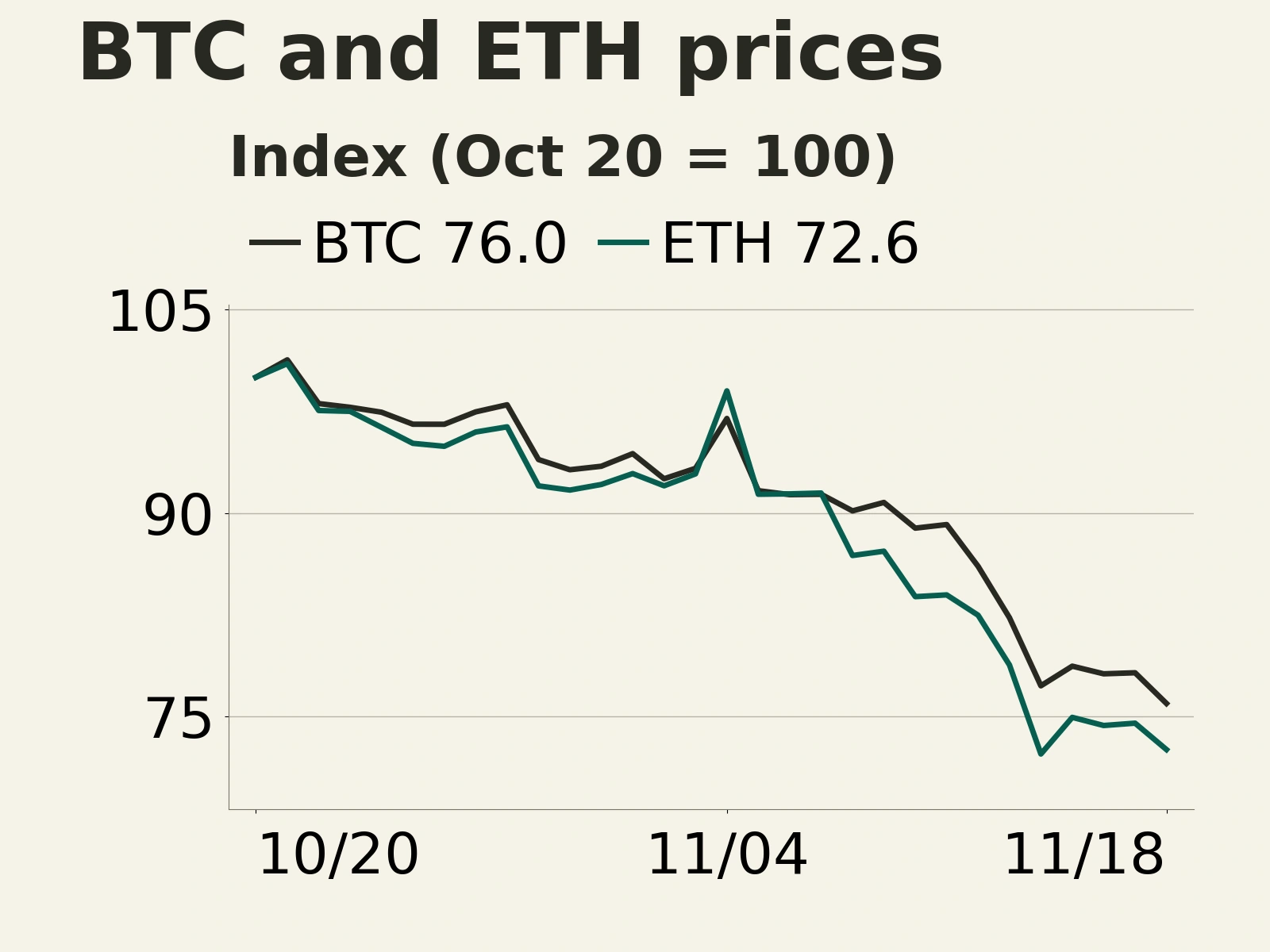
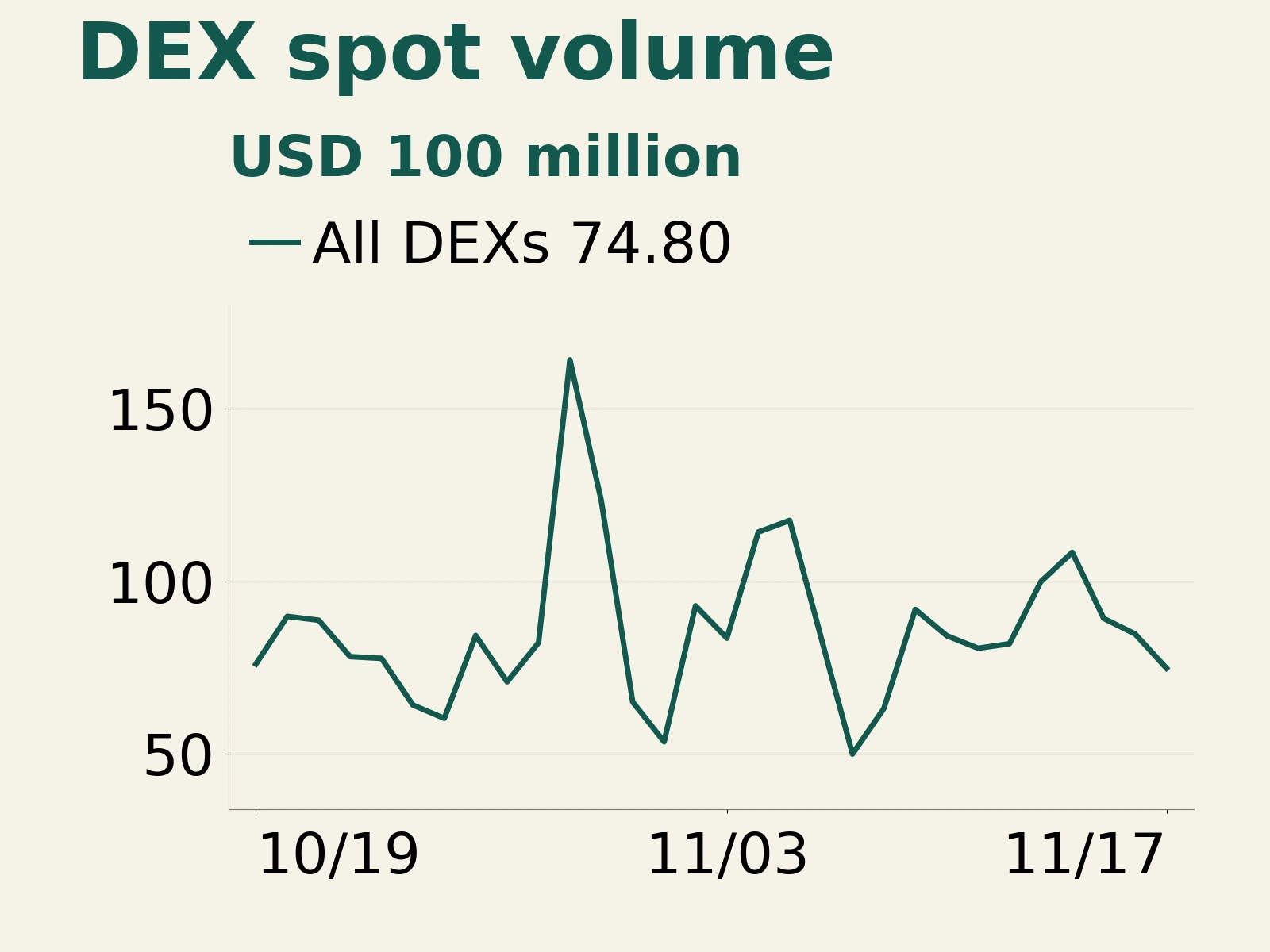
On November 18, 2026 (UTC), open interest in Binance bitcoin perpetual contracts rose 4.66% in bitcoin terms, while the relative price of Deribit puts expiring the next day climbed rapidly in the hours before the Federal Reserve released the minutes of its October meeting. Meanwhile, US spot bitcoin ETFs recorded net outflows of $239.9 million on the preceding US trading day, and the circulating supply of dollar-pegged stablecoins was lower than a month earlier.
US spot ETF inflows lasted just one day

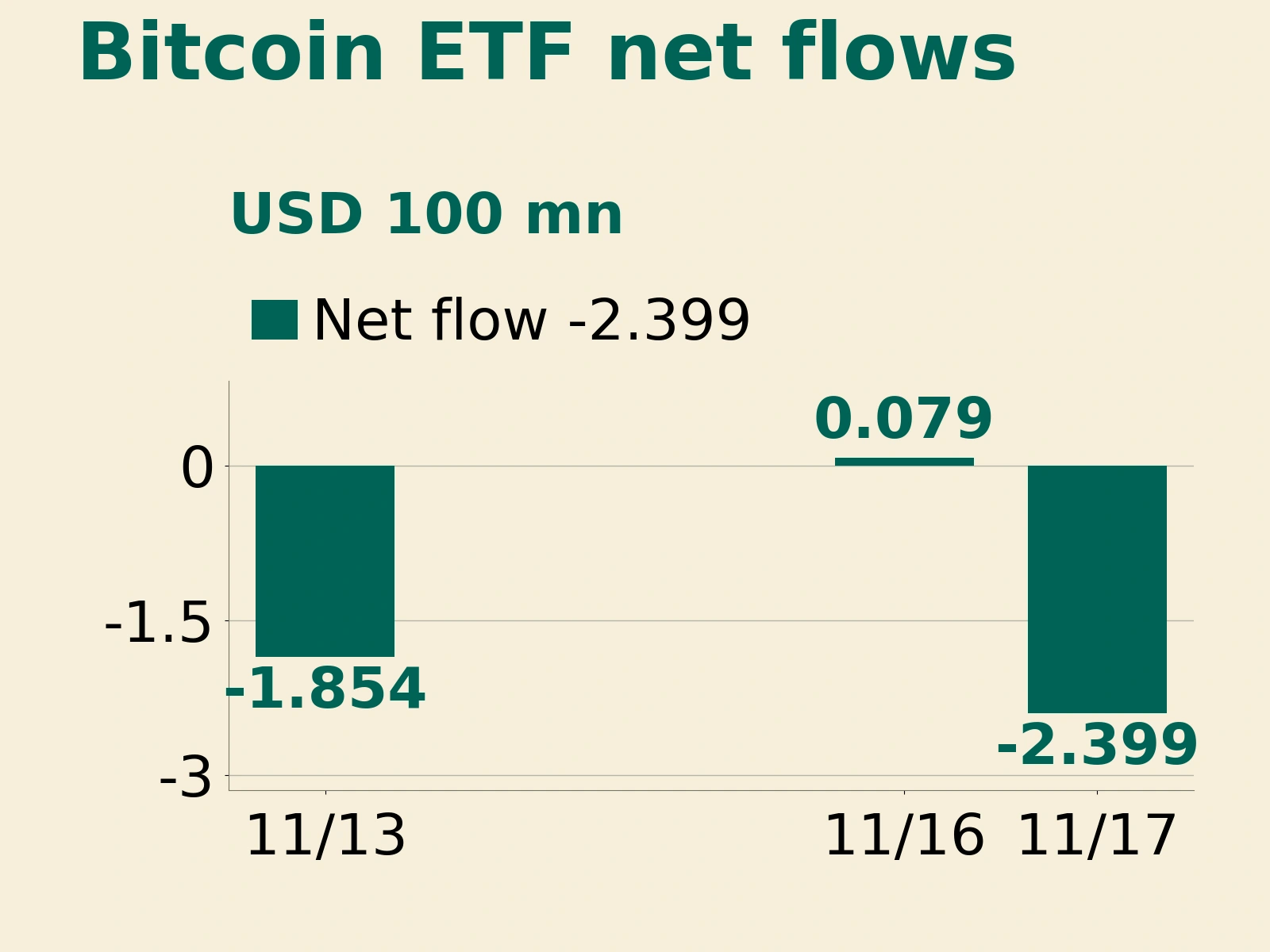
November 17 was the latest trading day with complete reporting for US spot bitcoin ETFs. Farside Investors’ compilation shows that these funds took in a combined net $7.9 million on November 16 before reversing to net outflows of $239.9 million on November 17. BlackRock’s IBIT accounted for most of the change.
On November 16, IBIT attracted net inflows of $76.5 million, offsetting aggregate redemptions from the other products. On November 17, it swung to net outflows of $209.5 million, accounting for about 87% of the market’s net outflows that day. Across November 16–17, the funds recorded combined net outflows of $232 million. They had already lost a combined net $1.907 billion over the seven consecutive US trading days from November 5 through November 13; the small inflow on November 16 only briefly interrupted that run of redemptions.
Some products had reported figures for the November 18 US trading session: Bitwise’s BITB, Ark and 21Shares’ ARKB, Grayscale’s GBTC and its Mini Bitcoin Trust recorded net outflows of $36.6 million, $19.3 million, $20.3 million and $10.5 million, respectively, for a combined $86.7 million. IBIT and several other products had yet to show figures for the day, so market-wide net subscriptions or redemptions for November 18 still awaited complete reporting. Since IBIT had driven most of the preceding day’s market-wide total, the redemptions from these four products should, for now, be treated as partial data.
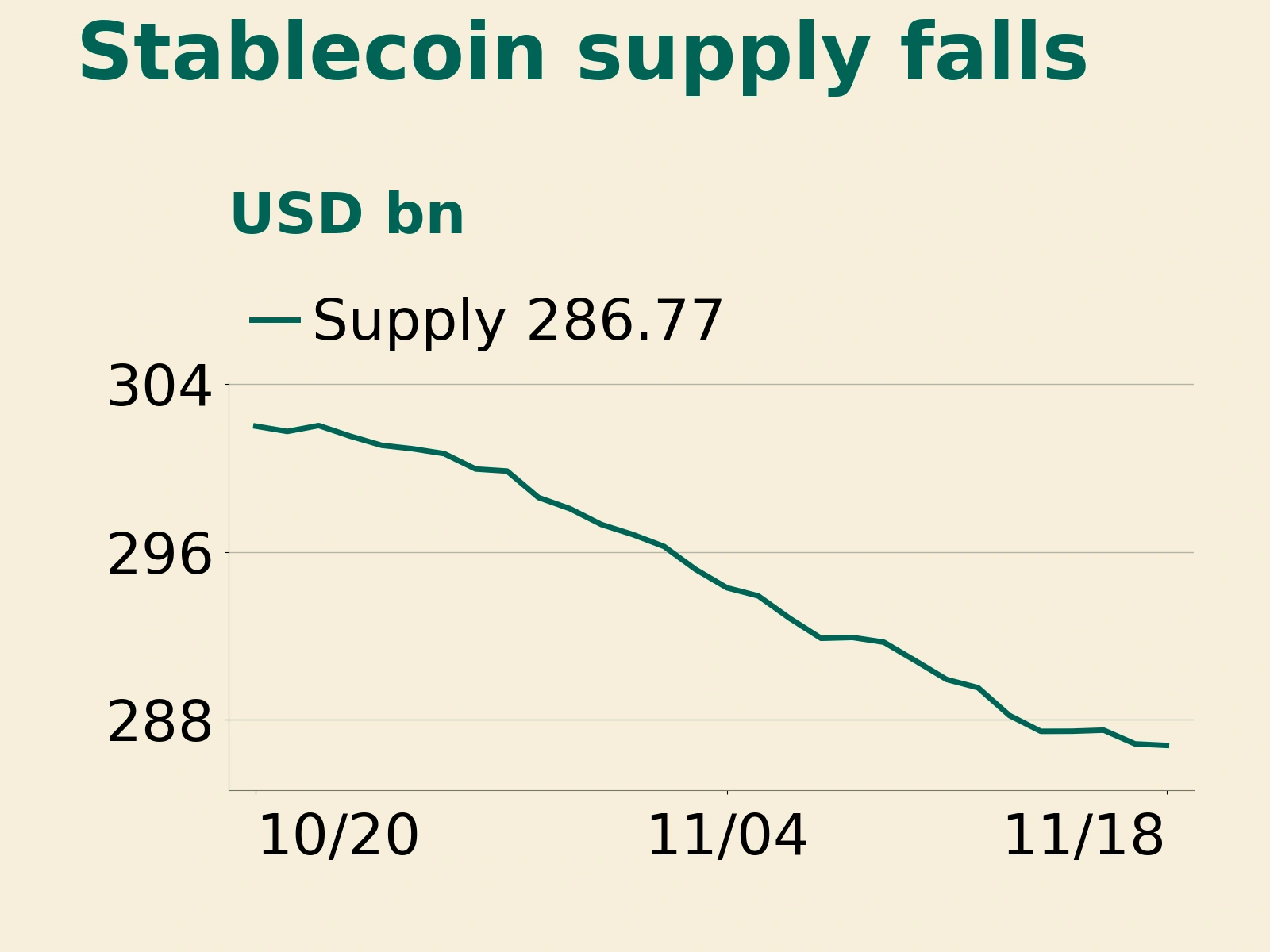
The stock of dollar-pegged stablecoins within the crypto market was also falling. DefiLlama’s circulating supply measure at face value declined from $302.00 billion at 00:00 UTC on October 20 to $286.77 billion at 00:00 UTC on November 18, a decrease of approximately $15.23 billion. The two measures have different scopes: ETF net subscriptions and redemptions measure a day’s fund flows into and out of US-listed products, whereas stablecoin circulation is a stock used for payments, collateral, trading and other purposes. The small ETF inflow on November 16 did not change the fact that stablecoin supply as of November 18 was lower than a month earlier.
Contract positions expand; protection costs rise most at the nearest expiry
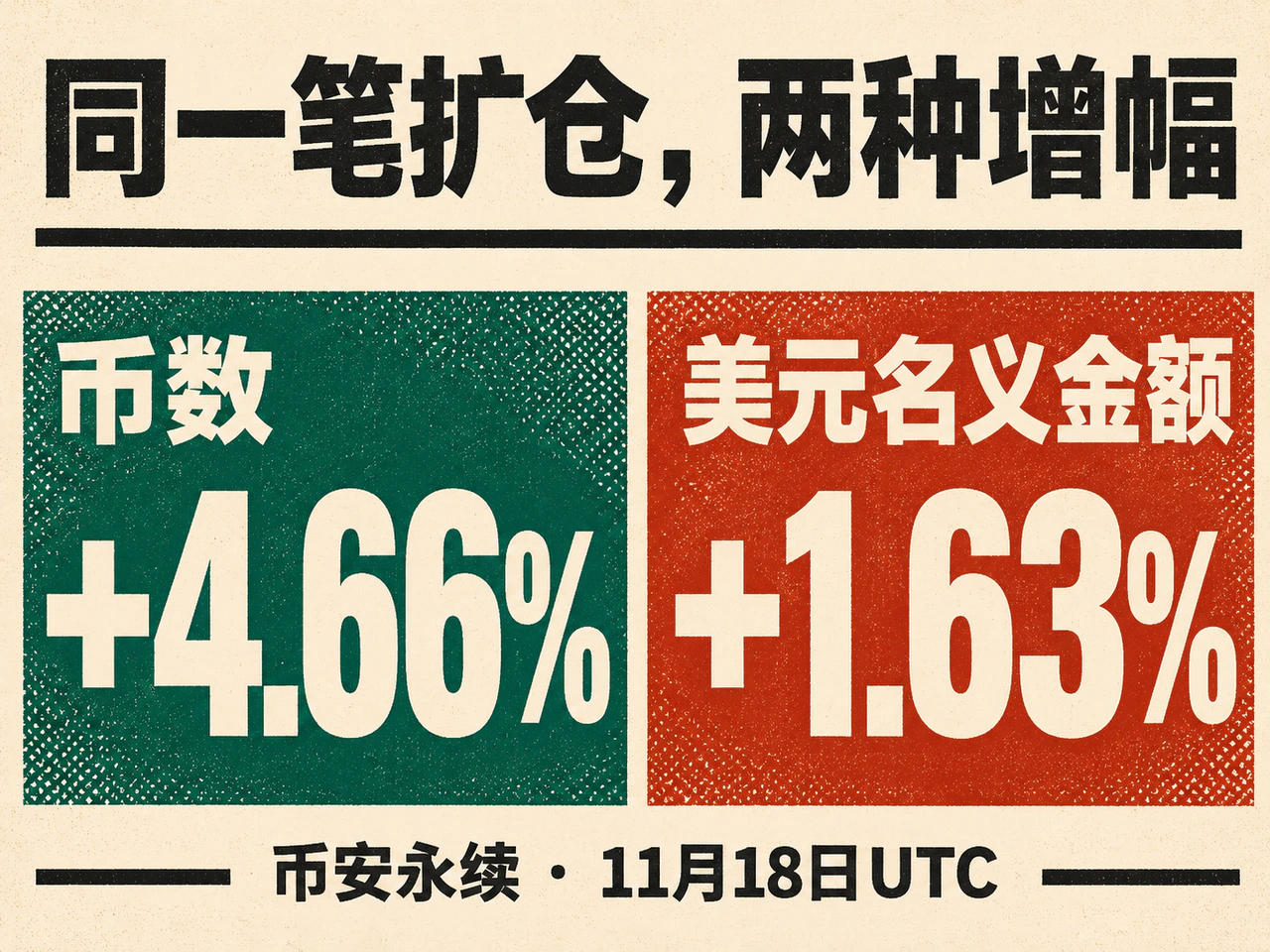
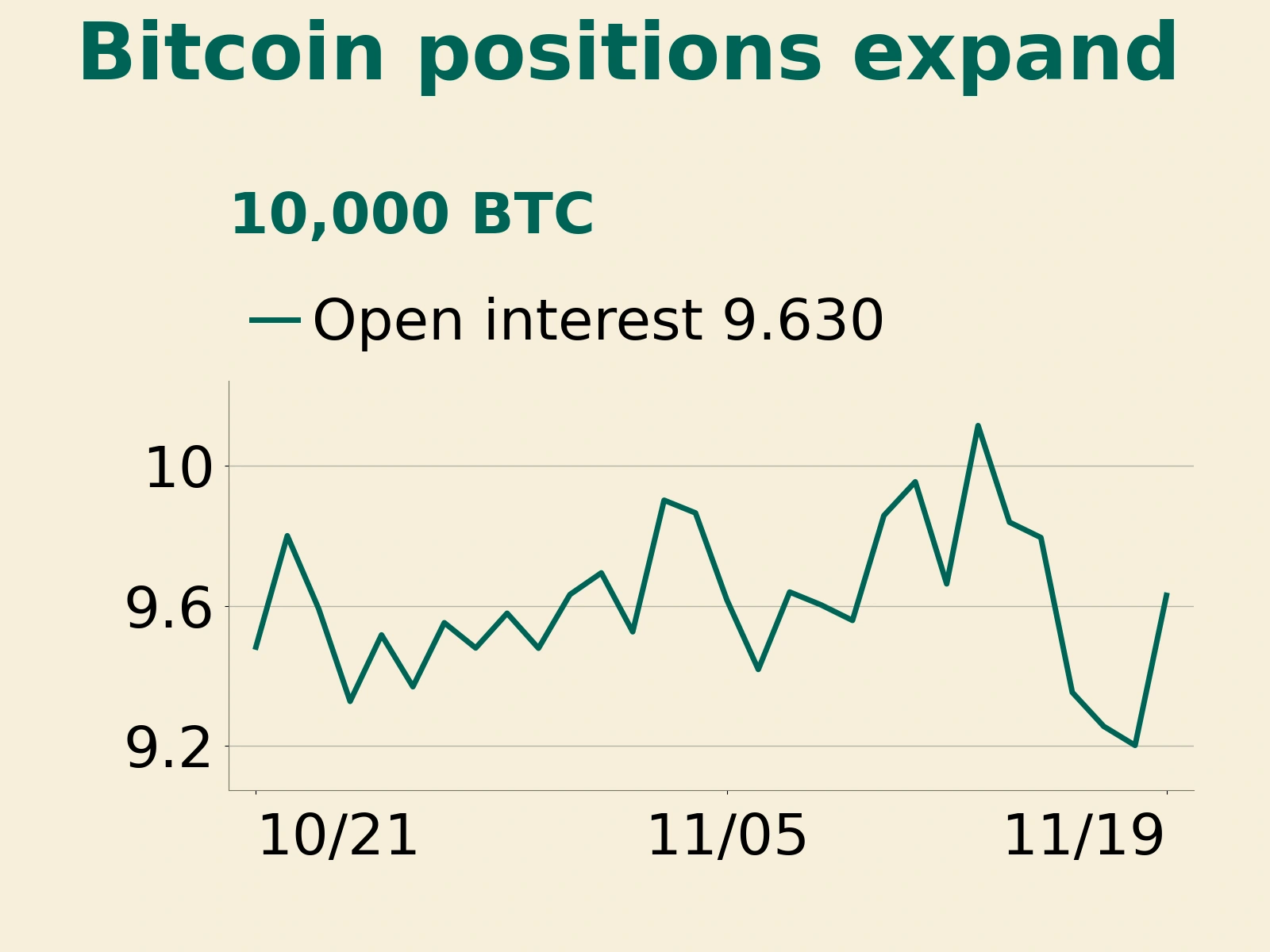
Comparing the two midnight observations bounding the November 18 UTC trading day, open interest in Binance BTCUSDT perpetual contracts increased from 92,007 to 96,298 bitcoin, a rise of 4.66%. The exchange’s dollar notional measure rose just 1.63%. The day’s decline in bitcoin’s price reduced the dollar equivalent of the positions, so the dollar measure understated the actual increase in contract size.
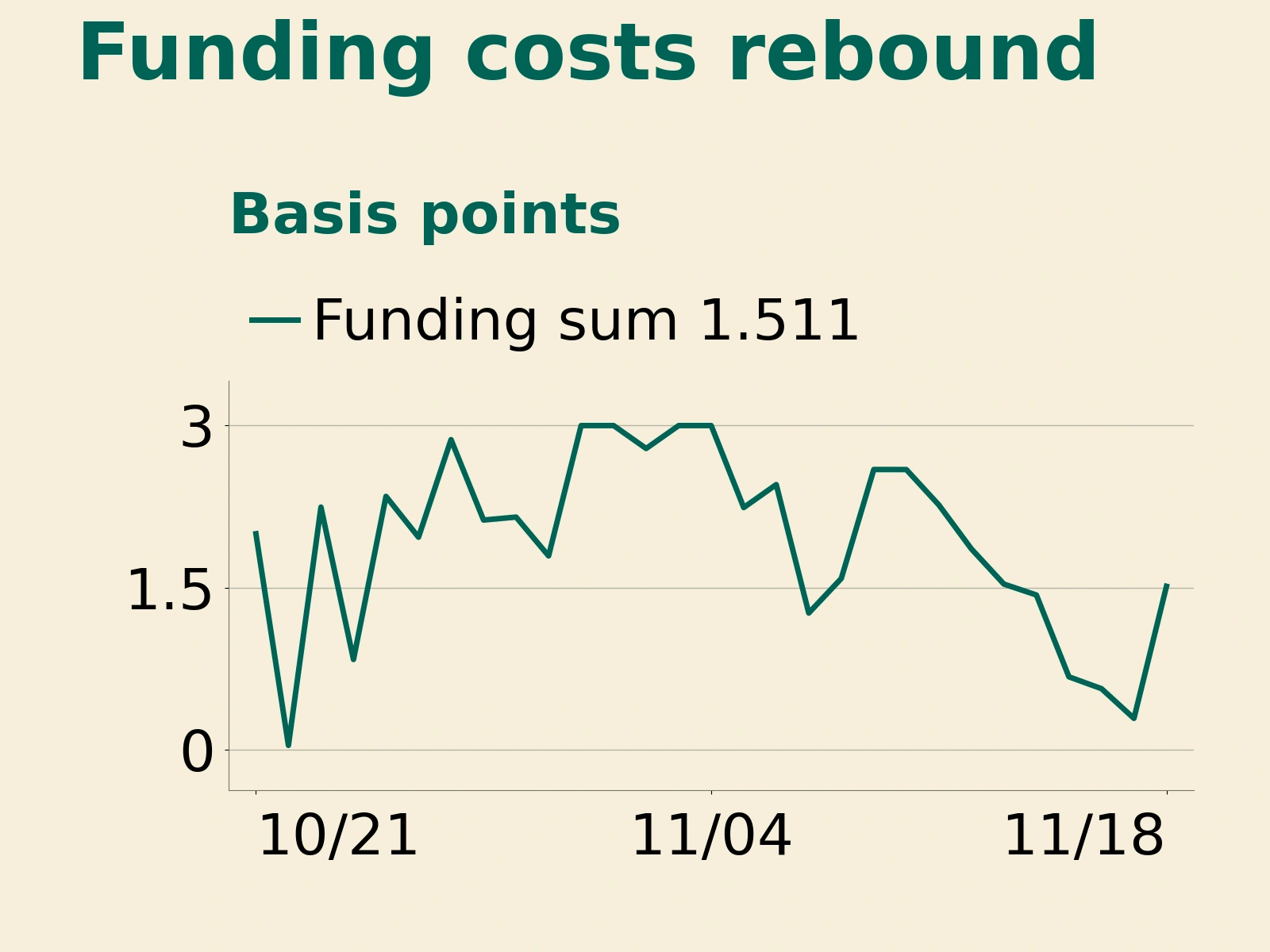
All three funding settlements that day required longs to pay shorts. The rates summed to 0.015109%, up from 0.002872% the previous day. For a long position held at a constant notional throughout the day, the funding cost of maintaining the position therefore increased. A trader’s overall exposure still depends on their spot holdings and other contract positions.
Options data further show that the increase in protection costs was concentrated in the nearest expiry. According to Deribit quotes recorded by Pandabull and cited by CryptoSlate, between 06:36 and 10:36 UTC on November 18, the implied-volatility spread of bitcoin 25-delta puts expiring on November 19 over calls with the same expiry and absolute delta widened from 5.08 to 8.92 volatility points, an increase of 3.84 points in four hours. The equivalent spreads for November 20 and November 27 expiries widened by only 2.86 and 1.25 points, respectively.
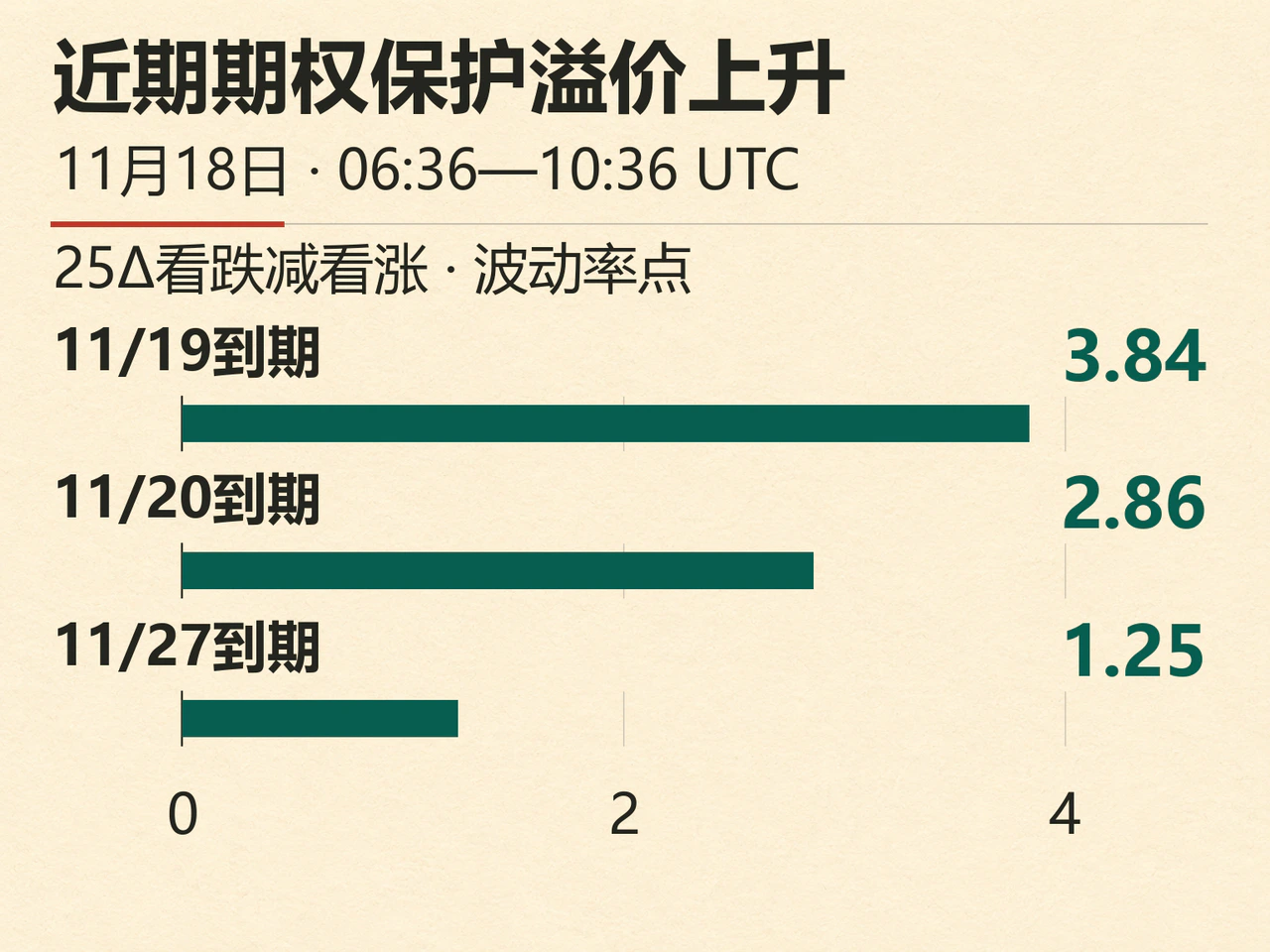
This means traders faced higher quotes for downside protection at the nearest expiry. That contract expired approximately 13 hours after the release of the Fed minutes, covering only a very short risk window.
Extending the observation window to the 24 hours ending at the same cutoff, however, the spread for the November 19 expiry increased by just 0.43 volatility points, less than the 0.76-point increase for the November 27 expiry. The sharp jump in the nearer-term spread was therefore concentrated in the hours before the minutes were released. It is not yet sufficient evidence to infer that investors were persistently adding to bets on a prolonged decline.
Taken together, the two sets of data show that traders on exchanges increased their exposure while demand for short-term protection also picked up ahead of the minutes. Whether longer-term allocation demand is recovering still depends on whether US spot bitcoin ETFs can record sustained net inflows.
Click “Read the original” for further details.