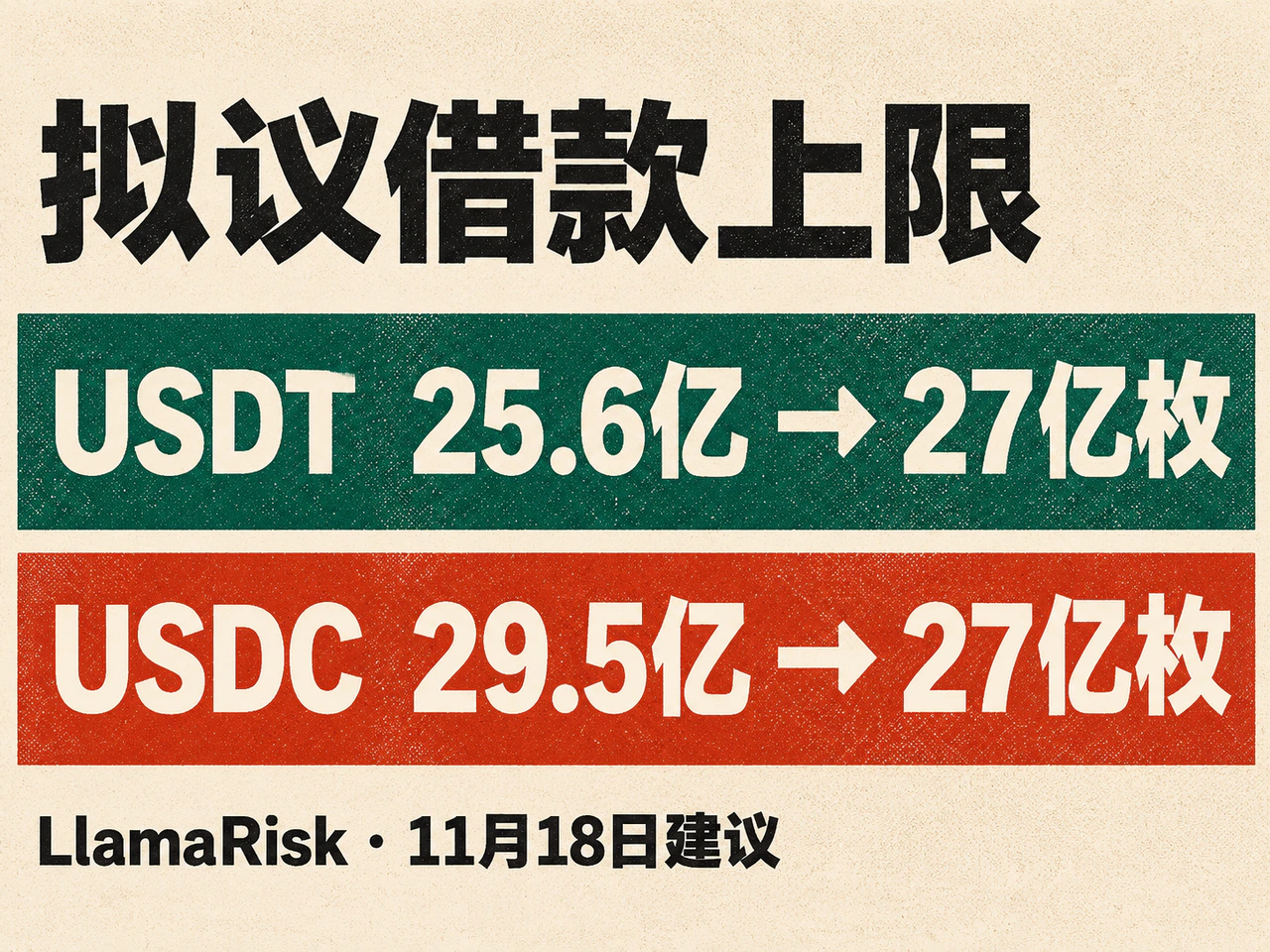
On November 18, Aave risk service provider LlamaRisk recommended raising the USDT borrow cap in the V3 Core market on Ethereum mainnet from 2.56 billion to 2.7 billion tokens, while lowering the USDC borrow cap from 2.95 billion to 2.7 billion tokens. The two dollar stablecoins have similar outstanding borrowings, but their pools have different amounts of room to accommodate further lending. On-chain trading and credit also show diverging trends: activity differs across networks and assets, even when measured in the same dollar units.
Spot trading contracts as networks and lending assets diverge
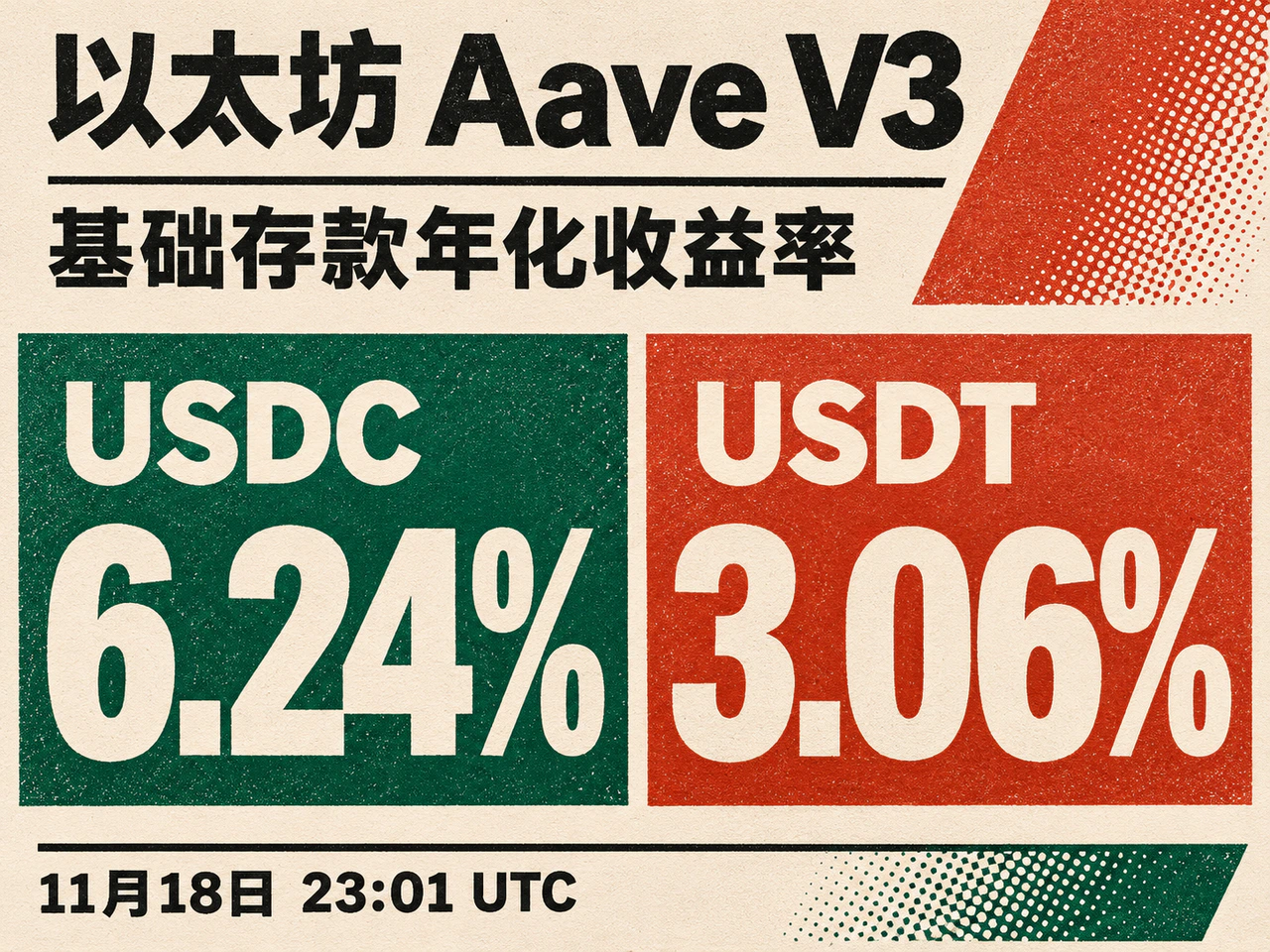
According to DefiLlama figures for November 17, the latest UTC trading day marked complete at the editorial cutoff, spot trading volume on the decentralized exchanges it tracks totaled $7.480 billion, down 11.72% from the previous day. Volume on Ethereum mainnet fell by roughly a quarter, while BNB Smart Chain and Ethereum layer-2 network Arbitrum also recorded declines. Solana and Base, another layer-2 network, posted small increases. The decline in trading was concentrated in particular networks. Trading volume measures asset turnover; the same existing funds can be used repeatedly in transactions.
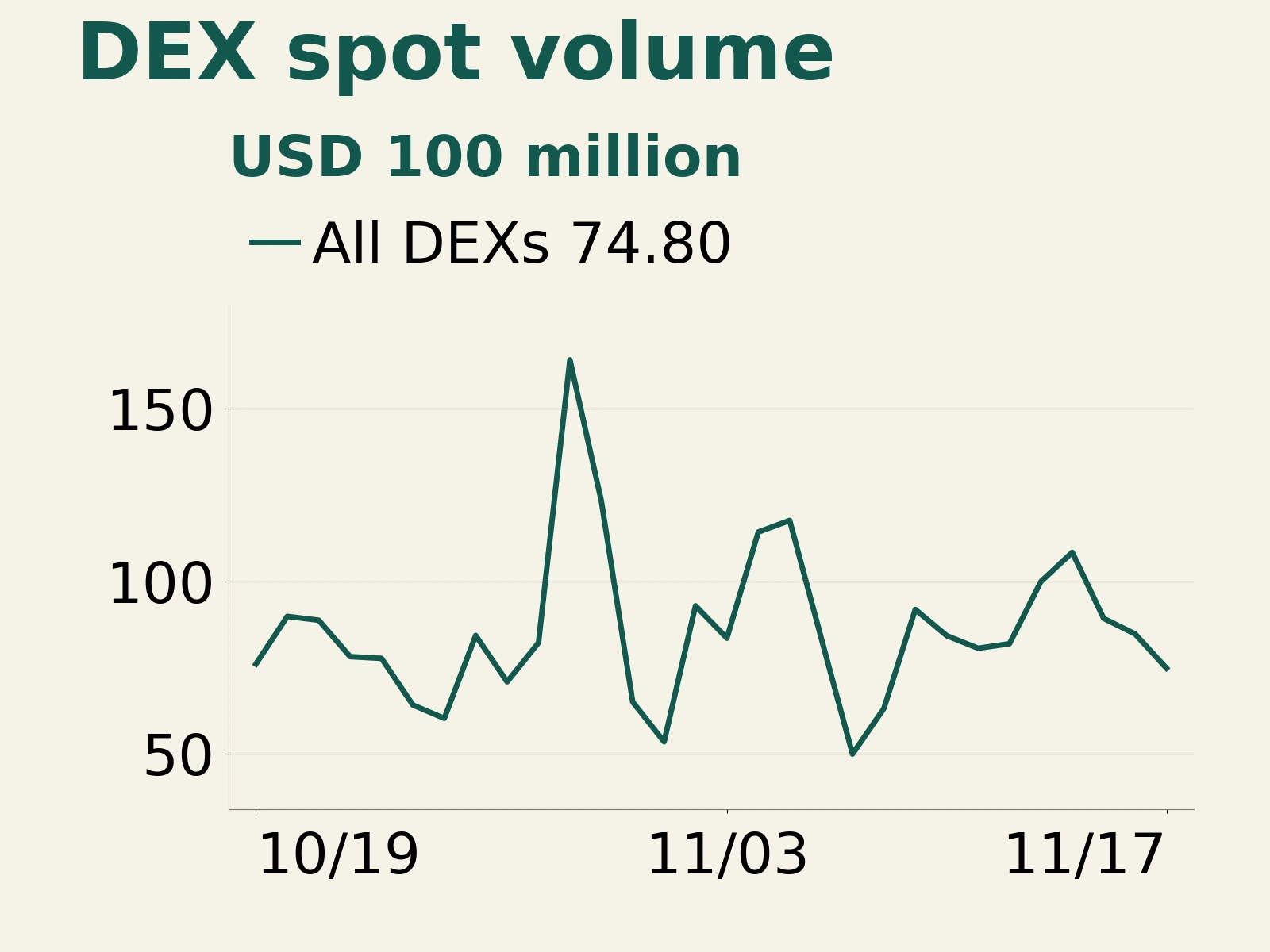
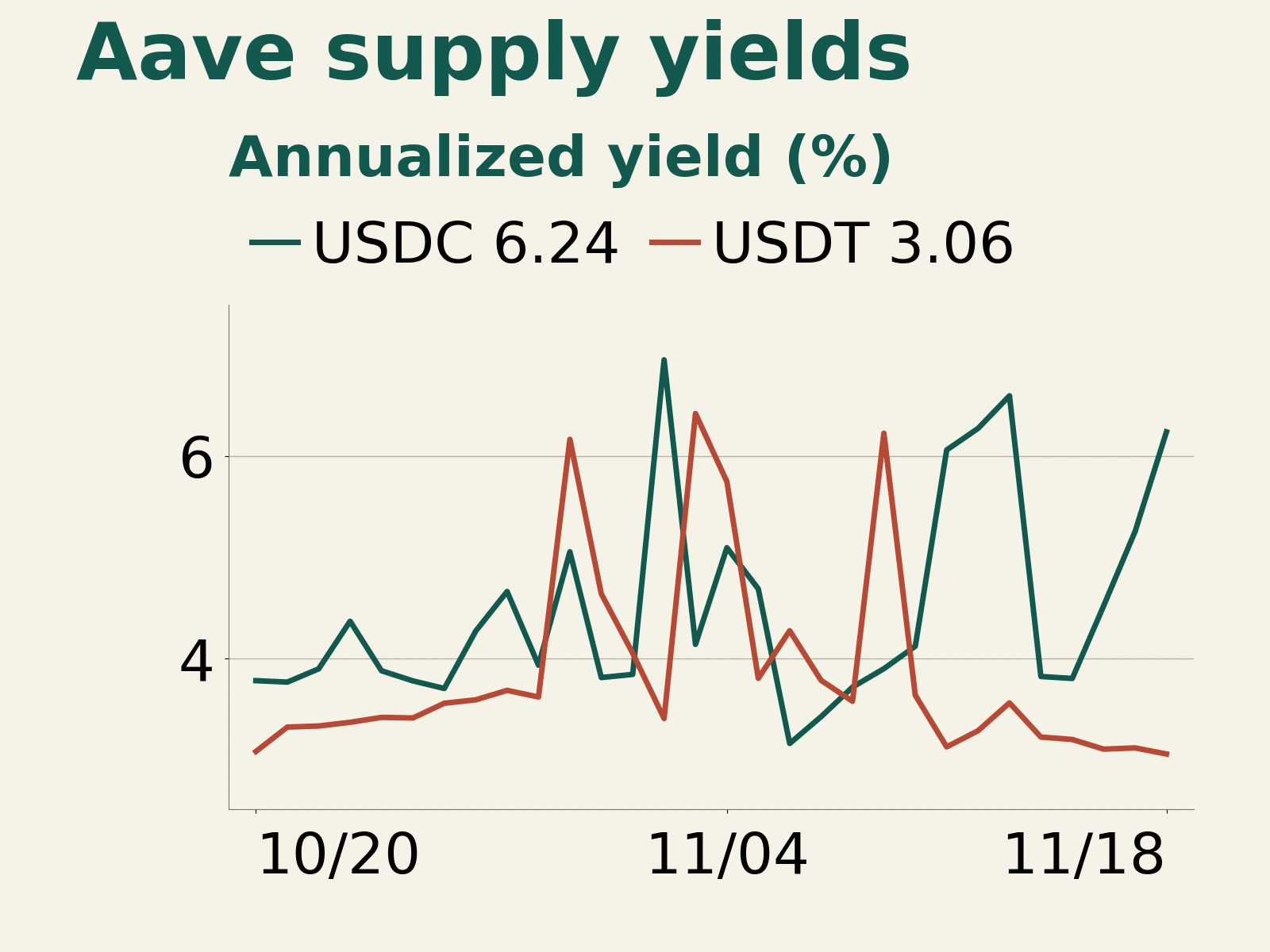
Another use of funds on-chain is lending. At 23:01 UTC on November 18, DefiLlama recorded a base supply annual percentage yield of 6.24% for USDC in the main Aave V3 market on Ethereum, up from 5.26% at the same time the previous day. Over the same period, USDT edged down from 3.12% to 3.06%. The USDC supply yield rose by nearly 1 percentage point in a day, widening the gap between the two assets to 3.18 percentage points. These figures annualize the rates prevailing at that moment. Suppliers’ actual returns depend on how pool rates change while their funds remain deposited.
Within the same protocol, the Horizon market for real-world assets presents a different picture. LlamaRisk records show that the supplied amounts of both USCC and USTB declined over the past 30 days, leaving most of their existing supply caps unused. It therefore recommended lowering both caps. The proposed cap adjustments follow changes in deposits that have already occurred; reducing a cap that sits far above actual deposits does not itself require suppliers to withdraw their assets.
The same 2.7 billion-token cap, but different pool constraints
A borrow cap limits the maximum outstanding loans the protocol is willing to permit, whereas utilization uses the assets actually deposited by suppliers as its denominator. Whether borrowers can obtain additional funds also depends on the liquidity available in the pool: the more funds lent out, the less remains immediately available for suppliers to withdraw.
LlamaRisk’s observations on November 18 showed approximately 2.49 billion USDT already borrowed, equivalent to 97.2% of the existing borrow cap, leaving new borrowing close to the limit. Based on the supply of funds at the time, even if borrowing reached the proposed 2.7 billion-token cap, utilization would be about 92.2%, still below the interest-rate curve’s 94% kink. Beyond that kink, additional borrowing pushes interest rates up much more rapidly. Raising the cap would allow the pool to accommodate more loans within the relatively gradual part of the rate curve. The top 20 USDT borrowing addresses mainly used ether and its staking derivatives as collateral. With credit capacity expanded, the prices of these collateral assets would still affect the safety margins of the largest positions.
At the same time, outstanding USDC borrowing was approximately 2.58 billion tokens, about 5% below its November 11 level. Although borrowings represented only 87.5% of the existing cap, they accounted for 95.8% of the pool’s supply, above the 94% interest-rate kink. Outstanding borrowing can therefore decline while supply APYs remain elevated. If the cap were lowered to 2.7 billion tokens, the outstanding balance at the time of observation would still leave approximately 120 million tokens of nominal borrowing headroom. Actual borrowing costs would depend on how much USDC suppliers leave in the pool. Lowering the cap would not automatically reduce interest rates on existing loans.
Other networks offer a useful comparison. Observations disclosed by TokenLogic on November 17 showed that the supply of the dollar stablecoin USDt in Aave on Avalanche had fallen by approximately 13%, while outstanding borrowing was broadly unchanged. Utilization rose from 79% to 91%. In pools of this kind, supplier withdrawals alone can push utilization and interest rates higher, without any increase in borrowing.
Two sets of data will help assess whether the proposed Ethereum cap changes address the relevant constraints: whether new USDT borrowing gradually uses the expanded capacity, and whether utilization and supply yields fall together if USDC deposits return.
Click “Read the original” for further details.