The Philadelphia Fed's November manufacturing survey, released on November 19, 2026, showed that new orders in its district had essentially stalled, while the share of manufacturers raising their selling prices continued to increase. On the same day, Federal Reserve Vice Chair Jefferson discussed the dilemma facing monetary policy: higher energy prices are pushing up prices while eroding households' real incomes, and the expansion in demand driven by artificial intelligence (AI) investment may arrive before productivity improves. Together, these forces mean that cooling demand may not quickly bring inflation down.
New orders stall as price increases spread across manufacturers
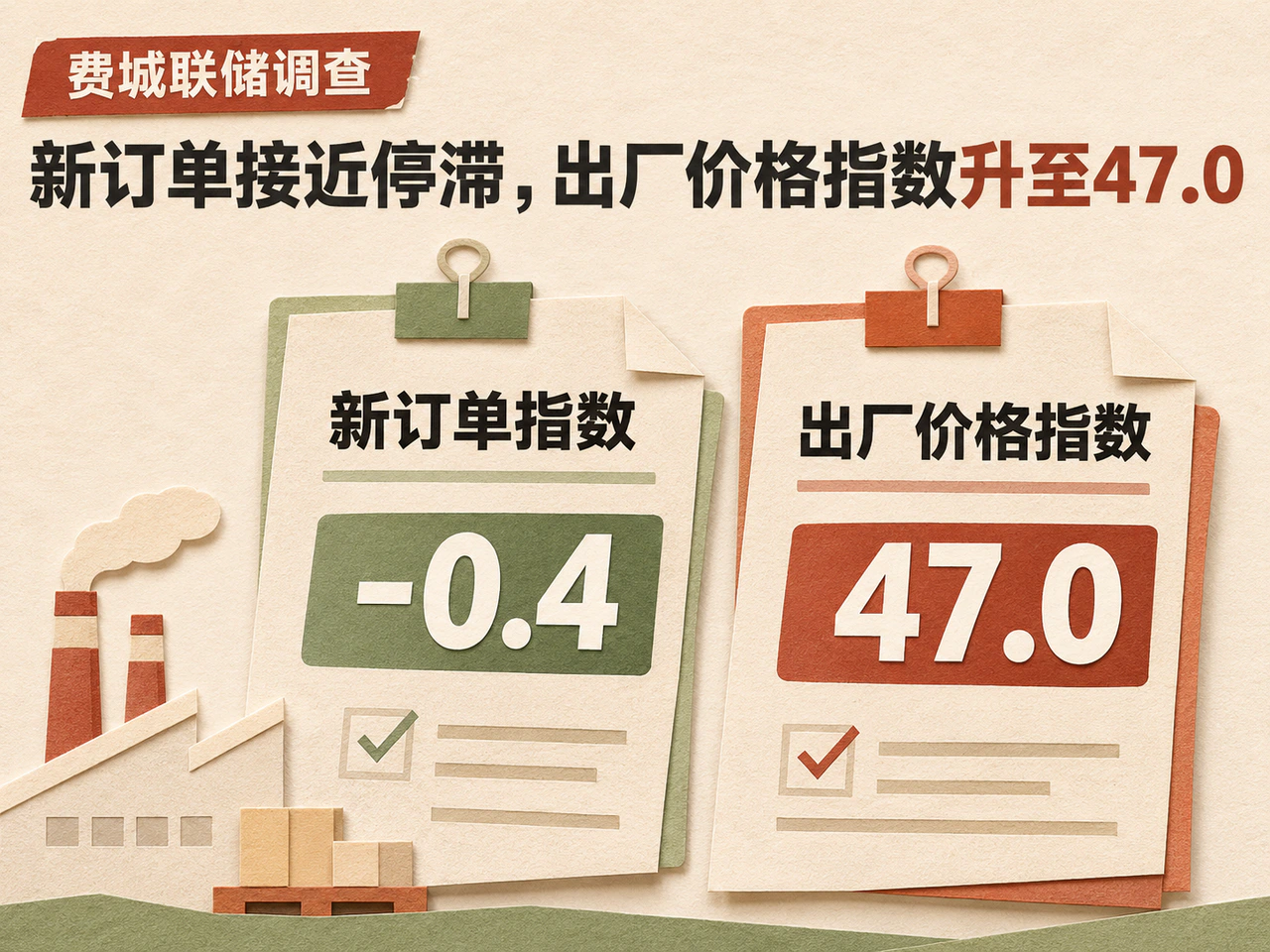
The Philadelphia Fed surveyed manufacturers in the Third Federal Reserve District from November 9 to 16. The diffusion index of general business activity—the share of firms reporting increases minus the share reporting decreases—fell from 20.9 in October to 6.3. The new orders index declined for a fourth consecutive month to -0.4, indicating that the proportions of manufacturers reporting rising and falling orders were roughly equal.
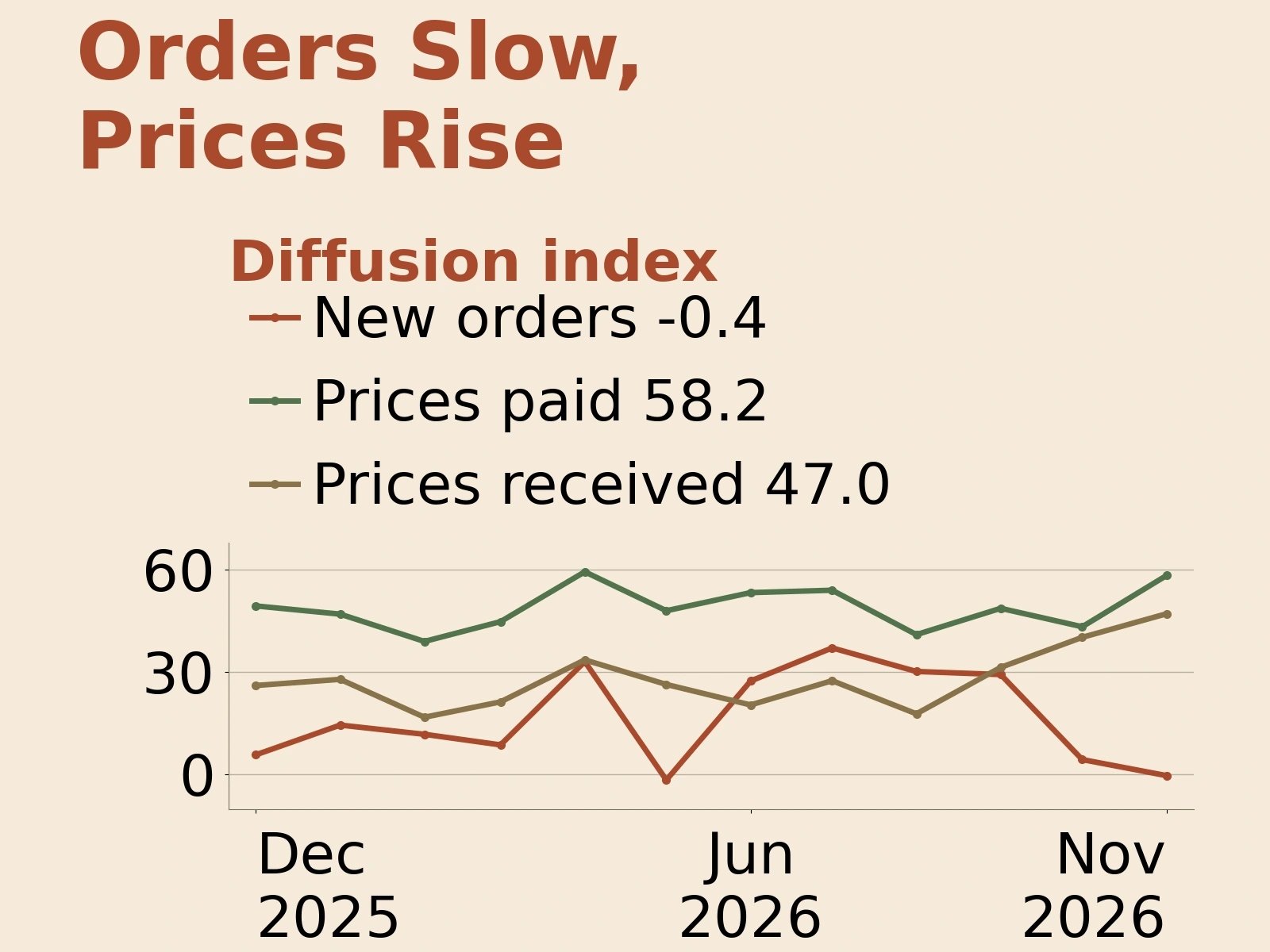
Weaker orders have not halted rising prices. In November, the prices paid index jumped from 43.2 to 58.2, while the prices received index rose from 40.1 to 47.0, its highest reading since June 2022. Slightly more than 48% of respondents raised their selling prices during the month, about 1% cut them, and the remainder left them unchanged.
Firms' responses offer further insight into the current pricing environment. More than four in ten respondents found customers more sensitive to prices than in the previous quarter. Even so, among manufacturers expecting near-term changes in industry costs, 79% expected competitors to follow suit in raising prices. This suggests that, if most firms continue passing costs on to customers, slower growth in new demand alone will take time to bring prices down. How long the price increases can persist will depend on downstream buyers' ability to absorb the new prices.
AI spending lifts demand first; divergent labor data complicate policy choices
Beyond cost pass-through, the new investment cycle is also generating near-term demand pressure. Speaking that day at a conference jointly hosted by the International Monetary Fund (IMF) and Brazil's central bank, Jefferson said that data center construction and purchases of computing equipment had already begun to stimulate demand, whereas AI's contribution to higher productivity and lower inflation might emerge later. According to Reuters, Chicago Fed President Goolsbee also noted at an Economic Club of Indiana luncheon that day that, alongside corporate investment, households might bring consumption forward in anticipation of greater wealth. Both officials focused on the same question: spending is already taking place, but when will additional productive capacity catch up?
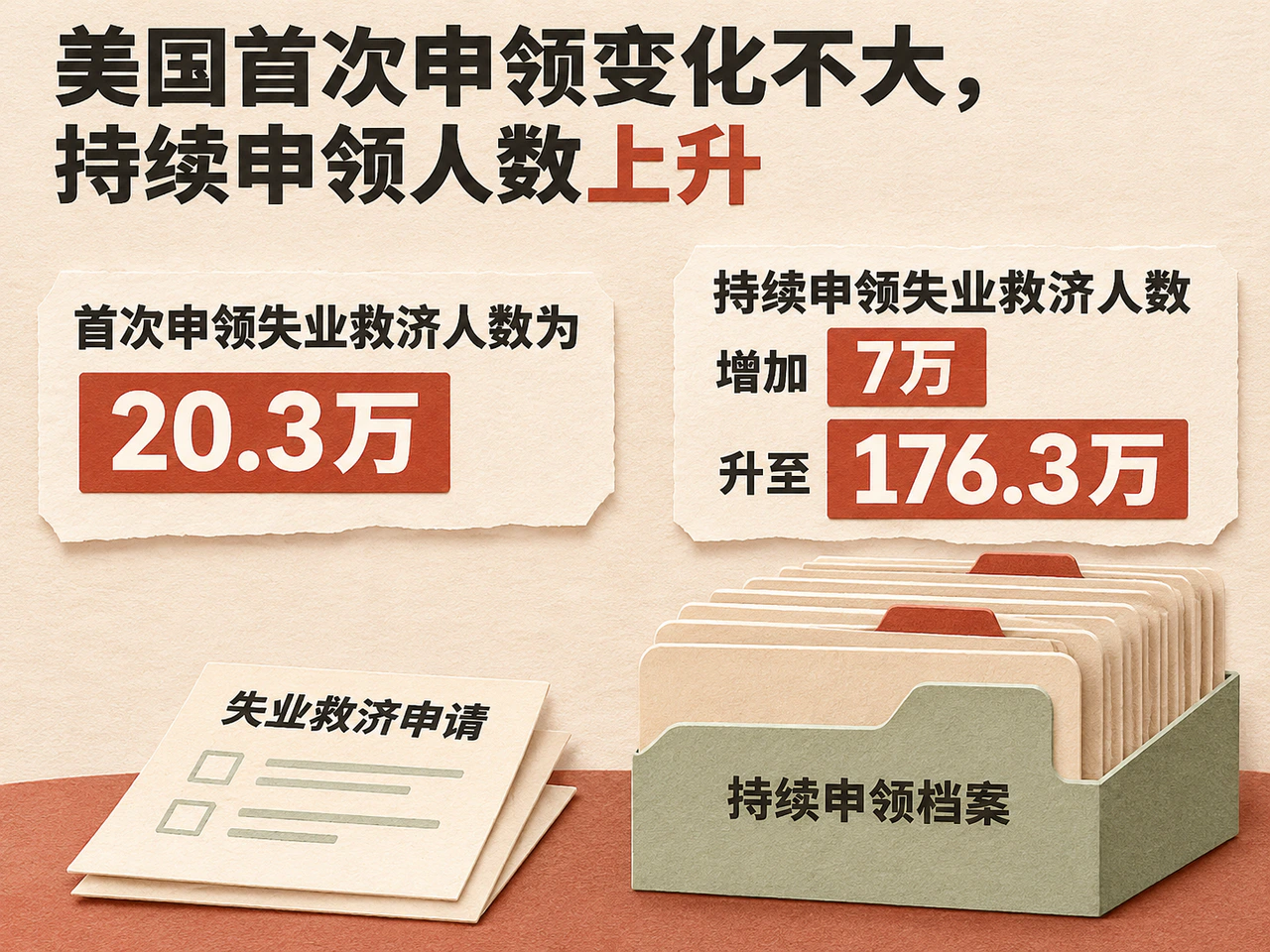
Meanwhile, divergent labor market data make it harder to calibrate policy. U.S. Department of Labor data released on November 19 showed seasonally adjusted initial unemployment claims of 203,000 for the week ended November 14, up just 1,000 from the revised prior reading. Continuing claims, however, increased by 70,000 to 1.763 million in the week ended November 7. Initial claims changed little while continuing claims rose; whether this pattern persists remains to be seen. Jefferson set out a framework for weighing these risks: if inflation expectations threaten to become unanchored, monetary policy needs to respond more forcefully to prices; if price pressures are contained, downside employment risks should carry more weight.
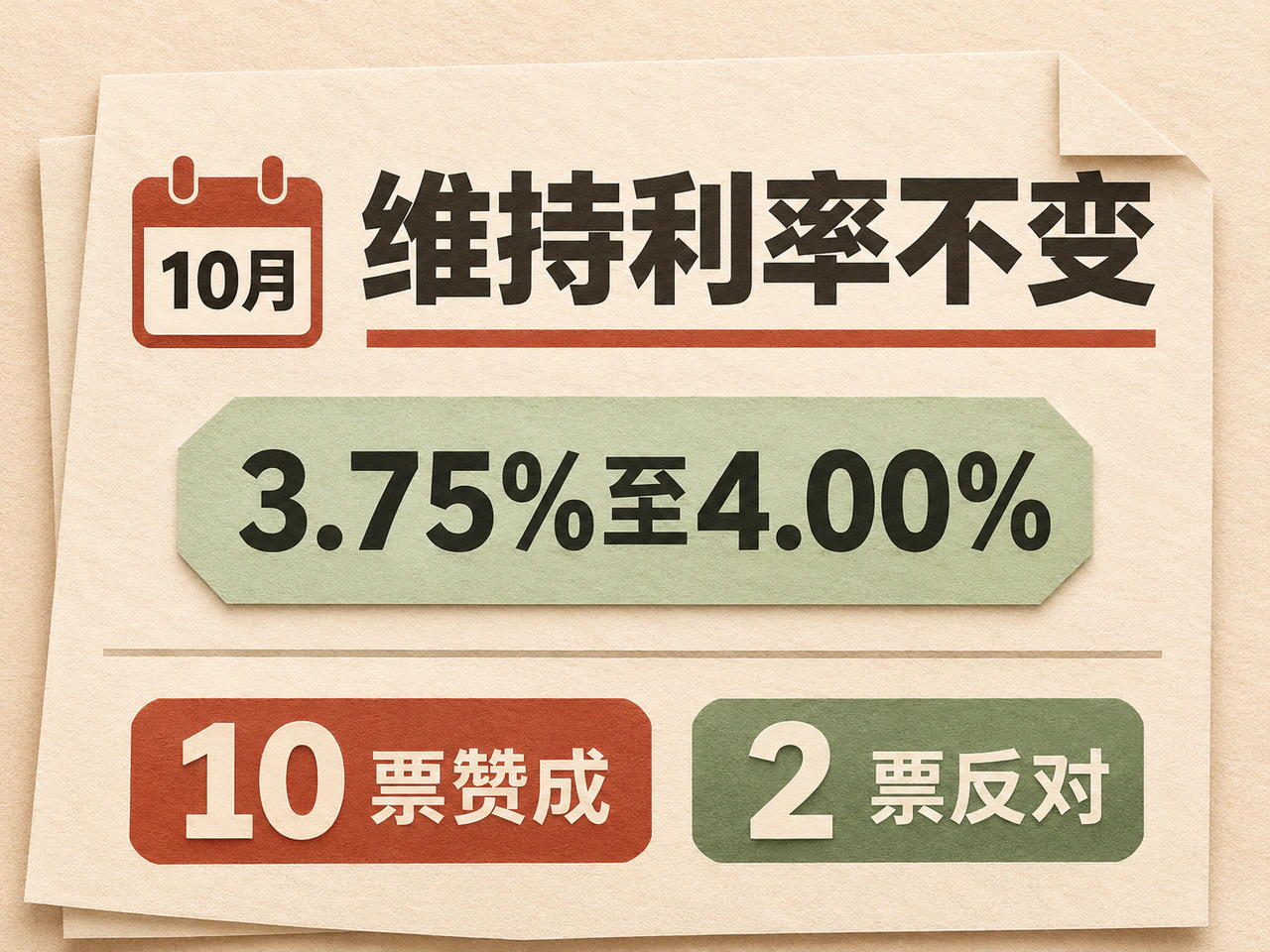
On October 28, the Fed held the target range for the federal funds rate at 3.75%–4.00%. Its next policy meeting will take place on December 8–9. Before that meeting, the Philadelphia Fed will release its Survey of Prices and Inflation Expectations on November 25, providing an important clue to how long firms expect price increases to last. If businesses expect a longer cycle of price increases, the case for further policy tightening will strengthen. Conversely, if weak orders begin to feed through to labor demand, the employment cost of raising interest rates will also increase.