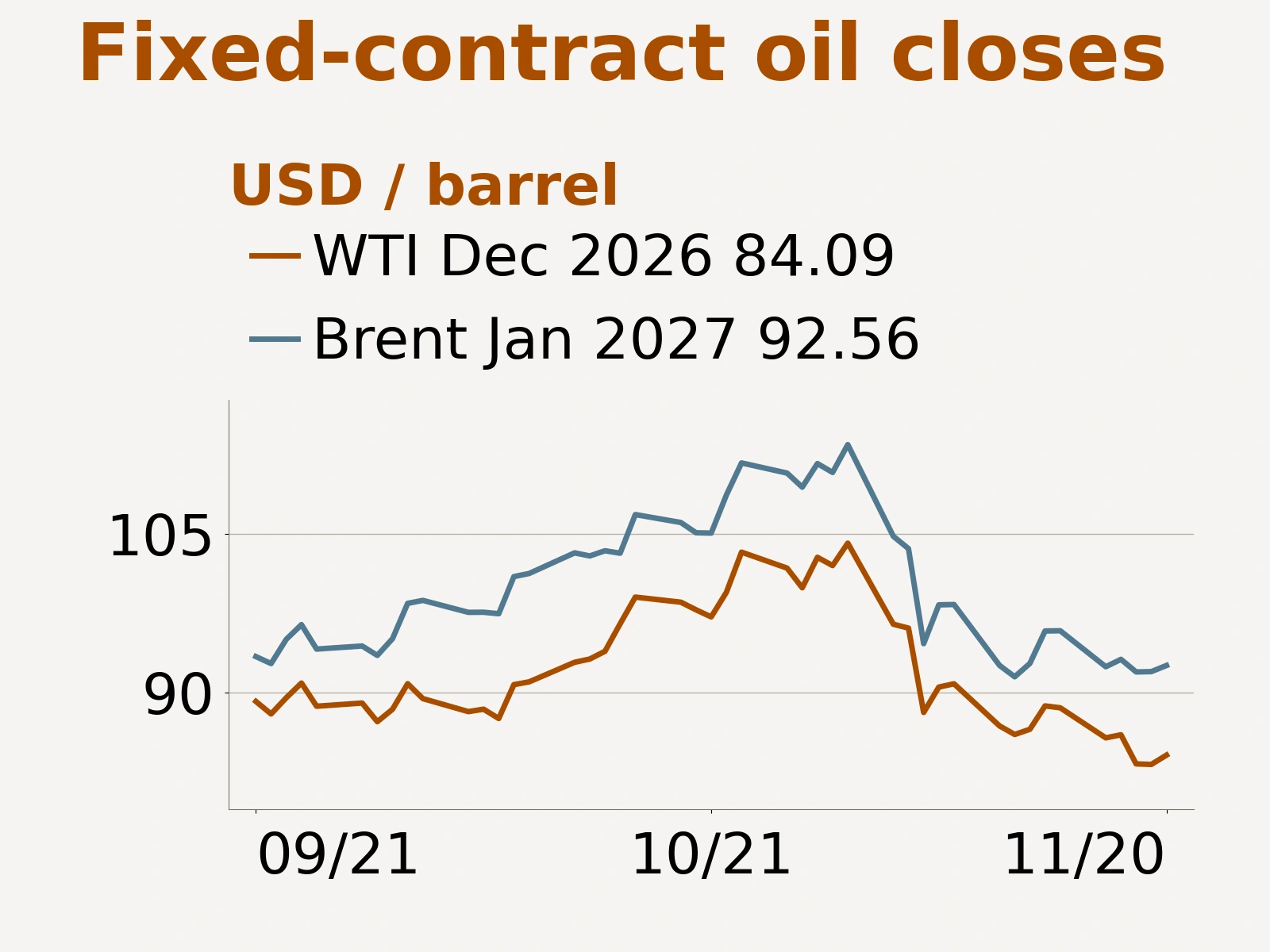
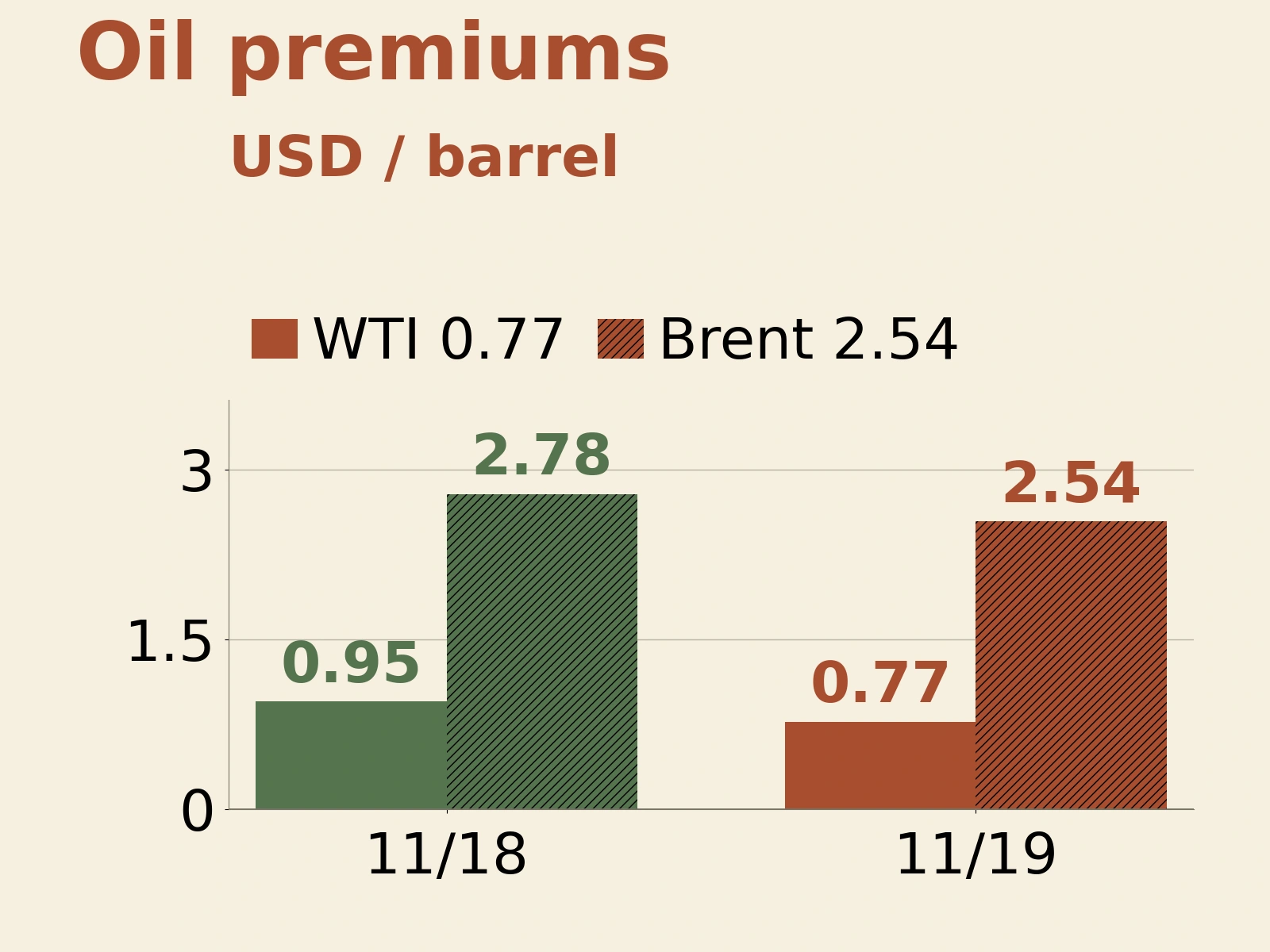
On November 20, 2026, January 2027 Brent crude settled at $92.57 a barrel and December 2026 WTI at $83.98. Both rebounded on Friday, but fell 3.41% and 5.17%, respectively, over the week, calculated from daily closing prices for continuous futures. Recovering Gulf exports prompted traders to reassess supply over the coming months, while increases in US crude and gasoline inventories added pressure. Prices declined over the week, yet during Friday's session December 2026 WTI still traded above January 2027 WTI, leaving a premium for earlier delivery of US crude.
Losses came early in the week; the front month still commanded a premium on Friday
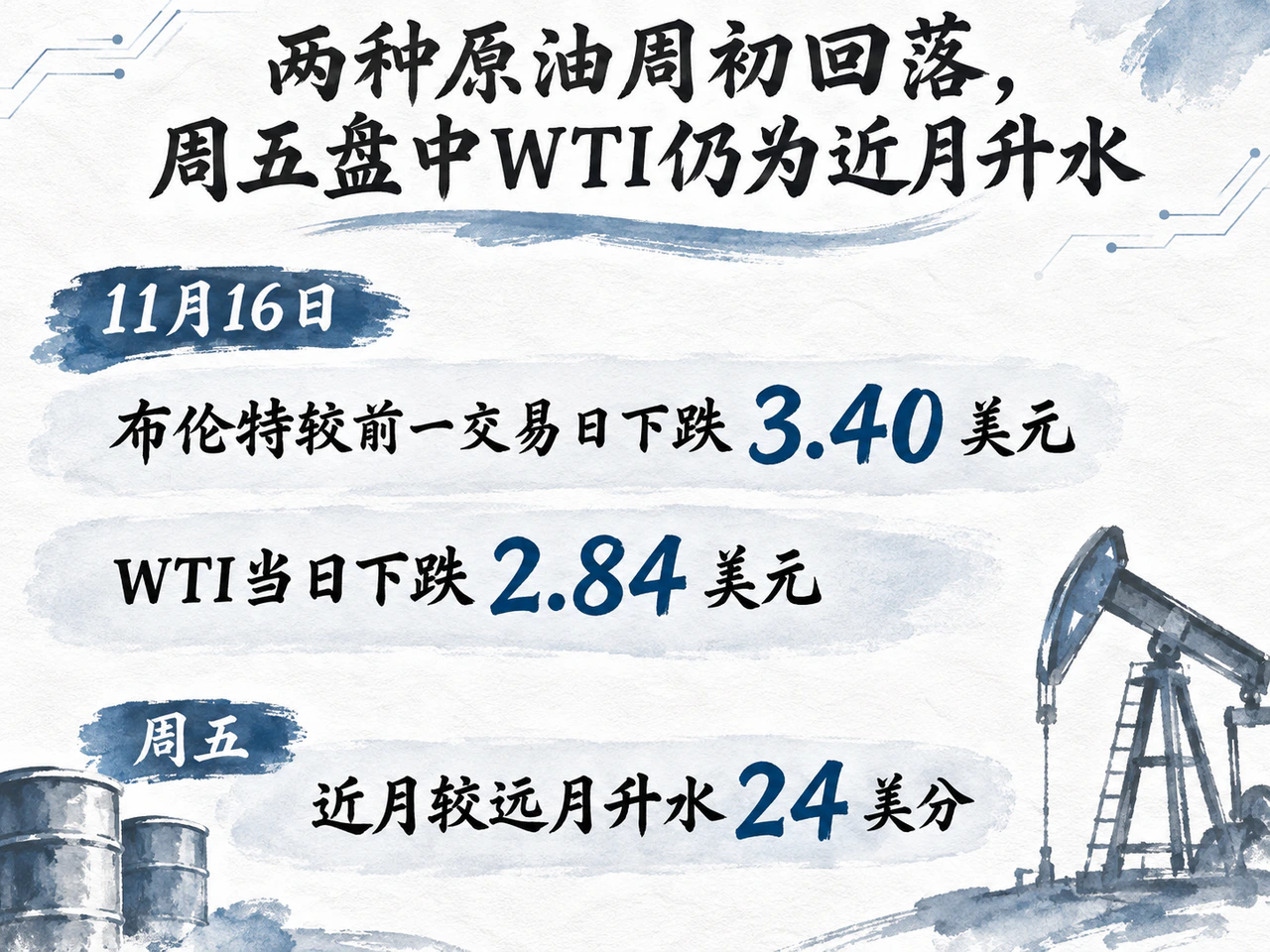
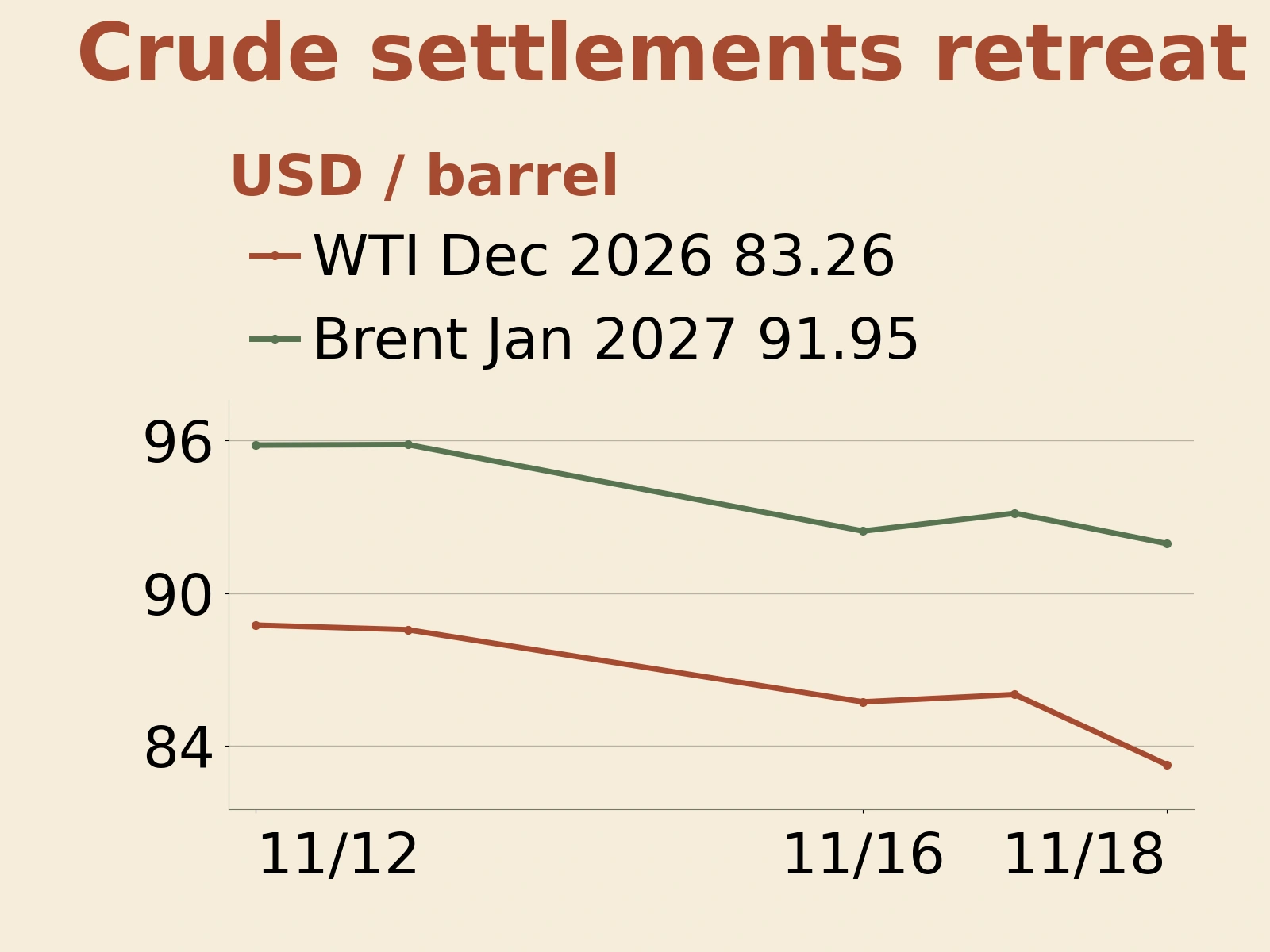
On November 16, Brent fell $3.40 from the previous session to $92.44; that single day's decline exceeded the net loss for the entire week. WTI fell $2.84 to $85.72 that day, recovered slightly on Tuesday, then dropped again to $83.26 on Wednesday; Brent closed at $91.95 on the same day. Supply expectations had already shifted the previous Friday: in its November 13 monthly report, the International Energy Agency (IEA) raised its fourth-quarter global oil supply estimate by 3.3 million barrels a day and projected a surplus for the quarter, reversing its previous expectation of a deficit. Its estimate put supply about 1.7 million barrels a day above demand during the quarter.
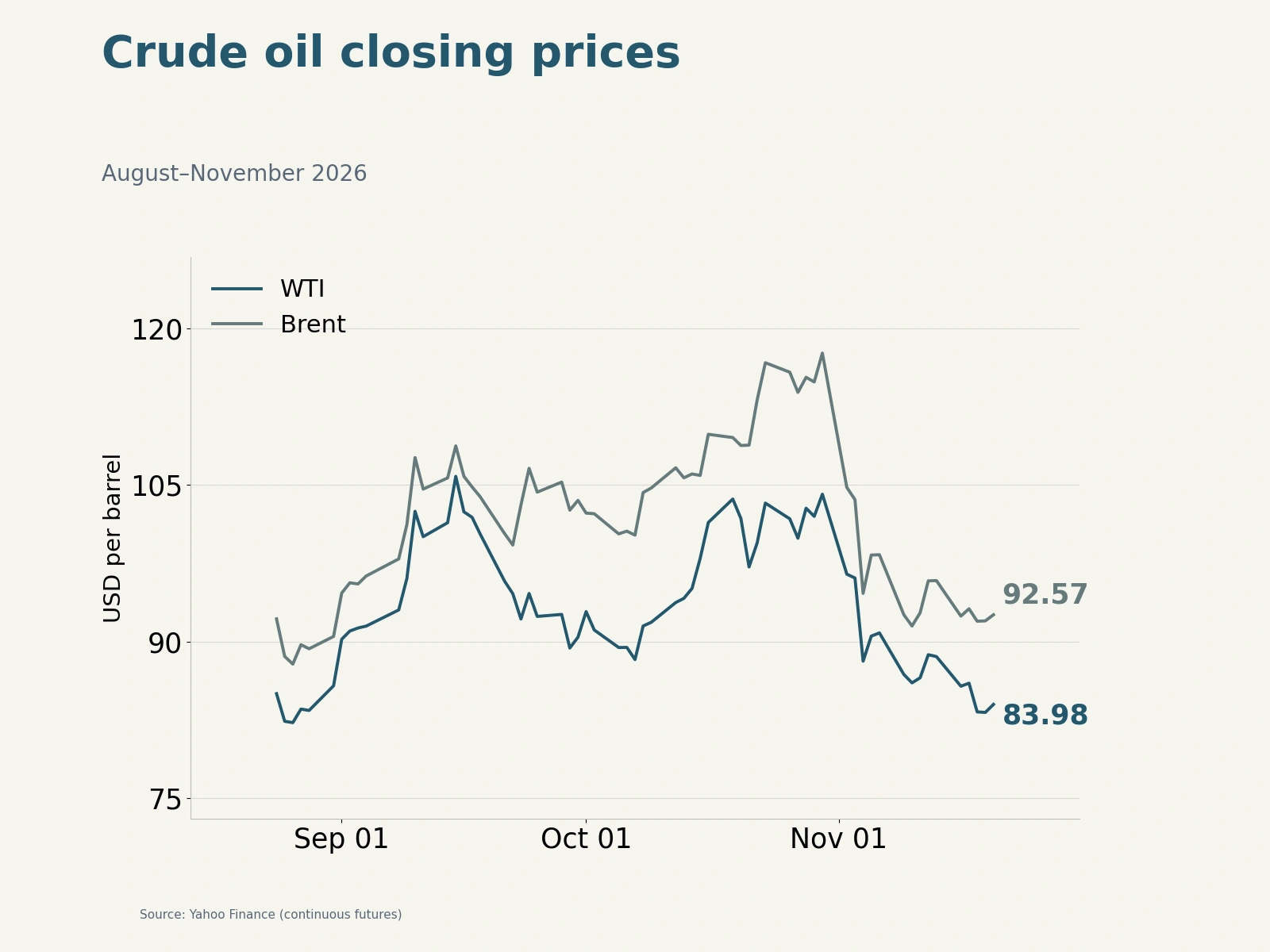
At 13:10 GMT on Friday, December 2026 and January 2027 WTI were quoted at $82.10 and $81.86 a barrel, respectively, giving the front month a 24-cent premium over the later contract. January 2027 had already become the more actively traded contract. At that point, buyers were willing to pay a little more for delivery a month earlier. The week's decline had not eliminated that front-month premium. Reuters cited traders as saying that short covering ahead of Thanksgiving and Middle East risks brought buying late on Friday. The dollar index rose about 0.39% during the week, while the S&P 500 fell 8.61%; Friday's oil rebound failed to recover the losses from earlier in the week.
More oil at sea, but onshore inventories remain low
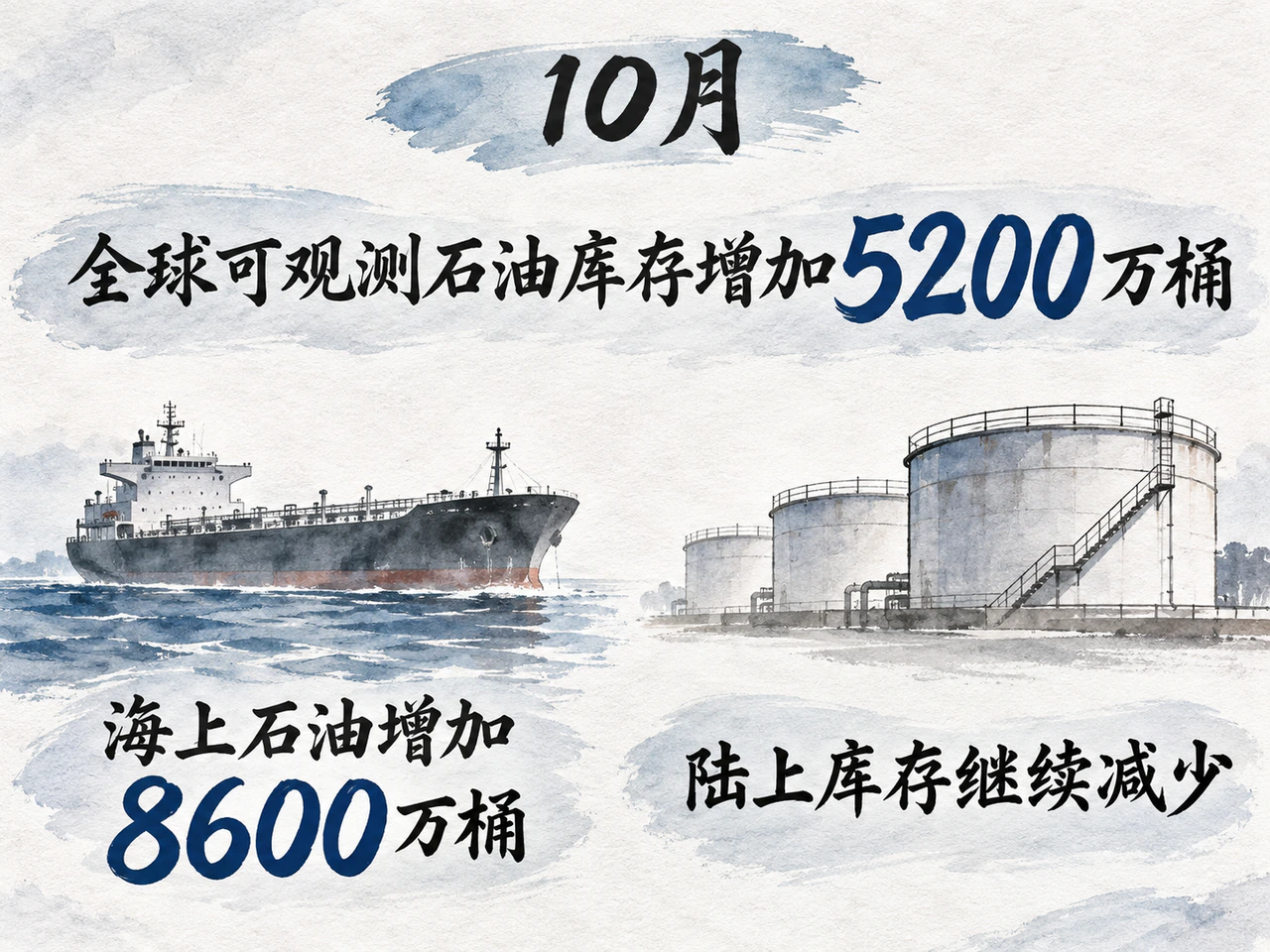
The extent of the recovery in Gulf exports depends on the measurement period. The IEA estimated that October crude exports from the Gulf, excluding Oman, recovered to 15 million barrels a day, equivalent to 82% of the prewar level. Global observed oil inventories increased by 52 million barrels that month; oil on water rose by 86 million barrels, while onshore stocks continued to decline to their lowest level since at least 2016. More crude had been loaded onto ships, but refiners could use it only after those ships reached port and unloaded. Uncertainty over maritime transport could still affect prices for near-term delivery.
November shipping volumes also saw setbacks. On November 20, the Associated Press cited Rystad Energy estimates showing that the Middle Eastern oil shipments it tracked fell by roughly one-fifth from October to about 13 million barrels a day in the first half of November. The transport routes included passage through the strait and pipeline alternatives. Rystad attributed part of the decline to shipowners' concerns and lower pipeline flows to Saudi Arabia's port of Yanbu. On November 22, Yemen's Houthis claimed an attack on the Rabigh refinery on Saudi Arabia's Red Sea coast. At the time of Reuters' report, the extent of any damage was unclear, and Saudi authorities had not immediately confirmed the claim. For the oil market, subsequent loadings and actual refinery throughput will provide a better measure of supply disruption than the claim itself.
US gasoline stocks are above their five-year average; distillates remain tight
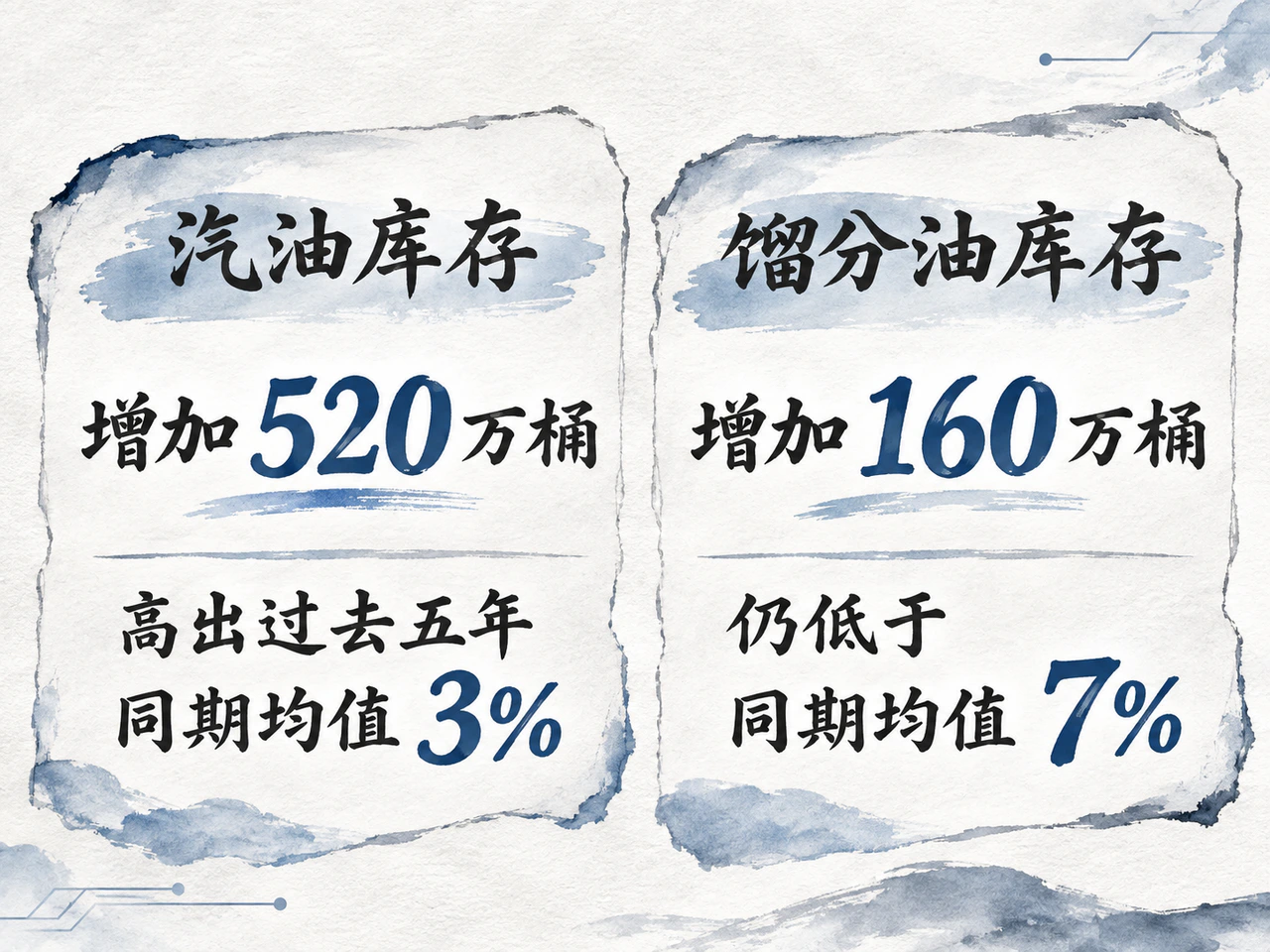
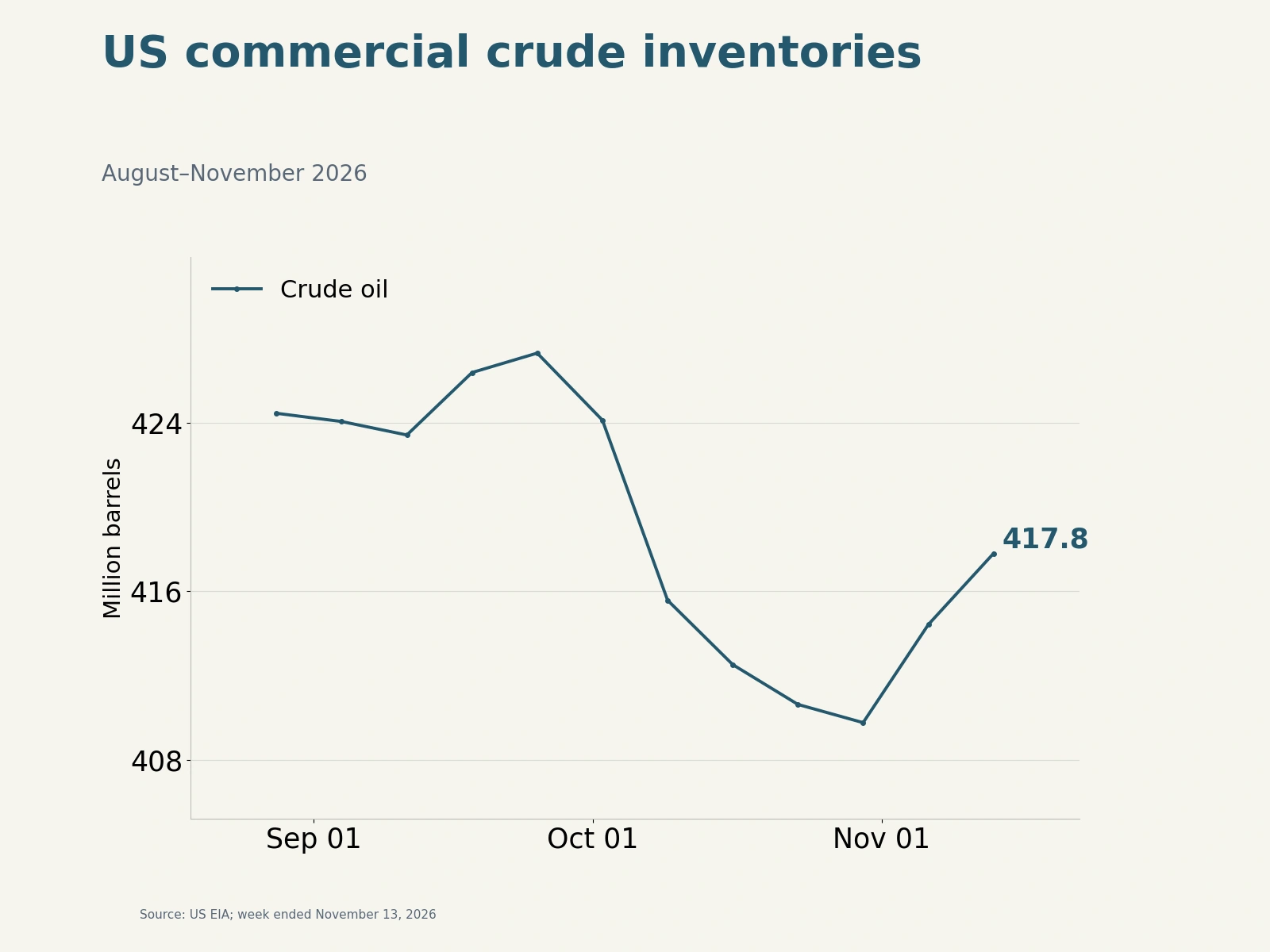
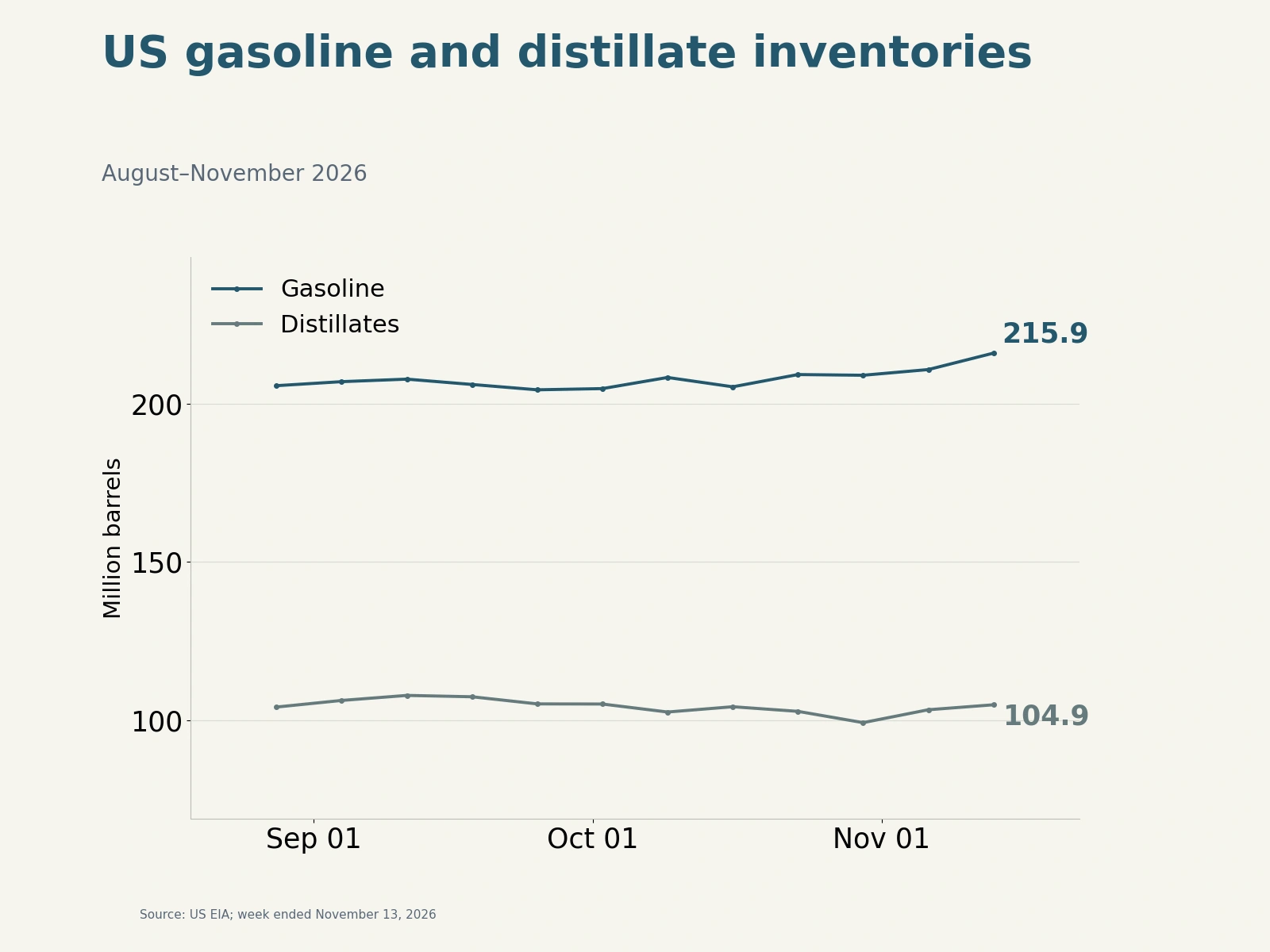
The US Energy Information Administration (EIA) reported on November 18 that commercial crude inventories, excluding the Strategic Petroleum Reserve, rose by 3.4 million barrels to 417.8 million barrels in the week ended November 13. This was the second consecutive weekly increase, although stocks remained 3% below the five-year average for that time of year. Refinery utilization was 95.7%, and crude inputs averaged 16.9 million barrels a day, down 129,000 barrels a day from the previous week. Alongside the crude build, gasoline inventories rose by 5.2 million barrels and were 3% above their five-year seasonal average. Distillate inventories, which include diesel, increased by 1.6 million barrels but remained 7% below their seasonal average. Over the past four weeks, US gasoline product supplied, commonly used as a proxy for demand, was down 1.8% year on year, while distillate product supplied rose 4.3%. Ample gasoline stocks and tight distillate stocks leave refiners facing different sales conditions for the two products.
What to watch next

Two sets of physical-market data merit attention next. If recovering Gulf loadings are followed by sustained increases in onshore inventories in major consuming regions, that would provide more direct support for the IEA's projection of a fourth-quarter surplus. If US crude stocks continue to build while distillate inventories remain well below seasonal averages, diesel prices and refining margins could remain relatively strong compared with crude. On pricing, after the contract roll, the spread between January and February 2027 WTI will be worth tracking: a persistent widening of the front-month premium would indicate stronger demand for earlier delivery. On November 29, the ministerial meeting of OPEC and its partners will discuss production policy for 2027. Its decisions will shape the scope for further output increases next year following the recovery in Gulf supply.