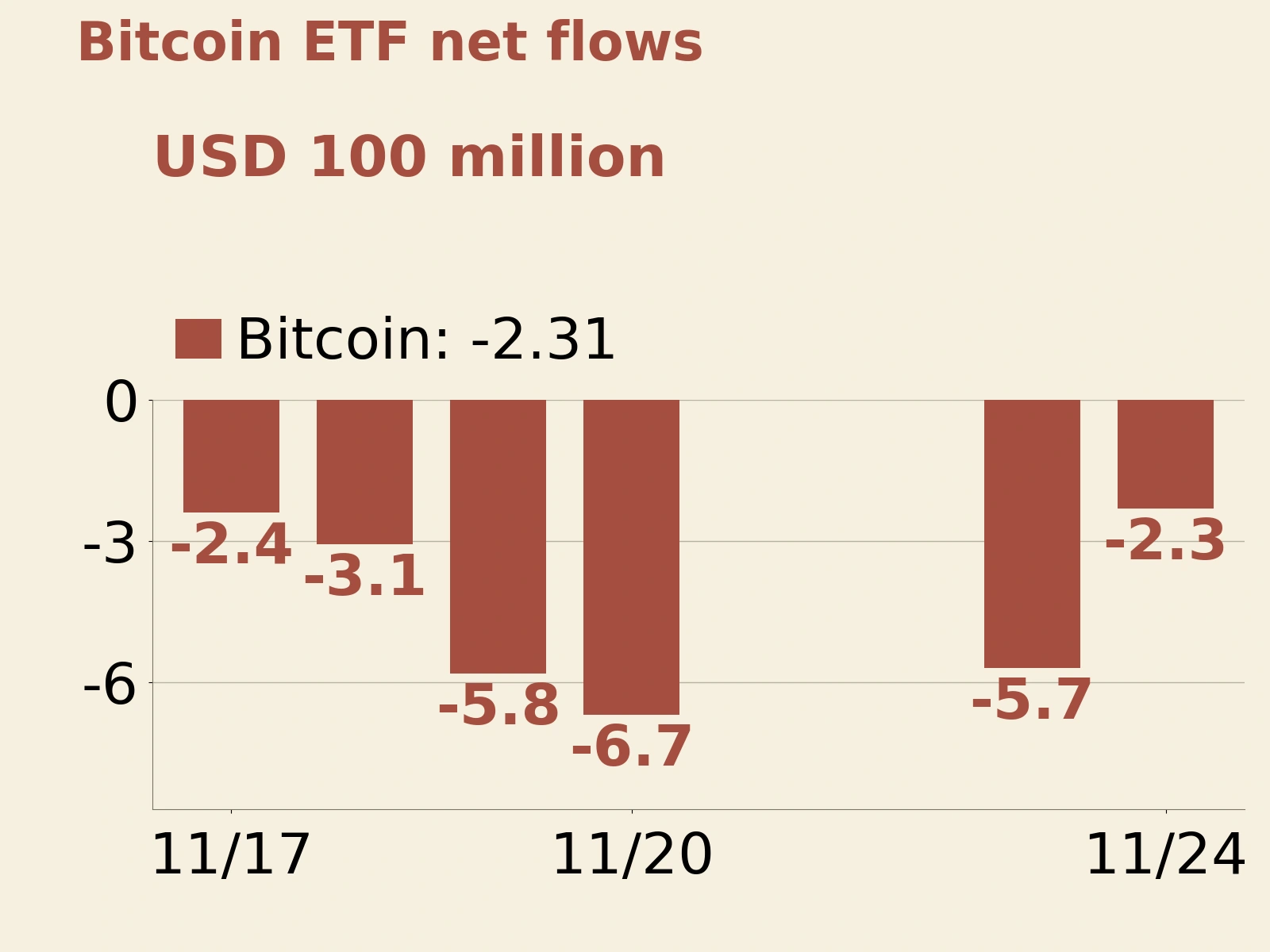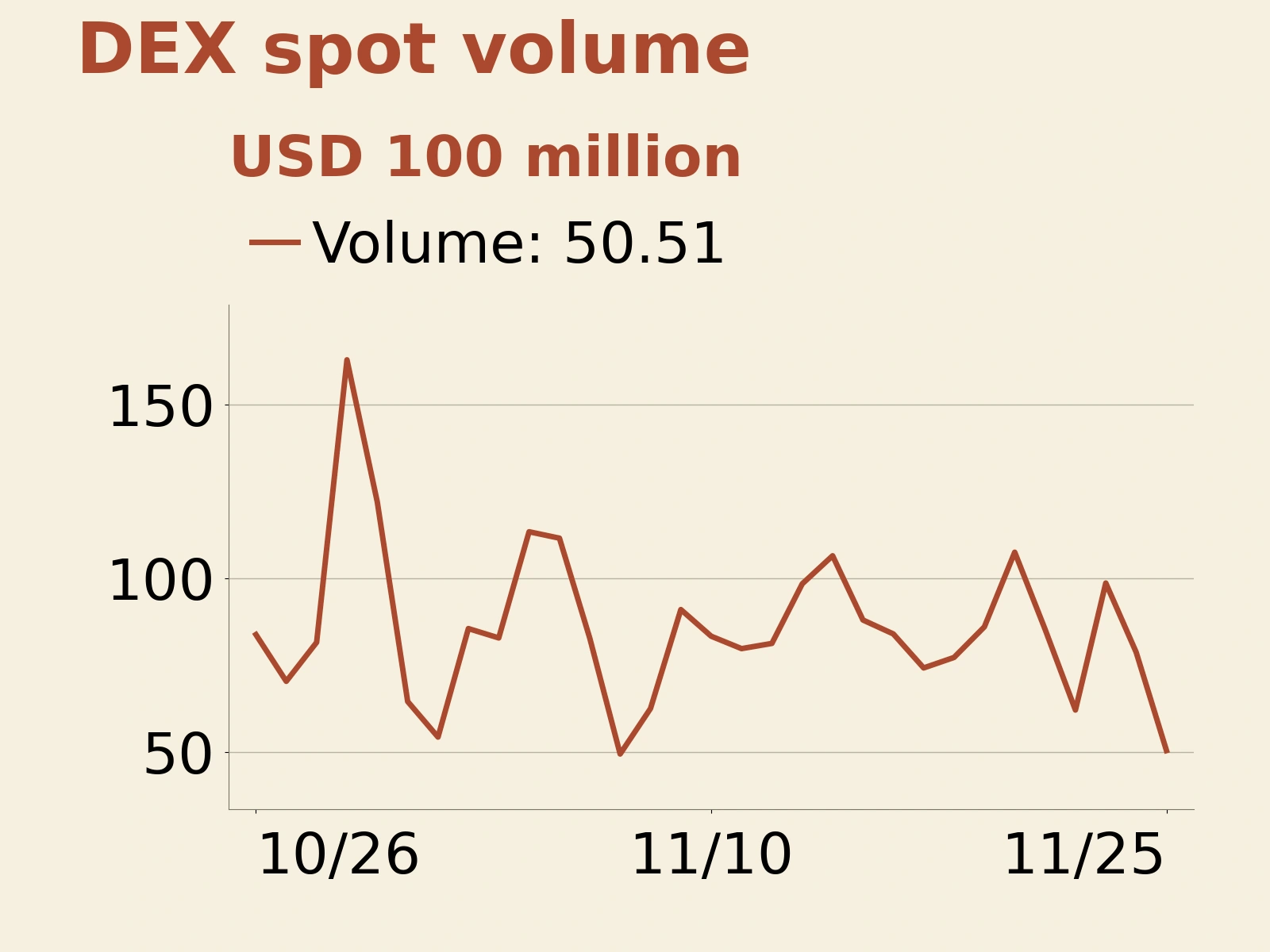
On November 25, Bitcoin fell as low as 57,300.38 USDT after the release of U.S. October inflation data, before recovering. On Binance spot USDT pairs, the UTC daily session ended at 8 a.m. Beijing time on November 26 with Bitcoin at 60,458.01 USDT, up 1.05% from the previous close, and Ether at 1,692.65 USDT, up 0.75%. Bitcoin rebounded about 5.5% from its intraday low to the close, far more than its daily closing gain.
Selling after the inflation release continued into the U.S. equity session

The U.S. Bureau of Economic Analysis released October personal consumption expenditures data at 8:30 a.m. Eastern time on November 25. The PCE price index rose 3.8% year over year, while the core index, which excludes food and energy, rose 3.3%. Both indexes increased 0.3% month over month. Bitcoin was already below its previous closing price of 59,832 USDT before the release. In the 15 minutes beginning at 8:30 a.m., its Binance spot price fell from 58,858 to 58,298 USDT; over the following 15 minutes, it fell further to around 58,081 USDT.
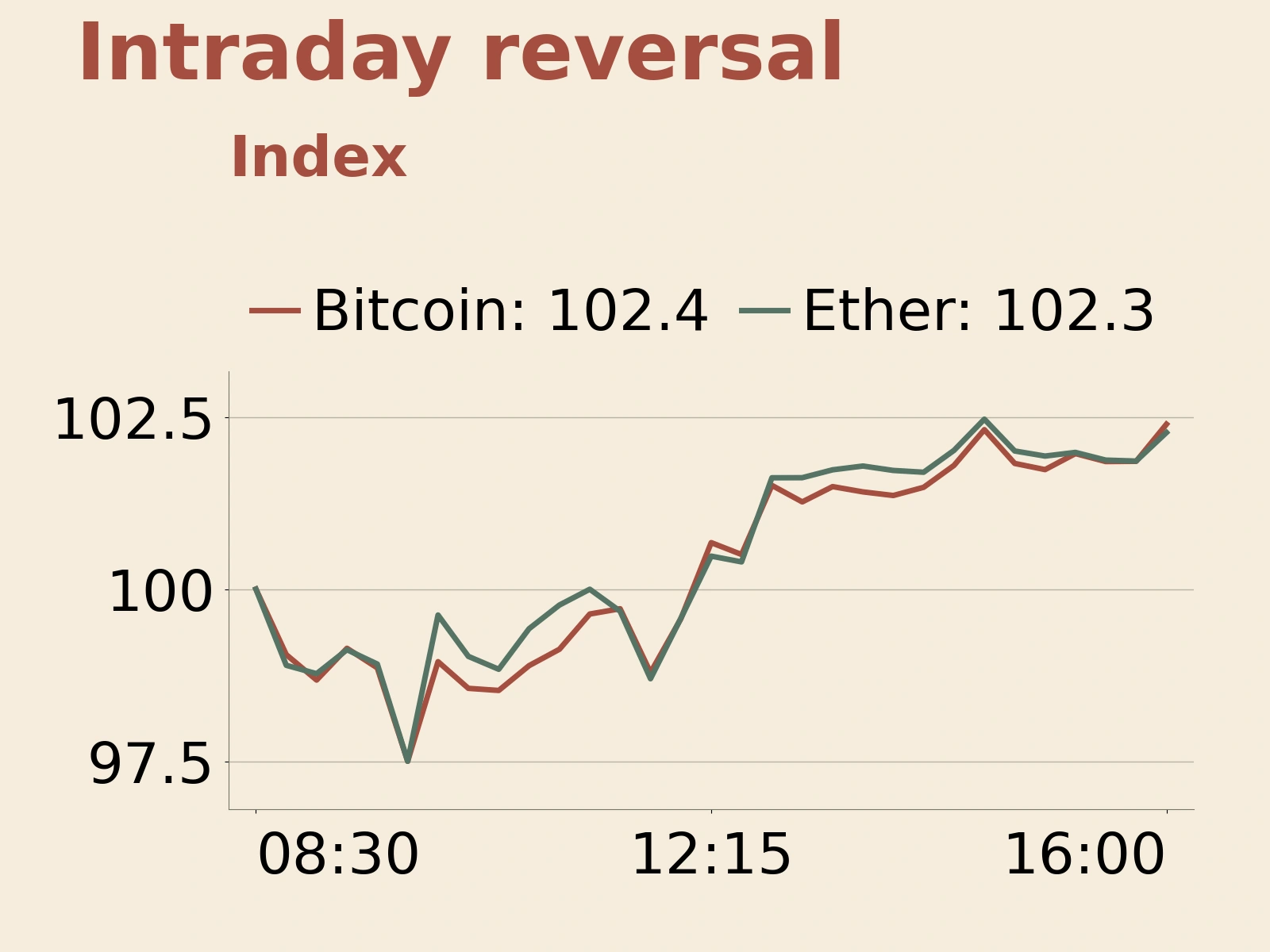
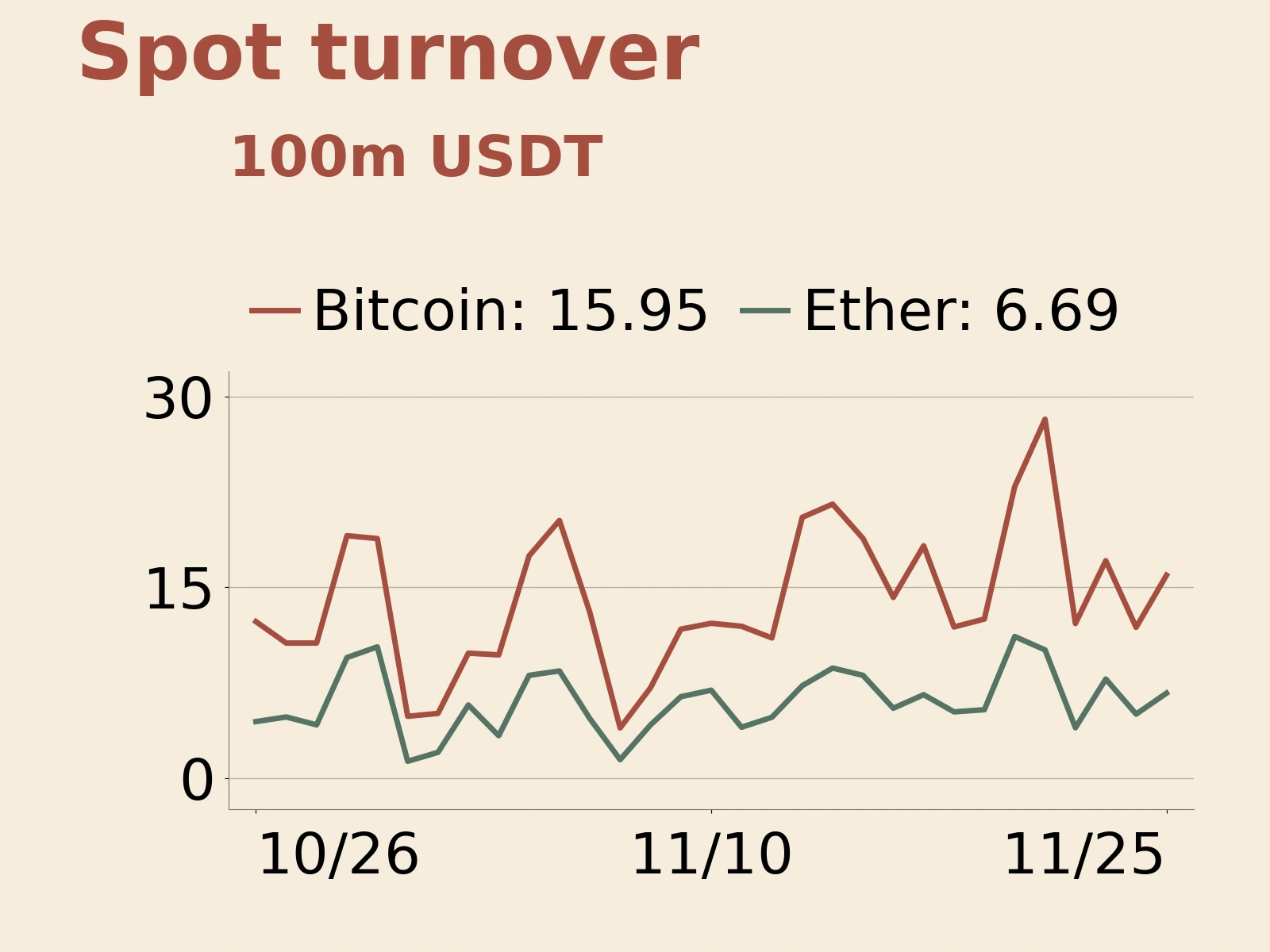
Selling continued after U.S. stocks opened. Between 9:45 and 10 a.m. Eastern time, Bitcoin and Ether both hit their intraday lows, at 57,300.38 and 1,608.86 USDT, respectively. By the U.S. equity close, Bitcoin had returned above 60,200 USDT. Full-day Binance spot turnover reached 1.595 billion USDT for Bitcoin, up 34.5% from the previous day, and 669 million USDT for Ether, up 32.6%. Both the decline and the recovery took place during this session of higher turnover. Full-day turnover alone cannot show how much represented fresh buying and how much represented positions being closed.
U.S. stocks also recovered from their intraday lows, but the three major indexes finished mixed. According to Reuters, the Nasdaq Composite fell more than 4% at one point before closing down 0.62%; the S&P 500 fell 0.25%, while the Dow Jones Industrial Average rose 0.33%. Alongside inflation, technology investors were also digesting valuation pressure in artificial intelligence stocks and newly proposed U.S. tariff measures.
Bitcoin had weakened before U.S. stocks opened and was above its previous Binance daily close by the time the equity session ended. Both Bitcoin and U.S. stocks recovered from lows within a few hours, but their closing returns differed. Fabian Dori, chief investment officer at Sygnum Bank, told The Block that day that the inflation data had done little to alter the market's existing assessment of December interest rates; the more significant question was how long monetary tightness would persist thereafter.
All eight major coins rose, but all remained down over 30 days

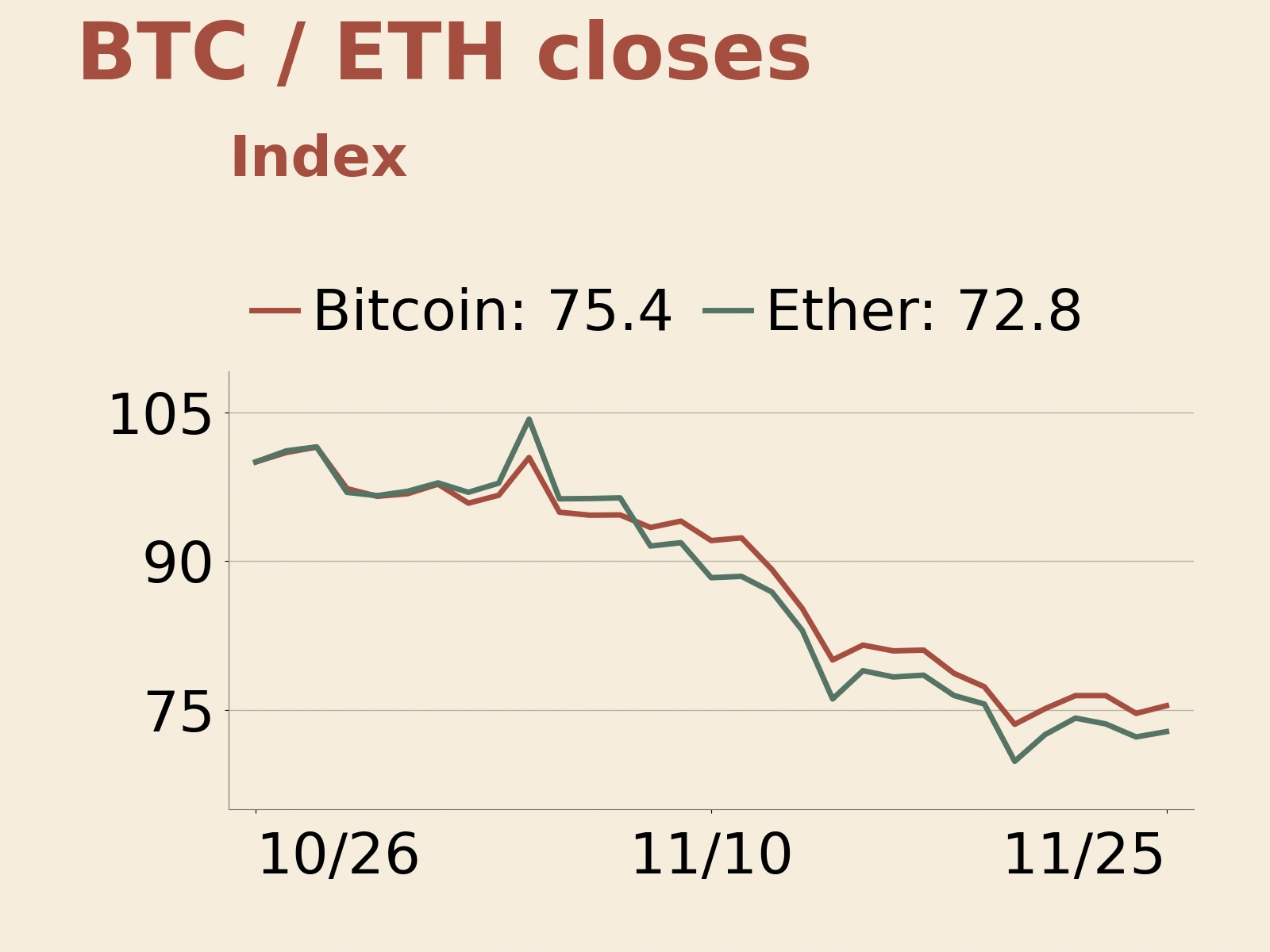
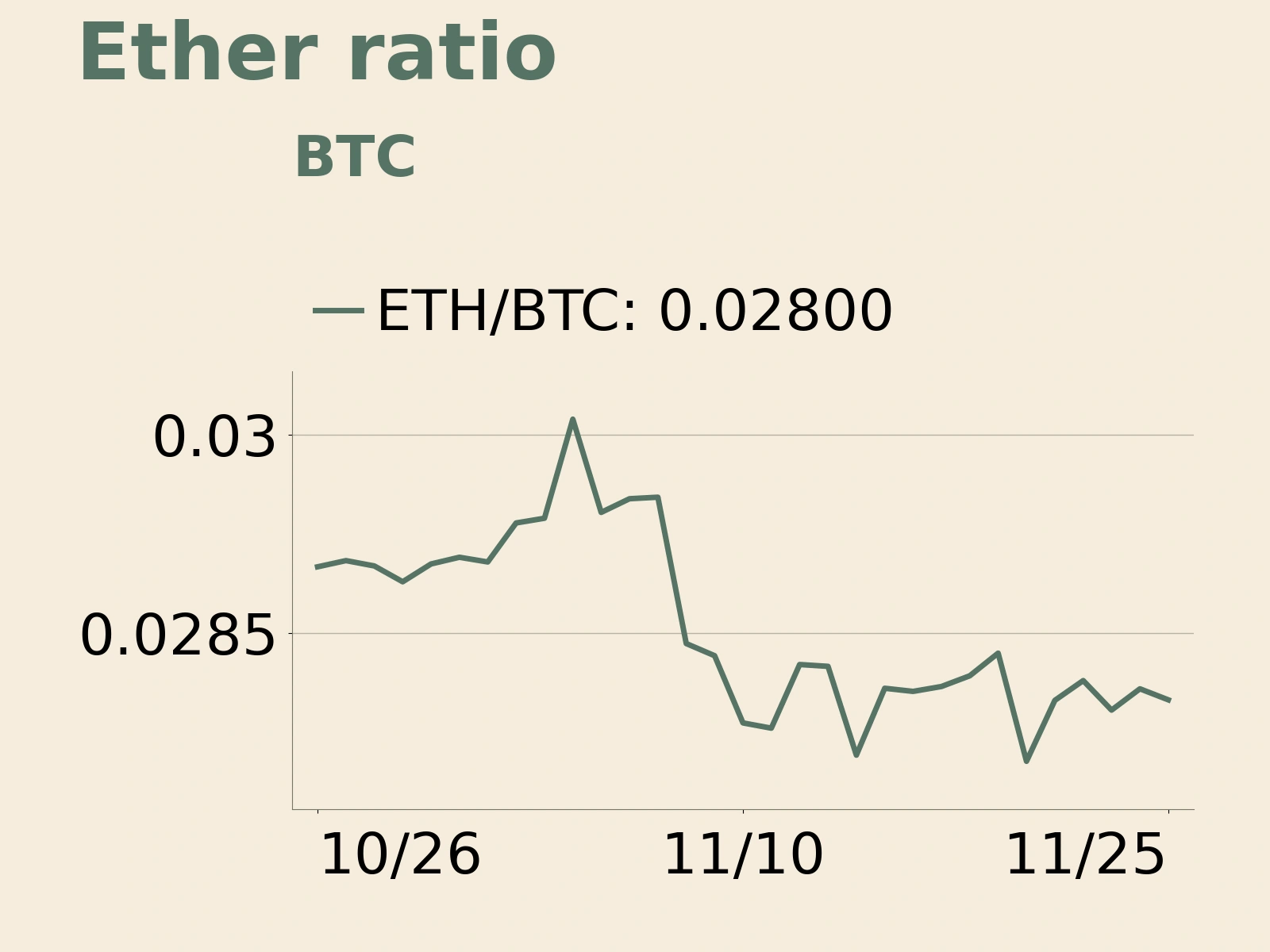
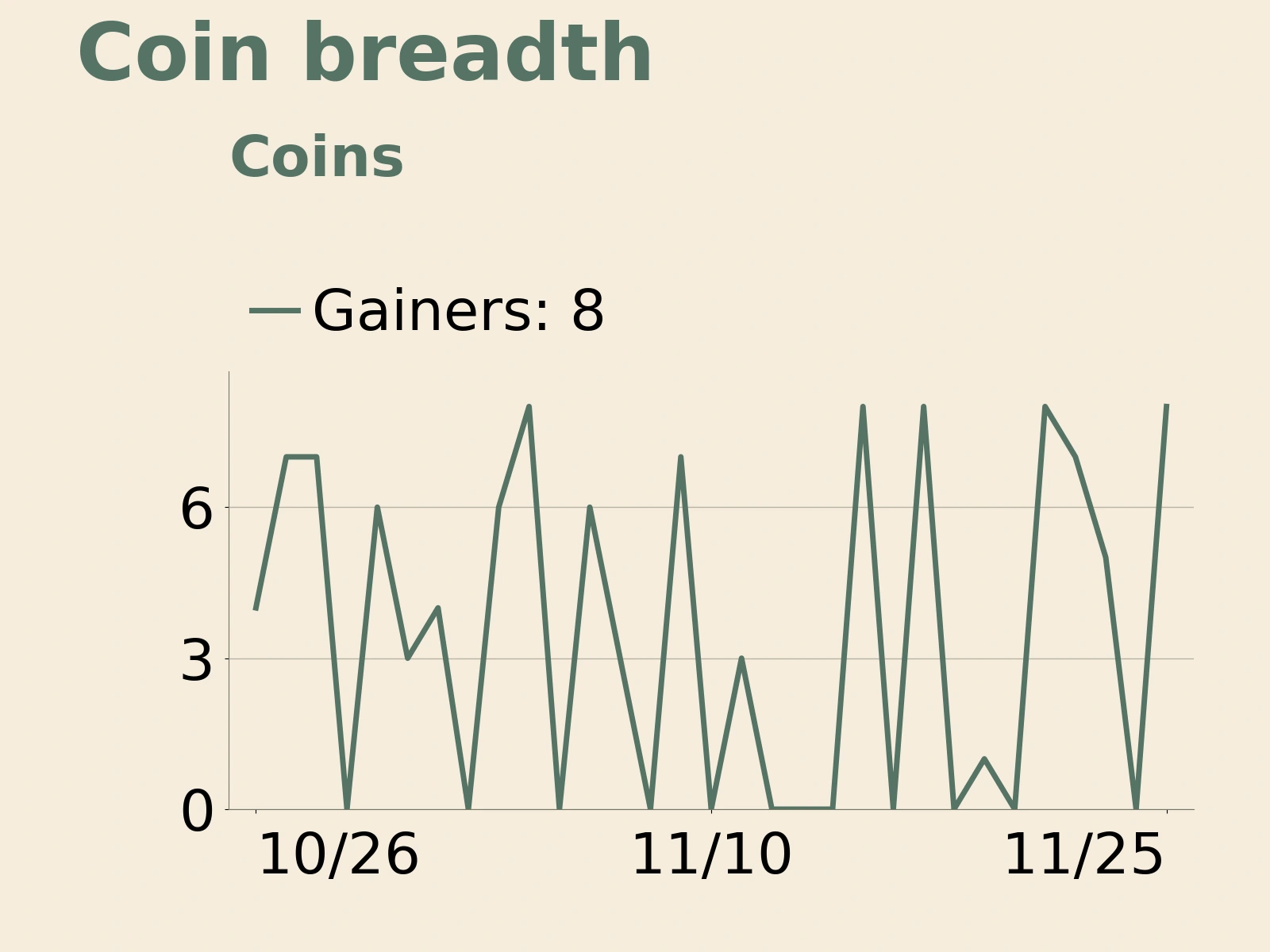
All eight major coins in the fixed Binance sample closed higher. LINK gained 2.30%, XRP 1.38%, DOGE 1.32% and SOL 1.12%; BNB and ADA rose 0.99% and 0.90%, respectively. Ether posted the smallest gain in the group. Based on their USDT closing prices, one Ether was worth approximately 0.0280 Bitcoin, slightly less than the previous day. An intraday Dextape snapshot taken 15 minutes before the inflation release put Bitcoin at 57.7% of global crypto asset market capitalization.
Over a 30-day comparison period, all eight assets were still lower. Bitcoin was down 24.57%, Ether 27.18% and SOL 30.19%. LINK, the day's strongest performer, was still down 20.60% over 30 days. The broad daily advance shows that buying at lower levels had spread across several coins, but one day's rebound repaired only a small part of the preceding losses.
Institutions differ on how long the buying can last. Speaking to The Block on November 25, CoinShares head of research James Butterfill said the bear market might be nearing its end. Yet even if Bitcoin returned to his expected range of $60,000–$90,000, a further upside breakout would still require a substantial shift in monetary policy expectations. Matt Mena, a research strategist at 21Shares, argued that a sustained move back above $65,000 would strengthen the case that a bottom had formed near $55,000.
For reference, Glassnode estimated in its November 24 report that the aggregate average cost basis, calculated using the price at which each bitcoin last moved on-chain, was approximately $53,200. Mena said that a sustained break below roughly $53,000 could take the market back into the $40,000 range.
Reclaiming 60,000 improved the day's closing performance. Whether the rebound can continue depends on whether prices can subsequently hold at higher levels.
Click “Read the original” for full details.