On November 25, spot trading volume on decentralized exchanges (DEXs) tracked by DefiLlama fell to $5.051 billion, down 35.9% from the previous day. Aave Labs opened registration for its mobile savings app to the public on the same day, removing the invitation-code requirement. Users can fund their accounts through bank transfers or stablecoins, and the app allocates the money to onchain lending markets. User fees on the Aave protocol increased by about $174,700 from the previous day. Trading volume and lending fees reflect different activities: a swap counts toward volume once it is completed, while an outstanding loan can continue to accrue interest.
DEX spot volume contracts; Base and Arbitrum post modest gains
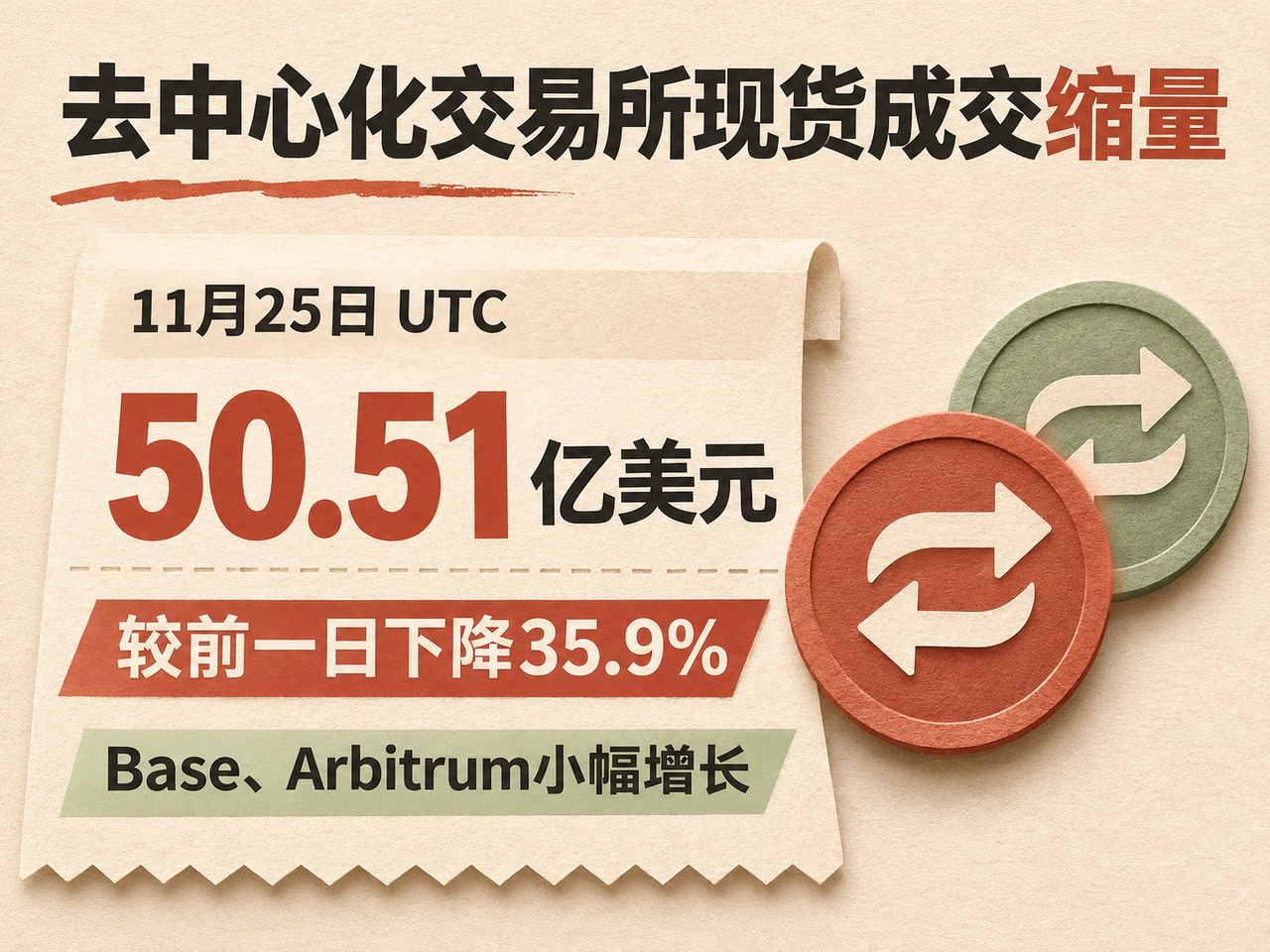
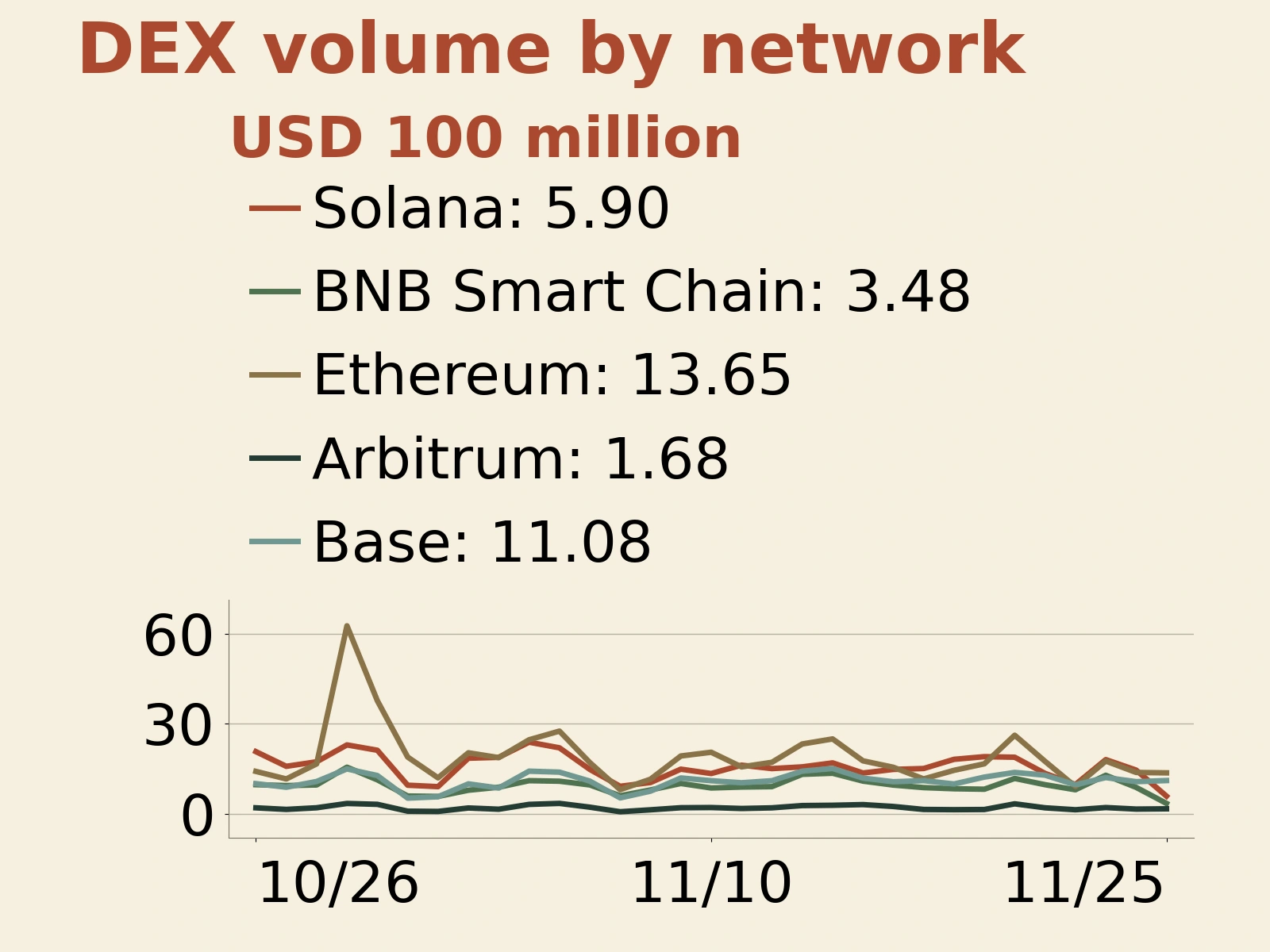
According to data recorded by DefiLlama as of the morning of November 26, Beijing time, DEX spot volume for the full UTC day of November 25 was $5.051 billion, down 35.9% from $7.879 billion the previous day and below the preceding 30 days' median daily volume of $8.361 billion. The platform may add or revise historical trades; the comparison between the two days uses the same data snapshot.
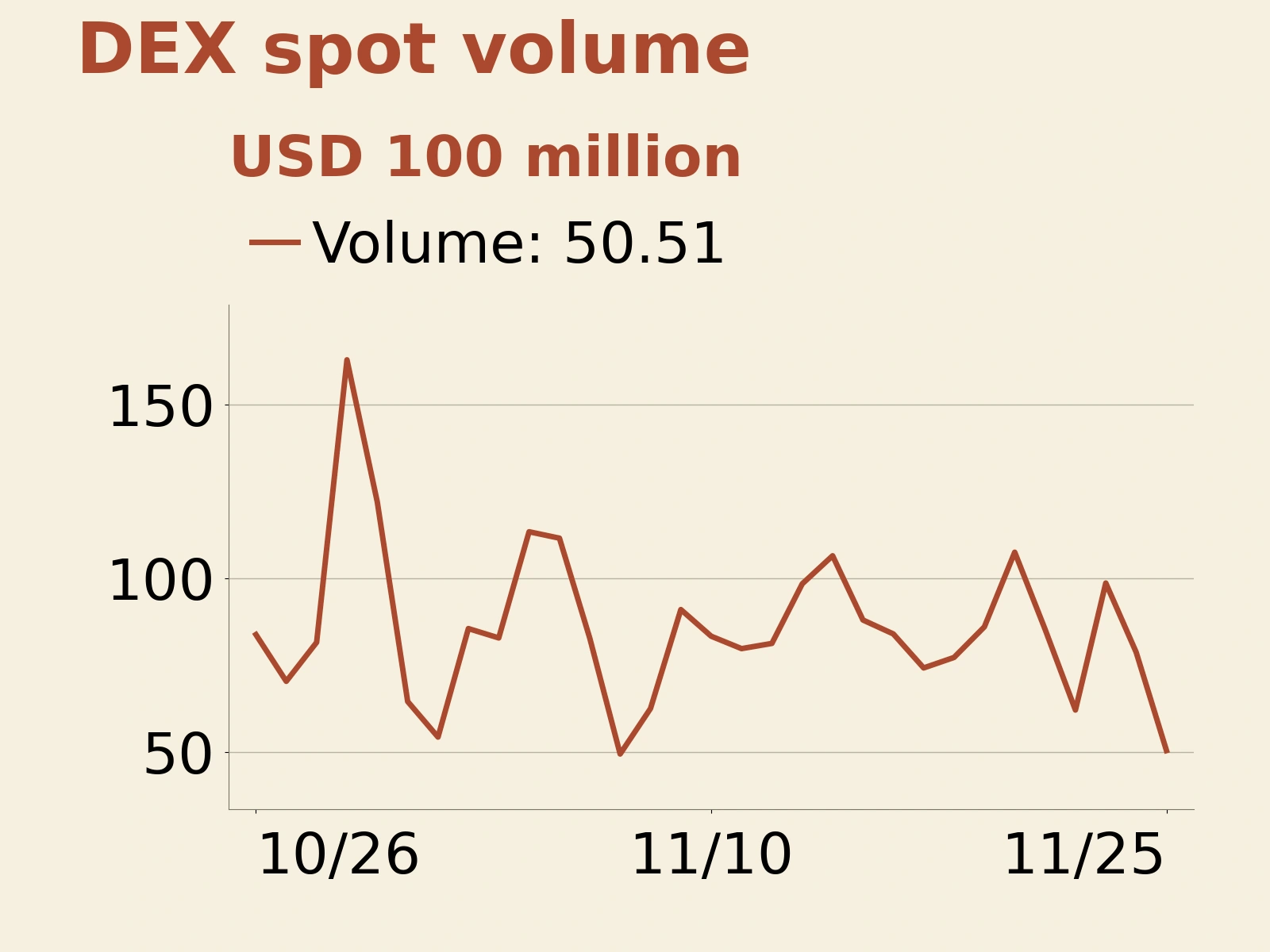
Changes in trading volume varied markedly across networks. Solana recorded $590 million that day, a decrease of $867 million from the previous day; BNB Smart Chain recorded $348 million, a decline of $534 million. Together, the two chains accounted for a decrease of about $1.4 billion, nearly half the industry's recorded decline over the same period. Ethereum mainnet volume was $1.365 billion, down about 1%. Two of its layer 2 networks posted modest gains: Base rose 3.4% to $1.108 billion, while Arbitrum increased 5.5% to $168 million. The recorded data show that the contraction was concentrated in Solana and BNB Smart Chain. Determining whether assets migrated between chains also requires examining cross-chain transfers and account balances.
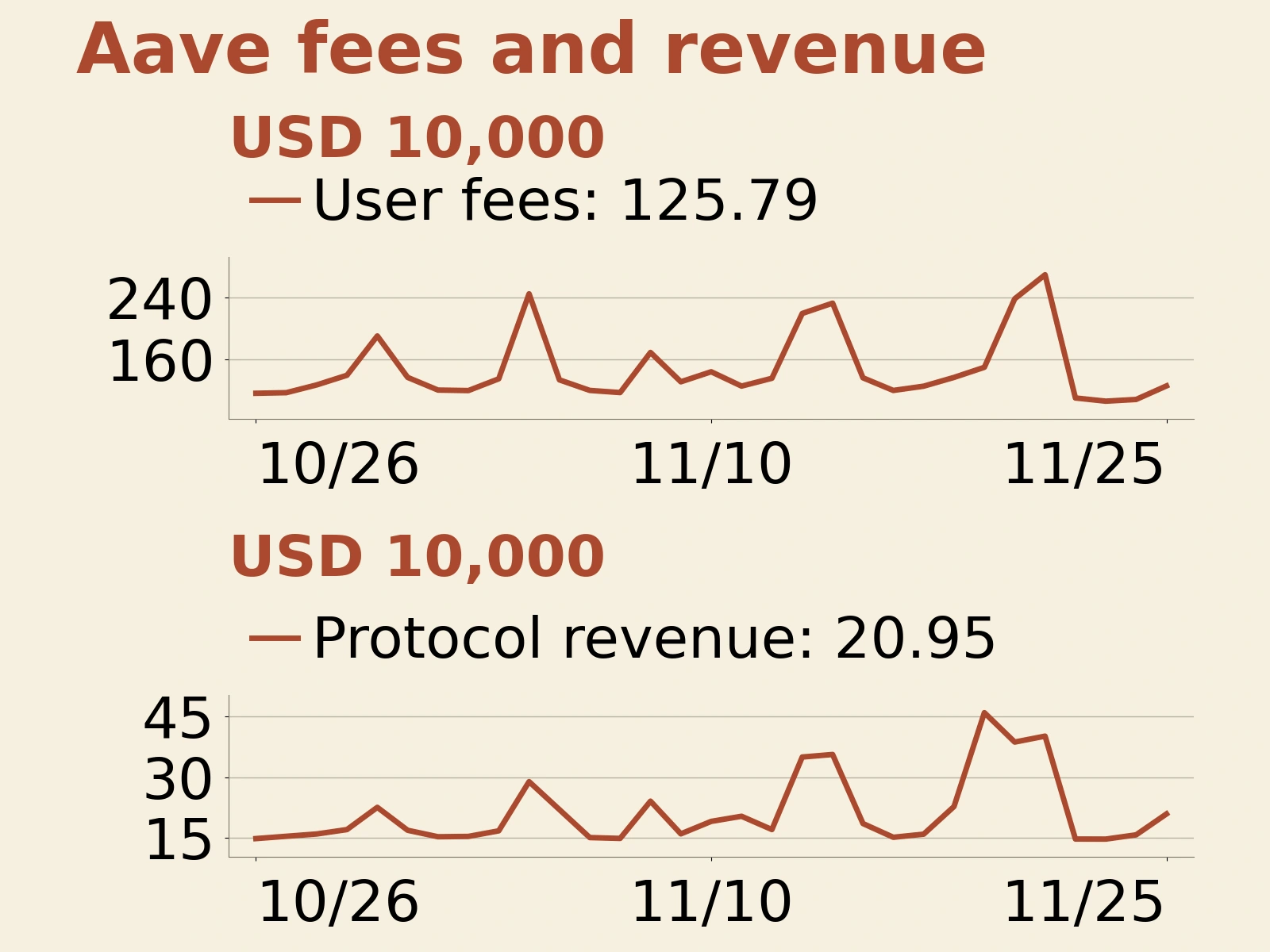
Aave user fees increased even as DEX spot volume declined. DefiLlama recorded an increase in Aave user fees from $1.0832 million to $1.2579 million; the portion classified as protocol revenue rose from $158,000 to $209,500. Lending fees can arise from outstanding loans. As market rates change, existing debt can generate more fees even if little new borrowing takes place that day. The Aave protocol spans multiple markets, and the available data do not allow the mobile app's contribution to be isolated within protocol revenue for November 25.
One balance in the app; underlying pools need a liquidity buffer for withdrawals
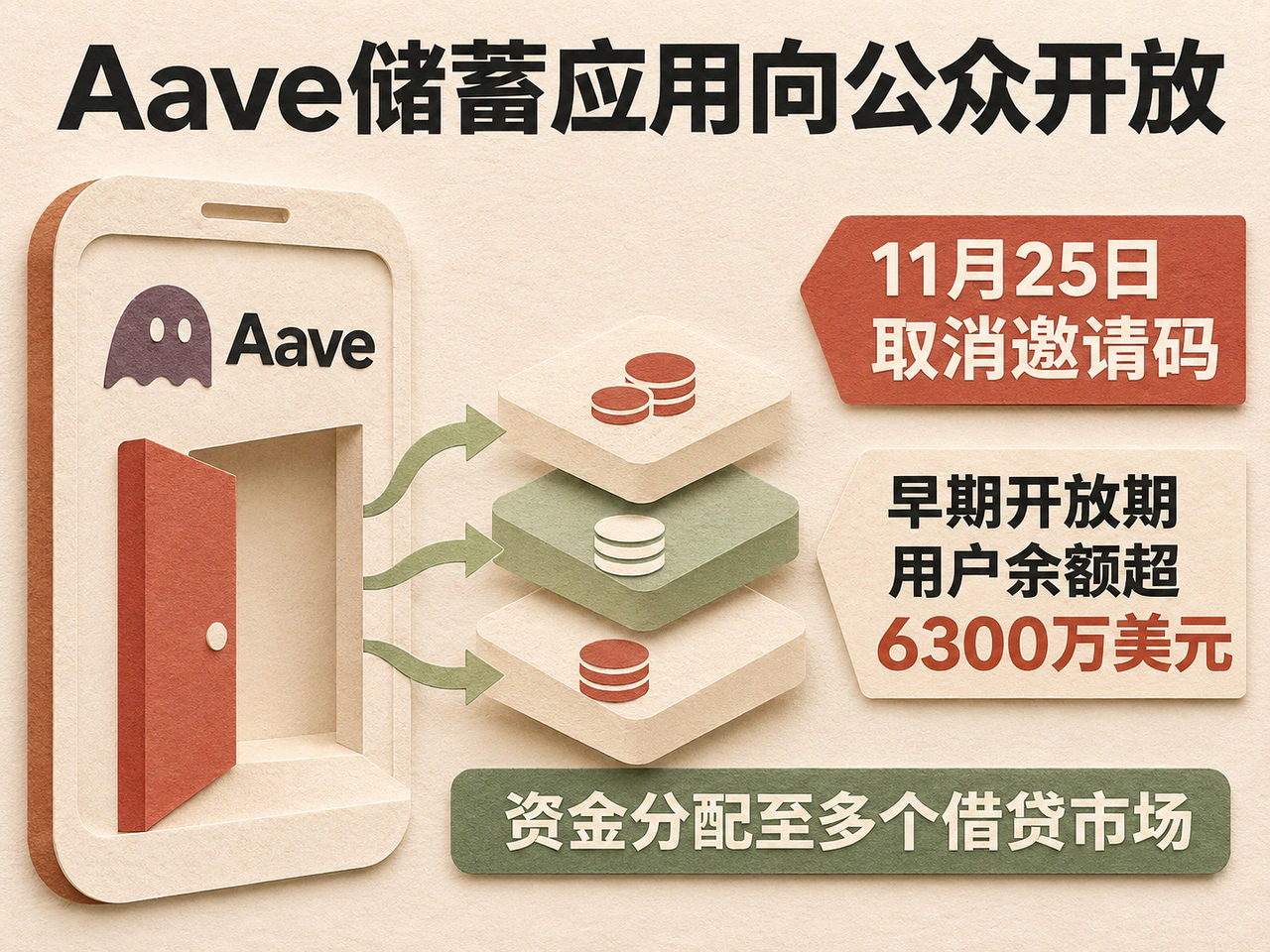
Aave Labs had previously made the app available only to invited users. According to information the company provided to The Block, user balances had exceeded $63 million during an early-access period lasting less than three months. With the invitation-code requirement removed on November 25, iOS and Android users can now register directly. The more than $63 million represents balances accumulated before public access opened and provides a baseline for tracking subsequent new deposits.
Users can open a self-custodial account with an email address or phone number. Eligible users in the United States, excluding New York State, the United Kingdom and the European Economic Area can link bank accounts to deposit funds. Stablecoin deposits are supported across eight networks, including Ethereum, Base and Tron, with available tokens varying by network. The mobile interface displays a single balance, while funds are allocated across different Aave lending markets in the background. Borrowers deposit collateral worth more than the amount they borrow before taking out stablecoin loans; the interest they pay is one source of depositors' returns.
At launch, eligible, verified users were offered a variable base annual percentage yield of 6% on balances of up to $100,000 during the first 90 days. The annual percentage yield could reach 7.25% if promotional conditions were met. Funds are not protected by government deposit insurance.
Users can request withdrawals at any time, so pools need to retain liquidity to meet concentrated redemptions. In a proposal published on November 25, risk service provider LlamaRisk used the USDC pool in Aave V3's Core market as an example. At the time, deposits stood at $4.131 billion and borrowing at $3.220 billion, meaning about 77.9% of supplied funds had been lent out. LlamaRisk proposed lowering the utilization threshold at which borrowing rates begin to rise more rapidly from 94% to 91%. At the supply level then prevailing, about $372 million would remain in the pool when the new threshold was reached, about $124 million more than at the old threshold. The pool's three largest supply positions accounted for a combined 56%. LlamaRisk's rationale was that making borrowing costs rise earlier could preserve more withdrawable funds ahead of concentrated withdrawals.
The proposal applies only to that USDC pool, whereas the mobile app allocates funds across multiple markets. Assessing the new app's operating sustainability requires monitoring balance retention after the promotional period, the rates borrowers are willing to pay, and the liquidity available for withdrawals in each pool. New customers can bring in lendable funds, but actual borrowing demand and liquidity buffers determine the terms on which those funds can continue to earn interest.
Click “Read the original” for the full details.