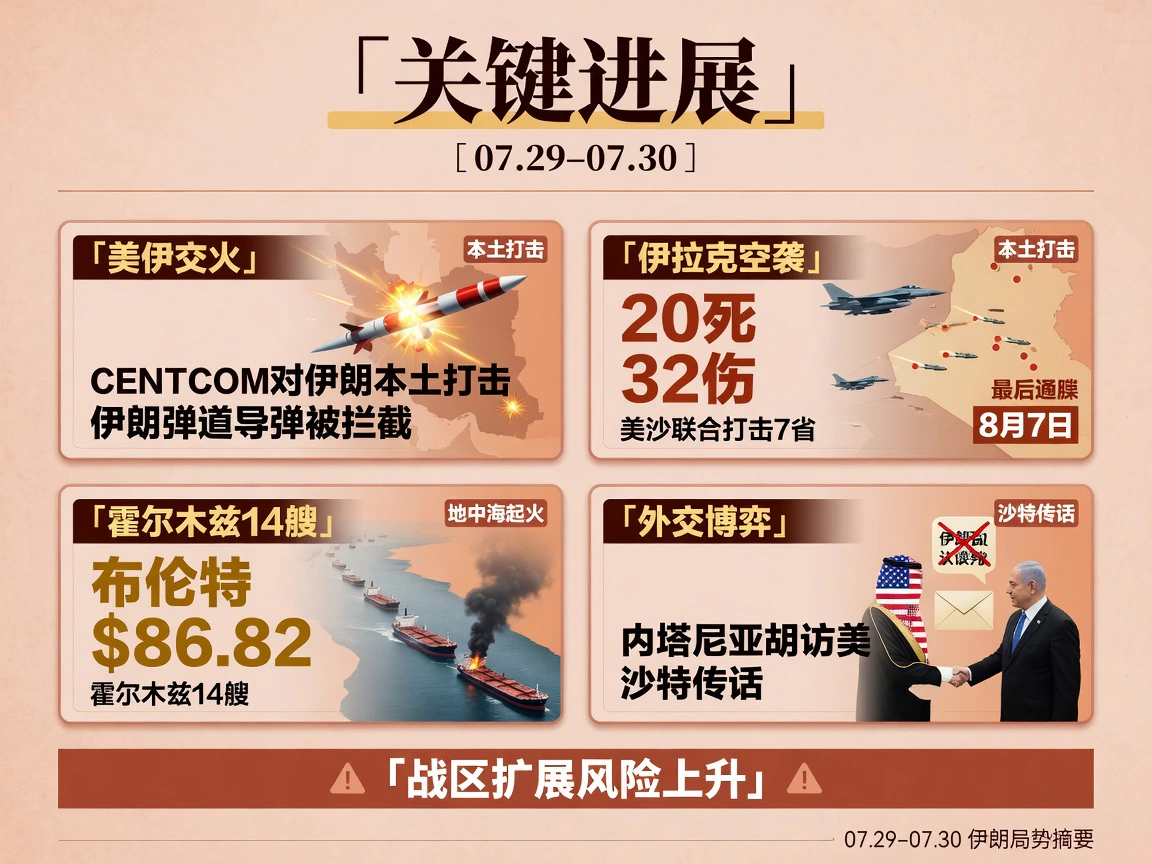
US–Iran confrontation escalated sharply over 24 hours, breaking the brief tacit ceasefire. After Iran fired ballistic missiles at US Middle Eastern bases, Washington said it was now its turn, striking widely inside Iran and jointly with Saudi Arabia hitting Iran-linked forces in Iraq with major casualties. Hormuz traffic fell near 14 ships daily and Bab el-Mandeb kept declining under Houthi restrictions. Two ships also caught fire in an Egyptian Mediterranean port; if deliberate attacks were confirmed, the conflict would have approached Europe's energy gateway.
US Launches Another Round of Strikes inside Iran
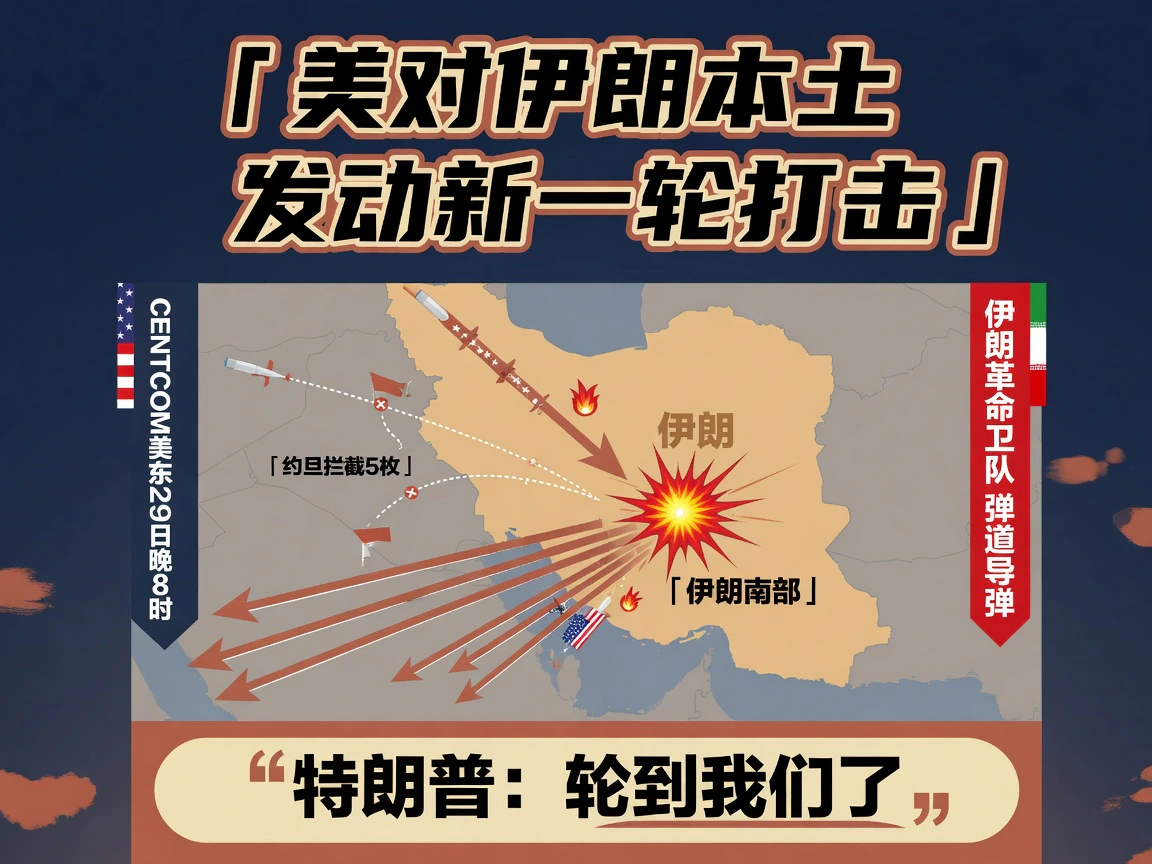
On the morning of July 30 Beijing time, CENTCOM confirmed strikes on Iranian targets at 8 p.m. US Eastern on July 29, calling them a forceful response to Iran's attempted attack on regional US bases the previous day. A US official told CNN that military facilities across a very wide area were targeted.
Press TV subsequently reported loud explosions across southern Iran. Iranian authorities had not released detailed casualty or facility-damage figures.
In the Oval Office, Trump said the US would hit back hard and it was now its turn. In a Fox News interview he said all Iranian ballistic missiles had been intercepted and used harsh language about the coming intensity. He speculated the launches came from a different Iranian faction than the negotiators, saying apologies had been offered but punishment was still necessary.
The direct trigger was the Guards' ballistic launches at US regional positions the prior night, early July 29 Beijing time. Jordan confirmed assisting interception of five. CENTCOM called it an attempted surprise attack, with all missiles downed and no US casualties or serious base damage.
Strikes across Seven Iraqi Provinces Kill at Least 20 and Wound 32
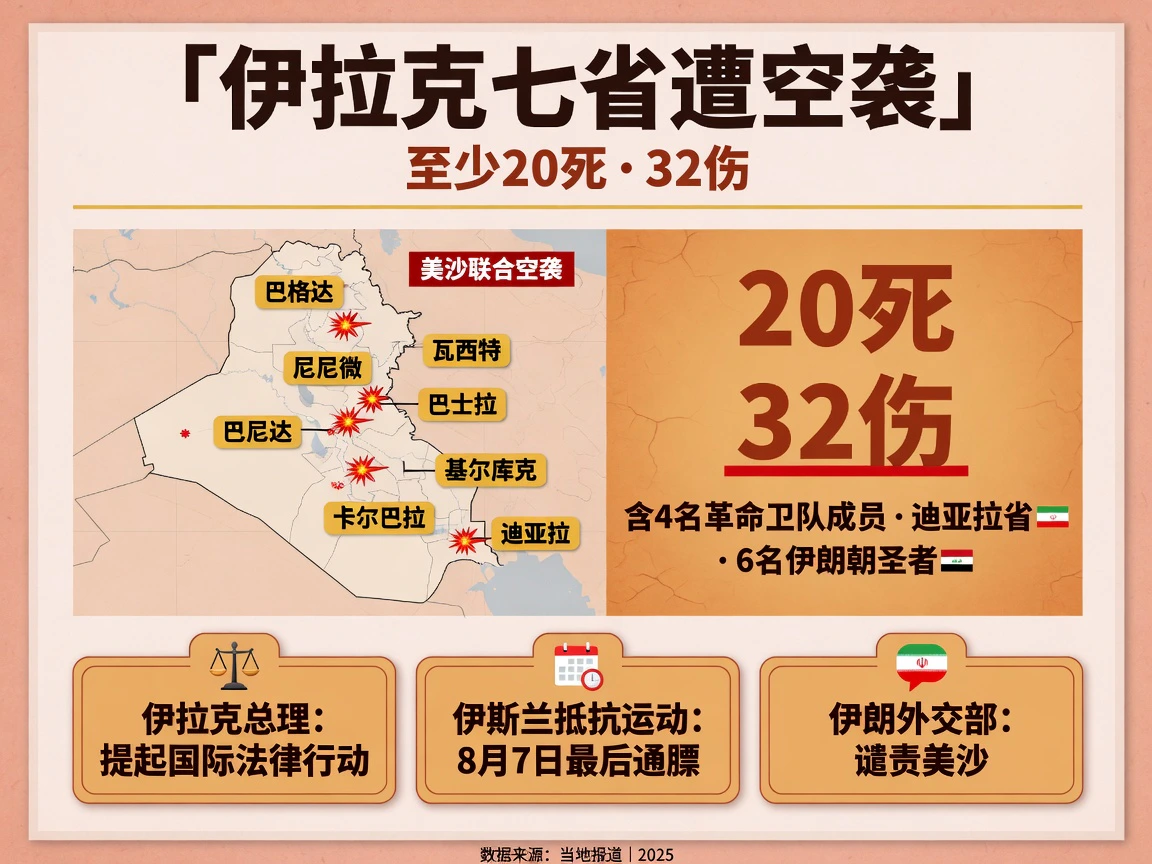
Early July 29 local time, the US and Saudi Arabia launched coordinated strikes on Iran-linked targets in several Iraqi provinces. CNN said logistics and ammunition sites were targeted in retaliation for more than 30 drone attacks on US forces and Saudi energy facilities over the preceding 72 hours.
The Popular Mobilization Forces (PMF), an Iraqi Shiite militia umbrella, said Baghdad, Wasit, Nineveh, Basra, Kirkuk, Karbala and Diyala were hit, with at least 20 dead and 32 wounded and headquarters, armored vehicles and equipment destroyed. An Iranian local official said four Guards members died in Diyala while securing Arbaeen pilgrimage events. A PMF spokesman also said six Iranian pilgrims were among the dead, stressing that they had entered as ordinary pilgrims rather than fighters or advisers.
Iraqi political reactions were strong:
- Prime Minister Zaidi urgently convened the National Security Council and instructed the foreign ministry to pursue legal action against the US and Saudi Arabia under international law and the UN Charter. His July 30 Riyadh visit was also postponed at the Iraqi side's request.
- Speaker Halbousi condemned a blatant violation of sovereignty and demanded a comprehensive public investigation.
- Former Prime Minister Sudani called it a grave breach of Islamic brotherhood and international law.
- Iran's foreign ministry condemned the joint operation through Tasnim, saying the belligerent US government and its allies must bear all consequences.
On July 29, the PMF-linked Islamic Resistance in Iraq issued an ultimatum for a substantive official response by August 7. If government failed to act, militias would retaliate themselves, potentially inside Saudi Arabia. They also promised not to disrupt the forthcoming Arbaeen pilgrimage.
Hormuz Traffic Remains Extremely Low; Mediterranean Port Fires Raise Concern
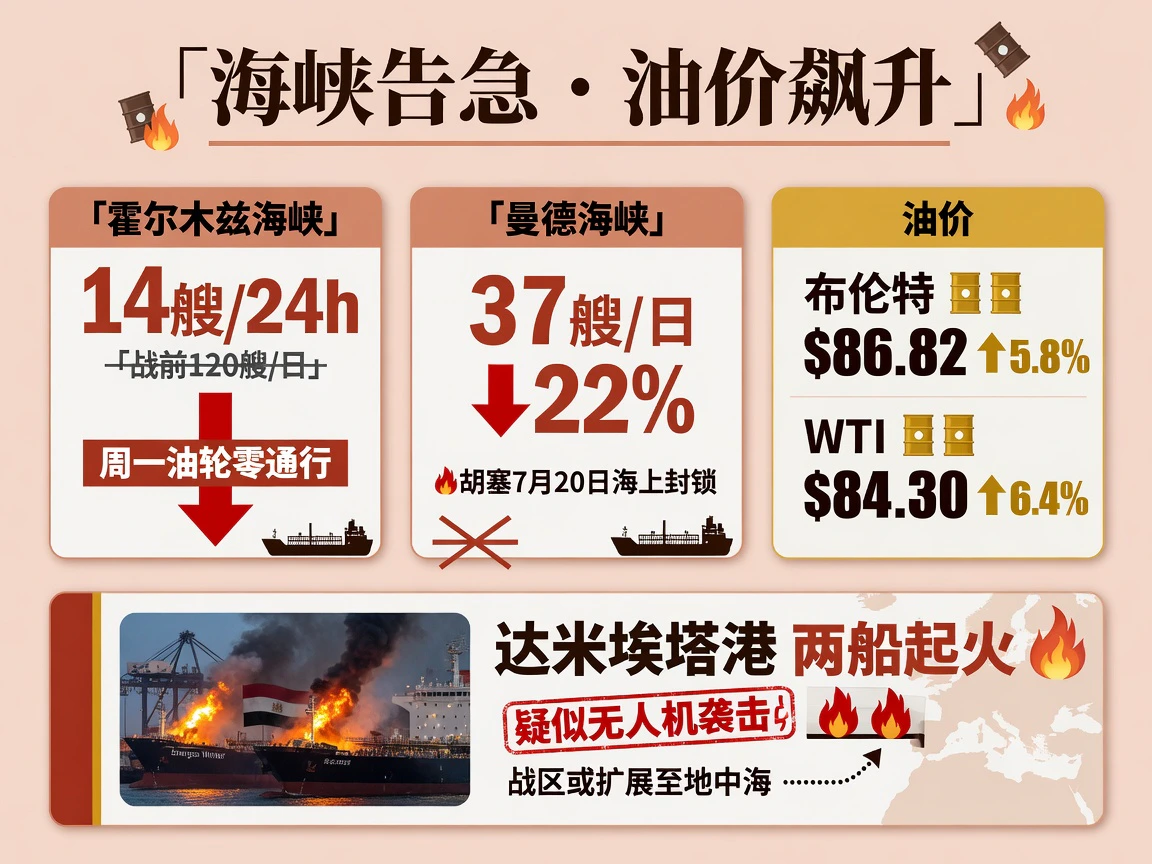
MarineTraffic recorded only about 14 Hormuz merchant transits in 24 hours: eight inbound to the Gulf, five bulk/general-cargo ships and three tankers; six outbound, five cargo ships and one tanker. Prewar traffic averaged near 120 daily. Windward said the US-escorted southern channel saw zero tanker traffic in either direction Monday.
Since the July 20 Houthi declaration of a maritime blockade of Saudi ports, Bab el-Mandeb traffic fell about 22%, from 48 to roughly 37 ships daily. Saudi Arabia used more overland pipeline capacity, diverting crude via the east–west route to Mediterranean Sidi Kerir. Analysts said SUMED diversion showed resilience, but capacity limits prevented it fully replacing the Bab el-Mandeb shortfall on Asian routes.
A more concerning spillover appeared at Damietta on July 29, where a floating regasification unit and LNG storage vessel caught fire. Maritime-security and industry sources suggested a suspected drone strike on a Marshall Islands-flagged, US-owned floating LNG storage facility believed to be Energos Winter, with fire spreading to adjacent Gaslog Salem. Egypt said the fire was extinguished without casualties but did not identify the cause. No group claimed responsibility and officials had not confirmed an attack. If deliberate external action were established, the conflict would have crossed the Red Sea and Gulf into a key eastern Mediterranean energy hub.
Oil rose with successive geopolitical shocks: Brent gained 5.8% to $86.82 a barrel and WTI 6.4% to $84.30.
Treasury sanctioned two Iranian maritime entities July 29, Persian Gulf Maritime Insurance Company and Hormuz Safety Maritime Services Authority. The US accused them of collecting protection money for the Guards by forcing ships to buy purported passage insurance as maritime extortion.
Intensive Diplomacy: Netanyahu Visits, Saudi Arabia Carries a Message and Iran Denies Talks
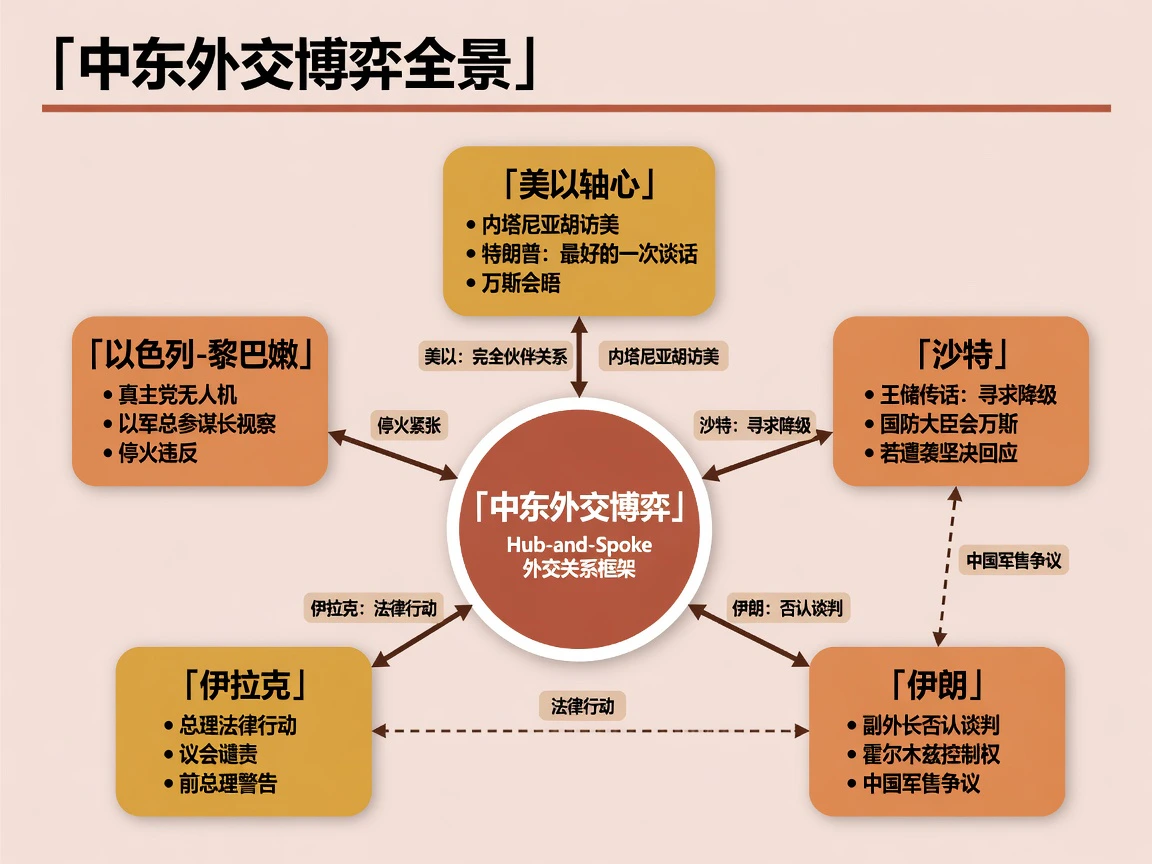
Washington diplomacy: Netanyahu met Trump and then Vance at the White House July 29, praising the Oval Office meeting as among his best with a US president and stressing complete partnership against an Iranian nuclear weapon and for regional security. Leavitt called it positive and productive. Vance then met Saudi Defense Minister Khalid bin Salman. Sources said Khalid carried a personal message from Crown Prince Mohammed: Iran sought negotiating leverage through escalation and would keep using Iraqi militias and Houthis; Saudi Arabia preferred de-escalation but would respond firmly to further attacks on core infrastructure. The joint strikes were intended to tell Iranian proxies this was not their war.
Tehran's firm position: Hours before the ballistic attack, Deputy Foreign Minister Gharibabadi denied in a July 29 state-television interview that Iran had sought dialogue during the previous 16–17 days, rejecting Trump's claim it wanted talks. He said a return to uncontrolled Hormuz passage would leave Iran's wartime success incomplete. Citing the previous month's memorandum, he claimed exclusive mine-clearance responsibility, opposed unauthorized third-country intervention and retained a right to charge passing vessels.
China-related reports: Reuters cited sources July 29 saying Iran might receive 300–400 Chinese-made portable air-defense launch systems within weeks in a deal worth approximately $60 million–$70 million. Trump said he would be quite disappointed if true, but had previously received clear assurances of noninvolvement. China's Washington embassy had formally denied the report.
Israel–Lebanon exchanges: Israel accused Hezbollah July 29 of a drone attack on an engineering vehicle in southern Lebanon, calling it a ceasefire violation; no casualties occurred. Chief of Staff Zamir warned during a troop visit that operations could deepen into more areas. Lebanon's National News Agency accused Israel of burning houses in Qantara.
Other developments: Iran had lost about 230 million cubic meters of daily gas capacity; government urged lower consumption and warned of broad outages. Defense officials said military industry was expanding, especially maritime and air defenses, contradicting Hegseth's claim of near-total destruction. In Washington, Democratic Representative Ansari on CNN condemned the February 28 Shajareh Tayyiba school strike in Minab, which killed 168 children, as a national disgrace and demanded accountability.
Key Developments
| Key Developments (Beijing Time) |
|---|
| 07-30 09:06Explosions are reported across southern Iran as the US launches another round of strikes. |
| 07-30 08:28CENTCOM announces strikes at 20:00 US Eastern, describing a forceful response. |
| 07-30 05:20Hormuz records about 14 merchant crossings in 24 hours versus 120 daily prewar; Bab el-Mandeb about 37, down 22%. |
| 07-30 04:17Trump says Chinese arms sales to Iran would disappoint him; Reuters reports a 300–400 shoulder-fired air-defense missile deal. |
| 07-30 04:09An Iranian provincial official says four Guards members died in US–Saudi strikes in Diyala. |
| 07-30 03:28Trump vows hard retaliation, saying it is the US turn, and says another group than the negotiators attacked and apologized. |
| 07-30 02:51Saudi defense minister meets Vance with the crown prince's message: seek de-escalation but respond firmly to infrastructure attacks. |
| 07-30 02:29Two ships catch fire at Damietta. Industry sources suspect a drone strike on Energos Winter; officials have not confirmed it. |
| 07-30 00:55Islamic Resistance in Iraq demands a government response by August 7 or threatens its own retaliation, including Saudi targets. |
| 07-29 23:35Iraq's prime minister directs international legal action against the US and Saudi Arabia. |
| 07-29 23:19The US sanctions two Iranian firms accused of a Hormuz protection-money scheme. |
| 07-29 22:02Israel accuses Hezbollah of a drone attack on an engineering vehicle and a ceasefire breach; its chief of staff visits forces in Lebanon. |
| 07-29 21:51Netanyahu meets Trump and Vance and calls the Oval Office discussion one of his best with a US president. |
| 07-29 21:12Oil surges: Brent +5.8% to $86.82, WTI +6.4% to $84.30. |
| 07-29 20:50Tankers use Suez–SUMED instead of Bab el-Mandeb; Windward shows 37 daily Bab el-Mandeb crossings and zero Hormuz tankers Monday. |
| 07-29 20:28Iran condemns US–Saudi strikes in Iraq and says the belligerent US government is responsible. |
| 07-29 19:19Iran's deputy foreign minister says no negotiating request was sent in 16–17 days and Hormuz control will not be surrendered. |
| 07-29 18:08Iraq postpones the planned July 30 Riyadh visit at its own request. |
| 07-29 16:01US–Saudi strikes hit PMF facilities in seven provinces, killing at least 20 and wounding 32; oil initially rises around 4%. |
| 07-29 13:10Jordan confirms intercepting five Iranian ballistic missiles. |
| 07-29 12:47Iran fires ballistic missiles at US regional forces, called an attempted surprise attack by CENTCOM. A Democratic legislator calls the February 28 school bombing a national disgrace. |


