Senior security officials from Saudi Arabia, Pakistan and Türkiye visited Tehran for talks with Iran’s leadership on regional security, in developments reported by the morning of October 27 Beijing time. Meanwhile, media reports said U.S. forces in the Middle East had completed preparations to expand military operations against Iran, while fighting in Yemen continued to affect Saudi Arabia. Regional diplomatic contacts had intensified, but translating the desire for de-escalation into specific U.S.–Iran arrangements still depended on the sequencing of safe passage through Hormuz, reopening Iran’s southern ports and addressing the nuclear issue.
Saudi, Pakistani and Turkish officials hold Tehran talks, prioritizing Yemen spillovers

On October 26, Saudi Defense Minister Khalid bin Salman, Pakistani army chief Munir and Turkish intelligence chief Kalın met Iran’s president and security officials in Tehran. Saudi Arabia described the visit as an effort to ease regional tensions and support Qatari and Pakistani mediation. The Associated Press, citing regional officials, said the Yemen conflict and Houthi attacks on Saudi Arabia were also on the agenda.
The visit combined diplomatic mediation with coordination on mutual defense. Saudi Arabia, Pakistan and Türkiye had signed the Mecca mutual defense agreement in August, explicitly treating an armed attack on any member as an attack on all. Continued attacks on Saudi Arabia forced its partners to balance defense commitments against the risk of widening the conflict. Tehran consequently became a meeting point for efforts to address both the U.S.–Iran confrontation and spillovers from Yemen.
The two layers of negotiation faced different degrees of difficulty. Sanam Vakil, director of Chatham House’s Middle East and North Africa program, said there might be limited room for an understanding on Yemen, but the Houthis had their own calculations and Iran’s influence over them was not absolute. Fundamental U.S.–Iran differences were harder to bridge. The International Crisis Group’s Ali Vaez likewise argued that mediation depended on credible proposals capable of narrowing those core disagreements.
U.S. forces prepare to act within 96 hours of an order; navigation and blockade sequencing remains central
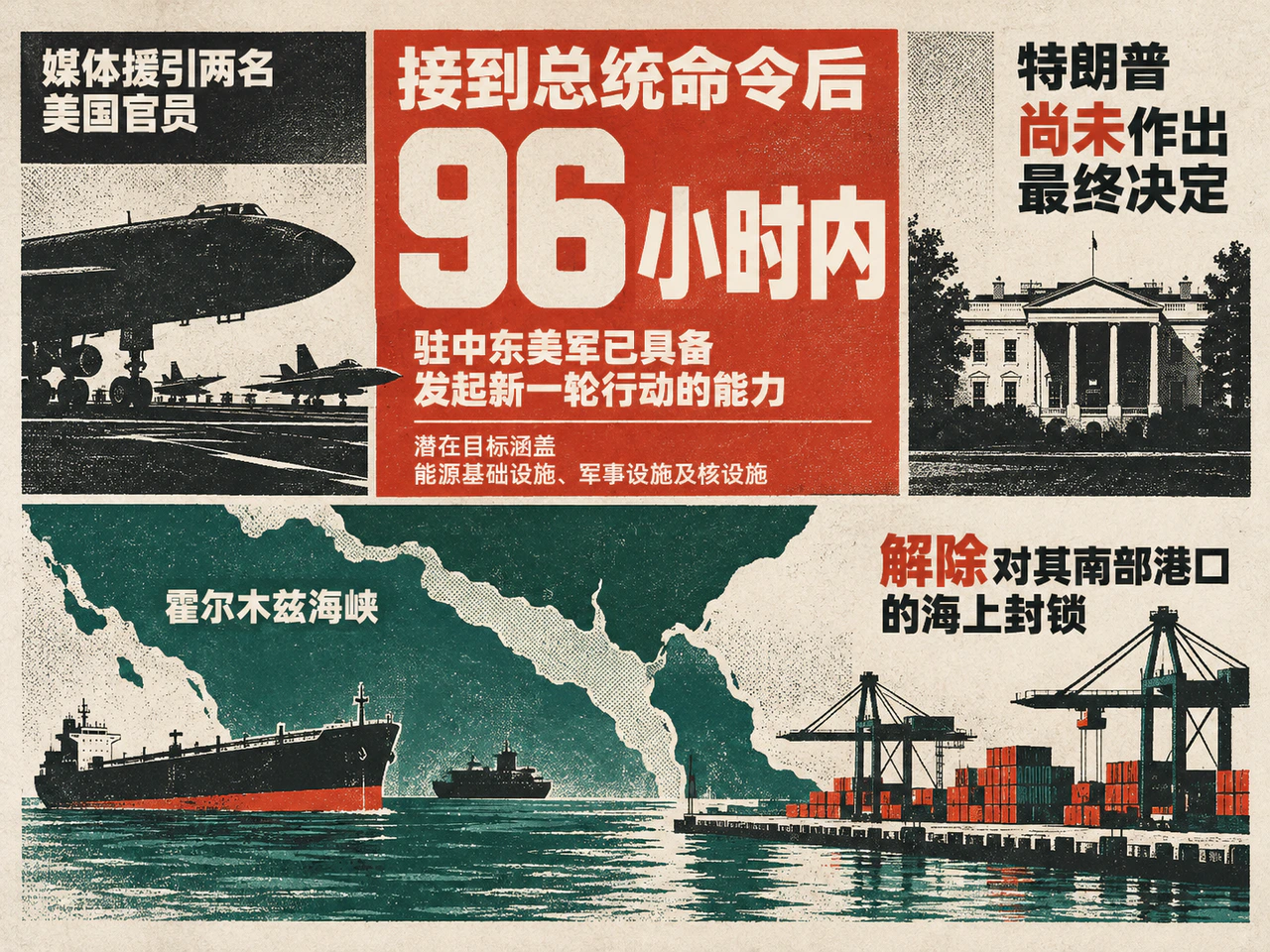
On October 26, media reports citing two U.S. officials said American forces in the Middle East were capable of launching a new round of operations within 96 hours of a presidential order. Potential targets included energy infrastructure, military facilities and nuclear sites. Trump, however, had not made a final decision.
The same reporting said deployments had been canceled for some nonessential U.S. military personnel previously scheduled to rotate into the Middle East, and Washington was considering further reductions in diplomatic staff in the region. Separately, Israel’s prime minister’s office and defense minister denied reports that Israel was pushing for action before its election and that there were internal differences between civilian and military leaders. With U.S. preparations complete but no order issued, the parties were intensifying diplomatic efforts to test one another’s limits.
Maritime security and lifting the blockade were the central connecting issues in the negotiations. Regional countries wanted shipping through Hormuz protected from interference. The United States also focused on Iran’s nuclear program and international verification, while Iran demanded the removal of the naval blockade of its southern ports and a return to the framework of understanding reached in June. The parties had yet to agree on the sequence of lifting pressure and restoring navigation, leaving military deterrence and diplomatic contacts to proceed together.
Houthis claim attacks on Riyadh airport and an oil pumping station; Egypt approves support for Saudi Arabia
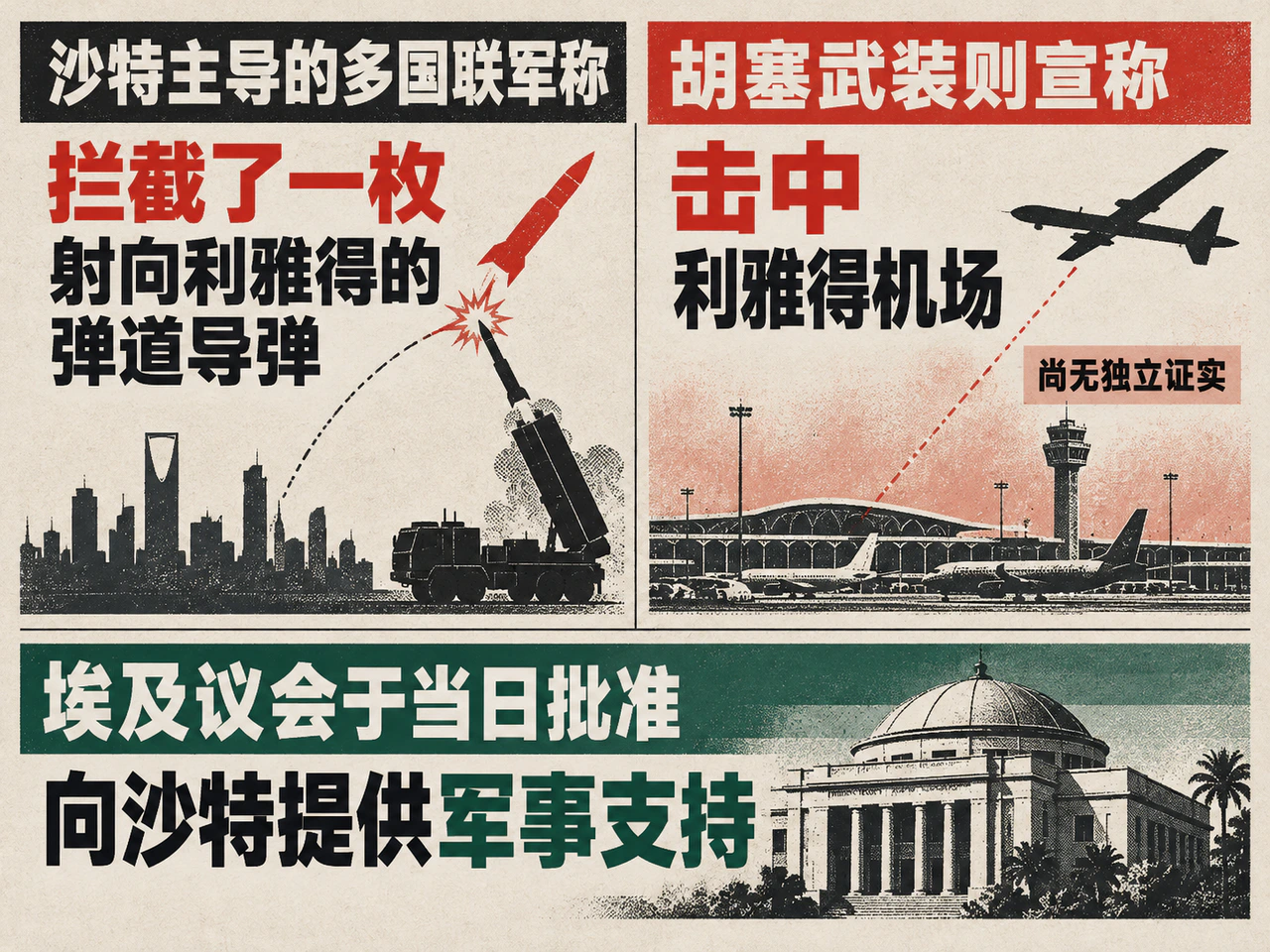
Combat statements on October 26 showed continued pressure between Saudi Arabia and the Houthis. The Saudi-led multinational coalition said it intercepted a ballistic missile headed toward Riyadh and destroyed two launchers in Sana’a. The Houthis claimed to have hit Riyadh airport and attacked an oil pumping station with drones, but neither the airport hit nor damage to the facilities had been independently confirmed.
The same day, the Houthis also claimed ballistic-missile attacks on troop concentrations and weapons depots in Aden and Lahj. The Saudi-led coalition said it destroyed five Houthi missile-storage tunnels and four launchers. Facing sustained air-defense and security pressure, Egypt’s parliament approved military support for Saudi Arabia that day, broadening regional defense coordination. For markets, the next issues to watch were whether diplomatic contacts produced specific arrangements for strait passage, port reopening or a ceasefire, and whether material damage to Saudi transport and energy infrastructure was confirmed.
Key developments
| Key developments |
|---|
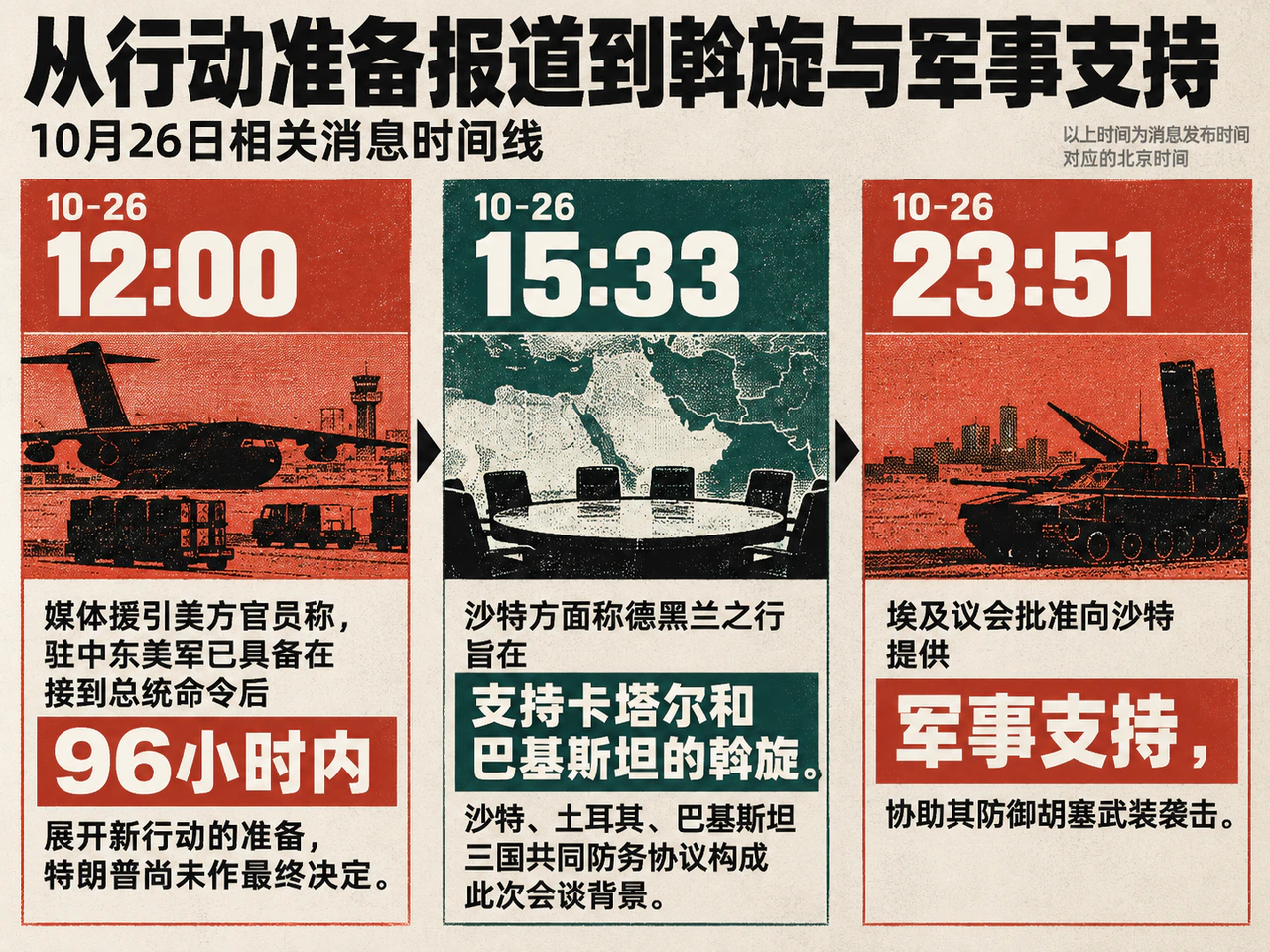
| 10-26 23:51Egypt’s parliament approved military support for Saudi Arabia to help defend against Houthi attacks. |
| 10-26 23:51Saudi, Pakistani and Turkish delegations met Iranian leaders in Tehran to try to prevent a resumption of full-scale U.S.–Iran fighting. Yemen and attacks on Saudi Arabia were also discussed. |
| 10-26 23:51The Houthis said they fired ballistic missiles at troop concentrations and weapons depots in Aden and Lahj. The Saudi-led coalition separately said it destroyed five missile-storage tunnels and four Houthi launchers. The reported combat results were not independently confirmed. |
| 10-26 15:33Saudi Arabia said the Tehran visit supported Qatari and Pakistani mediation. The mutual defense agreement among Saudi Arabia, Türkiye and Pakistan formed part of the talks’ backdrop. |
| 10-26 14:14The Saudi-led coalition said it intercepted a ballistic missile headed toward Riyadh and destroyed two launchers in Sana’a. The Houthis claimed a hit on Riyadh airport and a drone attack on an oil pumping station. |
| 10-26 12:00Media reports citing U.S. officials said American forces in the Middle East were prepared to launch new operations within 96 hours of a presidential order. Trump had not made a final decision. |
The times above are the corresponding news publication times in Beijing time.