On October 27, 2026, Qatar’s Emir Tamim met Iranian President Masoud Pezeshkian in Moscow to discuss the Middle East conflict and the situation in the Strait of Hormuz. The same day, Iran’s military said an oil tanker had struck a mine and caught fire in the eastern part of the strait, while fighting near Yemen’s Bab el-Mandeb Strait continued to expand. Diplomatic communication had yet to ease pressure on maritime routes and surrounding fronts, with repercussions for shipping, energy infrastructure and even water security.
Qatar calls for the strait to reopen; ceasefire conditions remain unresolved

The Gas Exporting Countries Forum summit in Moscow provided an opportunity for contacts among the parties. Alongside his meeting with Qatar’s leader, Pezeshkian discussed joint oil and gas projects and economic and trade cooperation with Russian President Vladimir Putin. A day earlier, senior officials from Saudi Arabia, Pakistan and Türkiye had met in Tehran and agreed to continue discussing regional security. The succession of meetings reflected regional countries’ desire both to contain the widening conflict and to find a path toward restoring security arrangements.
Qatar made more specific demands on October 27. Foreign ministry official Hashemi said Iran should demonstrate goodwill through action, including ending threats against regional countries and reopening the Strait of Hormuz. Mediators were still exchanging messages and ideas with the United States and Iran; no new agreement or negotiating breakthrough had been announced.
Differences centered on sequencing and the terms of an exchange. Iran sought the lifting of the port blockade, an easing of oil-export sanctions and guarantees against further attacks. The United States sought concessions from Iran on the nuclear issue. Regional countries wanted immediate security threats reduced first, while Iran linked shipping arrangements to ceasefire conditions. Whether talks could produce measures for navigation and security still depended on reconciling those conditions.
Verification also reached the UN Security Council’s agenda that day. International Atomic Energy Agency Director General Rafael Grossi urged Iran to provide immediately the information and access needed to verify nuclear facilities and material. Alongside regional security negotiations, progress on verification arrangements was needed to lay a foundation for a more durable agreement.
Iran reports a mine incident in Hormuz as fighting near Bab el-Mandeb expands
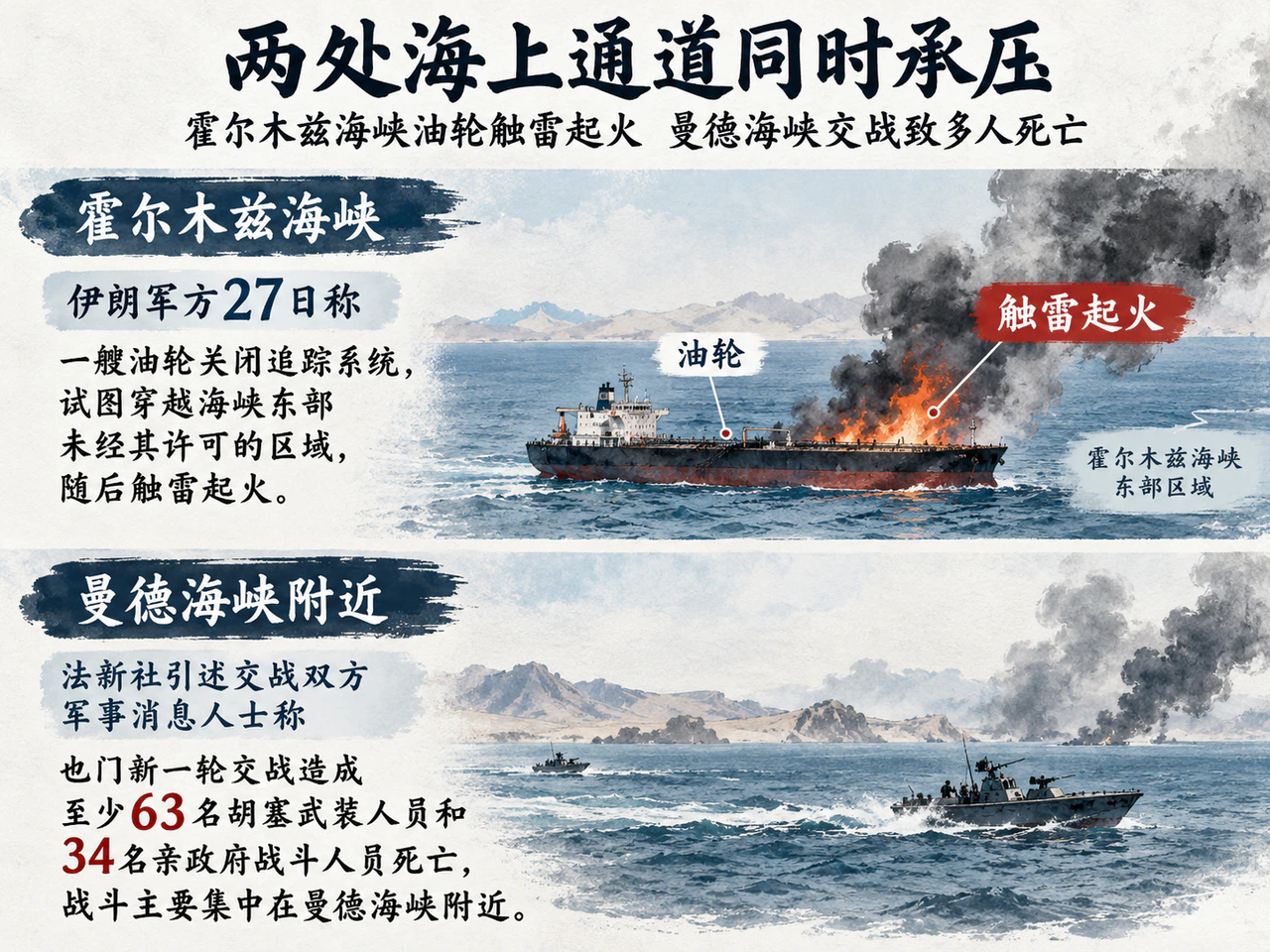
Iran’s military said on October 27 that a tanker had switched off its tracking system and attempted to cross an area in the eastern Strait of Hormuz without Iranian authorization, then struck a mine and caught fire. The military reiterated that vessels could not pass safely without coordination. The account of the mine incident and damage still came from the Iranian statement. Its renewed demand for passage authorization also showed that access to the strait continued to be used as a means of pressure.
Fighting at the southern end of the Red Sea intensified at the same time. Citing military sources from both sides, AFP reported that a new round of fighting in Yemen had killed at least 63 Houthi personnel and 34 pro-government fighters, mainly near Bab el-Mandeb. The sources said fighting had intensified after airstrikes on the evening of October 26 and involved Mayun Island in the strait and coastal areas. Hormuz is crucial to Gulf oil and gas exports, while Bab el-Mandeb links the Red Sea to the Gulf of Aden. Pressure on both routes made regional transport harder to stabilize.
Alerts also continued inside Saudi Arabia. On October 27, the Saudi-led coalition separately announced the interception of three ballistic missiles headed toward the Eastern Province and two headed toward Riyadh. The Houthis also claimed to have struck the Ras Tanura refinery and caused a major fire; the account of refinery damage remained a Houthi claim.
Egypt’s involvement added another complication to regional relations. A Houthi political bureau member on October 27 described the Egyptian parliament’s authorization of military support for Saudi Arabia as a declaration of war. Egypt had previously emphasized that the deployment was defensive and did not include attacks on Yemen. The sharply different characterizations of the same action increased the potential for miscalculation.
The UAE cleans oil from beaches as desalination intake safety draws attention
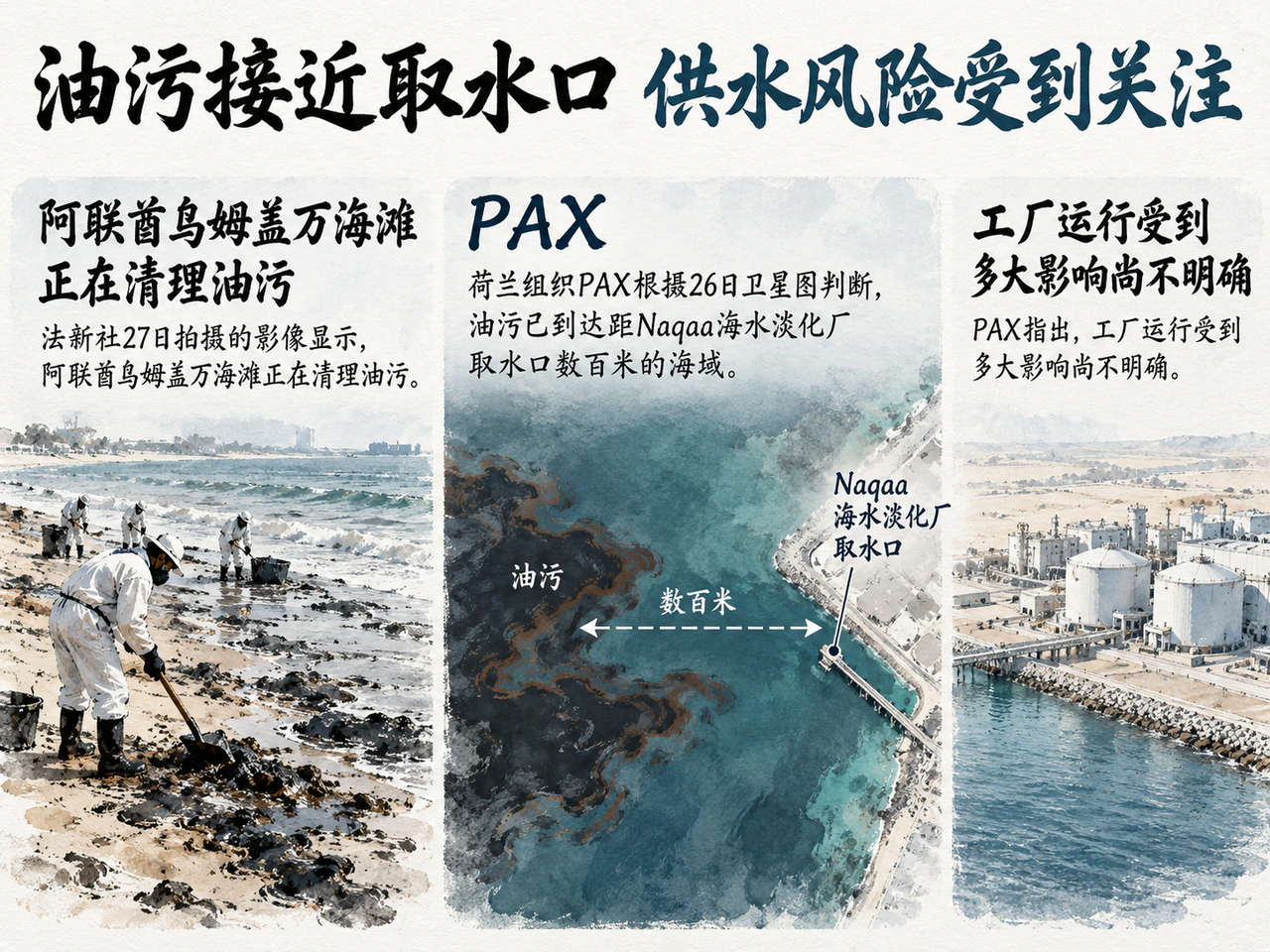
The conflict’s spillovers had reached coastal environments and water security. AFP footage filmed on October 27 showed oil being cleaned from beaches in Umm Al Quwain in the United Arab Emirates. Dutch organization PAX assessed from October 26 satellite imagery that oil had reached waters within a few hundred meters of the Naqaa desalination plant’s intake. The extent of any effect on plant operations remained unclear. In a Gulf region dependent on seawater desalination, marine pollution also affects the security of domestic water supplies.
Exit polls for Israel’s October 27 election showed neither of the two main blocs with a clear majority, leaving coalition formation uncertain. Regional mediation, nuclear-verification discussions and surrounding military operations continued in parallel. The next critical issue was whether diplomatic communication could produce specific arrangements for navigation, security and verification that would ease the pressure from the actual conflict.
Key developments
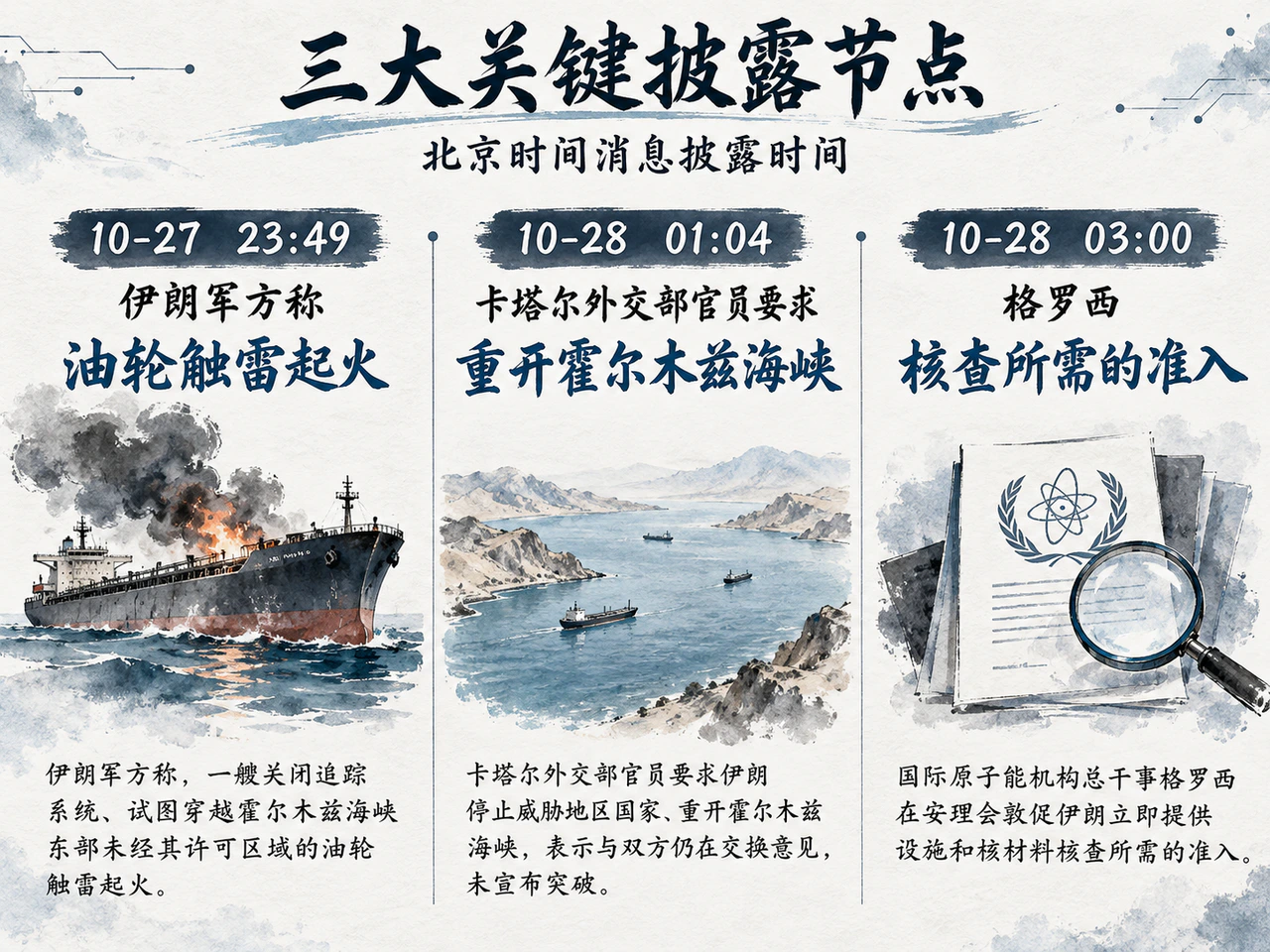
The times below are disclosure times in Beijing time. The timing of each event is stated in the entry where applicable.
| Key developments |
|---|
| 10-28 05:20Exit polls from Israel’s major television networks showed neither main bloc with a clear majority, leaving the prospects for forming a government uncertain. |
| 10-28 03:00At the UN Security Council, IAEA Director General Grossi urged Iran to provide immediate access needed to verify facilities and nuclear material. |
| 10-28 02:42AFP, citing military sources on both sides, reported that renewed fighting in southwestern Yemen had killed at least 63 Houthi personnel and 34 pro-government fighters, mainly near Bab el-Mandeb. |
| 10-28 01:18According to an Iranian government readout, Putin and Pezeshkian discussed political, economic, trade and energy cooperation in Moscow, including joint oil and gas projects. |
| 10-28 01:04A Qatari foreign ministry official called on Iran to stop threatening regional countries and reopen Hormuz. The official said exchanges with both sides continued, without announcing a breakthrough. |
| 10-27 23:49Iran’s military said a tanker that had disabled its tracking system and attempted to cross an unauthorized area in eastern Hormuz struck a mine and caught fire. |
| 10-27 22:34The Saudi-led coalition said it intercepted two ballistic missiles headed toward Riyadh. An AFP journalist heard explosions, and residents received air-raid warnings. |
| 10-27 21:28The Houthis claimed a ballistic-missile strike on Saudi Arabia’s Ras Tanura refinery had caused a major fire. |
| 10-27 20:25Al Arabiya, citing Iraqi security sources, said the air-defense system at the U.S. embassy in Baghdad shot down two drones. |
| 10-27 19:37AFP footage from that day showed oil cleanup on Umm Al Quwain beaches in the UAE. PAX said October 26 satellite images showed oil approaching the Naqaa desalination plant’s intake. |
| 10-27 18:14A Houthi political bureau member said Egypt’s parliamentary authorization of military support for Saudi Arabia amounted to a declaration of war. Egypt had previously stressed that its action was limited to defense. |
| 10-27 13:43The Saudi-led coalition said air defenses intercepted three Houthi ballistic missiles headed toward the Eastern Province. |