Over the past 24 hours, public diplomatic rupture shattered the Middle East's apparent calm. Hopes of halted weekend strikes and resumed Monday talks quickly evaporated. Trump escalated pressure as a last chance before leadership-targeting strikes and proposed separating Hormuz reopening from nuclear issues. Tehran rejected direct dialogue, saying its only contacts concerned a technical temporary route with Oman. Oil initially fell sharply on ceasefire rumors even though southern-route flows remained weak. On the morning of August 4 Beijing time, UKMTO again reported a cargo ship struck by an unidentified projectile in Hormuz. A briefly cooler diplomatic narrative had not removed physical disruption or conflict risk.
Diplomatic collision: US offers a last chance; Tehran recognizes only Oman
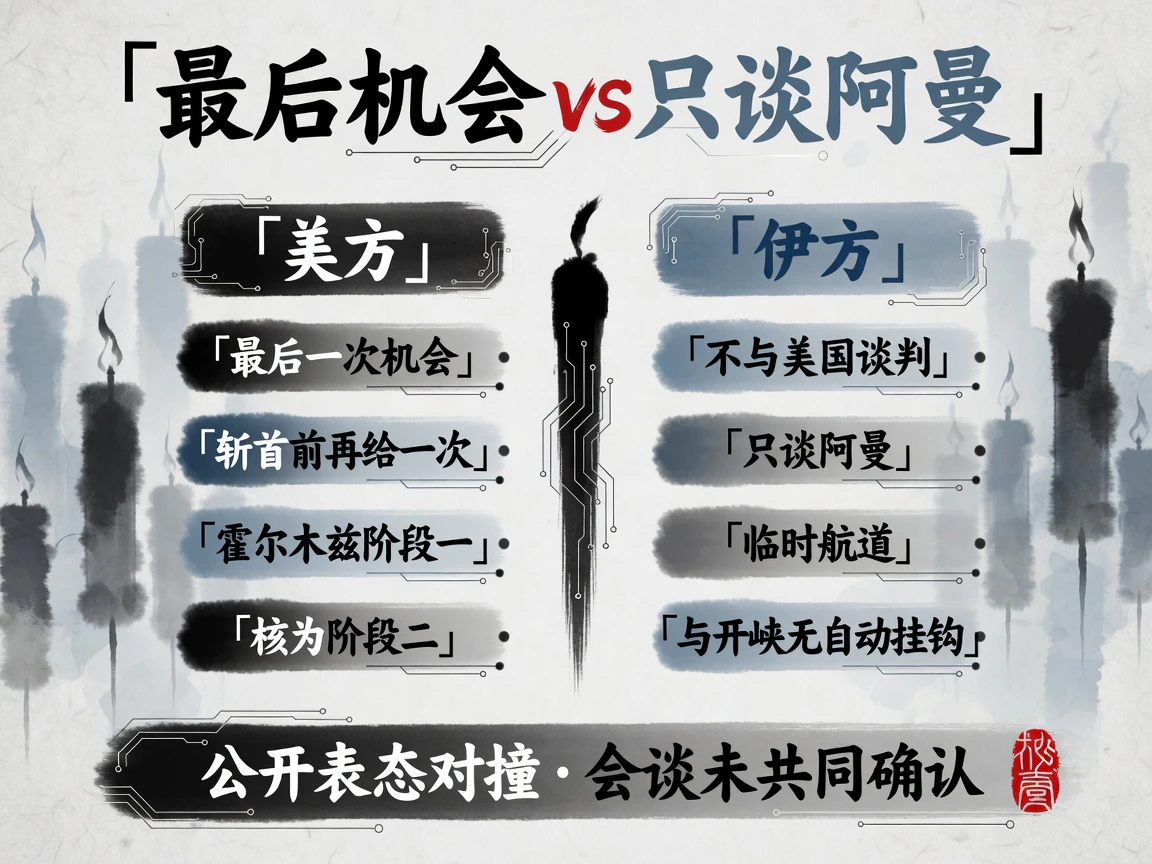
Over the weekend, Trump claimed Saudi, Emirati, Qatari and Iranian requests had prompted cancellation of large retaliatory airstrikes, and said contacts would formally resume Monday afternoon. Tehran directly challenged that unilateral easing narrative Monday.
Spokesperson Baghaei said no US negotiations existed and Iran communicated only with Oman. Technical talks concerned specific transit mechanisms and routing, not whether Hormuz reopened or stayed closed. With Washington abandoning June's memorandum, maintaining a maritime blockade and refusing to ease oil sanctions, he said disruption would not materially change.
US rhetoric then intensified. On Truth Social, Trump called Iranian leaders hypocritical and duplicitous for privately seeking contact while publicly confronting him. He said the port blockade would continue indefinitely until a decisive agreement or complete Iranian surrender.
In the Oval Office, he called the canceled attack a final chance granted after appeals. Asked how this pause differed, he threatened that he wanted to offer every last opportunity before actual decapitation strikes. He proposed two stages: quick Hormuz reopening, then deeper nuclear negotiations. He said he faced no time pressure because he was not seeking reelection and had ample time.
What was established was an intense rhetorical confrontation and mutual testing. Major international sources had no jointly recognized meeting arrangement or formal contact memorandum for the claimed Monday-afternoon talks. The White House's unilateral de-escalation framework remained ungrounded.
Shipping and oil: expectations plunge, while actual passage stays severely disrupted
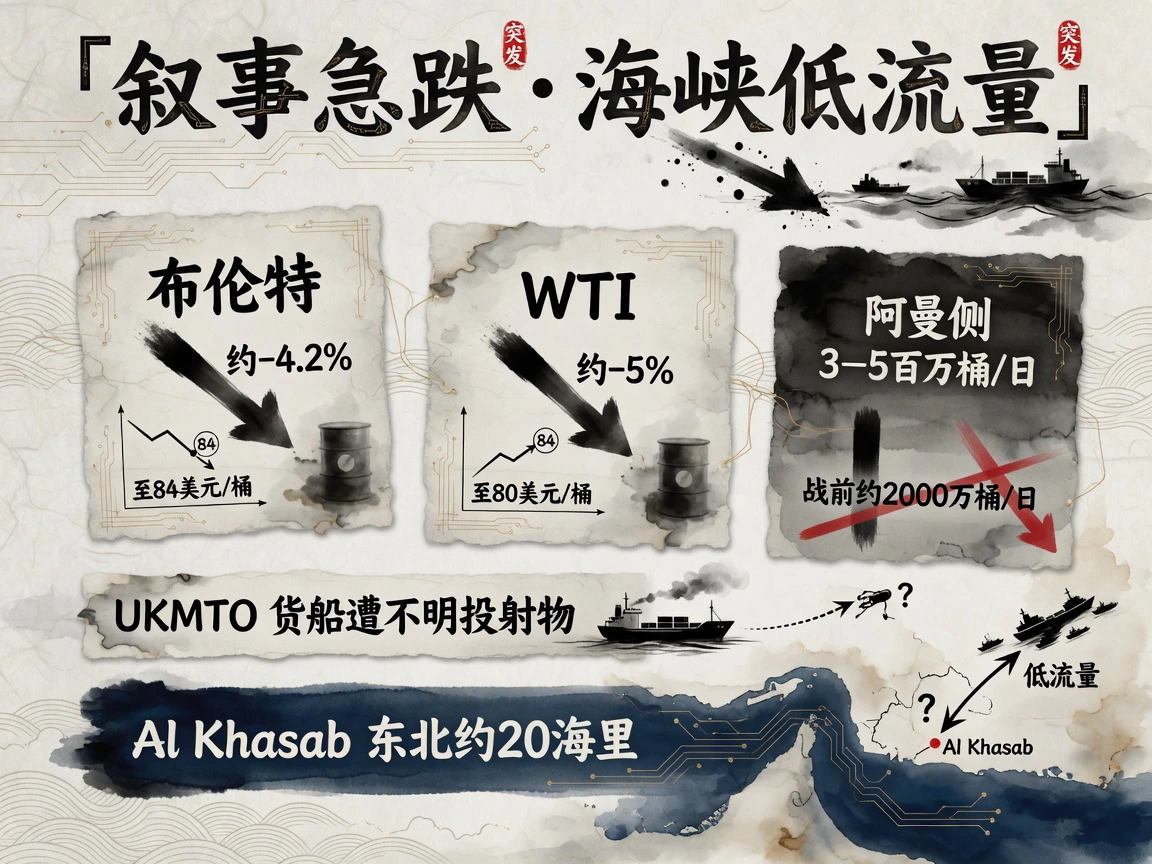
Global energy prices reacted sharply to weekend signals of canceled strikes and Monday talks. Early Monday Asian trade saw profit-taking and geopolitical-premium removal: Brent fell about 4.2% toward $84 a barrel and WTI nearly 5% toward $80. Weekend electronic quotes had shown declines above roughly 5.5%–5.6%.
Physical shipping did not confirm relief. Trackers showed only fragile, slow passage through a narrow southern Omani route, with rough crude outflows of 3 million to 5 million barrels a day versus about 20 million before the war, a reduction of more than 70%–80%. Even a limited Iran–Oman technical agreement would be a restricted emergency-transit mechanism, far from a fully safe recovery in international oil shipping.
A fresh physical attack emerged at the window's end. On the morning of August 4 Beijing time, UKMTO reported a merchant ship directly hit by an unidentified projectile about 20 nautical miles northeast of Al Khasab, Oman, near the main Hormuz waterway. Vessel details and responsibility were not finally public, but incidents around Oman were increasing markedly.
Outer logistics arteries were also hit. At least 6 large Saudi-operated tankers abandoned the Suez shortcut for the Cape of Good Hope to avoid the Houthis' announced Red Sea/Bab el-Mandeb blockade. This added at least two weeks to one-way voyages, reducing global shipping efficiency and increasing insurance-cost pressure.
Military and political side signals: unconventional options dwindle as White House domestic costs rise
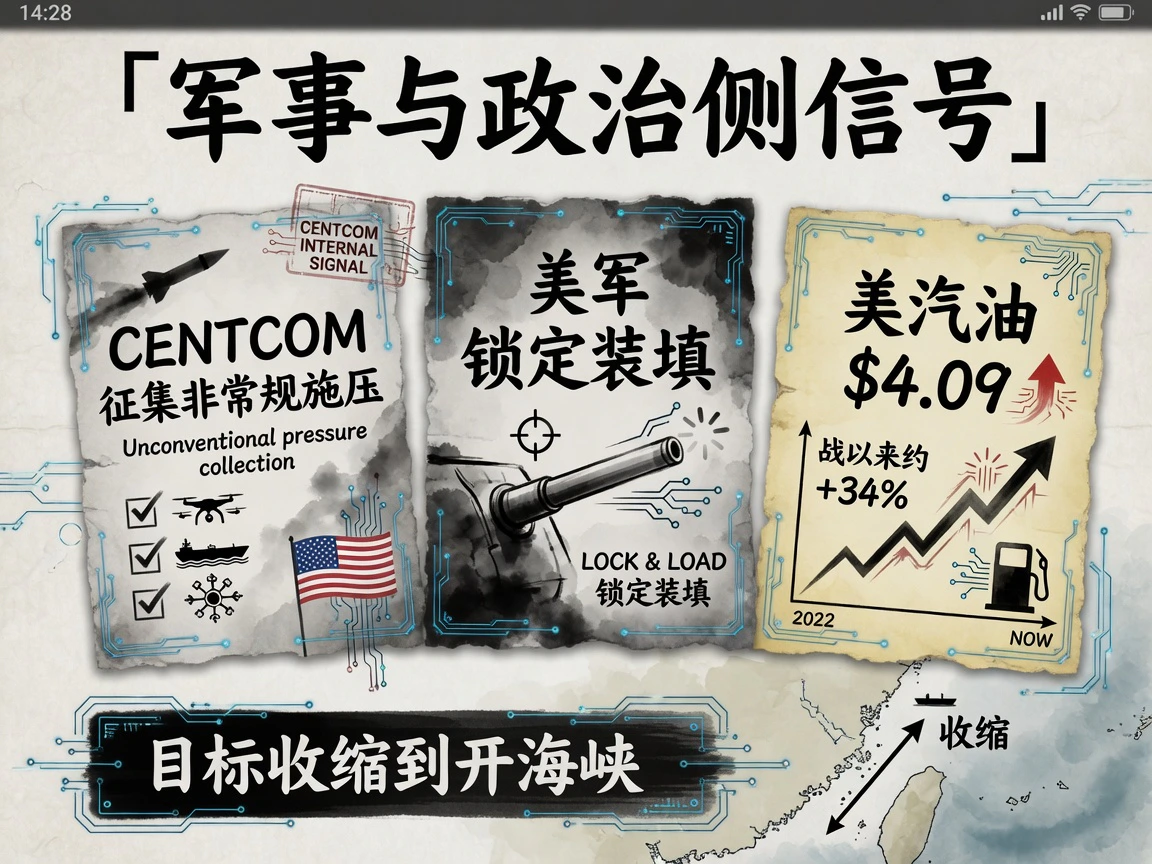
The gap between military threats and limited options became clearer. A senior CENTCOM intelligence officer had emailed staff the previous week seeking creative, unconventional ways to pressure and punish Iran. A spokesman called innovation routine, but Washington defense observers viewed the request as evidence of few low-risk conventional options against asymmetric retaliation and mines. In contrast, Hegseth publicly said US frontline forces were locked and loaded over the weekend.
Domestic political and economic costs were accumulating. In the Oval Office Monday, Trump accused large oil companies of excessive wartime profits and demanded immediate cuts in US refined-fuel retail prices.
The economics and polling were unfavorable. Regular gasoline averaged $4.09 a gallon, about 34% above the low since fighting began, directly challenging consumers' inflation confidence. A national poll found 67% believed direct war with Iran would seriously damage US interests. Regional strategists argued that the earlier regime-change objective was retreating and the White House's immediate minimum aim had narrowed to reopening Hormuz at almost any cost.
Live highlights

| Key developments |
|---|
| 08-04 09:02 Beijing timeUKMTO urgent notice: a merchant vessel was directly hit by an unidentified projectile about 20 nautical miles northeast of Al Khasab in Hormuz. No attacker was identified. |
| 08-04 02:24 Beijing timeTrump says the pause is a last chance before decapitation strikes and proposes reopening Hormuz in stage one and denuclearization in stage two. |
| 08-03 23:47 Beijing timeTrump accuses Iranian leaders of duplicity on Truth Social and promises blockade until an agreement or complete surrender. |
| 08-03 18:11 Beijing timeBaghaei says Iran is not negotiating with the US, only discussing technical routes with Oman. Technical arrangements are unrelated to full reopening; he condemns US abandonment of June's memorandum. |
| 08-03 17:23 Beijing timeOil's geopolitical premium falls: Brent briefly drops about 4.2% to $84 a barrel and WTI nearly 5% toward $80. |
| 08-03 16:48 Beijing timeShipping: Oman's southern route carries only about 3 million to 5 million barrels daily versus about 20 million prewar. About 34 Red Sea vessels crossed Sunday; several Saudi tankers rerouted via the Cape. |
| 08-03 12:19 Beijing timeAn internal CENTCOM email seeks creative, unconventional pressure measures, exposing constraints on conventional military options. |


