Over the past 24 hours, no decisive large-scale clash occurred on the Middle East's main front, but underlying maneuvering and fighting on its flanks intensified sharply. The central issues were nearly finalized yet unresolved Hormuz passage arrangements and security alerts spreading from the Red Sea into the Gulf. Under Oman's discreet mediation, Tehran and Muscat approached a new transit framework. Iran nevertheless firmly denied direct US contact and insisted a technical agreement did not mean unconditional reopening. Saudi intelligence warned of multiple coordinated attacks by Iran-aligned forces under Tehran's direction. Across the Atlantic, Trump proclaimed vast ammunition reserves against reports of interceptor shortages, yet his wording exposed constraints in advanced precision weapons.
Hormuz: framework nears completion; Tehran says it does not mean reopening

Omani shuttle diplomacy was accelerating changes in postwar navigation. Deputy Foreign Minister Kazem Gharibabadi told Iran's official news agency that technical arrangements for merchant passage were nearly finalized, but signing would not automatically reopen the strait. Washington first had to reverse unilateral hostile actions violating earlier commitments.
He said the arrangement was not a mechanical implementation of Article 5 of June's ceasefire memorandum, but a new model tailored to current security. A substantial share of merchant traffic would be routed through Iranian territorial waters and the rest through Omani waters. This would break the prewar pattern centered on Omani waters, establishing Iran's effective sovereignty and jurisdiction in legal and geographic terms. He added that Iran did not intend a permanent physical closure in normal peacetime.
Senior US and Iranian messaging was directly opposed. Spokesperson Baghaei confirmed intensive mediation messages through Oman and others, unlike Trump's claims of productive round-the-clock negotiations. Speaker and chief negotiator Ghalibaf accused the White House of theatrical diplomacy, cycling between imminent major strikes and claims that Iran wanted talks. He called intimidation, broken agreements and misinformation a failed strategy, saying Washington must accept battlefield and geopolitical realities and honor its commitments.
Hardliners also pursued legislation. Fars reported senior lawmakers drafting wartime Hormuz controls banning military and civilian vessels owned by hostile-axis states including the US and Israel, and related cargoes. Violators could face fines up to 20% of cargo value. The draft was under closed review by the Supreme National Security Council. It would reinforce the government's bargaining position with domestic law and suggested that even nominal reopening could bring unprecedented inspections and exclusion for Western-linked shipping.
Vessel flows stay near freezing, oil hesitates and the industry opposes passage fees

MarineTraffic data starkly reflected disruption: only 7 merchant ships crossed Hormuz in 24 hours, 6 entering the Gulf—5 bulk carriers and 1 tanker—and just 1 cargo ship exiting toward the Gulf of Oman. Bab el-Mandeb saw about 30 vessels. This contrasted with prewar daily dozens of large ships carrying roughly 20% of global seaborne crude. Persistent military-grade GPS spoofing and electromagnetic interference across the Gulf added severe technical navigation risks.
Iran's effort to monetize wartime control triggered collective industry protest. On Monday, eight leading shipping and maritime associations jointly sent the UN and IMO an urgent letter warning that proposed Iranian–Omani maritime technical and safety fees would undermine basic innocent-passage conventions and impose intolerable logistics costs. They opposed Tehran's plan for tiered charges after reopening, viewing it as a sovereign toll barrier at an international chokepoint and a fundamental challenge to longstanding free-navigation rules.
Oil traders were highly sensitive to ambiguous political signals. Front-month Brent briefly rose 1.2% toward $80 a barrel, WTI about 1% near $76. Wall Street commodity banks said markets had become resistant to repeated claims of diplomatic breakthroughs. Attention shifted from whether a deal might be signed to pricing mandatory charges, sovereign safety guarantees and practical implementation.
Saudi Arabia braces for coordinated attacks; Houthis strike troop and weapons concentrations
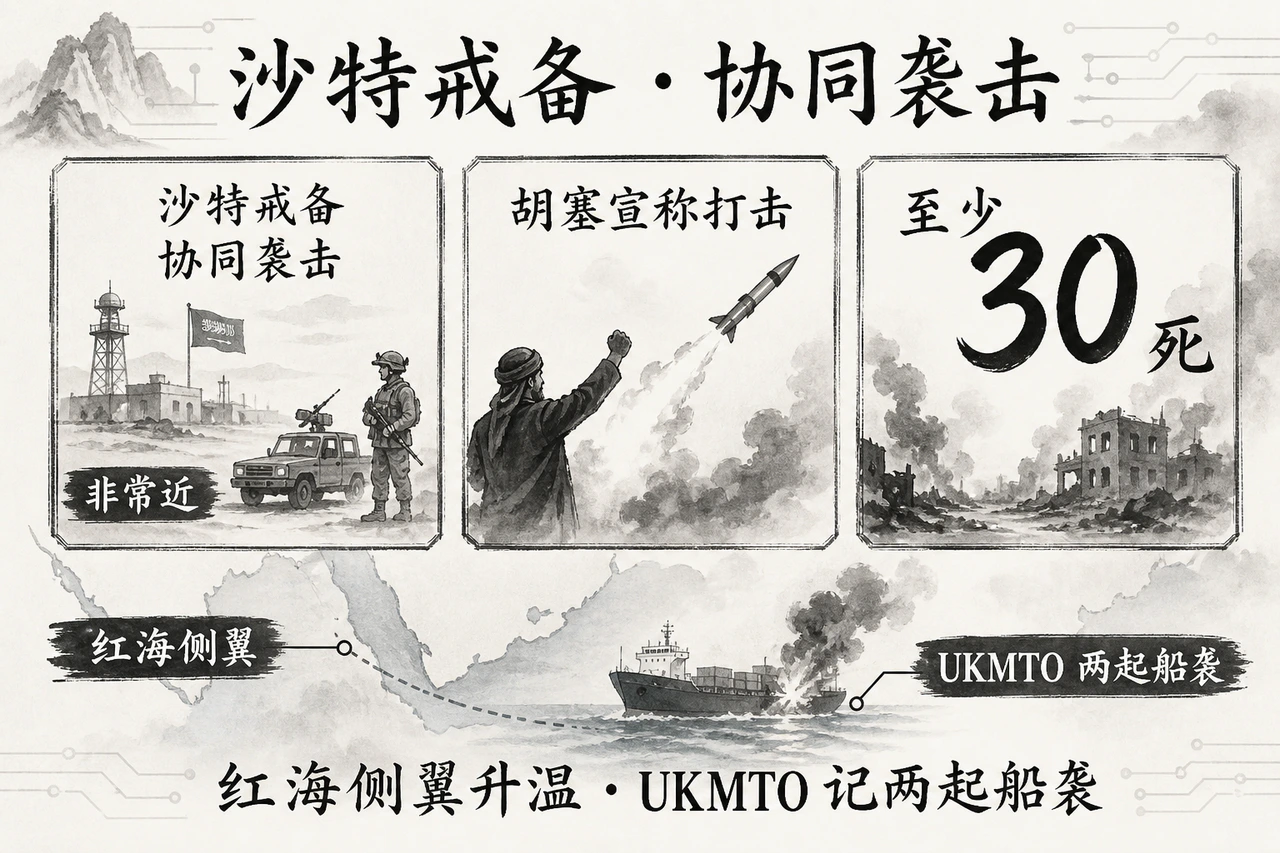
Before negotiations delivered, the northern and southern flanks became more combustible. A senior Saudi security official told major Western media that intelligence and air-defense networks were on maximum readiness based on overlapping Saudi and Gulf-allied information. According to that intelligence, Iraqi Shiite militias and Yemen's Houthis were highly likely, under unified Iranian direction, to launch multiple coordinated waves against strategic and energy facilities in Saudi Arabia very soon. The official said Riyadh was fully prepared to defend sovereignty and security with necessary force despite its reconciliation efforts. The warning cast a shadow over Friday's Turkey–Saudi Arabia–Pakistan summit in Mecca.
Houthi battlefield claims escalated too. A spokesman claimed a large, highly precise and destructive combined strike using heavy ballistic missiles and long-range attack drones against Saudi forward concentrations in Yemen, naming Al-Ruwaik, Al-Abr and Al-Thaniyah camps. The Houthis described it as a preemptive response to final-stage operational Saudi military buildup along the border.
Saudi defense officials had not publicly commented, but Reuters cited senior Yemeni government military sources confirming a severe strike on a staging camp near the Marib–Hadramawt boundary, killing at least 30 government soldiers. The US embassy condemned the Houthis' deliberate disruption of the border ceasefire and offered condolences. UKMTO also recorded merchant attacks and explosions near Bab el-Mandeb, while Houthis threatened to extend asymmetric attacks on Saudi-linked shipping into the northern Red Sea.
Trump denies ammunition shortages and backs Hegseth, but inventory weaknesses remain
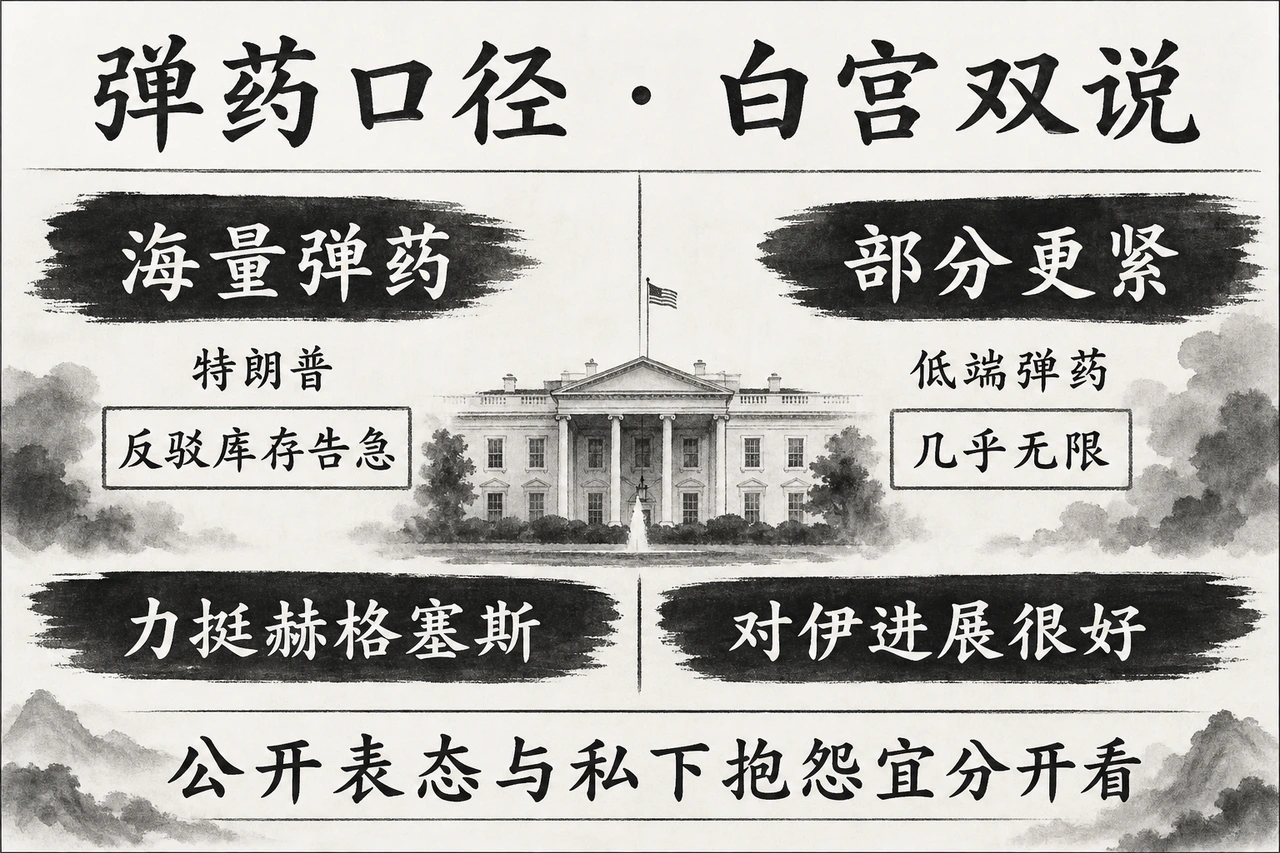
A Washington controversy grew over whether US stocks were exhausted. Earlier US reporting citing classified Pentagon briefings said theater reserves were below dangerous thresholds, especially advanced missile defense: nearly 80% of existing THAAD interceptors and more than half of Patriot-3 stocks had been expended. Trump responded early Thursday on social media, claiming extraordinary reserves and a steady stream of newly accelerated wartime production to the theater.
Questioned in the Oval Office Thursday midday, he adjusted his wording. He acknowledged tighter supply in some advanced interceptors and guided weapons, then stressed almost unlimited conventional lower-precision ammunition. He said an executive order required full wartime contractor output and accelerated Patriot and Tomahawk production. He expressed complete confidence and satisfaction in Defense Secretary Pete Hegseth, denied cabinet infighting over shortages and said the Iran pressure campaign was progressing extremely well.
Senior White House aides privately described greater anxiety: Trump had reportedly erupted in closed meetings over leaked shortage information, complaining that exposure of logistics vulnerabilities undermined leverage at a critical negotiating moment. The contrast between public toughness and private concern underscored how prolonged attrition was pushing US defense-industrial replenishment weaknesses toward a limit.
Lebanon–Israel Rome talks claim progress while southern fighting and rights allegations intensify

US-led indirect Israel–Lebanon mediation continued with difficulty. The third round of technical Rome talks, interrupted by escalation in southern Lebanon, concluded after Thursday's closed-door resumption. A State Department spokesperson called expert discussions constructive and effective and said the sides were closer to expanding pilot security buffer zones. The plan envisaged phased Israeli withdrawal from selected southern outposts and gradual transfer of security responsibilities to regular Lebanese forces.
Diplomatic wording could not conceal frontline bloodshed. Israel accused Hezbollah of repeated ceasefire violations. Israeli ground forces said two soldiers died Wednesday after triggering a heavy explosive device while entering a building during searches in Majdal Zoun, with four others seriously wounded. Israel then intensified retaliatory southern airstrikes over 24 hours. Lebanon's National News Agency reported multiple high-explosive attacks around Tyre and nearby villages, injuring at least four civilians and defense personnel.
Israel also faced new legal and diplomatic pressure. A major international rights-investigation organization released an independent forensic and ballistic report on the earlier killing of Lebanese journalist Amal Khalil. It said detailed evidence indicated an Israeli airstrike on unprotected journalists was highly likely to constitute an intentional war-crime-level attack. The military firmly denied targeting journalists. Released during sensitive Rome talks, the findings intensified international condemnation of excessive lethal force in southern Lebanon.
Live highlights

Key developments over the past 24 hours, newest first in Beijing time:
| Key developments |
|---|
| 08-07 12:35 Beijing timeOverall assessment: Iran–Oman Hormuz rules near completion but do not mean reopening; Saudi alerts intensify; Trump's ammunition wording reveals constraints. |
| 08-07 07:46 Beijing timeStrategic review of Trump's recurring shifts between maximum pressure on Iran and calls for negotiation. |
| 08-07 07:05 Beijing timeTrump insists on vast ammunition reserves, acknowledges some advanced weapons are tighter and strongly supports Hegseth. |
| 08-07 05:20 Beijing timeA senior Saudi security official says the kingdom is bracing for imminent coordinated attacks by Iraqi militias and Houthis. |
| 08-07 04:47 Beijing timeWhite House explanation: some theater munitions are tight, but lower-precision conventional stocks are almost unlimited. |
| 08-07 04:32 Beijing timeMarineTraffic records only 7 Hormuz merchant crossings and about 30 at Bab el-Mandeb; GPS spoofing remains extensive. |
| 08-07 04:16 Beijing timeGhalibaf condemns Trump's theatrical diplomacy; Tehran again rules out direct Washington contact. |
| 08-07 02:05 Beijing timeIranian draft legislation would ban hostile-bloc vessels and impose fines up to 20% of total cargo value. |
| 08-07 01:17 Beijing timeThe State Department says Rome technical and expert talks between Lebanon and Israel made progress toward pilot border zones. |
| 08-07 01:09 Beijing timeTrump posts complete satisfaction with Hegseth and says the Iran military campaign is progressing very well. |
| 08-06 23:22 Beijing timeIsrael intensifies strikes on Hezbollah positions; the third Rome round concludes; Salam separately holds intensive meetings with senior British officials. |
| 08-06 23:20 Beijing timeAn international rights investigation says the fatal Israeli strike on a journalist may involve war crimes; Israel rejects the conclusion. |
| 08-06 23:08 Beijing timeHouthis claim a large missile strike on Saudi staging areas. Reuters confirms at least 30 Yemeni regular troops killed; the US embassy condemns it. |
| 08-06 21:53 Beijing timeFrontline roundup: Trump denies shortages, Iran–Oman text nears completion and two merchant incidents are recorded in the Red Sea. |
| 08-06 21:21 Beijing timeThe third Rome technical meeting resumes with difficulty after a pause caused by sudden southern-border escalation. |
| 08-06 19:27 Beijing timeNew revenge-themed anti-US murals appear in Tehran, centering Hormuz sovereignty imagery. |
| 08-06 19:18 Beijing timeOil edges higher with Brent near $80; traders remain wary of false dawns in nominal peace talks. |
| 08-06 18:42 Beijing timeIsraeli military report: two soldiers killed by an explosive during Majdal Zoun searches, four seriously wounded. |
| 08-06 18:12 Beijing timeEight global maritime business groups jointly write the UN and IMO opposing compulsory Hormuz transit charges. |
| 08-06 17:53 Beijing timeIran's deputy foreign minister says an Iran–Oman agreement does not automatically reopen Hormuz; Washington must stop violating commitments and new routes emphasize sovereignty. |
| 08-06 17:32 Beijing timeUKMTO alerts on two merchant vessels in distress near Bab el-Mandeb; Houthis threaten to extend fighting northward. |
| 08-06 14:14 Beijing timeLebanese officials report Israeli strikes on towns around Tyre, at least four injured, amid intensified border bombing. |
| 08-06 13:48 Beijing timeRome technical talks broke off Wednesday after border bloodshed; parties reported efforts to resume Thursday. |
| 08-06 13:40 Beijing timeTrump urgently posts late at night denying depleted stocks and calling accusations false, insisting the US has vast ammunition. |