Over the past 24 hours, the focus shifted from large direct exchanges to sharply intensified politics over Hormuz. Tehran issued strict reopening prerequisites, demanding that the United States first correct its conduct. Araghchi stressed that technical route arrangements with Oman did not mean reopening and no direct U.S.–Iran negotiations existed. Washington shifted subtly: Trump said it was handling matters quietly through semi-negotiations and emphasized Iran's high inflation and fiscal exhaustion as leverage. Brent rebounded. Tehran also changed a key coordinator: the supreme leader appointed former IRGC commander Mohsen Rezaei as his Supreme National Security Council representative. On the flanks, the Houthis claimed new attacks on Jizan's Aramco refinery and Mocha port.
Information note: The main source is CNN's rolling “The war with Iran” coverage, 2026/08/09/.../iran-war-trump. The monitoring window includes 21 core updates from 12:10 Beijing time August 9 to 06:44 August 10. Key figures, quotations and timed records correspond to official statements and on-site verification. No new posts appeared for about three hours before the live window's first item. The article follows objective reporting without invented speculation.
Hormuz: a high-threshold list; an Oman arrangement does not equal reopening

Tehran turned navigation discussions into high-level political bargaining. On Saturday, SNSC secretary Mohammad Bagher Zolghadr formally listed hard prerequisites through official channels: no reopening until Washington genuinely corrected its conduct. Demands included a permanent end to war and aggression against Iran and allies, removal of the blockade of all Iranian ports and withdrawal of U.S. forces from surrounding waters, full war-damage compensation, removal of all sanctions and unconditional unfreezing of overseas assets. CNN's live analysis said hardliners repeatedly reinforced this message to counter optimism: limited Iran–Oman technical arrangements did not mean full reopening.
On Sunday, Araghchi, conducting intensive diplomacy in Oman, said a technical agreement was close. Merchant ships could use temporary safe lanes during transition until a new system replaced the prewar traffic-separation scheme. He warned this bilateral coordination could not alone reopen the strategic waterway. He also said there were currently no U.S. negotiations. Mediators sought a route back, but Tehran saw none before U.S. violations of June's memorandum were addressed and substantive compensation paid. The live report emphasized that Iran had effectively kept the oil chokepoint closed since the U.S.–Israeli war began.
Oil and navigation expectations: reopening hopes cool and risk premiums return

Oil quickly restored premiums as diplomatic expectations deteriorated. After Sunday's opening, Brent rose about 1.2% intraday to $84.58 a barrel and WTI about 1.1% to $79.28. Market analysis linked this directly to Tehran's high-threshold list and no-negotiations statement. Near-agreement reports with Oman had encouraged shipping and energy expectations; Zolghadr's ultimatum extinguished fragile hopes and made immediate unrestricted passage difficult to price. Detailed balances and curves are left to the oil report; this section records benchmark moves and geopolitical transmission within the live window.
Washington: low-key semi-negotiations, a military exit search and defense production

Trump told Axios on Sunday that Washington was “low-keying it” and “semi-negotiating” with Iran. He said it was watching Iranian inflation and depleted finances and described the economy as in bad shape. Live analysis concluded that Iran's insistence on prior U.S. implementation of June's temporary agreement left direct negotiations highly uncertain.
Behind the public pressure, unease was reportedly spreading in U.S. command. Reporting citing informed sources said Joint Chiefs Chairman General Dan Caine privately sought a clear exit from the Iran operation, fearing escalation could backfire and airpower alone could not achieve presidential objectives. This remained anonymously sourced private military commentary, not a White House statement, but showed professional concern over a prolonged war. The Pentagon also prepared for attrition: Deputy Secretary Feinberg's August 5 internal memorandum ordered contractors to submit detailed acceleration and capacity-expansion plans within 21 days. The department confirmed its authenticity, showing concern over critical inventories.
Tehran: Rezaei becomes the leader's security-council representative; public-appearance footage announced

Supreme Leader Mojtaba Khamenei appointed former IRGC commander Mohsen Rezaei his plenipotentiary SNSC representative Sunday, replacing Zolghadr. The decree praised his command experience during the Iran–Iraq “Sacred Defense.” Coming just after Zolghadr's Hormuz list, the change did not soften its hard-line consensus but replaced the coordinator of defense and strategic talks.
State media also cited Basij officials saying footage would be released of Mojtaba walking among crowds, visiting streets and meeting commanders. It was the first formal preview of public-appearance footage since he became supreme leader in March. Health rumors persisted with limited independent verification; observers awaited the first images to assess political control.
Regional flanks: Houthis claim Jizan and Mocha attacks after the Mecca defense pact
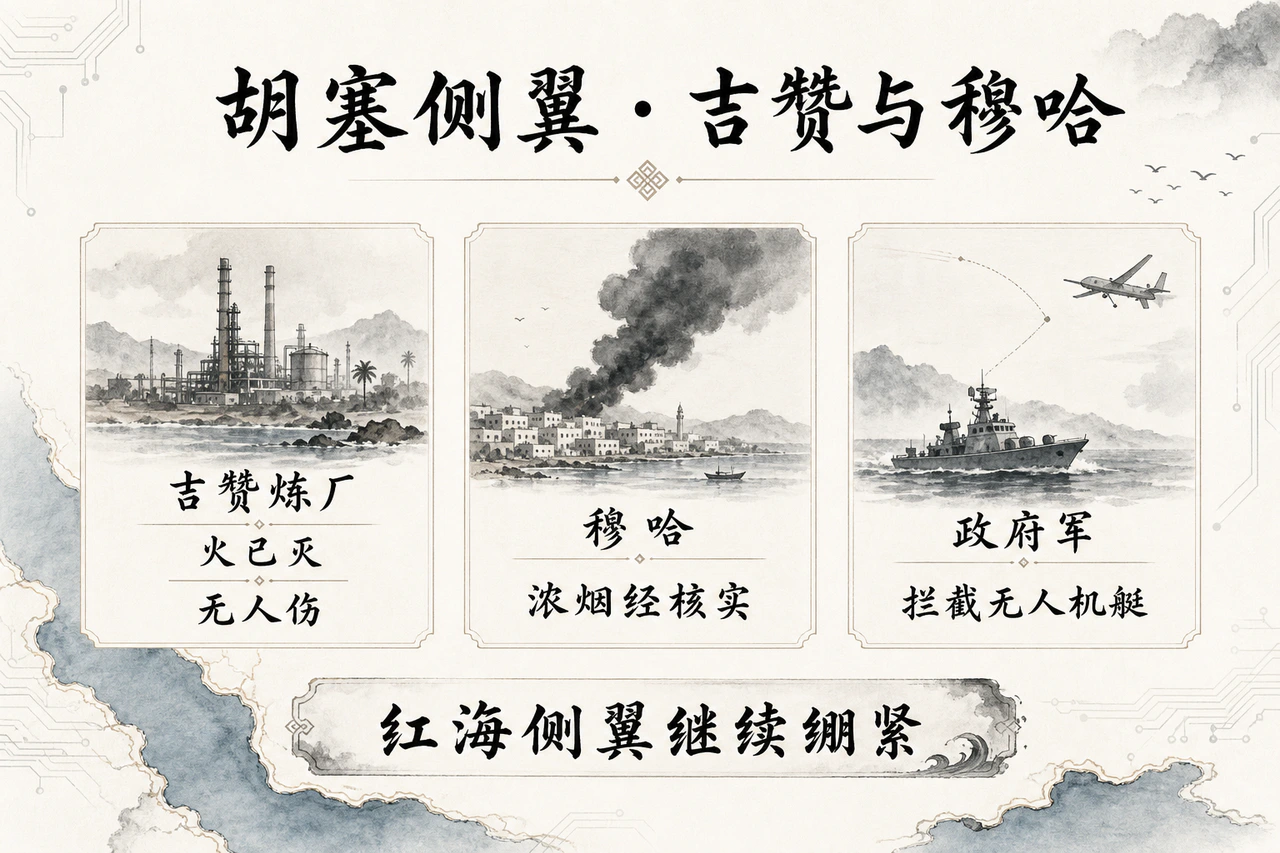
Fighting spread along Red Sea and Gulf flanks. The Houthis claimed drone swarms hit Aramco's Jizan refinery in response to Saudi drones entering Saada and Hajjah airspace. Saudi Arabia's Energy Ministry confirmed a dawn facility fire, saying it was quickly extinguished without injuries.
The Houthis then claimed a large precise operation against strategic Mocha port. CNN-verified social footage showed thick smoke over the port, while Yemeni government forces countered that they had thwarted the attack and intercepted an explosive drone boat offshore. The attacks came days after Saudi Arabia's collective-defense pact with Pakistan and Turkey in Mecca, showing continued pressure on its alliance. Houthi success claims and government interception accounts conflicted sharply; independent casualty and damage figures remained unresolved.
Key developments

Summarized from CNN Live posts in reverse Beijing-time order:
| Key developments |
|---|
Brent approximately $84.58 (+1.2%) and WTI $79.28 (+1.1%); recovery linked to Iran's reopening demands and no-talks statement. |
Mojtaba appointed Rezaei SNSC representative, replacing Zolghadr after the reopening list. |
Trump told Axios of low-key semi-negotiations and reliance on Iranian inflation and fiscal pressure. |
A Pentagon memo required contractors to submit faster-delivery and capacity-expansion plans within 21 days. |
Yemeni government forces reported intercepting a suicide explosive drone boat bound for Mocha. |
The Houthis claimed a Mocha attack; CNN verified footage of thick port-area smoke. |
Araghchi said no U.S.–Iran talks existed and contacts were unlikely before memorandum violations were corrected and compensation paid. |
The Houthis claimed a Jizan refinery attack; Saudi Arabia said the dawn fire was extinguished without casualties. |
Araghchi said an Iran–Oman temporary-lane arrangement was close but could not independently reopen Hormuz. |
Informed sources said Caine privately sought an exit from the Iran war. |
Zolghadr listed permanent peace, U.S. withdrawal and blockade removal, compensation, unfreezing assets and other reopening conditions. |


