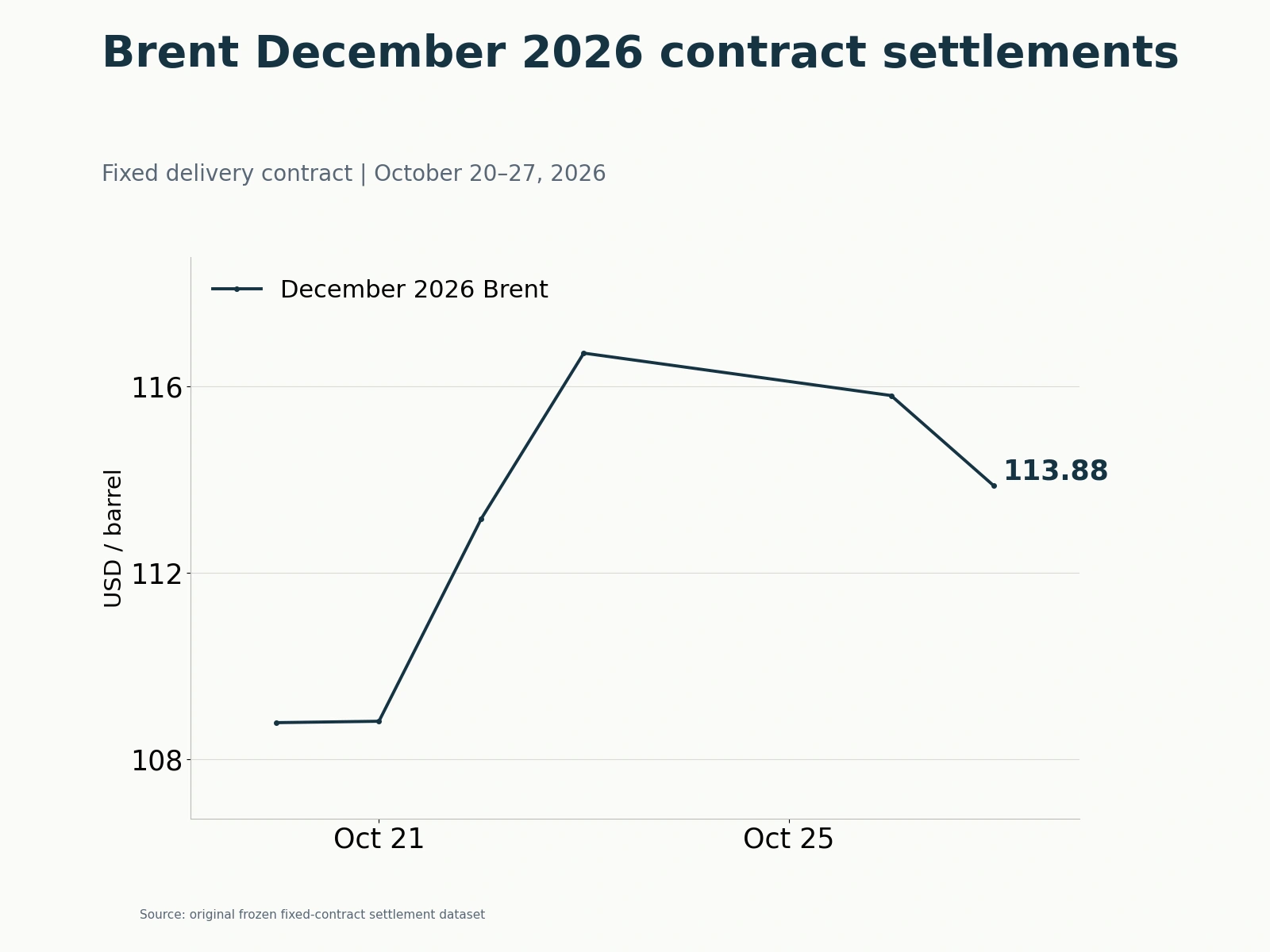
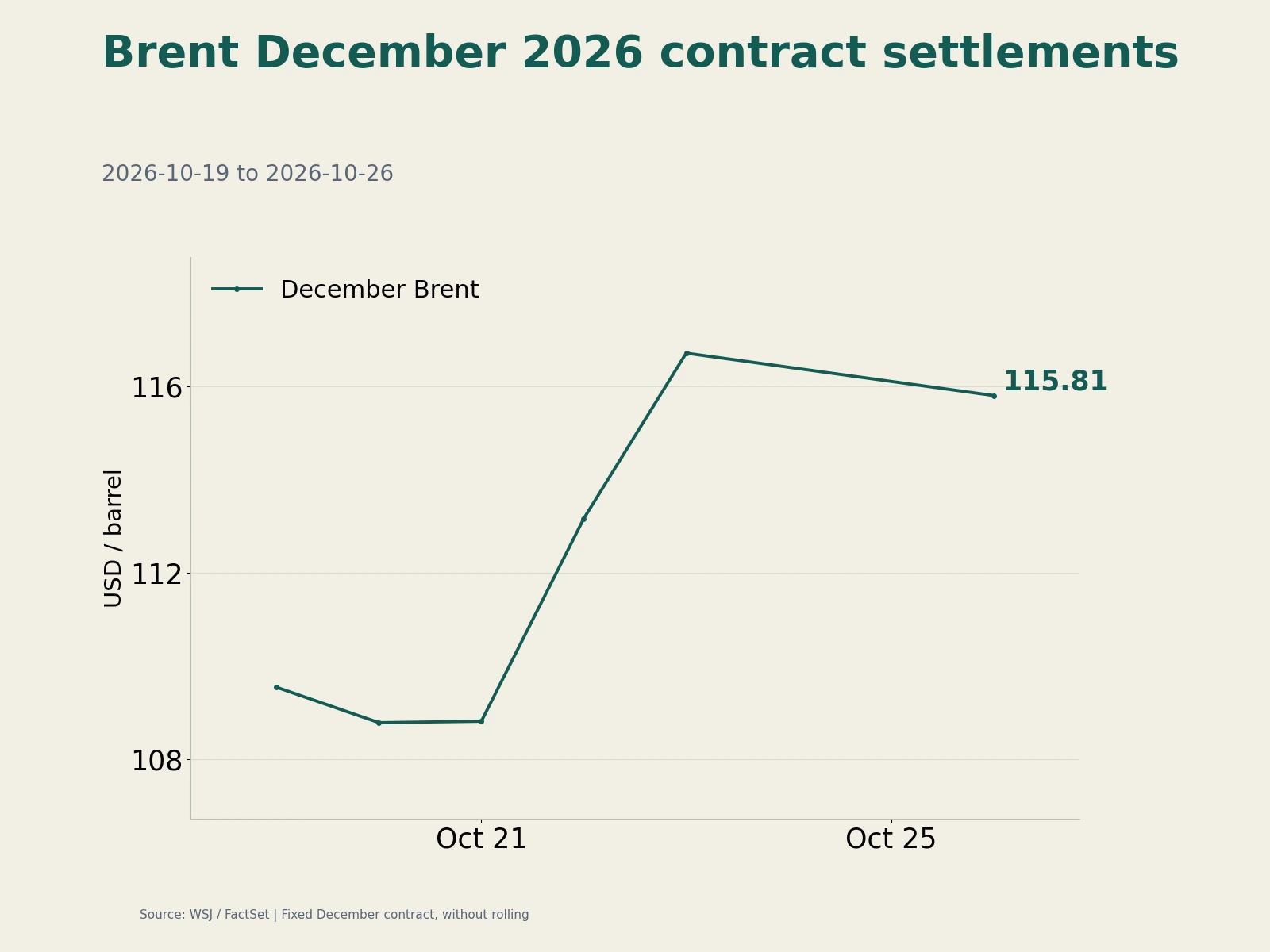
Oil rebounded strongly on Monday, with both benchmarks settling up about 5% and recovering more than half of the previous week's decline on hopes of imminent Hormuz reopening. The driver was neither U.S. commercial inventories nor Treasury and dollar moves, but a correction of excessive optimism. Disputed core terms and commercial flows far from normal prompted rapid rebuilding of nearby geopolitical and capacity premiums. Reuters and other leading financial media likewise attributed the roughly 5% gain to sharply reduced reopening expectations.
The settlement recovers around half the weekly loss while the curve trades two stories
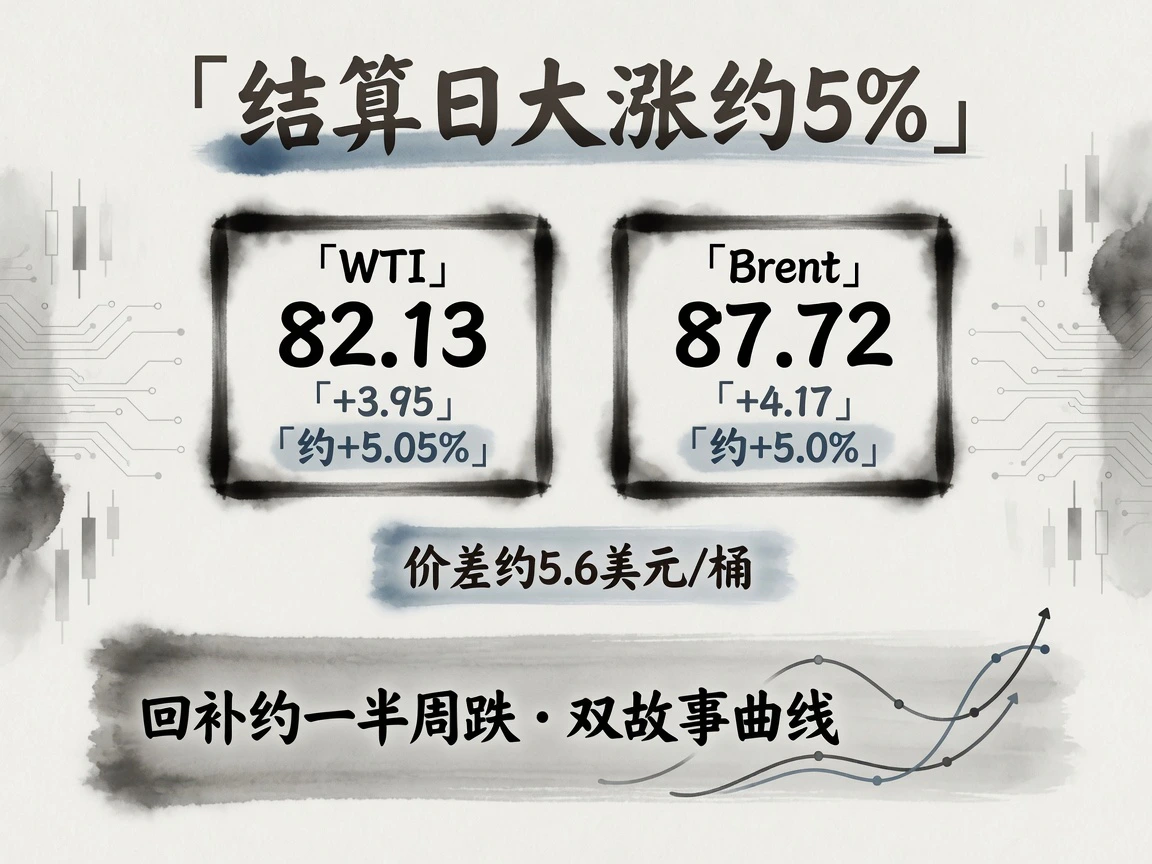
Official Monday, August 10 settlements put front-month WTI at $82.13 a barrel, up $3.95, about 5.05%, from August 7's $78.18. Brent settled at $87.72, versus $83.55, up $4.17, about 5.0%. CNBC and other mainstream reports matched these levels. Brent's premium over WTI stayed near $5.6 a barrel.
Later Monday electronic trading put WTI CL near $82.39 and Brent BZ around $87.94. The live snapshot at 10:16–10:17 Beijing time on August 11 remained around that range.
Friday had produced only a weak bounce; Monday's long upward candle recovered nearly half the previous week's decline. This was an expectations adjustment, rapidly cutting the option value assigned to conditional Hormuz reopening, rather than a physical Cushing squeeze. There was no authoritative full table of monthly spreads, but the qualitative picture was clear: nearby contracts rose steeply as reopening hopes failed and logistics friction persisted, while deferred prices remained restrained by September OPEC+ paper increases and expected U.S. builds. The EIA's looser deferred outlook, finalized in July with the next update due August 11, could coexist with a 5% daily spot move. One curve was trading two different stories.
U.S. crude builds while products draw; inventories are not the nearby driver
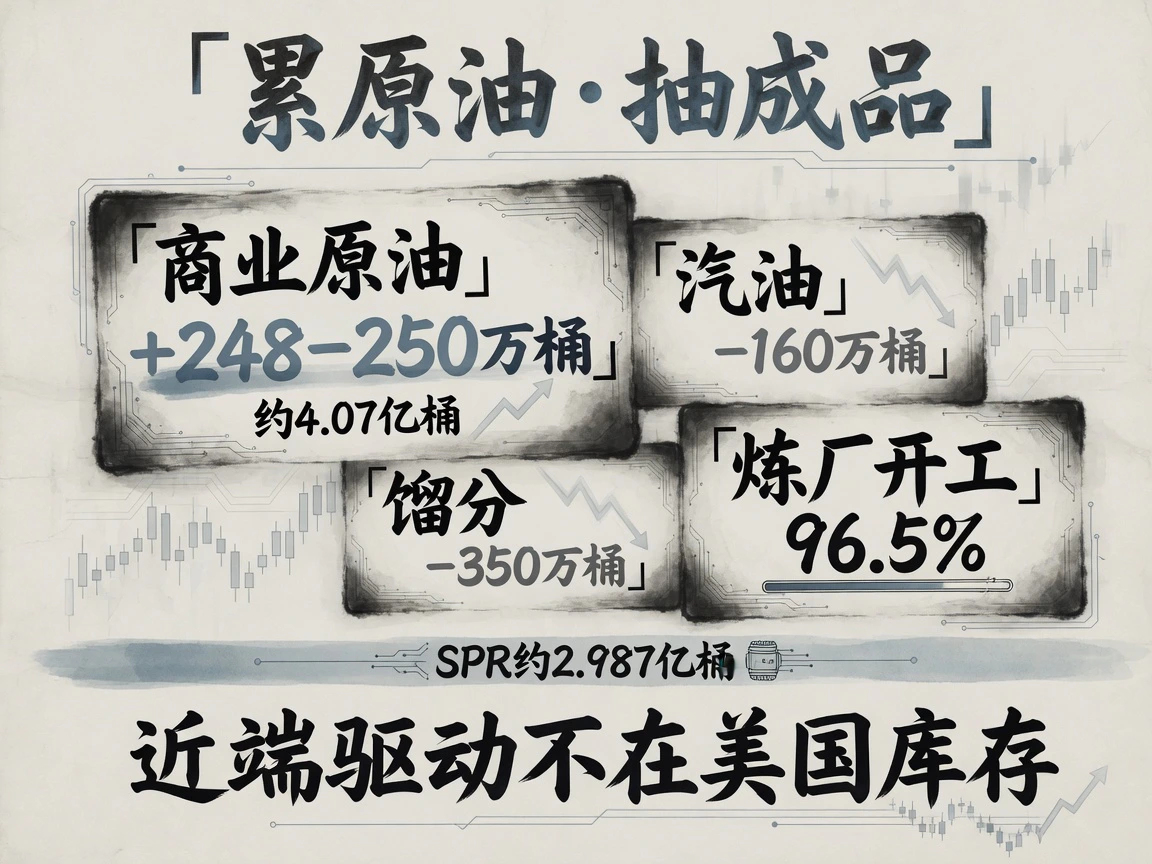
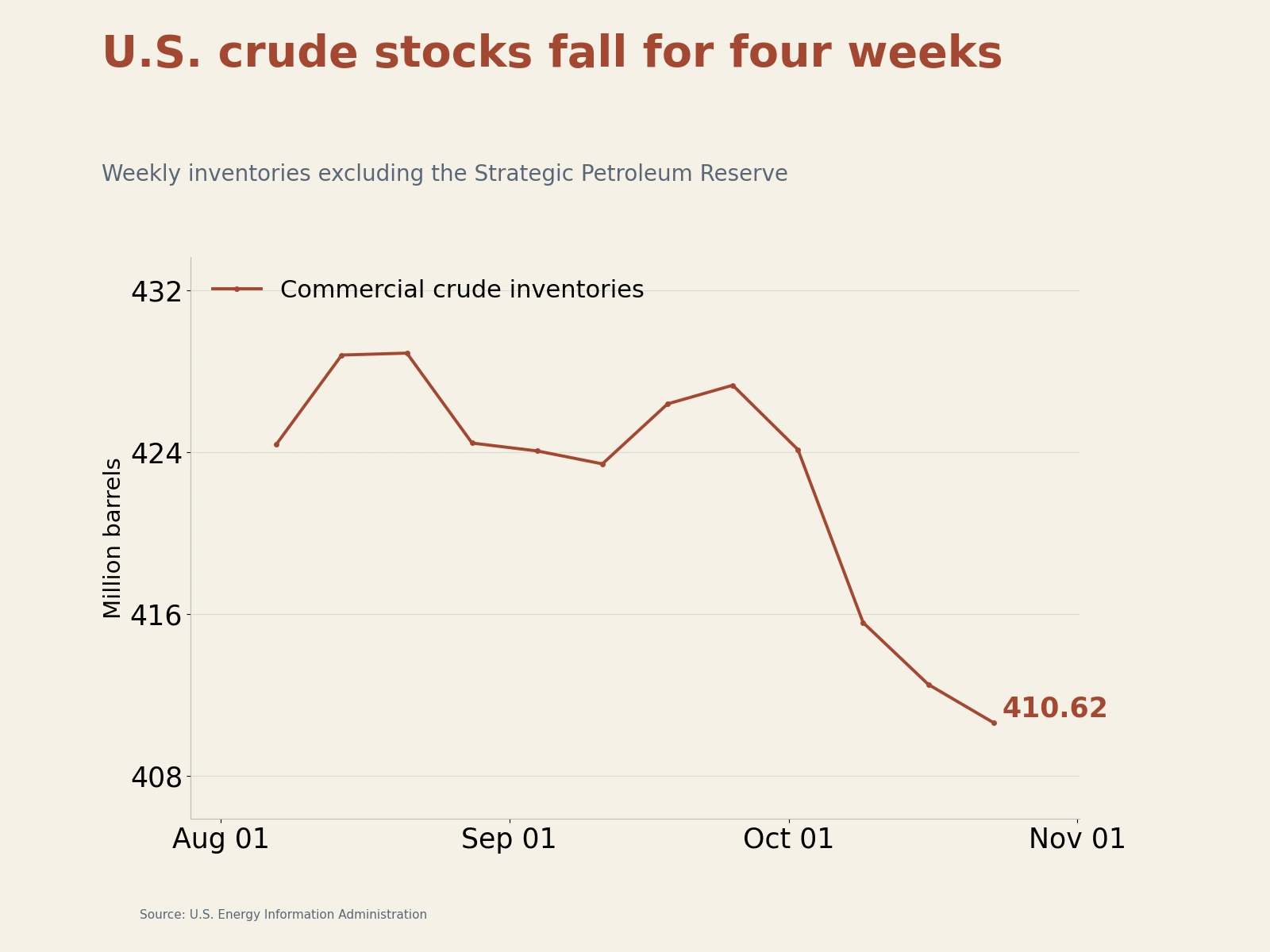
U.S. data did not support a broad physical crude shortage despite the rally. The EIA's August 5 report for the week through July 31 showed commercial crude up about 2.48 million–2.50 million barrels to 407 million. Stocks were still about 6% below the five-year average, but the build contradicted expected draws and was pronounced at Cushing. Gasoline fell about 1.6 million barrels, distillates 3.5 million, with refinery utilization at 96.5%. The surge despite this crude-build/product-draw combination confirmed that the premium concerned strait transport rather than an onshore U.S. squeeze. The next official report was due August 12.
Energy Department figures put the SPR near 298.7 million barrels, down about 6.1 million in August, approaching very low levels since the early 1980s. Continued buffer depletion increased macro vulnerability, but explained the sudden 5% daily move much less than disputed Hormuz terms.
Baker Hughes' August 7 figures showed oil rigs up three to 454, gas rigs down three to 124 and total rigs unchanged at 588. The slow overall supply response was far too small to explain Monday's volatility.
OPEC+ remained the supply-policy anchor. Eight core countries confirmed on August 2 a planned 188,000-barrel-a-day increase from September, gradually reversing 2023 voluntary cuts. The next JMMC meeting was scheduled September 6. With navigation still obstructed, actual delivery of the paper quota was uncertain. No official decision yet established a Q4 pause, leaving deferred prices to discount possible additional paper supply.
Tighter macro conditions yield to geopolitical premiums
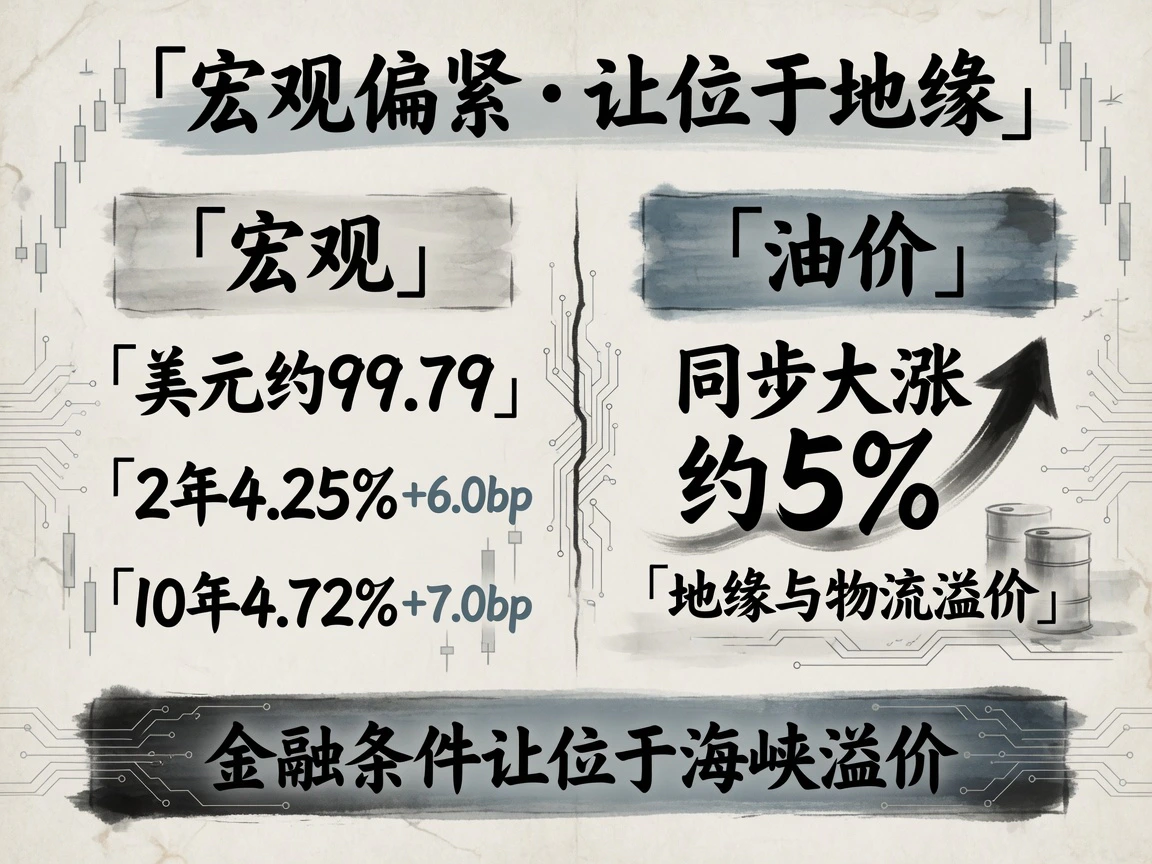
The day's financial backdrop was generally unfavorable to commodities. The dollar index firmed to 99.79 from 99.60, about 0.19%. Treasury closing yields rose broadly: two-year 4.25%, up six basis points; ten-year 4.72%, up seven. Higher rates and a stronger dollar would normally weigh on crude, but oil's strong contrary move showed geopolitics and logistics overriding macro restraint.
The S&P 500 was flat, VIX edged up to about 15.5, roughly 3.8% higher, and spot gold rose about 3.5%, reinforcing safe-haven demand alongside oil. Moderate volatility without panic equity selling indicated a premium focused on energy and shipping rather than general liquidity tightening.
Negotiations concern terms; ship flows remain far from normal

Oil and shipping price responses are often harsher than diplomatic language. From the weekend into Monday, the signal was persistent disagreement. Trump told Axios the sides were only semi-negotiating, relying more on naval blockade than new airstrikes. Iran insisted full lifting of the port blockade must come before complete Hormuz reopening. Earlier U.S. suggestions that free-navigation agreement was close were quickly disproved, driving forceful premium rebuilding.
Iranian-Omani mediation continued, but details remained sharply disputed. Iran reportedly wanted a transit-service fee around 5%–7% of cargo value; Oman's proposal around 3%; Washington insisted on zero fees. Jurisdiction and control of checks on incoming Gulf vessels remained unresolved. A paper framework is different from commercial passage that can be insured and settled. Verbal de-escalation does not directly restore owners' confidence.
Commercial tanker transits remained far below pre-conflict norms, with industry agreement on heavy restrictions, sporadic passage and extreme insurance. Without authoritative consistently defined daily counts, analysis should not overrely on estimates. Earlier Gulf–Far East VLCC rates reached extreme Worldscale levels in the hundreds and daily equivalents in the hundreds of thousands of dollars. A peak followed by sustained freight declines usually precedes convergence in paper-oil premiums. No evidence yet showed fully released capacity or collapsing rates.
For U.S. domestic logistics, discussion of extending Jones Act waivers was on the agenda as the existing window approached expiry around mid-August. The aim was to ease interregional product transport to the East Coast, only a secondary influence on global benchmark crude.
Nearby reopening option value falls; the deferred story is unchanged
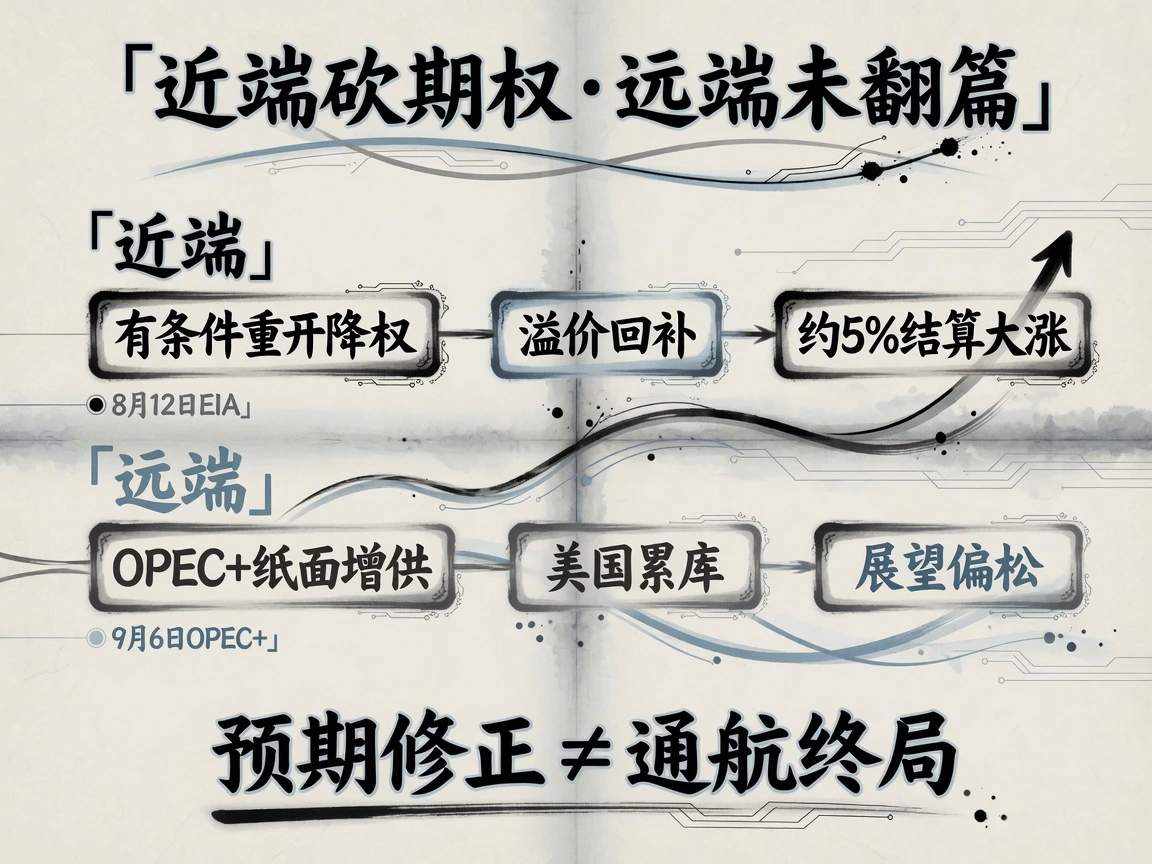
The curve was rapidly removing earlier conditional-reopening option delta. Unresolved blockade, transit fees and war insurance still deterred owners and P&I clubs, while historically low SPR stocks supported the long-side cushion. At the far end, scheduled OPEC+ paper supply, actual U.S. commercial builds and looser short- to medium-term balances had not reversed.
Monday's nearly 5% settlement rebound was a mean correction of the previous week's excessive optimism, not proof of an irreversible end to passage. Five high-confidence signals merit attention:
- Whether commercial crossings move beyond isolated trials toward stable, insurable, nondiscriminatory tanker flows;
- Whether fees and safe-corridor arrangements become legally binding documents, with easing in blockades, sanctions and reciprocal conditions;
- Whether key freight routes such as TD3C decline consistently, confirming logistical relief before Brent/WTI paper prices;
- The August 12 EIA report, testing whether crude builds and product draws continue to diverge;
- The September 6 OPEC+ ministerial meeting and its fourth-quarter output guidance.