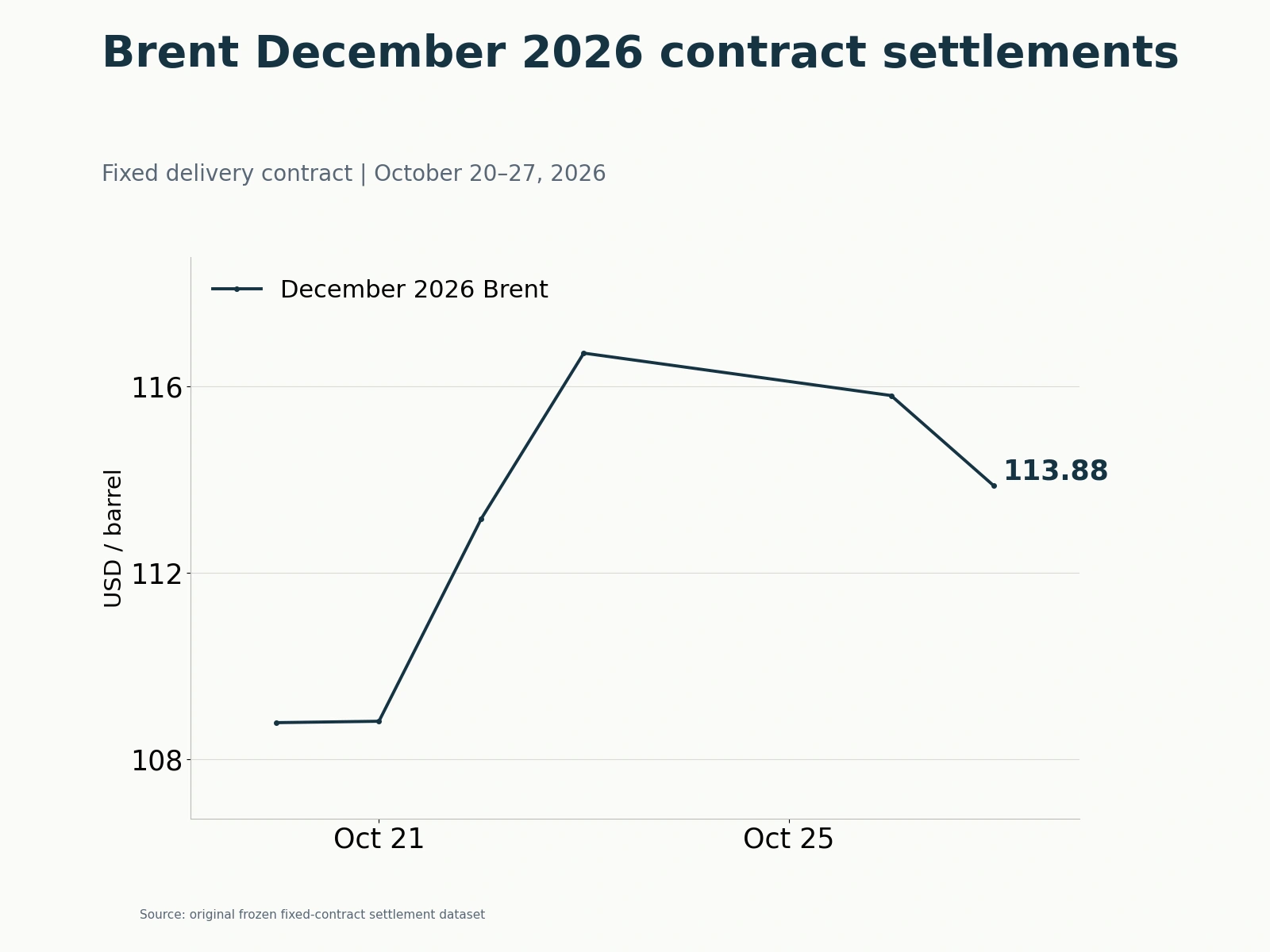
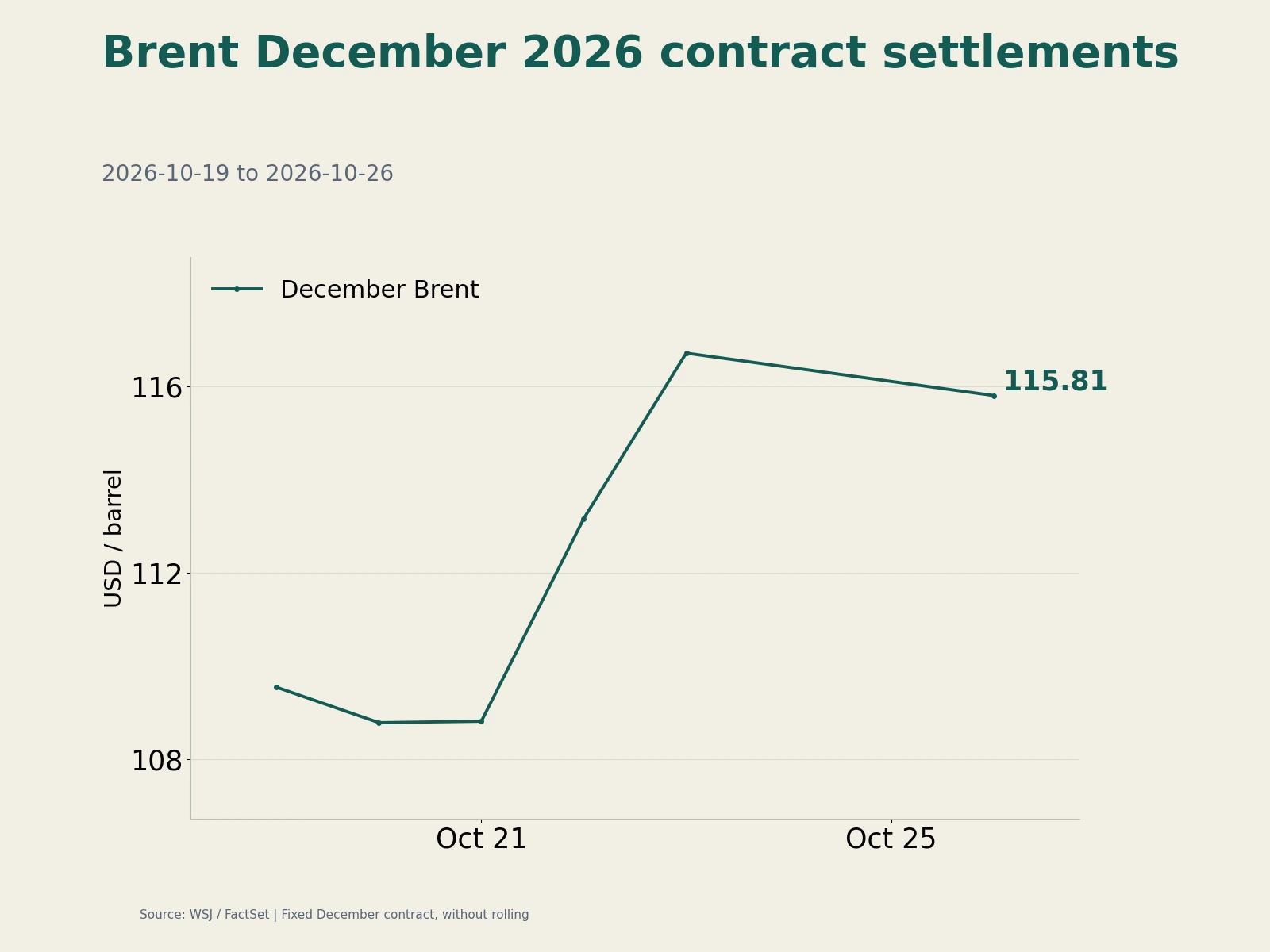
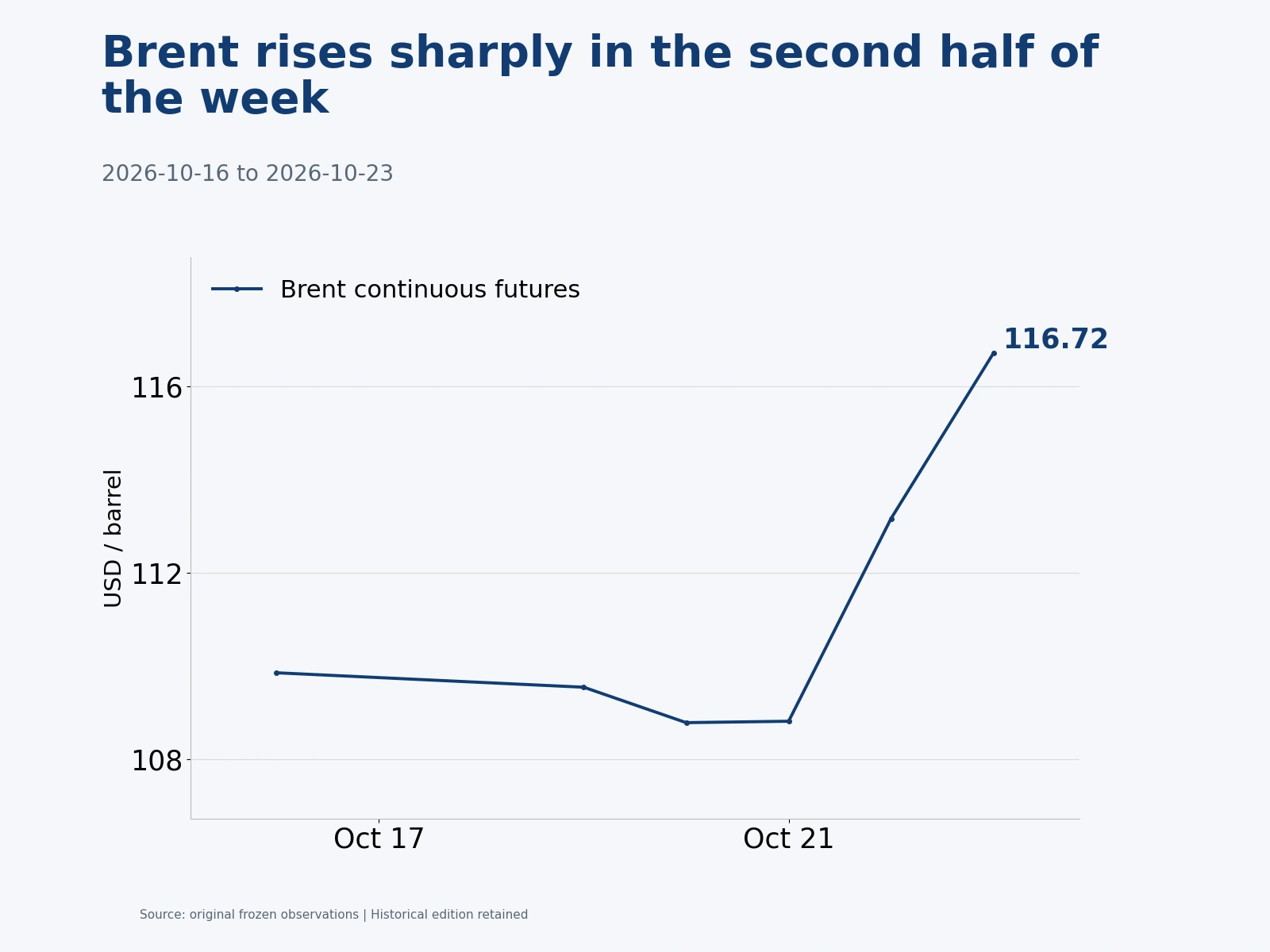
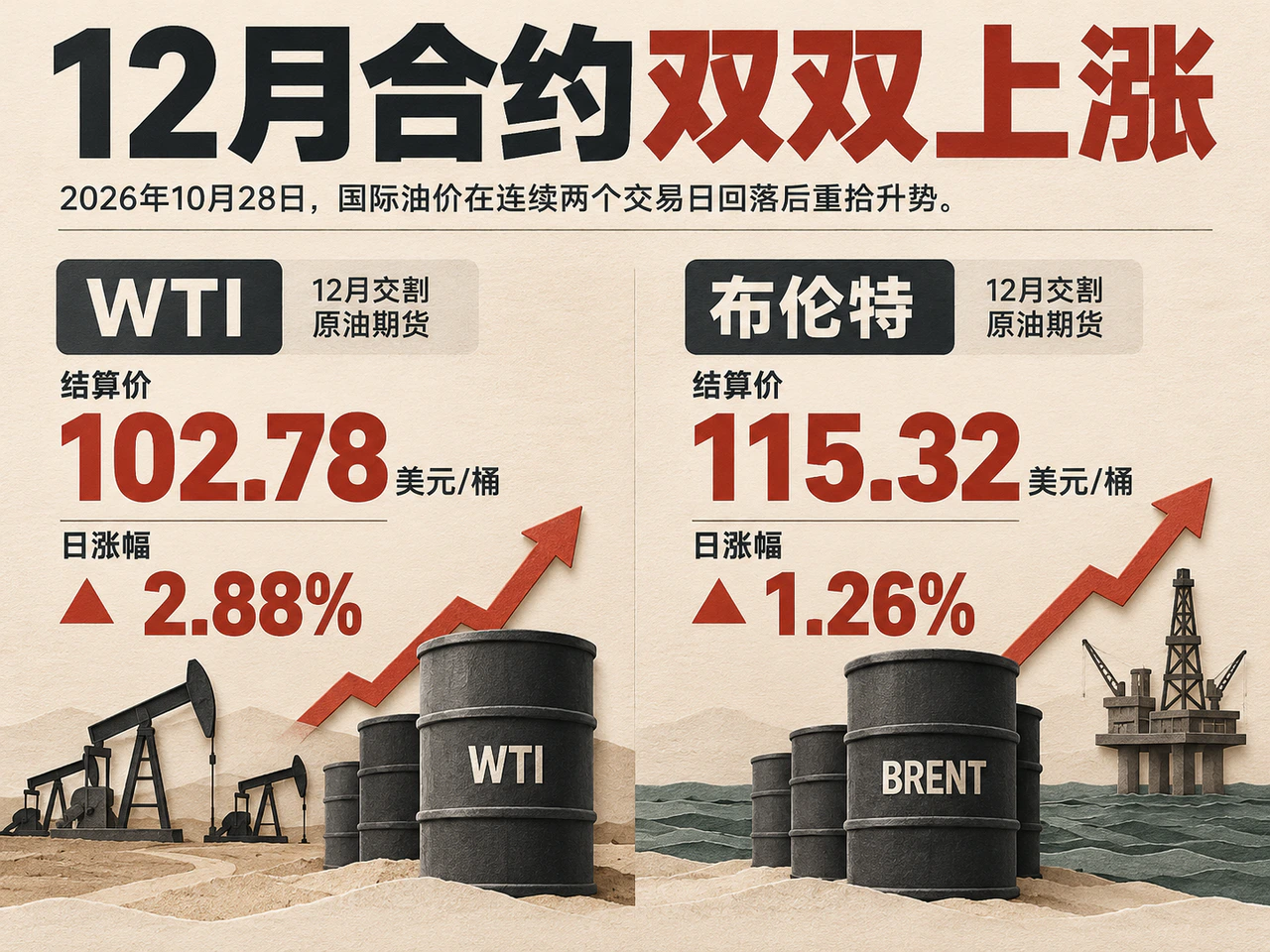
On October 28, 2026, international oil prices rebounded after two consecutive sessions of declines. December WTI futures settled US$2.88 higher, up approximately 2.88%, at US$102.78 a barrel. December Brent rose US$1.44, or about 1.26%, to US$115.32. Renewed threats to Middle Eastern energy facilities and shipping routes increased near-term supply risks. A fourth consecutive weekly decline in U.S. commercial crude inventories added physical support. Diplomatic contacts were nevertheless continuing, and U.S. fuel inventories and consumption were mixed. The durability of the rally will depend on actual supply deliveries and the pace of inventory adjustment.
A claimed attack on a Saudi refinery lifts risk premiums as Brent remains in backwardation
Middle Eastern supply risks again dominated front-month pricing. Reuters reported that the Houthis claimed to have struck a Saudi refining facility with capacity of 550,000 barrels a day using missiles on October 27. Saudi Arabia had not immediately confirmed the claim. Markets were also concerned that the United States might resume military action against Iran after the November 3 midterm elections. Threats to refineries, ports and transport routes encouraged buyers to pay more for crude that could be delivered promptly.
Diplomatic mediation had not eased supply concerns. Reuters cited officials familiar with the talks as saying Qatari mediators had proposed a new plan to end the war, while senior Iranian officials said the ideas were unacceptable. With substantial differences in the parties' positions, the market had little basis for quickly reducing the supply-risk premium.
The futures curve gives a direct indication of near-term supply tightness. Oilprice's Brent contract table showed December priced above the following January, with prices generally lower further along the curve: a backwardated structure. This indicates that the market places greater value on immediately available supply while allowing for improved conditions later. As the December contract approaches expiry, rolling into a cheaper deferred contract can produce a discontinuity in continuous price quotations. Price comparisons therefore need to hold the delivery month constant.
U.S. crude stocks fall for a fourth week; a 3.9-million-barrel gasoline build limits refinery demand
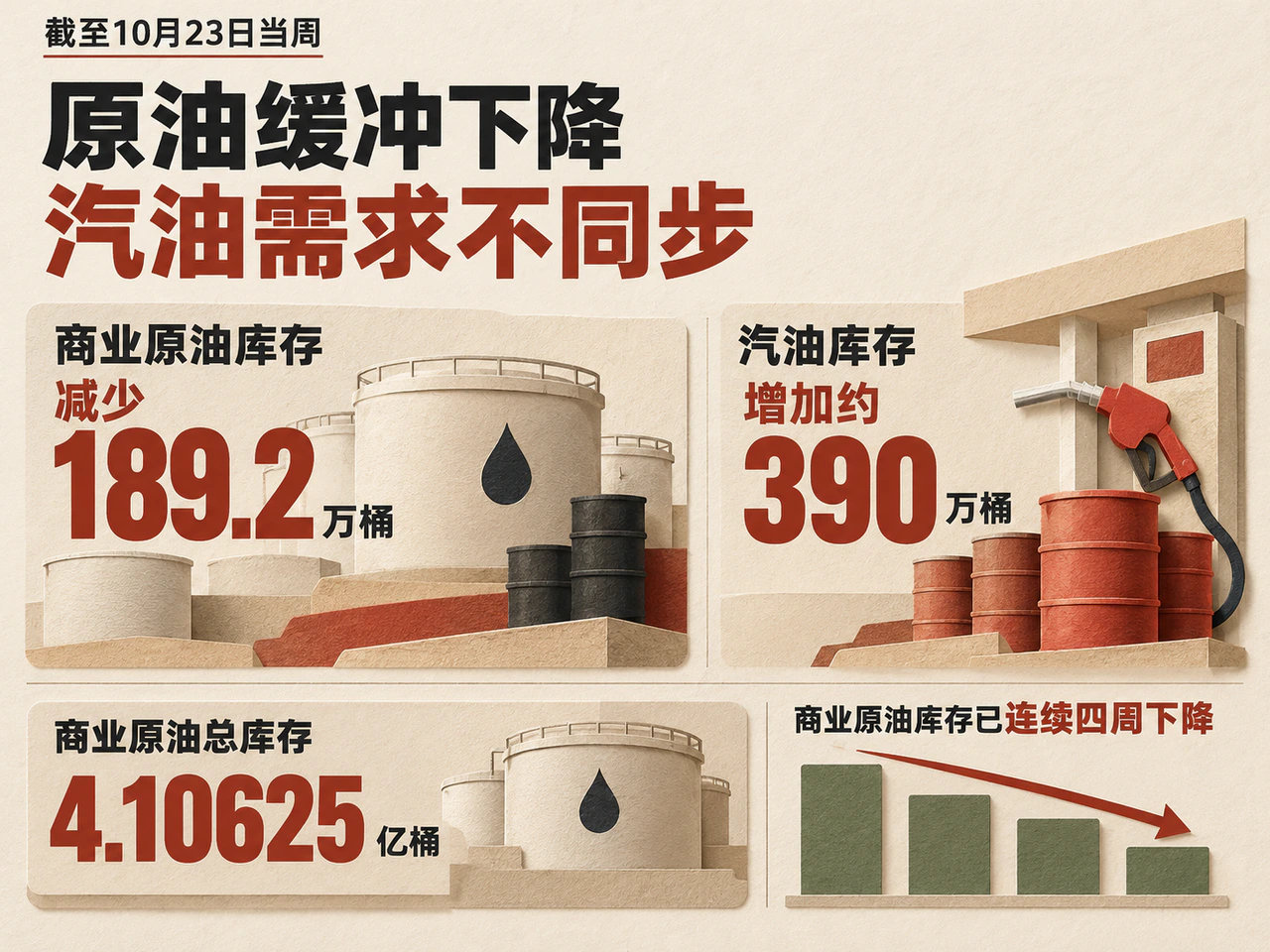
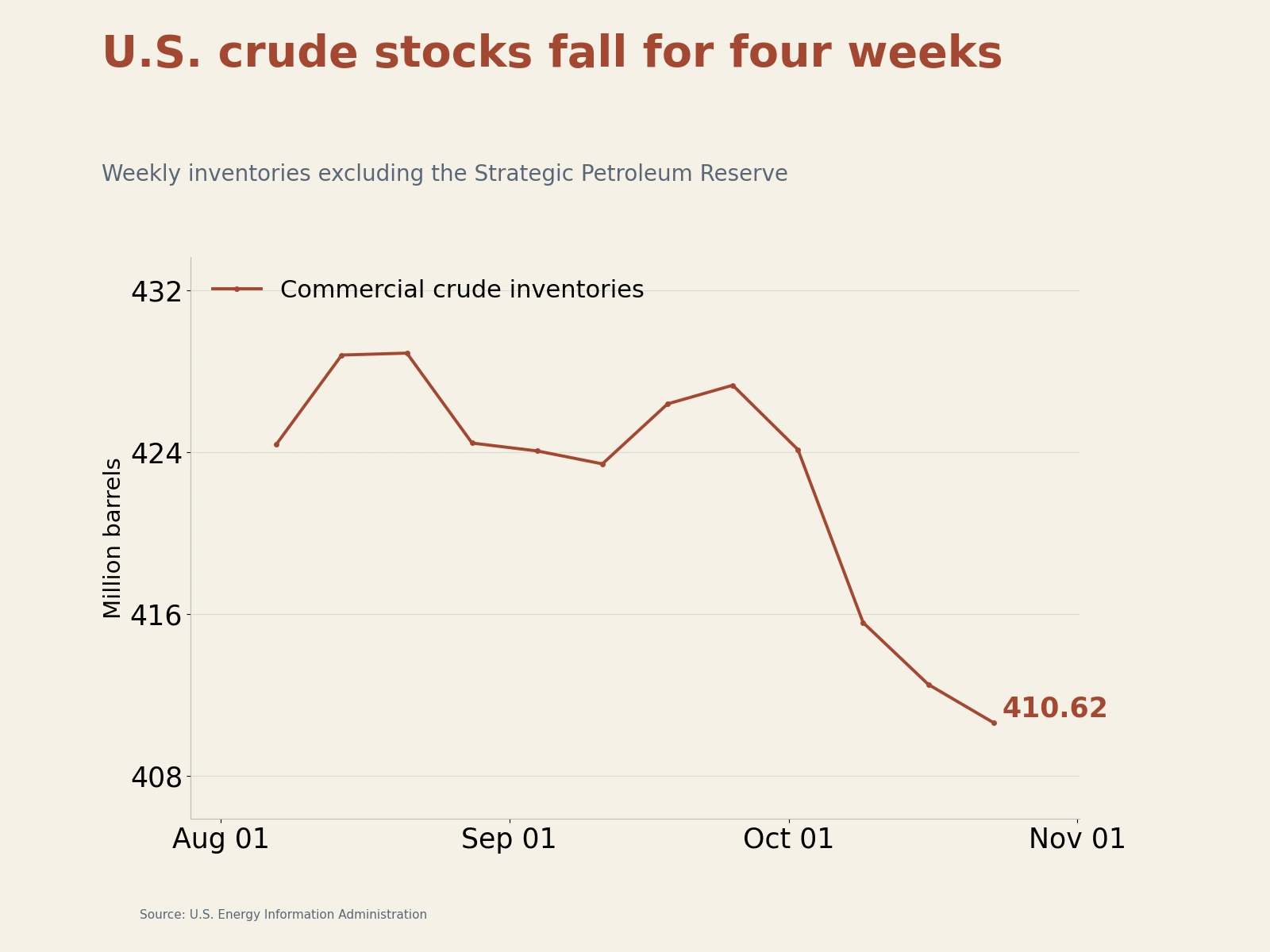
The U.S. Energy Information Administration's weekly report released on October 28 showed commercial crude inventories falling by 1.892 million barrels to 410.625 million barrels in the week ended October 23, approximately 4% below the five-year seasonal average. The same official historical series showed four consecutive weekly declines and a cumulative draw of 16.695 million barrels since September 25, indicating that the near-term crude supply buffer is being steadily depleted.
The crude draw occurred despite higher imports and lower refinery runs. Crude imports rose by 616,000 barrels a day to approximately 6.4 million barrels a day, while refinery throughput fell by 123,000 barrels a day to around 16.5 million barrels a day. Utilization was 92.8%. Higher imports and slower processing would normally ease inventory depletion. Whether draws persist will therefore need to be assessed alongside exports and changes in domestic supply.
Refined products sent mixed signals. Distillate inventories fell by approximately 1.5 million barrels and were about 10% below the five-year seasonal average, pointing to structural tightness alongside crude. Gasoline inventories, however, rose by roughly 3.9 million barrels. Average gasoline product supplied over the past four weeks was approximately 8.6 million barrels a day, down 0.7% year on year. Tightness is thus concentrated in crude availability and distillate stocks, while gasoline consumption provides less support. Continued gasoline builds would limit refiners' incentive to buy more crude.
OPEC+ expected to hold December targets; deliveries and inventory trends will determine the outlook
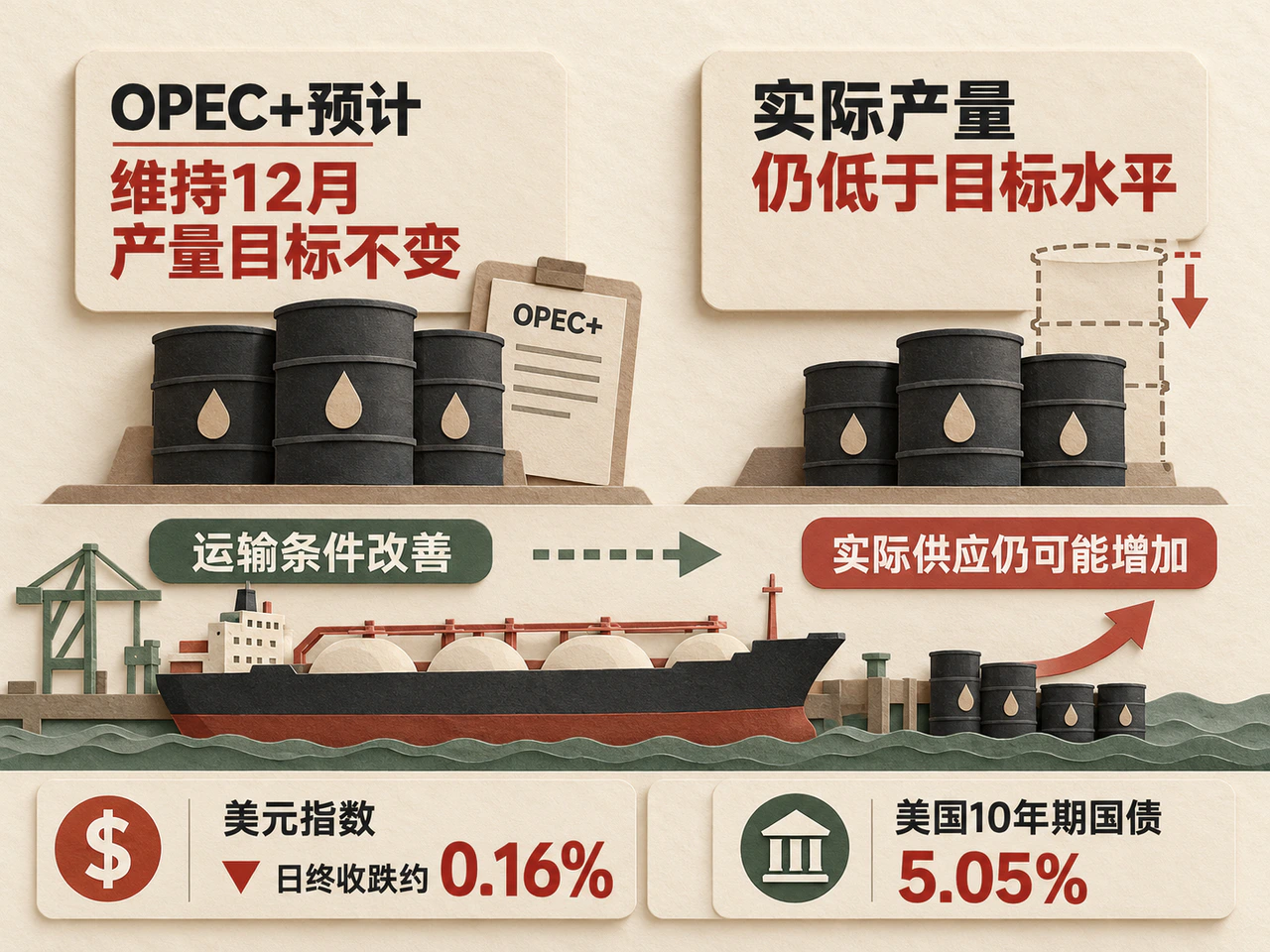
For OPEC+ policy, the gap between nominal targets and actual deliveries remains a key variable. Reuters cited people familiar with the matter as saying OPEC+ was expected to leave December output targets unchanged at its Sunday meeting, even though most core members were producing below target. Actual supply reaching the market could still increase if transport conditions improve or existing capacity returns. Conversely, continued disruption to facilities or shipping routes could prevent nominal targets from translating into physical supply.
Financial conditions had a more modest influence on the day's oil prices. The dollar index ended approximately 0.16% lower, improving purchasing power for buyers using other currencies. The U.S. 10-year Treasury yield ended at 5.05%. Although higher long-term rates raise financing and carrying costs, supply risks and inventory changes remained the principal drivers of this rebound.
Four concrete developments will shape the next move. First, verifiable, sustained losses in Saudi facility operations or loadings would determine how much of the risk premium becomes an actual supply shortfall. Second, actual OPEC+ production and export delivery after Sunday's meeting will matter. Third, continued U.S. crude draws and any further gasoline builds will test refinery demand. Fourth, a narrowing Brent front-month premium would indicate easing prompt tightness. A simultaneous improvement in transport and an end to inventory declines would substantially weaken the fundamental support for high prices.