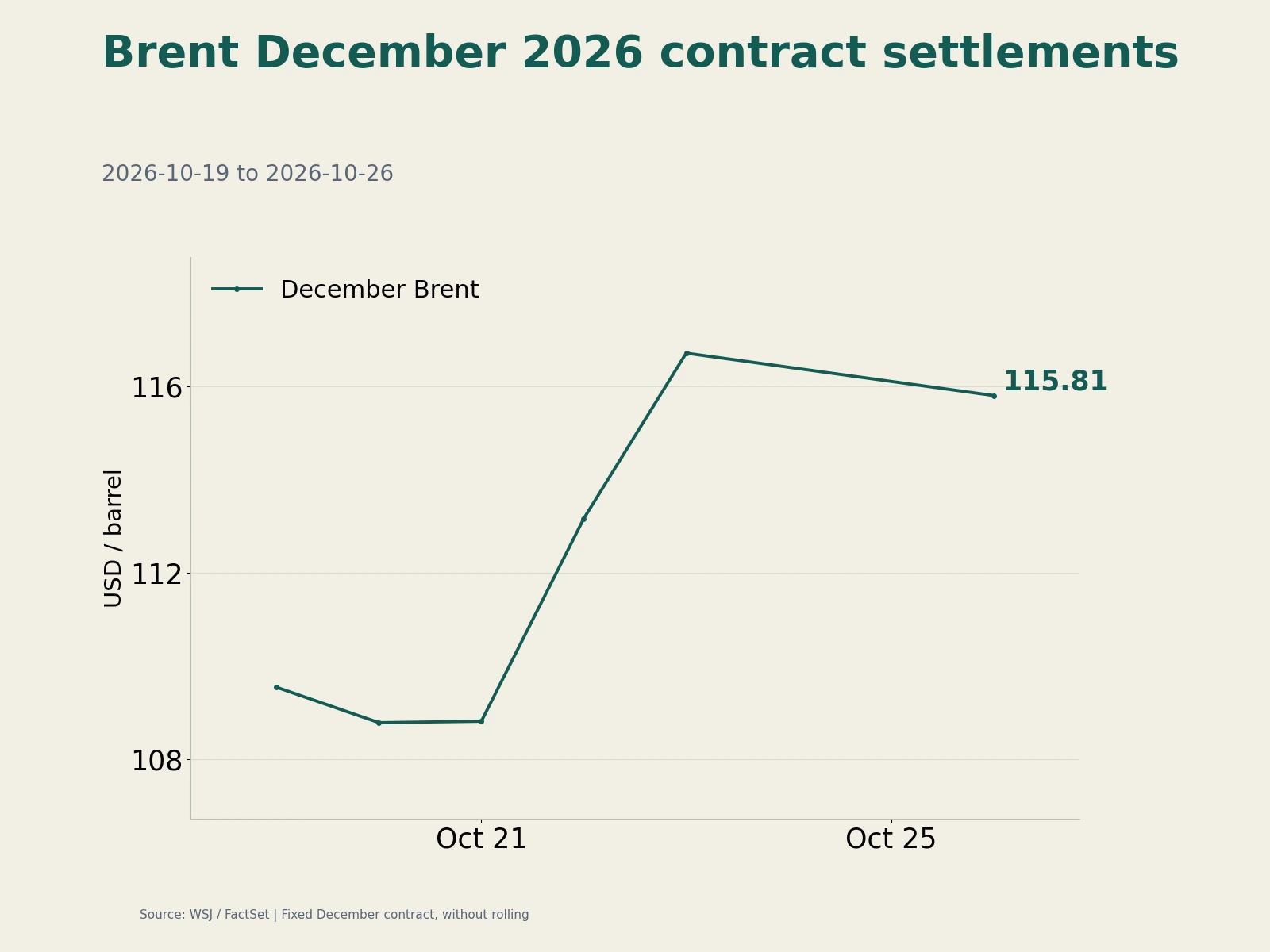
On October 27, 2026, December-delivery Brent crude futures settled at US$113.88 a barrel, down US$1.93, or approximately 1.67%, from the preceding day. December WTI settled at US$99.90, down US$1.86, or about 1.83%. Hopes of diplomatic de-escalation in the Middle East drove a second consecutive daily decline, but near-term crude remained significantly more expensive than oil for slightly later delivery. Markets were reducing the premium for further escalation, while immediate delivery pressures had yet to dissipate.
Oil gives back some gains, while prompt supply remains tight
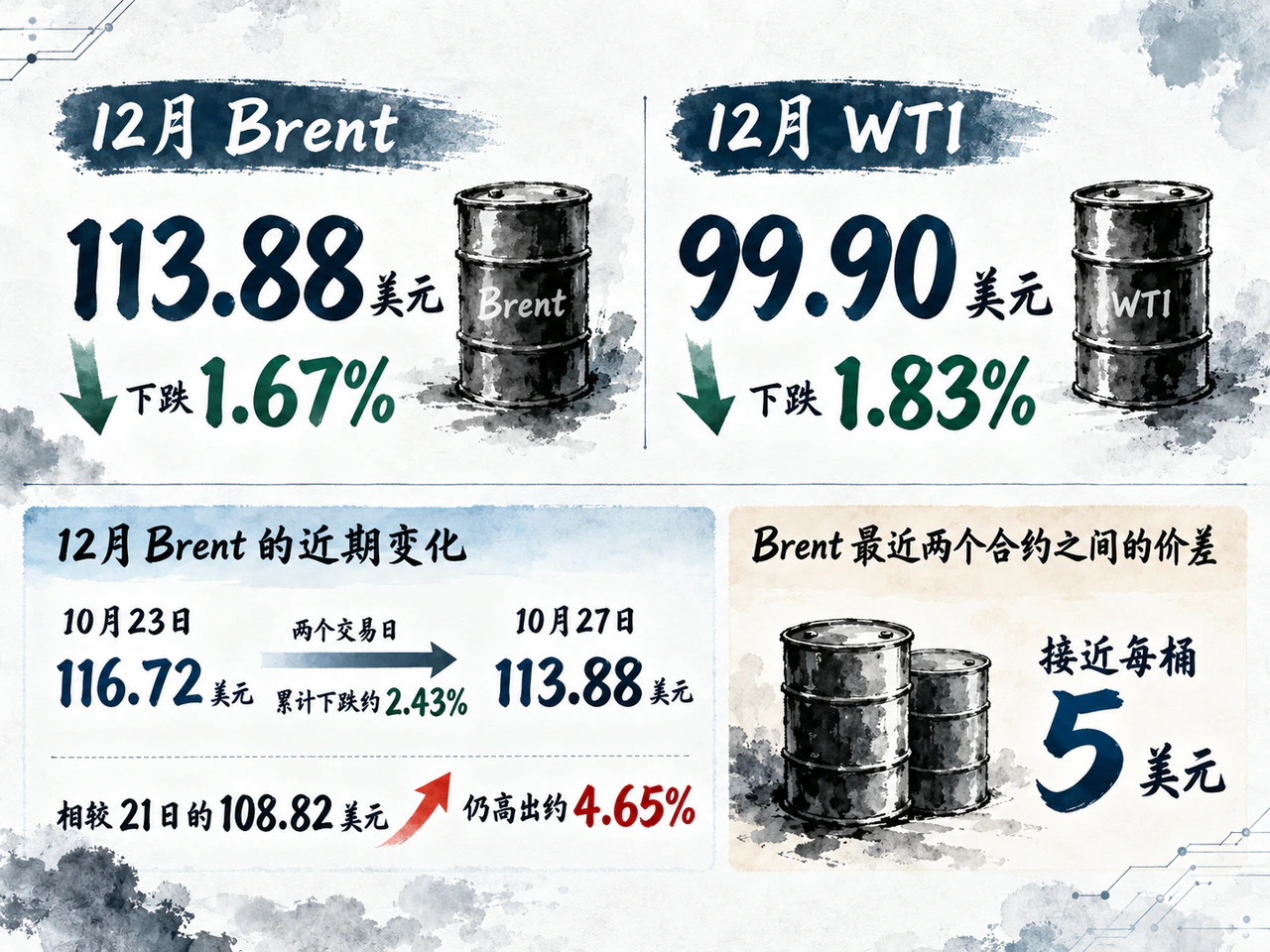
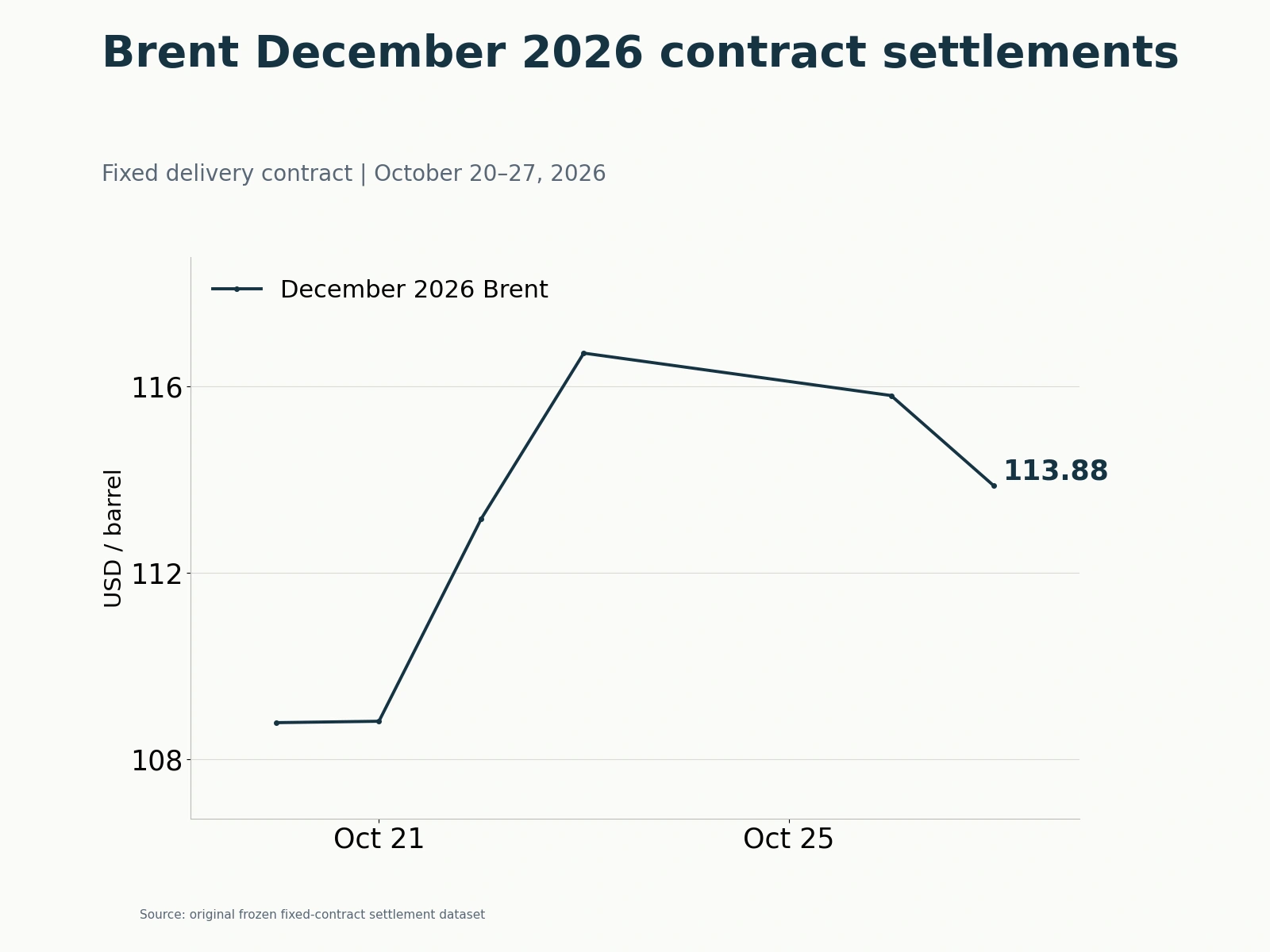
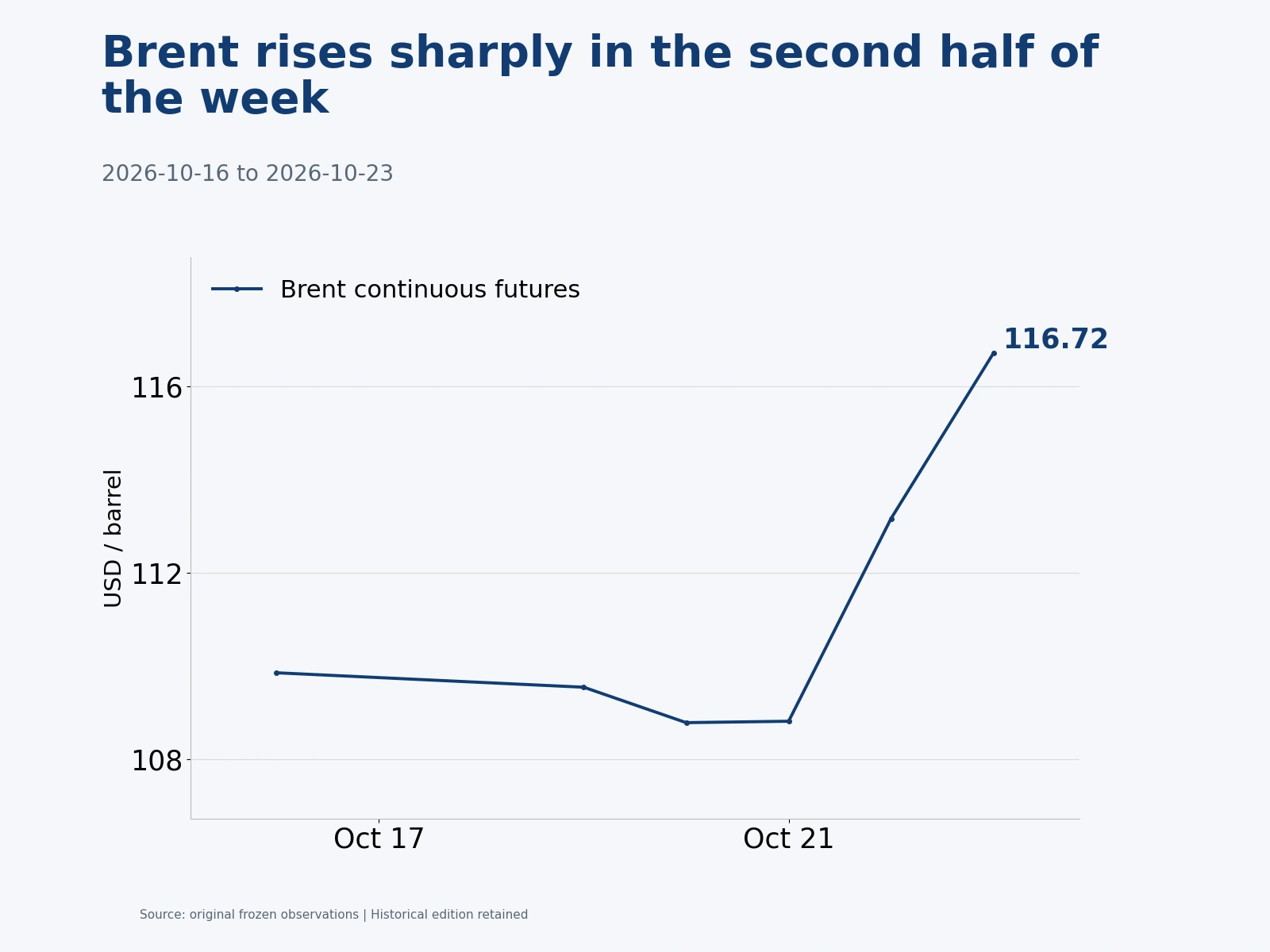
December Brent had settled at US$116.72 on October 23, before falling approximately 2.43% over the two trading days through October 27. Even so, it remained about 4.65% above its October 21 price of US$108.82. The pullback followed the previous week’s sharp rise on supply risks, leaving oil at a relatively high level in its recent range.
Bloomberg reported that investors were assessing diplomatic efforts to ease tensions in the Persian Gulf. People familiar with the matter said a fire near Saudi Arabia’s Ras Tanura export terminal following attacks in the region had been contained, but shipping costs remained elevated. The United States continued to blockade Iranian ports while helping oil from other Persian Gulf producers pass through Hormuz. Export conditions therefore differed markedly by origin. A recovery in Gulf supply still depended on security, vessel allocation and transportation costs.
The crude futures curve continued to reflect pressure on immediate supply. Bloomberg reported that the spread between the two nearest Brent contracts was close to US$5 a barrel, compared with US$3.69 a week earlier, leaving a substantial near-term premium. Buyers were willing to pay extra for earlier delivery, while diplomatic progress initially eased concerns about future supply disruptions. A decline in outright prices could therefore coexist with a high premium on near-month contracts.
Ole Hansen, head of commodity strategy at Denmark’s Saxo Bank, argued that further oil-price declines required clear signals of de-escalation and the ability to transport oil freely. Negotiating headlines can change risk pricing quickly, but improved physical delivery conditions require sustained progress in export loadings, passage through the strait and freight costs.
U.S. crude inventories keep falling, while product stocks recover
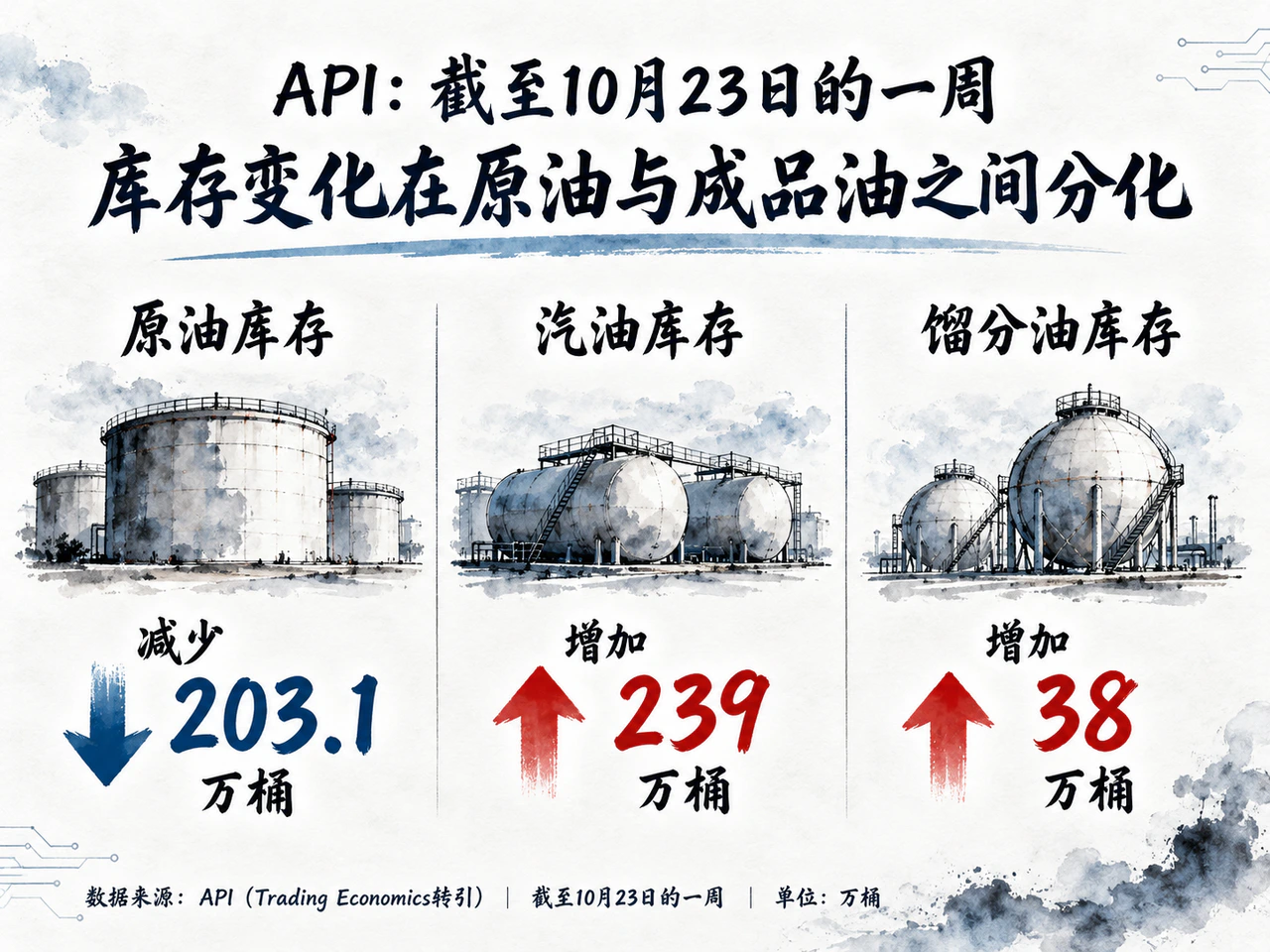
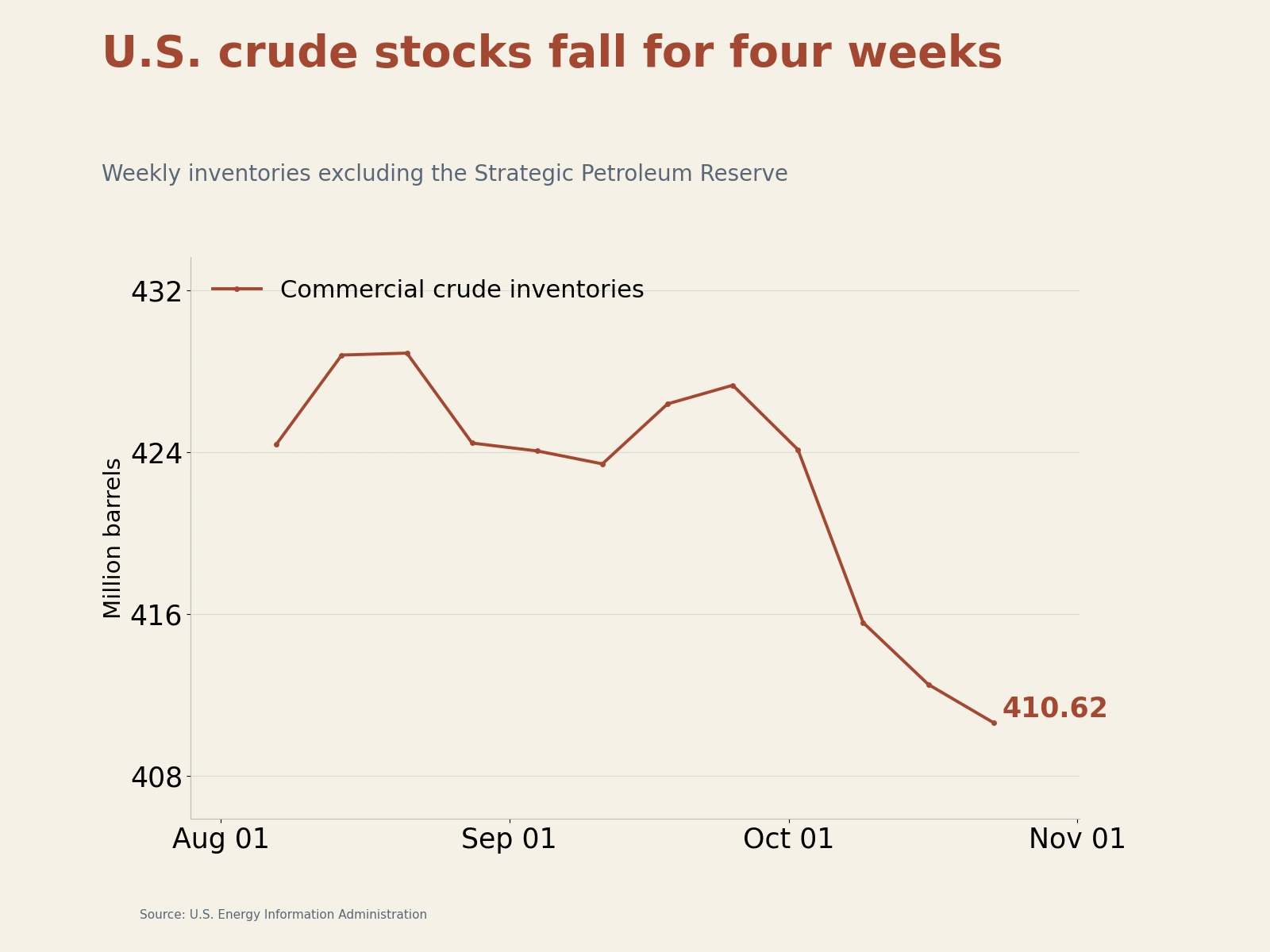
Inventory information released after the U.S. close provided fresh supply-and-demand signals for the next trading session. Trading Economics, citing API data, reported that U.S. crude stocks fell 2.031 million barrels in the week ended October 23, against expectations for an increase of 800,000 barrels and following a 4.93 million-barrel draw the preceding week. Cushing stocks fell 453,000 barrels, while gasoline and distillate inventories rose 2.39 million and 380,000 barrels, respectively.
The continued crude draw supported the view of a tight physical market. A smaller draw and rising product inventories, however, helped relieve some supply pressure. Refinery throughput and import and export data were still needed to assess the sources of the inventory changes. Higher refinery purchases or exports can both reduce crude stocks, while replenished product inventories can ease pressure on end-user supplies.
Global inventory changes suggested that the buffer of available supply remained inadequate. The International Energy Agency’s October monthly report estimated that global onshore oil inventories fell 113 million barrels in September, while oil on water increased 103 million barrels, leaving a net decline of about 10 million barrels in observable global stocks. Large quantities of crude had moved into transit without providing an equivalent replenishment for onshore users.
The agency forecast that global oil demand in the fourth quarter of 2026 would fall by 2.5 million barrels a day from a year earlier. High fuel prices were suppressing consumption, but its October forecast still projected a supply shortfall through year-end. Weaker demand limited the scope for price increases, while low inventories kept the market sensitive to fresh supply disruptions.
A sustained pullback requires better transportation and inventories
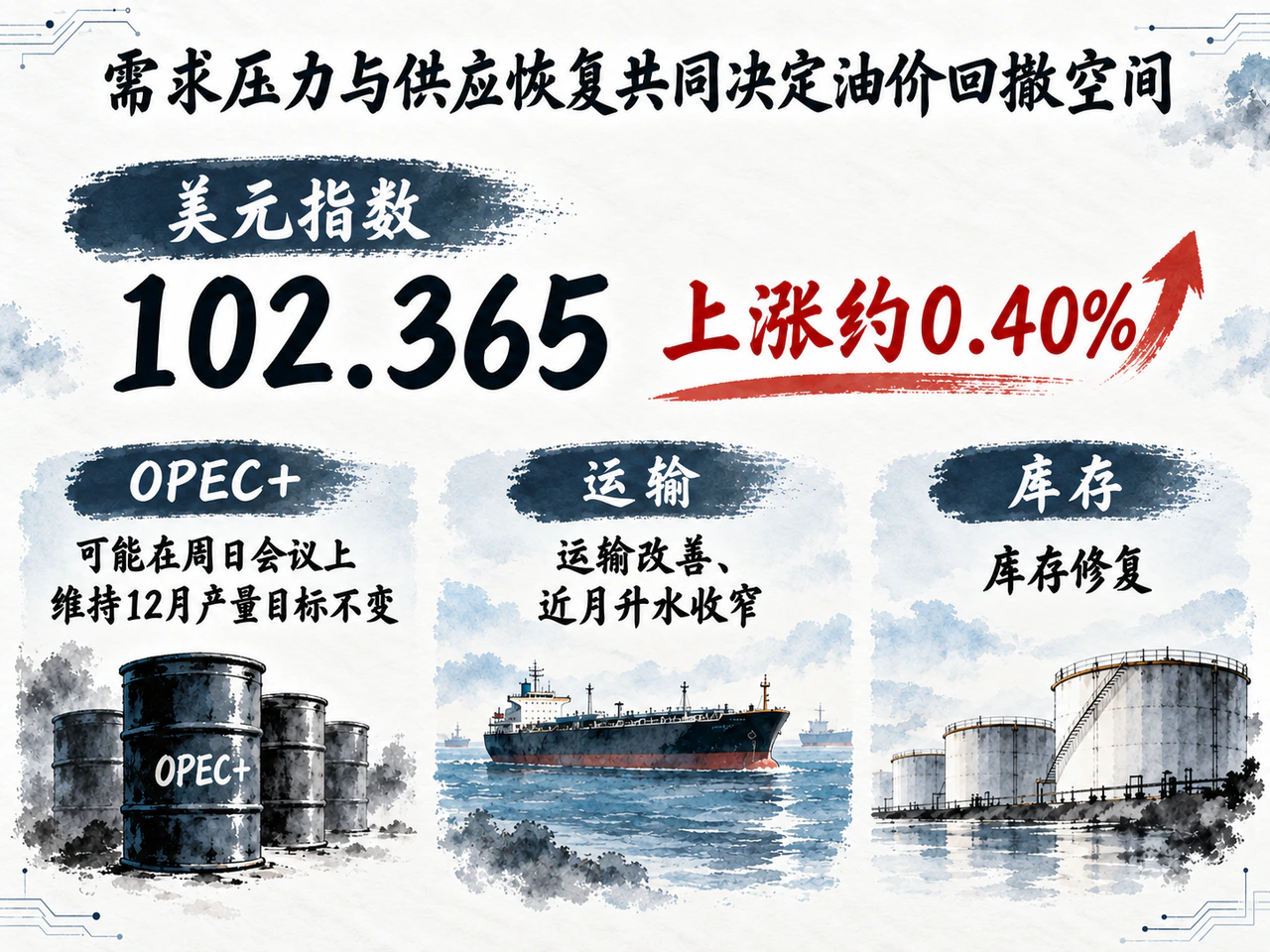
Reuters reported on October 27, citing three people familiar with the matter, that OPEC+ was likely to leave December production targets unchanged at its Sunday meeting. The formal decision still awaited confirmation. If targets were unchanged, incremental supply would depend more on existing capacity and a recovery in transport chains than on further quota increases.
A stronger dollar was also adding pressure on demand. The provider’s daily closing dollar-index value for this edition was 102.365, up approximately 0.40% from the preceding trading day. That raised purchasing costs for buyers using other currencies, compounding high oil prices’ restraint on consumption. At the same time, the substantial near-term premium showed that short-term supply constraints continued to support prices.
Whether Brent’s front spread could narrow persistently would provide a direct indication of changing immediate delivery pressure. Concurrent improvements in Saudi loadings, passage through the strait and freight costs would determine whether diplomatic progress translated into physical supply. U.S. EIA inventory and refinery data would help explain crude draws and product replenishment, while the formal OPEC+ production decision would also need to be assessed alongside actual exports.
If transportation improved, the near-term premium narrowed and inventories recovered, the pullback would have a firmer basis to continue. If diplomatic headlines improved but delivery costs and inventory pressures remained unresolved, oil would still be vulnerable to fresh supply shocks.