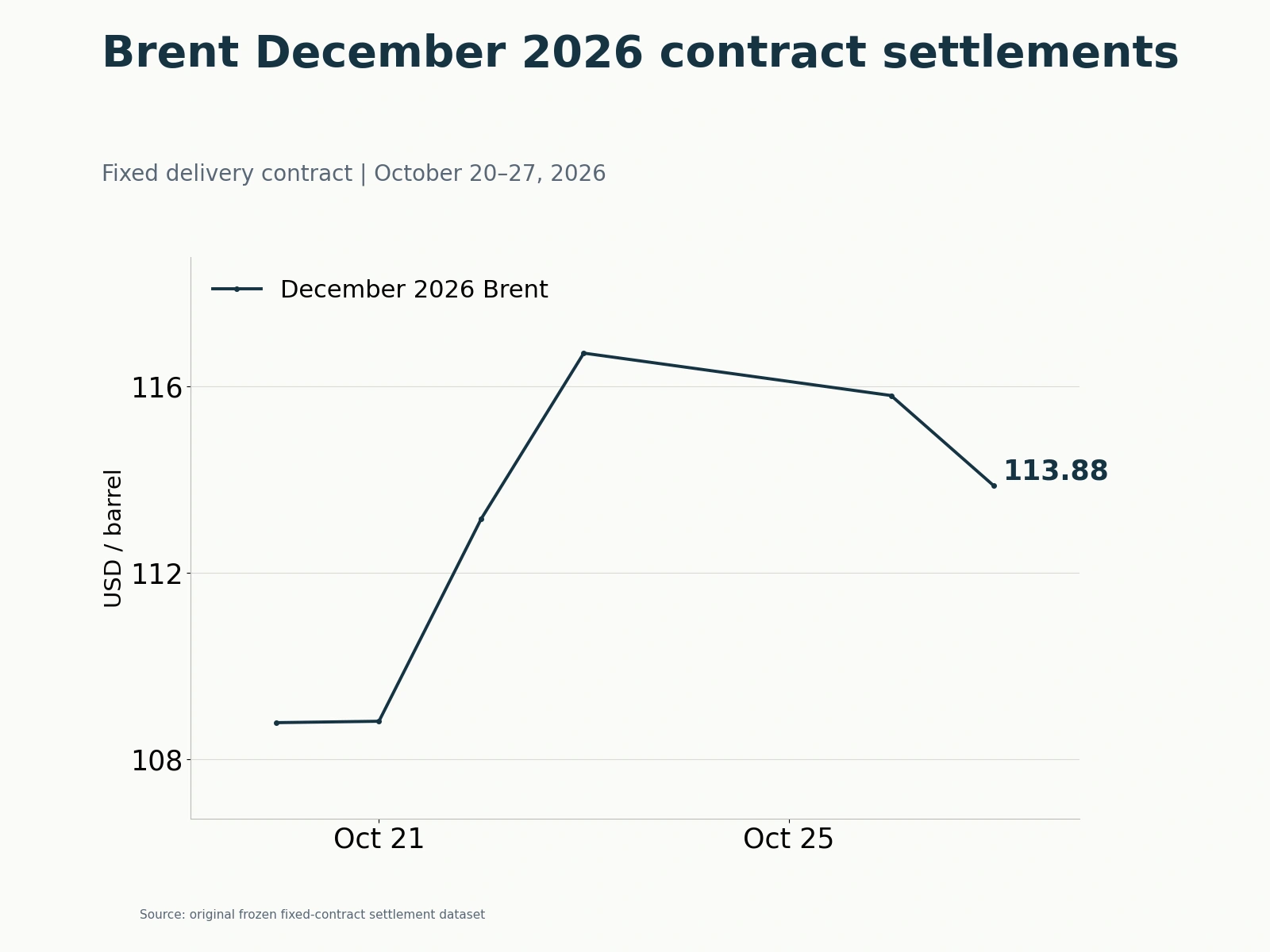
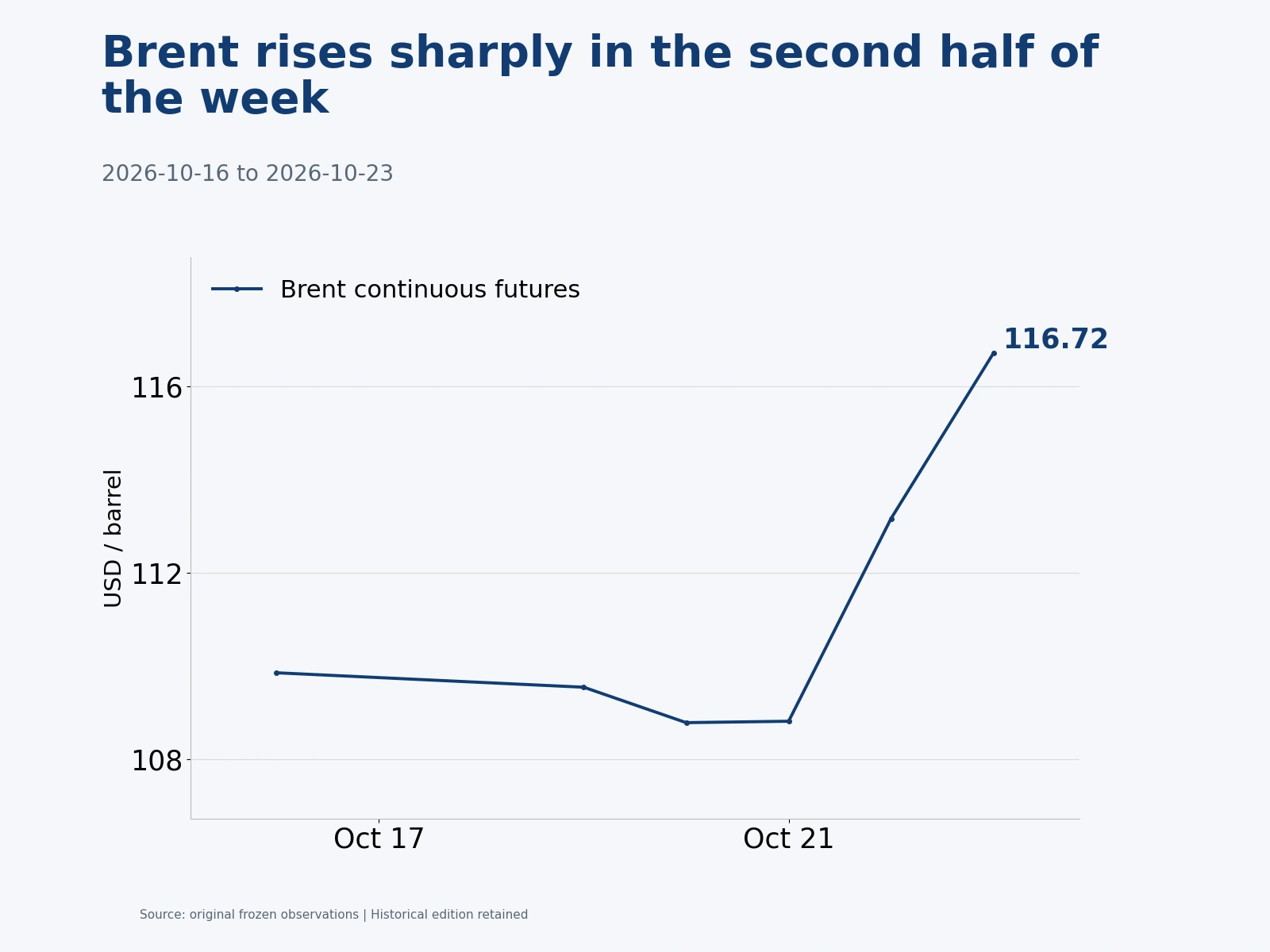
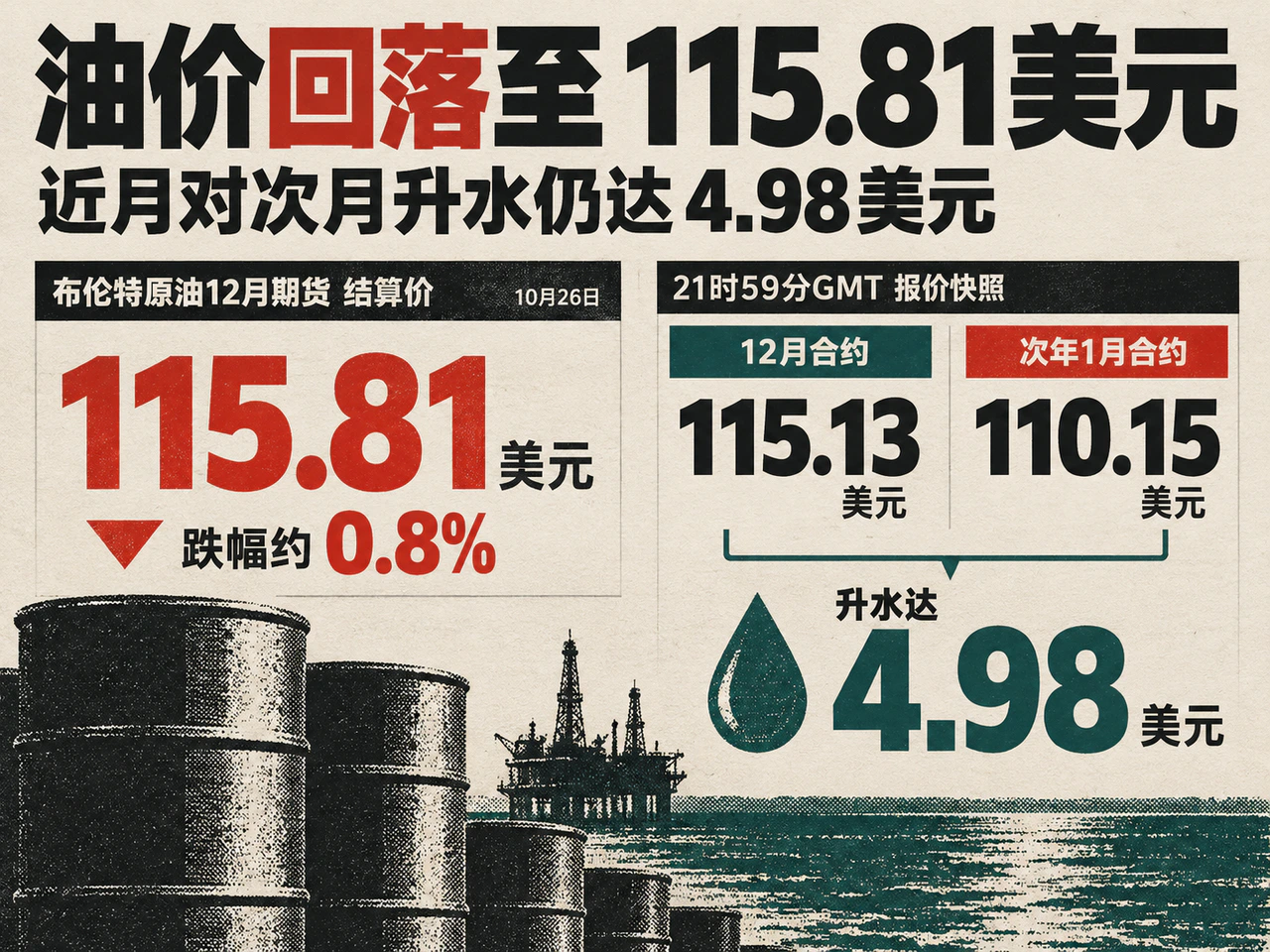
On Monday, October 26, December Brent crude futures settled at US$115.81 a barrel, down US$0.91, or approximately 0.8%, from the preceding session. Near-month WTI closed at US$101.76, down US$1.51, or 1.46%. Developments available on the morning of October 27 Beijing time showed Middle East diplomatic contacts drawing international oil prices back from near six-month highs, while security risks to transport routes and energy infrastructure limited the decline. Brent and WTI had gained about 6% and 2.3%, respectively, in the preceding week, so Monday’s pullback reversed only part of those gains. Diplomatic contacts improved expectations of future supply recovery, but physical delivery remained constrained. Substantial premiums for near-month crude over later contracts showed that concerns over immediate physical supply were unresolved.
Four-country talks ease tensions, but pipeline and shipping risks sustain the prompt premium
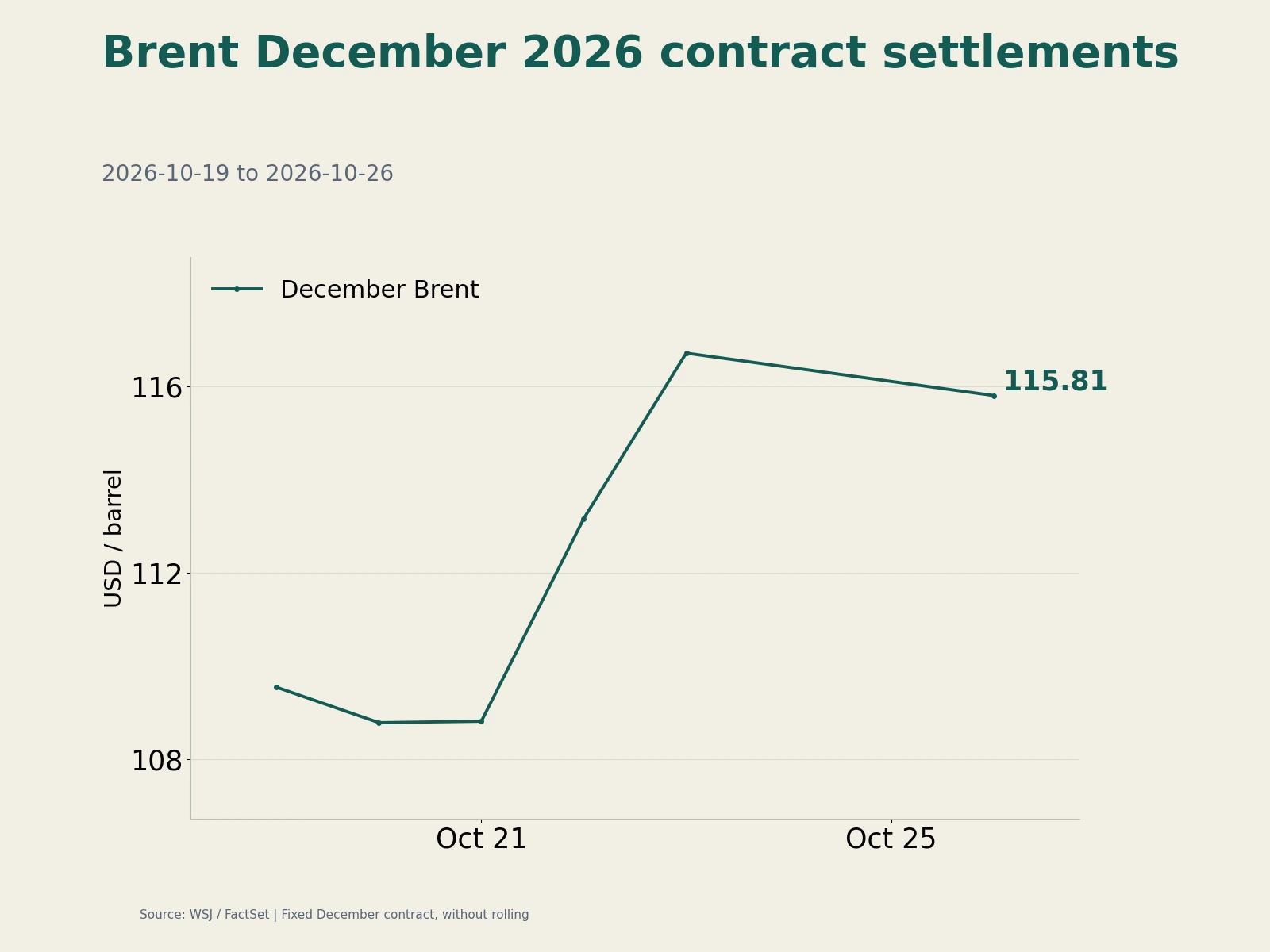
Diplomatic mediation briefly pushed prices substantially lower during the session. Reuters reported that Qatari mediators had traveled to Tehran on Sunday, while Saudi, Turkish and Pakistani officials held talks with Iran on Monday. Iranian media said the four countries agreed to maintain contact and advance cooperation on peace and security. Brent fell more than US$2 intraday before recovering much of that decline.
Risks to energy infrastructure and shipping remained key price supports. The Houthis claimed weekend attacks on targets including pumping stations on Saudi Arabia’s East–West crude pipeline, without immediate Saudi confirmation. The Saudi-led coalition said on Monday it had intercepted three drones headed toward Riyadh and southern areas. The pipeline connects inland Saudi oil supplies with Red Sea export terminals, making the reliability of this alternative export route a major market concern.
Disruption to sea routes had also persisted. The United Kingdom Maritime Trade Operations office said on Monday that it had received a third-party report of a vessel fire near Al Faw, Iraq. The effects on personnel, vessel damage and the environment were unclear. Even if upstream crude production continued, rerouting, rising insurance rates and limited shipping capacity could still increase the cost of delivering oil to refineries and delay downstream inventory replenishment.
Immediate delivery pressure was directly visible in the futures curve. A simultaneous quote snapshot at 21:59 GMT on October 26 showed December Brent at US$115.13 a barrel and the following January contract at US$110.15, leaving a US$4.98 front-month premium. That substantial premium indicated the high value of prompt arrivals. Diplomatic news could reduce geopolitical risk premiums quickly, while relief from physical shortages still required sustained loadings and smooth transportation.
Hormuz flows recover to around 80% of prewar levels; product exports and onshore rebuilding lag
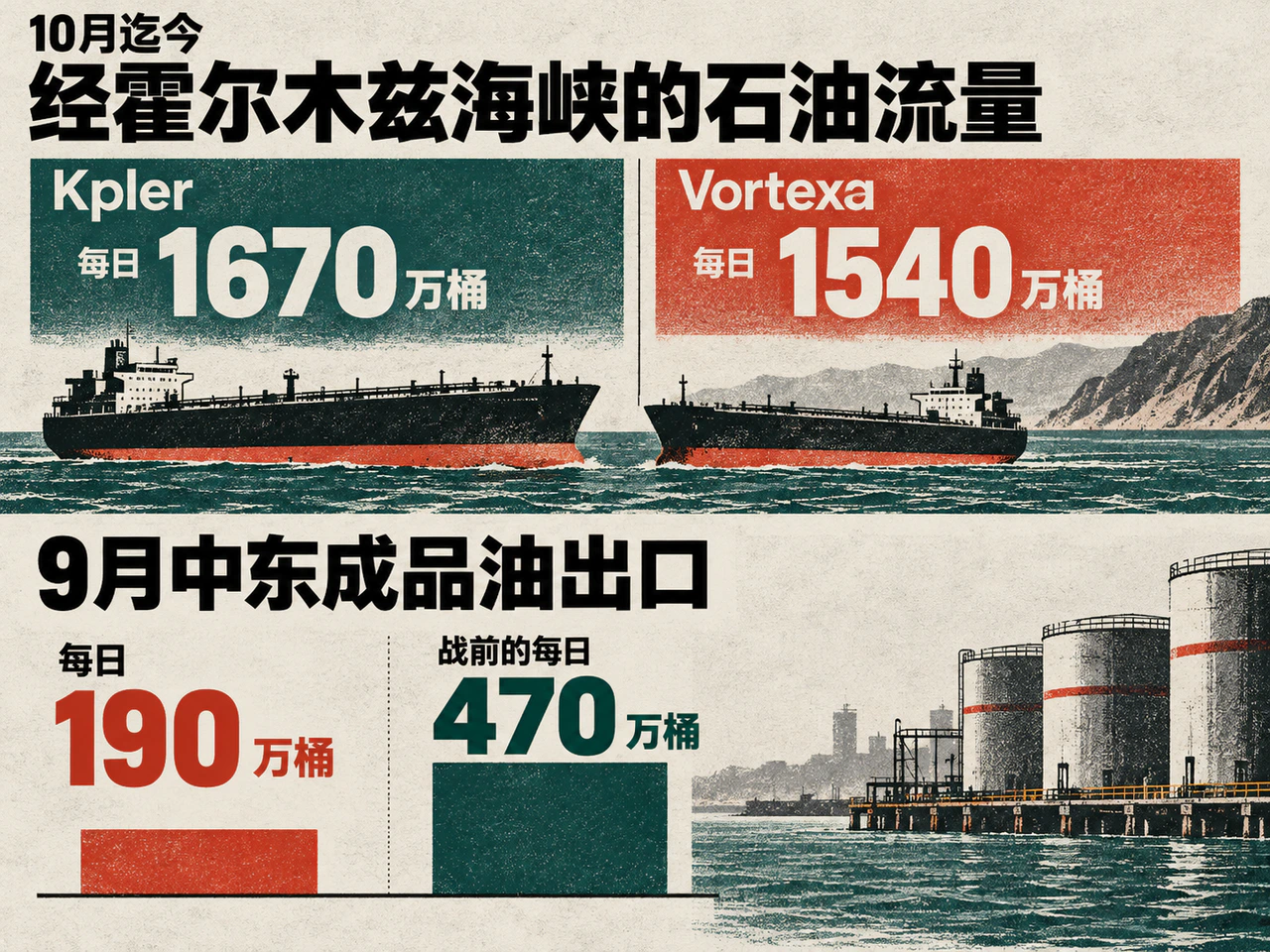
Upstream loadings showed tangible improvement. Barchart on Monday cited tanker-tracking data indicating that October-to-date oil flows through Hormuz were moving closer to the prewar level of about 19 million barrels a day. Kpler estimated 16.7 million barrels a day, while Vortexa estimated 15.4 million. U.S. Energy Secretary Chris Wright also said that day that Persian Gulf oil flows had recovered to around 80% of prewar levels, although refined-product transportation remained constrained.
Higher crude flows had yet to translate fully into product exports and inventories in consuming markets. The International Energy Agency’s October monthly report put September Middle East product exports at approximately 1.9 million barrels a day, still well below the prewar 4.7 million. Meanwhile, global onshore oil stocks fell 113 million barrels, oil on water rose 103 million barrels and total observable global inventories declined only 10 million barrels. More crude in transit did not mean effective replenishment at refineries or in consuming markets.
Floating-storage figures further illustrated slow logistics turnover. Barchart, citing Vortexa, reported that crude held on tankers stationary for at least seven days increased 8% to 87.42 million barrels in the week ended October 23. This definition differed from the IEA’s measure of all oil on water, but indicated that some crude remained in the transportation and discharge-waiting stages.
U.S. official reserves, a buffer for emergencies, were also low. Reuters cited Energy Department data released Monday showing the Strategic Petroleum Reserve falling to 282.6 million barrels the preceding week, its lowest level since October 1982. Reserve releases could ease current pressure, but sustained supply improvement still depended on a broader recovery in upstream production, refinery processing and export transportation.
IEA sees demand falling 2.6 million barrels a day this year; price relief depends on physical arrivals
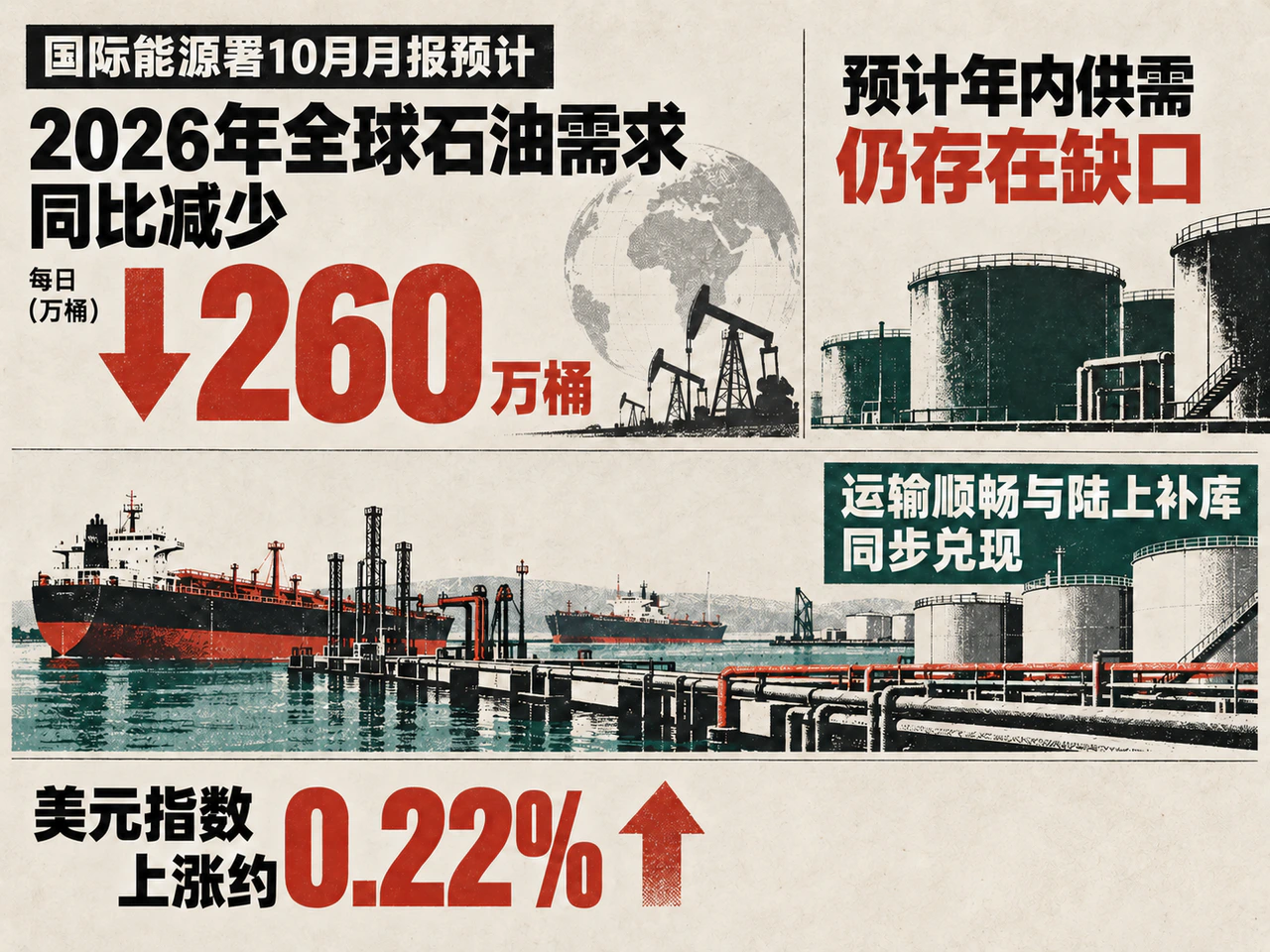
High oil prices were weighing on end-user consumption. The IEA’s October report forecast that global oil demand in 2026 would decline by 2.6 million barrels a day from the preceding year, while still projecting a supply-demand shortfall during the year. Contracting demand alongside tight supply left prices restrained by slower economic activity but highly sensitive to transportation disruptions. In addition, the dollar index rose approximately 0.22% on the provider’s daily closing basis used for this edition, further increasing procurement costs for buyers using other currencies.
Four specific signals would help track the outlook. First, whether diplomatic contacts reduced attacks on energy facilities and merchant vessels; second, whether Brent’s front-month premium over the next month narrowed persistently; third, whether the recovery in Hormuz transportation extended to refined products; and fourth, whether better arrivals rebuilt onshore inventories in consuming markets. The first two shaped the geopolitical risk premium, while the latter two determined whether physical shortages genuinely eased. If vessel flows through the strait increased while onshore stocks continued to fall, the basis for lower oil prices would remain fragile. A sustained decline in the recent high prompt premium required smooth transportation and onshore replenishment to occur together.