The focus of Middle East developments diverged over the preceding 24 hours. As of 23:57 on August 13, 2026, public intelligence and frontline reports showed no fresh large-scale direct strikes deep into each other's territory by the United States and Iran, indicating brief relative restraint on the main front. Secondary effects and spillovers were accelerating, however. Yemen's southern front broke its quiet, and the UN warned of full-scale civil war returning. Oil cleanup around Hormuz and a worsening grounded-tanker emergency off Oman also tested shipping corridors and environmental security.
Yemen Fighting Raises Spillover Risks
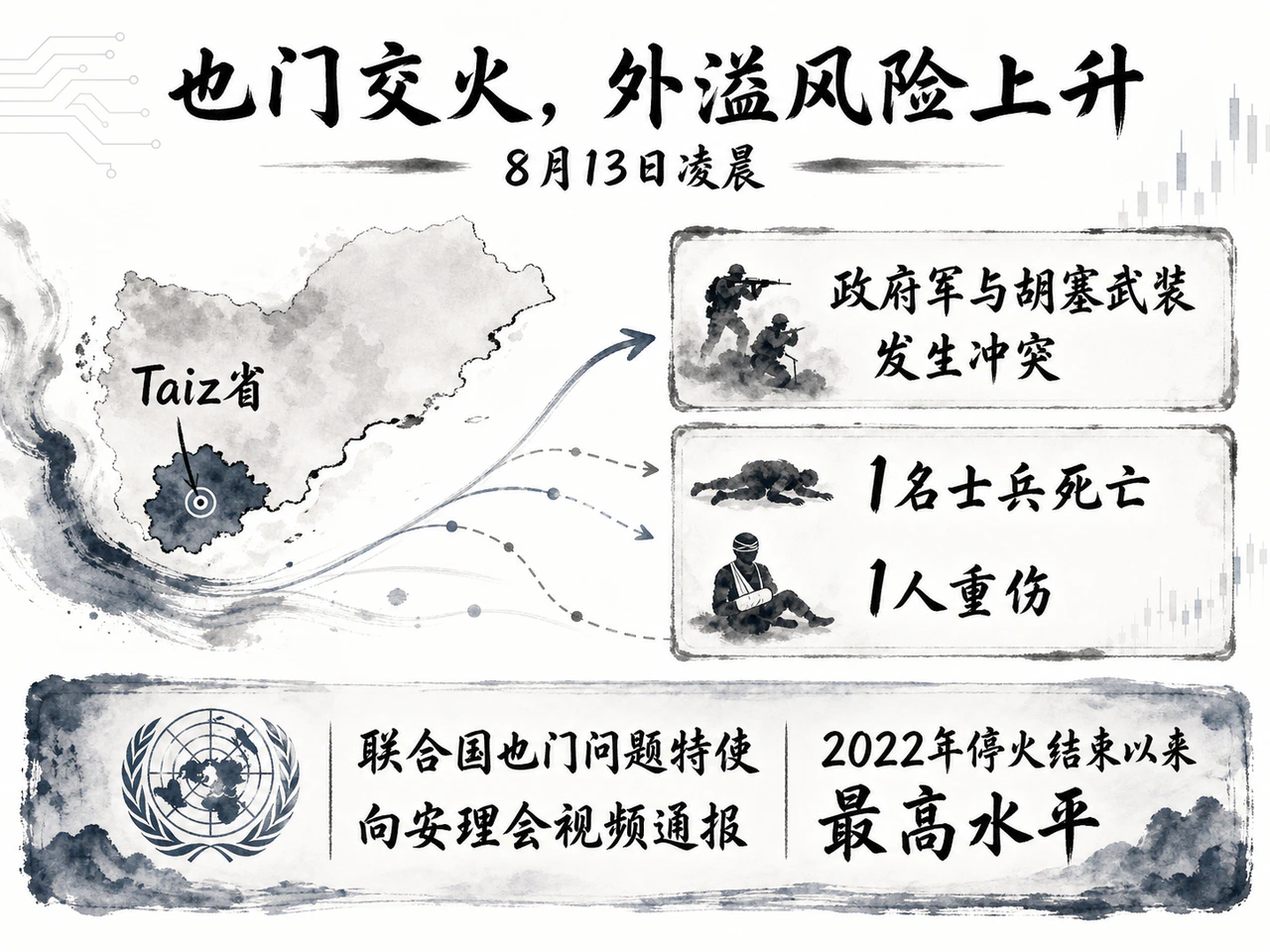
Fresh heavy fighting erupted early August 13 on the Taiz front in southwestern Yemen. Government forces said the Houthis had conducted infiltrations since the prior week, with one soldier killed and another seriously injured that day. Casualties and responsibility mainly came from a unilateral military account without independent verification, but the tactical clash quickly heightened fears for the Red Sea flank.
UN envoy Hans Grundberg told the Security Council by video that regional tensions had raised the risk of a return to full-scale Yemen conflict to its highest since the 2022 truce ended. With the Red Sea crisis closely tied to broader Middle East bargaining, breakdown of Yemen's fragile balance could readily trigger another regional chain reaction.
Maritime Environmental Risks Have Unresolved Causes
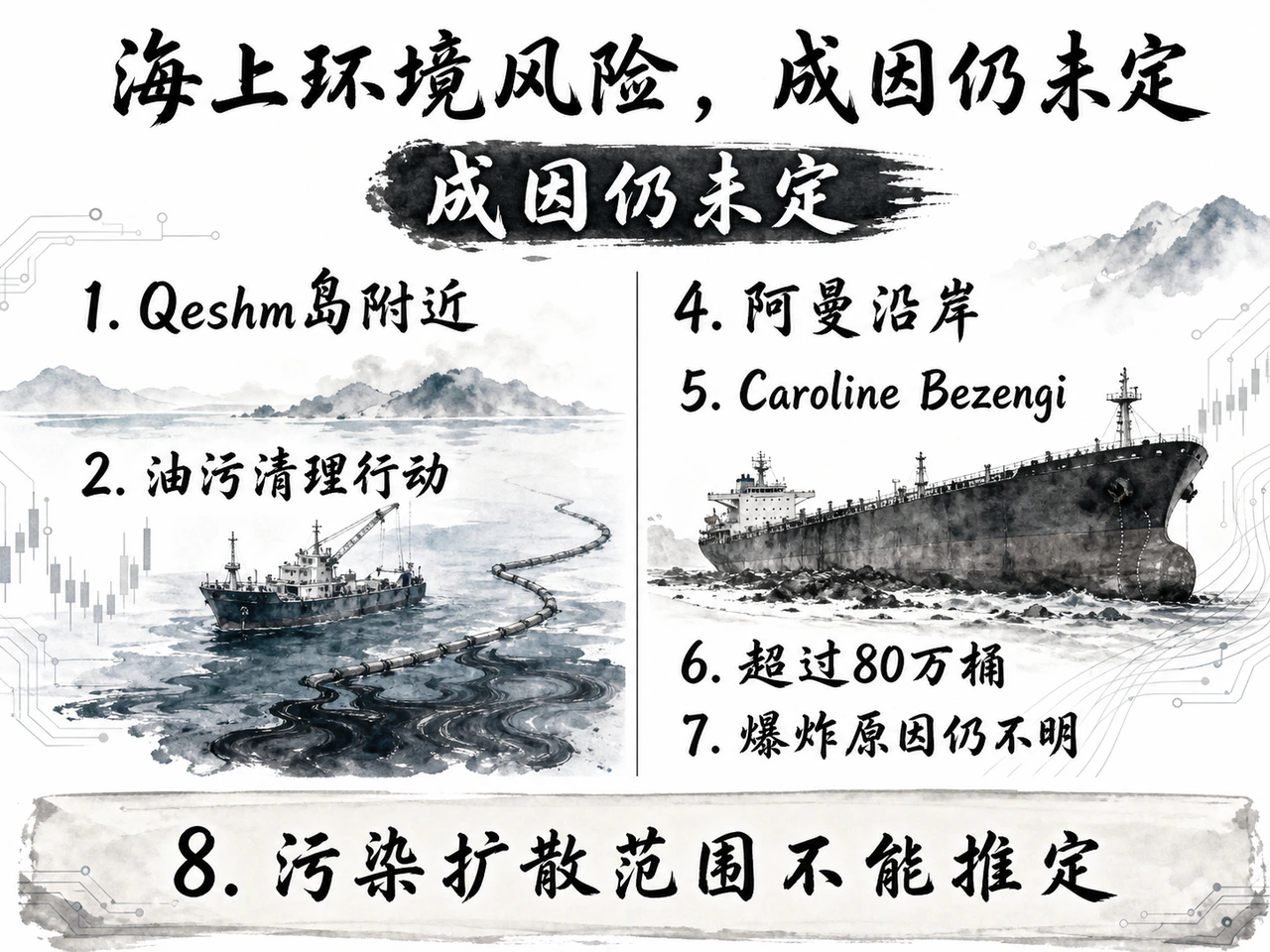
Hormuz and neighboring waters faced complex secondary ecological and shipping crises as well as changes on land.
Iranian authorities began extensive emergency oil cleanup near Qeshm in the eastern Gulf. Public information confirmed cleanup operations, but Iran had not officially identified the spill's source and outside maritime bodies had not completed tracing it. Without technical findings, the pollution could not simply be attributed to a particular strike or distressed ship.
The response off Oman was also becoming more difficult. Emergency specialists from British maritime-security adviser Ambrey boarded the grounded Caroline Bezengi with Royal Air Force of Oman aerial protection and support, assessing the vessel and sealing leaks to prevent oil reaching the coast.
Public records described the Suezmax tanker, under an unidentified flag and widely classed in Russia's shadow fleet, as carrying an estimated more than 800,000 barrels. It exploded off southwestern Oman in June before drifting aground; the cause remained undisclosed. Remaining cargo, structural damage and spill radius still needed specialist assessment. Qeshm and Oman were geographically and causally separate incidents, but both near strategic waters exposed fragile regional resilience under military pressure and an aging shadow fleet.
Key Developments
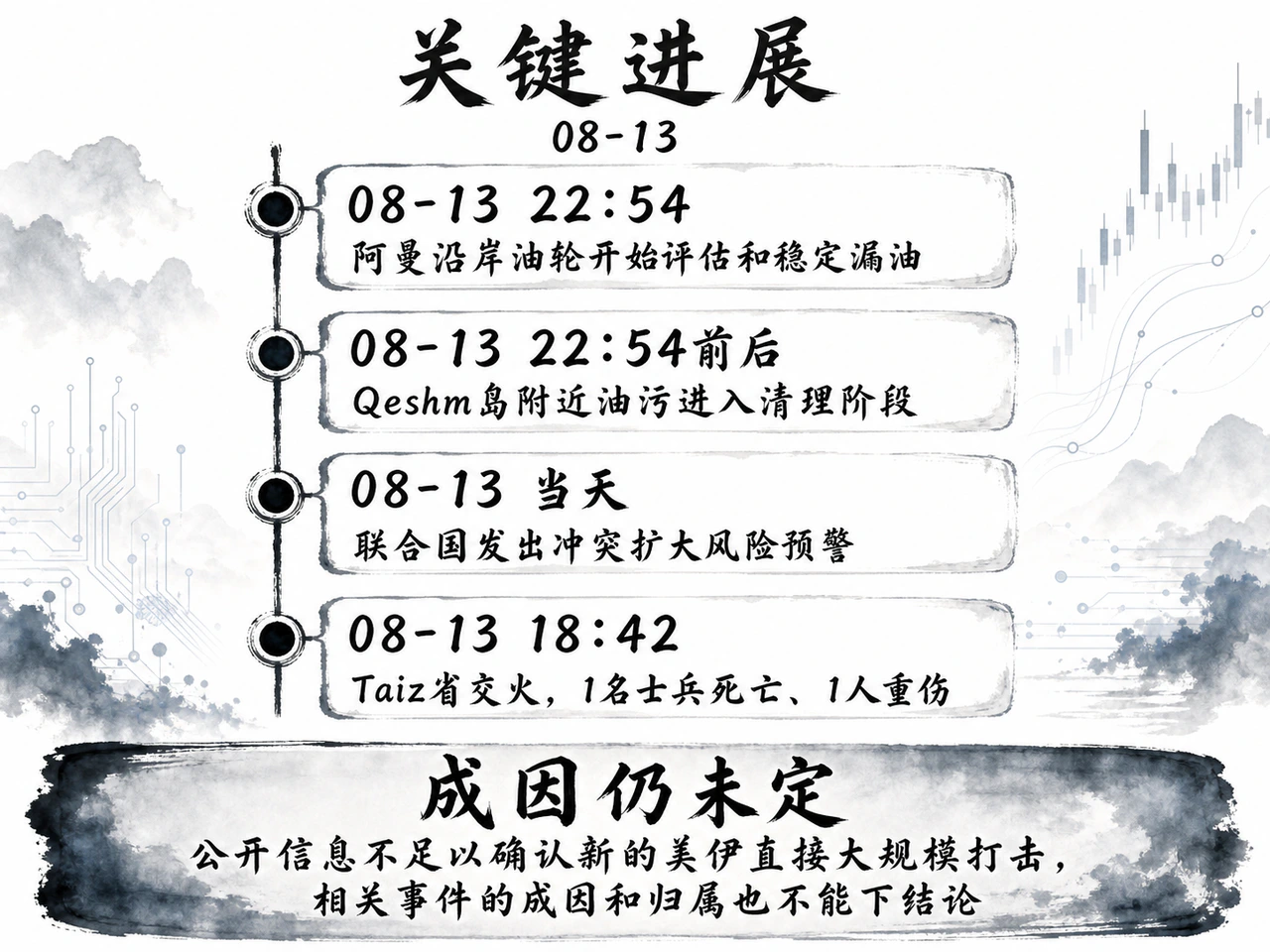
| Key Developments (Beijing time) |
|---|
| 08-13 22:54 Ambrey's emergency team boarded Caroline Bezengi with Omani air-force support to assess hull damage and stabilize leakage. |
| Around 08-13 22:54 Emergency oil cleanup began near Qeshm; the exact source and overall contamination scale still required authoritative assessment. |
| 08-13, during the day The UN Yemen envoy warned the Security Council that the risk of renewed large-scale conflict was the highest since the 2022 truce broke down. |
| 08-13 18:42 Heavy Taiz fighting: Yemen's military said repeated Houthi attacks killed one defender and seriously injured another. |


