The past 24 hours showed three constraints tightening together rather than isolated Middle Eastern battle reports. Merchant shipping was attacked again in Hormuz, with overall commercial traffic near conflict lows. More external intermediaries carried U.S.-Iranian messages without reaching substantive negotiations. Meanwhile, fighting in southern Lebanon and along Yemen's Red Sea coast intensified, raising the cost of implementing any ceasefire or regional reconciliation.
For asset pricing and industry, the issue has moved beyond whether political or legal statements call the strait open. The real test is shipowners', insurers' and cargo owners' calculation: can ships complete scheduled voyages safely and at affordable cost? Until commercial confidence is materially repaired, oil-supply and shipping premiums retain solid real-world support.
Incidents are established; responsibility and shipping constraints need deeper scrutiny
The UAE recently reported that a vessel linked to its state energy company was attacked while transiting Hormuz, with no crew casualties, and blamed Iran directly. Around the same time, a British maritime-security agency independently confirmed that an unidentified projectile struck a bulk carrier, with all crew safe. It did not detail damage, environmental consequences or responsibility.
The two sources corroborate a security incident but political accusations must not be equated with technical findings. Available information strongly points to the same vessel, so they should not be counted as two attacks. Three factual layers matter: an external strike is confirmed by multiple parties; ownership and repeated damage within days mainly come from the UAE; and the attackers' identities and intentions await independent physical evidence and maritime investigation.
The more damaging increment is frequency. Reports said vessels in ADNOC's business chain had suffered a third attack within 48 hours. Even without severe casualties or catastrophic sinkings, this recurrence can overturn captains', compliance teams' and insurers' risk-return assessments. The result shifts from one-off emergency damage to unaffordable recurring operating friction.
Transmission changes qualitatively. An isolated attack mainly disturbs short-term sentiment; repeated incidents systematically raise every voyage's marginal cost and expected loss. War-risk surcharges, doubled crew allowances and armed-security costs appear first, followed by delays, precautionary port stays and detours absorbing global effective capacity. Delivery defaults, wider spot calendar spreads and precautionary downstream restocking then transmit into benchmark crude. A physically unclosed strait therefore does not mean healthy supply chains. Only technical investigations excluding deliberate attack and consecutive safe commercial voyages offer a basis for insurance and capacity bottlenecks to ease materially.
Traffic at only 17% reveals commercial shipping's actual judgment of strait risk
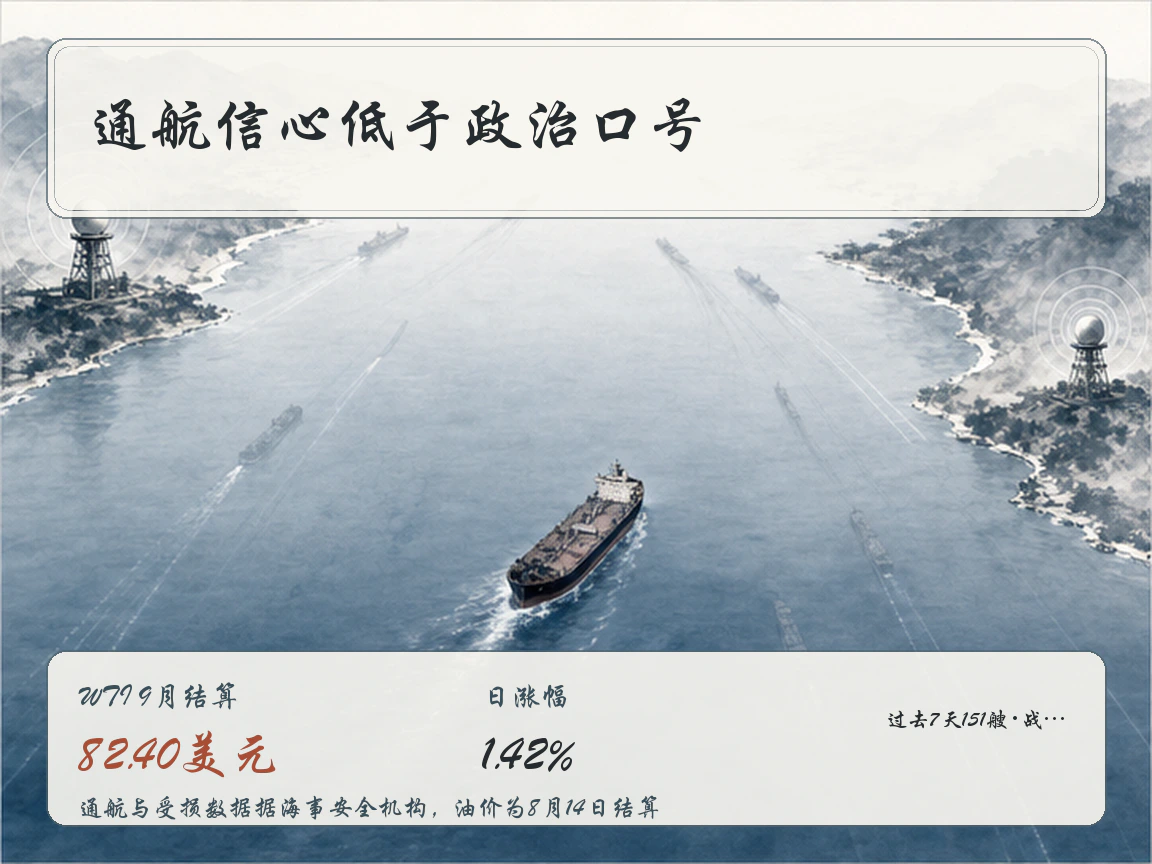
Latest British maritime-security monitoring counted only 151 merchant-vessel entries and exits over seven days, less than 17% of the normal pre-conflict baseline. Since the war began February 28, 56 commercial damage incidents had been reported in and around the strait. Compared with political declarations, these weak flows directly show the global shipping system's security assessment.
Owners do not wait for a formal closure before suspending voyages. Unmeasurable attack probabilities, uncertain rescue and legal claims, and confused insurance quotes are enough for compliance and risk teams to stop approvals. Buyers must increase safety stocks, find non-Middle Eastern supply or accept long, uncertain delivery schedules. Refiners receiving nominal allocations also need larger buffers against dispersed arrivals. This creates a hidden supply contraction: physical passage exists, but efficiency is very low.
Derivatives provide a macro reference. At the August 14 close, September WTI settled at $82.40 a barrel, up 1.42%, and October Brent at $88.52. There was no panic premium comparable to total port closure, indicating continued allowance for commercial stocks, alternative pipelines and diplomacy. With actual passage near one-sixth of normal, restrained prices do not prove disappearing risk. Weak final demand, strategic releases and macro expectations may instead be temporarily offsetting future supply tightening.
The chain runs from low turnover to higher logistics costs, regional mismatches and then benchmark oil. Markets will become less sensitive to isolated verbal headlines and more anchored to actual VLCC and LNG-carrier passage, war-risk quotes and anchorage waits. A further fall below 151 weekly transits, or faster withdrawal of core energy vessels than dry bulk, would expose apparently moderate prices to abrupt repricing. Sustained recovering traffic and no new damage reports are needed for solid premium removal.
More intermediaries, but layered messages still fall short of formal talks
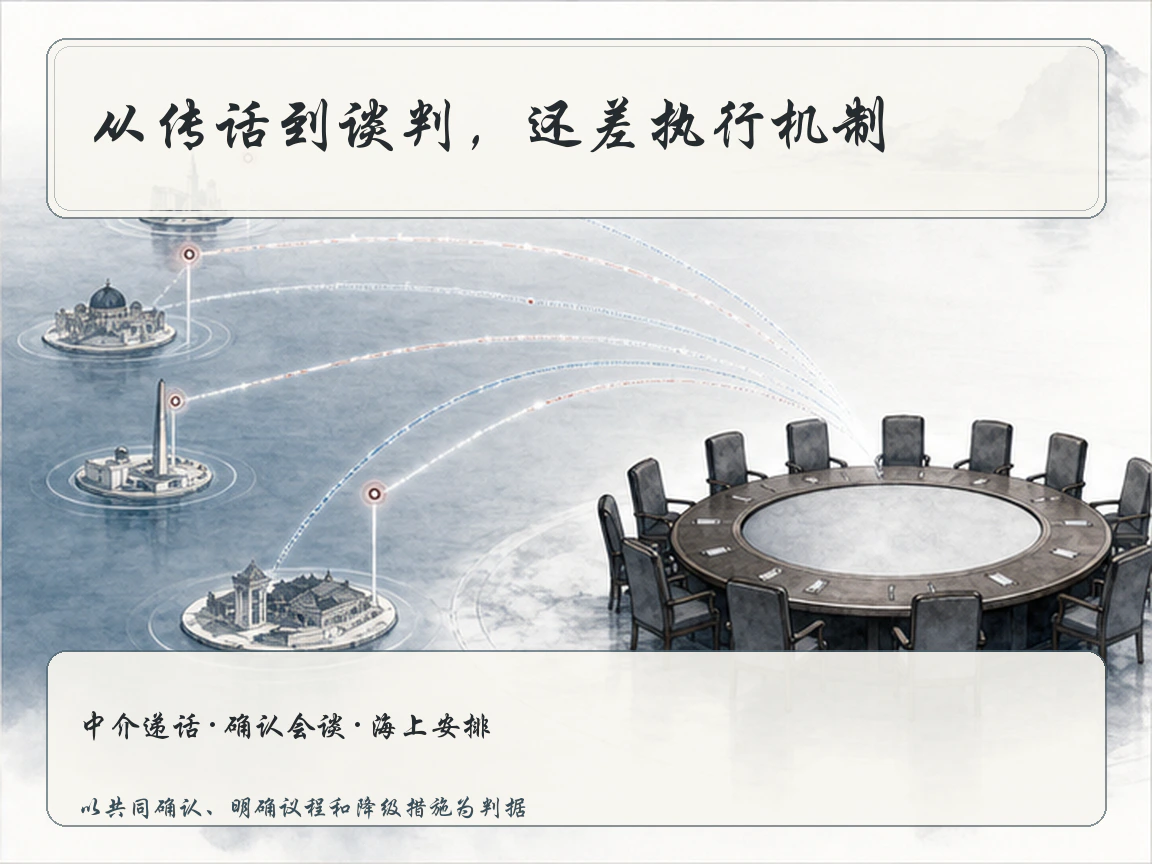
Iran's foreign minister said Tehran had not decided whether to resume negotiations with Washington. Qatar and Pakistan continued carrying messages, but Iran stressed that these were not formal talks. After U.S. contacts with Austria's and Greece's foreign ministers, both spoke to their Iranian counterpart. Greece emphasized navigation and merchant safety; Austria offered a venue for potential future contacts.
Diplomacy had not collapsed, but remained at the preliminary stage of layered indirect messaging. Austria's value derives from Vienna's history in nuclear-agreement verification; Greece has major shipping interests; Qatar, Pakistan, Oman and Turkey are traditional regional bridges. More channels can reduce miscalculation at the margin while also revealing the depth of the bilateral deadlock. Washington wants rapid Hormuz normalization to contain domestic inflation without conceding nuclear red lines. Tehran links long-term strait jurisdiction, sovereignty and dignity with delivery of existing temporary benefits. Both want to avoid full war, but remain divided on who moves first, verification and reciprocal compensation.
A real shift to substantive talks requires at least four pieces of evidence: joint public confirmation by the two governments or clearly authorized intermediaries of official dialogue; a specific date and physical venue; an agenda explicitly covering passage guarantees or nuclear issues; and executable de-escalation terms capable of simultaneous implementation. Fragmented messages and peripheral contacts can only modestly narrow extreme-conflict tails. They cannot remove owners' safety concerns or justify a ceasefire in the macro baseline.
Transmission proceeds gradually: peripheral signals reduce tail probabilities, security guarantees guide insurance, and confidence finally restores physical traffic. Courtesy calls and venue offers contain far less information than bilaterally endorsed talks and practical escorts. Continued legal debate over jurisdiction could make excessive intermediaries cover for delay. Conversely, official meetings and temporary transitional navigation arrangements could reduce insurance premiums before a final political agreement.
Southern Lebanon escalates as proxy conflict complicates regional reconciliation
Lebanese health authorities said Israeli strikes at two southern locations killed at least eleven and injured nineteen, including women and children among the dead. It was the deadliest exchange since June's fragile ceasefire understanding. Israel called it precise retaliation for a Hezbollah attack seriously injuring three soldiers, said it hit military facilities and killed a Radwan battalion commander. Both sides disputed targets and victims; public sources could not independently verify all details under battlefield conditions.
The deeper issue is not whether Iran directly commanded each exchange, but autonomous armed groups undermining regional implementation. June's framework envisaged phased Israeli withdrawal and Hezbollah heavy-weapons disarmament, yet Hezbollah never signed directly and rejected direct Israeli contact. Lebanon's caretaker government wanted to demonstrate state forces' legitimacy in protecting civilians, while Israel treated casualties as grounds to exceed ceasefire limits and retain operational freedom. Rising civilian and military losses rapidly depleted moderates' political capital for restraint.
Proxy conflict raises the risk of a nominal ceasefire becoming meaningless and adds issues for Washington and mediators, linking a potentially separable Hormuz dispute to cross-regional security. U.S.-Iranian conciliatory signals do not automatically cool Lebanon. Deeper Israeli control or sustained medium- and long-range Hezbollah retaliation could reconnect energy-supply anxiety with systemic regional war. Only effective joint monitoring, Lebanese army deployments and multilateral mediation restraining escalation can gradually calm spillovers.
Yemen's Red Sea port halts after attacks; both sides of the Arabian Peninsula face pressure
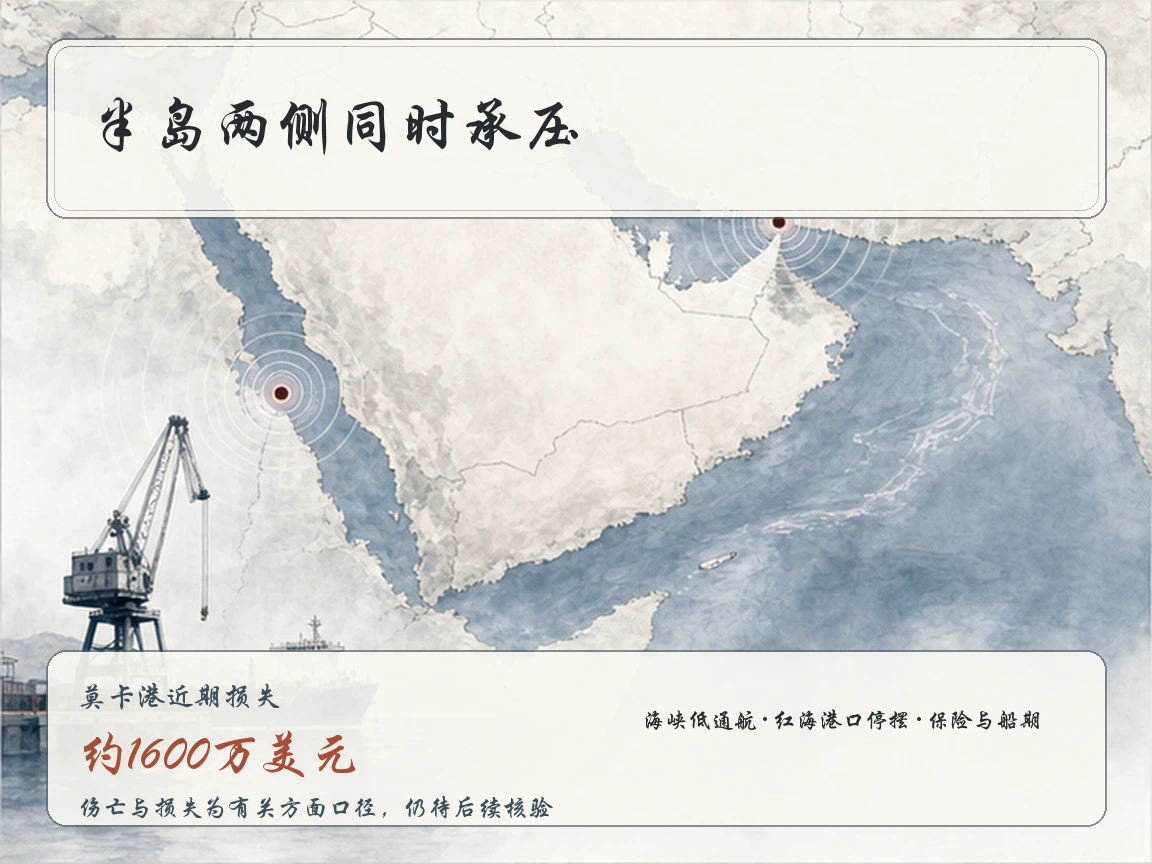
Red Sea security also deteriorated materially. Yemen's recognized government said the Houthis fired six ballistic missiles at Mocha, initially killing one and injuring eight, with two crew missing. Operators said more than 25 missiles had recently targeted the port, cumulatively killing seven and causing about $16 million infrastructure damage. Loading, unloading and berthing were fully suspended. The figures concern one attack versus recent cumulative damage. Final casualties still required confirmation, but the port's loss of function was a tangible shock.
The Houthis said they targeted Saudi-led military concentrations and supply ships; Yemen's government said civilian food and trade facilities were hit. Regardless of motive, falling Red Sea port capacity and severe Hormuz contraction create a dangerous double constraint. Owners normally diversify routes between the peninsula's Red Sea and Gulf sides. With both exposed to missiles, drones and asymmetric ship attacks, every alternative now demands high risk and insurance premiums.
Blocked nodes can quickly turn port congestion and handling paralysis into broad rerouting, raising grain, fertilizer and energy transport costs, regional inflation and sovereign deficit pressures. Assessment must focus on actual throughput and clearance recovery, not just attack frequency. A quick, safe Mocha restart and end to attacks could limit spillovers near Yemen. Expansion to main commercial routes and other ports could exhaust global shipping's spare routing capacity through simultaneous Hormuz and Red Sea impairment.
Six hard indicators and macro scenarios for a strait turning point
Verifiable facts and data are the best way through uncertain war reporting. Six signals matter:
First, maritime investigation evidence: damage, projectile trajectories and physical attribution from authoritative agencies, separating confirmed damage from unilateral blame.
Second, actual commercial transit: recovery from only 151 vessels over seven days, especially simultaneous improvement in VLCCs, LNG carriers and large bulk ships.
Third, owner capacity deployment: normal schedules at ADNOC-linked and major international fleets; actual routes say more than diplomacy.
Fourth, official U.S.-Iranian endorsement of talks: public mechanisms and clear authorization for Austrian, Greek, Qatari, Pakistani or Omani mediators to set dates, venues and agendas.
Fifth, Lebanon-Israel fighting intensity: larger reprisals, openings for monitors and the Lebanese army, and revised official civilian casualties.
Sixth, Red Sea hub repair: limited Mocha restart, missing-sailor searches and final damage verification.
The current macro baseline is a high-friction neutral stalemate: low-load Hormuz operations, attack threats and expensive insurance; frequent diplomacy without an institutional agenda; and recurring Lebanese and Yemeni proxy friction. In an improving de-escalation scenario, official talks and maritime guarantees arrive together, traffic rebounds and insurance trends lower first. In a deteriorating scenario, a severe ship incident with heavy casualties or environmental disaster, panicked withdrawal of energy fleets and uncontrolled proxy escalation could trigger irreversible supply repricing in oil and shipping.
Real Gulf de-escalation requires more than another polite call or one fortunate vessel's passage. It needs sustained recovering commercial traffic, no further damage reports, normalized insurance and schedules, and diplomatic agreements with strong enforcement. Until then, Hormuz risk has hardened from an occasional news impulse into an institutional cost within commercial contracts and capital calculations. Global commodity markets must continue paying for that entrenched uncertainty.