The past 24 hours marked a turning point in the Middle East. The June U.S.–Iran memorandum, once lavishly praised by Trump as the greatest Middle East peace agreement ever, became worthless after its 60-day implementation deadline expired Monday. Instead of the expected final ceasefire deal, Trump issued a cold Truth Social declaration that the United States had no ongoing or planned negotiations with the Islamic Republic of Iran.
This directly contradicted the White House's earlier Fox News claim of back channels with the Revolutionary Guard and senior adviser Kushner's assertion that contacts were deeper than ever. The Guard also categorically denied secret communication. The abrupt disappearance of diplomacy triggered a chain reaction: military deterrence and diplomatic confrontation across Hormuz escalated. Tehran set three stringent reopening conditions, Trump issued an extreme military threat against mediator Oman, and ballistic launches and commercial-vessel attacks followed in Gulf waters. Commodities and macro assets repriced quickly, with Brent futures strongly regaining $91 a barrel, their highest since late July.
Iran's price: three Hormuz reopening conditions and contradictory U.S. signals

Expiry of the 60-day memorandum let Iranian hardliners and parliamentary forces dominate the confrontation's narrative. On Tuesday, Speaker and Iran's chief negotiator with the United States Mohammad Bagher Ghalibaf set three preconditions for reopening Hormuz: fully lift the blockade and sanctions on Iranian oil trade; immediately end all military threats and hostile acts against Iran; and fulfill every existing commitment in the June memorandum.
Ghalibaf also attacked U.S. maximum pressure on social media, accusing Washington of believing tougher extortion could extract unilateral concessions absent from the agreement. He singled out new Treasury Secretary Bessent and Defense Secretary Hegseth as completely incapable of managing complex geopolitics. Bessent had just publicly said the United States was preparing unprecedented new financial and trade restrictions to choke Tehran.
Compared with Tehran's clear demands, Washington's signals were self-contradictory and theatrically escalatory. Trump insisted the maritime blockade was fully effective and even claimed mines had been completely cleared and normal navigation restored. Yet he also posted a map labeling Hormuz “New US Territory,” saying the United States effectively controlled it and that he liked declaring it territory.
International- and maritime-law scholars widely rejected this extraordinary claim. City, University of London professor Jason Chuah said neither U.S. constitutional presidential powers nor UN Charter principles of sovereign equality and territorial integrity allowed a tweet or executive order to create sovereignty over international waters or another state's territorial sea. Swansea maritime-law expert Simon Baughen said a more feasible de-escalation compromise would be a special U.S.–Iran transit-fee arrangement mediated by Oman, although even that could conflict with innocent-passage rights under the UN Convention on the Law of the Sea.
Washington threatens Oman as Gulf allies distance themselves
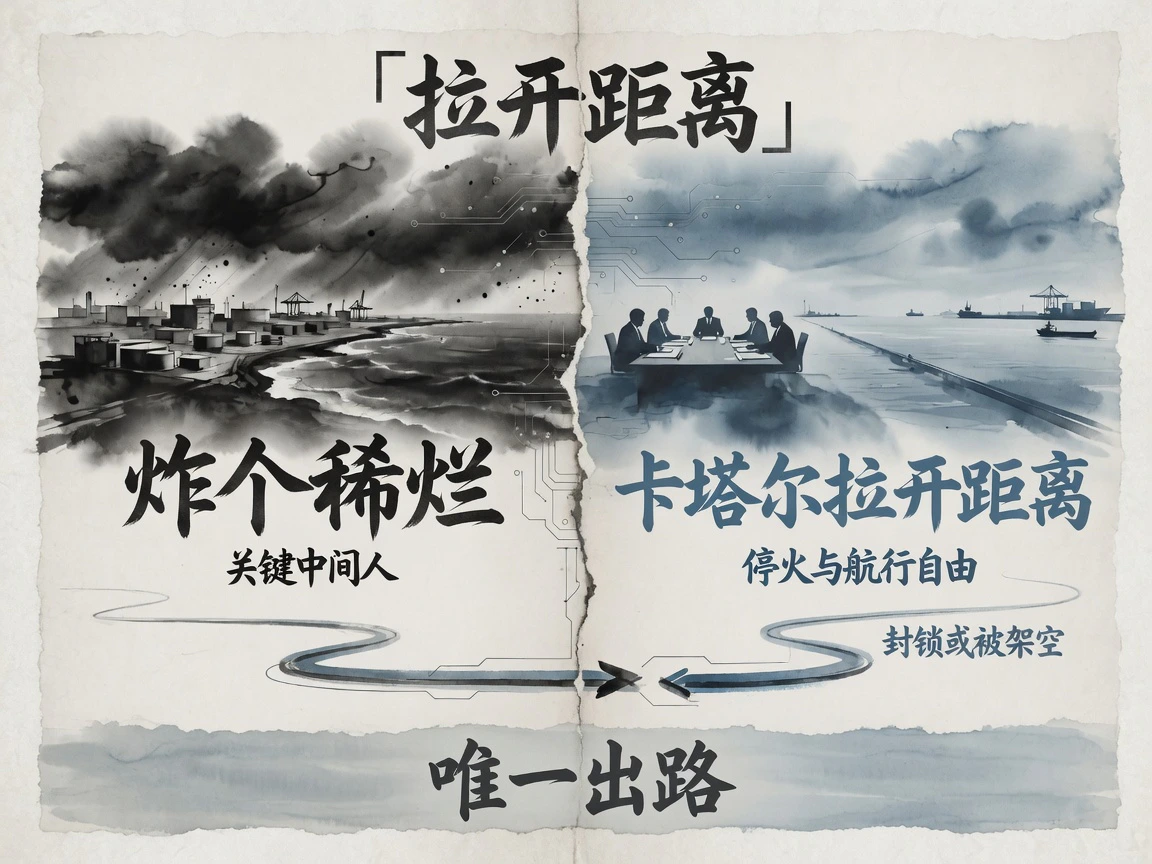
The collapse rapidly affected traditional U.S. Gulf alliances. In a Monday Fox News interview, Trump warned that if Oman obstructed U.S. military and control operations in the strait, the United States would “blow them to smithereens.” This extreme threat against a key mediator continued reverberating for 48 hours and pushed Gulf Arab states collectively toward defensive self-preservation.
On Tuesday, Qatari Foreign Ministry spokesman Majed al-Ansari publicly and unequivocally supported Omani–Iranian bilateral talks on navigation. He called a comprehensive ceasefire, freedom of navigation in Hormuz and a rapid return to diplomacy the only realistic way out. This showed that core GCC members no longer unconditionally followed Washington's confrontational agenda, instead publicly establishing security distance from the White House.
The remarks also drew broad criticism within U.S. politics and strategy circles. Democratic Senator and former naval aviator Mark Kelly called the threat senseless, stressing Oman's decades-long role as an irreplaceable U.S.–Iran communication buffer. He accused Trump of dragging the country blindly into war without overall strategy, clear tactical goals or an exit plan. Former Pentagon Middle East adviser Jasmine el-Gamal judged threats to bomb a noncombatant ally wholly lacking in credibility, more an emotional release of frustration after the failed memorandum.
Security scholar Danny Citrinowicz, a veteran of Israeli military intelligence, identified the White House's deeper concern: Oman was closely engaging Iran to establish new strait routes bypassing U.S. control. If Saudi Arabia, the UAE and other regional producers followed to protect exports, regional cooperation could effectively hollow out the unilateral U.S. blockade.
Ballistic missiles, vessel attacks and Red Sea strikes make low-intensity Gulf conflict more visible
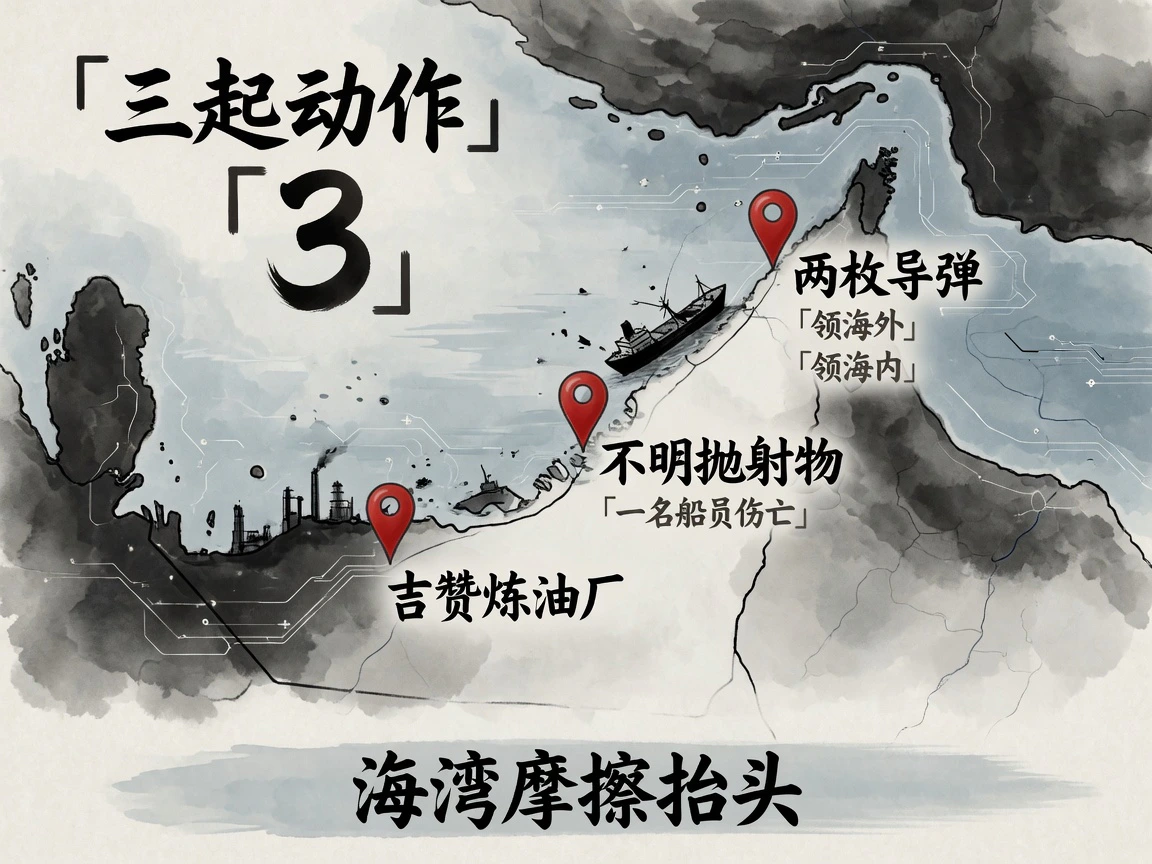
As diplomacy froze, frontline friction intensified at several points over 24 hours. Three direct incidents showed rapidly spreading navigation risks.
First came probing ballistic launches toward the UAE. Its Defense Ministry said Tuesday that air defenses detected two ballistic missiles fired from Iran toward the UAE. Official tracking showed one falling in international waters beyond its territorial sea and the other inside it. The military mentioned no casualties, property damage or specific interception, stressing full readiness to confront threats. Defense experts broadly read the move as Tehran's tactical warning to Gulf U.S. bases and host states.
Second, civilian shipping was attacked again in the main Hormuz channel. UKMTO confirmed that a merchant cargo vessel leaving the strait was struck by an unidentified projectile. The attack severely damaged its engine room and caused one crew casualty. The vessel sought help from Oman's coast guard, which escorted the remaining crew as they undertook emergency safety measures. The projectile's origin and casualty details had not been formally announced.
Third came a cross-regional Houthi move against Saudi rear-area energy infrastructure. A military spokesman claimed a drone attack on Aramco's Jizan refinery on the Red Sea in retaliation for Saudi incursions into Yemen's Saada and Hajjah airspace. The claimed result was unverified, with no response yet from Saudi authorities or Aramco. The preceding day, the Houthis had also claimed a ballistic-missile attack on one Saudi warship and four escort vessels.
Israeli strike on a Syrian airfield draws U.S. criticism as confrontation spreads to the flanks
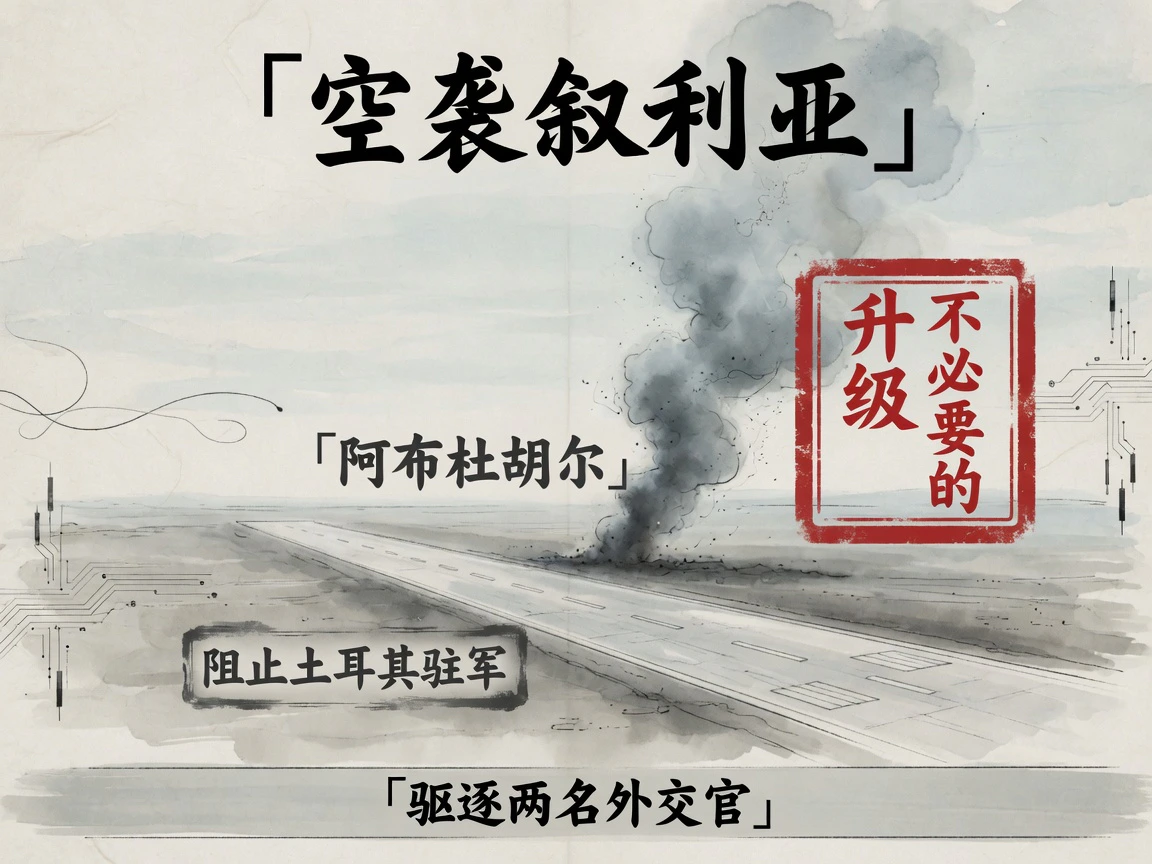
Beyond the central theater, fighting spread rapidly along geopolitical fault lines, while U.S.–Israeli differences over operational limits unusually became public.
On Tuesday, Netanyahu broke hours of silence to acknowledge an Israeli air strike on Abu al-Duhur military airfield near Idlib in northwestern Syria. He argued Israel believed Turkey was about to deploy troops there and would not tolerate security threats. The unilateral action drew Washington's displeasure: Syria envoy Tom Barrack had called it an unnecessary escalation that did not aid regional stability. Syria's Foreign Ministry strongly condemned what it called unjustified aggression.
Multilateral diplomacy around the Gulf also intensified that day. First, European confrontation became public. French Foreign Minister Barrot said Paris would expel two Iranian diplomats in retaliation for Iranian security services briefly detaining two French embassy staff in Tehran on July 19. Tehran had moved faster, announcing Monday that the two French diplomats could not reenter Iran. Second, Iraqi shuttle diplomacy came with mutual accusations. Ghalibaf planned to lead a senior parliamentary delegation to Iraq Wednesday to discuss border security and economic cooperation. Before the visit, Kurdistan Regional Government Prime Minister Barzani accused Iranian drones of attacking his official office residence. Tehran categorically denied this and suggested a likely foreign false-flag provocation. Third, Gaza ceasefire and disarmament plans remained in play. Kushner said in an interview that progress might come soon, expecting Hamas to begin disarming within 60–90 days, or the United States would fully support Israel finishing the job appropriately.
Hormuz traffic nearly freezes as commodities and long rates price prolonged conflict
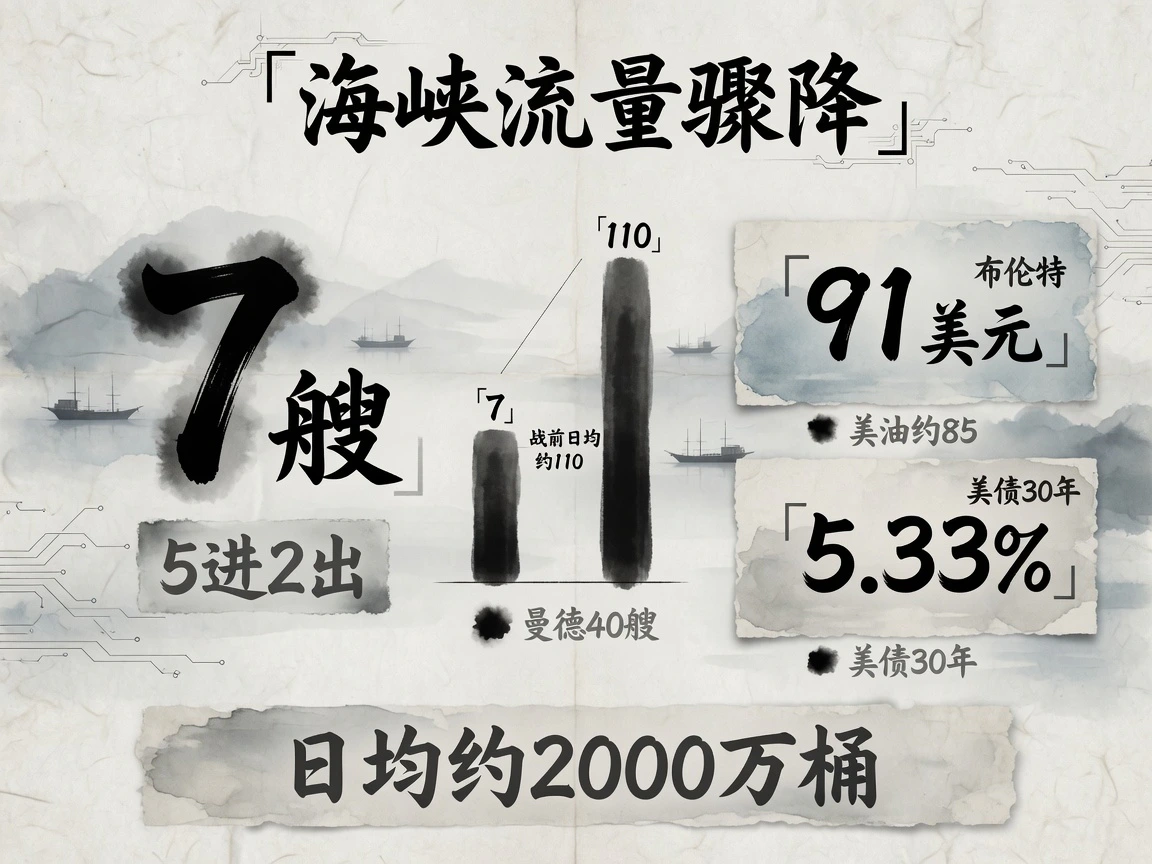
Washington tried to minimize the political impact, but commercial satellite and AIS data revealed the severity of the physical blockade.
Tracking showed at least seven civilian merchant ships actually completing Hormuz passage in 24 hours—five inbound and two outbound—more than 90% below the prewar norm of roughly 110 a day. The chokepoint was effectively logistically paralyzed. Bab el-Mandeb recorded at least 40 transits, broadly in line with recent months. Strong GPS interference affected both waterways, displacing many reported positions by tens of miles and multiplying navigation risks.
Concern over physical shortages rapidly struck global energy markets. EIA estimates put normal Hormuz flows around 20 million barrels a day of crude and products, about one-fifth of global oil consumption. Existing land-based bypasses had severe limitations: combined spare capacity on Saudi Arabia's East–West and the UAE's Fujairah pipelines was only about 2.6 million barrels a day, far short of strait volumes.
That physical constraint quickly reached macro markets. Brent futures rose above $91 a barrel, highest since late July, while WTI was around $85. Expectations of prolonged conflict also spread rapidly to bonds: Reuters reported the 30-year Treasury yield briefly reaching 5.33%, near a two-decade high, while Germany's ten-year benchmark yield set a 15-year high.
Inside Iran, prolonged wartime destruction was producing serious civilian hardship. National Iranian Gas Company officials warned Tuesday that damaged gas infrastructure could tighten winter supply in several provinces. North Khorasan, Mazandaran and Golestan faced particularly difficult heating conditions, with gas shortages potentially spreading into nationwide electricity generation.
Key developments over 24 hours, Beijing time, newest first

| Key developments |
|---|
| 08-19 05:36 Beijing timeNetanyahu acknowledged striking Syria's Abu al-Duhur base, saying the aim was to prevent Turkish deployment. |
| 08-19 04:47 Beijing timeTracking data: seven Hormuz transits in 24 hours, against a prewar average near 110; Bab el-Mandeb 40; GPS interference continued. |
| 08-19 03:33 Beijing timeFrance announced plans to expel two Iranian diplomats in retaliation for the July detention of embassy staff. |
| 08-19 02:03 Beijing timeTrump said on Truth Social that no talks with Iran were ongoing or planned and the blockade remained in force. |
| 08-19 01:59 Beijing timeGhalibaf accused the United States of squeezing Iran for concessions, naming Bessent and Hegseth. |
| 08-19 00:56 Beijing timeQatar publicly supported Oman–Iran strait talks, calling a ceasefire and navigation freedom the only way out. |
| 08-19 00:21 Beijing timeIran's gas company warned of winter shortages across several provinces, potentially affecting electricity. |
| 08-18 23:34 Beijing timeUAE Defense Ministry: two ballistic missiles detected from Iran's direction, one landing in territorial waters. |
| 08-18 23:33 Beijing timeHormuz was central to the June memorandum's collapse; its 60-day term expired Monday. |
| 08-18 23:08 Beijing timeFormer Pentagon adviser el-Gamal called Trump's threat to bomb Oman not credible. |
| 08-18 22:18 Beijing timeTrump's denial of talks contradicted Kushner's claim of deeper-than-ever dialogue; the Revolutionary Guard denied back channels. |
| 08-18 21:43 Beijing timeGhalibaf, the chief negotiator with the United States, would visit Iraq Wednesday. |
| 08-18 20:30 Beijing timeMaritime-law scholars said a presidential declaration could not establish sovereignty over Hormuz and violated the UN Charter and UNCLOS. |
| 08-18 19:59 Beijing timeU.S. envoy Barrack criticized Israel's strike on a Syrian base as unnecessary escalation; Syria condemned it. |
| 08-18 19:44 Beijing timeTrump posted a map labeling Hormuz New US Territory. |
| 08-18 19:25 Beijing timeReview of June memorandum terms covering military matters, the strait, economic arrangements and nuclear issues. |
| 08-18 18:53 Beijing timeIran set conditions for reopening Hormuz; oil prices rose. |
| 08-18 18:19 Beijing timeHormuz normally carries around 20 million barrels of crude daily, one-fifth of global production; the EIA said alternatives were very limited. |
| 08-18 17:54 Beijing timeReuters: Brent rose to $91, highest since July; the 30-year Treasury yield touched 5.33% intraday. |
| 08-18 17:33 Beijing timeGhalibaf's conditions: remove oil sanctions, stop military threats and fulfill the memorandum's other clauses. |
| 08-18 16:44 Beijing timeHouthis claimed a drone attack on Aramco's Jizan refinery; it could not be independently confirmed. |
| 08-18 15:20 Beijing timeIsraeli analyst Citrinowicz said Iran was arranging new strait routes with Oman and Trump feared his blockade would be bypassed. |
| 08-18 14:38 Beijing timeIranian state media said Ghalibaf would lead a delegation to Iraq Wednesday. The Kurdish regional premier accused Iran of a drone strike; Tehran denied it. |
| 08-18 13:16 Beijing timeSenator Kelly called Oman a key negotiating party and the bombing threat senseless. |
| 08-18 12:58 Beijing timeThe memorandum expired without a deal; Trump turned to punishing an ally. |
| 08-18 12:03 Beijing timeUKMTO: a merchant vessel in Hormuz was hit by an unidentified projectile, damaging the engine room and causing one crew casualty. |
| 08-18 12:03 Beijing timeTrump called reports of supply difficulties aboard USS Lincoln fake news; the carrier had deployed for more than 250 days. |
| 08-18 12:02 Beijing timeKushner expected Hamas to begin disarming within 60–90 days or the United States would support Israel finishing the job. |


