Over the past 24 hours, U.S.-Iran ceasefire talks showed no sign of restarting while confrontation intensified on two fronts. Trump announced the most destructive economic action ever against Iran; regionally, the UAE suspended all Iranian trade and Israeli strikes on a northwestern Syrian air base triggered a dispute with Turkey. The Pentagon's updated database put U.S. wounded above 750, while continued Hormuz closure and supply fears took Brent back above $92 a barrel.
Talks stall as Trump threatens economic strangulation

Trump announced on social media what he called the most destructive economic action ever taken against any country. The White House had not published implementing rules or lists, but he identified oil smuggling, currency swaps, cash transfers, informal exchange networks, vessel registration and offshore shell companies. He warned countries allowing financial institutions, companies, airports, ports or public entities to provide Iran an economic lifeline of severe secondary penalties and countermeasures.
Only hours before the threat, Trump had told White House reporters the situation was very good, suggested talks might resume at some point and again claimed complete U.S. control over Hormuz. The previous day he had ordered envoys to halt direct talks entirely. Sharp shifts in words and decisions made the policy intention uncertain.
Iranian speaker and chief negotiator Qalibaf countered on X that Americans imagining pressure could extract concessions absent from the agreement were deluding themselves. He mocked Treasury Secretary Bessent and Defense Secretary Hegseth as no match in complex diplomacy and strategy. Bessent had promised unprecedented punishment; Trump's latest remarks marked movement toward implementing maximum pressure.
Updated casualty database puts wounded above 750

The Pentagon updated DCAS on Wednesday, adding more than 50 wounded records. Combining the new Overseas Contingency Operations category with existing Operation Epic Fury figures produced 18 killed and 757 wounded since fighting began February 28, the first official wounded total above 750.
When creating the overseas category last month, Defense specified only coverage since July 7 and declined to identify which Middle Eastern conflict it covered. July 7 was the date the administration formally notified Congress of renewed Iran operations under the War Powers Act. The update followed credibility questions: four death records and dozens of injuries disappeared from DCAS last month before being restored after reporting and congressional scrutiny. Multiple outlets submitted written questions about the category and classification, without substantive clarification.
Oil exceeds $92 as UAE cuts Iranian trade
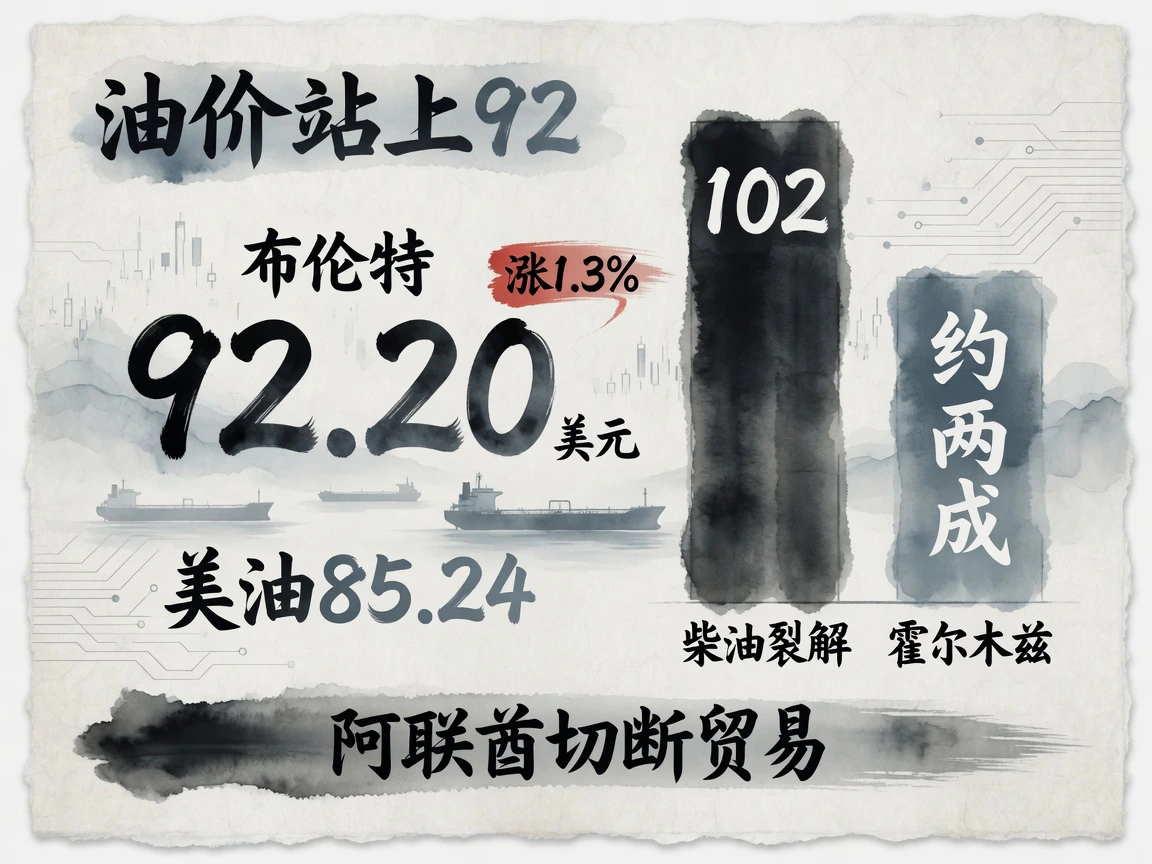
With normal commercial Hormuz shipping far from restored, Brent's main futures contract rose 1.3% to $92.20 a barrel, the highest in nearly a month; WTI reached $85.24. Deutsche Bank said Trump's assertion of no active or planned talks worsened near-term reopening expectations, lifting the whole forward curve; one-year Brent reached a two-month high.
Downstream refining transmitted greater pressure. Diesel cracks reached $102 a barrel Monday for the first time, nearly three times their prewar norm. Rapidan Energy president Bob McNally said the market was signaling severe shortages. Damaged Middle Eastern refineries and blocked exports from surviving facilities spread the crude shock into products. Hormuz handles about 20% of global crude transport and substantial LNG, heavily destined for Asia; each additional day of stalemate raises Asian procurement and transport costs.
Two regional developments followed. The UAE foreign ministry announced suspension of all Iranian trade, commercial exchange and financial transactions until further notice because of escalation. As Iran's longstanding second-largest trading partner and a major re-export hub, it closed a key channel. Hours earlier, UAE forces said two ballistic missiles aimed at maritime navigation fell in nearby waters; Iran denied launching them. Several ADNOC tankers had been attacked near the strait the preceding week, described as the first direct damage to UAE assets in this conflict; the trade cutoff was central to its protective and retaliatory response.
In Baghdad, Iraqi speaker al-Halbousi asked visiting Qalibaf for special status exempting Iraqi crude passing Hormuz. Analyst Ali Rizk suggested inviting him might also position Iraq as a mediator, but prior Pakistani, Qatari and Omani efforts had failed, limiting optimism about unilateral Iraqi mediation.
Iran considers attacks in Europe; NATO pledges allied defense

The Financial Times cited sources near Iranian leadership Wednesday saying Tehran seriously considered striking U.S. military targets in Europe if Washington expanded the war. A senior NATO official said the alliance was ready for any potential threat and would take necessary action to protect all allies. The official recalled four March interceptions of suspected Iranian ballistic missiles toward Turkey, launches denied by Tehran, and a March drone attack on Britain's Cyprus base.
Iran's power structure and rhetoric also shifted. Defense observers said hardliners advanced an offensive and external-deterrence strategy after Supreme Leader Mojtaba Khamenei reorganized security leadership by decree the previous week. Adviser Mokhber warned that unless core security conditions were met, an all-out offensive posture would fundamentally change the global balance.
Regional flank: Israeli strikes in Syria trigger exchanges with Turkey
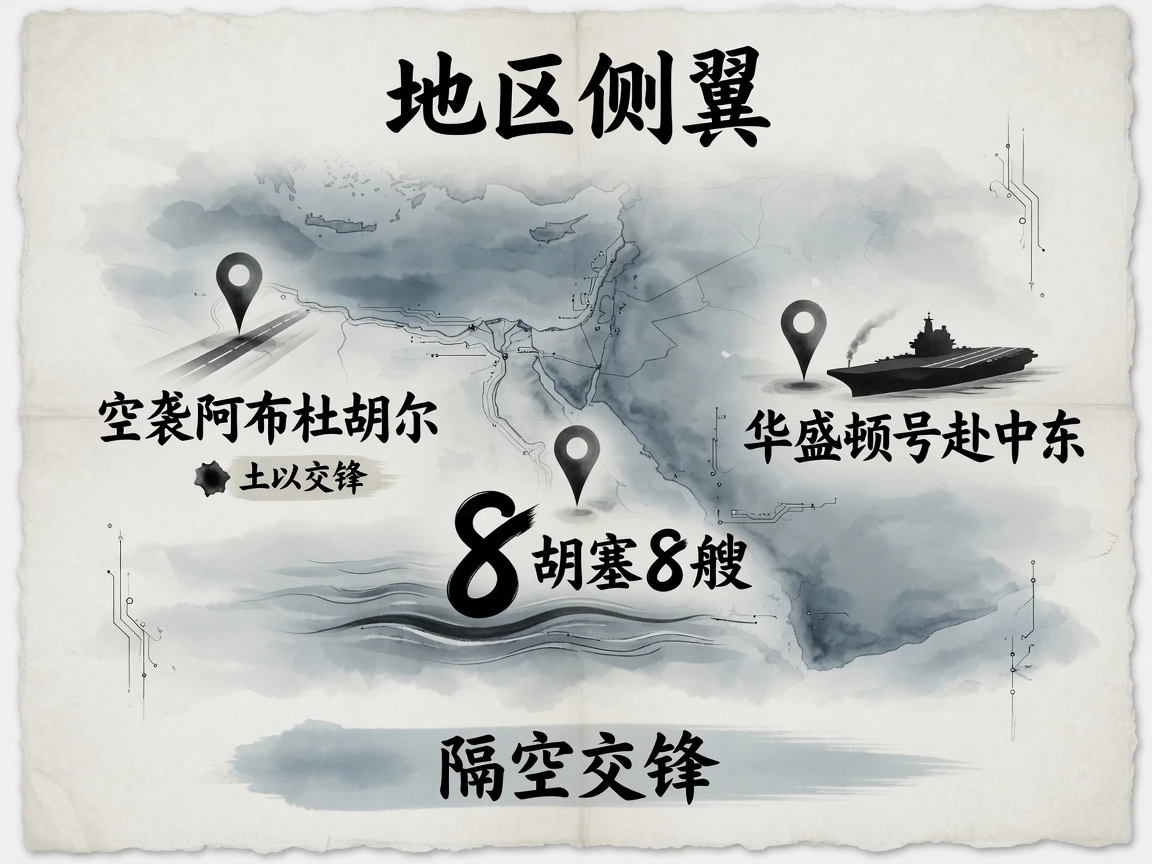
Netanyahu acknowledged Tuesday's Israeli strike on Abu al-Duhur air base near Idlib, saying intelligence showed imminent Turkish deployment. U.S. Syria envoy Barrack criticized unnecessary escalation harmful to stability. Turkey called the deployment claim untenable and an excuse for an unlawful violation of Syrian sovereignty. Visiting troops in Syria, Israeli chief of staff Zamir warned against both terrorist threats and major external military threats along the border. He did not name Turkey, but the message was clear.
Conflict also spread around the Red Sea and Gulf of Aden. The Houthis claimed that since their July 20 blockade of Saudi shipping they had hit 8 Saudi tankers, forced nearly 50 to turn back, sunk 2 Saudi landing ships and more than 10 patrol warships. No independent satellite or maritime evidence supported these figures and Saudi officials did not comment; they were widely treated as unilateral propaganda. In Gaza, intensive Israeli strikes Tuesday killed at least six; Hamas and Islamic Jihad jointly condemned what they called deliberate sabotage of mediated ceasefire efforts.
U.S. force rotation also changed. The Navy released footage of USS George Washington passing Malacca and conducting intensive carrier flights in the Indian Ocean en route to relieve USS Abraham Lincoln in the Middle East. Lincoln had spent nearly nine months deployed, an unusually long post-Cold War period, with morale and mental-health concerns drawing Congress's attention. Washington's emergency diversion would temporarily leave the Pacific without a stationed U.S. carrier.
Key developments over the past 24 hours

| Key developments |
|---|
| August 20, 08:00 Beijing timeTrump announced the most destructive economic action against Iran and warned third countries against providing Tehran a financial lifeline. |
| August 20, 07:08 Beijing timeCombined Pentagon categories showed 18 U.S. dead and 757 wounded since the war began, wounded exceeding 750 for the first time. |
| August 20, 06:08 Beijing timeMedia summaries described stalled ceasefire talks, continued Hormuz deadlock and elevated volatile oil prices. |
| August 20, 03:24 Beijing timeNetanyahu defended the Syrian air-base strike; chief of staff Zamir implicitly warned Turkey from the front. |
| August 20, 00:25 Beijing timeAnalysts said Iraq's Baghdad invitation to Qalibaf might explore a new mediation role. |
| August 20, 00:04 Beijing timeTrump said the Iran situation was very good and repeated his claim of complete U.S. Hormuz control. |
| August 19, 21:43 Beijing timeHouthis claimed eight Saudi tanker attacks and several warships sunk since the July 20 blockade; unilateral claims remained unverified. |
| August 19, 21:26 Beijing timeNATO responded to the Financial Times report, pledging readiness against threats and defense of allies. |
| August 19, 20:27 Beijing timeIraq's speaker asked Iran for special-status exemption for Iraqi crude through Hormuz. |
| August 19, 19:39 Beijing timeMedia summaries reported Turkish condemnation of Israel's strike, the UAE trade suspension and Trump's public threats toward Oman. |
| August 19, 19:08 Beijing timeBackground analysis examined Oman's shift from traditional U.S.-Iran mediation hub to a target of Trump pressure. |
| August 19, 18:49 Beijing timeTurkey rejected Netanyahu's Syrian-deployment allegations as untenable. |
| August 19, 18:35 Beijing timeBackground analysis examined Revolutionary Guards, Quds Force and Basij command structures. |
| August 19, 18:19 Beijing timeNATO detailed four March interceptions of suspected Iranian missiles heading toward Turkey; the Financial Times reported Iran considering U.S. military targets in Europe. |
| August 19, 18:01 Beijing timeDiesel cracks broke $102 a barrel, with the supply shock becoming a fuel crisis. |
| August 19, 17:25 Beijing timeBrent rose 1.3% to $92.20, a near-month high; Deutsche Bank said pessimism lifted the entire futures curve. |
| August 19, 17:12 Beijing timeUAE suspended all bilateral Iranian trade and financial transactions until further notice amid escalation. |
| August 19, 17:04 Beijing timeForeign Minister Araghchi acknowledged U.S. blockade-related shortages and price rises in parts of Iran. |
| August 19, 14:53 Beijing timeU.S. footage showed George Washington passing Malacca toward the Middle East to relieve the overdue Lincoln. |
| August 19, 13:02 Beijing timeBefore flying to Baghdad, Qalibaf called Iranian-Iraqi ties unbreakable. |
| August 19, 12:41 Beijing timeAnalysis described hardliners promoting an offensive strategy and adviser Mokhber's public warning. |
| August 19, 12:19 Beijing timeMedia summaries described stalled direct talks and Qalibaf's criticism of pressure to extract concessions. |
| August 19, 12:18 Beijing timeIsraeli Gaza strikes killed at least six; Hamas accused Israel of undermining ceasefire efforts, following Kushner's pressure on Israel the previous day. |
| August 19, 12:18 Beijing timeNetanyahu confirmed the Abu al-Duhur strike; U.S. Syria envoy criticized unnecessary escalation. |


