On the morning of August 19, 2026, Treasury announced expanded cash-bond buybacks, raising the single-operation liquidity-support cap for 10-20-year and 20-30-year nominal Treasuries from $2 billion to as much as $4 billion, effective September 9. The 30-year yield, at a post-2007 high the preceding session, fell 9.1 basis points to 5.194%; the 10-year declined 5.3 to 4.653%, and the 2-year only 1.1. The long-end rally reflected an intense appetite for a policy ceiling on term premiums. Yet the 10-year breakeven stayed 2.30%, inflation-risk compensation did not ease, and futures priced no cuts. July FOMC minutes released that afternoon said most participants considered further tightening likely necessary without continued disinflation, but assets barely reacted: Treasury's morning announcement had already exhausted the long end's daily move.
Fixed income: Treasury intervention temporarily pulls long yields away from 19-year highs
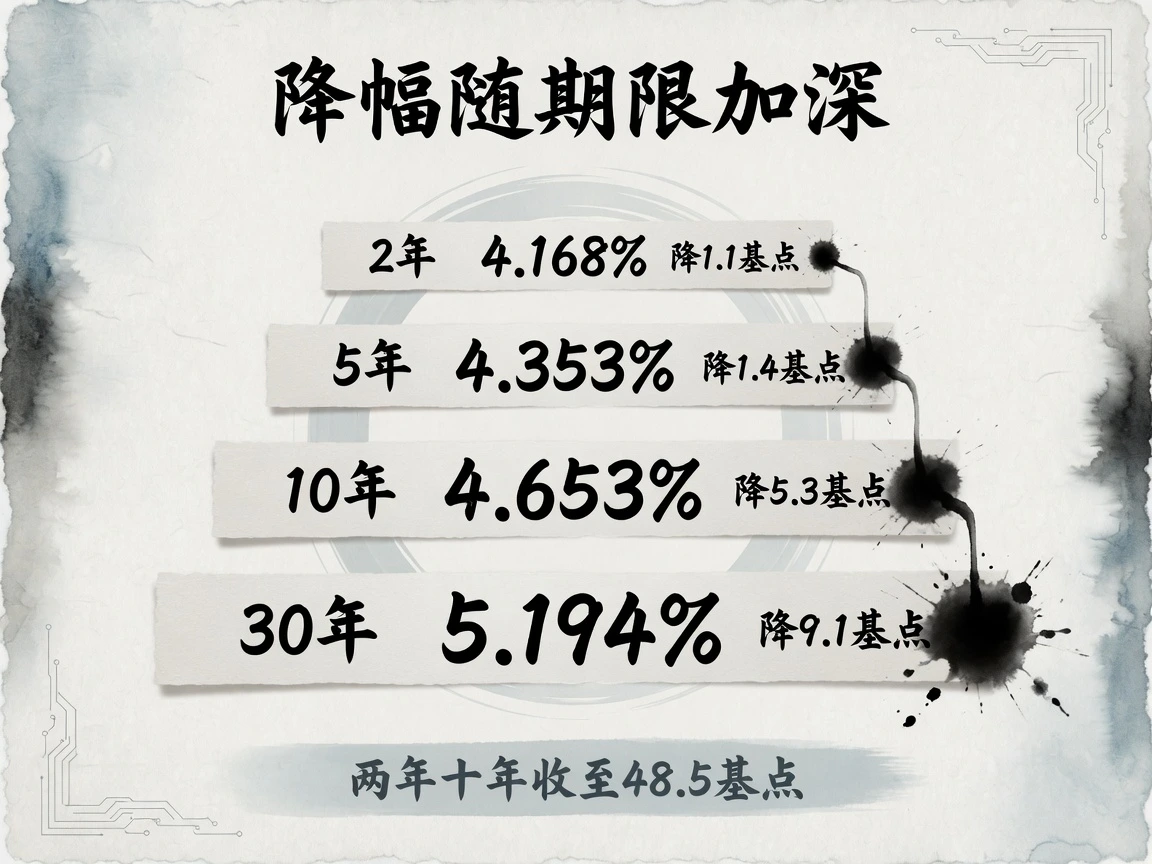
Wednesday's curve bull-flattened, with pronounced long-end declines and a largely stationary short end. New York closes were 2-year 4.168%, down 1.1 basis points; 5-year 4.353%, down 1.4; 10-year 4.653%, down 5.3; 30-year 5.194%, down 9.1. Declines increased with maturity, narrowing 2s10s about 4.2 basis points to 48.5.
The actual expansion was modest. Reuters estimated the quarterly cap rising from roughly $69 billion to $83 billion, an extra $14 billion against $5.5 trillion of ultra-long debt. The program had operated since 2024. Treasury's routine explanation cited continued high-quality quotes in key maturity sectors requiring more liquidity support. Traders cared more about timing: two weeks after Q3 refunding and one day after the 30-year's nearly 19-year high, the implicit message was that Treasury would not ignore an excessive long-rate surge.
A policy signal could not immediately create primary-market demand. That afternoon's $16 billion 20-year auction cleared at 5.204%, the highest since October 2023, with bid-to-cover only 2.53, well below the six-month average. Federal debt crossed $40 trillion that day, less than five months after $39 trillion. July's $432 billion deficit was the fourth-largest monthly deficit; interest spending exceeded Medicare to become the second-largest federal outlay after Social Security. A statement could force a temporary retreat but not reverse weakening absorption.
The curve's pricing division was clear. A 5.3-basis-point nominal 10-year decline with unchanged breakevens implied roughly 5 basis points lower real yields. Almost all room came from compressed real rates and term premiums, none from inflation compensation. Derivatives did not turn more hawkish on the minutes: evening August 19 futures put a September 25-basis-point hike at 30.6%, slightly below the previous day, and at least one hike before December near 64%. The short anchor remained further inflation and payroll tests; cuts were absent.
Macro: hawkish minutes, while actual bills reveal inflation divergence
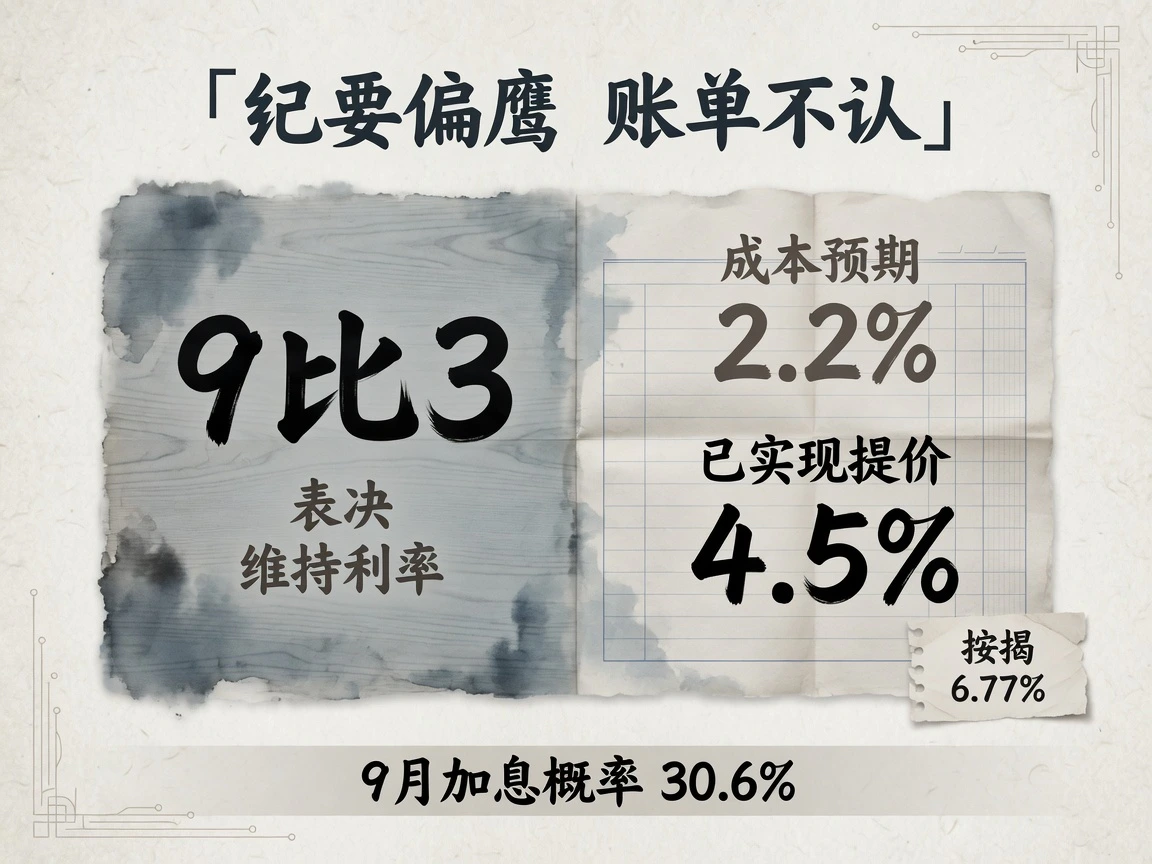
The July 28-29 minutes released at 14:00 showed hawkish views broader than the 9-3 vote. Beyond dissenting Cleveland, Minneapolis and Dallas presidents favoring an immediate 25-basis-point increase, many participants saw further tightening as likely necessary without ongoing disinflation. Several favored an immediate increase to avoid steeper forced restraint later. There was no discussion of cuts. Trump, asked about bond volatility, said he was unconcerned and again called current rates absurd.
Business surveys confirmed a gap between expectations and bills. Atlanta's August business inflation survey put expected next-year unit-cost growth at a stable 2.2%, while actual price increases over the previous twelve months were 4.5%. Most firms considered Middle Eastern energy transmission broader than tariffs, and only about one-third believed price rises already covered both new costs. Housing remained constrained: seasonally adjusted purchase mortgage applications fell 2% weekly and the 30-year fixed rate stayed 6.77%. Aggregate trackers were steady: Atlanta GDPNow Q3 growth 4.0%, Cleveland August CPI nowcast 0.35% monthly. Renewed oil gains since August made the next release likely to reverse earlier relief from falling import prices.
Commodities: oil focuses on Hormuz obstruction; gold trades lower long yields
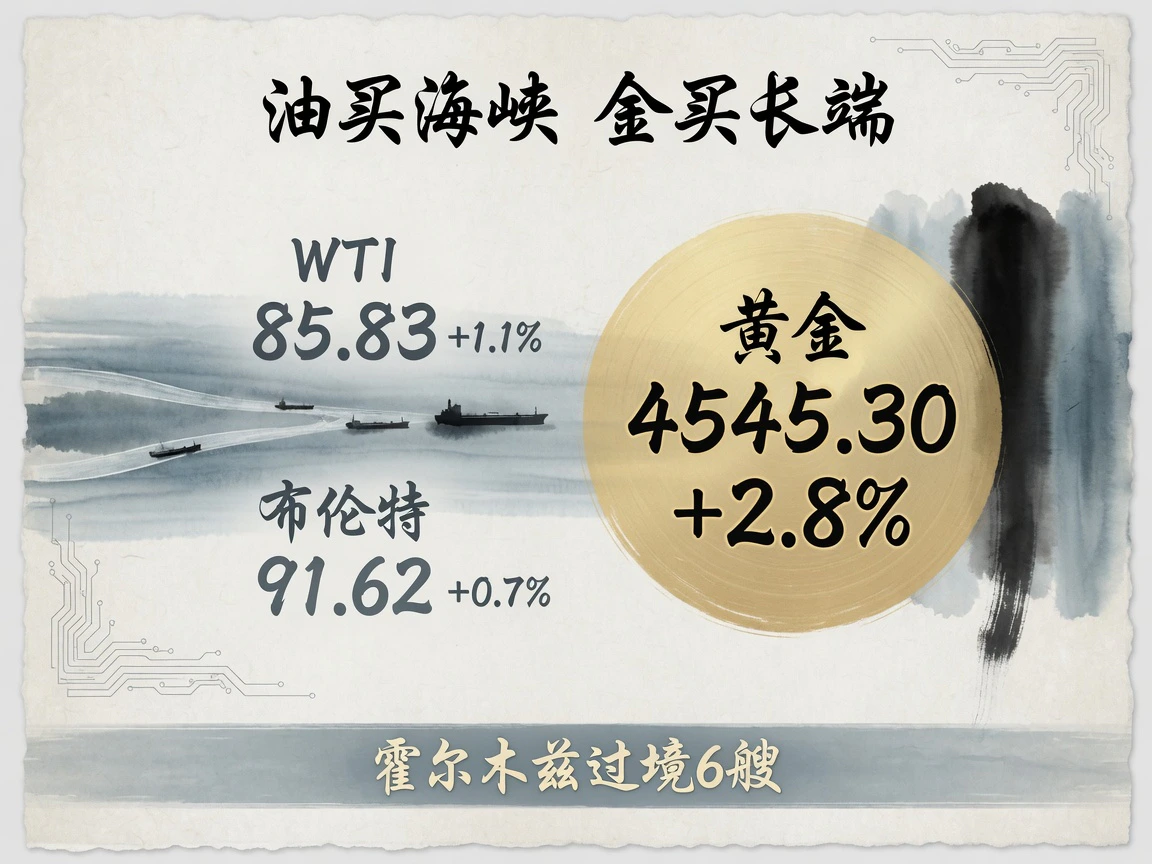
Oil settlements reached nearly four-week highs: WTI $85.83/barrel, +1.1%; Brent $91.62, +0.7%, both highest since July 24. Supply was tightening: Tuesday night's UAE suspension of all Iranian trade and finance received its first full U.S. pricing Wednesday; only six merchants passed Hormuz Tuesday versus an eleven-vessel ten-day average; first-half-August western Russian port loadings were about 15% below plan. EIA crude inventories rose 4.4 million barrels for a third weekly increase, but markets did not reduce geopolitical premiums. Builds concentrated on the Gulf Coast, while Cushing fell 1.31 million and refinery utilization reached 97.2%. Gains of tens of cents to one dollar and continuing backwardation showed complete Hormuz closure was not the baseline.
Gold futures settled up 2.8% at $4,545.30/ounce. Transmission was clear in sequence: Treasury's morning buyback plan first pulled down 30-year yields and the dollar, and futures gains were realized before the afternoon close. Hawkish minutes arrived only at 14:00 and did not depress metals. With unchanged 10-year breakevens and no rise in inflation swaps from oil, gold reflected falling real rates and administrative pressure on long yields. Copper, nickel, zinc and aluminum in London generally fell, reinforcing that the driver was rates and sovereign-credit pricing rather than a broad procyclical commodity boom.
Equities: healthcare and retail support indices as semiconductor deleveraging continues

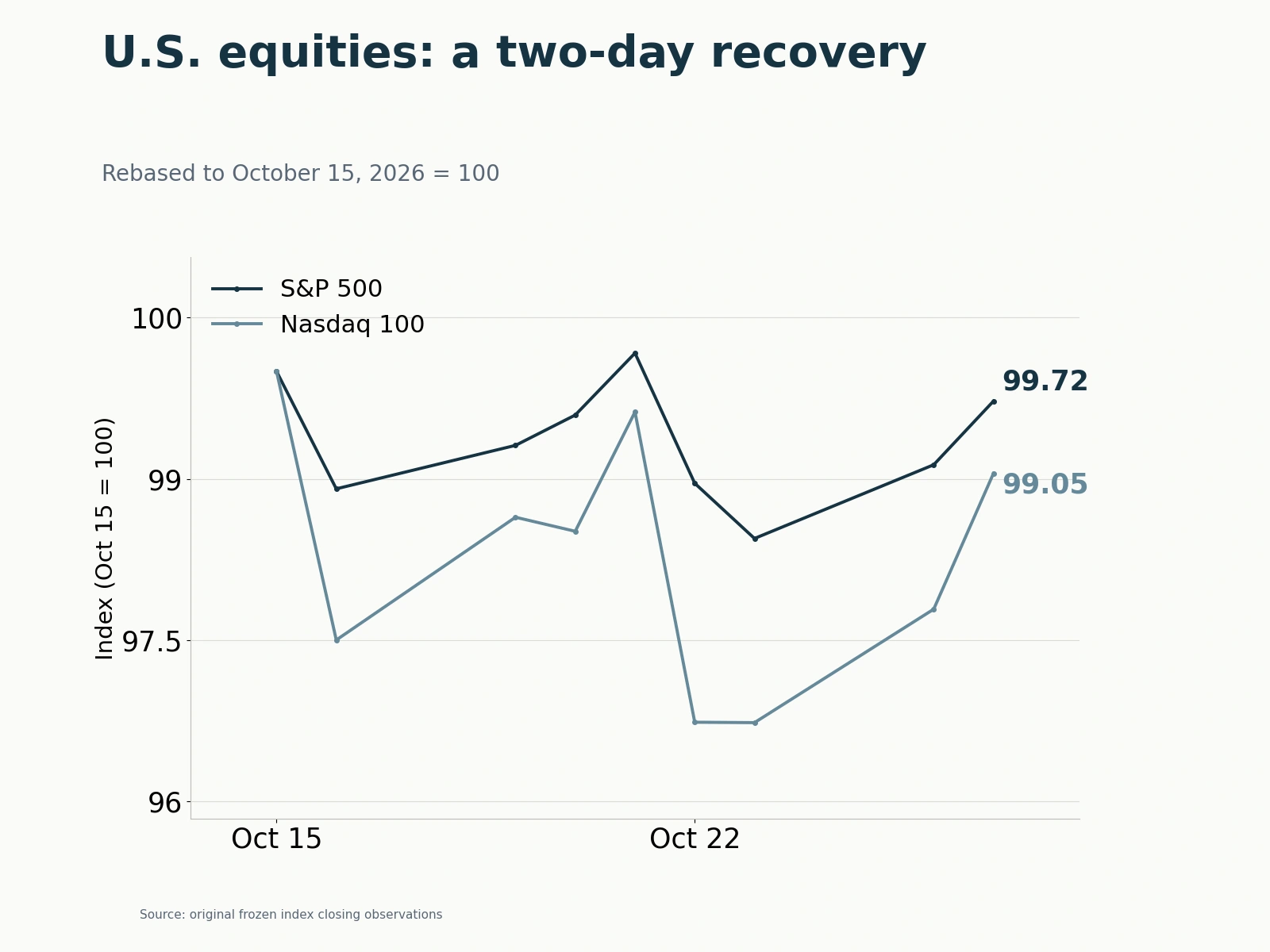
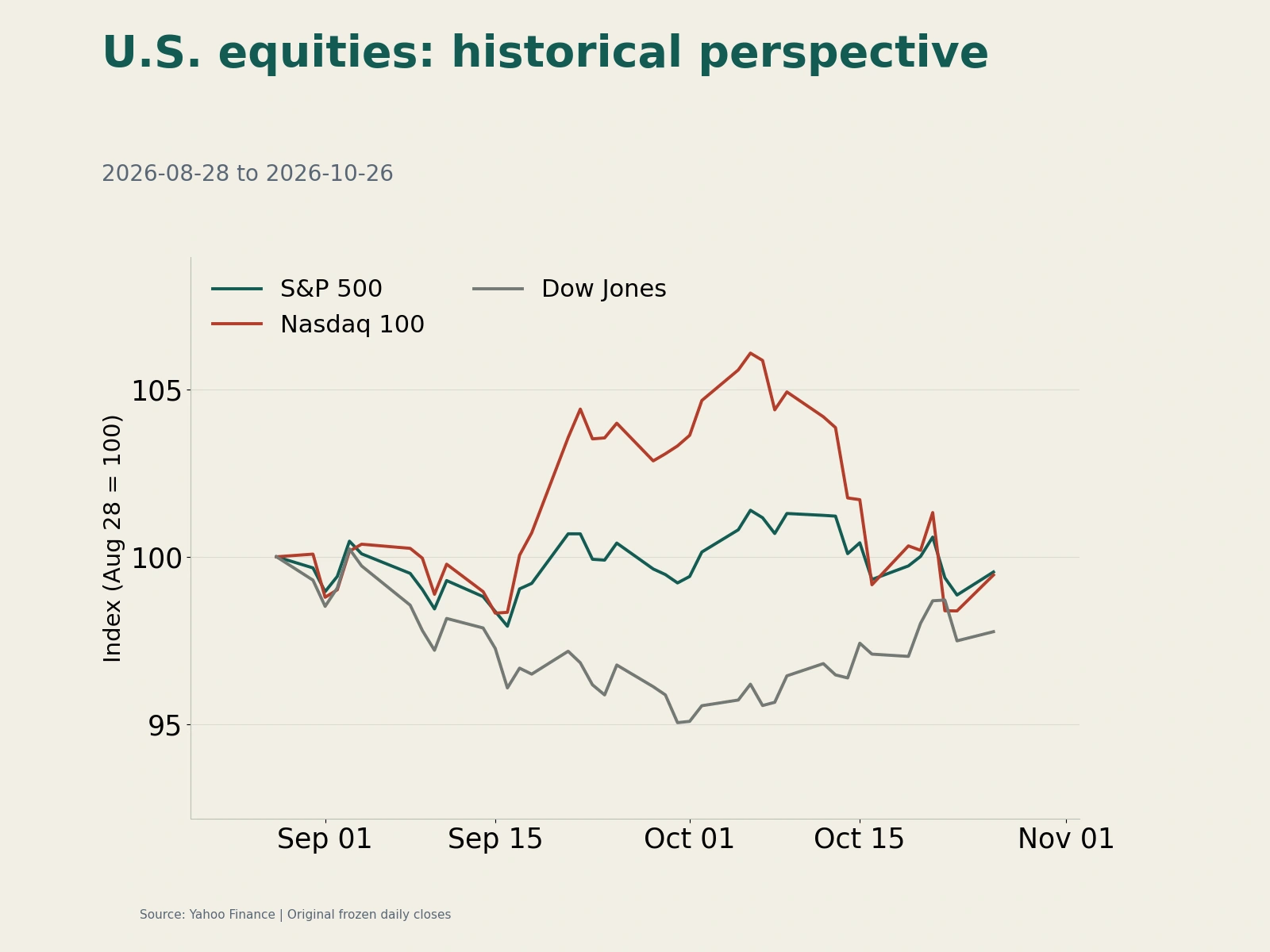
The S&P 500 gained 0.21% to 7,707.98, ending three declines, while VIX fell 6% to 14.89. Nontechnology blue chips supported the recovery. Moderna and MSD's personalized mRNA skin-cancer vaccine met its Phase III primary endpoint, the first Phase III success significantly outperforming Keytruda alone in adjuvant melanoma treatment. Moderna surged about 177%, its best day since listing, and MSD 12.6%, lifting the Dow. Target reported Q2 comparable sales +3.8%, store traffic +3.6%, raised annual sales expectations and gained 4.28%. Even Home Depot, before its results, rose 2%, showing temporary relief for rate-sensitive retail as long yields fell.
Chip selling continued: Philadelphia Semiconductor -2.12%, Broadcom -4.6%, Seagate nearly -8%, Western Digital nearly -7%. The Wall Street Journal reported OpenAI Q2 revenue of $6.7 billion with widening losses, versus Anthropic's $11.6 billion and a small operating profit. The contrast challenged limitless linear extrapolation of AI computing clusters. Nvidia was relatively resilient, down only 1%, with investors waiting for August 26 results. The S&P 500 briefly rose 0.7% but surrendered most gains under chip-heavyweight pressure, closing higher while the Nasdaq 100 fell.
Asia's response requires trading-sequence distinctions. Wednesday's Nikkei 225 fell 3.16%, Kospi 5.80% with a circuit breaker—Samsung and SK Hynix together near 47% weight—Shanghai 2.40%, and Shenzhen Component 5.01%. Those markets were absorbing the prior U.S. chip selloff before Wednesday's U.S. open; the Hang Seng was nearly flat. Treasury buybacks later revived global duration trades and Japanese and Korean morning markets rebounded from oversold levels. Equipment valuations remained pressured, so technical covering should not be extrapolated into a comprehensive regional technology reversal.
Geopolitics: diplomatic remarks leave room, while actual blockade pressure persists

Wednesday's physical trading reflected flexible rhetoric but unchanged blockade. Trump said at midday conditions were good and talks might restart sometime, while claiming total control of Hormuz. CENTCOM's afternoon update listed 65 vessels diverted, three disabled and two boarded; visible tanker traffic stayed in single digits. After the close Trump threatened the harshest economic countermeasures and serious consequences for countries sustaining Iran. Treasury had not issued accompanying details at publication: verbal deterrence preceded a pending implementation list.
Markets responded directly: oil reached four-week highs but gained only tens of cents to a dollar; long breakevens did not move; duration and broad equities rose together. This confirmed a firm ceiling on geopolitical premiums, without a qualitative change in safe-haven mechanisms. If investors truly expected prolonged complete interruption rather than current obstruction, long yields could not have fallen smoothly alongside rising oil. UAE trade suspension chiefly tightened Iran's domestic imports, with a larger impact on Iranian domestic hyperinflation than global Brent. Neighbors such as Iraq already bore the fiscal cost: against rigid monthly spending of $6.5 billion, monthly oil revenue had plunged from $6.8 billion to only $2.3 billion.