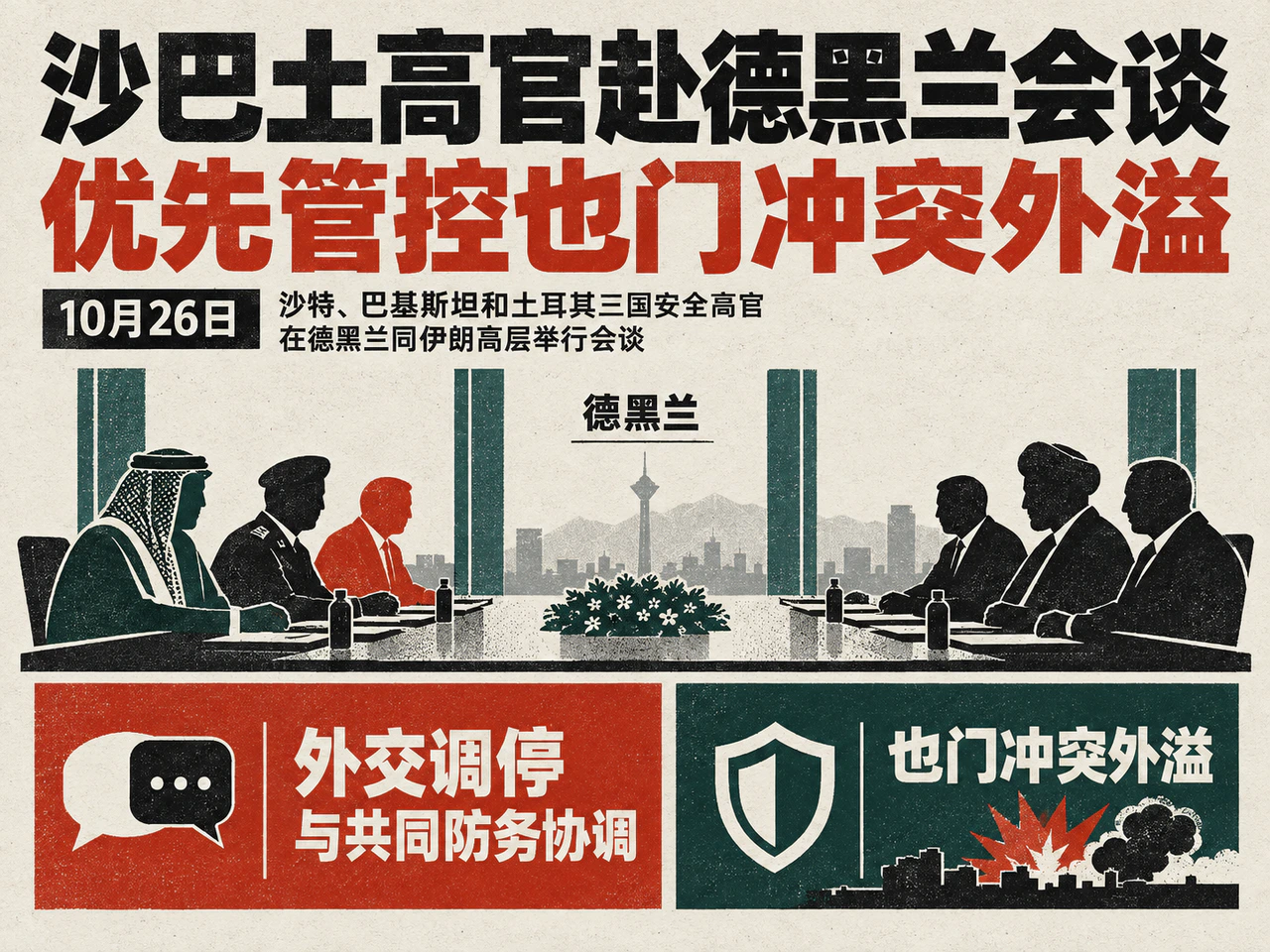
No new airstrikes or missile exchanges occurred on the Iranian front in the past 24 hours; direct confrontation shifted to economic blockade and sanctions. After announcing the most destructive economic action, Trump warned Iran's trade partners of enormous economic consequences. Vice President Vance called economic pressure Washington's most effective tool. Commodity markets quickly priced the risk: intraday Brent approached $94 a barrel, its highest since late July.
Tehran responded diplomatically and militarily. Foreign Minister Araghchi called sanctions threats a distraction; the Guard warned that renewed war would involve weapons entirely different in every respect. The main deployment change was carrier relief: George Washington's strike group entered the Middle East and Lincoln, deployed almost nine months, began returning home.
Economic pressure intensifies and oil jumps
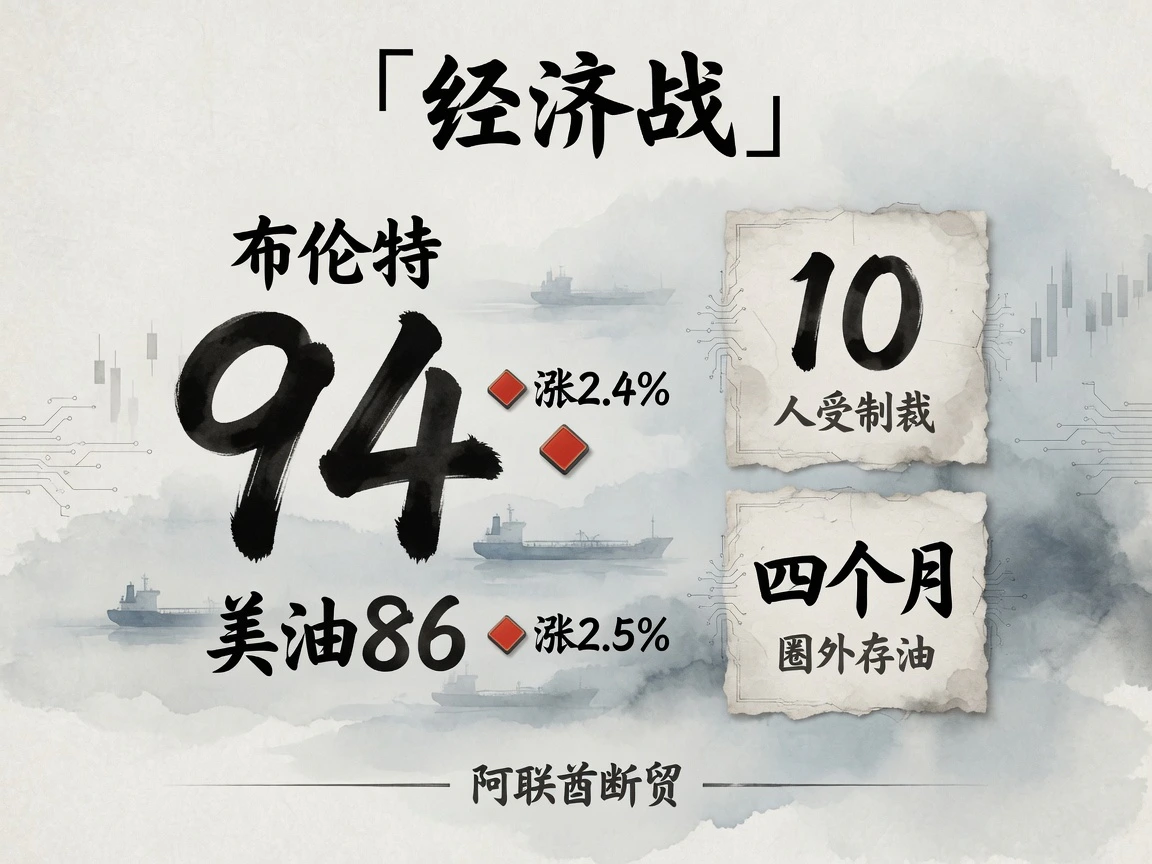
After Wednesday's economic D-Day remarks, Trump warned countries trading with Tehran of enormous consequences and urged allies to stand with the U.S. Vance offered the most systematic explanation yet in a radio interview: economic pressure was the most effective instrument in a delicate exchange of pressure and counterpressure. He acknowledged high oil prices burdened Americans but claimed Iran had suffered far more in recent weeks. The ultimate aim was complete abandonment of attempts to rebuild nuclear capabilities.
Measures followed. Treasury sanctioned ten individuals Thursday, alleging they carried cash on commercial flights among Lebanon, Turkey, the UAE and Iran to help Hezbollah transfer hundreds of millions of dollars and evade sanctions. The State Department recharacterized Hezbollah as an extension subordinate to the Guard's Quds Force rather than an independent entity, while Washington mediated Israel–Lebanon ceasefire talks.
Hard rhetoric and sanctions expectations lifted oil: Brent settled 2.4% higher near $94 and WTI 2.5% higher at $86. Kpler estimated Iran held crude in floating storage outside the blockade equivalent to about four months of exports; a complete cutoff could reduce oil revenue to zero. Analysts said closing financial channels would also require precise targeting of covert re-export and settlement networks through the UAE, Hong Kong and Singapore. The UAE's suspension of all Iranian trade and financial dealings that week was seen as a severe blow to Tehran's offshore hub.
Secondary sanctions' wider trade effects also drew attention. World Bank data identify China as Iran's largest partner, with $22.4 billion of Iranian exports in 2022; India and Germany are also major partners. Specific third-country buyer and settlement-bank lists and exemptions remained unclear, leaving enforcement boundaries uncertain.
Tehran combines diplomatic rebuttal with military deterrence

Araghchi wrote on X that U.S. threats distracted from domestic crises and warned doubling down on failed policy would bring greater failure. Deputy Foreign Minister Gharibabadi called Washington's calculations wrong. A formal Foreign Ministry statement through the official agency described stronger sanctions as a continuation of war and military aggression, threatening legal accountability and punishment for those ordering or implementing them.
Tasnim reported the Guard's spokesman warning that renewed war would bring weapons with wholly different performance and operational methods and missile warheads far more destructive than in previous conflicts. This followed Trump's suspension of direct talks. Although he had said conditions were good and talks might restart at some point, neither side yielded rhetorically.
Blockade and depreciation rapidly affected livelihoods. Public videos and market visits showed weak consumption in Tehran and Karaj wholesale markets. Traders said an ordinary watermelon cost 400,000–500,000 tomans, about $2.1–2.6, severely straining purchasing power. Officially linked ILNA cited the statistical center saying food prices had risen more than 100% since July last year. Industrial traders also reported Dubai-shipped containers detained by UAE customs, showing direct supply-chain pressure after the trade cutoff.
Hormuz traffic stays low; boarding and hijacking return to the Gulf of Aden
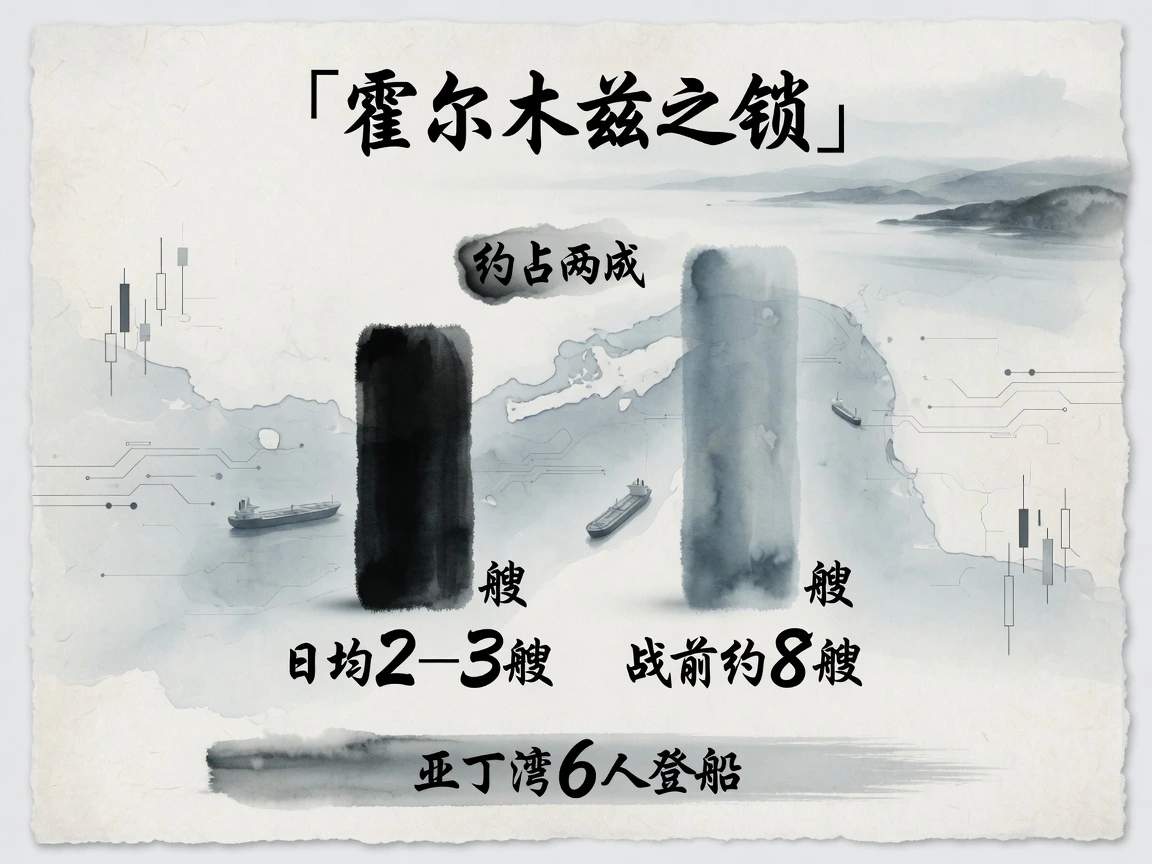
Kpler showed only two to three VLCCs daily through Hormuz since escalation July 7, versus about eight before the war. Most international owners remained cautious about potential Iranian attacks. EIA definitions put the Strait at roughly one-fifth of global crude-consumption transport and one-quarter of seaborne crude trade. Current traffic thus implies a de facto partial blockade. Only some crude leaves through bypass pipelines, U.S.-escorted convoys and offshore STS transfers.
Marisks CEO Maniatis judged Iran retained substantial control through asymmetric attack threats and selectively tolerated particular cargoes. U.S. Energy Secretary Wright countered that escort capability was steadily improving and actual Gulf outflows exceeded publicly tracked levels.
The Gulf of Aden saw the most notable maritime incident in 24 hours. UKMTO said a tanker sent distress signals about 136 nautical miles east of Mukalla, Yemen, before six unidentified armed men boarded, seized control and redirected it toward Somalia. Marisks called the pattern strongly characteristic of piracy. Traditional piracy was resurging around Aden and Somalia as long-distance ships avoiding Middle East combat and routing around the Cape entered pirates' operating range.
Carrier relief arrives; extended wartime deployment reveals strain
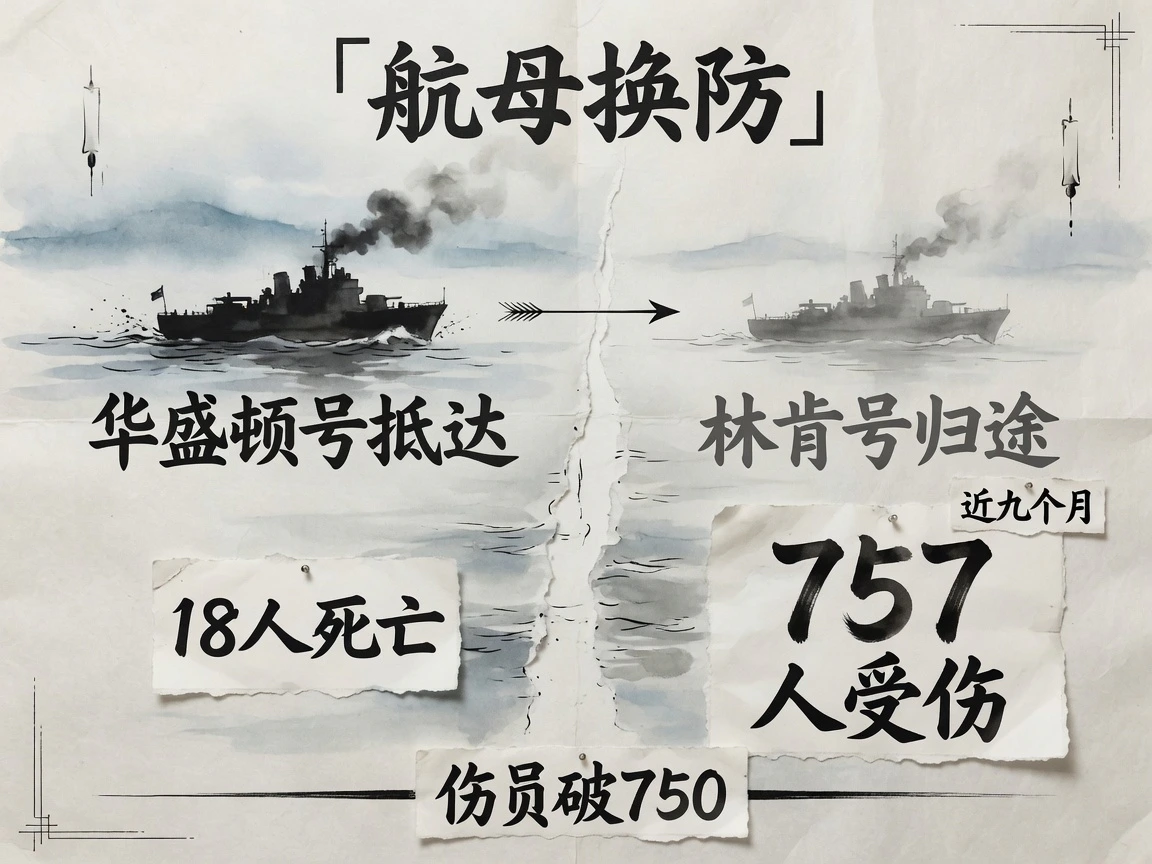
CENTCOM confirmed George Washington's strike group entered the Middle East Wednesday on a planned relief of Lincoln. Defense sources said Lincoln had begun its return but remained within the Fifth Fleet area and had not fully left CENTCOM's region.
Lincoln's deployment approached nine months, well beyond the Navy's normal seven, amid controversy over mental-health strain. Reports described two sailors-overboard incidents in recent months, both rescued, and damaged morale under intensive operations. Trump said the deployment was not long; Defense Secretary Hegseth said conditions were misrepresented; the Navy said it found no evidence of a surge in suicidal tendencies or behavior. Moving Washington to the Middle East would briefly leave a Pacific carrier-deployment gap.
Updated Pentagon casualty data Wednesday, combining the new Overseas Contingency Operations category with Operation Epic Fury, showed 18 U.S. personnel killed and 757 wounded since the war began, the first total above 750 wounded. When created the prior month, the category specified counting from July 7 without naming a conflict; that was also the date the administration formally notified Congress under the War Powers Act of additional Iran operations.
Flanking developments: Yemen escalation and Israeli–Turkish rivalry in Syria
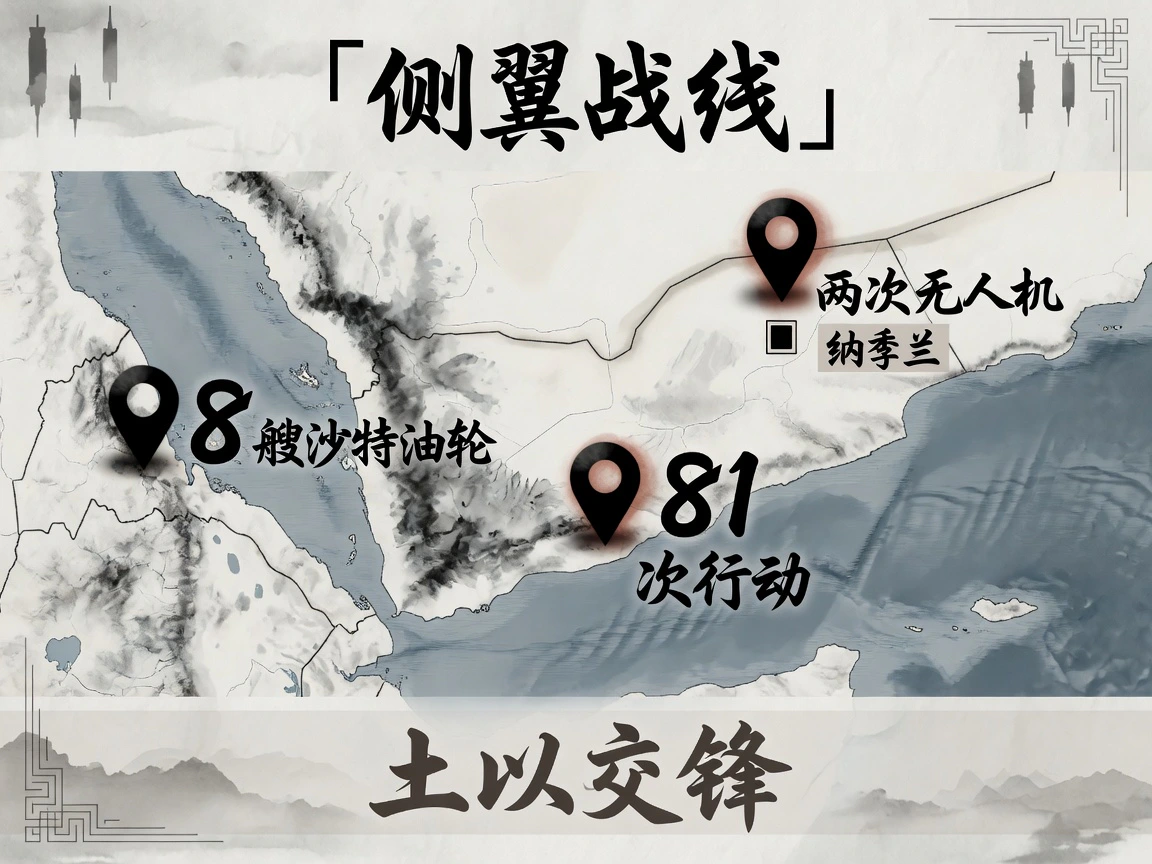
The Houthis claimed two drone attacks in Saudi Najran, targeting sensitive military facilities at the airport and a local Aramco energy installation, in retaliation for Saudi drones violating Saada airspace. Saudi Arabia had not confirmed. Hours earlier, Yemeni government forces claimed 81 strikes on Houthi positions in 24 hours, killing commanders and fighters and destroying armored equipment, without independent verification. Since late July the Houthis had declared a Red Sea blockade on Saudi-linked shipping; their spokesman claimed Wednesday to have struck eight Saudi tankers.
Israeli–Turkish friction in Syria also grew. Turkey condemned reckless Israeli strikes, denied a Turkish delegation was at an airbase south of Aleppo during the attack and rejected Netanyahu's claim of attempted Turkish deployment. Netanyahu said Wednesday that Israel detected an attempted Turkish move and sent a stay-away signal. U.S. Syria envoy Barrack had criticized the strikes as unnecessary escalation. Visiting forward forces, Israeli chief of staff Zamir warned against terrorism and any major external military threat forming near the border, implicitly signaling Turkey without naming it.
Key developments over 24 hours
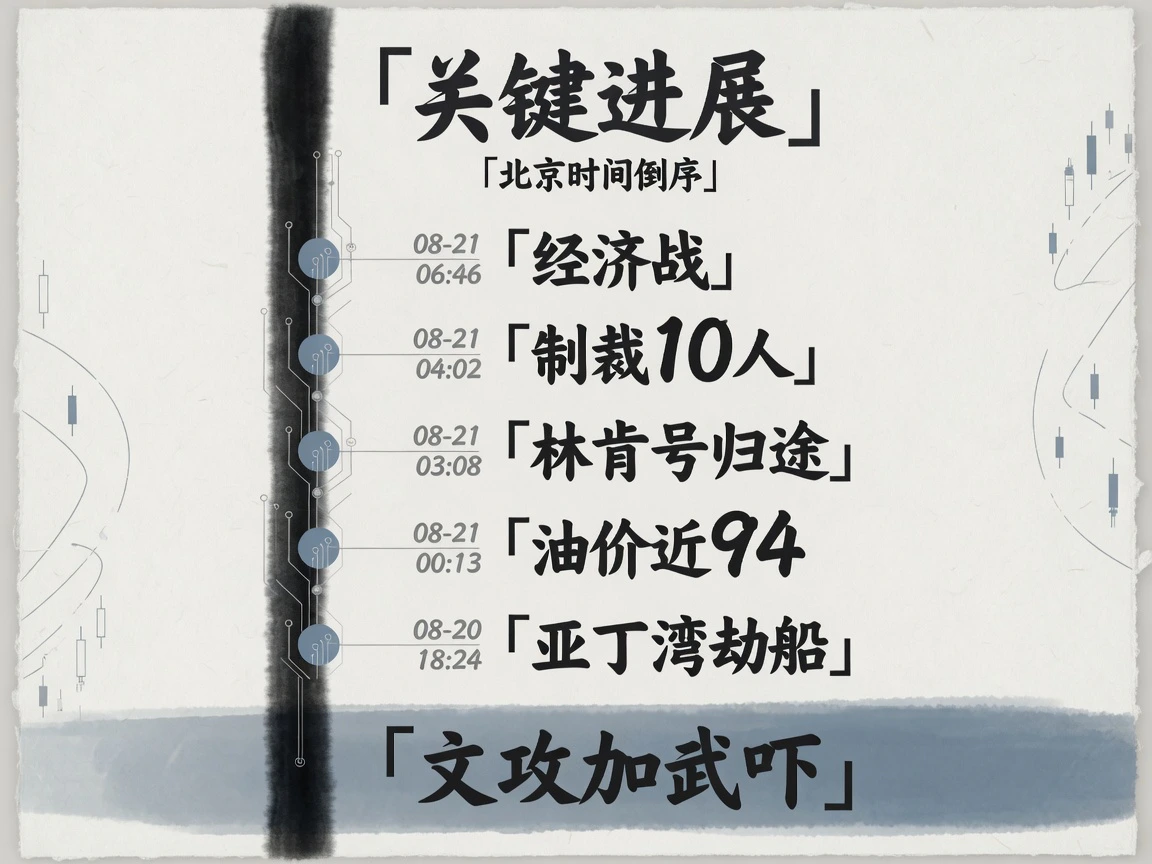
Reverse chronological order, Beijing time:
| Key developments |
|---|
| 08-21 06:46 Beijing timeTrump threatened stronger economic warfare; the Guard warned renewed fighting would bring more destructive new weapons. |
| 08-21 04:04 Beijing timeVance called economic pressure the most effective tool against Iran, while acknowledging a delicate game. |
| 08-21 04:02 Beijing timeTreasury sanctioned ten alleged Hezbollah cash couriers; State recast Hezbollah as a Quds Force extension. |
| 08-21 03:08 Beijing timeSources said Lincoln had begun returning home but remained in Fifth Fleet waters. |
| 08-21 01:08 Beijing timeIran's Foreign Ministry called stronger sanctions continued military aggression and threatened accountability for implementers. |
| 08-21 00:13 Beijing timeBrent rose over 2% toward $94; Araghchi called U.S. economic threats a distraction. |
| 08-20 23:13 Beijing timeKpler estimated offshore oil beyond the blockade could support about four months of export revenue; a complete U.S. cutoff faced practical obstacles. |
| 08-20 22:38 Beijing timeHouthis claimed drone strikes on Najran airport and an Aramco facility; Saudi Arabia had not confirmed. |
| 08-20 22:22 Beijing timeReports highlighted Lincoln's nearly nine-month deployment and concerns about morale and mental health. |
| 08-20 21:30 Beijing timeWorld Bank data showed Iranian annual exports to China at $22.4 billion, with India and Germany next among key partners. |
| 08-20 20:58 Beijing timeCENTCOM confirmed George Washington arrived in the Middle East to relieve Lincoln. |
| 08-20 20:55 Beijing timeYemeni government forces claimed 81 attacks on Houthi targets in 24 hours; results lacked independent verification. |
| 08-20 20:28 Beijing timeConsumption was weak in Tehran and Karaj markets; official data showed food prices doubled year on year. |
| 08-20 20:10 Beijing timeKpler counted two to three VLCC Hormuz transits daily, about 30% of prewar traffic. |
| 08-20 19:27 Beijing timeThe Guard warned that, if fighting resumed, the weapons it used would far exceed previous ones in performance and destructive power. |
| 08-20 19:21 Beijing timeAn in-depth assessment examined limits to Iran's survival economy; officials acknowledged damaged oil exports and fiscal revenue. |
| 08-20 18:24 Beijing timeUKMTO reported six armed men boarding a Gulf of Aden tanker and taking it toward Somalia. |
| 08-20 17:54 Beijing timeTurkey urged Israel to stop cross-border strikes and denied a Turkish delegation was deploying to the Aleppo base. |
| 08-20 17:23 Beijing timeU.S. economic-war threats lifted Brent 2.4% near $94 and WTI 2.5% to $86. |
| 08-20 14:43 Beijing timeAraghchi said economic D-Day would fail; the deputy foreign minister blamed U.S. miscalculation. |
| 08-20 12:13 Beijing timeCombined Pentagon categories showed 18 killed and 757 wounded since the war began, exceeding 750 wounded. |
| 08-20 12:13 Beijing timeNetanyahu defended Syria strikes and warned Turkey not to enter the airbase. |