No new airstrikes or missile exchanges were seen on the Iranian front in the preceding 24 hours, with confrontation shifting toward sanctions and rhetoric. Washington struck a dual posture: loud sanctions threats abroad and efforts to ease election and inflation pressures at home. After promising history's most devastating economic action on Wednesday, Trump described the Iran war as a little detour at a Friday-night South Carolina campaign rally and promised gasoline prices would soon fall. Beijing and Tehran both pushed back on Friday. The week's first complete shipping figures showed Hormuz traffic up 27% from the preceding week, but only around one-fifth of prewar averages.
Before 'economic D-Day' measures arrive, Beijing and Tehran respond on the same day
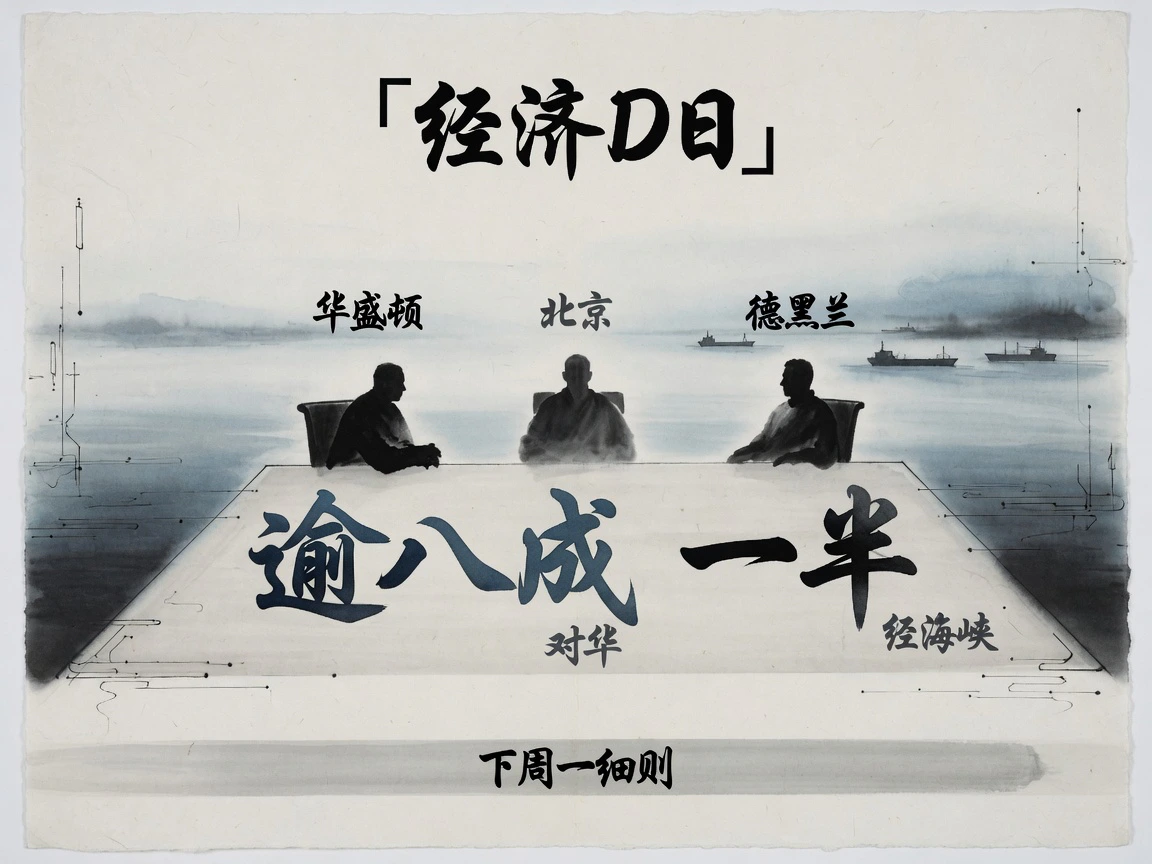
On Wednesday, Trump announced on Truth Social what he called the most devastating economic action ever taken against a country, targeting Iran, but no specific measures had yet been published. He threatened secondary sanctions against countries allowing financial institutions, companies, airports or government bodies to provide Iran a lifeline, explicitly listing oil smuggling, swap lines, cash transfers, informal currency exchange, ship registration and shell companies, demanding all stop and saying those involved knew who they were.
The pressure did not fully close negotiations. Earlier that same day, Trump told media the situation was very good, suggested talks might resume at some point and said he held very severe sanctions. Pressure alongside an open door captured Washington's full posture. U.S. reporting said Bessent later described a combination of the harshest sanctions and a naval blockade and told countries to choose sides. Details were expected at the following Monday's briefing.
Beijing responded clearly at Friday's regular foreign-ministry briefing. The spokesman said sanctions served no party's interests and pressure was no solution, calling for a political settlement through talks. Bessent had earlier urged Beijing to get in step. China's role as an energy buyer is substantial: Kpler estimates more than 80% of Iran's seaborne crude exports go to China, while about half China's Gulf energy supplies transit Hormuz. Analysts said Beijing maintained cautious communication and Washington's leverage over it was becoming increasingly limited.
Tehran countered on two levels. Parliamentary speaker Mohammad Bagher Ghalibaf told semiofficial media Iran was ready to sacrifice wealth to defend dignity and honor and needed preparations against unjust sanctions to get through the crisis. Iran called Trump's ultimatum illegal. Other Iranian politicians accused Washington's threats of preparing a wholesale return to classical colonialism.
A rally's 'little detour' meets gasoline at $4.11 a gallon
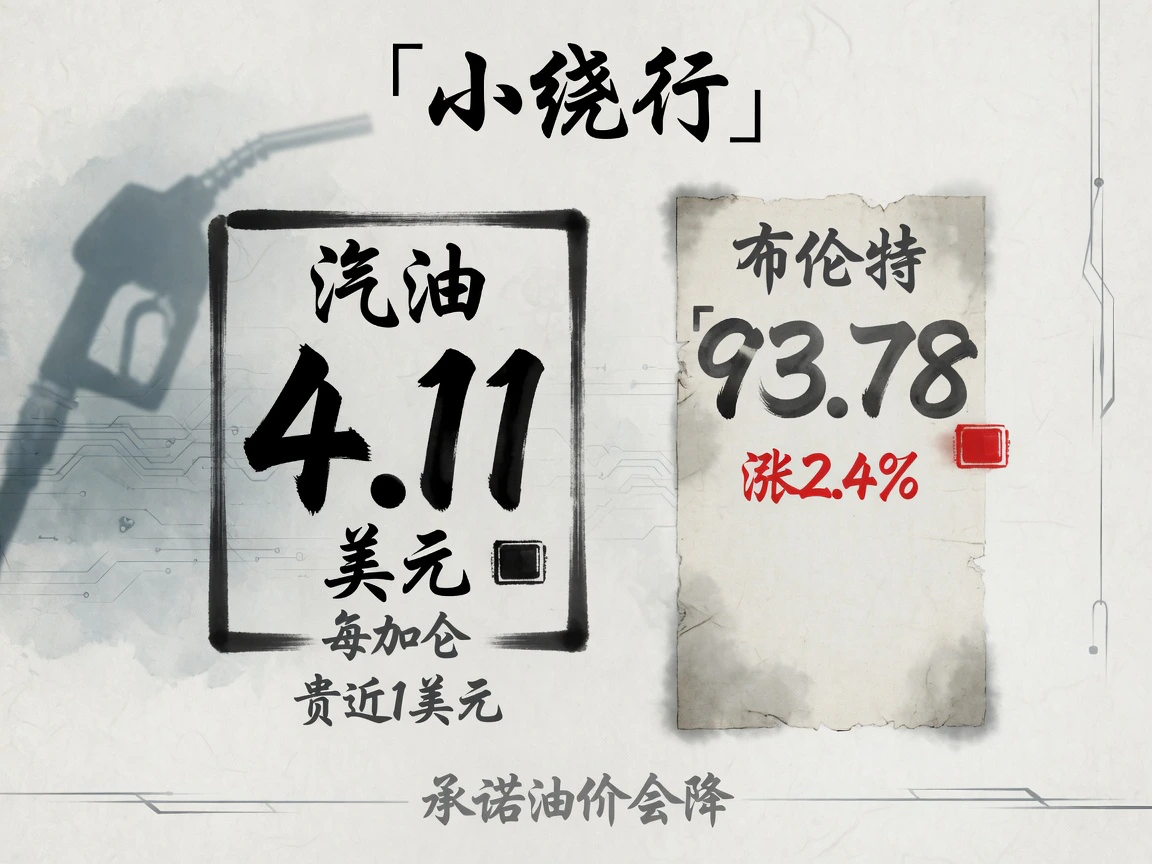
Trump appeared in South Carolina on Friday evening to campaign for Senator Lindsey Graham. He downplayed the Iranian conflict as a little detour, blamed inflation entirely on Democrats and promised gasoline would soon fall. His casual delivery included asking what else he could do on a Friday night with plenty of time—go back and bomb Iran again.
The accounts contrasted starkly with the relaxed rhetoric. Average U.S. retail gasoline reached $4.11 a gallon on Friday, nearly $1 above a year earlier and unusually high for August historically. Industry analysts described a perfect storm of war and export restrictions for refiners, with constrained crude feedstock for gasoline, jet fuel and diesel. Crude was also tight: August 20 Brent closed up 2.4% at $93.78 a barrel. Without a clear policy mechanism, the promise of lower prices remained campaign rhetoric.
Hormuz weekly traffic rises 27% but remains only one-fifth of prewar levels
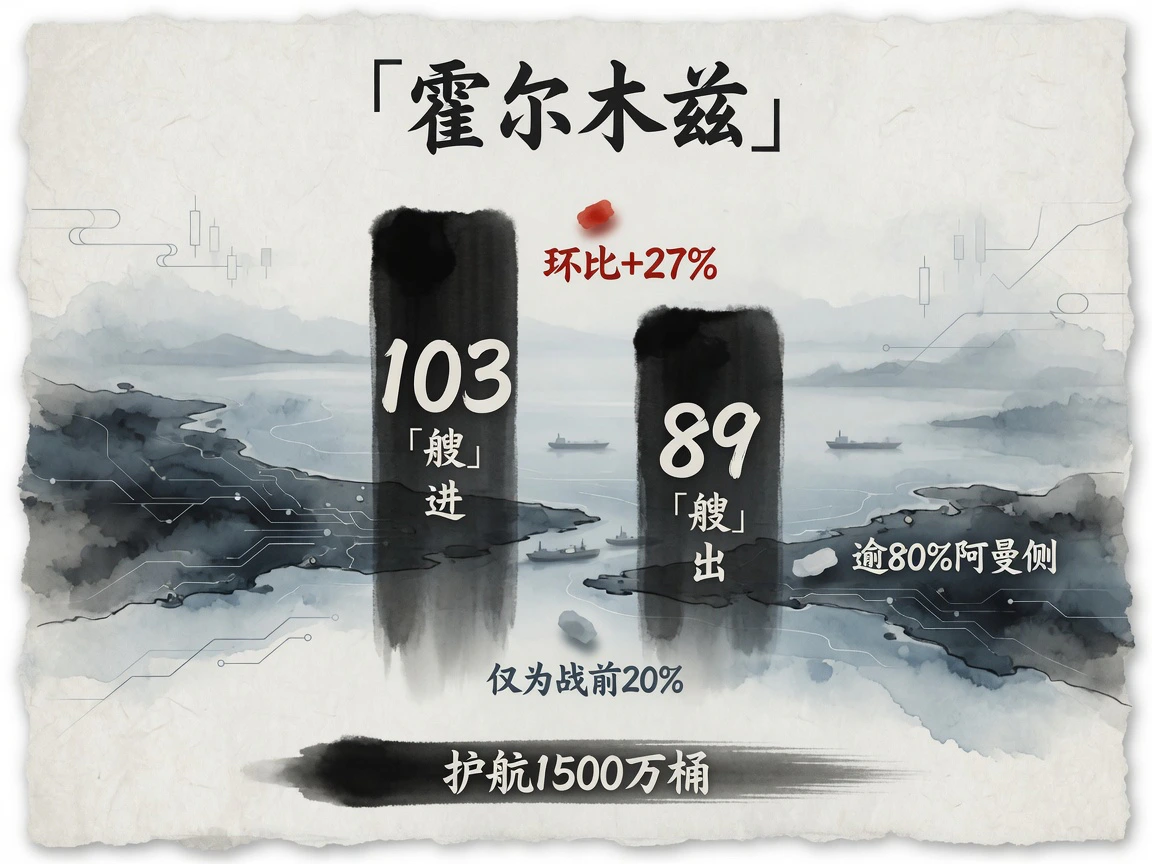
The first meaningful complete weekly traffic figures emerged. Media compilations of UKMTO records showed vessel counts up 27% week on week, with 103 entering and 89 leaving, only 20% of the prewar seven-day average. Panama-flagged ships, seven, and Liberian-flagged ships, six, were most common; none flew the U.S. flag. Product tankers were the most common vessel type.
Accounts of practical control diverged. Some reports based on vessel tracking judged the U.S. Navy to be gaining the upper hand and Iran to have lost much surface control. More than 80% of liquid cargo over the preceding two weeks used the Omani-side channel, described as UN-authorized but strongly opposed by Iran. Energy Secretary Wright claimed on X on Saturday that the Navy had helped more than 15 million barrels of crude and products leave the strait earlier in the week, with another 5 million through land pipelines. He credited the Navy for oil continuing to move through Hormuz.
Declaring improvement nevertheless departed from shipping fundamentals. Before the war, Hormuz handled about one-fifth of global oil transport; since fighting began it had become a complex, dangerous maze. War-risk premiums rose from around 0.25% of hull value before the war to 7.5%–10%, while hundreds of cargo vessels remained stranded in the Gulf. Weekly traffic had indeed rebounded 27% from a low, but normal navigation remained distant.
Regional flanks and an unresolved window

Lebanon's presidency said President Joseph Aoun met visiting Italian Prime Minister Giorgia Meloni to discuss southern Lebanon and other matters, without further substantive details. Israel, Yemen's Houthis and Gulf states otherwise showed no new developments within the window.
The larger uncertainty was the formal expiry this week of a two-month U.S.-Iranian peace-talk window, without a clear ceasefire roadmap. Hormuz remained the central blockage. Whether Trump's possible future talks develop, and how Bessent's sanctions details materialize Monday, will decide whether the next contest remains verbal deterrence or becomes a more damaging entity list.
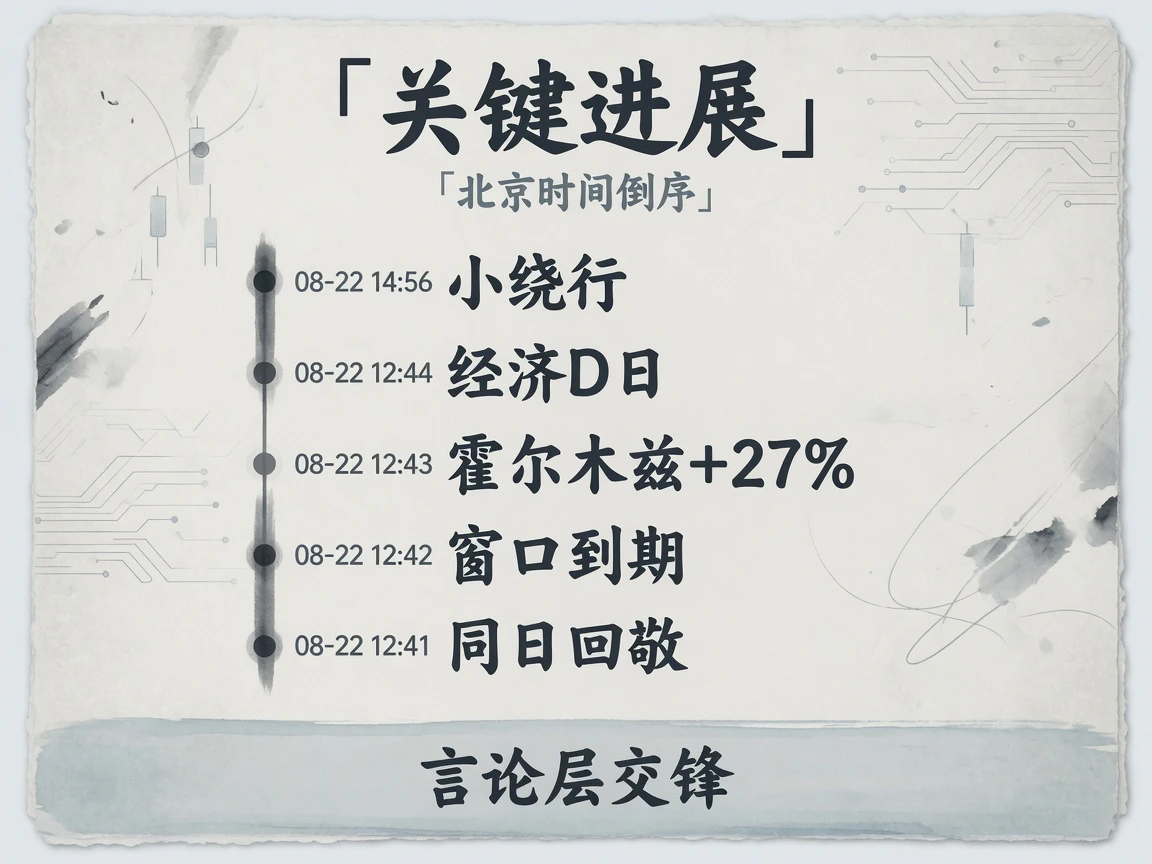
Key-development timeline — Beijing time, newest first
| Key developments |
|---|
| 08-22 14:56Trump calls the Iran war a little detour at a campaign rally and promises lower oil prices. Average U.S. gasoline that day is $4.11 a gallon. |
| 08-22 12:44Trump's Wednesday announcement promises the most devastating economic action, threatens third countries and names six channels. The same day he says the U.S.-Iran situation is very good. |
| 08-22 12:43Hormuz traffic remains low and oil rises. Lebanon's president meets Meloni to discuss the south. |
| 08-22 12:43UKMTO data show 103 entries and 89 exits over the week, up 27% but only 20% of prewar traffic. Energy Secretary Wright says more than 15 million barrels were escorted out this week. |
| 08-22 12:43Iranian figures accuse Trump's economic threats of preparing a wholesale return to classical colonialism. |
| 08-22 12:42The two-month U.S.-Iran peace-talk window expires this week, with oil still rising and Hormuz navigation unresolved. |
| 08-22 12:42Since the war began in February, merchant vessels have been left with only four high-risk transit choices through the strait. |
| 08-22 12:41Beijing responds to economic D-Day on Friday: the foreign-ministry spokesman says sanctions and pressure are no solution. Iranian speaker Ghalibaf says Iran is ready to sacrifice wealth. |