As of 15:18 Beijing time on August 23, no large-scale direct U.S.-Iranian exchange of fire had been independently verified in the preceding 24 hours. The contest shifted toward two issues: new Treasury sanctions to be unveiled Monday, and Iran's conditional access regime in Hormuz, selectively admitting some Iraqi tankers while warning Gulf neighbors against assisting U.S. pressure.
Vessel traffic recovered from its low but remained only 20% of normal prewar levels. Some tankers went dark, switching off location signals for nighttime passages. The U.S. Navy provided escorts, while Tehran insisted its own oil exports continued. Slower direct confrontation did not eliminate risk. A wider struggle over sanctions lists, transit permission and concealed shipping networks was underway.
U.S. sets 'economic D-Day' for Monday; effectiveness awaits the actual sanctions list
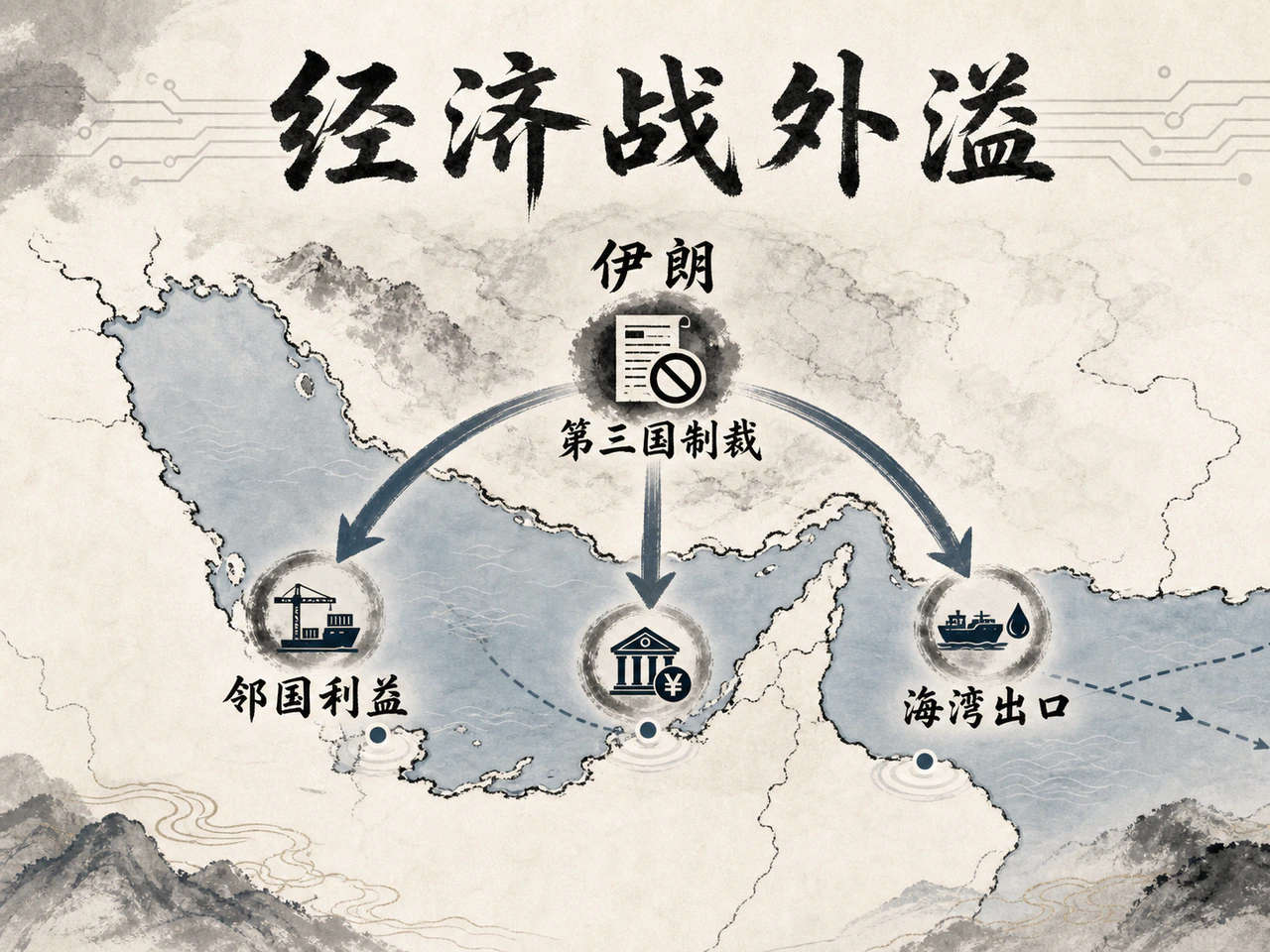
Treasury Secretary Scott Bessent planned a Monday press conference at 14:00 Eastern time to announce new Iran sanctions. He had described the tools as unprecedented. Trump called the package economic D-Day and warned third countries maintaining Iranian economic ties of secondary sanctions.
Key implementation details remained unknown before the briefing: targeted entities; liabilities for third-country financial institutions, ports, ship registries and energy traders; exemptions; and effective dates. Trump's remarks that week were also in tension. He claimed the situation was going extremely well while describing the war at a South Carolina rally as a small detour. Direct contacts or negotiating channels between Washington and Tehran remained unclear.
U.S. sanctions on Iran date to 1979. The Congressional Research Service describes the current framework as one of Washington's broadest and tightest against a single country, blocking direct bilateral trade, freezing Iranian sovereign assets in the United States and cutting foreign assistance and arms sales. Whether Monday marks a real turning point therefore depends on workable cross-border enforcement and penetrating targets, rather than the volume of threats.
The economic war's inflationary feedback into the United States was developing alongside sanctions. Latest industry monitoring put average retail gasoline at $4.11 a gallon, up $0.97 year on year. Conflict and export restrictions pressured refiners, leaving Trump's earlier promise of a rapid oil-price decline without clear near-term policy tools to support it.
Hormuz: selective passage, dark shipping and escorts coexist
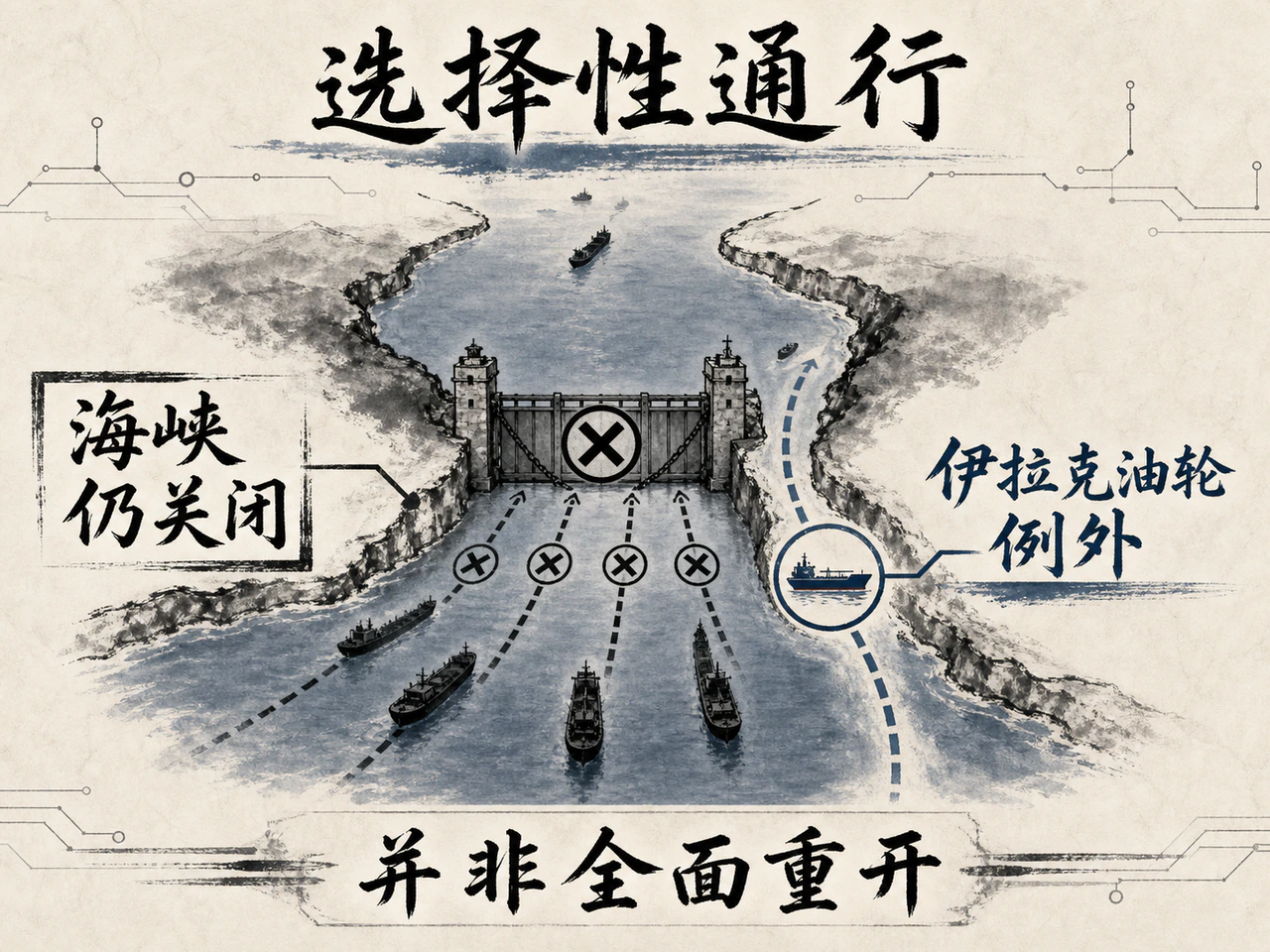
After repeated Iraqi negotiations, Iran's military agreed to let some Iraqi tankers through Hormuz. China, India and Pakistan had also negotiated with Tehran over their vessels. Iran drew a clear line: vessels linked to the United States or Israel were prohibited; others required individual Iranian approval.
The strait had thus become a case-by-case permission system tied to geopolitical relations, rather than reopening fully. Shipping tracking showed 103 vessels entering and 89 leaving over the previous week, a 27% increase from the prior week but only 20% of the prewar seven-day average. Traffic improved while normal transport order remained far away.
Some tankers used dark shipping to avoid risk, disabling AIS, crossing at night and transferring cargo in the Gulf of Oman. The Greek-owned VLCC Kiku was identified as using this route. The U.S. Energy Department estimated flows through concealed operations and escorted transfers at 8 million–9 million barrels daily and confirmed Navy patrol escorts for some vessels.
Iran offered a different measure. Supreme National Security Council chief Mohsen Rezaei claimed Iran had exported 70 million barrels over the past one or two months. He warned Gulf neighbors that helping U.S. sanctions would cause Iran to close routes and prevent a single drop of oil leaving through Hormuz or other Gulf passages. Different periods and definitions prevent direct comparison of the U.S. and Iranian figures. Their underlying logic was similar: both were contesting discretion over Hormuz access and influence over energy pricing.
Tehran's defiant statements and internal strains
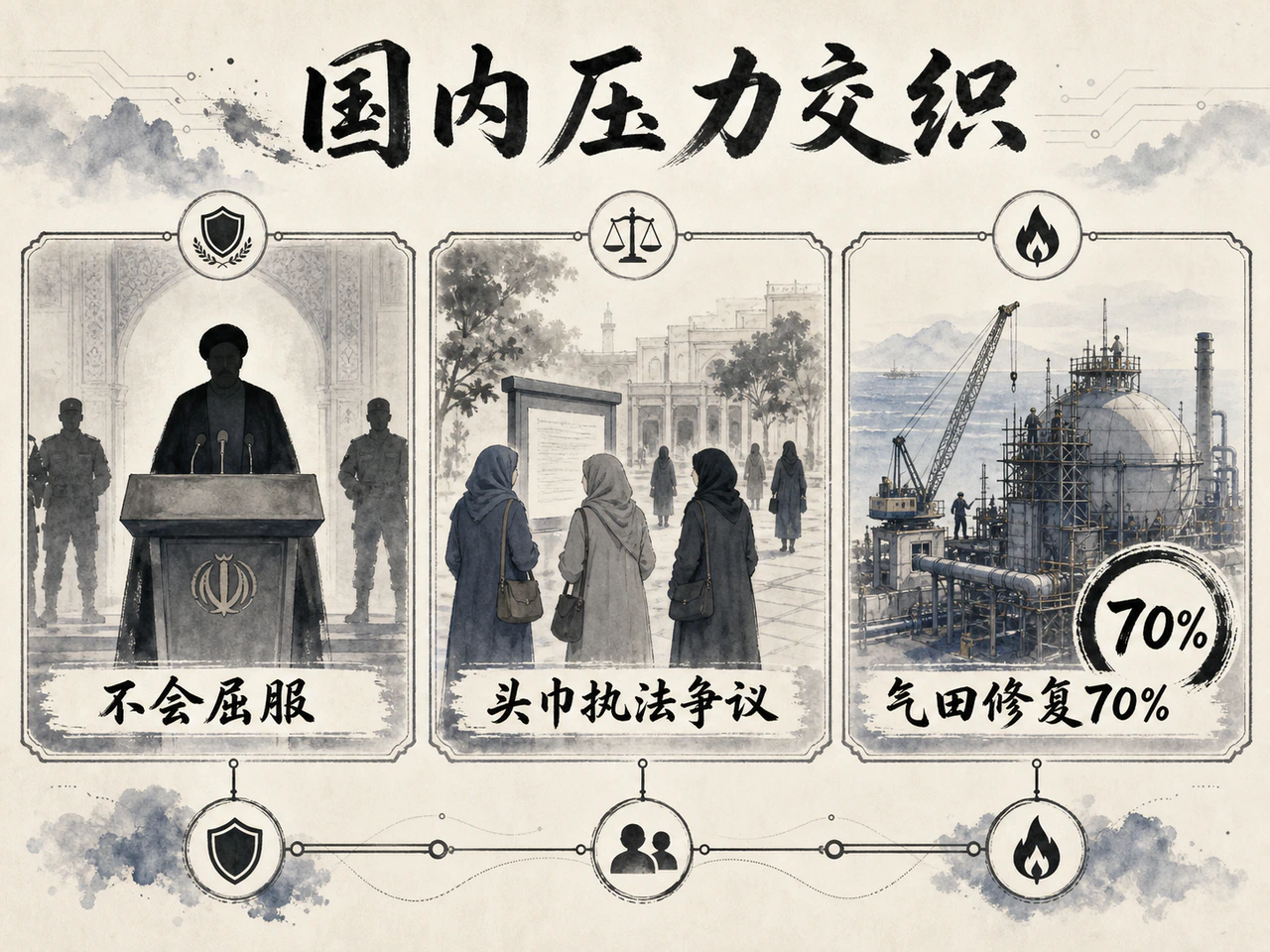
Security bodies and hardliners maintained a refusal to compromise. Hossein Taeb, described as a close supreme-leader ally and Basij chief, called Trump's statements desperate and said full reopening required Iran's own conditions. Rezaei also said Tehran could neutralize economic warfare. Behind these declarations, military and political leaders offered no specific list of conditions for returning to direct talks.
External war pressure brought accumulated domestic governance tensions back into view, particularly inconsistent hijab enforcement. During the heaviest fighting, unveiled women appeared at pro-government rallies and in official imagery, while security agencies prioritized more urgent issues. Conservative demands for strict enforcement grew again in recent weeks. Although a comprehensive crackdown had not begun, maintaining social control, absorbing economic pain and reorganizing security institutions simultaneously tested the new leadership.
There was also limited energy-repair news. Iran's oil authorities said repairs to a South Pars refinery damaged in the 2025 Israel-Iran conflict were 70% complete and expected to finish by March 2027. This was routine progress on earlier damage, not a new strike in the preceding day.
A humanitarian dispute over missing pilots also continued. Iran claimed four missing pilots were held on a floating facility and asked Qatar to transfer them to a land hospital. Qatar had denied holding pilots, saying it assisted searches and transferred one pilot's remains. With conflicting accounts, neither side's statement could yet be accepted as a complete account.
Three verifiable signals for the next 24 hours
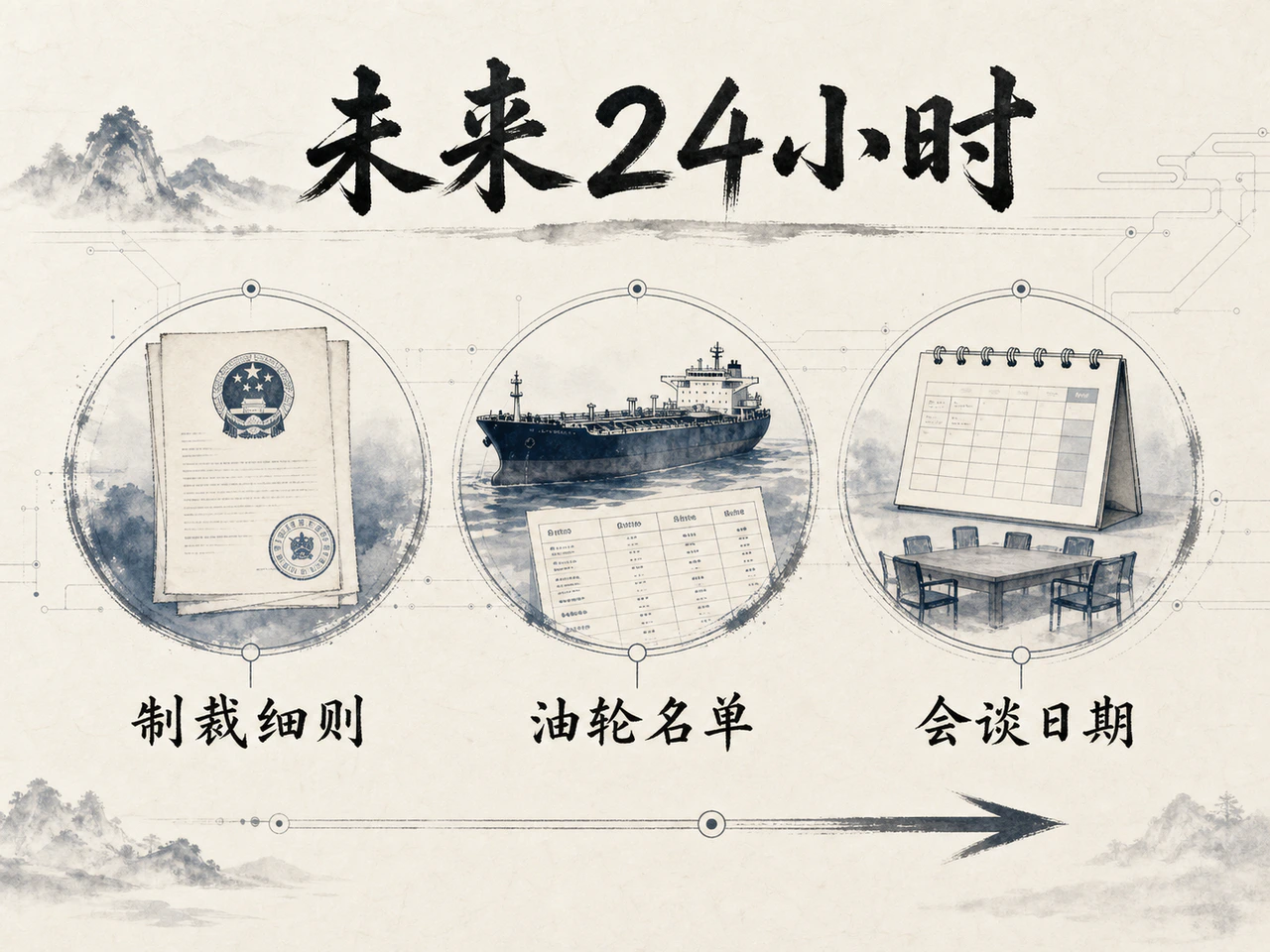
First, whether Monday's 14:00 Eastern briefing specifies entities, third-country responsibilities and effective dates. Stronger language without concrete enforcement targets would leave economic D-Day at the deterrence stage.
Second, whether Hormuz traffic stays above 20% of prewar averages and the permitted country and vessel lists expand. Ship names, actual cargo and insurance arrangements reveal practical control more accurately than unilateral declarations.
Third, whether dark shipping and naval escorts cause new interceptions or friction. Continued signal shutdowns, nighttime passages and Gulf of Oman transfers shift risk from open blockade toward a more concealed and harder-to-verify contest.


