Understanding the Federal Reserve, article 8/20
Even on ordinary days without an FOMC rate meeting, the Fed's enormous operational center runs at full speed: clearing trillions of dollars in interbank funds daily, supplying and withdrawing currency as needed, examining bank balance-sheet risks and maintaining Treasury account flows as fiscal agent. Rate decisions attract the spotlight, but monetary policy is legally only one of the Fed's five core public functions.
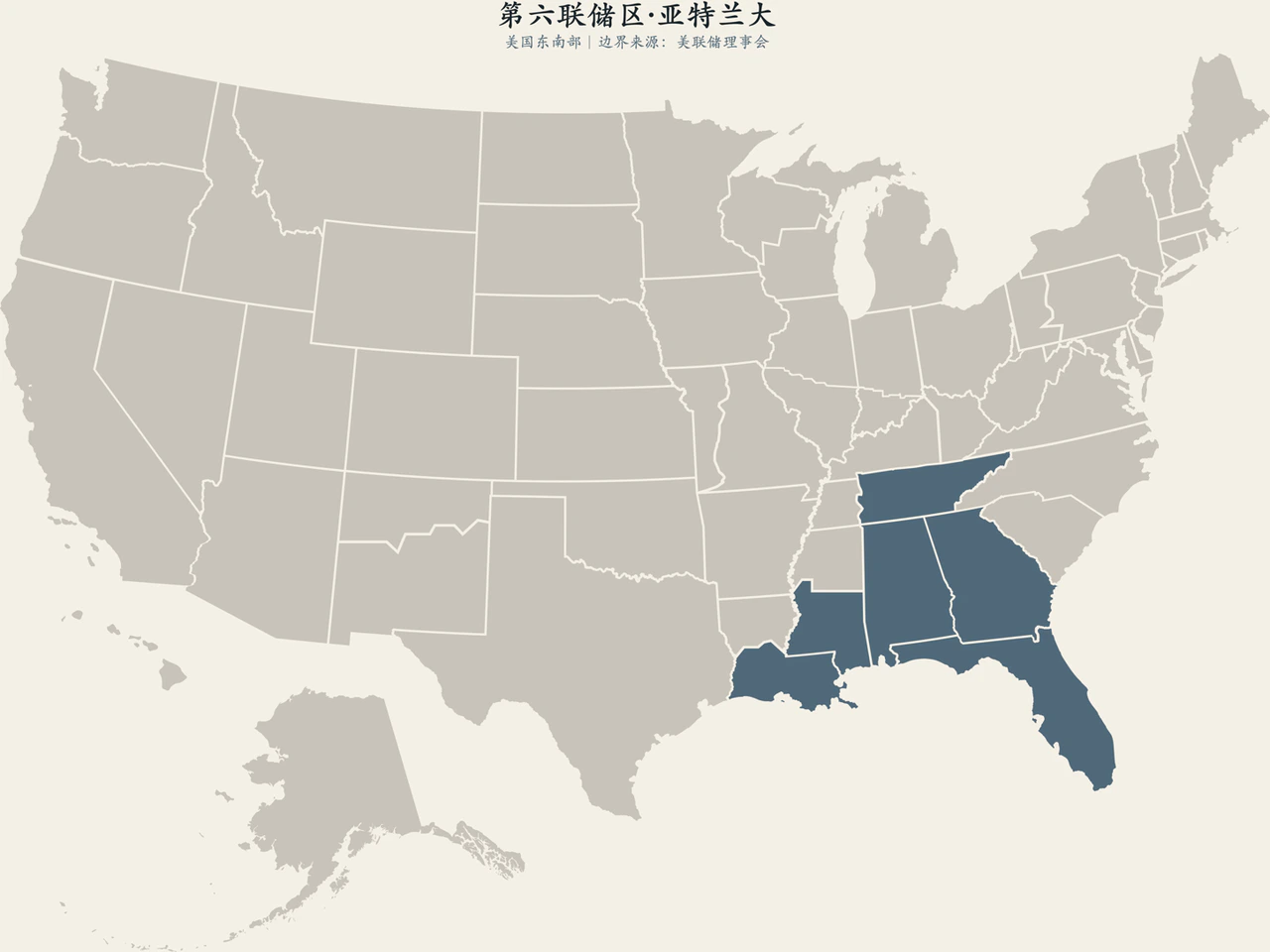
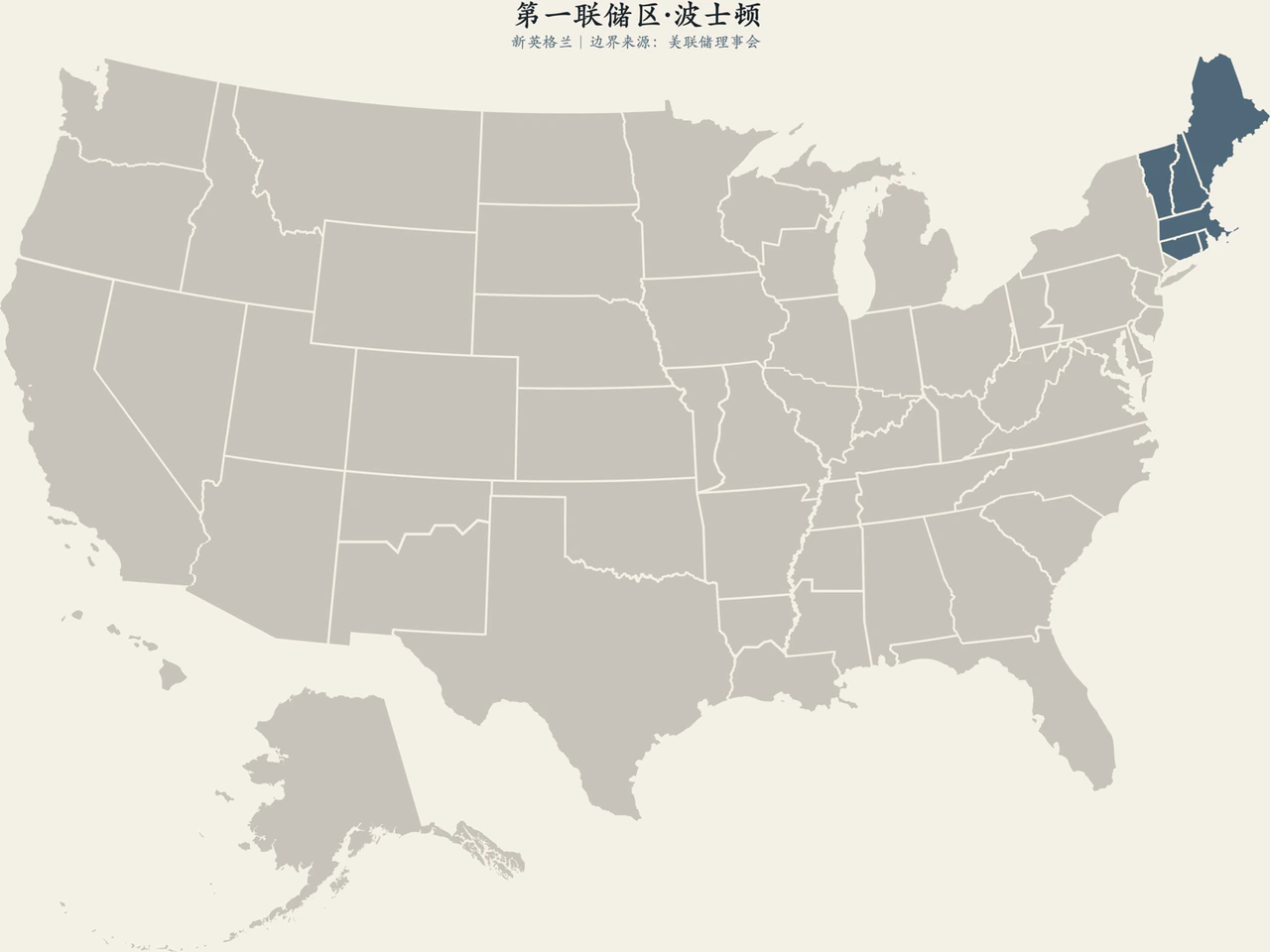
These complex, indispensable operations explain why the 12 regional Reserve Banks cannot simply be replaced by the Board in Washington. Cross-regional clearing and settlement need distributed nodes. Prudential supervision requires sustained, detailed contact with local institutions and the real economy, while cash distribution and grassroots research require a physical presence. In a financial storm, lower benchmark rates, discount-window liquidity and payment-system backstops address entirely different risks; “rate cuts” cannot encompass them all.
1. U.S. bank supervision: an overlapping, diverse patchwork
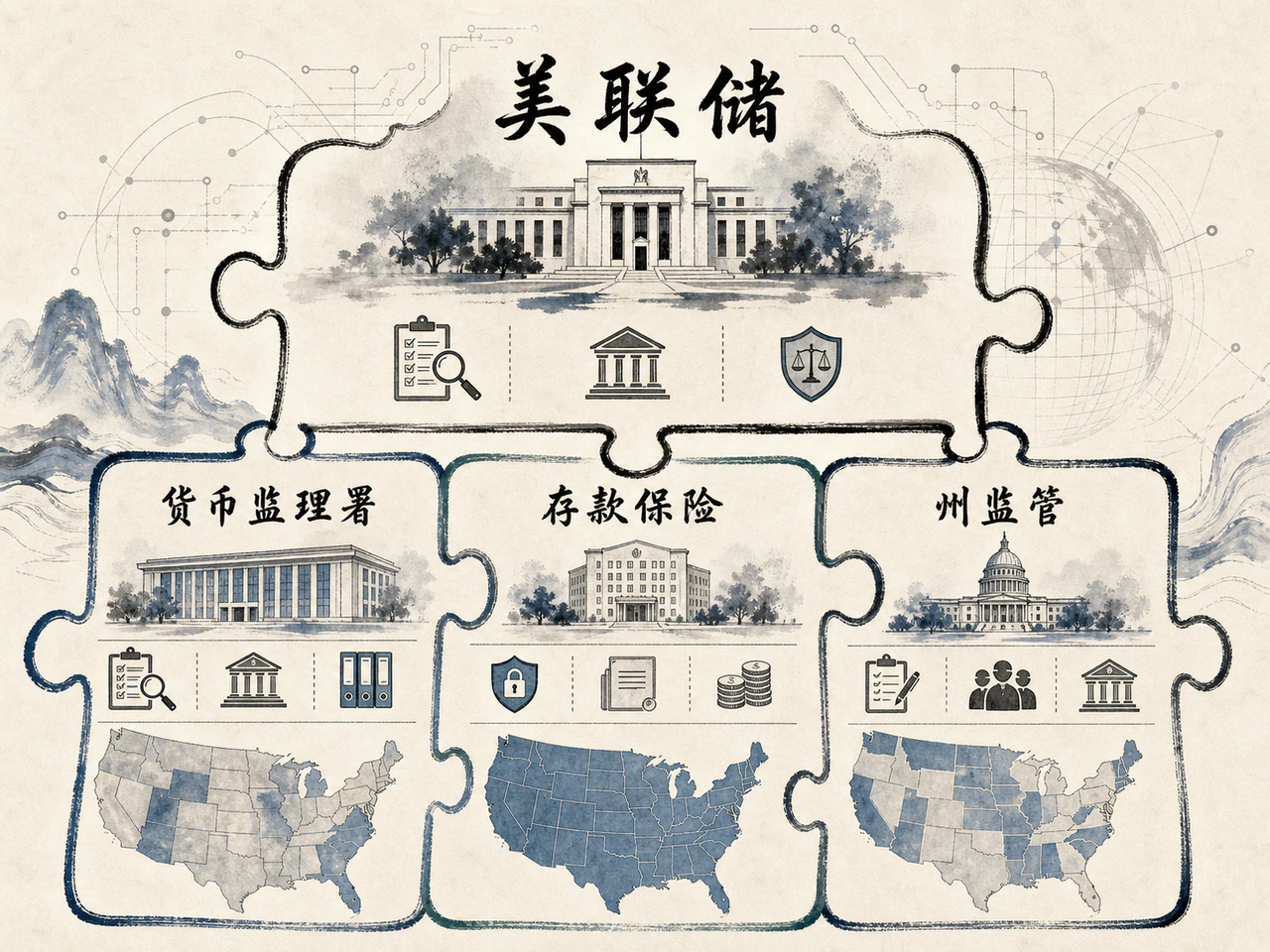
The supervisor depends on the institution's charter and group structure
U.S. bank supervision is divided by financial charter, deposit-insurance arrangements and group legal structure, rather than monopolized by one agency. Federally, the Treasury's Office of the Comptroller of the Currency (OCC) primarily supervises national banks and federal savings associations. The Federal Deposit Insurance Corporation (FDIC) maintains the deposit-insurance fund and directly supervises state-chartered nonmember banks. State banking departments retain local chartering and day-to-day compliance roles. The Fed's core jurisdiction covers all bank holding companies (BHCs), financial holding companies (FHCs), state member banks voluntarily in the System and certain large systemically important institutions legally designated for its oversight. A diversified large financial group therefore often answers to several federal and state authorities.
Operationally, the Board in Washington mainly coordinates system-wide regulations, capital guidance and prudential frameworks. Regional Reserve Bank teams undertake extensive examinations, continuing on-site oversight and ongoing monitoring of balance-sheet data. Capital adequacy, liquidity coverage, underlying credit quality, governance, cybersecurity, operational risk and consumer compliance all face multidimensional scrutiny. Prudential supervision does not implicitly guarantee that banks can never fail. It uses binding constraints to reduce failure probabilities, requires internal capital buffers to absorb unexpected losses and seeks to reveal and resolve problems before vulnerabilities become disasters.
Stress tests assess resilience under extreme strain, rather than predict the next crisis
Annual comprehensive capital reviews and stress tests for large institutions apply severe hypothetical scenarios—deep recession, surging unemployment, collapsing asset prices and spreading commercial-property defaults—to bank balance-sheet models. They estimate losses and whether common equity Tier 1 capital remains adequate under extreme shocks. However demanding the scenarios, they cannot exhaust every possible new financial risk. Asymmetric asset–liability duration gaps, lightning-fast runs on uninsured deposits in the mobile era, hidden off-balance-sheet networks and nonbank contagion often emerge outside the script.
This reveals the fundamental distinction between microprudential and macroprudential oversight. The former focuses on individual institutions' asset quality, compliance and viability. The latter examines shared exposures across institutions, hidden system-wide leverage, severe maturity mismatches and the robustness of core infrastructure, aiming to prevent a single failure from becoming contagious. Adequate book capital does not mean assets can instantly be sold to meet payments during a liquidity shock; temporarily stable secondary-market prices do not mean every institution's maturity mismatch and deposit–loan structure are healthy.
2. Payment networks and fiscal agency: finance's unseen foundation

Retail batches and large-value real-time settlement: distinct payment rails
Modern fund movements depend on specialized infrastructure. Ordinary payroll credits and interinstitutional Treasury settlements worth hundreds of millions of dollars use very different routes. The automated clearing house (ACH) network mainly processes large batches of non-real-time retail payments such as payroll and utility bills. Fedwire Funds Service handles high-value real-time gross settlement (RTGS) between financial institutions, where certainty is crucial and confirmed transfers are legally final and irrevocable. Fedwire Securities Service supports book-entry issuance, transfers and delivery-versus-payment (DVP) settlement of Treasuries and agency securities. The newer FedNow service provides eligible institutions with round-the-clock, 24/7 instant retail-payment infrastructure. These systems differ in transaction limits, timing of finality, access requirements and uses; speed alone does not describe their architecture.
Beyond paperless payments, physical currency circulation also relies on a vast logistics and risk-control network. The Treasury's printing agency produces banknotes, while the 12 regional Reserve Banks and branches store, authenticate, count, sort and distribute them according to commercial-bank demand. Worn, damaged or otherwise unfit notes are collected, destroyed and removed from the books in Fed vaults. Behind every stack withdrawn from an ATM are commercial-bank reserve-account debits and the local Reserve Bank's cash-management operations.
Acting as fiscal agent does not mean deciding fiscal revenues and spending
By law, the Fed serves as the Treasury's principal fiscal agent. It operates the government's main cash account, the Treasury General Account (TGA), and provides infrastructure for Treasury auctions, principal and interest payments and government disbursements. The TGA is a major liability on the Fed's balance sheet. When tax collection or heavy issuance raises the TGA balance, reserves held by commercial banks at the central bank are mechanically withdrawn; when the government spends, liquidity flows back into the banking system.
Account management and settlement agency do not authorize the Fed to intervene in spending decisions. The size of fiscal revenues and outlays, tax design, and debt issuance volumes and maturities belong legally to Congress and the Treasury. As agent, the Fed executes authorized transfers and settlement. This neither endorses specific fiscal legislation nor grants it administrative power to approve, delay or veto individual legally authorized transfers. Monetary policy and debt management interact deeply in primary and secondary Treasury markets, but their legal mandates, governance and responsibilities remain distinct.
3. Lender-of-last-resort limits and the grassroots information network
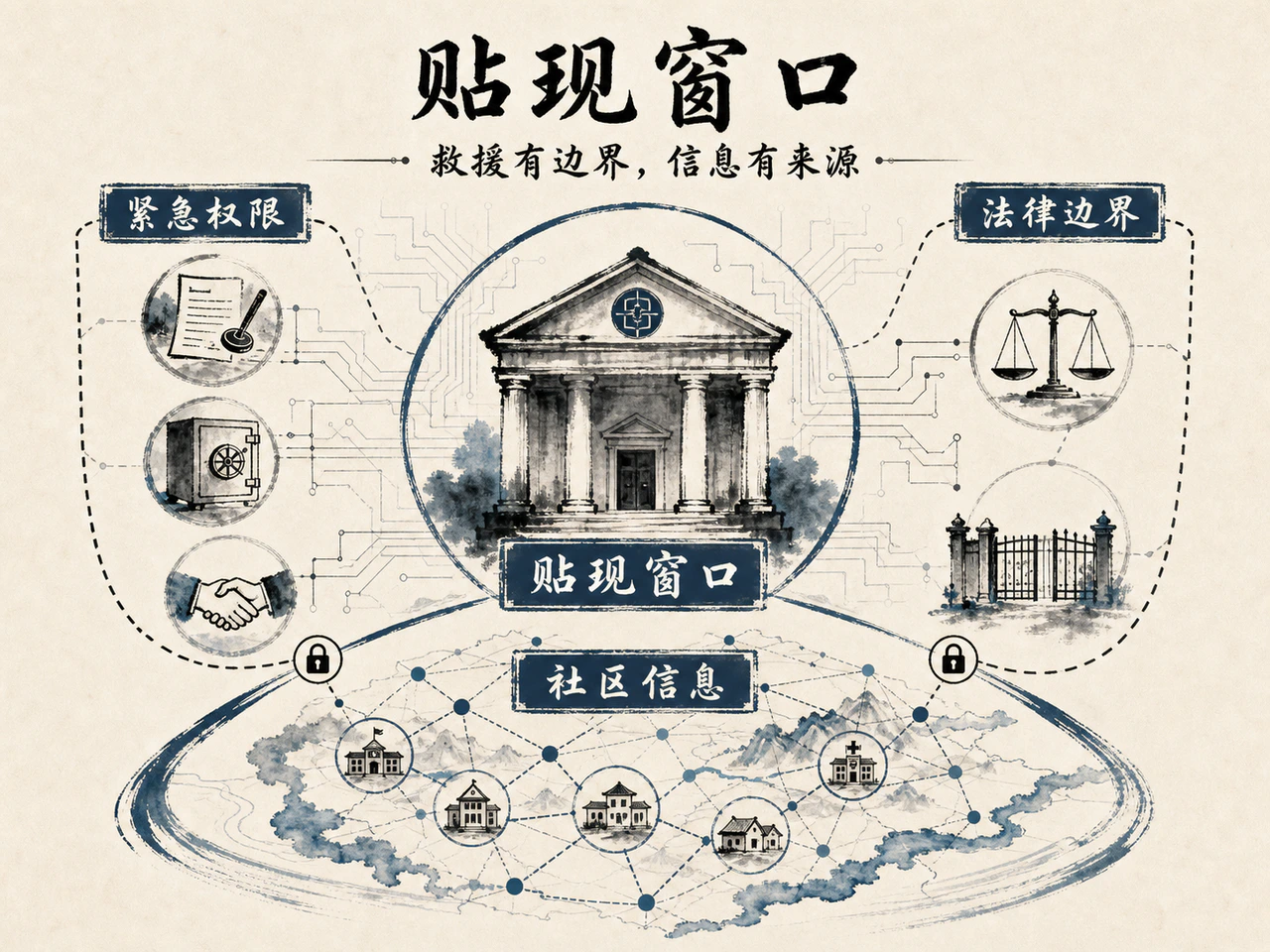
Standing discount-window liquidity and the legal limits of Section 13(3) emergency lending
The Fed's crisis credit tools as lender of last resort have a strict institutional hierarchy. The discount window is a standardized, standing channel for eligible depository institutions. With sufficient eligible collateral, banks may borrow short term at established rates to bridge an institution-specific funding gap or ease system-wide liquidity strain. Section 13(3) of the Federal Reserve Act grants more exceptional authority: in unusual and exigent circumstances, the Fed can establish targeted emergency facilities for a broader range of entities, nonbanks or companies beyond normal depositories. After the 2008 subprime crisis, Dodd–Frank imposed strict limits on that authority, prohibiting bespoke exclusive rescues of single troubled institutions. Emergency facilities must have broad eligibility and adequate high-quality collateral, and major programs require explicit Treasury approval or even joint credit support.
Central-bank intervention provides credit, rather than grants or fiscal equity injections. Borrowers must pledge sufficient eligible assets, pay interest and meet binding repayment obligations. The design aims to contain taxpayer-backed central-bank credit exposure safely. The hardest professional distinction in crisis management is between a temporary liquidity shortage and balance-sheet insolvency. When asset values will cover liabilities after normalization but a market liquidity shock blocks near-term funding, a lender-of-last-resort bridge can be decisive. If bad assets have exhausted net worth, the institution instead needs recapitalization, equity injection or lawful resolution. Central-bank liquidity loans cannot and should not become a long-term cover for bad-debt holes.
Grassroots research: seeing beyond macroeconomic averages
Beyond supervision and operations, the 12 regional Reserve Banks study local housing, low-income employment, community-bank soundness and small-business credit access, while carrying out statutory fair-lending and Community Reinvestment Act (CRA) oversight. Their broad local business contacts, community interviews and surveys of small lenders can detect early cracks not yet visible in macro data: widespread withdrawal of small-business credit, working families overwhelmed by surging home-insurance costs and rigid rents, or agricultural lenders sharply reducing exposure as crop cycles fluctuate.
Such local intelligence is not mechanically translated into basis points at the next meeting. It gives senior policymakers a microeconomic lens through the trap of national averages. An apparently stable aggregate unemployment rate of 4% may hide a harsh split between stalled high-tech hiring and deep depression in traditional manufacturing regions. This nationwide grassroots network keeps the Fed from becoming an ivory-tower policymaker watching only Wall Street asset prices.
Public debate often blames the Fed for every economic difficulty or expects one monetary toolkit to solve everything. Yet tax law, fiscal deficits, industrial subsidies, local land and housing approvals, deposit-insurance limits and bankruptcy resolution belong to Congress, executive agencies or specialized bodies. The Fed can adjust economy-wide financing conditions, prudentially oversee specified intermediaries and maintain payment operations, but benchmark rates cannot replace fiscal redistribution, legislation or deep structural reform in industry.
Clarifying legal powers is especially important in turmoil. If payment channels are physically blocked, the first task is to restart their systems and operations. If a healthy institution suffers a sudden run and lacks cash, tools such as the discount window should be used decisively. If bad debts have destroyed capital, fiscal injection, private recapitalization or FDIC resolution is required. Only when systemic contraction causes aggregate demand to stall does broad easing, including rate cuts, become the relevant trade-off. Reflexively assigning different financial and real-economy injuries to one-way rate cuts will neither treat causes nor symptoms adequately; it encourages moral hazard and blurs the responsibilities of the actual authorities.