No new airstrikes or missile exchanges were reported on the direct U.S.-Iran front over the past 24 hours, but confrontation shifted fully toward economic defenses. U.S. Treasury Secretary Bessent proclaimed Economic D-Day in a column, with what Washington called its toughest sanctions package possible as early as Monday. Tehran responded sharply: Supreme National Security Council Secretary Rezaei threatened to let not one drop of oil leave the Persian Gulf. President Pezeshkian also publicly exposed fierce internal divisions over war or peace for the first time. Beneath calm waters, a struggle over strait access, crude lifelines and global settlement was intensifying rapidly.
Washington's Economic D-Day
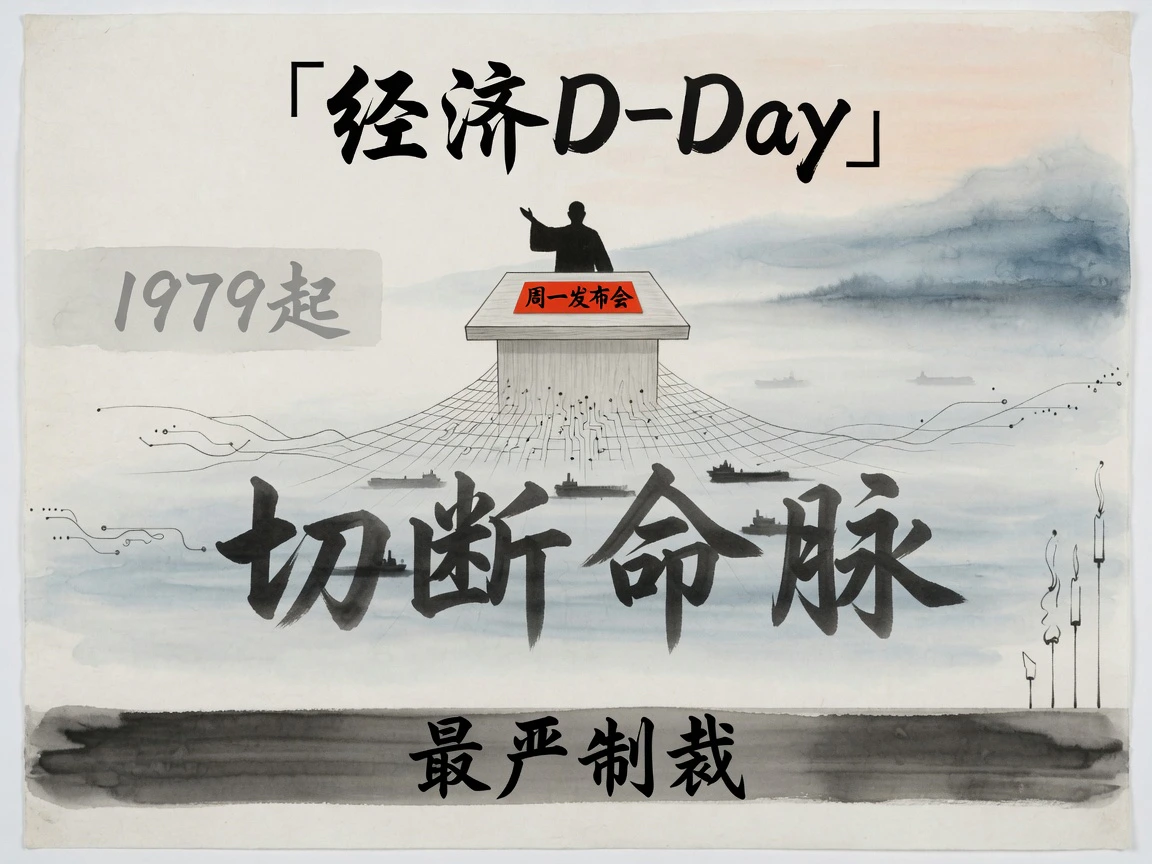
In Sunday's column, Bessent declared an economic D-Day beginning at dawn, aiming to sever every economic lifeline sustaining the regime until Tehran stood isolated. He warned third parties continuing to buy or transship Iranian oil, or overlooking violations in fuel transfers and offshore banking, to consider the cost of supporting it. The column also specified a military backstop: an Iranian military response to sanctions would prompt swift and decisive U.S. retaliation.
The pressure campaign had already taken shape. Trump previewed ECONOMIC D-DAY the previous week, threatening enormous economic consequences for states, multinationals and institutions providing any lifeline to Tehran. Targets extended from oil smuggling and money laundering to flags of convenience and shell networks. Foreign media reported Bessent would hold a Monday-afternoon Eastern-time briefing to disclose what the U.S. called the toughest package ever imposed on one country.
The uncertainty lay in what remained available. Sanctions had accumulated since 1979 and were already described by the Congressional Research Service as America's broadest and most comprehensive against any single country. With the existing toolbox nearly exhausted, even veteran observers struggled to identify the unprecedented new weapon. Monday's details were the main focus for global markets and geopolitical analysts. In the wider political narrative, Trump called the war a small detour at Friday's campaign rally and repeated plans to declare Hormuz U.S. territory after completely defeating Iran.
Tehran responds, putting its rules in writing
Rezaei, the hardliner appointed security-council secretary this month, signaled strong confrontation in state interviews and televised remarks. He said maximum pressure was doomed, Trump's threats were empty bluster, and warfare, diplomacy and the political-social landscape would change profoundly.
His warning to Gulf neighbors was direct: cooperation with U.S. economic warfare would bring strikes on their core interests, with oil allowed through neither Hormuz nor the Persian Gulf. The threat extended to Saudi and Emirati alternative pipelines toward the Red Sea and Gulf of Oman. To portray sanctions as ineffective, he claimed Iran exported 70 million barrels over the past one or two months despite the U.S. port blockade begun in mid-July. That was Iran's unilateral account, without independent third-party shipping verification. He also argued dangerously that U.S. attacks encouraged more countries to seek nuclear weapons, because IAEA membership and the Non-Proliferation Treaty had not prevented missiles striking.
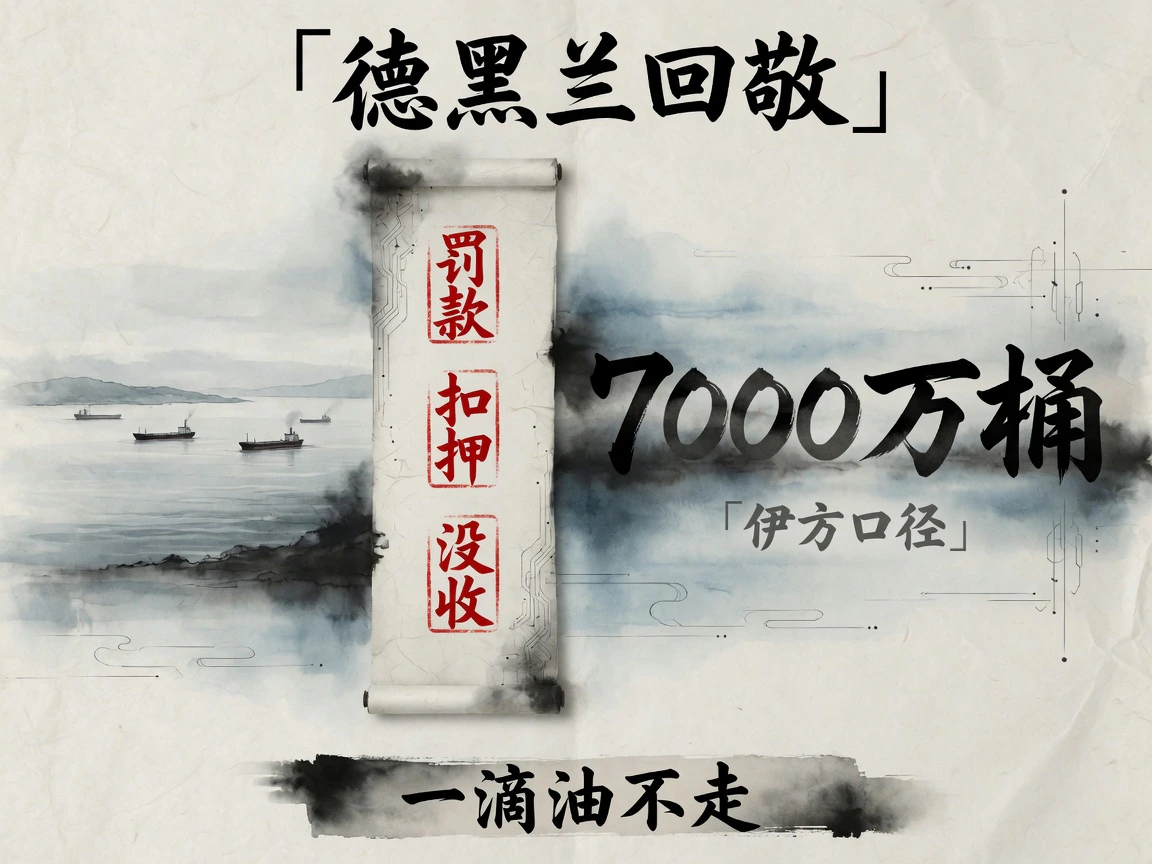
Beyond threats, Iran moved quickly to codify strait control. Its state-owned Persian Gulf Strait Authority (PGSA) issued repeated Sunday notices declaring huge fines, detention or confiscation for merchant vessels violating Iran's self-imposed transit rules, and published a noncompliant-vessel blacklist urging cargo owners to screen chartered ships. Tehran was trying to turn sporadic interceptions into routine access controls, creating major legal and compliance threats for owners still navigating.
The president brings the choice of fighting or talks into the open

In contrast to security officials, Pezeshkian spoke publicly twice in Tehran Sunday to defend diplomacy. He said the country must eventually decide how to escape the neither-war-nor-peace impasse. Core negotiators agreed June's subsequently collapsed memorandum with Washington remained the best route, he said; implementing it would resolve the dispute with logic and dignity. He acknowledged full economic, military and security warfare and promised to stabilize livelihoods, inflation and employment while guiding the country toward dignity and pride.
Hassan Khomeini, grandson of the republic's founder, appeared with him and said one wise political compromise could outweigh hundreds of mutually destructive wars. Reporting described growing public division among leaders over negotiating while leverage remained or resisting sanctions and rejecting dialogue to the end, amid fiscal crisis and outside pressure.
At the deepest power center, another development drew attention. An Iranian news site released an undated Sunday video showing new Supreme Leader Mojtaba Khamenei reviewing papers. He had not appeared publicly since succeeding his father, with widespread speculation he was badly wounded in the U.S.-Israeli attack that killed his father; officials cited strict security for his absence. International media comparisons judged the footage likely prewar archive material. It could not establish current health and instead exposed leadership anxiety about countering rumors.
Life at the strait: numbers under a partial blockade
Behind information warfare and diplomacy, radar and commodity data described Hormuz's new partially blockaded normal.
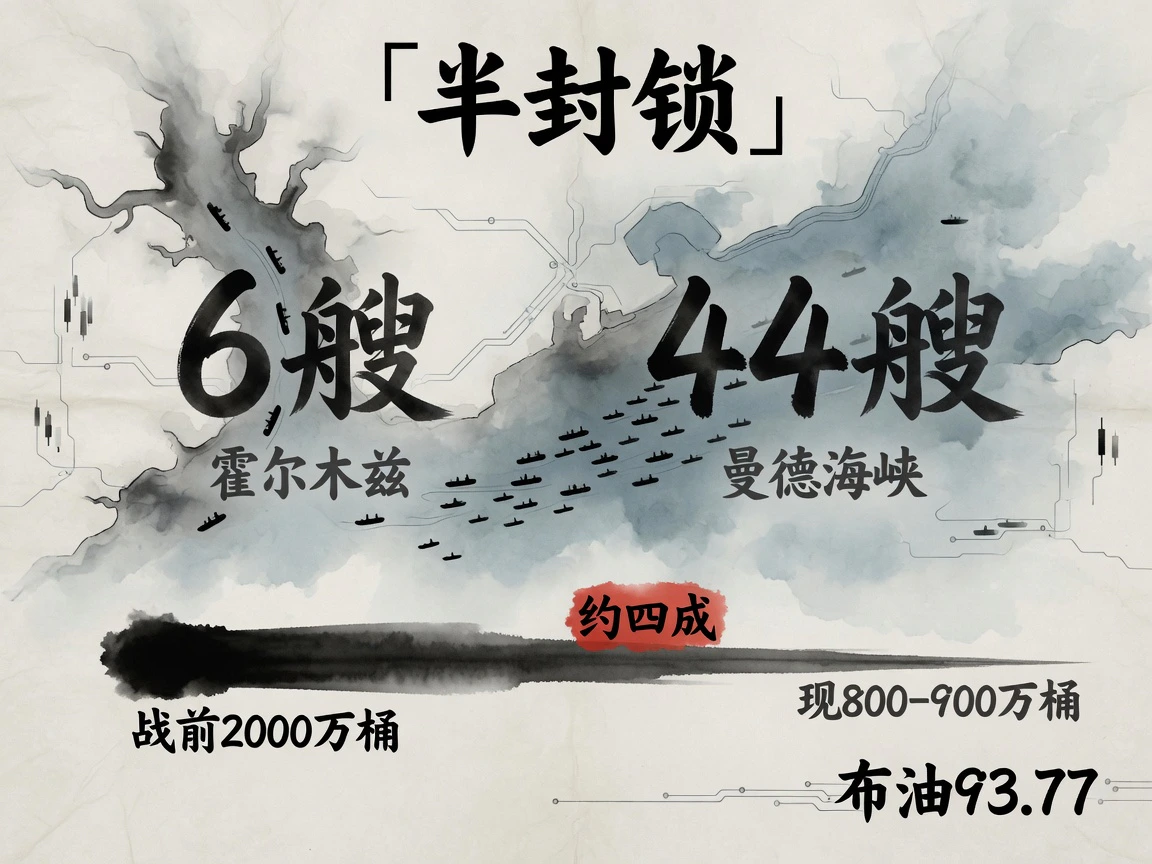
Sunday tracking showed only six vessels crossing in 24 hours: three tankers and two cargo ships toward the Gulf of Oman, plus one empty tanker entering the Persian Gulf. At least 44 passed Bab el-Mandeb over the same period despite its own war risks, highlighting Hormuz's inactivity.
DOE models estimated crude transit at only 8 million to 9 million barrels a day, just over 40% of the prewar roughly 20 million. Tankers commonly switched off AIS and moved at night in dark transit to avoid surveillance and missiles, then transferred crude to waiting customer vessels offshore Oman. More cargoes were taking the southern route close to Oman's coast, quietly weakening Tehran's chokepoint leverage and helping explain PGSA's haste to formalize blacklists and punishments.
Commodity and macro markets were suspended in anticipation. Sunday Brent edged down 0.66% to $93.77 a barrel and WTI 0.68% to $86.47. U.S. retail gasoline stayed high at $4.09 a gallon, nearly 37.5% above prewar. Minneapolis Fed President Kashkari said Sunday that the longer war continued, the less confidence he had in a smooth return to 2% inflation, eventually requiring tougher action. U.S. equity futures opened quietly for a second consecutive Sunday, with Wall Street reserving real repricing for Monday's sanctions details.
Three developments beyond the main front
Three apparently separate but intertwined threads were developing outside the spotlight:
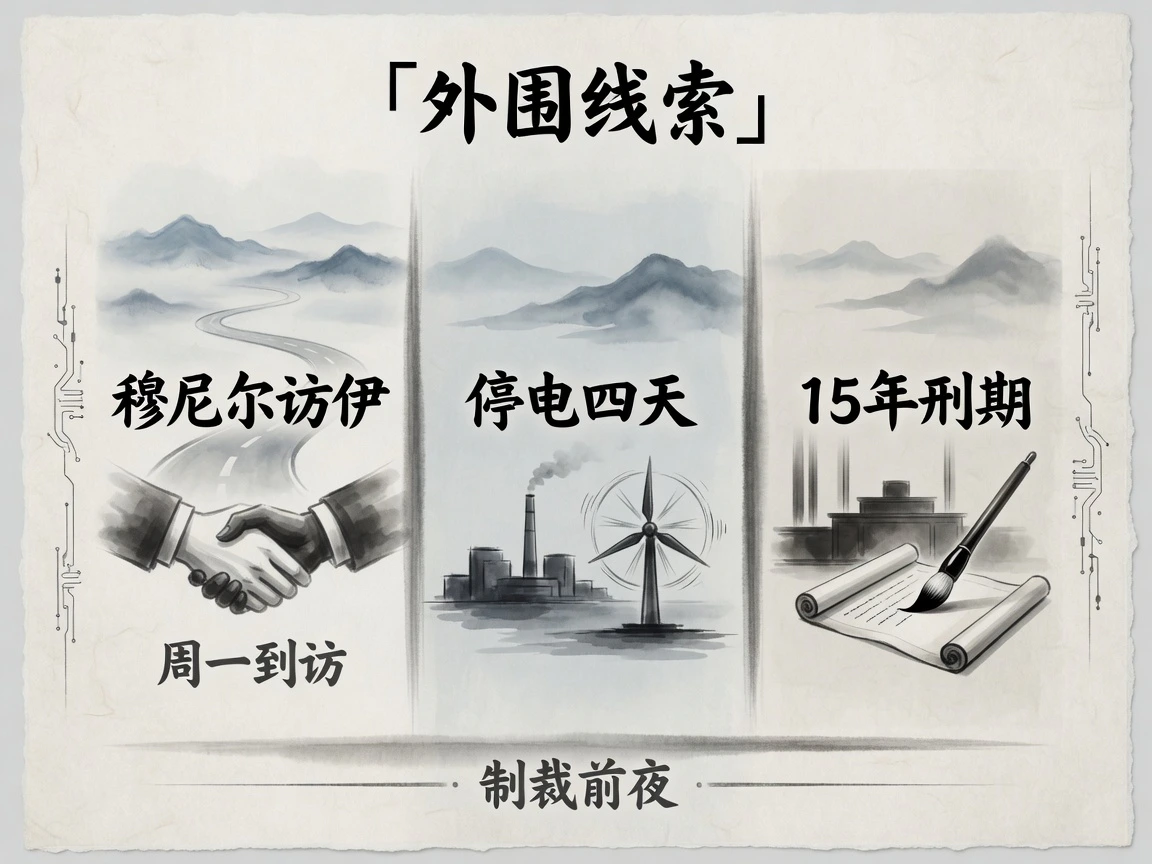
First, fragile mediation channels had not closed. Iran's official agency confirmed Pakistan army chief Munir would arrive Monday for closed talks on cooperation and regional peace. Pakistan's military had been a key discreet U.S.-Iran messenger throughout the conflict, making the timing immediately before Economic D-Day especially delicate.
Second, asymmetric cyber conflict reached Europe. British Sunday reports said a state-level group believed linked to Tehran had briefly disabled a small regional U.K. power facility the previous month, forcing four days offline. Energy-security officials stressed strong national-grid resilience and no overall supply threat, but warned major providers. The plant was unnamed and direct command links to Iran remained intelligence attribution; attacks on critical infrastructure nevertheless alarmed allies.
Third, domestic and judicial tensions intensified. Photojournalist Yalda Moaiery, arrested for documenting protests, briefly appeared Sunday for a procedural final defense against a 15-year sentence. Her lawyer could not speak; during a recess she said she would never stop taking photographs. Friction over women's clothing and hijab enforcement continued quietly, but under internal and external strain the security system appeared restrained and had not launched a broader crackdown.
Timeline of key developments
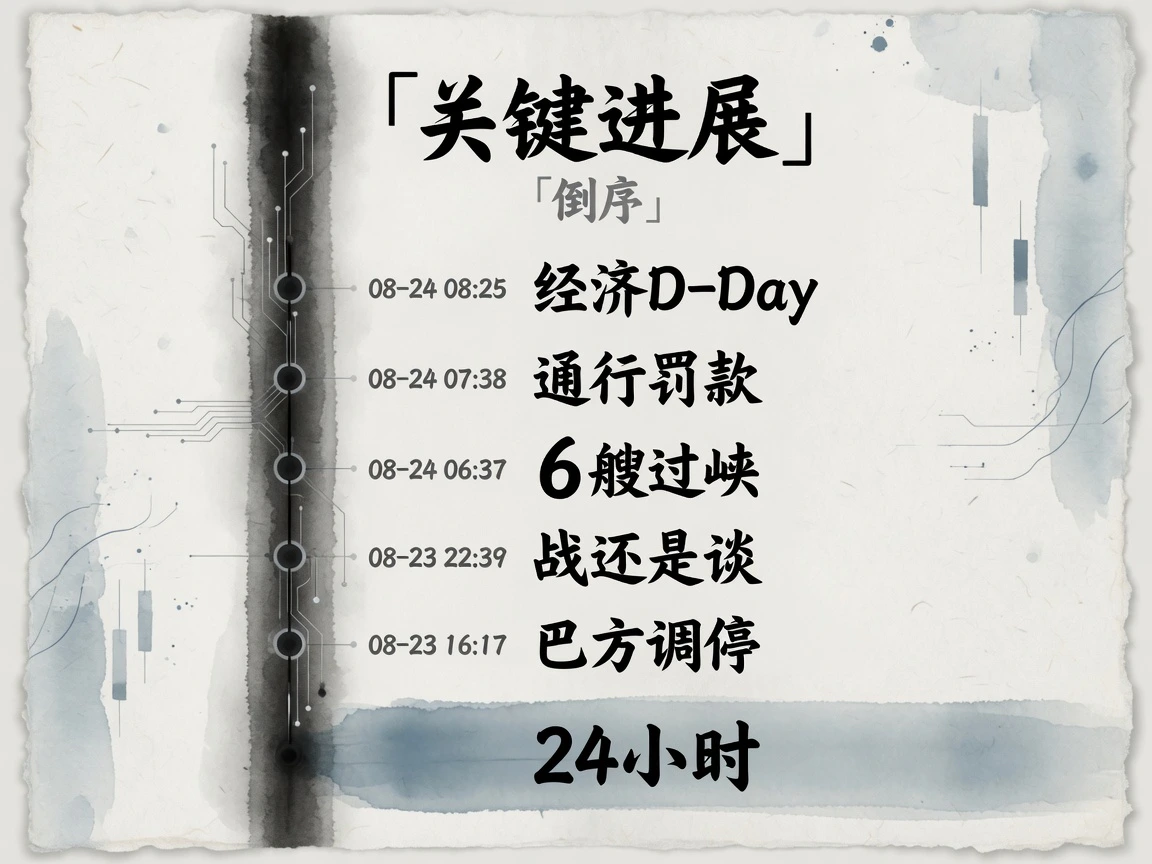
| Key developments |
|---|
| 08-24 08:25 Beijing time Bessent's column declares Economic D-Day, vows to cut every Iranian economic lifeline and warns of decisive retaliation if Iran responds militarily. |
| 08-24 07:38 Beijing time PGSA announces fines, detention or confiscation for violating strait rules and publishes its noncompliant-vessel blacklist. |
| 08-24 06:37 Beijing time Oil edges lower: Brent $93.77, WTI $86.47. Rezaei threatens a total crude-route cutoff; only six vessels have crossed Hormuz in 24 hours. |
| 08-24 06:19 Beijing time Conflict roundup: new U.S. sanctions possible Monday, public Iranian leadership divisions and elevated U.S. gasoline prices. |
| 08-24 03:24 Beijing time Kashkari warns prolonged war makes 2% inflation increasingly uncertain and the Fed will ultimately need more action. |
| 08-24 01:35 Beijing time Moaiery appears for a final defense; her lawyer cannot speak and the 15-year term may stand. |
| 08-23 22:39 Beijing time Pezeshkian says Iran cannot fight forever and publicly supports June's memorandum; Hassan Khomeini favors wise compromise over a hundred mutually destructive wars. |
| 08-23 22:20 Beijing time Foreign-report roundup: Rezaei says maximum pressure will fail and warns Gulf neighbors helping Washington; Pakistan's military leadership holds closed talks in Iran. |
| 08-23 21:53 Beijing time Iranian media release undated office footage of Mojtaba Khamenei, suspected prewar archive material; no public appearance since succession. |
| 08-23 19:44 Beijing time Foreign media report Iran-linked hackers disabled a small U.K. regional plant for four days last month, prompting energy-security warnings. |
| 08-23 19:15 Beijing time Rezaei threatens that no oil will leave the Persian Gulf if neighbors assist U.S. economic strangulation, extending threats to alternative pipelines to the Red Sea and Gulf of Oman. |
| 08-23 18:17 Beijing time Rezaei calls Trump an empty bluffer and predicts a turning point, says U.S. strikes encourage nuclear armament, and claims 70 million barrels exported in nearly two months. |
| 08-23 17:54 Beijing time Background: tectonic collision shaped Hormuz's special terrain and the geology behind giant Middle Eastern oil and gas accumulations. |
| 08-23 17:02 Beijing time Background: before war, Hormuz carried nearly 20 million crude barrels daily, one-fifth of the world total, and nearly 20% of global seaborne LNG trade. |
| 08-23 16:17 Beijing time IRNA says Munir will visit Monday as Pakistan works to preserve critical mediation. |
| 08-23 15:52 Beijing time Pezeshkian acknowledges full economic, military and security warfare and promises to stabilize inflation and employment at any cost. |
| 08-23 14:20 Beijing time Background: U.S. sanctions have accumulated since 1979; CRS describes exceptionally comprehensive unilateral coverage. |
| 08-23 12:09 Beijing time Domestic report: hijab-enforcement tensions persist quietly, without a large aggressive crackdown under internal and external strain. |
| 08-23 12:08 Beijing time Foreign-report roundup: Economic D-Day expands, Rezaei threatens economic-war retaliation and strait closure, while dark tanker transits become routine. |


