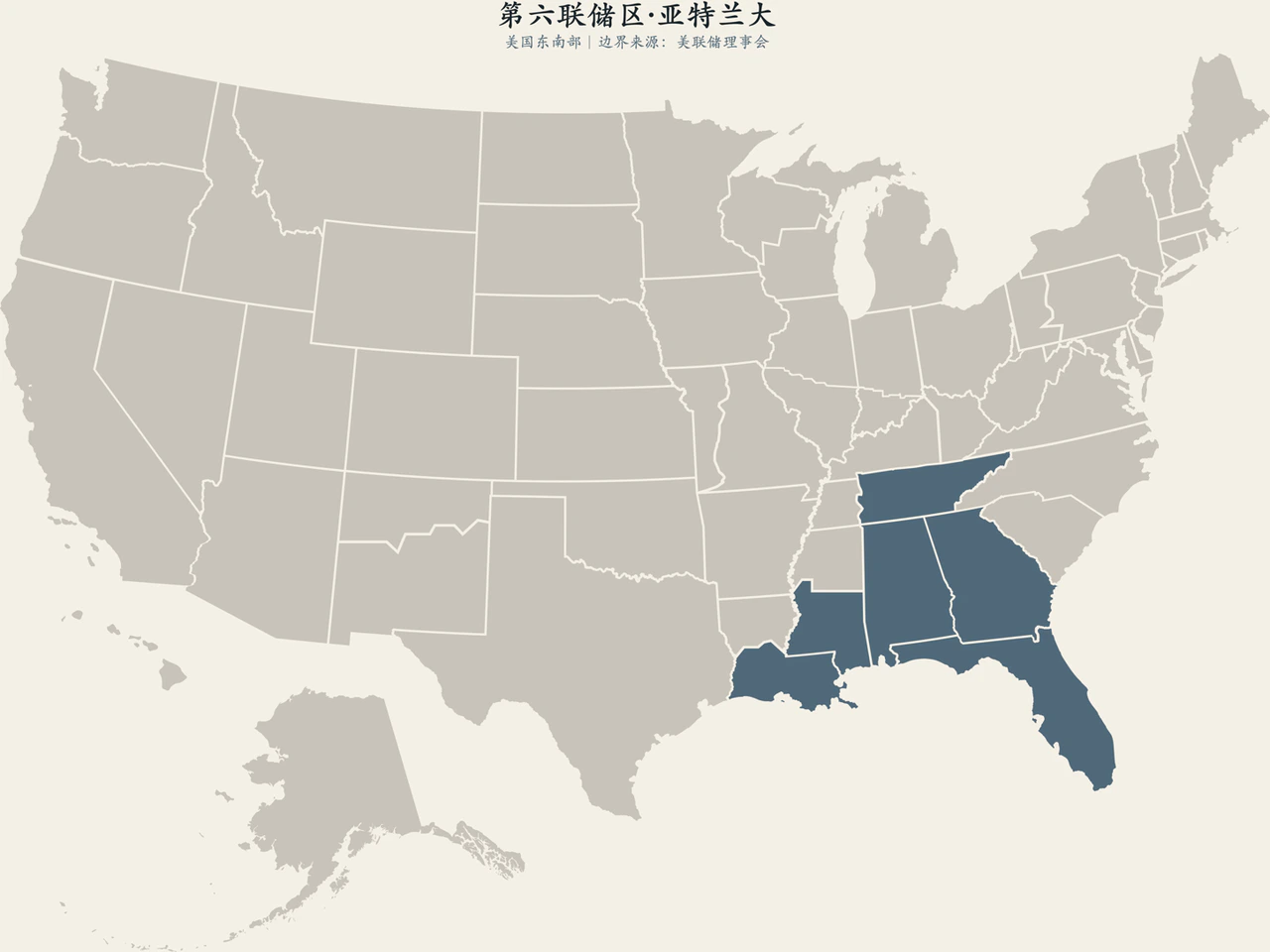
Understanding the Federal Reserve, article 17/20
The same benchmark rate produces very different effects at a large Minneapolis financial institution and a remote Montana farm. Washington's macro charts present America as smooth weighted averages. The Ninth District instead reveals an economy built around enormous distances, sparse populations, vulnerable community banks and commodity cycles. National averages most readily erase precisely these land-rooted structural differences.
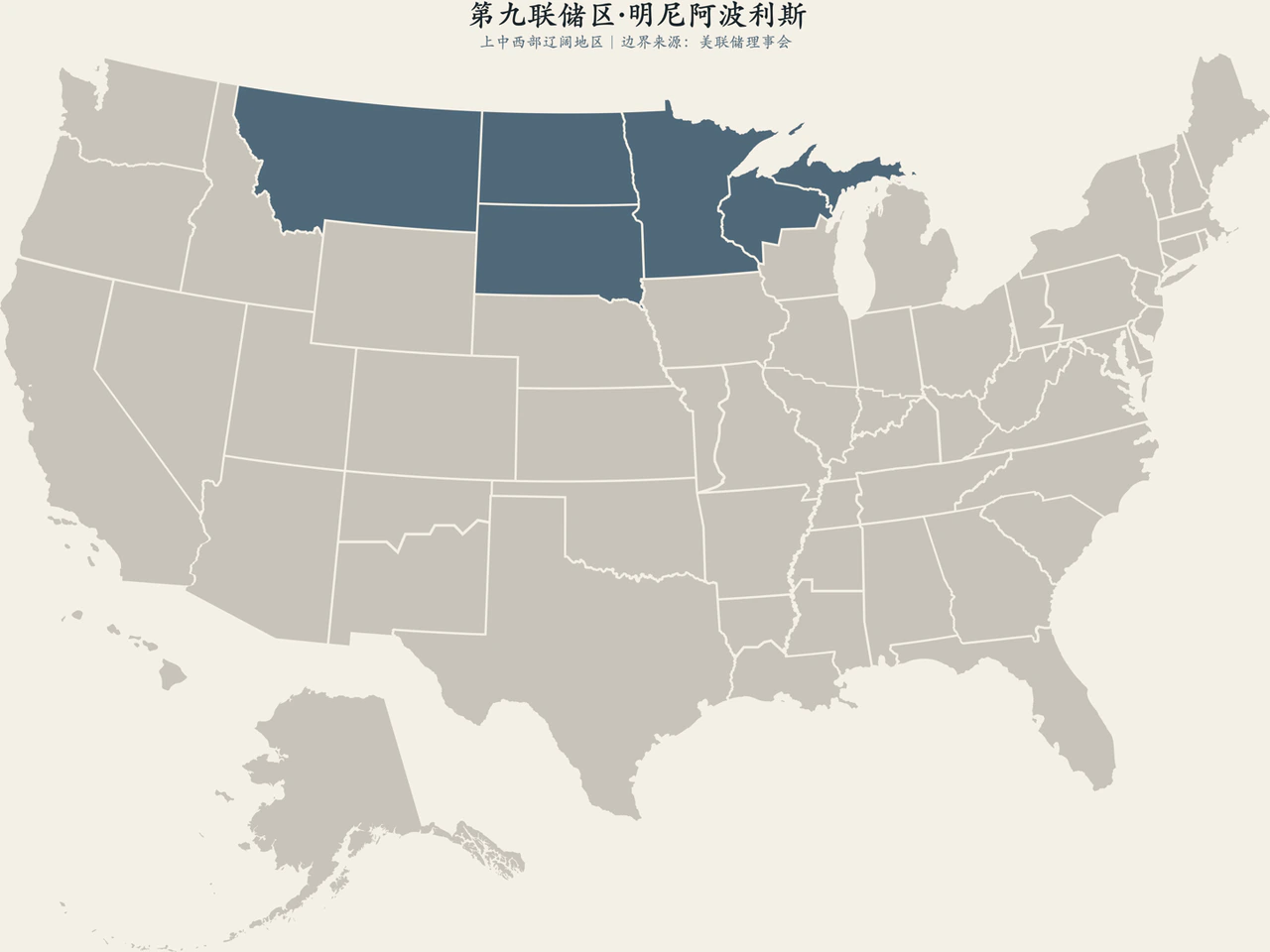
The Ninth District spans two time zones and covers all of Minnesota, Montana, North Dakota and South Dakota, Michigan's Upper Peninsula and 26 northern Wisconsin counties, with a branch in Helena, Montana. It combines the Twin Cities' healthcare, finance, retail headquarters and precision manufacturing with vast farming and ranching plains, Bakken shale oil and older mining areas.
1. Distance is a cost, not merely background
Low population density changes how rates transmit
Established metropolitan firms can choose among multinational banks, corporate bonds, commercial paper and private equity. On the Dakota plains or in Montana valley towns, family farms and small businesses rely almost entirely on highly local community banks. In a hiking cycle, remote banks can quickly face deposit flight and higher liability costs. Volatile land and machinery collateral and concentrated local lending then prompt rapid credit retrenchment. Even while national credit expands moderately, financial conditions in some remote counties may already be frozen.
Physical distance also restricts labor matching. High nationwide vacancies do not make relocation or cross-county commuting easy. Sparse towns, winter transport barriers, chronic affordable-rental shortages and limited childcare and broadband hold workers in place. A single unemployment rate cannot convey the physical gulf between jobs and jobseekers.
The Twin Cities' diversified services and multinational headquarters follow a different rhythm from western resource- and grain-producing counties. Urban expansion and rural contraction often offset each other. The district is not a homogeneous farming belt; a one-sided description hides its complex internal balance.
Agriculture, mining and energy can respond oppositely to the same shock
Commodity volatility often produces opposing cash flows on different district balance sheets.
Higher crop prices improve growers' profits but immediately burden livestock and feed businesses. Higher oil stimulates Bakken drilling, equipment and employment in North Dakota while raising fuel and input costs for farm households. Strong critical-mineral demand improves hiring in Montana and the Upper Peninsula, constrained by environmental reviews and heavy capex.
Regional analysis asks who receives incremental cash and who bears new costs. Headquarters' aggregates generally call food and energy increases imported inflation; for many Ninth District communities they redistribute wealth. Highly leveraged family farms and cash-rich energy giants respond very differently to identical tightening.
2. Why Indigenous and opportunity research belongs within a central bank's view
Many tribal nations cannot be reduced to one portrait
The district includes many tribal nations with sovereign jurisdiction and Indigenous communities. Small samples, inadequate racial classification and overlapping administrative boundaries have long left them partly invisible in conventional macro surveys.
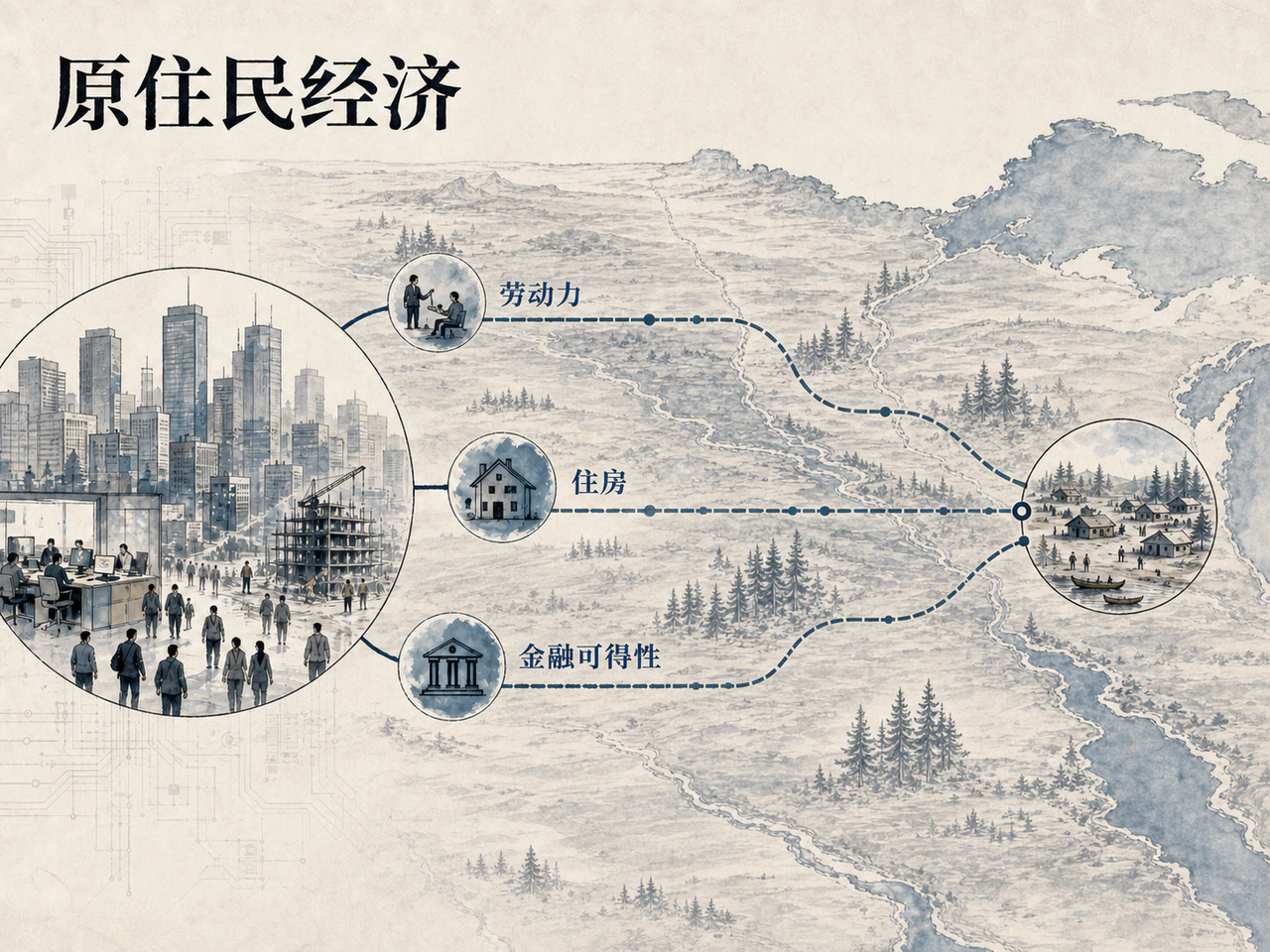
The Minneapolis Fed's Center for Indian Country Development (CICD) addresses that blind spot. With community partners it studies credit access, housing title, participation and business conditions, grounded in respect for tribal sovereignty and local context. Inalienable tribal trust land cannot directly serve as collateral, making conventional commercial-bank credit allocation persistently ineffective there.
A central bank cannot rewrite land law or replace tribal fiscal decisions, but can locate financial bottlenecks, enforce fair-lending duties, improve payments and incorporate special data into national policy analysis. If difficult-to-measure populations remain absent, maximum employment degenerates into a goal for only the easiest people to count.
Opportunity and inclusive growth affect estimates of potential supply
The Opportunity & Inclusive Growth Institute studies labor mobility, intergenerational mobility, education, residential segregation and inequality. This does not broaden central banking into social relief for appearances; it addresses how micro frictions constrain potential supply and the economy's natural output ceiling.
When unemployment falls, did disadvantaged workers find stable jobs, or did discouraged workers leave the denominator? Does faster average pay reflect productivity and bargaining, or high transport, rental and care costs forcing higher reservation wages? The institute decomposes aggregates into individual trajectories to distinguish durable expansion from illusion.
3. Regional voices are often most useful when averages look calm

Neel Kashkari has a formal vote in 2026
Neel Kashkari has led the Minneapolis Fed since 2016. The Ninth District's 2026 rotation makes him a voting FOMC member. His speeches and dissents show a distinctive analytical style and how non-consensus risk judgments shape decisions.
A regional president's stance cannot be reduced to hawk or dove. The key is whether the anchor is renewed inflation risk, potential labor slack, financial conditions or forward-guidance credibility, and especially the alternative offered when dissenting. Votes concern the whole country, but draw their insight from long familiarity with local conditions.
Three distributions matter more than one district average
Three micro distributions are especially useful: first, urban-rural differences in employment growth, real wages and migration; second, farmland valuations, commodity earnings and rural community-bank balance-sheet quality; third, financial access, housing shortages and participation in reservations and isolated communities. Together they test whether national recovery reaches the economic margins.
Regional heterogeneity is an early detector of blocked national transmission, rather than a tool for local monetary policy. At high rates, remote banks and asset-heavy farms can run short of liquidity and cut spending first, while multinationals with offshore cash and long fixed debt remain comfortable, delaying the aggregate credit signal. Likewise, temporary energy windfalls may mask deteriorating farm cash flows.
Climate and seasons amplify spatial frictions. Long extreme winters interrupt outdoor construction, logistics and surface extraction; planting and harvest govern annual credit peaks, while short summer/autumn tourism seasons create local service pulses. Seasonal smoothing can remove regular chart peaks but cannot erase nonlinear shocks from extreme cold or climate anomalies. Geography and climate are endogenous operating variables, rather than static map decoration.
That is why Ninth District micro information can be most forward-looking when national aggregates look quiet. Transport barriers, emerging collateral-price cracks and slight asset pressure at small banks often appear before national statistics. For the FOMC these are real tests of whether uniform policy penetrates a complex financial network, rather than isolated rural anecdotes.