Over the past 24 hours, US–Iran confrontation shifted visibly from direct frontline strikes to the less visible fronts of economic sanctions and sea routes. Washington unveiled its long-advertised economic D-Day, but primarily as threats and grace periods rather than immediately effective, crippling penalties. Tehran claimed a prepared two-year response while the rial plunged to a record low. Two separate commercial-tanker attacks in the Red Sea and off the Gulf of Oman brought economic isolation and passage risks into focus together. No verifiable new round of large-scale direct US–Iran military exchanges occurred within the observation window.
Economic D-Day: threats first, severe penalties deferred
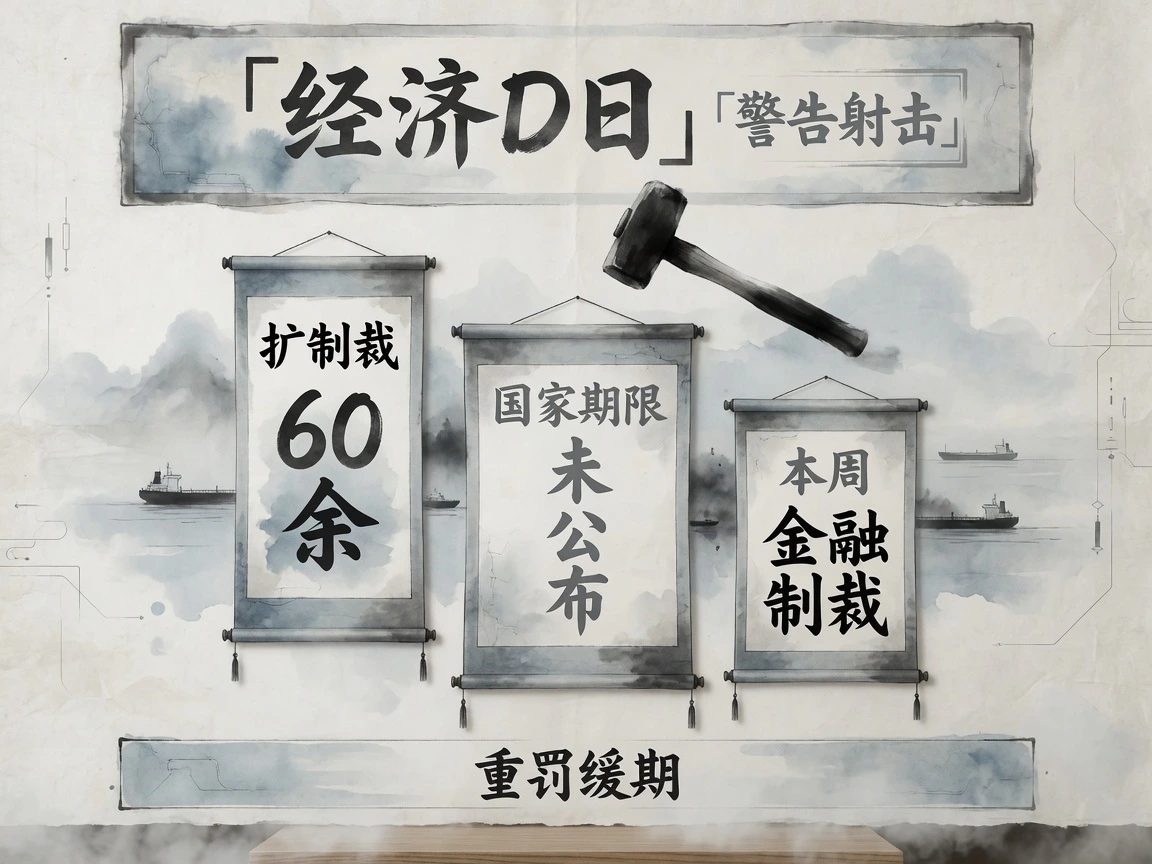
Monday afternoon US Eastern time, early Tuesday Beijing time, Treasury Secretary Bessent unveiled the long-prepared maximum-pressure plan. Treasury's transcript named it Operation Economic Outcast, which he described as the largest financial offensive ever directed at a single geopolitical adversary. Beneath the rhetoric, the approach had three layers:
First, greatly expand the Iran-related activity potentially subject to sanctions. Beyond digital assets, advanced technology and shipping already in the draft, gold and civil aviation were added as key targets. Initial implementation imposed targeted sanctions on more than 60 entities, individuals and vessels linked to nuclear/missile procurement, cyber operations and oil-export revenue.
Second, threaten secondary sanctions on third countries refusing to sever economic ties. Bessent said every country maintaining trade with Tehran would receive a clear disengagement deadline, but declined to disclose countries or timetables, saying US patience was not unlimited.
Third, cut cross-border financial settlement. Institutions helping Iran evade sanctions or launder money would be excluded from dollar clearing, with major sanctions on an unnamed large foreign financial institution promised later that week.
Bessent himself called the approach a warning shot and a calibration of market expectations. Defending delayed penalties, he said indiscriminate maximum sanctions overnight could blow up the global financial system, requiring time for countries to cut Iran exposure. Repeatedly asked about Chinese banks, he avoided a direct answer and favored quiet diplomacy, while asserting that nobody worldwide was beyond US sanctions' reach.
He also unusually addressed ordinary Iranian soldiers, urging them to consider whether commanders were leading the country to victory or destruction and invoking the Berlin Wall's fall. Senior US rhetoric again raised regime-change imagery despite repeated administration denials over previous weeks that this was an operational goal.
Tehran's rebuttal and the rial's new low

Iran responded on two tracks. Chief negotiator and Speaker Ghalibaf said Washington lacked the economic ability to cut ties between sovereign states, that nobody believed its bluff, and that major partners had publicly and privately pledged to ignore sanctions threats. Finance Minister Madanizadeh told state media Iran was fully prepared with a two-year cabinet plan, warning that it would go on the offensive rather than merely defend and calling US measures economic terrorism. A semiofficial agency quoted an unnamed intelligence source describing the plan as public-relations design by Trump's media team, intended to create fear rather than actual constraints.
Market pricing was harsher than the rhetoric. After the news, panic selling pushed the free-market rial past 2 million rials per $1, to a record low; the controlled official rate valued the currency about 29% above the free market. Foreign media said the UAE, a Middle Eastern re-export hub, had recently halted Iran trade, tightening external funding further. Central-bank governor Hemmati urgently reassured businesses, promising $20 billion in foreign exchange for key industrial sectors by year-end and allocations for essentials and medicine.
Fundamental weaknesses were hard to conceal. The IMF projected economic contraction of more than 5% this year, while food inflation exceeded 100%. Energy and strategy observers generally argued that genuinely choking Iran's lifeline required confronting China, destination for about 90% of crude exports. Most interviewed experts doubted Washington would risk a full bilateral confrontation by sanctioning large Chinese banks before an expected major leaders' meeting.
US political economics were also unforgiving: gasoline averaged above $4 a gallon, with only 71 days before midterms crucial to the governing party. Economic D-Day therefore needed a dramatic maximum-pressure message politically while avoiding an immediate oil-price spike economically. Threats first and penalties later reflected that calculation.
Shipping alert: two tankers attacked in succession
As financial pressure advanced, two independent commercial-vessel attacks occurred in the Red Sea and Gulf of Oman within the window.
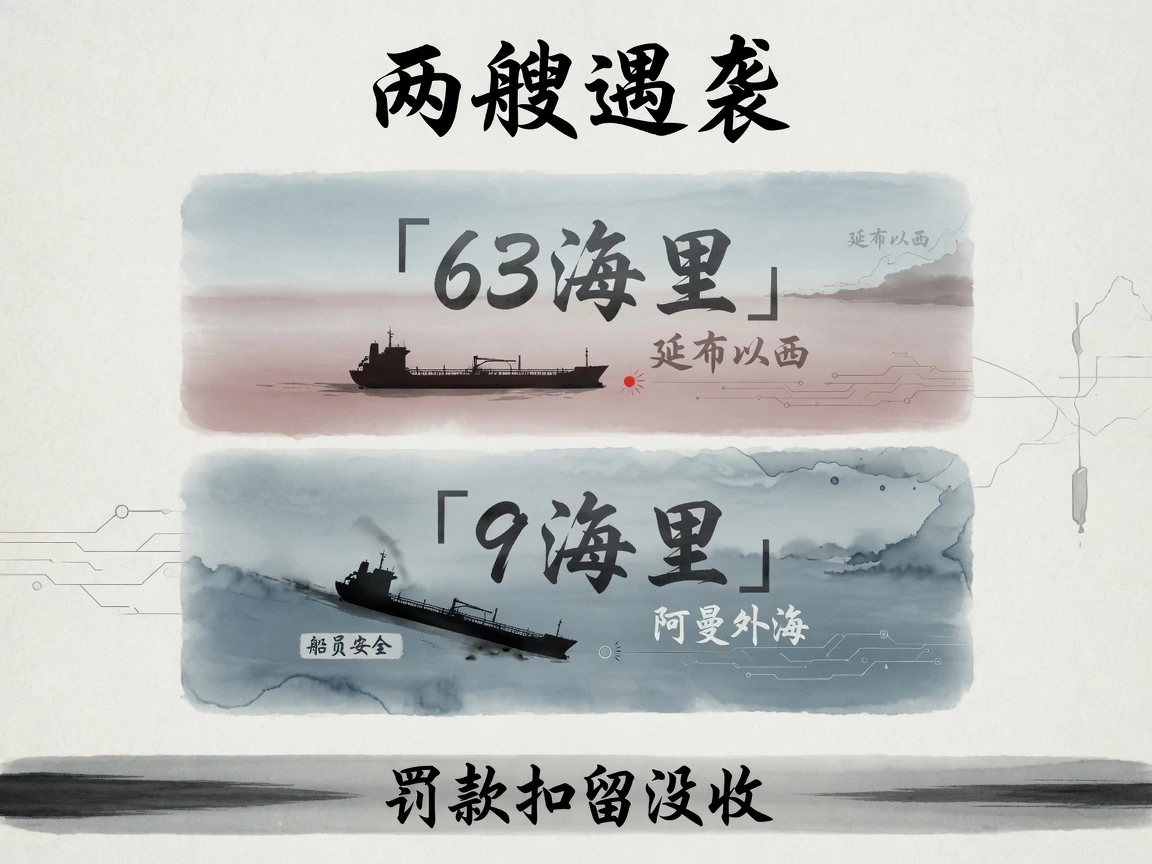
The first was in the northern Red Sea. UKMTO reported an unidentified projectile striking a crude tanker about 63 nautical miles west of Yanbu, Saudi Arabia's western export center, causing a major deck fire; all crew escaped safely. Maritime-security agencies assessed the vessel as probably Saudi-flagged AMZAN, owned by Bahri. Its AIS was off, and the Egyptian Navy reportedly responded. Hours later Houthis claimed a precise ballistic-missile strike on AMZAN. Bahri confirmed a Red Sea security incident on August 24 but gave no further details. Houthis had announced a blockade-for-blockade restriction on Saudi-linked shipping. Yanbu is about 900 kilometers from the nearest Houthi-controlled Yemeni area. With Hormuz effectively closed and Saudi exports rerouted by East–West pipeline to the Red Sea, the demonstrated long-range threat was the latest severe pressure on Saudi-linked routes.
UKMTO subsequently reported another unidentified-projectile strike about 9 nautical miles northeast of Ash Shishah, Oman. The tanker's engine room was severely damaged and propulsion lost. Crew were safe but environmental effects remained under assessment. UKMTO urged vigilance and immediate reports of suspicious activity. No organization had claimed the second attack.
Iran's state Persian Gulf Strait Authority (PGSA) meanwhile warned global commercial shipping that vessels breaching its Hormuz controls could face fines, detention or confiscation on future passage, urging charterers to check its noncompliant-vessel list. Simultaneous pressure on the Red Sea and Hormuz forced renewed reassessment of war-risk premiums and coalition escorts.
Diplomatic side channels: mediation, warnings and bargaining assets
Beyond battlefield and sanctions developments, diplomacy over ceasefire terms and geopolitical boundaries remained contested.
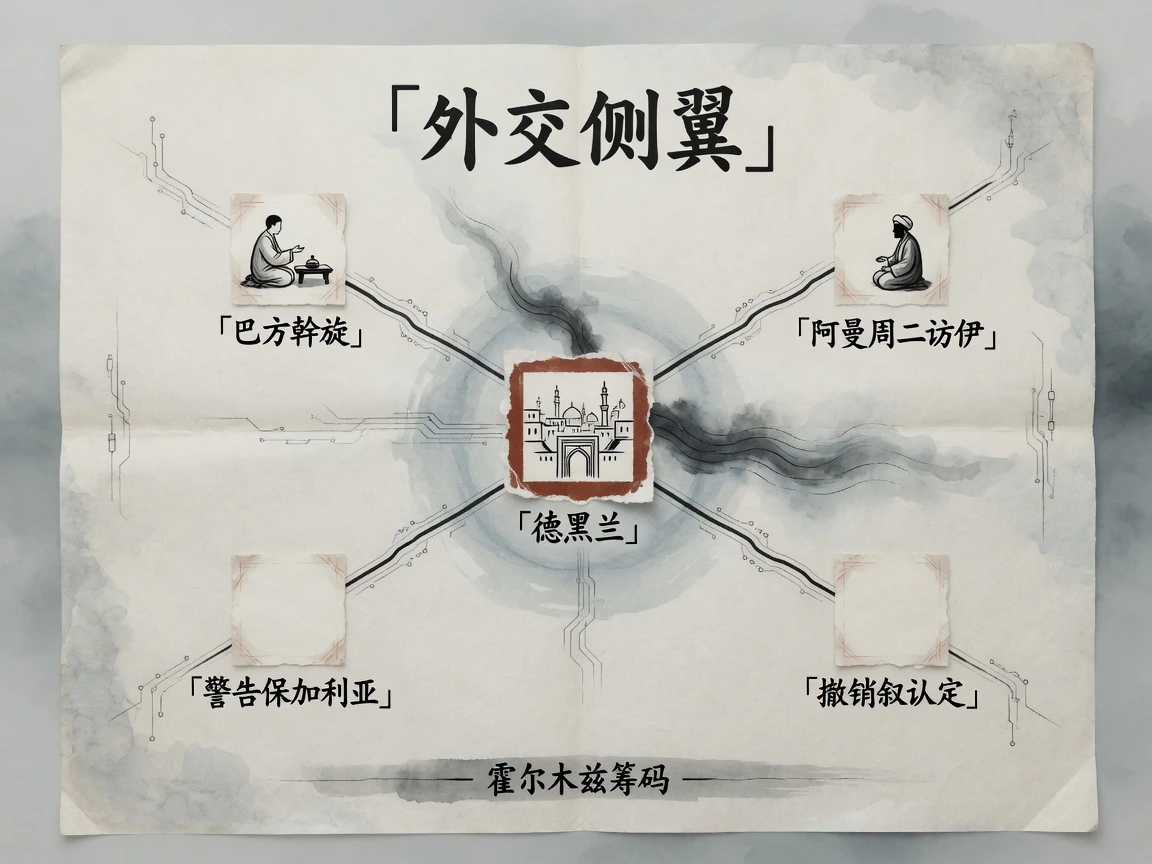
On Monday, Pakistani Army Chief Munir quietly arrived in Tehran and met Ghalibaf and Supreme National Security Council secretary Rezaei. Rezaei demanded changed US behavior and concrete fulfillment of the memorandum, again presenting Hormuz controls as leverage. Informed people confirmed that Trump had discussed Iran with Munir the previous week and asked Pakistan to use military influence to restart multilateral talks. Yet on the same day that he privately sought mediation, Trump publicly said Iran was collapsing completely, sharply contrasting internal and external messaging. Netanyahu quickly endorsed Trump's and Bessent's sanctions threats as imposing deserved costs on a brutal dictatorship.
Other developments: Omani Foreign Minister Badr was due in Tehran Tuesday for urgent discussions on Hormuz and the regional crisis, after private talks on alternative safe routes. Iranian spokesperson Baghaei warned NATO member Bulgaria that using its territory for US–Israeli operations would give Iran the right to strike the origin and logistics bases of aggression, referring to US tankers' recent use of Bezmer air base. The US State Department also formally removed Syria's longstanding state-sponsor-of-terrorism designation, removing one legal constraint in the regional landscape.
Key developments over 24 hours
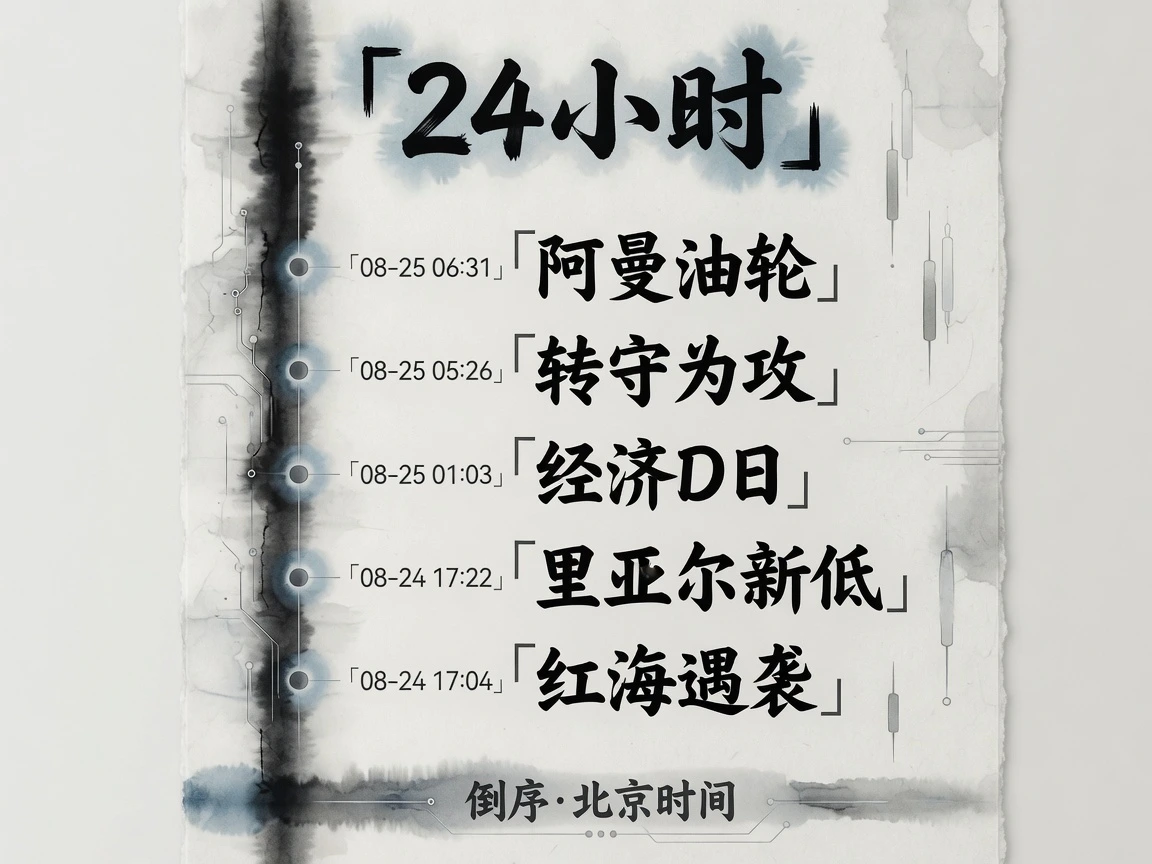
Key items within the window, newest first in Beijing time:
| Key developments |
|---|
| 08-25 07:51 Beijing timeRoundup: sanctions threats, the rial's new low and regional news. |
| 08-25 06:31 Beijing timeUKMTO: a tanker off Oman is disabled by a projectile; crew are safe. |
| 08-25 05:26 Beijing timeFinance Minister Madanizadeh says Tehran is fully prepared and will shift from defense to offense. |
| 08-25 04:13 Beijing timeAnalysis: China, India, Turkey, Iraq and the UAE face the greatest risks if sanctions take effect. |
| 08-25 03:44 Beijing timeNetanyahu praises Trump's and Bessent's sanctions threats. |
| 08-25 03:00 Beijing timeRoundup: Bessent's warning shot, Munir's Iran visit and US removal of Syria's terrorism designation. |
| 08-25 02:19 Beijing timeInformed sources say Trump called Munir the previous week and requested Pakistani mediation. |
| 08-25 02:00 Beijing timeGhalibaf says the US lacks the economic ability to restrict ties between other countries. |
| 08-25 01:42 Beijing timeRezaei tells Munir the US must change its behavior and fulfill the memorandum. |
| 08-25 01:34 Beijing timeBessent defends delayed penalties, saying immediate action could blow up the global financial system. |
| 08-25 01:29 Beijing timeBessent says entities helping Iran launder money will leave the dollar system and major financial-institution sanctions will be announced this week. |
| 08-25 01:28 Beijing timeBessent urges ordinary Iranian soldiers to question commanders, invoking the Berlin Wall. |
| 08-25 01:28 Beijing timeBessent declines to disclose countries' disengagement deadlines, saying patience is not unlimited. |
| 08-25 01:22 Beijing timeBessent avoids specifying Chinese-bank sanctions, saying nobody is beyond reach. |
| 08-25 01:08 Beijing timeTreasury expands sanctionable Iran-related activities to include digital assets, technology and shipping. |
| 08-25 01:03 Beijing timeBessent's press conference begins and the economic D-Day plan is unveiled. |
| 08-25 00:35 Beijing timeHormuz background: passage remains severely restricted; Oman's foreign minister visits Iran Tuesday. |
| 08-25 00:19 Beijing timeMunir meets Ghalibaf to discuss implementation of the Islamabad memorandum. |
| 08-24 23:35 Beijing timeAnalysis: economic D-Day is unlikely to have real effect without targeting China. |
| 08-24 23:28 Beijing timeBahri confirms a Red Sea tanker security incident; Houthis claim a missile strike on AMZAN. |
| 08-24 21:57 Beijing timeAnalysis of economic D-Day's political stakes: gasoline above $4 and 71 days to midterms. |
| 08-24 21:47 Beijing timeHormuz background: prewar flow 20 million barrels a day, one-fifth of global production. |
| 08-24 21:22 Beijing timeIran trade-partner review: exports to China totaled $22.4 billion in 2022. |
| 08-24 21:01 Beijing timeTrump posts that Iran is collapsing completely. |
| 08-24 18:49 Beijing timeBackground: US sanctions on Iran since 1979. |
| 08-24 17:22 Beijing timeRial hits a new low of 2 million per $1; central bank promises $20 billion in foreign exchange. |
| 08-24 17:04 Beijing timeUKMTO: a tanker is hit and catches fire 63 nautical miles west of Yanbu, suspected to be AMZAN. |
| 08-24 16:57 Beijing timeIran warns Bulgaria against providing base support for US refueling aircraft. |
| 08-24 14:18 Beijing timeFormer Treasury officials say Washington is more likely to enforce existing sanctions strictly and pressure Iran's oil ecosystem. |
| 08-24 13:27 Beijing timeOman's foreign minister will visit Tehran Tuesday to discuss Hormuz. |
| 08-24 12:21 Beijing timeBessent previews economic D-Day in a media column; analysis examines China. |
| 08-24 12:20 Beijing timeIran's PGSA warns that ships breaching passage rules may be fined, detained or confiscated. |
| 08-24 12:20 Beijing timeReview of differences among Iran's leadership: Pezeshkian, Rezaei, Baghaei and Taeb. |