Over the past 24 hours, US–Iran confrontation shifted further from direct fighting toward economic warfare and diplomacy, with military conflict receding into the background. Washington converted announced sanctions into dense implementation rules: more than 60 entities, individuals and vessels, five core sectors, and three administrative restrictions covering remittances, sports and academic exchanges, and shipping compliance. China explicitly rejected US maximum pressure. Tehran combined offense and defense, claiming a two-year contingency plan and readiness to go on the offensive while joining Oman in proposing a temporary Hormuz shipping corridor to regain initiative over its key bargaining asset. Meanwhile, another tanker was disabled by an unidentified projectile off Oman, leaving maritime uncertainty unresolved.
Sanctions lists arrive as economic warfare moves fully into implementation
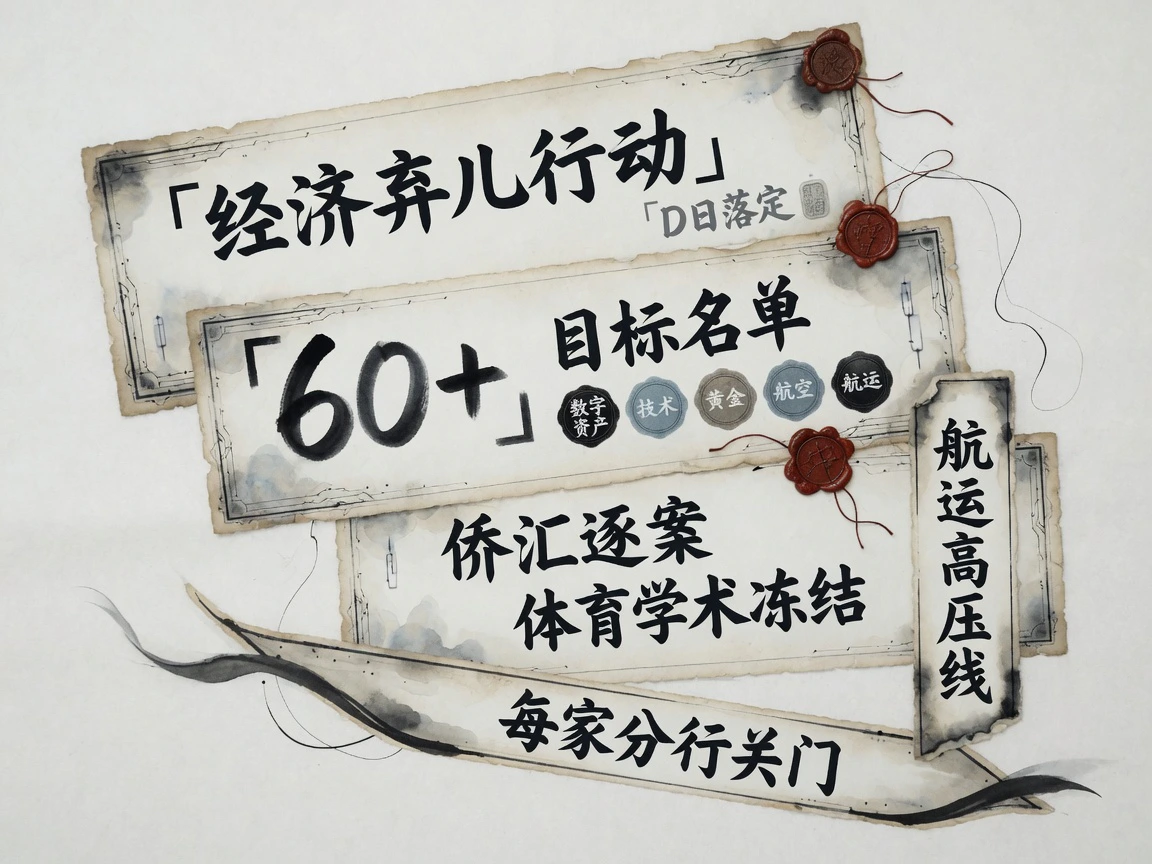
The economic D-Day announced August 24 entered implementation under the pointed name Operation Economic Outcast. OFAC imposed sanctions on more than 60 entities, individuals and vessels worldwide, accusing them of supporting Iranian nuclear-weapons and missile technology, malicious cyber operations and crude-export revenues. Sector determinations also brought digital assets, technology, gold, aviation and shipping—five perceived economic lifelines—within the sanctions scope.
Treasury Secretary Bessent issued a strict deadline warning: each country had a clear timetable for ending specified Iran-related activities, after which Treasury would act unilaterally under its statutory powers. He singled out Bank Melli, saying every overseas branch must close.
Further administrative rules tightened pressure. The general license for personal remittances to Iran was suspended, replacing a channel for overseas relatives' living-expense transfers through third-party intermediaries with individual OFAC licenses. Analysts broadly expected more civilian funds to shift into crypto and underground third-country exchange networks. The US indefinitely halted all amateur and professional sporting events and academic exchanges with Iran, even revisiting the national team's earlier move of its 2026 World Cup qualifying training camp from Arizona to Mexico. Shipping rules imposed a severe compliance boundary: merely replying to routine information requests from Iran's three strait-management bodies—the Persian Gulf Strait Authority, Persian Gulf Maritime Insurance and HormuzSafe Maritime Services Authority—could expose operators and owners to sanctions, even without payment.
China rejects pressure, Tehran stands firm and US observers question effectiveness
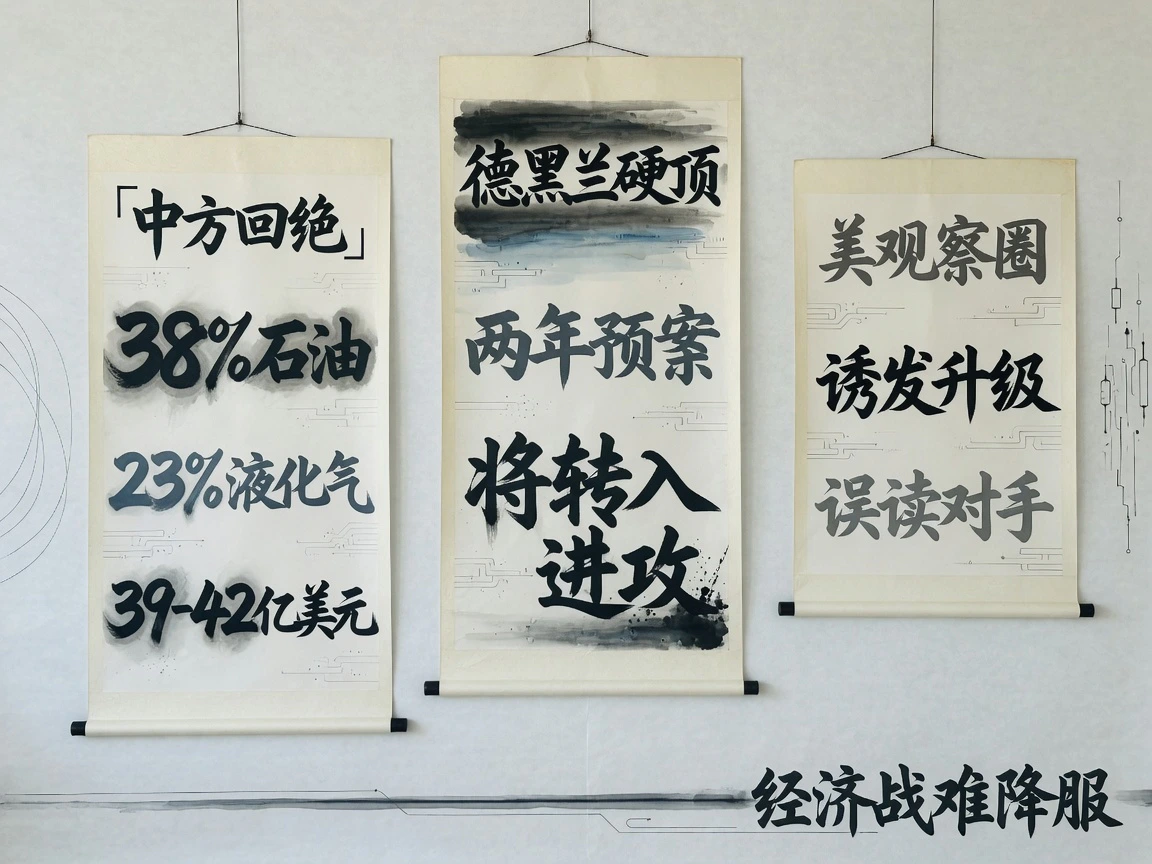
Whether the sanctions net tightened depended first on major buyers, especially Beijing. China's Foreign Ministry spokesperson said economic warfare and maximum pressure would worsen tension, conflict and spillover risks. Normal China–Iran trade operated within international law and should not be disrupted; China would take all necessary measures to defend legitimate interests. Trade exposure supported the statement's significance: around 38% of China's oil and 23% of its LNG traveled through Hormuz, while estimated Iranian oil exports to China last September were $3.9 billion to $4.2 billion.
China was not Washington's only target. Bessent suggested the UAE's suspension of Iran trade the previous week was no coincidence and might reflect a causal link, expecting other countries to follow. UAE presidential diplomatic adviser Gargash said the region had entered a new phase of economic pressure and treating Gulf Arab states as bargaining targets was no solution.
Tehran pursued domestic and external responses. Finance Minister Madanizadeh told state media Iran was fully prepared, with a two-year contingency plan. He warned that this time it would not merely defend but go on the offensive, calling sanctions economic terrorism. Speaker and chief negotiator Ghalibaf told Tasnim that US failure on military and political fronts would be followed by complete failure in its economic operation.
US think-tank and specialist observers were more skeptical than Washington's official rhetoric. Quincy Institute executive vice president Parsi argued that coercing national policy through suffering had almost never worked for the US and these sanctions would likely provoke stronger Iranian responses and another escalation cycle. Former Israeli military-intelligence Iran specialist Citrinowicz warned that believing enough economic strangulation would force surrender reflected a fundamental misreading of strategic resilience, beyond an intelligence forecasting error. Trump meanwhile alleged on social media that Iran broadly withheld military pay and killed protesters, calling it an epic humanitarian crisis, but supplied no evidence.
Hormuz: Iran and Oman propose a temporary navigation corridor
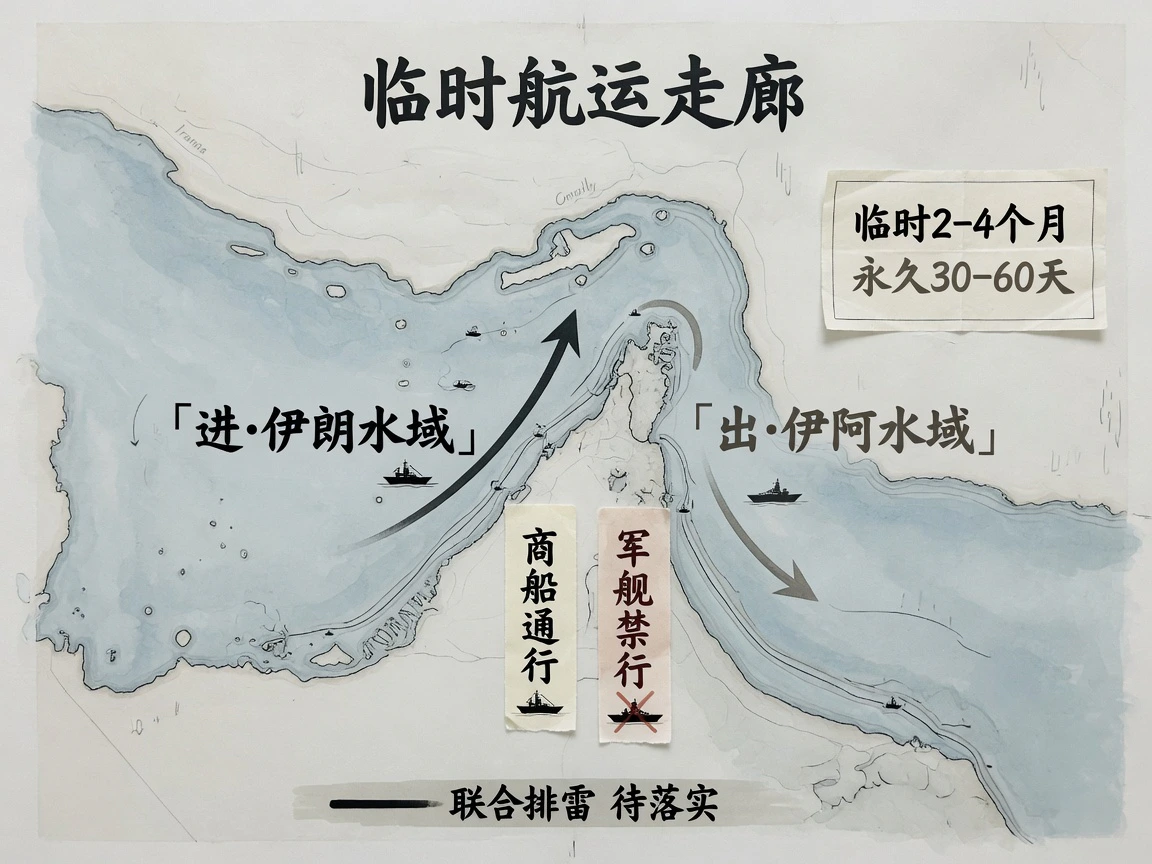
The most striking diplomatic opening in the past 24 hours came between Tehran and Muscat. After Tuesday talks in Tehran, the two foreign ministers jointly proposed a phased framework for a temporary Hormuz shipping corridor and initiated bilateral joint mine-clearing operations, with the eventual goal of a formal agreement on permanent routes and long-term jurisdiction. Oman's Foreign Minister Badr expressed confidence in announcing the temporary plan soon and said permanent-governance talks would follow at the appropriate time. Araghchi said it demonstrated Iran's commitment to peace and stability and aligned with determined diplomacy with neighbors.
Deputy Foreign Minister Gharibabadi then described the design: westbound entry into the Gulf mainly through Iranian territorial waters, eastbound exit through adjoining Iranian and Omani waters. Warships of all states would be prohibited; only civilian merchant ships could pass. The interim corridor would last 2–4 months, with agreement on permanent routes sought within 30–60 days. He stressed that this did not mean immediate reopening: full passage still depended on ceasefires across fronts, withdrawal of forces and complete removal of the maritime blockade.
The proposal also touched unresolved earlier commitments. Since full-scale war began in February, Iran had tightly controlled Hormuz as its central bargaining asset. A June 17 Islamabad memorandum had included in-principle passage commitments. Oman later coordinated with the International Maritime Organization on a southern temporary route, soon shelved amid Iranian opposition and renewed fighting. Proposing a joint route now was an effort to retain bargaining power through institutional arrangements against US economic isolation.
Washington countered with prominent military deterrence. Trump claimed the Navy had confirmed every mine in Hormuz international waters cleared or detonated, threatening immediate, systematic destruction of any vessel laying more. He claimed Space Force monitored every inch of the strait and Pickaxe Mountain plus three destroyed nuclear sites, with zero tolerance for minelaying. Gharibabadi rejected the clearance claim and warned that US minesweepers entering without authorization would be struck. Foreign media noted Trump's repeated unilateral social-media announcements of breakthroughs and his temporary cancellation early the previous month of planned Pickaxe Mountain strikes. A substantial gap remained between remote threats and complex underwater clearance.
Another tanker attack off Oman, but oil markets remain subdued
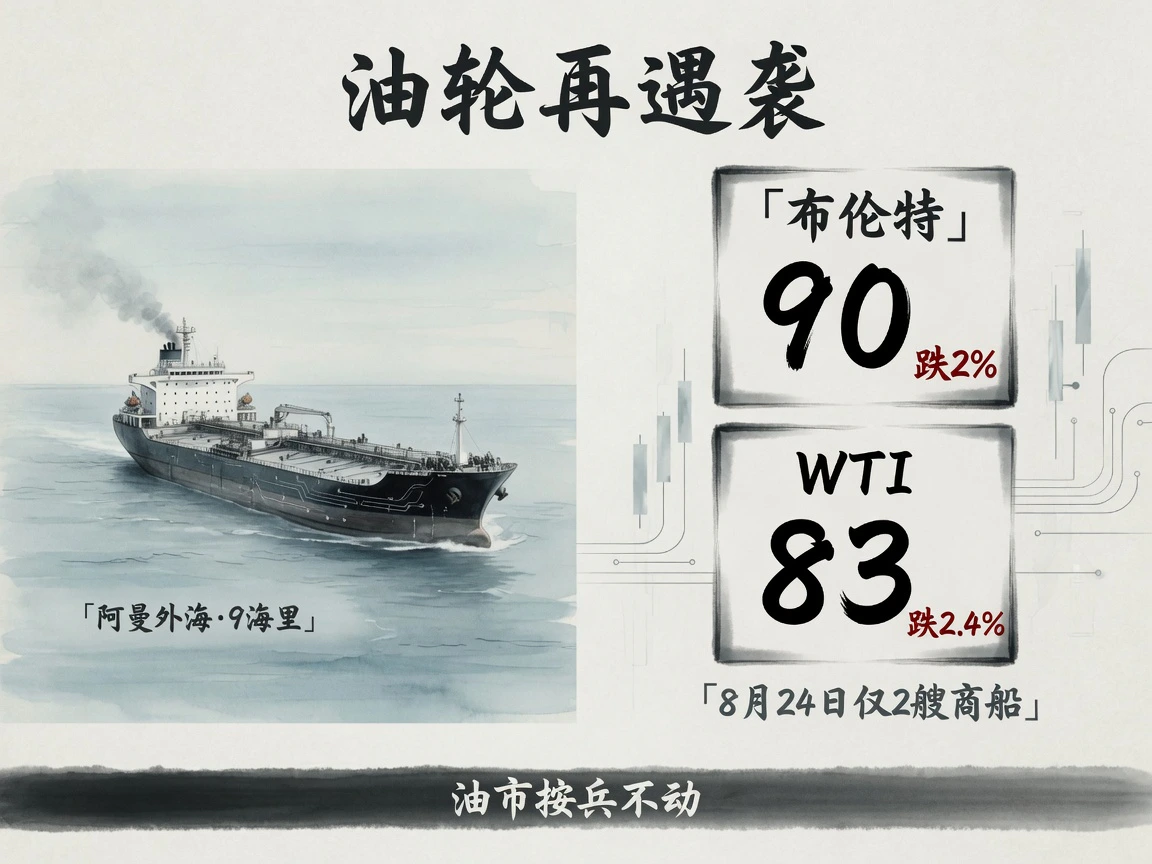
UKMTO reported early Tuesday that an unidentified projectile struck a tanker about 9 nautical miles northeast of Ash Shishah, Oman, severely damaging the engine room and disabling the ship. Crew were safe and no secondary pollution was reported; multinational maritime agencies were investigating. No group had claimed responsibility, and motive or any direct link to Iran's strait controls remained unconfirmed. It was another merchant-vessel emergency along Red Sea–Oman routes within 48 hours.
Energy markets reacted with surprising restraint. Around 5 a.m. US Eastern time Tuesday, front-month Brent fell 2% toward $90 a barrel and WTI 2.4% toward $83, after both fell 2.4% Monday. Deutsche Bank analysts said the US had offered no specific surprise beyond sanctioning more than 60 Iran-linked targets. Without deeper military escalation and with gray shipping continuing, oil remained in wait-and-see mode. Gray shipping referred to Gulf crude moved by ghost tankers switching off AIS signals to avoid detection. Shipping trackers also showed only two commercial cargo ships crossing Hormuz on August 24, the lowest daily count since early May.
Tehran fuel queues and a decade's collapse in wages
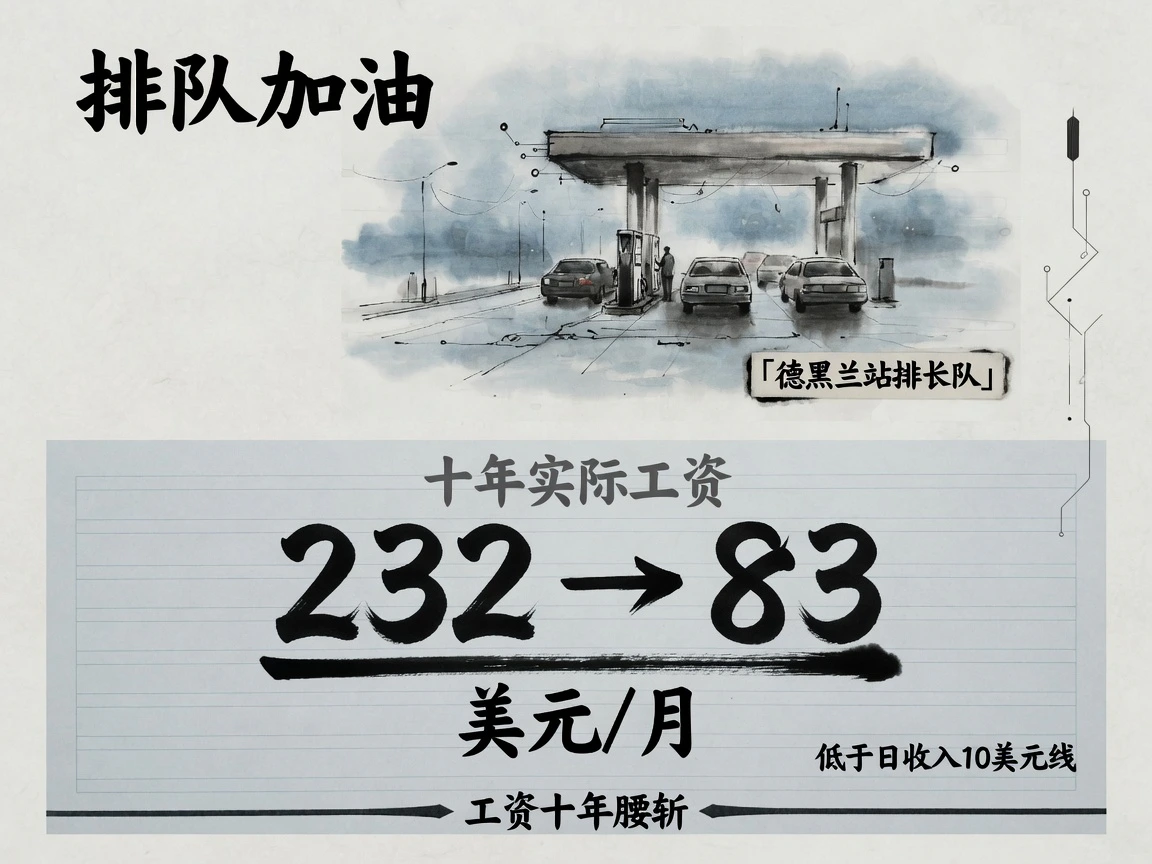
Sanctions and blockade quickly affected Iran's everyday economy. Local media and social videos showed long Tehran fuel queues, temporary closures and dry stations in northern districts, alongside diesel and gasoline shortages reported in Mazandaran and Fars provinces. International media could not verify every detail. NIOPDC nevertheless maintained the national supply chain was stable, attributing queues to rumor-driven panic hoarding and localized transport disconnection and promising resolution within days. Tehran's regional chief acknowledged that earlier fighting had physically damaged product storage and distribution infrastructure, creating real terminal-distribution bottlenecks.
Fuel queues were only part of the hardship. Iran's labor news agency, citing official labor data, said a decade of severe inflation and depreciation had reduced ordinary workers' real monthly basic pay from $232 to $83, far below what the article calls the internationally used $10-a-day poverty warning line. The free-market rial had previously fallen past 2 million rials per $1. Inflation also affected US households: AAA projected that summer travel and geopolitical premiums could make August's average regular-gasoline price the highest for that month on record. Tuesday's national average was $4.10 a gallon, sharply above $2.98 when war began February 28.
Regional side channels: Pakistan relays messages, Japan supports the ICC
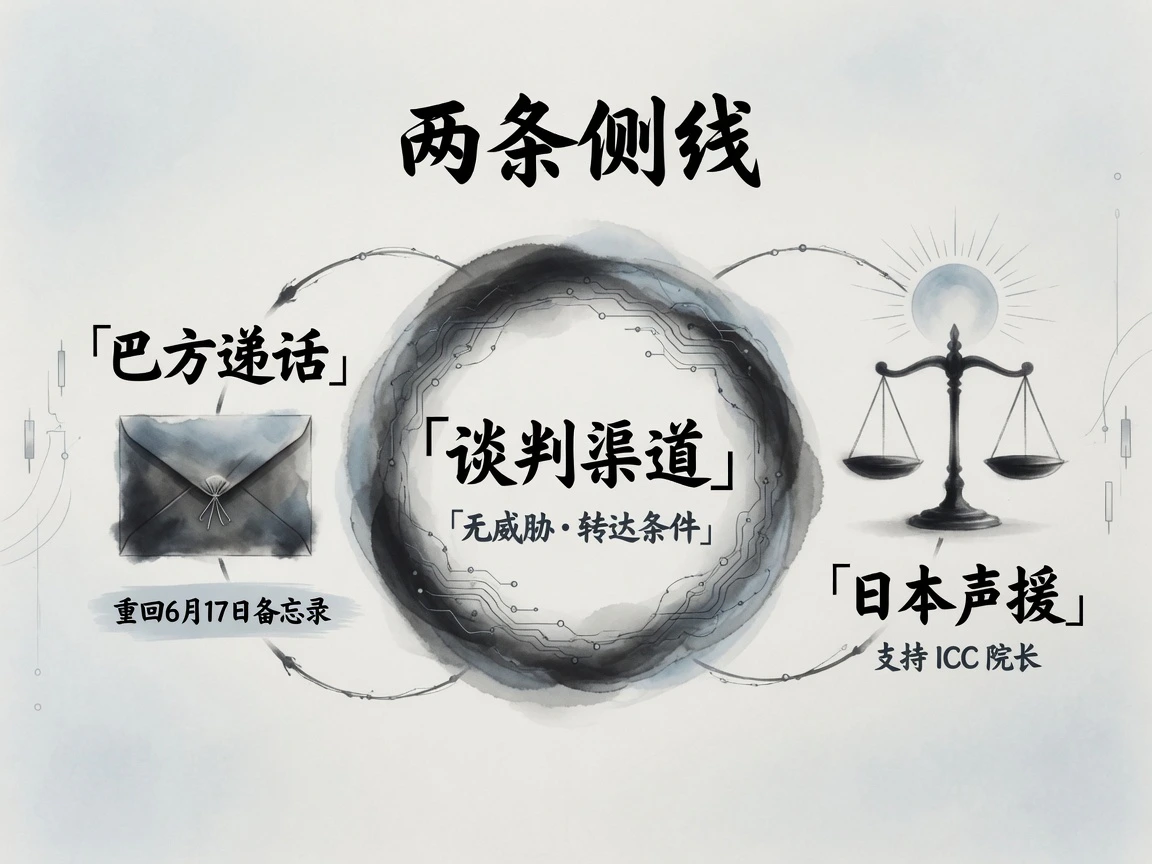
Away from direct confrontation, diplomatic channels expanded. Pakistani Interior Minister Naqvi called talks he and Army Chief Munir held with Pezeshkian very positive and productive, claiming a major breakthrough in conflict resolution. Tasnim, citing unnamed informed people, said Munir carried no US war threat or ultimatum, instead seeking negotiating room and faithfully conveying Iran's red lines. The key demand was a US return to the June 17 Islamabad memorandum and strict fulfillment of its fifth article guaranteeing Hormuz passage rights.
In Tokyo, Chief Cabinet Secretary Yoshimasa Hayashi said Japan would continue firm support for Japanese ICC President Tomoko Akane, sanctioned unilaterally by Washington the previous week, and provide necessary help for the court's work. Though not directly part of Gulf fighting, the statement reflected subtle effects of US unilateral sanctions on traditional allies through law and multilateralism.
Key developments over 24 hours
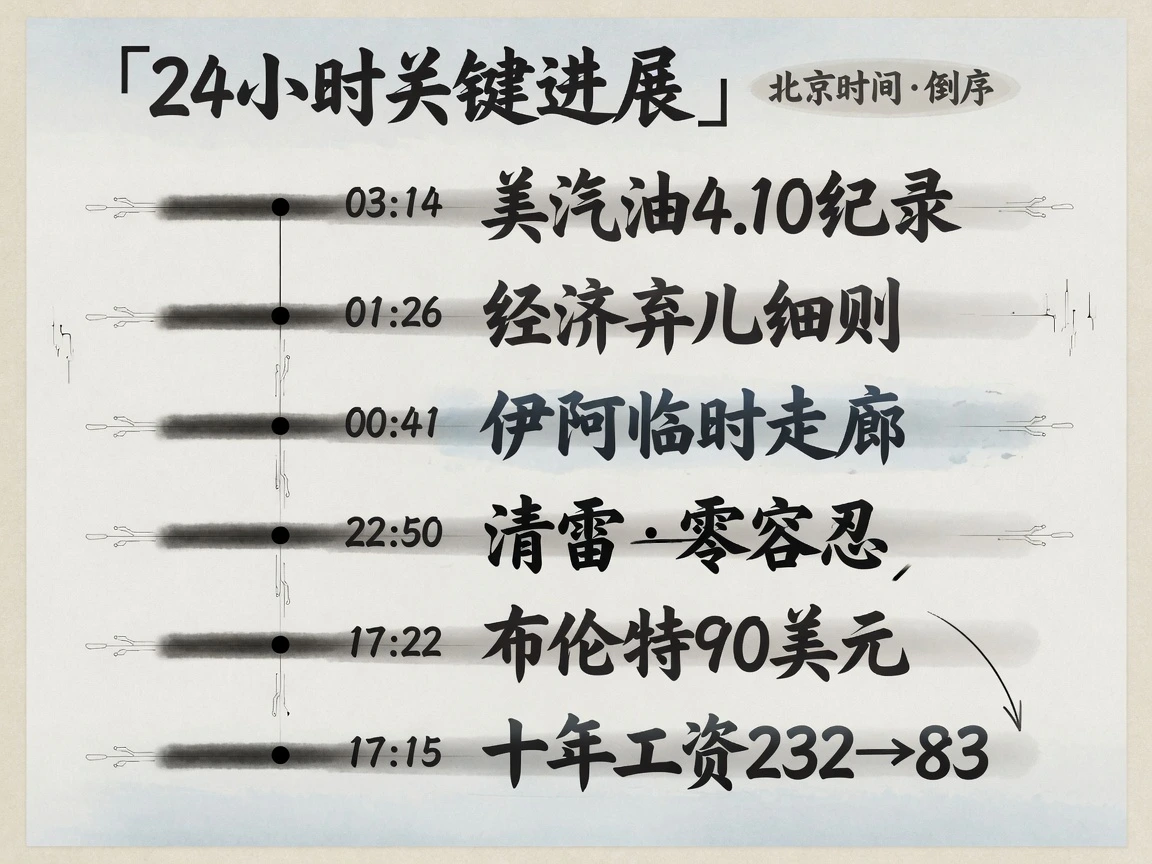
Key items within the window, newest first in Beijing time:
| Key developments |
|---|
| 08-26 03:14 Beijing timeAAA projects a possible August US gasoline record: regular gasoline $4.10 a gallon, versus $2.98 when fighting began February 28. |
| 08-26 01:26 Beijing timeOperation Economic Outcast details emerge: more than 60 targets and determinations covering five sectors. Bessent says every Bank Melli branch must close. |
| 08-26 01:24 Beijing timeRoundup: China's rejection, the temporary Iran–Oman passage proposal and Trump's mine-clearance claims. |
| 08-26 00:41 Beijing timeIran and Oman formally propose a temporary Hormuz shipping corridor, with permanent arrangements to be negotiated separately. |
| 08-25 22:50 Beijing timeTrump says mines have been cleared or detonated and renewed minelayers will be immediately and systematically destroyed; zero tolerance takes effect. |
| 08-25 21:43 Beijing timeTasnim cites informed people saying Munir aims to create negotiating space and convey Iranian terms; Tehran seeks a return to the June memorandum. |
| 08-25 21:31 Beijing timeTehran residents respond to sanctions, saying Washington seeks to create chaos, fear and despair. |
| 08-25 21:12 Beijing timeIranian and Omani foreign ministers meet in Tehran. |
| 08-25 20:41 Beijing timeExperts say economic pressure may provoke escalation rather than submission, and Washington may fundamentally misread its opponent. |
| 08-25 19:55 Beijing timeTrump alleges unpaid Iranian military wages and killings of protesters, calling an epic humanitarian crisis, without evidence. |
| 08-25 19:02 Beijing timeBessent says the UAE's trade halt was no coincidence; a UAE adviser describes a new phase of economic pressure. |
| 08-25 18:37 Beijing timeNew sanctions affect ordinary Iranians, tightening crypto, remittance, gold and aviation channels. |
| 08-25 18:05 Beijing timeTehran fuel stations see long queues and temporary closures; NIOPDC says supply is stable and blames panic buying. |
| 08-25 17:22 Beijing timeOil retreats: Brent down 2% near $90, WTI down 2.4% near $83; both had closed down 2.4% Monday. |
| 08-25 17:15 Beijing timeIranian workers' real basic wages fall from $232 to $83 monthly over a decade; the rial had reached a record low of 2 million rials per $1. |
| 08-25 16:36 Beijing timeChina's Foreign Ministry says new sanctions will only intensify tensions and China–Iran cooperation should not be disrupted. |
| 08-25 14:29 Beijing timeWho buys Iranian oil: China is the largest buyer, and the substantive impact depends on action toward China. |
| 08-25 13:55 Beijing timeOFAC suspends the general license for personal remittances to Iran, moving to case-by-case approval. |
| 08-25 13:23 Beijing timeThe United States indefinitely suspends all amateur and professional sports events and academic exchanges with Iran. |
| 08-25 12:56 Beijing timeOFAC says merely responding to Iranian strait bodies' information requests creates sanctions risk even without payment. |
| 08-25 12:03 Beijing timeAnalysis: China, India, Turkey, Iraq and the UAE face the greatest risk if US sanctions are enforced. |
| 08-25 12:02 Beijing timeNetanyahu praises Trump's and Bessent's sanctions threats. |
| 08-25 12:02 Beijing timeIranian Finance Minister Madanizadeh says Tehran is fully prepared and warns it will go on the offensive. |
| 08-25 12:02 Beijing timeUKMTO says a tanker was disabled by an unidentified projectile about 9 nautical miles northeast of Ash Shishah, Oman; crew are safe. |
| 08-25 12:02 Beijing timeJapan will continue supporting ICC President Tomoko Akane after US sanctions. |
| 08-25 12:02 Beijing timePakistan's interior minister says Munir's talks with Pezeshkian made major progress. |


