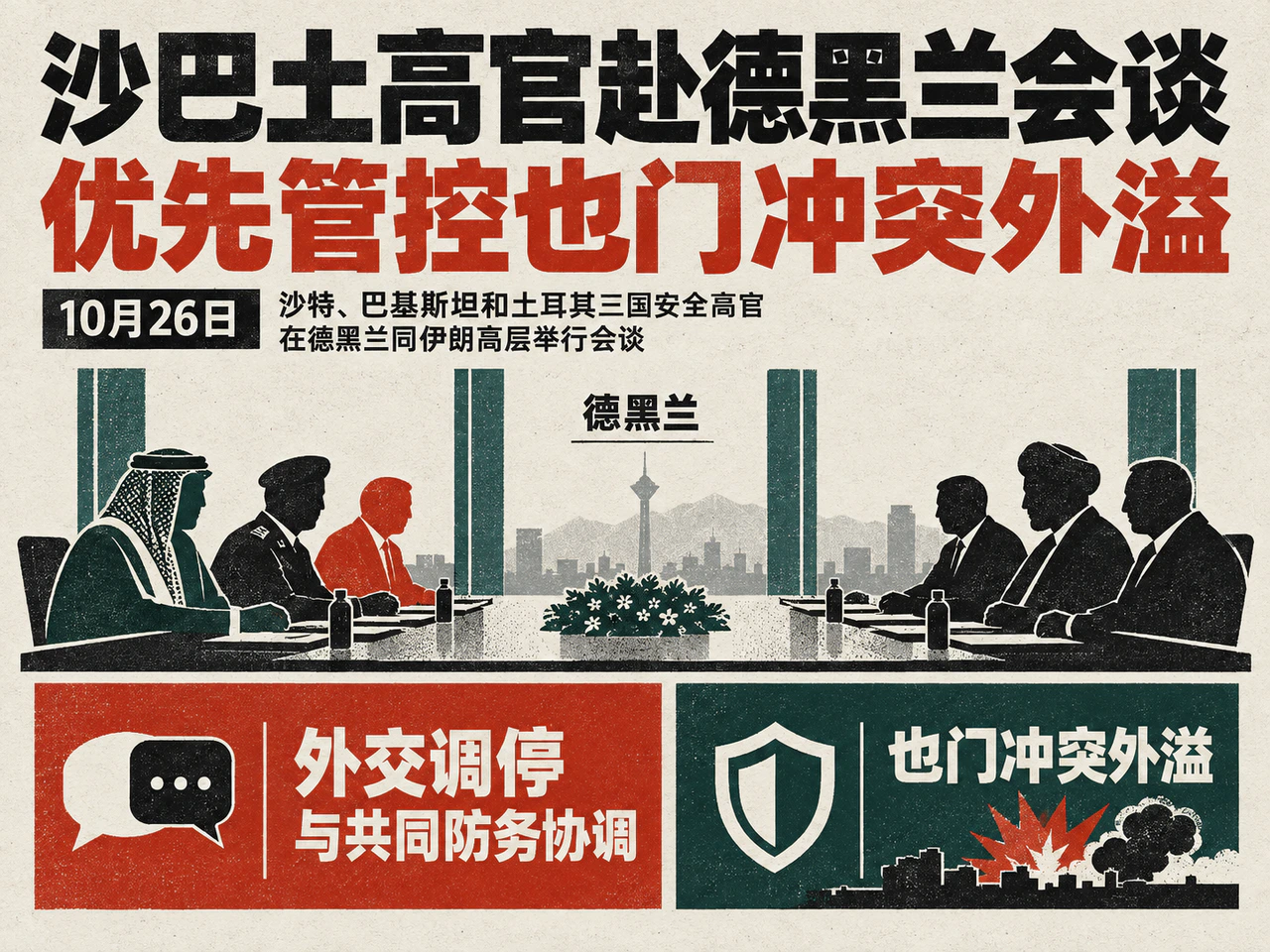
The temporary shipping corridor led by Iran and Oman is moving from a paper concept into a difficult operational contest. Over the past 24 hours, Iran's Revolutionary Guards claimed agreement on passage shares and revenues, then accused Washington of deliberate delay and obstruction. The deputy foreign minister laid out plans to close the existing southern route. Crude came under pressure for a third consecutive day. Tehran simultaneously pursued UN complaints, nuclear-inspection disputes and Russian cooperation to counter the shock of Washington's economic-isolation campaign.
Gulf mediators were also moving faster. Qatar's foreign ministry announced that the prime minister would visit Tehran on Thursday for important mediation on de-escalation and freedom of navigation in Hormuz.
Hormuz Corridor: Implementation Details Come into Focus
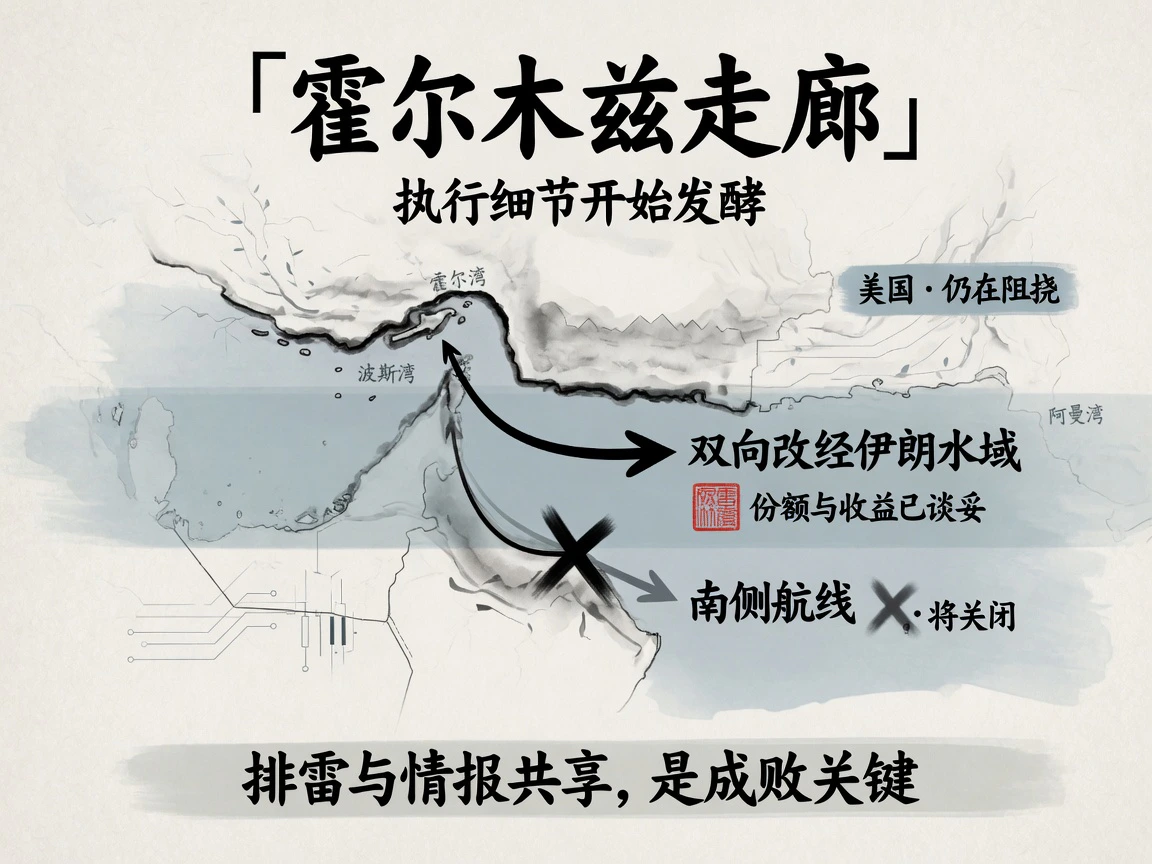
Iranian messaging is becoming more operational. A Revolutionary Guards spokesman told Tasnim that the two countries had agreed on their respective shares and revenues in strait waters, but then accused the US of obstructing and delaying implementation.
Deputy Foreign Minister Gharibabadi elaborated on Press TV: once an agreement was finalized, the UN-authorized southern route along Oman's coast, which handles most current traffic and which Iran has long opposed, would close. Ships in both directions would instead pass through Iranian territorial waters. Oman's earlier joint statement, however, mentioned no such change, while Washington continued to call Hormuz international waters. Whether the US would tolerate an exclusive corridor entirely through Iranian waters remained highly uncertain; Trump had even publicly threatened strikes on Oman the previous week.
The US response was equally forceful. Trump reiterated that mines in the strait had been cleared or detonated, warned that any vessels attempting to lay more would be systematically destroyed, and said the military was monitoring every square inch. On Monday, the Treasury warned global shipping firms that even complying with requests for information from Iran's strait-management authorities could very likely trigger secondary sanctions.
Beyond politics, mine clearance poses a practical technical hurdle. Chatham House researcher Laub argued that although Iran has some mine-clearing tools, its mine-warfare system was built mainly for laying mines and is poorly suited to precise, large-scale clearance in deep water. Senior UN demining expert Heslop said clearance requires sophisticated sensors and highly specialized explosive-ordnance teams, making it costly and laborious. Iran's willingness to share mine coordinates would be decisive: without that information, other countries could not operate on equal terms. Laub added that political promises such as the June memorandum were insufficient to normalize the strait; declaring it open neither removes underwater hazards nor restores shipping and insurance confidence.
Diplomacy intensified accordingly. After meeting Araghchi in Tehran, Omani Foreign Minister Badr expressed optimism that the two countries would formally announce a temporary corridor soon. Doha sent another significant signal: Qatar announced that Prime Minister and Foreign Minister Sheikh Mohammed bin Abdulrahman would visit Tehran on Thursday to discuss concrete ways to reduce confrontation and restart dialogue. Talks would cover free passage through Hormuz and the need to return to conditions before the February 28 war. Qatar had maintained public support for the Iran–Oman plan even after Trump's threat to attack Oman.
Oil Falls for a Third Day: Hopes for Passage Outweigh Threat Premiums
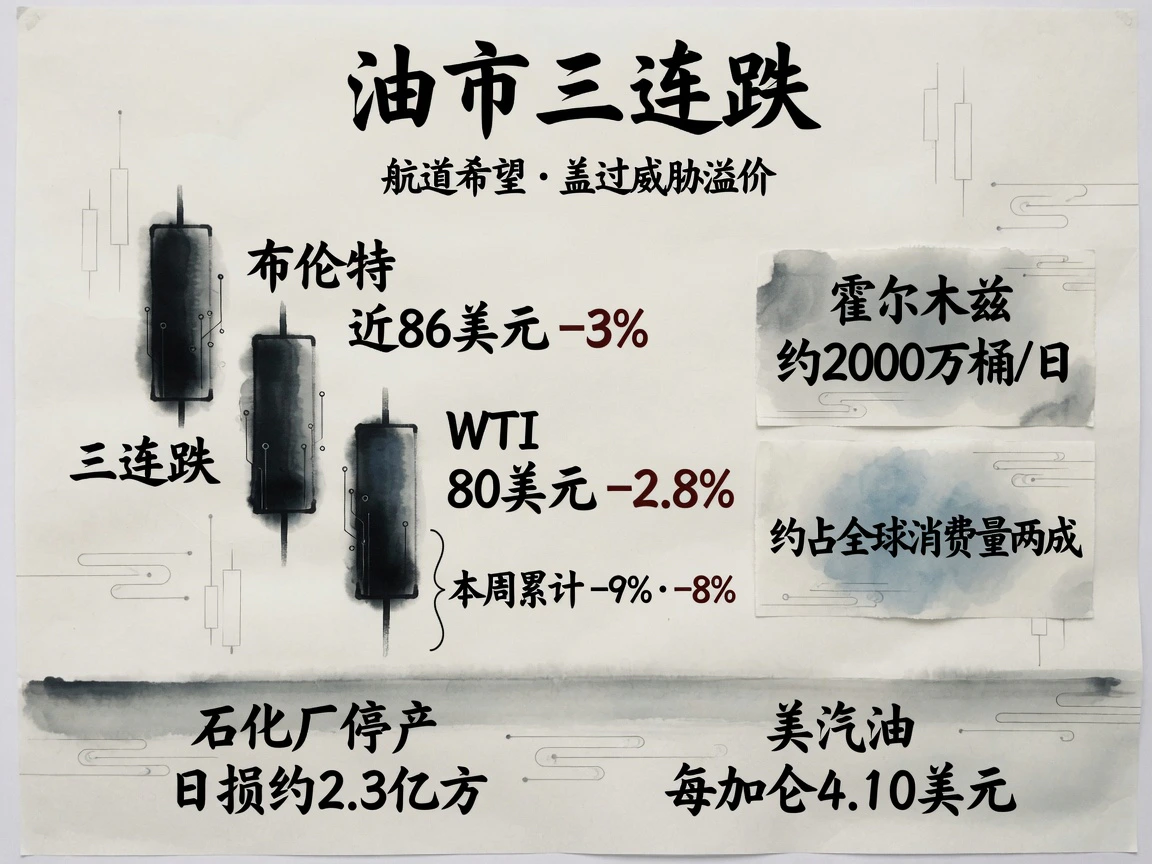
Markets quickly priced the prospect of a breakthrough in navigation. Before 06:00 US Eastern time on Wednesday, Brent futures fell 3% toward $86 a barrel and WTI 2.8% to $80. Both declined for a third day, taking weekly losses to 9% and 8%, respectively, largely reversing the geopolitical premium generated by Bessent's economic D-Day rhetoric. Deutsche Bank analysts said traders remained in a wait-and-see mode without operational details or a timetable. The Guards' claims of agreed shares and US obstruction caused little market response.
Hormuz's global importance is clear. EIA data show roughly 20 million barrels of crude normally pass daily, around one-fifth of world consumption, alongside nearly one-fifth of global LNG trade. Flows collapsed at one stage after the conflict began. Every detail of the route and who clears obstacles therefore affects energy markets.
Iran's supply and industrial systems showed strain. Extreme heat and electricity shortages forced several plants in the southwestern petrochemical hub of Mahshahr to stop. Arvand Petrochemical halted from August 22, and downstream Ghadir Petrochemical was also ordered shut by the National Petrochemical Company. Tehran acknowledged that fighting had destroyed about 230 million cubic meters per day of gas capacity. Repairs at key Asaluyeh facilities sought first to restore roughly 95 million cubic meters per day of basic supply.
US consumers also felt inflation pressure. AAA estimated that the August national gasoline average would likely set a record for that month. Wednesday's regular-gasoline average was $4.10 a gallon, far above the prewar February 28 level of $2.98.
Sanctions Fallout: UN Letter, Siege Characterization and Enforcement Test
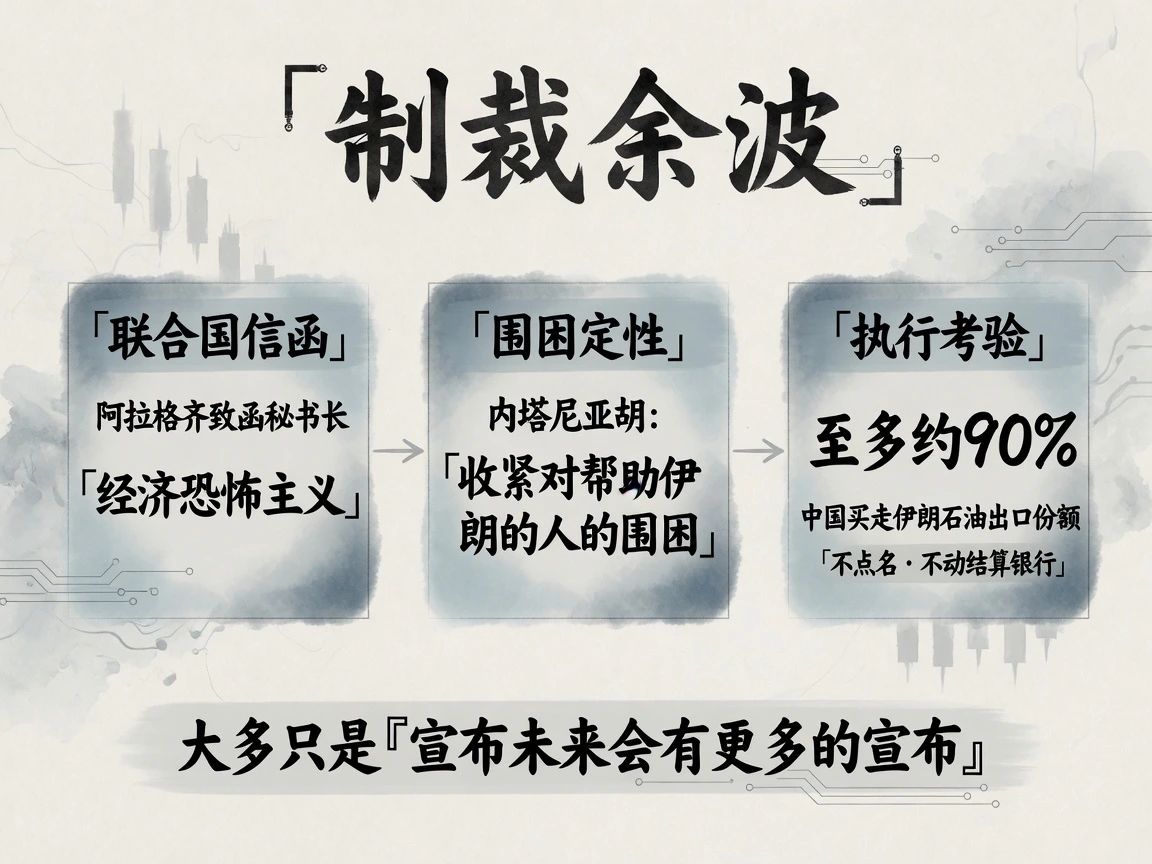
Tehran sought to move the sanctions dispute onto the multilateral stage. Araghchi formally wrote to UN Secretary-General Guterres requesting systematic assessment and reporting of US sanctions' human-rights and livelihood effects. He called the measures economic terrorism, citing damage from unilateral sanctions and extraterritorial jurisdiction to food, medicine, health care, energy and transport, and urged an immediate end to US pressure on third countries and businesses. Speaker Ghalibaf remained defiant, asserting that Washington had lost the military and political war and would also fail at economic blockade.
Israel offered its characterization of Washington's strategy. Speaking in the West Bank, Netanyahu said Trump's measures tightened the siege around Iran, focusing on external channels supporting Tehran rather than directly closing it off. He said that during his late-July US visit he had offered three choices: a comprehensive agreement, renewed strikes or maximum economic pressure. Trump chose to pursue economic pressure very firmly. Netanyahu also warned that the Iranian threat was far from over.
The US sanctions package, presented as the toughest ever, nevertheless faced domestic scrutiny and doubt. Effective economic D-Day enforcement could not avoid China, which currently bought as much as 90% of Iranian crude exports. Yet Bessent's Monday announcement named no country and did not put major financial institutions helping settle China–Iran trade on the secondary-sanctions list. University of Michigan economist Wolfers was blunter: the major economic-isolation initiative amounted largely to announcing that more announcements would follow.
Nuclear and Russian Channels: Inspection Deadlock and a Nuclear-Power Memorandum
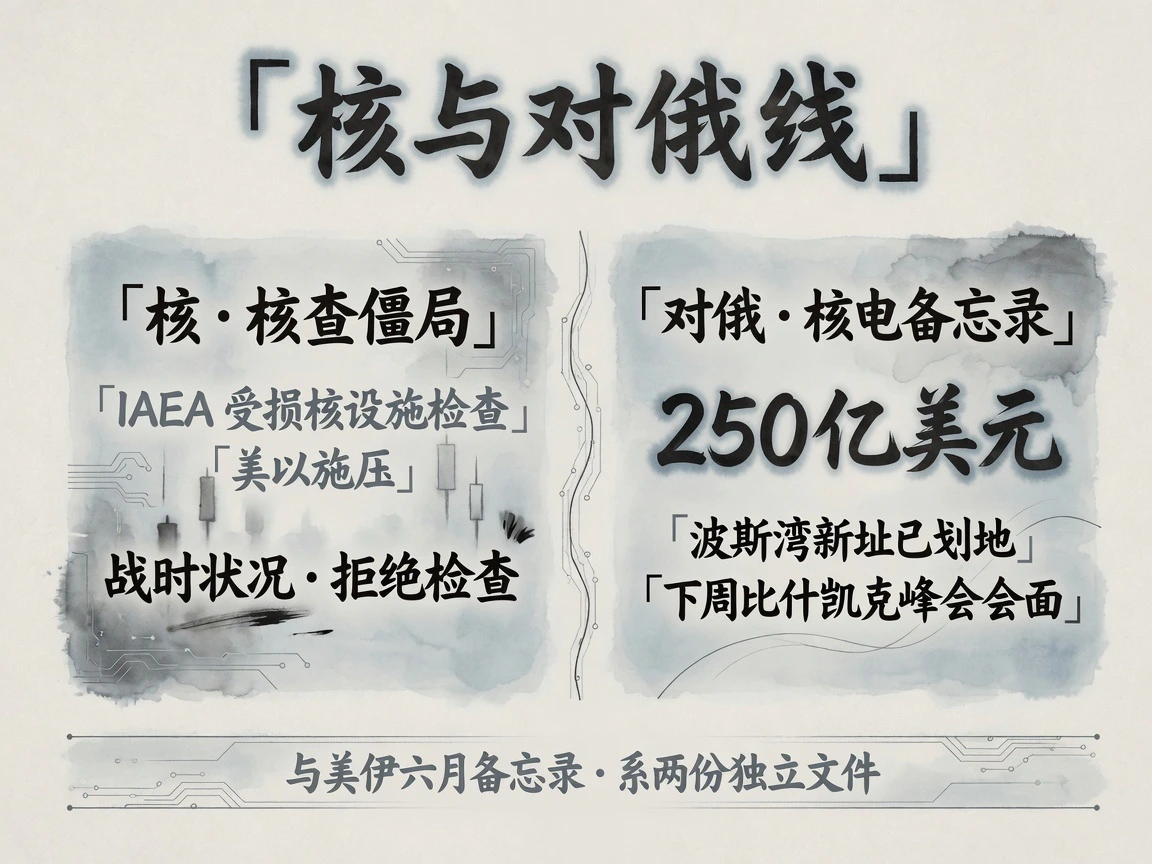
On Wednesday, Atomic Energy Organization chief Eslami accused the US and Israel through state media of pressuring the IAEA to inspect damaged nuclear sites to assess military-strike damage. He said the agency had neither an existing agreement nor an official position and was being pushed by Washington and Israel to investigate on site. He rejected inspections, saying Iran was in wartime, damaged sites lacked safe conditions, sensitive inspections were governed by parliamentary legislation, and the IAEA had no statutory inspection procedure for attacked facilities. The agency had not publicly responded. Access to war-damaged nuclear sites was becoming another arena of confrontation.
Iran accelerated Russian cooperation in energy infrastructure and leader-level diplomacy. Mehr cited Iran's ambassador to Russia as saying the countries signed a $25 billion memorandum for new nuclear plants and allocated a dedicated Persian Gulf coastal site. President Pezeshkian was due to meet Putin at the following week's Shanghai Cooperation Organization summit in Bishkek. This project and the US–Iran framework memorandum signed in June are separate, unrelated documents.
Trump's Assessment and Tehran's Domestic Politics
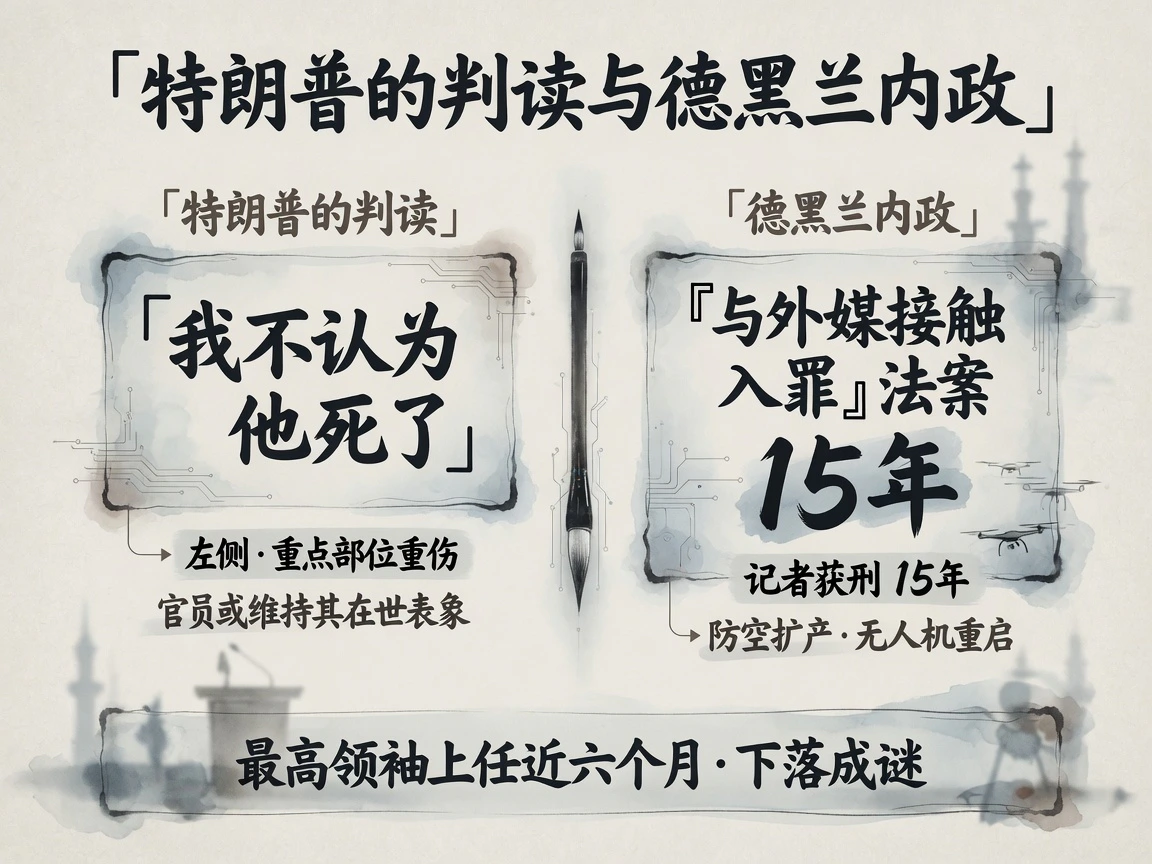
In a Wednesday interview with conservative radio host Beck, Trump offered a vivid assessment of Iran's supreme leader's health. He said he did not believe the leader was dead but thought the left side, arm and leg had suffered devastating injuries. Trump further claimed that even if he had died, Iranian leaders would maintain the appearance that he was alive and invoke his purported supreme approval for major decisions. He also disparaged the negotiating team as unworthy of respect. Outsiders had followed the leader's condition for nearly six months, while Tehran remained silent. Trump cast US financial strength as the decisive advantage, claiming it could overwhelm any opponent.
Trump was pessimistic about regime change through street protests. He argued that protest could not persist against forces prepared to fire on crowds, and that rooftop snipers shooting a few leaders could disperse tens of thousands of demonstrators.
Tehran was tightening domestic social control. Parliament was advancing legislation to criminalize contact with hostile foreign media, prompting human-rights lawyers to warn of a new legal disaster. Some reformists argued that suppressing interviews could not hide governance failures. Photojournalist Yalda Moayeri, who had spoken out repeatedly, was sentenced this month to 15 years. Militarily, the army air-defense commander said lessons from the third imposed war were being converted into equipment capacity, with domestic technology expanding new defenses. Reports indicated that some drone production lines had already restarted during May's six-week ceasefire window.
Key Developments
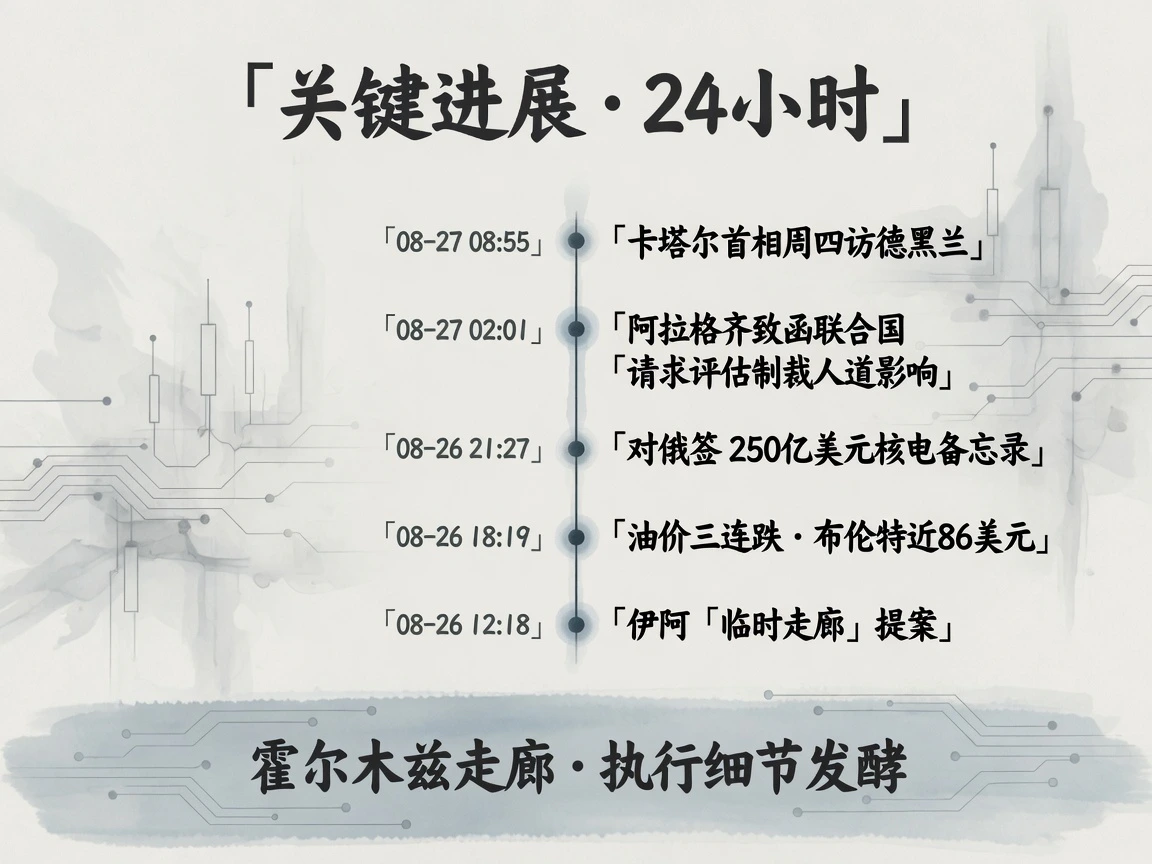
| Key Developments (Beijing Time) |
|---|
| 08-27 08:55Qatar's foreign ministry: the prime minister will visit Tehran Thursday to discuss de-escalation, free navigation in Hormuz and returning to the status quo before February 28. |
| 08-27 03:51US Central Command published a military-dog promotional post about Middle East missions, with no new details of combat capability. |
| 08-27 02:01Araghchi wrote to Guterres requesting assessment of sanctions' humanitarian impact, calling them economic terrorism and urging an end to pressure on third parties. |
| 08-27 00:30Eslami accused the US and Israel of pressuring the IAEA to inspect damaged nuclear sites and rejected inspections on wartime grounds. |
| 08-27 00:00Daily update: Iran–Oman corridor details, a third day of oil declines and US positions were updated together. |
| 08-26 22:31Experts Laub and Heslop said Iran's mine capability is oriented toward laying mines, clearance is expensive and complex, and sharing mine intelligence is crucial. |
| 08-26 22:05AAA said August US gasoline prices might set a record for that month; Wednesday's $4.10 a gallon compares with $2.98 on February 28. |
| 08-26 21:41Trump said snipers and repression made street protests difficult to sustain and questioned the possibility of Iranian regime change. |
| 08-26 21:33Trump said he did not believe the supreme leader was dead, claimed severe injuries to the left side, and disparaged the negotiators as less than respectable. |
| 08-26 21:27Iran and Russia signed a $25 billion nuclear-plant memorandum and allocated Persian Gulf land. Pezeshkian would meet Putin in Bishkek the next week. |
| 08-26 20:44Oil fell for a third day. A Guards spokesman said strait shares and revenues were agreed but accused the US of obstruction and delay. |
| 08-26 20:09Heat and power shortages halted Arvand and Ghadir petrochemical plants; lost gas capacity was approximately 230 million cubic meters per day. |
| 08-26 19:28Netanyahu said US measures tightened the siege on those helping Iran, and Trump reaffirmed economic pressure among three options. |
| 08-26 19:07Iran's bill criminalizing foreign-media contacts caused disagreement; photojournalist Moayeri received a 15-year sentence. |
| 08-26 18:19Brent fell 3% toward $86 and WTI 2.8% to $80; weekly losses were roughly 9% and 8%. Deutsche Bank described a wait-and-see market. |
| 08-26 17:37Analysis said sanctions implementation might need to target China. Bessent named no countries and did not include major banks settling China's Iranian purchases in secondary sanctions. |
| 08-26 16:19Iran's army air-defense commander said lessons from the third imposed war were being used to expand production of new systems and equipment. |
| 08-26 14:08Wolfers said the economic-isolation campaign mostly announced that further announcements would follow. |
| 08-26 12:59Analysis noted that China rejected unilateral sanctions and pledged all necessary measures to protect its interests, potentially limiting forceful US enforcement against it. |
| 08-26 12:18New sanctions details: more than 60 targets and determinations covering five sectors. Bessent emphasized that every Bank Melli branch must close. |
| 08-26 12:18Iran–Oman temporary-corridor proposal: a phased framework, mine clearance and a later permanent solution. Oman's foreign minister expressed hope. |
| 08-26 12:18Iran's deputy foreign minister said the UN-authorized southern route would close and both directions would use Iranian waters. Oman's statement did not mention this. |