By mid-2026, global capital markets were entering a concentrated listing window for core artificial-intelligence assets.
In June, SpaceX, having absorbed xAI, formally listed on Nasdaq at a reported valuation of about $2.2 trillion. Around the same time, Anthropic was reported to have confidentially filed with the SEC, led by Goldman Sachs and Morgan Stanley, for a listing as early as October. OpenAI followed with its prospectus, targeting a window from this year's fourth quarter to early next year. Combined expected valuations exceeded $4 trillion, approaching Germany's annual GDP.
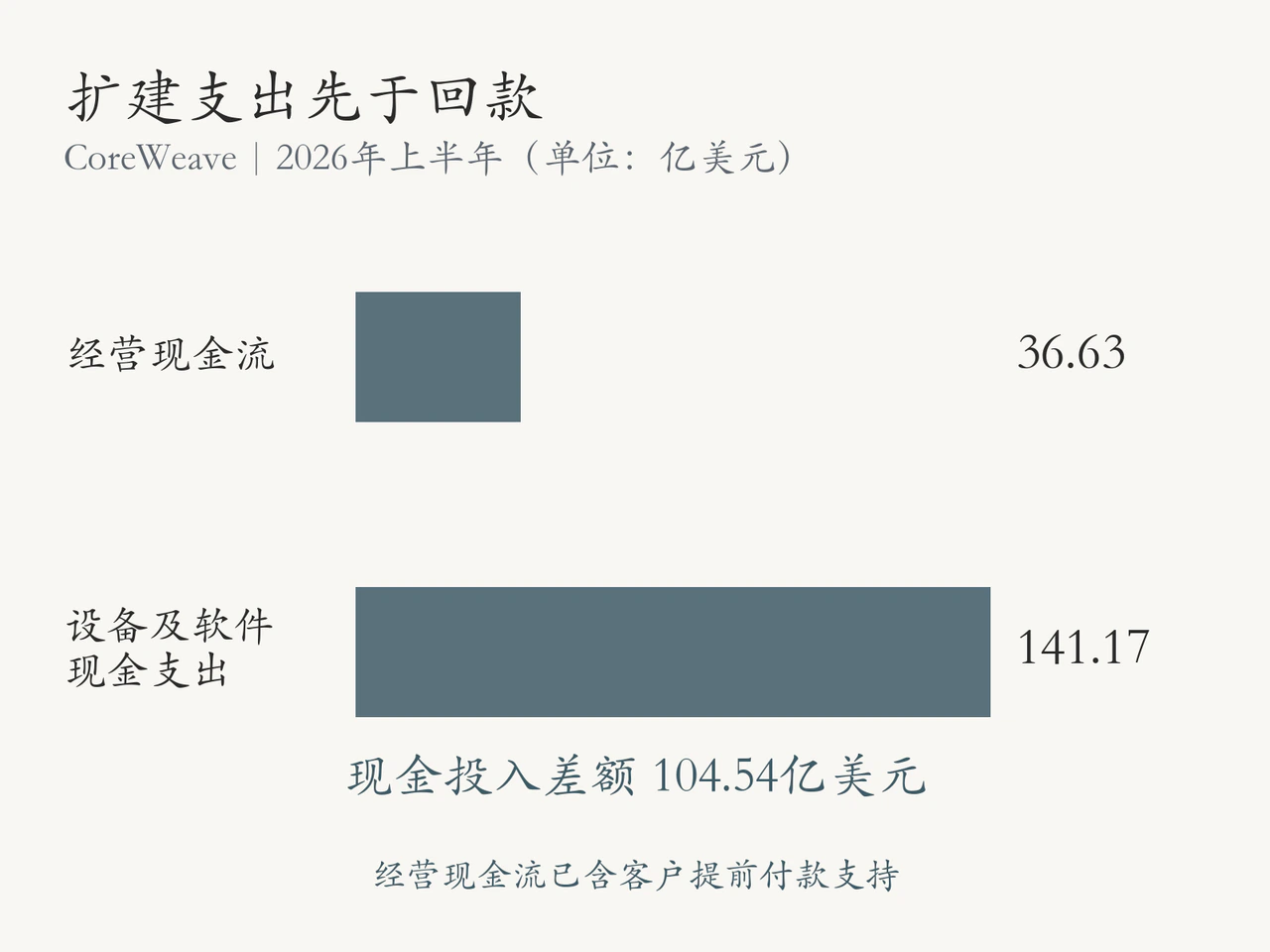
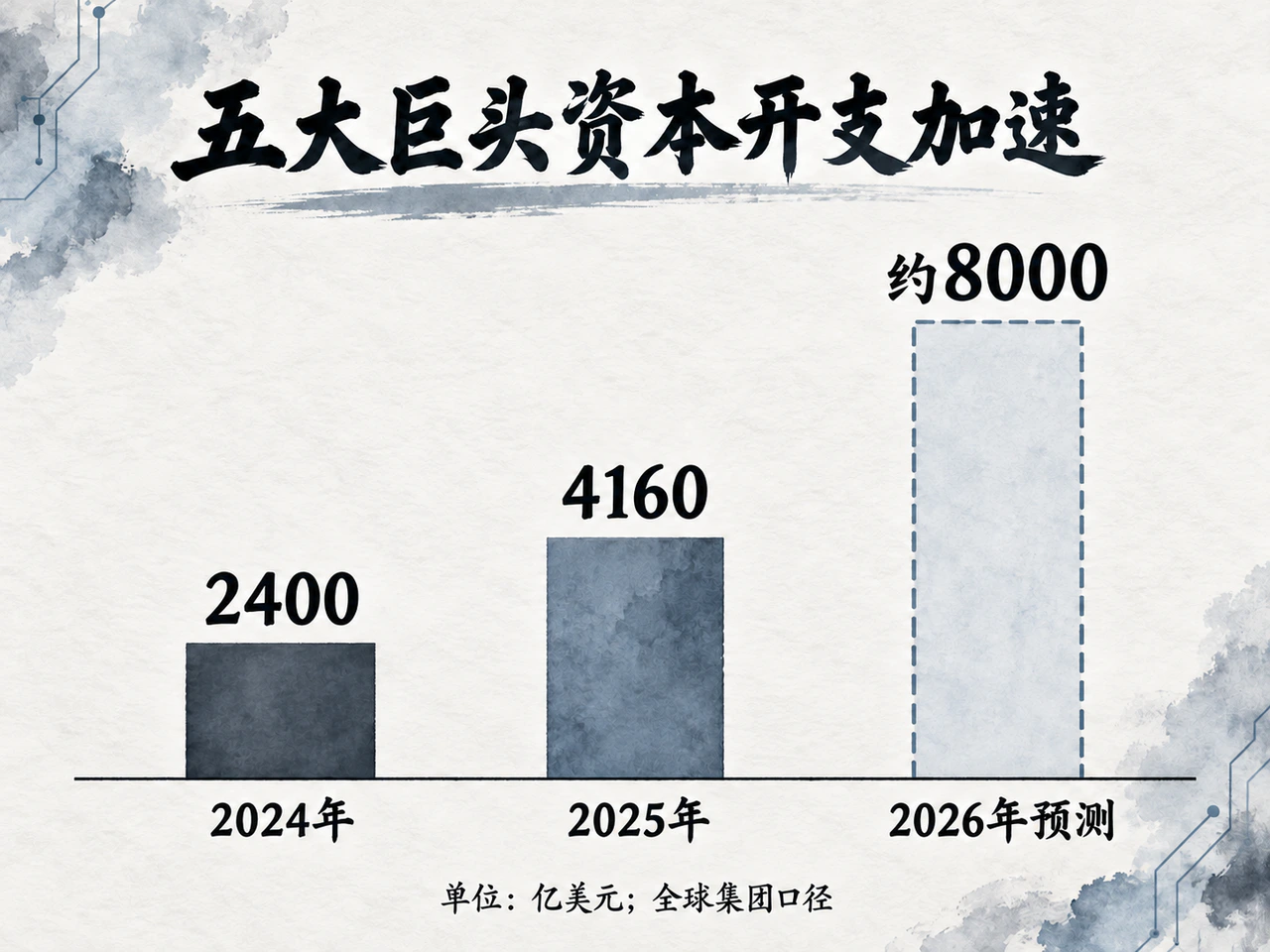
A common market argument held that these leaders were cash-rich, enjoyed unrestricted private funding and were simply moving naturally toward listing. That view was detached from commercial reality. All three were deeply loss-making. Their long private-market residence reflected that market's greater tolerance for high valuations and minimal disclosure requirements, allowing continued funding. This capital-supported model has now reached its ceiling. Under computing capex measured routinely in tens of billions of dollars, public listing has become an unavoidable necessity.
The central question for public-market investors is how to reprice Anthropic and OpenAI now that their revenue structures have substantively diverged.
1. Why list: computing expenditure exceeds private markets' capacity
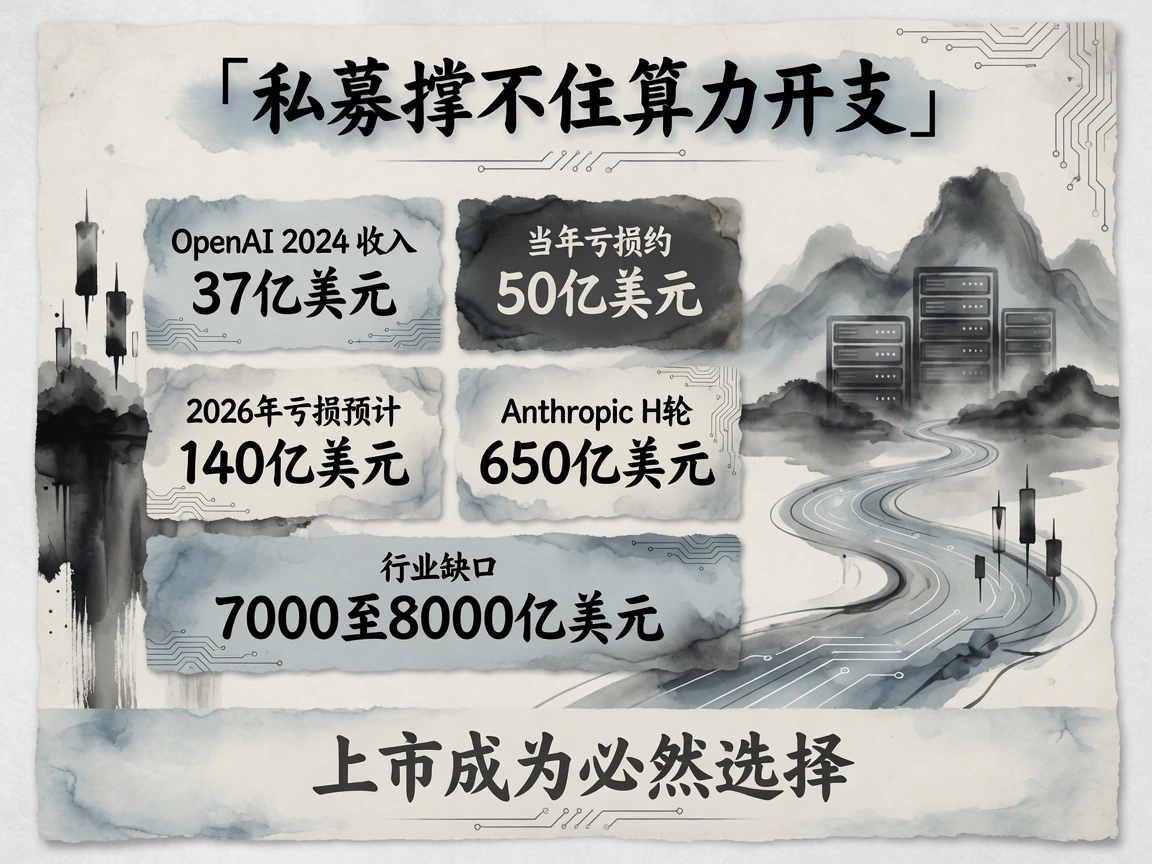
The losses reveal the financial position first. OpenAI generated $3.7 billion of revenue in 2024 but lost about $5 billion net. Leaked internal forecasts projected losses widening to $14 billion in 2026, with profitability not expected until 2029. In xAI's final full quarter before entering SpaceX, revenue was only $818 million against a $2.47 billion operating loss—three times revenue. Reviewing SpaceX's prospectus, Morningstar described xAI's finances as aggressive.
Computing remains the real funding sink. In May, Anthropic raised $65 billion in Series H at a $965 billion post-money valuation, alongside a heavy infrastructure bill: up to 5GW of AWS expansion; a combined 5GW TPU supply commitment from Google and Broadcom; a $36 billion capacity agreement with SpaceX's Memphis data center; and $35 billion in private credit jointly provided by Apollo Global Management and Blackstone. Across the industry, falling frontier-model prices alongside expanding computing clusters are opening a $700 billion–$800 billion financing gap. Even the largest technology companies have begun issuing bonds at scale to finance data centers.
Funding needs on this scale have broken through private markets' capacity. A single $65 billion round nearly matches the historical ceiling of global private fundraising, while frontier computing over the next decade can readily require trillions. Public markets offer three irreplaceable functions: direct equity raising of tens of billions at a time; a liquid pricing benchmark supporting subsequent share issuance and public debt; and exits for early venture investors and employee options.
The race for the listing window is strategic. SpaceX's successful debut demonstrated public willingness to buy trillion-dollar-scale core AI assets. The first across the line captures scarcity value as the first pure AI stock and the broadest global allocation flows. Slower entrants often find their valuation room fixed below the pioneer benchmark. OpenAI followed within a week of Anthropic's filing reports, making the defensive competition clear.
The scene recalls 2019's unicorn listings. Uber had absorbed more than $20 billion privately before listing below its offer price at a valuation far below final-round expectations. WeWork collapsed from a $47 billion paper valuation after prospectus disclosure. The lesson was that private valuations can burst when they fail public-market scrutiny. Today's AI giants nevertheless differ fundamentally: Uber and WeWork suffered from discredited business models, whereas demand for the three AI companies is real and revenue is still growing two- to threefold annually. The present conflict concerns computing spending outgrowing private capital's balance-sheet limits, rather than the existence of demand.
2. Revenue structures: consumer subscriptions and enterprise services follow different paths
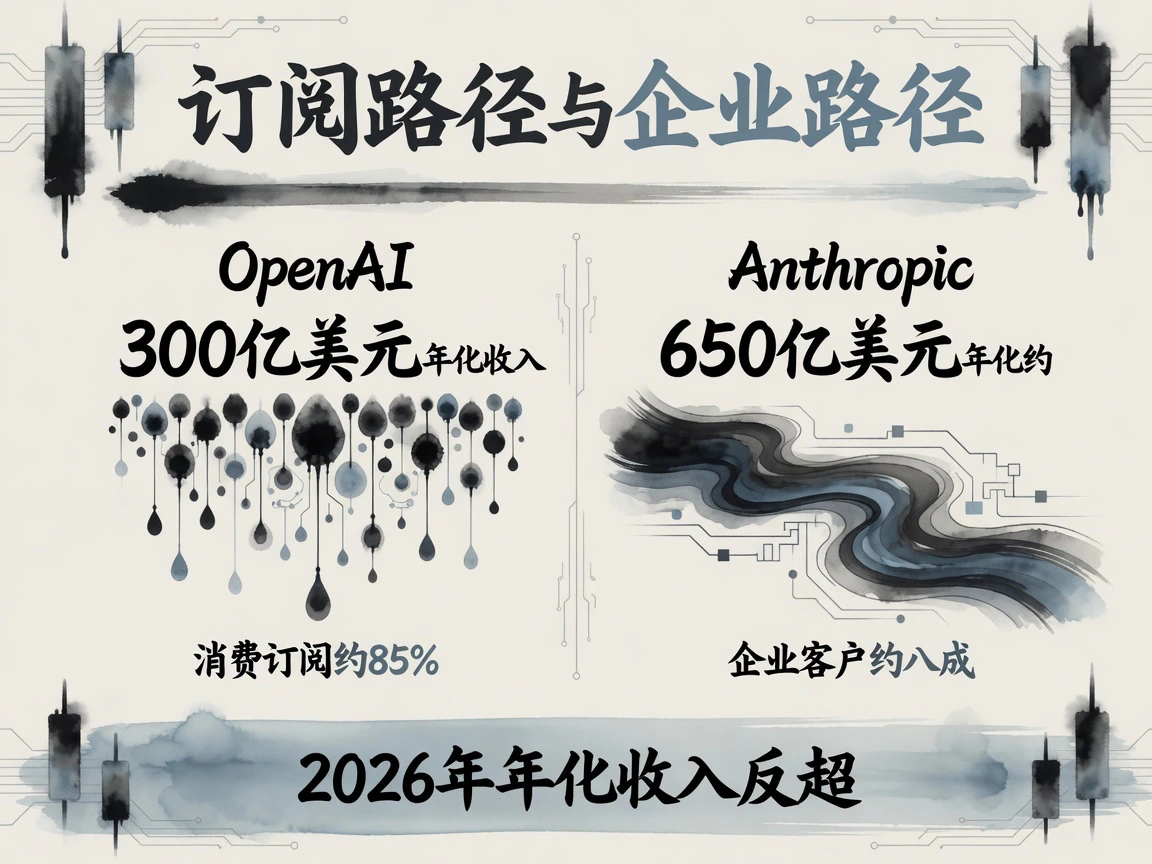
Anthropic and OpenAI are usually grouped together, but their financial statements reveal increasingly different commercial territories.
OpenAI's foundation remains firmly in consumer markets. Revenue rose from $1.6 billion in 2023 to $13.1 billion in 2025; first-quarter 2026 revenue was $5.7 billion and the period-end annualized run rate reached $30 billion. This rests on 900 million weekly active users and 9 million paid enterprise seats, yet consumer subscriptions still supplied about 85% of revenue in early 2025. Its most durable assets are a dominant gateway and global mindshare: ChatGPT has become society's generic term for generative AI, its most important defense as offerings become homogeneous.
Anthropic has followed a very different, enterprise-focused route. Consumer business is negligible, yet annualized revenue has climbed steeply: about $9 billion at end-2025, $30 billion in April 2026, roughly $47 billion at Series H and about $65 billion by August. More than 300,000 business customers contribute around 80% of revenue. Coding tool Claude Code has grown especially rapidly, passing a $1 billion annualized run rate within six months of launch and $2.5 billion by February 2026. Official tracking shows coding accounts for 37% of all commercial conversations. Adjusted operating profit turned positive in the second quarter, though overall net losses remained substantial.
In 2026, Anthropic's annualized revenue formally overtook OpenAI's.
The divergence comes chiefly from different revenue quality. Consumer subscriptions are anchored near $20 monthly, personal payment retention is fragile, and Google Gemini, Meta's open-source lineup and free products continually draw users away. Enterprises pay for actual token usage and dedicated seats. Once embedded in business and development workflows, migration is costly and expansion and renewals appear directly in the accounts. OpenAI charges for user attention, with a ceiling shaped by consumer-software monetization. Anthropic charges for concrete work tasks, anchoring its ceiling to corporate labor budgets. Actual financial feedback suggests greater staying power in the latter's expansion slope.
3. Hong Kong examples: MiniMax and Zhipu's pricing experiments
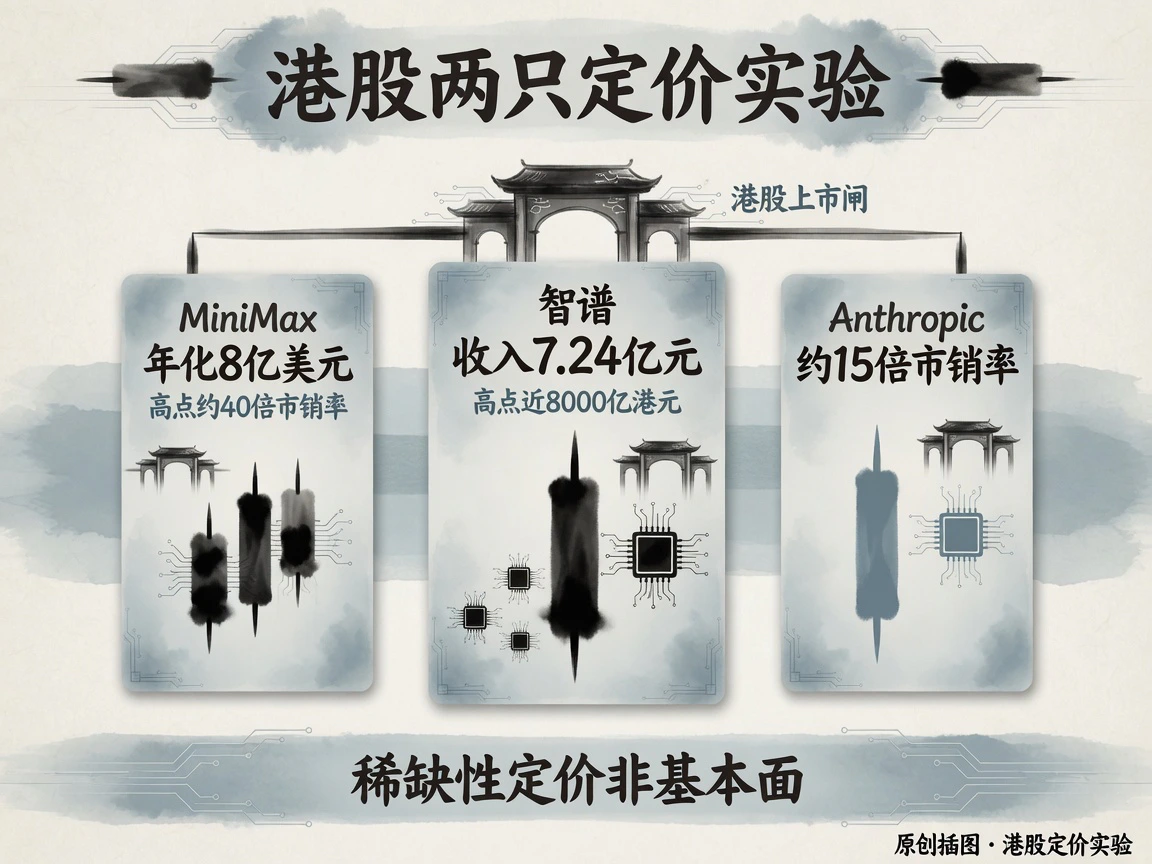
Before the U.S. leaders' public offerings, Hong Kong had already carried out two representative pricing experiments in pure large-model companies.
MiniMax, listed January 9, still looked like a typical consumer-app business in its prospectus: 212 million individual users and more than 70% of revenue from overseas AI-companion and creation products. Its first post-listing interim results showed a dramatic turn. First-half revenue of $117 million exceeded the previous full year. Open-platform and enterprise services generated $73.9 million, up 703%, overtaking consumers as the largest engine. Annualized revenue reached $800 million by August. Public-market reaction was extreme: shares doubled early after listing, with market capitalization at one point between HK$200 billion and HK$260 billion. A July lockup expiry and HK$16 billion discounted placement then brought a marked valuation decline. In full-year 2025 it had $79.04 million of revenue, a $250 million adjusted net loss and more than $1.3 billion of cumulative cash burn over a little more than three years.
Zhipu, listed January 8, offers another perspective. Its 2025 revenue was RMB724 million, up 132%, with cumulative losses around RMB10 billion. In 2024, R&D expenditure was seven times revenue, and more than 70% went to computing. First-day capitalization was about HK$53 billion, followed by an extraordinary rush. In May, the intraday gain from the offer price exceeded 15-fold, implying market value near HK$800 billion. In June it announced plans for a second listing on the STAR Market to raise RMB15 billion.
The valuation gaps are striking. Anthropic's private valuation is about fifteen times its latest annualized revenue. MiniMax's peak value exceeded 300 times 2025 historical sales and remained about forty times even using August's sharply higher run rate. Zhipu at its HK$800 billion peak against RMB724 million annual revenue traded at more than a thousand times sales. Hong Kong priced a classic scarcity premium. With OpenAI and Anthropic unavailable publicly, its only two pure-model tickets became irreplaceable. The violent swings were dominated by fund supply and demand and had little connection to fundamentals.
The companies' operating evolution nevertheless supports an important pattern. Across two markets, four sample companies and different starting points, large models' ultimate monetization paths converge on enterprise APIs and workflow services. Even MiniMax, one of China's strongest consumer-AI companies, shifted decisively toward open platforms in its first listed year with 703% growth. Domestic consumer markets are saturated with free competition and overseas users' willingness to pay is also topping out. Consumer chatbots alone cannot carry listed-company earnings. Zhipu has consistently focused on government and enterprise, and Anthropic on business customers, both leading industry growth. OpenAI, with the largest consumer franchise, slowed first.
The destination of loss-funding reveals a deeper divide. More than 70% of Zhipu's R&D becomes chip and computing bills, while MiniMax needed a HK$16 billion placement only six months after listing. Within the same loss cycle, Anthropic has already achieved adjusted operating profitability, while Chinese peers still depend heavily on the next round to sustain R&D. The former's cash burn buys scale and better unit economics; the latter's increasingly buys the ability to remain in the game.
4. Industry structure: does winner-takes-all still apply?
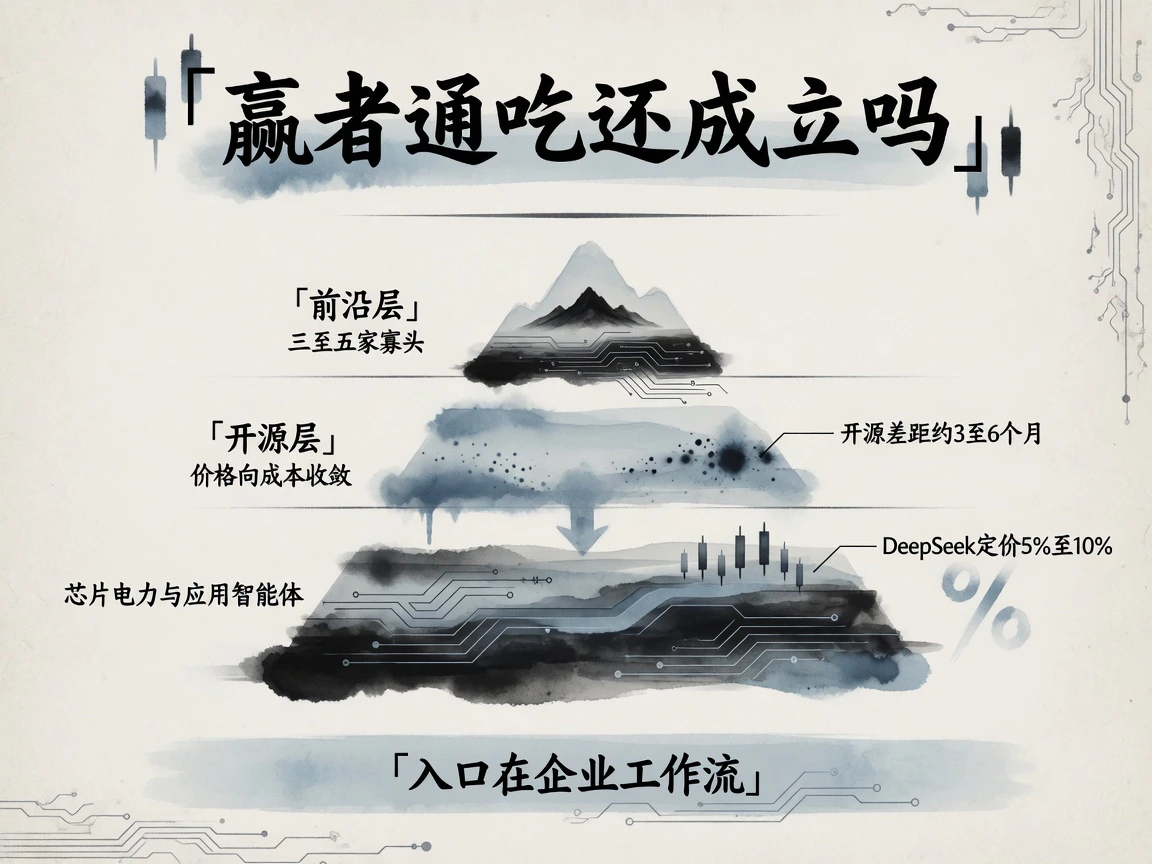
Long-term model-company valuation must confront whether the internet era's winner-takes-all rule still works in large models.
Traditional internet dominance rests on strong two-sided network effects and near-zero marginal distribution costs. Social networking and search fit this pattern; e-commerce less so. Large models lack such natural network effects. More usage does not automatically produce a leap in intelligence, and switching between APIs can be remarkably cheap. Three forces are reshaping the industry.
First is close competition from open source. DeepSeek's new spring model has matched leading closed flagships across coding, agents and long-context benchmarks, while charging only 5%–10% of comparable U.S. API prices, on a constrained domestic computing base. OpenRouter tracking shows the open/closed capability gap staying within three to six months over the last eighteen months; EpochAI estimates only a slight widening from three to four months. The technical landscape is differentiating structurally. Chinese models have caught up or sometimes surpassed rivals in open-source ecosystems, Chinese-language use and inference efficiency; top closed models retain a substantive lead only in extremely long-horizon complex agents and demanding enterprise reliability. Open-source providers have not captured sufficient profits themselves. DeepSeek and Alibaba act more like indiscriminate price crushers, lowering foundation-model pricing floors, directly reflected in this year's collapse in usage prices.
Second is a jump in the frontier arms race's entry threshold. Hardware costs reliably fall each year, but the benefit democratizes the previous generation's mature capabilities while frontier exploration accelerates outward. A leading model could be trained for tens of millions of dollars in 2023. By 2026, remaining at the frontier requires annual capex in the tens of billions and hundreds of top researchers. The number able to afford it is shrinking, rather than expanding. Semiconductors followed a similar path: chip prices fell while TSMC's barriers deepened because advanced-process R&D thresholds rose faster than manufacturing costs declined. This logic depends on scaling laws continuing to advance. If frontier capabilities plateau with diminishing returns, followers can replicate peak performance cheaply and existing technical moats will depreciate rapidly—the largest uncertainty hanging over high valuations.
Third is rapid diversion to local deployment. Large unified-memory hardware such as Mac Studio is already routine for local inference; consumer devices can smoothly run 70-billion-parameter models, and major PC makers are promoting dedicated AI machines. Cloud platforms still control the memory-throughput requirements of giant frontier models, but local deployment is rapidly serving long-tail demand highly sensitive to privacy and inference costs. More fundamentally, cheaper open models and inference hardware push pure usage prices toward electricity and depreciation costs. Whether deployed locally or in the cloud, merely selling metered tokens faces continued erosion.
Together, these trends favor an hourglass industry structure. At the top, three to five frontier oligopolies maintain service premiums through talent, capital moats and enterprise credibility, resembling today's cloud market. Yet even AWS, Microsoft and Google, together controlling two-thirds of global cloud, have not stopped price wars over more than a decade: oligopoly does not equal pricing power. The middle tier of good-enough foundation models will be fully commoditized by open source, priced near cost with little excess profit. Richer profits migrate to the poles: upstream chips, computing and energy infrastructure, and downstream industry applications and autonomous agents that control concrete business use cases.
The strategic high ground is therefore the operating gateway into enterprise-agent workflows, rather than the foundation model alone. Seamless embedding in coding, customer service, risk management and data analysis will confer pricing power. Generic conversation, open or closed, will increasingly sink toward marginal cost.
5. Valuations: matching revenue, losses and expectations
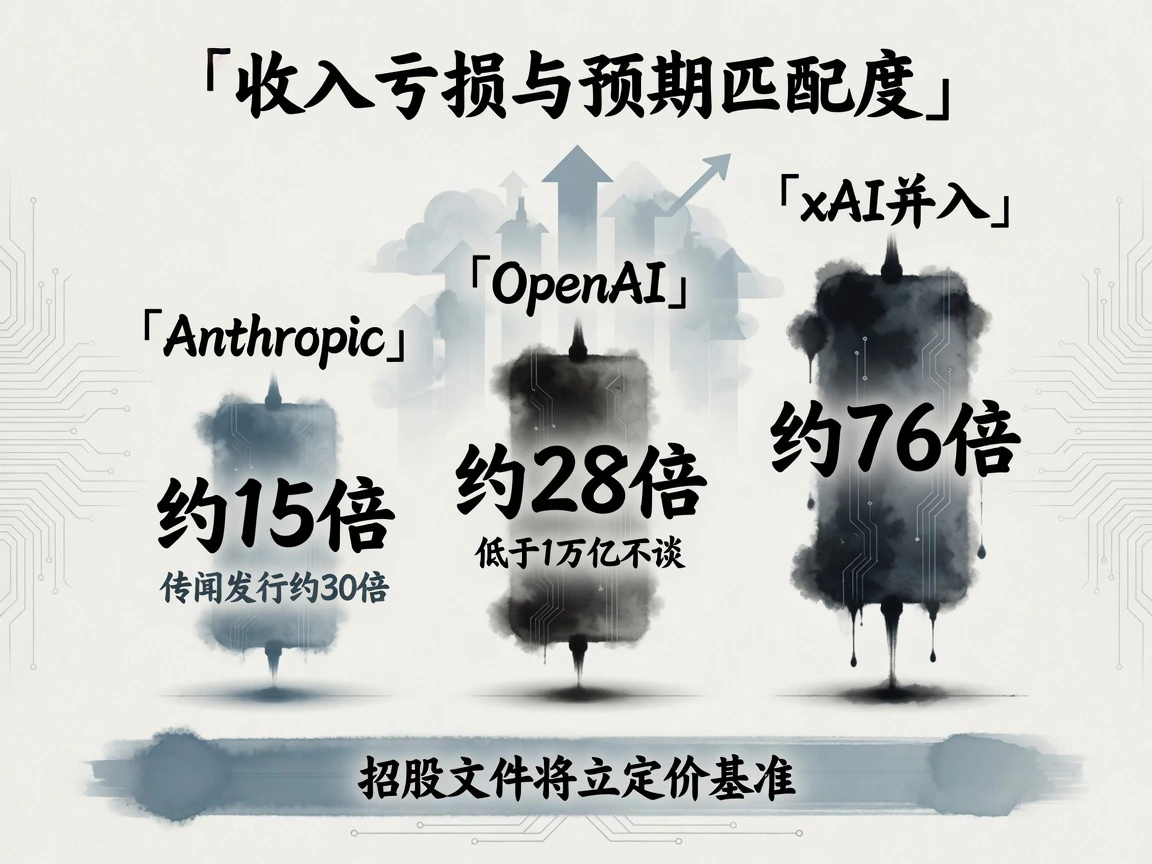
As listing approaches, valuation accounts must finally face public-market scrutiny.
Using price-to-sales as a common scale, Anthropic's latest private valuation is about fifteen times current annualized revenue, rising to thirty times at the rumored $2 trillion offering target. OpenAI's latest financing valuation of $852 billion against roughly $30 billion annualized revenue implies about 28 times; management has publicly said valuations below $1 trillion are not open for discussion. xAI entered SpaceX at $250 billion against about $3.3 billion annualized revenue, or 76 times sales. This largely explains why it could not list independently and had to enter SpaceX's large balance sheet. By comparison, Nvidia's valuation above twenty times sales comes with real net margins exceeding 50%.
On static finances alone, these unicorns are unquestionably in severely inflated valuation territory, with net profits elusive. The 2021 collapse of U.S. cloud-native SaaS provides a vivid precedent. Median sector P/S exceeded fifteen times and leaders surpassed thirty, followed by a two-year rout with peak drawdowns near 70%. Those SaaS businesses at least had 70%–80% software gross margins as protection; today's AI giants' margins are continually eroded by expensive inference computing.
The bullish case for enormous valuations is also powerful. If Anthropic can sustain threefold annual growth for another two years, fifteen times sales could quickly compress to single digits. The first half of 2026 supplied a key signal: amid free open source and plunging API prices, explosive actual frontier demand temporarily outpaced technical depreciation. Anthropic tripled revenue and overtook OpenAI. Investors entering now are essentially buying a call option on eventual oligopoly status, rather than the present income-expenditure balance.
Three prospectus tests can cut through valuation uncertainty.
First is revenue quality. Enterprise share and depth in demanding coding and agent workflows determine whether a company resembles sticky enterprise infrastructure or a vulnerable general-chat tool.
Second is the cause of cash burn. Computing procurement's actual share of losses determines whether spending builds a scale barrier or merely passes money through the computing supply chain.
Third is accounting inflation. Public listing requires strict auditing under net revenue-recognition rules. Widely reported run rates are likely to differ from final audited figures, and the measurement gap itself could trigger a public-market expectations reset.
The two prospectuses expected this year will, for the first time, expose the AI industry's financial foundations comprehensively: actual customer unit economics, irrevocable long-term computing agreements and unfiltered gross-margin structures. Where that benchmark lands will determine post-listing earnings and sales multiples for the leaders and directly reshape survival valuations for Hong Kong comparables, China's computing supply chain and unicorns still below the private-market surface.